


¶ Intro / Opening
Chat with Traders is brought to you by Trade the Pool. Did you know that every decade the market reinvents itself? Online brokers opened the doors, mobile apps made trading seamless, and commission free trading erased barriers. Now a new era has begun. Meet, trade the pool, limited risk trading. And now you also have unlimited time to reach the profit target. From now on, your trading risk is capped, and your trading opportunities are limitless.
Trade the pool funds home-based stock traders with up to$200,000 in buying power. That means you can trade larger positions and scale your strategies without risking your own savings. It's time to trade with more capital, making it truly worth your time and effort. Ready to trade the pool? Click the link in the description and join the stock trading revolution today.
Trading in the financial markets involves a risk of loss. Podcast episodes and other content produced by Chatwith Traders are for informational or educational purposes only and do not constitute trading or investment recommendations or advice.
¶ Introduction to Quantitative Trading
Of going through how a quantitative strategy works will set you up for the rest of your trading career. Number one, both in hard skills and understanding what it takes to be consistently profitable. Because these strategies, even though they are robust and sophisticated, they may work today, they may not work tomorrow. And what do you do when you get to a point where you put so much time and energy into a strategy? But if you know, you wake up on Friday morning or Monday morning and it no longer
The answer is you need to figure it out, right? So getting into a position where you've had that experience to not only build a strategy, you know, understand the variables and the testing measures that go into it and really creating alpha. but also being able to create strategy logic. What's what is the strategy built for? Um how can I ensure that the logic is sound for each variable that I've put into this so that it makes sense and it's not just with a black box of run of of noise really.
Once you've got that element down and you understand how the logic of different trading systems and strategies work, be it binary variables, again, be it the risk management side or trade management side. You're then set up to create strategies, be it discretionary, systematic, or quantitative, for the rest of your life for the most part.
into Chat With Traders episode three hundred and two and I'm Tessa and before we introduce our next awesome guest I just really want to welcome you and to let you know that it's really been an honor and great privilege to be the producer and your co-host on this podcast and I think I can speak on behalf of my co host Ian Cox as well, that we really appreciate you. And although we don't personally know most of you, but wish we could.
We really hope you are doing well in every way. Now I know I mentioned I am a producer and co-host, but I would call myself a trader first. A trader who happens to co host and produce the podcasts on the side. In a way, this is like a public declaration for myself because. When this wonderful podcasting opportunity was introduced into my life three years ago when Aaron, the original founder of the podcast, stepped down and I took over, for a while, my trading had to take a back seat.
Although it has been truly fulfilling to run a podcast and it still is, believe me. But I had to face the question on what's priority? What do I really want? Because it was really a struggle to juggle. And I regained my clarity a year ago when I decided that trading needs to come first in terms of my career and what I want.
So that clarity really helped me to bring things into order and focus. And I'm sharing this because I know some of you might be going through something similar right now, struggling with what you really want to do and what your priorities should be. And since we're at the half year mark of 2025, this might be a great reminder to reassess your goals. and gain the clarity that you need.
¶ Dylan's Early Market & Prop Firm Days
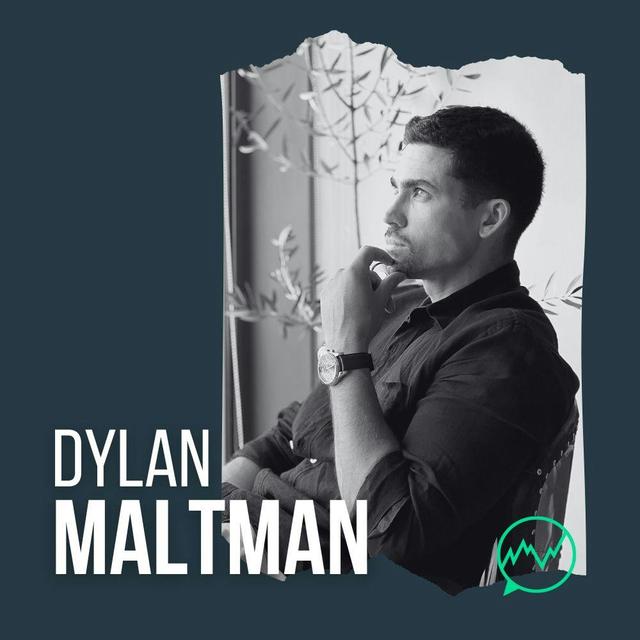
Well, our next guest, Dylan Maltman, an intraday futures and forex trader and founder of Apex Capital Management, must have had exceptional clarity starting at a young age. Introduced to the markets in a high school presentation by a prop firm, Dylan caught the passion for the potential of the markets and persuaded his way into a position at the firm. Learning about backtesting, he became obsessed with dissecting every nuance of past data so as to create a system with high returns.
and with minimal drawdowns by understanding where edge can be found, as evidenced in the performance of his algorithmic strategies. Oh, and this episode also includes my one-on-one with Dylan at the end. Ladies and gentlemen, we are so pleased to present Dylan Maltman from South Africa. Dylan, I would like to welcome you to Chat with Traders. Well, you sound like you have a an accent. Tell us where you are and where did you grow up.
Yeah, a hundred percent. So the accent you're hearing is uh first and foremost South African. So I was uh I was brought up here in Cape Town. But growing up in South Africa is an amazing place. Uh if you ever get the opportunity, definitely come through. You know, beautiful sunset, warm weather. very much uh soft earth type people, hard workers. Obviously finished my schooling here and then I studied uh I studied in Italy, spent some time offshore.
My first introduction to financial markets was really, I think, to my mother. So she was an actor. So, you know, very much risk-oriented mentality from day one. And we actually had a hedge fund manager come to my school when I was in uh quote grade eleven on the final year.
And at the time, you know, that whole world was only just opening up to me. You know, you only really begin to understand these things once you get into high school and it just sounded sound extremely fascinating. So I had the opportunity to spend some time with them, you know, learn. uh hedge fund and more prof style trading worked um at the time and that was my my real first introduction to the space.
Uh this was in high school, so were they uh was this hedge fund presenting to the other students in the class? Yeah, exactly what it was. So typically what would happen in in the high school assembly is, you know, maybe once a month or once a quarter, you they'd have either one of the parents or one of the colleagues of or the alumni of the school come through and they would just give a presentation on what kind of career paths and options are.
are available uh as would happen with a high school that's that's a very normal thing and done here I don't know about the US but that's uh that's pretty commonplace yeah. So what kind of types of investment ideas did this hedge fund introduce to you and the other students? And was there a particular type of investment that initially attracted you?
I think for all intents and purposes they had a hedge fund on, but they're really more of a prof fund, to be honest with you. So it was very much a priority stuff, trading fund, but they had a hedge funding. And the way that they sold it was very much that financial market. Are a place where billions, if not trillions, of dollars are made and lost every day. And it attracts the best and brightest people to the field.
And part of that is every day you arrive at the desk solving challenges. That's really the crux of the job. And you're up against the smartest people in the world. That was what really fascinated me. That was the original pull towards trading in general. What was the first asset class that attracted you and when did you open up your first account? Yeah, yeah. So something up I traded before then. So after the the assembly, I went out to the manager and said, Look, I want to repeat.
And then uh she said, listen, no, you know, go go and get your degree first and and maybe once you've got your master's and you've spent a bit of time at, you know, an investment back we can shut down. And I think, you know, naturally being a bullish teenager, the first thing I said is look.
I I don't think you understand. I really want to trade for you. And and she said, okay, fine, you know, if you arrive on Monday or it was the kind of school holiday that the following week. And she said, if you arrive on Monday, fine. And you make the coffee and sweep the floors, maybe I'll let you.
And I think she was joking, to be honest. Um I arrived and uh obviously she came in much later, but she was kind of like, What are you doing here? I said, Well she said, get here early, I've got here early. I've been making everyone copy. I thought that was the deal. So uh
So but that's what ended up happening. And I think she just um she saw a bit of herself in me and she said, Look, let's give this kid a shot. You know, if he if he becomes something great. And um that's where I first started training. So we were picking crypto crypto names for kind of macro swing positions, uh which went quite well. Um I learned some more of the quantity stuff through the quant desk as well. Yeah, so so that was really where my first quote unquote broker.
Uh described to us kind of your early time there at the um the prop firm. This was going from twenty eighteen into twenty nineteen. So really when that volatility spike in crypto really started to come back and volume started to move into that space.
Uh I learned very much a risk-on style of trading, which is really where the experience comes in. So I think contextually, if you put yourself in that end space where you're starting to see volume to pick up, you're starting to see these names start to move again, or at least substantially.
Contextually speaking, it was the perfect storm, really, because you know, they they had the data and the quantitative side to say, look, this is when you want to start buying, this is when you want to start looking for volume, uh, you know, standard deviation breaks and ATR breaks and all that kind of thing. Um, but at the time, that was my introduction to training, which was inherently aggressive just because the timeline of when I learned was just an aggressive market cycle.
So I learned a lot of the basics, market structure, volume, volume profiles at the time, where they were relevant, learning about narrative, things like that. That was really the fundamentals of where I started. And then how long were you uh in training, so to speak, or in this learning initial learning phase before you were able to uh click the first button to buy or short?
By myself, I uh full transparency, I don't think at the time by myself I was able to make any important decisions. Uh it was very much a team effort, which I think was a really important start toward my trading career. Um, I really spotted the clicking the actual button with the team from day two, day three, um, you know, learning alongside the traders next to me and the quantitative fundamental card.
And but like I said, it was very much a team effort. I I wasn't making any of those decisions myself. As I think is appropriate. You know, you you train for a prop land, you've got to go through your your school fees phase, so to speak. So it sounds like you hit the market right at the right time with the uh volume and activity really picking up. How did uh this time period go for you and uh the hedge fund uh as far as profitability? Um did your strategies uh work out, at least initially?
They did. They did. Again, I think it's important to remember that this was really the start of when everything started to go up. So it was really the bottom, so to speak, in in a lot of ways, especially for your your um your alternatives like your your altcoin. you know, the the I'm not gonna say the word, but the small coins at the time, yeah. That was really when the bottom was starting to to kick in.
Um, no, we did we did very well. We did very well. I think for that period I worked on a more aggressive style fund where we we were able to take on a bit more risk. Uh I think we three X the portfolio within a six to eight month period so we did well we did well Wow. And now are you trading your own personal account at the same time or just dedicated to the? just the problem. Um I think at the time I was I was fully cognizant that
you know, there were much more advanced, more sophisticated members on the trading team that were trading their own accounts, obviously linked to the prop firm. And that's that's kind of commonplace. And I I knew well enough that if I had to start on my own account, I wouldn't I wouldn't go anywhere very quickly. I think I'd be setting myself back, you know, creating bad habits and whatnot. Um so for for primarily just uh primarily problems.
¶ Post-Prop Firm: Academic & Strategy Evolution
So this is going well and you guys are are making bank. Uh how long did you stay there at at the Prop Firm? Oh the firm did well. the rest of the jokes. But I made a little bit of money then. The the thinking was look, he's done okay. Let's let's let's give him a bit of profitability and you know we'll send him on a go and he's ready. And that's what happened. And so that was that. And then and then following that I obviously went to go study in Italy.
yn ymwneud yn ymwneud. Yn ymwneud ymwneud ymwneud ymwneud ymwneud ymwneud ymwneud. And that was a that was a a spanner that was starting to work. So I moved over to Italy, uh I mean Bologna, they had a phenomenal uh economics and finance degree. And then 10 days in, uh, I got a call from um one of the government representatives then said, Yeah, I can see on the system that you're
Yeah and you're studying and it's phenomenal. And I said, Yep, having a great time. Why are you calling me? And they said, Well, there's one flight out of Bologna, uh, and you need to be on it. It's in four hours. So I hate to burst your bubble, but if you want to go back home throughout this COVID thing, you need to leave. So that was a major, major spanner and works for my family and um so then I had to come back after 10 days.
and then obviously finish my studies remotely. But I mean there's stories about tons of people going through that experience. Yeah, uh just uh for our listeners, what is the difference between a regular prop firm and what they call the funding get when you quote get funded? Are they the same thing? Such a good point in. No, they are they are explicitly not. So there's two primary distinctions that we need to make here, right? So the first one is instrument.
A brick and mortar proprietary trading firm is defined by a group of individuals that are trading their own capital or a firm's capital. So there's no clients whatsoever. And it is solely for the profit of those individuals and the firm. Very simple. Okay. There has been a rise in what's called CFD and futures profit. So CFTs, contractor differences, anywhere outside of the US you can practically trade them and that's that is
a model where a brokerage is signing a contract with you with every position that says whatever the difference in the position is from when you enter to exit, I'll settle with you. I'll ex I'll assume that exposure on my book. Um the other alternative is futures and we'll get into that shortly, but for all intents and purposes, a prof firm in the sense of getting funded is a company that agrees if you can
trade by our rules and you go through a kind of evaluation process to ensure that you do that for a fee, I might add. We will then give you a quote unquote trading account, which is 99% of the time, not live. It is full, it is a demo account, and will give you a split of whatever you would hypothetically make on that.
There are exceptions. I know that there are firms that take the same routes and they do fund some of their traders live. I'm sure that that is, I wouldn't say commonplace, but it happens. The majority of these funded accounts are not live. It is a business model like a casino.
Right. You you pay your you'll pay your fee, ninety percent of people can't pass this uh this challenge and as a result the business makes money and whatever the difference is between what they've made in from these evaluation fees and what their proper spit is that you know the profitable traders yet they didn't just pay that out. So there is a substantial difference. And I think it's important to make that distinction.
Great. So you go back to South Africa and um during COVID and during that time you're trading you're still trading uh with the firm remotely or you were trading just by yourself or what? At the time I actually wasn't. I was still following markets substantially. It was my passion and was what I was focusing on. But I think just given the amount of turbulence that was going on in the world, it wasn't something that I wanted to convince.
And that was obviously the time during COVID where Bitcoin really started to take off. I mean that's when we were breaking all-time highs and we were absolutely flying. Um so I I didn't I didn't fall apart at that one, but it doesn't. Okay. So then uh during this time what what are you trading? What are you looking at and anything stand out for you? Yeah.
At the time I was I was doing a lot of demo trading. I think uh the the important part for me when I write that was going, I'm not in a position where I should be trading out. Um I think obviously financially it hit a lot of people hard. I mean when I went to Italy, um that was my kind of life play at the time. And you know, having to come back, I mean, you know, having to start over was a was a big challenge.
So the immediate discussion was I know what good looks like contextually speaking. I know where the But I need to get there as quickly as I can. So it was very much coming back, learning about an algorithmic style of trading, binary variables, how to create strategies that work in in the real world and not just on back to end.
And then eventually putting that together into my own strategy. That was a month, that was a six-year period of learning how to do that. And then when I got back while I was finishing my studies, I actually worked for a CFD firm, a cell side derivatives firm. Ano? Ano? Ano? Ano? Ano? So you you're learning how to what create these quant models, doing a bunch of backtesting on like give us an example of some markets that you're doing backtesting on and uh what what you found.
Yeah, absolutely. So my immediate exposure was to FX. I knew that FX was for all intents and purposes the most widely available instruments that one can trade as a retail individual. And likewise, a lot of the platforms or the most popular platform for CFDs at the time had a somewhat quantitative uh trading platform where you could optimize strategies and backtest on historical data and things like that.
That was my my real introduction. My initial success in that space was very much in your um exotic FX phase, so things like dollar rand. uh your crosses like uh euro GDP that worked very well for substantial amounts of time and then also uh a couple of the majors euro USD obviously is something that you want to look at if you're trading apex. That that was when really where I started.
What attracted you to these more obscure trades? Is it because there's less competition or is there a particular advantage due to presumably less liquidity, right? Yeah, definitely less liquidity. When you're trading derivatives, liquidity isn't as much of a challenge because you've got a market maker or liquidity provider on the other side. The real element retrospectively.
that drove me towards that side was because of the volatility associated with these pairs, they tended to be more directional and you were able to catch directional edge a lot easier with the quantitative model, especially on such a surface level.
that that was just where the alpha was at the time, right? Like if you look at something that's maybe a bit more range bound, especially at the time like you're a USD, the the level of variables and understanding of how these models work was a lot more sophisticated to create genuine alpha. Um whereas on your exotics when liquidity wasn't an issue because you've got those um market makers and liquidity providers, it was not easier to just go, look, we've been long for three months.
And we're probably going to be long for another three months. So your your directional bias is going to be long and now you just need to create an entry model risk management plan and trade management plan and you're good to go. That's just where the the strategy program. It it was very much a a circumstance of I'm going to let the alpha decide what's working and I'm not going to dictate what needs to work, if that makes any sense.
Mm-hmm. Uh so did you have uh much of any experience with uh discretionary trading? And if so, how did it go? Have you ever watched a stock explode and thought, if only I had the capital, or sat on the sidelines because your account balance felt too small to matter? Good news. With Trade the Pool's limited risk platform, you don't need millions or even thousands to start trading the US stock market. Bypass the PDT and tap into over twelve thousand US listed equities.
From penny stocks to big caps, ETFs, even the newest IPOs, and short anything you like, with zero locate or hard to borrow fees. Start your evaluation, get funded with up to$200,000 in buying power so you can go big without risking your own savings. And now you can also have unlimited time to reach the profit target. It's a game changer. Not ready to trade yet? Trade the pool offers a free demo and educational resources.
practice on live data, master the platform, and build confidence risk-free before you even pay a cent. Click the link in the show notes to start trading with Trade the Pools Capital. I did have experience with discretionary trading again with the team. So they had a they had some guys that have been very good at discretionary trading, but that said they were experienced.
And I think one of the first big lessons I learned was that discretion you learn to do either with a mentor or you're going to pay your school fees in the market. Hence why I went to more systematic and quantitative roots because you're dealing with binary variables and and you know those aren't subject to change at least in the beginning phases.
¶ Backtesting Methodologies & Avoiding Overfitting
So how how do you go about doing backtesting? I cause I've heard people say, Oh, you should only back test for the last, you know, five years or you shouldn't include uh, you know, exogenous events like two thousand eight and And uh the COVID crisis because then it distorts everything. So I w kind of what's the process um that you implement in this?
And it's a great question and I think the most simple answer and indirect one is it depends, right? Uh what's the there's more than one thing more than one thing that works in the market, there's more than We have our own internal IP of how exactly that works, right? So
Firstly, let's start with timeframe and let's start with the amount of data that one needs to consume. So obviously, depending on the time frame that you choose, if you're trading the one minute, the chick chart versus say the 15 minutes, you're going to have a very different level of data and timeframe. I think the important part firstly is to acknowledge it's about data points and not necessarily a certain amount
Right. Because again, we could say five years, but five years on a one minute versus five years on a daily or weekly chart are very different sets of data. So you want to ensure that you've got this substantial amount of data points that you For us, that that typically is anywhere between five and ten thousand data points. But again, currently we trade a lot of tick in one minute and second related charts. So for us, it's really important to consume.
The other challenge when it comes to backtesting is the cursor over-optimization or code fitting, right? So for those who don't know what that means, it basically means if if we had a bag of skips. You've got schedules where you've at in the US obviously and you must have so i if I've got a bag of schedules and um let's say that I pull uh one red schedule. And then I go in and I happen to pull up another uh red schedule.
It's fairly logical to make the assumption at this point that if you haven't seen the rest of the bag and you don't know what skills are, the color of those suites are just red, right? So if I then say, okay, I'm going to start taking bets with people who don't know what's in this bag, and I still don't know what's in this bag, but I can make an assumption that every skiple is red, you're very quickly going to understand that you're going to lose money down.
That's called co-fitting, creating a strategy that is very and extremely optimized for a sub stack of sample data, but not necessarily all of the outcomes in the data that's within the Well, within the market, so to speak. Right. That's that's how that happens. So how do you avoid this as a trade? Well, the first thing that you do is you need to test for what's called robustness. There's a few ways to do this. The way that we do it.
is we do something called non consecutive sample testing, walk forward optimization, and out of sample testing. For all the quantum systematic guys in the audience, this is going to make a lot of sense. This isn't brand new information, but it's really about going less test and create a strategy on say 10 data. Okay, we're happy with how this is working. We're happy with how the strategy is performing. What we now need to do is take that strategy and test it on a separate set of data.
call it this this the next twenty or thirty day one. Based upon those results, you're going to get a very quick understanding that creating strategies is difficult because the majority of the time that's not going to work. When you find something that does work, okay, so uh test it on your first 10 and then you test it on your second and third set of 10 and it still works, you've then got something that that has legs, okay?
So then what you want to do is do a roundup optimization. You want to make sure that if we say test this data on another 50 days. That not only is it sound, but we can optimize each of those variables in the trading strategy to that set of data. And it's still going to work, right? So we really want to get into the weeds of how we can refine these things. If we're able to clear that robustness test.
The last step for us is called non consecutive sample testing. Okay. So by this stage, we've maybe tested. We now want to look at the last thirty to two hundred, right? So thirty to two hundred total data points. So thirty or a hundred. if the strategy still performs over that year. That's how you create a strategy that's going to work in the long term. Because not only have you tested over a specific sample, you've tested it with out of sample data.
And you've done something called walk forward optimization. You've optimized the strategy for periodic sets of data and check if check if it still works and it does. That's how we create a strategy.
¶ Building Your Own Algo Strategy
Okay, so given that um quant trading's been around a long time and you have a lot of different groups doing all these kind of backtesting, and I've even seen some uh uh programs for sale, people have done uh created these algorithms and stuff. I imagine what you're doing is probably pretty time consuming. Wouldn't it make more sense for your typical trader just simply buying off the shelf uh program since uh other people have done it before and uh save ourselves a bunch of time.
Uh it it's a good question and and I understand the logic. Personally, I would say no. And again, this going to be exactly. But but he has why? Typically when you create a strategy that makes alpha and does so in a sustainable and consistent way. There's more capital to be made from trading that strategy, either through a hedge fund, a prop firm, et cetera, or selling it to an institution, if that's the route you want to take, than selling it to the public.
Um, I have yet to see a consistently profitable strategy that's sold to the public, especially when you look at a price point of couple hundred dollars to maybe a couple thousand dollars. These strategies typically have extremely high valuations when they are sophisticated. And generally with those return uh risk return profiles and return consistency. They are generally very sophisticated. It's not an off the shelf product you want to buy. But what I would recommend. Um
And again, just because I've gone down this route personally, is I would recommend putting the work in, even if you are a manual, discretionary, or systematic trader. And I'll tell you what. Of going through how a quantitative strategy works will set you up for the rest of your trading career. Number one, both in hard skills and understanding what it takes to be consistently profitable.
Because these strategies, even though they are robust and sophisticated, they may work today, they may not work. And what do you do when you get to a point where you put so much time and energy into a strategy? But if you know, you wake up on Friday morning or Monday morning and it no longer
The answer is you need to figure it out, right? So getting into a position where you've had that experience to not only build a strategy, you know, understand the variables and the testing measures that go into it and really creating alpha. but also being able to create strategy logic. What what is the strategy built for? Um how can I ensure that the logic is sound for each variable that I put into this so that it makes sense and it stops just with a black box of rank of of noise really.
Um, I think I think that's really important. Once you've got that that element down and you understand how the logic of different trading systems and strategies work, be it binary variables, again, be it the risk management side or trade management side. You're then set up to create strategies, be it discretionary, systematic, or quantitative, for the rest of your life for the most part.
Alternatively, you know, you're going to go to someone who's maybe made a strategy. You don't really know how it works because you didn't put the work in. They'll release an update, but ultimately because you purchased the strategy and it's your own capital, they aren't liable if anything goes. There's also an accountability shift that that happens there. So successfully pots. Do the work early, get it out the way, it will it will do you good in the
¶ Defining Strategy Failure & Adaptability
And how do we define uh what doesn't work? Uh, because there's a certain time period, right, that everyone expects uh a drawdown. And uh and during the drawdown period, I'm sure many traders say, Oh, well, you know, I just need to wait a little bit longer. My system will work, it's worked in the past, it'll come back. At what point or how long should one wait before you throw in the towel and realize, oh, my strategy really doesn't
Mm. And this is this is the black box thing, right? And this is why logic is so important. If you understand when and why a strategy You'll know when it's not working because you'll be able to point towards the variable that is supposed to dictate that you're working. I'll give you an example, right? Let's look at like an intraday brain cluster.
Okay. So let's say we're trading NASDAQ. Um, you know, we've just gotten to the New York session. It's the first 15 minutes of the open, the most volatile time. But we can see that the average daily volume, so past 100-day period, for example, um, how much volume have we done to that point um relative to the past 100 days of average volume? If you've only got, say, 14% of volume, okay, by the close of the first 15-minute candle of the USA.
Logically speaking, when you understand how markets move. Breakout strategies are not typically going to work in that environment because for breakout strategies to break and run, you need consistent buying volume. Okay. Now again, that seems very simple, right? But what is consistent buying value? How do you measure that? Then you learn about delta. Okay, this is positive and negative delta. And then you learn about footprint charts and then you go into that block.
Once you understand that and you understand, okay, I'm trading a breakout. For this to work, I need to see this amount of volume happen within the first 15 minutes and within the first, you know, call it 12 hours of the day. You then are able to pinpoint, look, it's between June and August.
the majority of the intraday traders and the big banks are going on holiday, there just isn't that much volume surging through the market right now. And again, I see that we've only done say 14% of the average daily volume thinks 15 minute period. The likeliness of this working is not high because the core variable we need is volume. If the volume's not there, the breakout's not probably gonna work. So maybe we look at something else. Mean reversion, arbitrage, things like that.
So that's why it's important to really understand why do these things work. Not does it work? It's a very good question, but why? And when you understand why, you then know when it doesn't work and when it breaks. Does that make sense? Uh so you mentioned the breakout volume. Are you only looking at the individual security and their volume, or are you also looking at the market volume uh to see how sustainable uh that might be?
You can look at both. You can absolutely look at both. Um, it this is whether you know there's lots of things that both there's many races get cats in markets. You can look at both, and again, this is also about. If you're going to build a strategy that maybe looks at the index as opposed to the individual stock, or okay, let's refine that a bit more. That wasn't a good example. If you're going to look at the futures versus say the underlying index.
Those are two separate strategies with different financial engineering and different options. And you need to cater for one of those, right? You can't necessarily pick one and it's going to work on both. So this is why getting into that logic is so important.
¶ Founding Apex Capital: Futures Trading
So do you focus just on uh FX or are you looking at uh do you also trade other markets? uh maybe maybe i need to touch out from where we were the kind of plot firm derivatives stuff and so on so um after about two years of working for uh cfd and deriversives firms i had some exposure to a few hedge funds in uh in south africa
Um, and there was a consistent point where I realized that there's a substantial difference between the asymmetry of a proprietary trading firm. You know, you can lose a lot less and make a lot more versus most.
Um, you know, most hedge funds don't have a very good risk return profile. I mean, if you look at the the shafts of you know, your very big boys like your citadels for example and they have a different set of variables trading that that kind of size i think it's unfair to expect super high shock ratios and asymmetry but you get the point most most hedge funds just don't have that amount of asymmetry When I saw that, it it baffled me a bit because I thought to myself, I thought trading
is supposed to be asymmetric. Why do I have to risk one to make one or risk one to make 0.7? That doesn't make any sense. Why would anyone do that? And that's when I began to realize Well, there's this special thing called prop trading that most people don't actually get access to.
There there's demand for this product. If you had to go to a lot of other multistrats or family offices and say, look, I've got this product that outperforms meant, you know, your traditional long short equity or macro hedge fund. here's the data let me show you how it works that's a product that would be in high demand So as a result of that, I ended up saying two years later, you know, um in my Twitch.
If there's ever a time to go risk on and build a business and a good one, it's now. It's not going to be when I'm. Right. This is this is the the leap of faith. So what I ended up doing is I built a team. Um we created a company called Apex Capital. We raised some uh some equity capital for that and we have some phenomenal investors who've been very helpful throughout this period. Um and we incorporated our own proprietary trade.
Uh again, all guys in our twenties. Um, you know, we've got a phenomenal team of some substantially experienced traders, far better than I am. We're very lucky. And we trade futures intraday. So we created a strategy that was first and foremost meant to be liquid. So this is something that you can withdraw from and play with in terms of liquidity. Secondly, extremely asymmetric.
Um so again, we're not risking one to make one, we're risking one to make five, six, seven, and above, for example. And we need to have a defined logic and a defined edge. We need to know our niche of what we're good at in six weeks, not kind of drift too much from side to side. And that took the shape of a core team, trading team of four, spread across most CME liquid futures sectors. So things like NASDAQ, SP, Natural Gas.
gold, crude oil, and then we have got some FX exposure as well and it moves and it's got the So okay, so it looks like you look at a a wide variety of markets then. Um do your algos, do they look at once you got it down down for one market, does it apply to all the markets or do you have to go back and test it for every single market again and again?
So the logic works. The the logic of how does it breakout versus mean reversion strategy or arbitrary strategy that works pretty much consistently across all centralized futures markets. Again, this isn't something that will necessarily work on crypto. um which has its own advantages in different space.
The logic works. Obviously, when you trade these instruments, particularly on an intraday basis, you begin to realize very quickly that you're dealing with different participants while all optimizing for different outputs. Right. So they've all got quotes unquotes, their own personality.
If that makes sense, right? NASDAQ behaves differently to natural gas for crudol. So it is important to have say a set of foundational philosophies that are important. But on top of that, you need to cater for each individual personnel.
Right. It's it's like inviting your friends to a party at your at your house, drinks at your place. You know, you're gonna invite everyone through, but not everyone likes to drink champagne. You know, some some guys are gonna want water, some guys are gonna want beer, but they're all at the party, right? They're all at the same place. Yes. Yeah.
¶ Order Flow Analysis for Trading Edge
Uh y you mentioned earlier about uh using order flow uh to confirm directional volatility uh in your strategy. Can you break that down a little bit more? Yeah, absolutely. So I'm gonna give an overarching view here. So we base all of our alpha of three core principles, right? So the first one is ordered. Order flow in essence is a skill where you are dissecting the volume.
of a particular asset over a given period to get a better sense of what the underlying participants are doing. It's basically how you're able to read the heartbeats of the market. Just before it's about to stand.
Right. That's what order flow does for you. Admittedly, it does have a bias towards shorter timeframes in our experience. But again, if you have got that shorter timeframe bias just naturally as a trader, you want to have a look at order flow on your centralized markets. So that's the first.
The second thing is asymmetry. It's important for us to again find our niche. And our niche is we're good at high expected value strategies, particularly ones that you can risk one to make three, five, seven, and seven. Right. You can get high-expected value strategies if you're scaling one-to-one, for example, but that is a completely different set of skills, in our opinion. The final element that we focus on is results.
Right. Risk management in itself is also an edge. And I think there aren't enough traders that pay enough attention to it. Right. So again, understanding maybe the biases of your strategy from a risk perspective and catering a model. That can trade on top of that risk management strategy, whilst not necessarily optimizing for return only, but also optimizing for smooth equity. things like chart ratios with you know things like that but let's get back to the question water flow specific
Order flow tells you who's buying, how aggressively they're buying, who's selling, how aggressively they're selling, and who's winning. And again, because we're trading markets that are developing on an ongoing basis, right? The guys who were buying or selling thirty seconds ago are not the same guys that are buying or selling now, right? In the present and won't be the same as the guys buying in the next five, ten, fifteen, thirty seconds.
Like I said, it tends to have a bias for the short term. But if you're able to use that as a confirmation sign, perhaps for an entry, even if it's on a swing position, there's a lot of edge to be. I mean, it's fun. Isn't it common though for both buyers and sellers to break up their orders into a whole bunch of small lots, hundred share lots or whatever? uh and disguise this and how how does one detect uh this kind of hidden way of accumulation or distribution?
Yeah. You're getting into the real health uh questions now. Uh that's a great Um, all right, so let's use that example specifically. All right. Let me ask you again, who is who are going to be the the entities that are going to be doing that? Breaking up Uh the market maker, I would assume, right? Or the whoever the other.
Mm-hmm. Yeah, yeah. So they'd be acting as an agent for somebody else. So there's a a fund. Let's c let's call it uh Ian's fund capital, right? So so Ian, you call up your investment bank and you say, buy, I don't know, 200,000 shares of the stock. Again on the other side of the front says, yep, the end sounds great. I'll have that down for you at VWAPS a bit.
What that individual is incentivized to do is to execute your order without increasing the cost of the order or the slippage of the order, right? Because if you just buy market in one single time, 200,000 shares, depending on the liquidity of the asset. You're gonna eat up that order book, you're gonna get slipped, you're gonna get terrible problems. The investment banker or the south side trader, he's going to break that order up.
Okay, into into smaller pieces. I know this sounds this is very simple, but you'll understand why we're walking through it step by step. So he gets on his trading platform, he's starting to execute your orders. If you were an investment banker and you're incentivized to get the best price possible. What kind of order type? Are you going to use ideally? Presumably limit orders, right? A whole bunch of limit orders. Yeah.
You are spot on, absolutely right. So now we've just brought up this thing of passive versus buying. It's like passive versus active participation. Again, in limits terms, your passive participation is a limit order who's adding liquidity stock to the market, and you've got active who is removing uh liquidity or stock from the market. So, yeah, let's look at this example. Now that we have this information in mind, let's let's look at a breakout thread. Okay.
We've got a breakout trade. Uh we have price reaching our level, let's say on the one minute, and we can see in order flow that there is an influx of buy. Okay. An influx of buying is demonstrated by what we call positive delta. Delta is just a fancy term for what is the difference in buying or or selling.
from active participation. Okay, so the volume. If you took the volume bar and you split that between buyers and sellers, are there more buyers in that candle or are there more sellers in that candle? That's good in terms of market. Now, if we had a circumstance where we have price breaking out of a certain limit to the aspect. Tons of positive delta, tons, okay, uh abnormal positive delta. the price moved up above that level. and then declined again below them.
Something intuitively doesn't make sense that you've got all of these buyers pushing price beyond this point, but for some reason we can't close the candle beyond that point. How does that make any sense? The answer is limitless. There are resting limitless. that are absorbing all of that rhyme pressure to the point where there is now an unfair fight.
Between the guys who are buying and the guys who are selling. It takes so much more buying power to breach that resting sell order than it is for uh maybe aggressive sellers to develop. Look, this is very normal selling pressure that we can put into the market here. Buyers clearly can't raise price any further. Let's just keep selling and it's likely going to tank the market. There's a level of asymmetry there, right?
That is the kind of information you can obtain via order flow. And yes, you may have, you know, your institutions that are breaking up orders into multiple orders, an iceberg order, and that's completely common. But these are still things you can see and read either via the tape, via a footprint chart, via cumulative volume delta chart, things like that. And this is why order flow is so asymmetric, right? It lets you see behind price.
and see what the actual participants are doing and what that level of participation looks like. So are you looking for a setup where the limit orders on the top end, the the p potential sellers, have been uh have exhausted their stock? Uh, and then at that point then you say, Oh, look, the sellers have exhausted their stock. Now's the time to go in because it looks like this breakout is going to be s more sustainable.
That's yeah, that absolutely is something that we look for, right? And that's that's a common breakout. There there isn't enough liquidity to hold buyers back. Buyers are picking up all of that liquidity and we can break through that level and keep breaking up, right?
Absolutely. We also look at the previous example, which we call absorption. Well not we, but that's this what the sector called absorption, where there is so much stock available that there isn't enough buying to get through that massive order. And now there's asymmetry between buyers and sellers. Sellers are going to take this down.
that's also a setup that we look at. And there's tons of tons of these things. I mean the there's there's a whole world we can get into in terms of what's possible in the on water flow and all the and all of these setups and confirmations. But yeah, absolutely. For your fund, for you and for your fund, are you just a super short term scalper, uh, where you um take positions uh for longer periods? The look we can take positions along the periods theoretically. There is edge there.
For us, because we wanted to turn this into a hedge fund product, um, for all intents and purposes now, we are not a hedge fund. We have a waiting list of clients who want to purchase into this hedge fund. And I think once we get to a critical mass point, we'll get there. Um but for right now we're we're just a proprietary trading firm. We we're trading our own capital, share old capital.
Um, because the end goal has always been this hedge fund product, we're we're putting all of our emphasis and resources into refining what the intraday Um systems look like. Again, only trading within that US session, like you say, scalping. I mean, our average trade time is about six minutes, although we do have kind of the longest trades we've taken off say mid-london sessions we've closed with the US, but all within that one day time.
Um but again I think with order flow and all of these these tools, there there's edge on a signal time frames. Obviously there just is a bias for that that kind of Mm-hmm. Uh and then so over the years, uh, as you've learned and implemented, uh uh developed out your strategies, how have your um kind of returns, drawdowns, uh different metric sharp ratios um evolved over time? Mm-hmm. Also a phenomenal question. So
Look, naturally, when you start trading, you're gonna be shocking. There's just no way around that. Right. So I think right in the beginning when when I started trading. by myself, naturally, the returns were negative. They weren't good at all. Um and it was it was a major learning curve and a humbling experience. And since then we've primarily through on this command line through the order flow um elements of those three uh philosophies that we have.
And we were able to optimize for better investment metrics, things like your shock ratio, your Sortino ratio, Kalma, etc. Currently our shock ratio is doing very well. It's an excess of I announced an excess of three. Last time I checked it, I think it's in excess of six. Wow. Yeah, it's done phenomenally well. I sort of hear that excess of nine as well.
Um to date we've returned just over thirty percent into the fund. Uh well the the simulated hedge fund, the the props the props side we traded a higher risk model just because obviously it's more appropriate to trade on a
our own capital, the higher risk model for the hedge fund, which we report to return 30%. And our match build on as of this as of today this year is uh negative 0.2%. uh negative zero sorry zero point seven two percent uh so our karma ratio is I think phenomenal yeah it's it's going very well the the cars are doing uh phenomenal
¶ Asymmetry and Risk for Traders
Well, great. Uh what if uh some traders uh came to you and said, Hey, look, I don't have enough money to uh invest in your hedge fund uh or whatever, but But I've been a discretionary trader for the last two years and and I s I'm doing quite well. I why why would I want to get involved in any of this quant stuff? My discretionary trading seems to work just fine. I would say that's phenomenal. Good for you. That that's good news. Um it yeah I think it depends on what your bowl is.
ultimately like like i said there's so many ways to make money in markets right there there really are there's so many things optimal if you are the kind of trader that says look i want to get not only returns but i want to do that in the most asymmetric form possible
Right. I would then say look at water flow and look into the quantity risk management stuff because that's where that ultimately is. If you're optimizing for that, you can capitalize on both sides of the expected value formula and all four sides, technically speaking.
Whereas if you're just trading things like price action and regular backtesting and kind of those metrics, you can get return without a doubt. But it's not going to get you to that ultimate form of asymmetry that you're looking for. So what do you think are some of the biggest risks to discretionary traders?
uh especially ones who uh you know have some early success and say, you know, I I'm I'm you know, I've got this down. I I'm, you know, I'm I'm I'm doing well and I'll just keep repeating what I'm doing and Uh w what are some of the hidden traps that discretionary traders um frequently don't look at?
Before I answer, there's obvious there's discretionary and discretionary, right? I mean there are firms out there. I know um a couple of guys at SD Capital, use Trillium Kirchner, like there's some phenomenal firms out there.
they've just got a ton of IP towards discretionary trading and they do so in such a way where they can trade discretionary in a very consistent way. I'd even argue that it's not discretionary once you get to that level of sophistication. It is systematic. You're just using your heuristics a lot more. Um which is phenomenal, right? Like uh hats off to those guys that integrate. But
And again, just coming back to the original points, if we're defining discretionary as just not having a a set of binary variables that you're ticking off before every trade. So if if if that's what we're talking about. I would say that the most face value elements is obviously just tilt, right? What happens when your calls just aren't there today and you're trying to maybe force your own views on the market.
And you just keep adding risk on the table into something that's not working. That's the first risk, right? The other elements of discretionary trading that I feel has elements of risk that maybe your quantity and systematic style guys don't have is the risk management. There is so much more to risk management than just risk per trade and mass drawdown capability. I'd go so far as to say the one thing that has made us immediately profitable is having a sound understanding of
And really diving into what that means. You know, there are hundreds and hundreds of different ways that you can look at risk that you know really open your eyes, right? Um, I'd I'd say that those are the two primary challenges, I think, most discretionary guys. Again, there are exceptions. I'm not talking about the super sophisticated, you know, wonder kids out there. Yeah.
¶ Optimizing Position Sizing & Drawdown
What uh what about the issue of uh say position sizing? Have you found an optimum um level of position sizing in in your back testing? Yeah, and this is just you ask good questions, yeah. This is I'm having a great time. Um Yes, so it it all depends on top. Right. My level of risk tolerance is not going to suit yours or
uh testers or or someone else for example. I think first and foremost you need to have an understanding of what your personal risk tolerance is and have a target, you know, value at risk or match drawdown that you can incur in the worst possible So that's step one. Let's let's say that that's 10% for burn. Okay. Let's let's just use 10. What's then really important to do is understand what does the drawdown capability of a strategy look like based on its inherent variables and expected values.
And there's ways to test for this, right? So you can what we do personally, just to maybe get some game outs, is we use um Monte Carlo simulation. This is not new, but what we also do is we add a realism. Because ultimately they're just simulations. They won't necessarily show you the absolute worst case scenario. You then multiply that by say an additional 20 to 30 percent. So you're exaggerating the match drawdown you can incur.
You what you then want to do is match that to be based off the expected value, the maximum amount of trades you can or negative trades you can incur within a kind of straight line, right? So how how many consecutive losses can I make? Okay. So let's say that I want to target uh a negative 10% drawdown. That's what my uh exaggeration multiple gives me. Um sorry that's my
kind of target drawdown. I then see that based off my exaggeration multiple, that I can incur a maximum of let's just keep it under easy 10 trades in a row of losses. What I'm then going to do is mash those two together to get a risk per trade, right? At least as a baseline. So again, 10 divided by 10 is one. So I'm going to be risking 1% per trade, for example.
What's then really important too when it comes to understanding risk per trade is not all trades are made equal, right? There are gonna be some A plus trades where you know if you look at blackjack when the when the true count becomes extremely positive you you you want to start you know doubling tripling or quadrupling your best size if you're playing blackjack you don't want to be doing those kind of multiples per se if you're trading for a fund but
Um there are gonna be times where your strategy is more potent and there's gonna be times where your strategy is more dilute. In those environments, you want to have the flexibility to either increase size above your baseline or decrease size substantially below your baseline, right? And again, another another piece of game here, maybe that that would be valuable, is the one of the elements that really worked for us in the beginning phases once, you know, before we even got into order.
was anticipating based on the variables that make our strategy successful when we're going to see a reduction in performance or performance dilution, as we call it. And substantially decreasing our risk. Substantially. I'm talking minimum to a third of a third of the exposure to a tenth or even less. Um And why does this work, right? You know, why is that so important to do? Well, ultimately trading is what you make versus or minus what you lose is what you keep.
So if you can make as much as possible during the times that your strategy is most potent and then you know retain as much of that when your strategy is more diluted, you're going to be making more in the long term. So number one, when it comes to where the edge lies, get a sound understanding of what's possible in terms of drawdown with your strategy. That's the first one.
have a firm understanding of where your personal drawdown limit is. That is extremely important, especially if you're trading on a discretionary basis. Your head is very important, your your head space and psychology. matching those two together on an exaggerated basis. So give that a bit of leeway in case things go wrong. Things go wrong in in the real world. That's just the way that that things are.
Um and then get so nuanced with your strategy in terms of variables that you can go, okay, if the volume is greater than X percent by a certain time period in the day. Well our vol is, you know, two or three or five times its normal rent if you're trading uh stocks. That is when my strategy logically and from a backtesting perspective is most potent. So when that happens, I'm going to add something.
Conversely, that you know, the volume is really not there today. You know, it's uh it's a UK and US banking volume. Okay, that the volume is maybe 10% of what it usually. I'm not gonna trade at all. If I'm going to, I'm going to do that at a third or a tenth of the size. So that if I lose, I'm not losing much. But when I win in my most asymmetric part of the day. Excuse the last interruption here. This is Tessa. We hope you're enjoying this episode so far. If you love the podcast,
Please give Chatwith Traders the best review you can on whatever platform you're listening from. This will help us to keep the episodes coming. Also, if you haven't subscribed to our email list, please hop on to chatwithraders.com and click on subscribe. so we can keep you posted of information that may be of importance. Thank you. Now back to the chat with our guests.
¶ Apex Capital's Future & Value Dissemination
Um, so for our listeners uh who obviously hear that of the enormous amount of work you've put into this over the years, uh is there a way for traders to either plug in to your system or you to your group and or to invest passively? Not in the act.
So um put it this way, this is this is a brand new venture policy. And we've got investors that are our priority. We've got a fund on the way that we're we're looking to get up and running. And neither of those two things are small tasks, though. I think especially for a young team like that.
us. I think what we do have on our side, obviously, like I said, is a is a is an amazing group of investors that have taught us a lot and have been patient with us, but also we have the work ethic and we have the ability to forecast where maybe what we call
It's not brilliance, but we we call it brilliance. That's kind of the the what the youth call it, right? Like like you're young and hungry and you know you wanna make it work, but that only takes you so far. There is an element of experience that you maybe haven't gotten to that's going to limit you inherently.
So right now, no. We don't have any form of plug-in or any form of passive investing that clients can get into directly. But that's right now, it is publicly speaking. I can't say it's publicly. Um, but there will come a time where we will have that hedge fund open. Like I said, we're raising on a waitlist at the moment. So if there is interest, there's that.
Um, but we we're in no rush, put it that way. We want to ensure that by the time that that fund is ready, we have got all our checks and balances complete, crossed our I's, dotted our Ts, and we're ready to rock without any hesitation. Uh well not hesitation, but we're ready to rock without any um box left unchecked, if that makes any sense. Mm-hmm. So uh looking forward, uh, tell us what are you looking forward to? Getting your everything, all the boxes checked?
Yeah, absolutely. I think something that we're focusing on heavily right now from a business perspective is institutionalizing. A large part of trading client capital when the time is right is trust. And there's nothing that says trust like uh you know secure and robust process.
Things like having the right kind of documentation involved so that when you know you have an institutional client knocking at your door asking difficult questions, you can already show them the documentation that anticipates and answers those questions. So that's the first thing. Institutionalizing is a big one for. Um we've also um created a substantial amount of uh of new IP over the past three.
Um this IP has been amazing for the team to digest, but obviously when you find new avenues, there's going to be new avenues for you to digest from there, right? Like sub-avenues. So the team are not only working on existing strategies, but strategies that could become valuable in time to come once we have additional resources.
Um and other than that, I think just being in a position where we can disseminate additional value to other traders, you know, it wasn't very long ago when we were struggling. And we were trying to figure out how trading works in general. It's it's a challenging field to be in, especially when you do it alone. So being in a position where I wouldn't say we've got the secret source, but we're doing well and we can just provide some kind of direction at the very least.
to other traders who maybe in our shoes caught it six years ago, that's something that's been phenomenal for us to do. And we feel very blessed to do that. Fantastic. Dylan, thanks for uh coming on chat with traders. Thank you for having me, Ian. It's been amazing. Looking forward to uh to chatting soon. Yeah, great. And how can our listeners uh get in touch with you?
Um, I think the best place would be through our website. So that's uh www.apxcptl.com. Um we've got forms for uh traders, investors, and uh interested parties to fill out their that'd be the best place. Fantastic. Thanks for coming on the show. Yeah.
¶ Practical Strategy Development & Trust
There were a lot of golden nuggets and I admit I'm not a very good listener and I would have to listen to this interview um over uh maybe at least two more times to to really um you know not miss anything.
But I remember you mentioned something about um, you know, make your strategy systematic earlier as soon as you can. Is that is that what you meant? And So what stuck out to me is like if I'm not a programmer, if not a you know, I don't know how to program or anything and if I hire somebody or if anyone's interested in hiring someone to do the programming to make it more systematic. I mean wouldn't we worry about that, say that programmer
steal our strategy or something like that. That's one of the things that I just always had in my mind. Yeah, yeah, that's it's it's a great question, Jessica. Um So there there's two answers to this. I uh two avenues that I want to take. So the first one is that you don't actually have to code. I can't code. for what it's worth, right? There there are platforms out there that are no code platforms that allow you to basically put in a preset of common variables.
that are very sophisticated. You know, if it's market structure, volume, or even indicators, right? You can just plot in when RSI does this. Yeah. And MACD does this, for example, do this at this size for this amount of time. You can put all that stuff in, copy the code, paste it into Blackboard, and it'll test it for you without even having to decode anything. So that's the first item. There are ways to do it without having to create that kind of truck.
Um, not to mention manual backtesting. I I think manual backtesting literally just with a piece of paper and checklist is incredibly underrated. Highly recommend if you if you can do that, do that if you're going down that avenue. Um in terms of the trust element between you and the developer.
Something that we've begun to realize, especially when we talk about our IP, because originally we didn't want to say anything about what our three philosophies were, how we do what we do and trade types and stuff. But one of our investors told us. No one's going to steal your, no one's going to steal your idea unless you're driving several karates, right? Like if you think about people stealing your idea.
There's so much sophistication that goes into creating a strategy that people that someone would objectively want to steal and incur that risk. that the likeliness of that happening during that period is so slim that we're not even don't even worried about it. And if you are at a place where that is so sophisticated, you would have likely built a team back at that stage or at least a contact that you can trust, right?
That's helpful. Um, okay, another question I have, you you mentioned a lot about risk management and we know all that is super important, but what comes first, risk management or edge?
¶ Edge, Risk, and Trader Mindset
Oh, that's a good question. Risk management or edge? I would say edge comes first. And I'll tell you why. Risk management's pointless if you don't have something that works. Risk management is the thing that just It takes you from good to great on something that is already working.
If that makes sense, right? Yeah. Like like picture a strategy that's that's for all intents and purposes just excuse my French crappy, right? It doesn't work and you add superior risk management to it, it just means you're gonna lose this. That's all it means. Um, whereas if you've got something that's sound and you add the risk management elements on top of it on top of it, the returns may be good, but with the right risk management you've gone from good to great, to some extent.
Yes, absolutely. I just wanted to hear you confirm that. Um, okay, one last question. You're so young. Um, remind remind us how how old you are. It's been fun. Oh, so young. And you accomplished so much already. Um, but I'm still gonna ask this question. If you had to start over, would you do anything different? If I had to start over, would I do anything? Yes, I would. This is kind of a question where it's also like if you had to give yourself advice now looking back. Yes.
Definitely. Um for the guys that are just getting new or just getting into training, and it is a passion of yours. And you know, maybe even to a degree if you've got selling to prove, it you it's gonna be a self-valuing thing, right? We a lot of traders attach their oval to what they do. And I think to a large degree we all, right?
If you're getting started, it's not going to work immediately, end of discussion, right? Especially if you don't have a mentor and particularly if you're doing it alone. There is no need to hinder an already difficult process. By beating yourself up for not being the successful trader immediately. That's why you buy. That negative buildup that you that you create in your head while you're trying to put the work in to just get ahead.
is going to hinder you. It's not going to benefit your work, your work process or your workload. It's not going to get you to a point where you can operate more effectively or more efficiently. It's going to dial back your progress. It's going to dial back your enjoyment and dial back your efficiency. I think the most important thing is having faith in the fact that A, it takes time. It takes people Yeah, it's to just get profitable. I've seen guys do it in far less time. Time.
And you can definitely do it. The one thing that will take you there the fastest, aside from the work ethic, aside from the hard skill. is making sure that you don't beat yourself up for not being where you want it. Focus as intensely as you can on enjoying the process, learning every day, and being thankful that you just need to take that extra step towards profitability. Does that make sense?
Yeah. That's so important. We don't hear that, you know, we don't hear that enough, actually. You know, you know, um giving guidance to not beat yourself up because we do it all the time. Yeah, and and it's it's such a tricky balance, isn't it, Tesla? Because on the one hand, to be excellent, which we all want to be, we all want to be the top trader dog, like we want to be the big boy, you know, like or big girl or whatever.
Um, we all wanna be that person and we all think like, look, I need to be hard on myself. I need to be hard on my performance. And yes, you do, right? But you don't need to disrespect your headspace. That's gonna take you nowhere. It really is gonna set you back. You can be hard on yourself. Right, it can be hard on results, but don't do it to the point where it hinders you.
It needs to be an enjoyable process because that's where your genuine inspiration and that work ethic and efficiency comes from. If you can keep that in a good space and just mudd yourself through that period and enjoy it, you're going to be Without it. Yes. Oh my gosh. Thank you so much. That is so good. We're gonna, we're absolutely gonna include that in the bonus section. Thank you again, Dylan, and have a wonderful weekend.
You too. Test again. Thanks so much, guys. Really enjoyed the conversation. Take care. Thank you. Bye bye. You've reached the But rest assured there are not a little bit of a little bit of a More if you leave a rating.