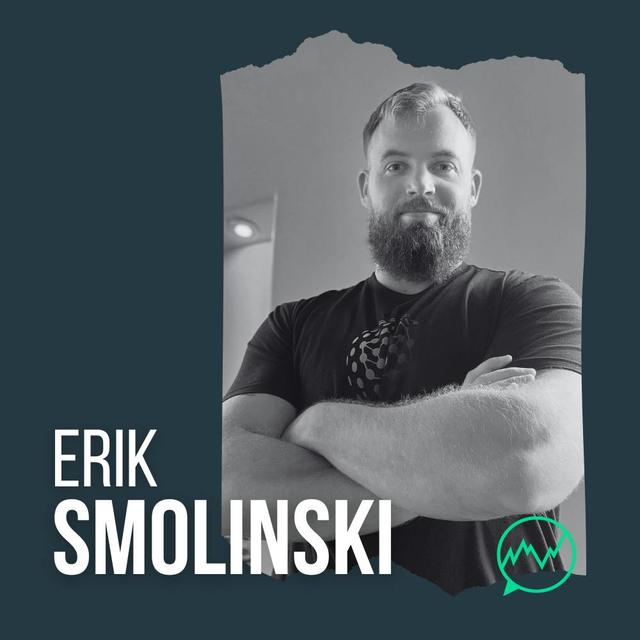



¶ Intro / Opening
Chat with Traders is brought to you by Trade the Pool. Did you know that every decade the market reinvents itself? Online brokers opened the doors, mobile apps made trading seamless, and commission-free trading erased barriers. Now a new era has begun. Meet, trade the pool, limited risk trading. And now you also have unlimited time to reach the profit target. From now on, your trading risk is capped, and your trading opportunities are limitless.
Trade the pool funds home-based stock traders with up to$200,000 in buying power. That means you can trade larger positions and scale your strategies without risking your own savings. It's time to trade with more capital, making it truly worth your time and effort. Ready to trade the pool? Click the link in the description and join the stock trading revolution today.
Trading in the financial markets involves a risk of loss. Podcast episodes and other content produced by Chatwith Traders are for informational or educational purposes only and do not constitute trading or investment recommendations or advice.
¶ The Difficulty and Simplicity of Trading
The reason why trading be is really difficult in the beginning is because you have to learn so much. A lot of the things that you think you know and understand, you're gonna see instances where that's violated and you don't know why and it confuses you and it makes you start to question what you thought you knew. But then you start to get an understanding of how.
options as a security or derivatives in general behave. And you start to develop an appreciation for your process over the outcome of individual trades. And that really starts to simplify everything because one of the most frustrating things is you put on a trade
You have this really well developed thesis and then it just goes against you. And you're like, well, why? Why did that go against me? You know, they they had good earnings. They just had a big beat. They had institutional sponsors, da da da da da da, right? Million different things. It should have gone up and it went down.
And as soon as you start to appreciate the fact that like that analysis, it's all Bayesian level analysis. It's we come up with the best thing that we can figure out right now with the information we have, but If you understand how markets work, you understand that short-term positioning is going to overwhelm just about everything else.
those kinds of frustrations start to shed off. And it doesn't really yeah, it doesn't really it really isn't that difficult. Like it's it's so funny. Reminds me of Little Leonardo da Vinci. He had the the quote, simplicity is the ultimate form of sophistication. That's exactly what happens isn't in trading. Is you stop worrying about the 32-legged iron dragon breathing fire condor options trade.
It's a joke. I'm just making fun of something with too many legs. And you just start trading super simple things that are based on observable, measurable market effects. And then all of a sudden you're like, Yeah, okay. This actually isn't that terrible.
¶ Welcome Back: Erik's Options Passion
Thank you for tuning into Chat With Traders episode three hundred and one. I'm Tessa, co-host on this show and Ian's taking a well deserved break. So guess what? You got me today. This episode focuses on options for you options traders. And for those who don't trade options or don't like options, please don't run away. I believe there will be something to take away for everyone. So stay with me. In this episode I have the great privilege of interviewing our returning guest.
Eric Smolinsky, a US Marine veteran. And if you missed episode 272 when Ian first interviewed Eric, I highly encourage you to go back and listen because you'll get to learn more about Eric's. very amazing story and humble background and his trading and investing evolution that turned him into a financially independent multi millionaire. Very inspiring. But in today's special episode, it's more of a conversation between traders.
except Eric is way more experienced and way more accomplished as a trader than I am. Whereas I'm still developing and the cool thing though about being in the developing stage is I get to ask whatever I want because like They say there's no such thing as a dumb question, right? That the only dumb question is the one you don't ask or are afraid to ask, maybe.
Anyway, it's so awesome to be able to pick Eric's wonderful brain today. So yeah, come along with me and enjoy the episode. See you there. Ladies and gentlemen, I'm so pleased to welcome back. Eric Smolinski from San Diego, California. Well, welcome back to Chat with Traders, Eric. It is awesome to talk to you again, like we were talking just a few moments ago. You've been telling me a little bit about your foray with options, so we have a fun conversation ahead of us, I think.
Yeah, I'm excited. And just for the audience, Ian actually interviewed Eric back in December 2023. I can't believe it's been Two years now. I remember from that episode, you said that there were two things that you were really obsessed about and to talk about. One is working out. And the other is trading. And since I can't talk about working out because um I really And I've been stacking off on that and that's not my area. So I guess we'll talk about trading and options trading to be specific.
Beautiful. I it's such a fun topic because I think options are one of those kinds of securities that exist. It's an asset class that's so different in the way that it allows. the most precise positioning based on a thesis that you can literally conceive of. So I'm stoked to talk about options.
¶ Remarkable Trading Performance in Volatile Markets
Yeah. And so before we get into kind of the um the details a little bit, I just want to ask you, how's 2025 going for you so far? And and since we did the last episode in 2023, how did 2024 and 2025 go for you? Yeah, so twenty twenty-four was my second best year ever. And Twenty twenty five so far is on pace for not first or second best, but a really solid year. So markets like this that we're experiencing right now that exhibit high general vol.
And I mean you can see that reflected. People will say things like, Oh, you know, why is the VIX down? And it's like, well, the VIX is down relative to the 60 print it had, but it's still above 20. And the historic average is 14 to 16. It's still high. Like there's still so much vault.
So for the options traders out there, whether you trade short premium, long premium, a mix, whatever your book is in general, you need volatility either way. Even if you're buying premium, you need volatility. You need the thing to move. Otherwise, you don't make any money. So for options traders, these kinds of years is what you salivate over. And it's because you can really achieve, in my opinion, a really good return on the risk. Because from our previous conversation.
I really have never geared out for like top line performance. My entire trading career from when I started in oh seven has been built around consistency. And it's because of a multi factor of reasons, it was more important to me than to have massive years and then maybe some slight down years to be really consistent. So years like this. allow for that kind of consistency with way less risk out, which is awesome.
Yeah. And twenty twenty five is not done yet. So there's more to more to go, more opportunities. And the entire market is hinged on what n truth comes out or what tweet comes out next. So the fun part about that is it adds so much volatility that it levels the playing field, right? If you think about a really quiet, calm bull market, institutions in those kinds of markets, and I mean they still have an advantage now, let's be honest. But
That advantage definitely gets flattened out a little bit because literally nobody knows what's coming next. The tariffs are a great example of that. Trump was saying like, oh, the tariffs are gonna be, you know, we're being nice. We could have been so much meaner. And then the first thing that he drops on everybody is 10% tariff on everybody. And the market's like, whoa, did not expect that.
So the fact that there's those kind of moments, it leads to so much opportunity from a trading lens. So yeah, twenty twenty five, if it's anything like it's been for the first few months, I expect continued firework throughout the rest of this thing. Yeah, and just to remind folks, because back in 2023, you had already done, if I remember correctly, um of sixty four percent performance in twenty twenty three, is that correct?
Twenty twenty three was actually quite a bit better than that. It was uh one eight one eighteen. Wow. Okay. Cause yeah. Okay. And then your your compound annual growth rate from listening to the episode again. Like twenty two percent year over year from from two thousand seven to twenty twenty three. Right. And and then versus what the S P was doing at the time, the same time frame, eight point five percent. That's phenomenal. And you're saying that it's even better now through 2025.
The the last two trading years, like the end of twenty twenty three and then into twenty twenty four, they're they're like statistical outliers for my performance. They blew my Kagger to the right. Um, so when people ask like, you know, what's your general trading performance? You like it used to be in the low twenties, but it hit as high as the low thirties and now it's, you know, drifted back down.
into the high 20s. But I still don't really think that that's what the true performance probably is. Like if we were to normalize it out, I would still expect somewhere around that number we talked about before, probably 22 to 24 if we, you know, got rid of the outliers.
¶ Adapting Strategies, Embracing Curiosity
And you're just doing the same thing? Have you done anything different with your strategies? No. What I do is the strategies that I trade are relatively static. They're built on known market forces. I call'em profit mechanisms. There are things that I can directly look at, see that they're there, I know why they're there, and there's reasons why they're there. So I can capitalize on those.
Um, there is always refinement though, because regimes change. So a great example of that is Coming into twenty twenty. I used to use a lot of small caps and it's because they typically exhibit higher vol and people don't remember this because of how dominant look it in a half. But growth stocks used to outperform large cap broadly. And that's changed. So it's changes like that. So the overall approach itself generally remains the same with the the toolbox that I use.
But the way that I deploy it has to shift a little bit. Another great example is the introduction of daily expirations in SPX on sixteen May twenty two. So that becomes another big part of the book. So it's like there's adaptations more than anything, but it's not like big changes. Would you say that trading options is getting even more easy for you or is it's just changing? I mean, it's just more challenging. I mean, do you ever get bored? No.
No. How could you get bored with the with with how things go? I like the concept of being bored in the stock market is just so foreign to me. I I couldn't even I I was looking at stuff yesterday in GameStop. And there was two prints for the past two days of like 18 million dollar positions being sold and deep in the money puts like two days in a row. And that the total net premium for everything below that was in within a couple hundred thousand dollars.
How like how could that be boring? Cause it's like why? And then you gotta go investigate. You gotta see what the price action is. So there's definitely no element of it that's really boring to me, but I think a big part of that is because I I'm naturally curious and the market is one of the best vectors I could possibly think of for that curiosity. Because if I'm sitting here trying to learn more about tariffs, like everybody should be right now.
Guess what? Perfect vector. You go to the markets, you start reading the earnings releases that are coming out by different industries to understand the impact of tariffs, how that's actually panning out. You now know more about tariffs. So it's like as a vector to learn about the world around us, there really is nothing better. So I boredom is not part of the equation. In terms of difficulty I really think the difficulty sheds off once you really define and develop your process.
The reason why trading be is really difficult in the beginning is because you have to learn so much. A lot of the things that you think you know and understand, you're gonna see instances where that's violated and you don't know why and it confuses you and it makes you start to question what you thought you knew. But then you start to get an understanding of how options as a security or derivatives in general behave. And you start to develop an appreciation for your process.
Over the outcome of individual trades. And that really starts to simplify everything. Because one of the most frustrating things is you put on a trade. You have this really well-developed thesis and then it just goes against you. And you're like, well, why? Why did that go against me? You know, they they had good earnings. They just had a big beat. They had institutional sponsors, da da da da, right? A million different things. It should have gone up and it went down.
And as soon as you start to appreciate the fact that like that analysis, it's all Bayesian level analysis. It's we come up with the best thing that we can figure out right now with the information we have, but If you understand how markets work, you understand that short-term positioning is gonna overwhelm just about everything else, those kinds of frustrations start to shed off.
And it doesn't really yeah, it doesn't really it really isn't that difficult. Like it's it's so funny. Reminds me of Leon Leonardo da Vinci. He had the the quote, you know, um Simplicity is the ultimate form of sophistication. That's exactly what happens isn't in trading. Is you stop worrying about the 32-legged iron dragon breathing fire condor options trade. It's a joke. I'm just making fun of something with too many legs.
And you just start trading super simple things that are based on observable, measurable market effects. And then all of a sudden you're like, yeah, okay, this actually isn't that terrible.
¶ Key Traits for Options Traders
Do you think there's um a certain type of personality would be more suited for options training? Definitely. What what what type is that? I think you have to be process driven. I think, well, and I guess I should take a step back because it depends on what kind of options trading we're talking about. Because there are traders that use options purely for leverage.
And who's to say if that's right or wrong? We know in the majority of instances that, you know, typically doesn't bear out that well. So if you're trying to trade options from the lens of like, I intend to do this for some time, that won't lend well. But I think it it comes down to people that have a natural curiosity of things, the ability to put the ego in the backseat. That's a big thing for all traders, but especially options traders because
You're not just dealing with delta anymore, right? The price direction impact to your trade. You're now dealing with things even like interest rate changes. You're dealing with things like volatility changes. And volatility changes can be real weird. Right. It's based on in implied expectation. So you're literally trading based on people's forward expectation of how something might move. That's as fickle as you imagine it might be. So
You have to be willing to accept things sometimes at face value. That's one of the funny things I find is like, I'm the perfect balance of dumb enough to try it. But smart enough to kind of find my way through it. I feel like if you're too smart, you'll look at this stuff and be like, no, that shouldn't have happened. And then you'll just get wrapped up in that cycle and you just won't be able to escape it. So it's like a really big balance between Observing how things behave.
updating a process based model, whatever that is that you choose to use. And being consistent enough and able to manage the ego is it really is so important, I think. So I think if you're generally in, you know, most of those buckets.
You're pretty good. Now, one thing I will say that lends terribly to options are people that are impatient, which most of us start super impatient. I know I did. And that's just The ability to persist in spite of that, not because of that, that is in no way a good quality to have with options. Um, and then I think outcome-based is also terrible because if you're so wrapped up about the outcome of individual trades, this is not going to be for you.
And it's because again, with options trading in general, whether you regardless of your approach, it's probably going to be manifested over tens of thousands of trades, hopefully, if you have a nice long trading career. So that means any one outcome really doesn't matter. It really doesn't, provided that it's within general good taste, meaning you're not losing 90% of your account on one of those trades.
If everything is generally within fair risk parameters, no one of those trades matter at all. It is all about the outcome of the aggregate process over time, which escapes all of us in the beginning. In the beginning, when you first start with options trading, you think it's gonna be fast, easy money.
And you think you're gonna be able to turn your$2,000 account,$5,000 account into millions of dollars or even, you know, maybe more conservatively, hundreds of thousands, both are equally improbable. And that entire expectation is what sets you up for failure, I think, from the jump.
¶ Tessa's Pre-Earnings Options Strategy
I'd love to pick your brain and just to give you a little background, I've been trading options. I was first introduced to options in 2014. So but that doesn't mean now it's 2025, doesn't mean that I've been trading options straight for 10 years, right? It's more on and off. But it's only um last year when I put a hundred and ten percent all into
uh relearning options, um, reassessing my old strategies and refining it. And I have this love-hate relationship with options. I love it because of some of the things you mentioned, like the leverage, but The thing that I think I've been trying to get better at and struggle at times is the volatility and the time decay. And with the time decay, that's a big one too, because you you have to be right.
by a certain time. That's what's completely different with straight up equities trading or futures trading or forex. I mean, you have to be right by a certain time. Otherwise Even if you end up your direction is right, but it's not by a certain time, then you lose. And then the volatility, you need the movement. Like you said earlier, volatility is actually your friend in options trading, especially if you know how to use it right.
But then there's just so many layers and options that if you're not careful, you can bleed slowly over time. Even if I mean even if you're super careful, but you don't really know how to navigate around that and and have the right strategies.
Which was my case is uh in the past, I would I wouldn't bleed a lot, but I would bleed a little over time and then it ends up being a lot. That's how options whereas like equities trading, it's like, instant like you can you can be out like really quickly for me at least but with options when I was starting out I was bleeding slowly everyday bleeding but I've gotten better over the past year but there are times when I feel stuck
I think the first thing that would help me understand a little bit better is what's your relationship with the Greek? And to be clear, I don't mean just the first order greed. There's there's a few different orders. There's first order, second order, third order. It sounds something out of Star Wars, but it literally just tells you what that group of Greeks measures with respect to.
So first order Greeks, they measure everything with respect to a change in the options premium. So delta change to premium based on movement. Vega change to premium based on vol changes. Theta change based on time. That's why a lot of people falsely would bucket gamma as a first-order Greek.
But it's not. Gamma tells you the rate of change of delta, second order grade. So it's Yeah, it's just complex terminology, but once you understand like what the order quote unquote means, it actually makes it a lot easier, at least for me, because it tells me what we're measuring with respect. Yeah. Well, with uh second order Greeks like with gamma, I just recently started learning more about that, introduced more about like um the gamma levels and things like that and
areas where um market makers are trying to hedge. And so I have this, I have these indicators, you know, on my, well, these levels that get plotted on my chart. to show where the likely kind of areas of interest where there's a lot of gamma, you know, and there's a lot of hedging right there. So I do have that, but I I don't know. Sometimes it's just too much information that I get analysis paralysis. So
The way to think about that, what you're referring to is called gamma exposure. And we refer to it as GEX, which is actually not really the primary purpose of what gamma is. It's a secondary purpose where we're trying to measure dealer positioning and then potential. dealer behavior based on what their positioning is, net positioning, I should say.
One of the reasons and the frustrations you will find with your relationship with stuff like volatility and time, it stems from not understanding well enough how options behave. And we all do this. And it Similar to if I knew better what the weather was going to be, right? I'm in San Diego, so it's gonna be sunny. Well, if I wanted to go out and let's say go on a really long hike.
And I knew it was gonna be sunny. I would put sunscreen on, put a hat on, that kind of thing. Well, it's this it literally is the same thing with options. If you know how they behave. You can build things so that you can gain that specific exposure that you want. So for example. With theta decay. If you're long an option, there are two things, three things you could do to decrease your total exposure to theta.
You can go really far out of the money. You can go really deep in the money. You can go further out in time. You can do a combination of two of them. So you always have that available to you if you know how theta behave.
So it's the same thing with the rest of the Greeks. Now, to be clear, you don't have to be like a giant nerd and go into all of the second-order Greeks, third order Greeks. Like that starts to become a little bit more based on like broader portfolio management. I think if a trader has a really good grasp,
on what I refer to as the primary Greeks, so what most people are used to, right? Delta, gamma, theta, vega, rho is kind of there. It's pertinent now because we're in a rate shifting environment, but typically rates don't move that much. If you have a good understanding of the way that those behave, it grossly simplifies literally the entire remaining decision making. Around what kind of structure you might choose based on the idea that you have, which is a beautiful segue.
into understanding what you've been doing. And we can see what kind of structures you've been picking, and then we can talk about it. Yeah. Have you ever watched a stock explode and thought, if only I had the capital, or sat on the sidelines because your account balance felt too small to matter? Good news.
With Trade the Pool's limited risk platform, you don't need millions or even thousands to start trading the US stock market. Bypass the PDT and tap into over twelve thousand US listed equities. From penny stocks to big caps, ETFs, even the newest IPOs, and short anything you like, with zero locate or hard to borrow fees.
Start your evaluation. Get funded with up to$200,000 in buying power so you can go big without risking your own savings. And now you can also have unlimited time to reach the profit target. It's a game changer. Not ready to trade yet? Trade the Pool offers a free demo and educational resources. Practice on live data, master the platform, and build confidence risk-free before you even pay a cent. Click the link in the show notes to start trading with Trade the Pool's capital.
Okay, so um lately, and well, I shouldn't say lately, for the past year, I have been trading instead of trading earnings like Like head on, like when it reports, I trade earnings pre earnings. So I trade. before they actually report. So for example, back in um early April, so JPM was reporting out, was supposed to report out um April eleventh in the morning. So about two or three weeks before that, so this is m my earnings play, I put on a calendar spread. Uh I believe that was a put calendar.
So I checked the IV on that JPM like three weeks before earnings and I noticed that at the time it was lower than the historical IV. So it was, let's just say twenty five percent, whereas the historical was twenty-eight percent IV. So to me, that's like safe. I'm like, okay, because I expect between so I put that on, I put on the calendar spread on March 24 4th, about two or three weeks before uh April 11th.
And while the IV was relatively low, And I expect that between then and the uh the um the earnings announcement that the IV is gonna grow, just based on historical for JPM and and many other stocks that report, they tend to, you know, supposed to kind of grow the IV. So That's what I did. And so then the tariff news happened on I believe that was April third. Did I get that right? April somewhere around there. Third, fourth, fifth, th that like started coming out. I forgot the exact day myself.
Yeah, very early April. Yeah. So what happened was the the IV just exploded um on uh April 3rd and then afterwards too. And um that was actually good news for me for for that position because If that didn't happen, I would still expect the the IV to still grow, but not crazy like that, that fast. Right. And that was like, I guess, you know, that just no one saw that coming. And so I was able to um Close out of that trade.
way before the earnings. I close out the next day, April 4th, you know, um, for uh a nice profit. But that was To me, that's in a way it's accidental because I mean I probably wouldn't have profited as much. Uh I mean, still I would I think I expected to still profit, but not that much and not that fast. But there were other earnings trades that I did that
did not profit like that um because of that tariff with the IV crush that came a few days later when it wasn't really a crush, the IV was still high, but it went down. So it impacted some of my long spread. Right. Cause'cause with the long spread, you want you want the IV to continue higher.
So I close out some of my other earnings trades for a little loss because of that. So I just want to share with that's to give you an idea that that is like one of my um strategies for earnings, pre-earnings play.
¶ Erik's Feedback: Process Over Outcome
So the cool part about that is, and I don't know if you did this on purpose or not, but you you stumbled into a really well-known market effect. And it's that implied volatility starts to ramp up leading into an earnings release starting about two weeks out. And you can research this widely. You could do it with your own data set. You can go onto a a website like SSRN, Social Science Research Network.
And you can literally look up different kinds of just options stuff to see what's been researched and what exists. So you've stumbled into one of them by your observation, which is fantastic. You're a little early, I think, going out three weeks. You The idea behind trading that vol expansion is you really have to put yourself in front of the meat of the vol expansion when it really starts to accelerate. Otherwise, theta will hurt you.
Yes. One thing you said that if I was working you with you directly that I would correct you and say that this was a red flag is when you said that it was good news for the trade. And in my opinion, it's not good news. It's not bad news. It's no news. This still shows me a mental attachment to the outcome of the individual trade. Whereas you told me you're trading in earnings-based. Strategy. That effect got completely blown out by a non-earnings based effect.
Which resulted in a positive trade, which is great for that, but we really gained no knowledge on how does this strategy, again, that we're expecting to use long term perform. So one of the things that I would recommend to somebody like that is it's completely okay to look at a trade and be like, yeah, okay, I'm glad that worked out, right? You don't have to be like mad about it.
But I would always take it back to what are you trying to accomplish? And you're trying to refine this earnings-based strategy. This trade happened to work out. Cool. Take the money. Always take the money run. But there's not it's not good, bad, indifferent. It's literally well, it is indifferent. It's just nothing. It doesn't mean anything. Made some money on this one from this thing that came off the top rope. Cool. But otherwise, it really gets no no mental capacity from there.
Now, what is the specific structure you use for your calendar? What expirations and what strikes relative to spot price? Yeah, so for example, in that same example for JPM, it's at the money calendar put and the expiration, the front expiration would be uh expiring the week of the earnings, the actual earnings announcement, because
I want to take advantage of the IV expansion, but then close it out before the earnings announcement. And then the back month is just one week after the following week. That's a completely viable approach. Now, another thing you could do that I typically recommend to people with something like this.
is I would paper trade other structures on the same trade. You've already done the research. You already found the ticker that you want to trade. You already built the hypothesis based on the relationship between implied vol and historic vol. So if I were in your shoes, what I would do is say, okay, I think the calendar is right for this. And it's nothing that's going to hurt you too bad. So okay, put the calendar on. But I would also put on other
structures so that you can directly observe the behavior without necessarily risking the money. So I would put on maybe a long straddle, a long strangle, and see how those perform relative. And again, the JP Morgan trade obviously wouldn't bear out because of the Trump stuff, but that's what I would do with the general earnings trading approach so that you can test.
some other things because what you'll find is that the calendar is probably good, but depending on if you're okay with your timing on the Vol expansion component of the trade, you can do better. If you're doing something like a long straddle or strangle and then gamma hedging around it. Oh, that's what I want to ask you. Okay. So I have I used um I well sometimes I do do the long straddles and long strangles instead of the the the calendars um a couple of weeks before earnings.
Um, but there are but there are times when it doesn't move enough. It doesn't move fast enough um for that. And that's why sometimes I like the calendar. If I know that stock historically doesn't move as much. Um, I mean not like, you know, like maybe under ten percent, but it's still within the the calendar, you know, the borders of the calendar. Um, but yeah, so if I do do the
the long strangles and straddles, what do you do? How do you um you know adjust it when you see that it's not gonna move in time before expiration?
¶ The Importance of Taking Losses
Take the trade down for a loss. You just take a loss. Yeah. So one of the things that is really important as an options trader is to de again, it goes back to desensitizing yourself from the outcome. So if my hypothesis when I put on the Straddle Strangle calendar, whatever it is, is that vol should start to steadily expand coming into earnings and it's not steadily expanding coming into earnings, what does that tell me?
My thesis is wrong. It didn't work. And guess what? It's gonna happen. It's okay. But if you limit the loss at a logical point, it keeps you alive so that you can expose yourself to the events when it does. So this goes into a really important process that I think has to be done at the strategy level. I call it the outlier strategy process. It's just a framework, it's a way to think of things.
But the first two steps of that process in my mind is to think of the profit mechanism, in your case, vol expansion leading into earnings, but then it's to quantify and qualify. So what that means is I want to look at what's the average vol expansion leading into earnings? What's the max, min, median? What's the overall vol expansion on a day overday basis on average?
And what I can do then is say like, okay, I've been in this long strangle for three days. On average, this should have been up ticking by 0.02 vol, and it's flat. It's not doing what it should be doing. Maybe I'll take half the trade down because it's not doing what it should be doing. Maybe I take the whole trade down because it's not doing what it should be doing. So by deeply understanding the profit mechanism, it again, it takes, it literally takes the guesswork.
out of what to do next because you'll know what normal looks like. And then if this doesn't look like that, then you know that this instance isn't a good one. When when you said earlier um that you would like in that case if the the the stock is not moving as much, you know, for the straddle or strangle and that, you know, at times you would just take a loss. Um Not that I wouldn't take a loss. I I can take losses, but um I just feel like
Maybe that I have this way of like I want to um I feel like with options because you can do so many things with it. So I tend to try to like turn it into something else, turn the leg into a spread or something like that, or or roll it out and you know and and you know, revive it somehow and just keep it going. And and at times it it just gets worse, you know, when you have too many legs. You know? Yeah. So it's yeah.
a really common mistake. And the reason why it's a mistake unequivocally is again, just remove the entire option component of the the thought process. I thought this was going to do blank. It did not do blank. I am wrong. That's what that means. So if I'm wrong, it doesn't mean morph the position into something else and hope I can be right on something else.
It means this instance was wrong. Completely okay. Literally gonna happen all the time. Take it down and then go find a better opportunity. Because this instinct, which is really common for all of us, is to start trying to adjust things into, you know, something that might work out. But I'll always remind people to zoom out. And think of what you're building as far as a strategy, not with respect to the outcome of this individual trade, but with respect to putting yourself in front.
of as many good opportunities as you can over your entire trading career. That's what matters. It's not if we could take the straddle, add some legs to it, roll it out and to trade a completely new idea. It that's not something that's gonna be highly replicable over a long period of time. So resisting that urge takes a little time, but it's super important. And you highlight a really common thing. We all go through that.
¶ Basket Trading for Earnings Diversification
So for earnings trading, like would you recommend to trade it like a basket of earnings or concentrate on one at a time? That's a great question. It really depends on the size of the book and how earnings fits into your broader portfolio. For me, for example.
My portfolio is split into two buckets, a core allocation and a speculative allocation. They each get a certain percentage of the portfolio based on what the market is doing at the time and like my analysis of how do I think things are going. And within the speculative allocation, different strategies get different amounts of money. I actually measure it more so by risk.
Then this one gets$5,000. This one gets$10,000. I care way more based on the earnings play. If I'm averaging 25 to 30 trades per week, average PL is blank, max drawdown potential is blank. That's how I size it. I think with something like options, especially around earnings. If you do not get yourself in front of enough looks, you are going to be so path dependent and that's outside of your control.
So I think you strip away the broad market effect that you're trying to expose yourself to, which is IV expansion leading into earnings. And now you become way too exposed to idiosyncratic risk, whether or not this company comes out with some sort of news that the market doesn't like before earnings or does like whatever. Right, you now have a a decent amount of idiosyncratic risk. So if I had my pick.
What I would do is size down the individual trades, but try to put on as many as make sense for your allocation of earnings. Because if you don't get on enough over the course of a week or over the course of an earnings cycle, you're really just seeing path dependency. And what I mean by that is it just what were the sequence of returns? By luck, by chance, over that pass.
Whereas if you get a larger number of occurrences, the law of large numbers starts to come into play. And even if the path tends to have tails, it's going to be more normally distributed. So then it's gonna approximate towards the actual performance of the strategy. And because earnings only occur, well, they occur every four, every three months, so quarterly, um, there's only, you know, really the first month or first month and a half of each quarter that really has, you know, earnings.
You know, enough for you to to trade. And because of that, I have been supplementing uh the non earning strategies. For example, I've been ex experimenting with zero D, zero DTE trading. Into zero DTE. Sorry to interrupt you, but I just wanted to understand the earnings package and total. So when you're trading earnings, you're trading the pre-run up, and then that's it.
Yeah, yeah, that's my earnings strategy pre-run up. And you know, like there's only so much, so many earnings you can play because you know it's but it's reoccurring every quarter. So that's that's a good thing.
¶ Advanced Earnings & Risk Management
Definitely. And there's two things I would ask you to take a note on to explore. The second thing that you can play earnings, that same effect. The reason why I'm saying this is because your comment of, you know, there's only so many that you can do over the course of a quarter, which is completely correct. But you literally can trade one earnings release three times. So you can play the pre-run-up leading into it, starting about two weeks out. Yeah.
Then it's the IV contraction after the release. That's the second way you can trade it. The way I normally do that is right before the close, five minutes before the close. depending on how liquid the underlying is, maybe 10 minutes before the close, I either trade short straddles, strangles, typically short strangles, and I'll play the earnings contraction. Then the third way you can play earnings is following the earnings release.
There's a market effect called post-earnings announcement drift. Now you can play a directional breakout, upside or downside, depending on the qualities of the beat or miss. And then you can trade that same thing directionally with the directional play for the following quarter. That's or yeah, a few more ways to trade the very same effect. Yes, I um I tried doing that, but I'm not good at Maybe I'm just not used to it. You mentioned the the earnings contra uh the the the IV contraction play.
And so you use short strangles or short straddles. I want to explore that a little bit more, but I feel like isn't that more risky? Because the risk side is, you know, not capped, right? Don't let the unlimited profit or in this case unlimited risk component scare you. You still control it via size. So one of the things that retail traders get in a terrible habit of is fearing risk. And it's literally how we make money. If we get too concerned with risk.
then it's very difficult to be profitable. Now again, you have to balance it. You can't be deft toned to risk, but that's where something like sizing comes into play. Now, if you're looking at something like a short straddle and you're like, ah, you know, if this moves too far, even if I traded at a one lot, this would potentially be a five percent drawdown on the portfolio. Like, that's a terrible risk profile. Do not do that.
The way that I would look at sizing those kinds of plays, like short premium plays, is I would look at the prior 12 earnings moves, find the biggest. that it had up or down, plot that range for reference and say, what could I size my position at that if it moved like it did and this is a base level.
What would the P and L be on the portfolio? And I would look to keep that under one percent of the total portfolio. And again, that's like a base case because what I always remind traders is the worst day is always ahead of you. So the worst post earnings move hasn't happened yet. It'll be in the future. So then if you size that out, let's say something is expected to have a 5% move for this coming earnings release.
But historically it had one that was a 15% move. Let's just call it to the upside. And I'm trading a short strangle. I would model what's my PL. based on the size that I think I want, based on the trade that I think I want to put on, if we get that 15% move. What about if we get a 20% move and it's a little bit bigger? And if I look at that and I say, ah, that's just too much. It's going to put me at three, four percent loss in the portfolio, add leg. By the wings.
So you can turn it into a wide iron condor. Cap cap it. It's not as efficient in terms of the number of legs you're trading and you're adding a little bit different of a market effect because you're really neutralizing some of your Greeks, but add the leg. And one note on that is a lot of times when I'm trading tech releases, I almost always add a wing to the upside, even if I size it appropriately.
And it's because some of these tech names can literally have four times the expected move to the upside. Not interested in that, don't want to play that game. So I will absolutely eat the cost to the upside. I rarely do it to the downside. And funny enough, it's because I'm less fearful to the downside on those kind of tech names. Um, they can have big down moves and it can hurt, but most of them are generally good businesses, right? If you're talking NVIDIA.
The probability of that having a 40% drop to the downside would be low, not impossible. So the short answer to all that stuff to help abate that fear is to paper trade it so that you can get a sense of what the numbers look like. And to size it down so that if you get the worst move you've ever seen, it still isn't that big of a contribution to the portfolio from a loss perspective. But then you obviously have to balance that out and you have to get enough of them on.
so that you can make money. Because if you're sizing them super small, then you're not going to make a bunch of money. Can I tell you a secret? I hate paper trading.
¶ The Necessity of Data and Backtesting
Yeah. I hate paper trading. I rather like um because I okay, to be for me to be able to do all this, I keep I have an Excel spreadsheet that I am able to like do what if scenarios. So I like doing what if scenarios on my Excel.
And because I do have the black shoals and all that um in there. So I can do like what if. So if the price does this and the IV does this, then this is what I'm expecting. So I might do that more than um I do paper trade once in a while when I'm trying something totally different. But I just I know it's it's it's prudent and I should do that, but I rather like use my forecast modeling to kind of do uh a what-if scenarios on these different um complex option strategies.
What I would tell somebody, and that's common by the way. None of us necessarily are super jazzed about it, but what I can guarantee you is your performance will reflect that. There's no outperforming that. And it's like it's like if a basketball player like Kobe Brown is like, I don't want to go to practice. Don't feel like it. He's probably not gonna be Kobe Bryant. He's not gonna do what he was able to do.
So this is genuinely the work required of a trader. And if it's not interesting or if it's not something that's satisfactory, then my biggest recommendation would be genuinely do something else. Because the thing is, is you cannot make good decisions without data to look at. So the forecasting model that you that you share is like, that's awesome. You should absolutely do that and give yourself an idea of like what this thing might do. That's a great step to take.
But by going one step further with these different kind of names, and I'm not even going to the To the deep level that I would do, where I would track every single company that had weekly options, whether I was trading it or not. And I would track all of them through the entire earnings cycle. And I wouldn't trade a lot of them, but I would track every single one of them. Wow. I'm not even recommending that because I know most people will be like, yo, chill, which I get.
But the way that I think about it is like if you're already trading JP Morgan, right, you're already looking at it, you already have your spreadsheet up that you're going to track what you're doing. It's literally one step more to just input some other numbers and a great way to shame you into doing this.
is when you're going in to close out your trade, right? Because you close out the long option right before it reports. Well, guess what? You're already in the sheet. You're already looking at the options chain. It's right before it closes or the day of. Why not just drop a little strangle in there? Just just tap it in. Just see what it is.
You're already there. The the way that I would I encourage people to think about paper trading is like it's not simulating your real account in this context. You can do it to do that. And a lot of people struggle with that, which I understand. It's more to collect data.
And it's so that you can make data-driven decisions. Because, again, to the point that we made earlier, for the trader that isn't Sure, what normal looks like in terms of the day-over-day change in implied volatility leading into the earnings release. If you don't know what that is, when you look at the stock four days in and it hasn't moved, then we're thinking like, oh, well, maybe it will move in the next couple days.
But if you have the data and you say, well, based on the data set that I have, if it doesn't move within the first four days, there's a 79% chance that this thing isn't going to move enough and I'm going to lose money. Guess what? That's an easy cut.
And that's how you get to the point where when you're taking losses, you feel nothing because you're like, ah, I'm taking this bad risk down because it's not doing what it should be doing. I'd rather go find good risk to put myself in front of. That's the exact way I would think about it. I I love your analogy with uh, you know, the professional athletes um with Kobe Bryant and that is something that um I think most of us aren't willing to do and that's why we're we're not successful. So
Um, thank you for that reminder. And I, you know, I definitely know that I should be, you know, doing a lot of in testing and things like that, especially with options because it's just so much more um, so many moving parts that you have to you have to test it at the minimum. Like that's what I did with my Excel spreadsheet, but I know I can I can do better if I just one step m further is to, you know. test it out in in the uh demo.
Yeah. Well, and again, what when I refer to paper trading, I don't I don't even use a platform. I just use my trade log in Excel and I just plot it. Because the thing that I I would remind everybody again, you can't conduct data analysis on a snapshot in time, right? If you plug it into your
Black Shoals model and you get a sense of how this thing might move. Well, unless you have the best memory on planet Earth, when you're trying to aggregate all of the times you looked at that and you're trying to say, well, how much might this move? It's not going to be that rock solid. So that's why I believe so heavily in having a really efficient process because it makes these seemingly arduous tasks bite-sized. So like for example, I have a earnings tab in my
And it's literally built exactly with what I need in there. And I have two versions of it. The first version is live trades. The second version is tested trades. So it lets me tinker with different settings and again make it bite-sized. You don't have to sit there and say, well, if I sell the strangle at 30 delta, I should also test it at 25, 24, 23, 22. Right? Don't do that. You can get the j
If you sell a strangle at 30 delta and it seems to perform okay, then maybe double click into it. Right. Now again, for somebody like me, I literally would go in five delta increments and test them all. But that is like an obsessive freakish thing to do compared to like what most people are interested, which I recognize.
So to to that end, I think you can get the Pareto principle in full effect. If you test again the 30 Delta short strangle, similar structure over and over again, you'll get an idea, right? And that can be enough to to help you feel also more confident. Because again, the reason why I'm confident in it is because I've seen tens of thousands of them.
And I know that even if you get a bad move, if you size it well enough, it, yeah, it's not fun, but it's not gonna hurt you. You'll be okay in the long run. But if you don't have that information, because if you don't have the data to look back at, there's no real confidence in it. And it's like, well, damn, you know, it's like it looks like it's starting to get really spicy. Maybe I should take this trade down sooner. I'm getting antsy.
And it's like the worst thing you could do, which leads into your zero DTEs, because zero DTEs are all gamma. And unless you have a good data set on how you're trading zeros. The propensity to just go off the rails and start going off script and doing other things because stuff is moving a lot is very high.
¶ Navigating Options Complexity & Stops
So uh how would you trade um I don't trade zero DTEs with with earnings, but I I use them on um the queues and and spy. Um and I I do vertical spreads. And I remember hearing you saying you you hate vertical spreads. And I kind of do hate it too, but I feel like it's like instant feedback. Yeah. Yeah. There's you know there's nothing inherently wrong with a vertical. The r the reason why I I say that I hate them is because a lot of people that use them.
It's muting too much of the effect that you're trying to trade. And it's because of risk aversion. There is a time and place where vertical spreads for sure. So don't feel any type of way about using them. I use them too sometimes. Um, how are we on time? I I'll I'll try to like wrap up. I have a few more things I wanna ask you. You're okay? I'm I'm liter after the market it's the best for me. That's why I always try to do the stuff after the market,'cause there's no pressing anything.
Yeah. Okay. So um What I have is uh the topic of stops because When I trade just straight up equities. Yeah, when I when I trade straight up equities, um yeah, I of course I use um stop losses. Well, not in the beginning, but I learned to always now use stop losses. Um, but when it comes to options trading, I've never used stop. I I'm not used to using stops on it. I just let it either expire or just get out. But do you use stops on on options? On options?
Is a really tricky concept with options. So there are periods I absolutely would use stop. but they are never optimal. This is mostly when I was on active duty in the Marine Corps, knew I wasn't gonna be able to look at the phone on the day'cause we were going out to a range or something.
So I'm putting on a trade and I'm just accepting the fact that I have a stop market order that if it gets hit, I'm gonna be really upset with the fill. I already know that, but it is what it is, right? It's just accepting the circumstances what it is. Stops on options is suboptimal across the board in a million different ways. So I echo your general preference for avoiding them. I think it's a better way to do it. I think depending on the profit mechanism that you're trading.
Like let's say for example it's the earnings plays, the expansion leading into earnings. Well, really you're monitoring the changes involved. It's not based on the PL. It's not if the trade is up five cents or down five cents. Like that's not the decision. It's based on Vol. So I wouldn't place a stop based on price if the effect I'm trying to trade is based on Vol.
And it's like the same thing with directional plays. If I'm trading like a breakout or a breakdown, all I'm doing is setting a stop based on where I would get out, even if this was a stock. And I can price the option at that point and I can see what the option is going to be worth. So all I'm going to do is set alerts so that I can go in and physically exit. But sometimes you can't get away from it, but it's always gonna be suboptimal.
Yeah. You know another thing I hate about options. I mean I I overall love it, but I hate is it's like options, what you see is not what you get.
You know, unlike unlike with equities. Like for example, a a stock, I and I'm just talking um for for those who um aren't as familiar with options, not trying to scare them away, but like say um the underlying is gonna, you know, you see that it it moves up, but it doesn't mean like if you're trading options on it, it doesn't necessarily mean that you're gonna profit on that.
You know, with equities, it's very clear you you you buy at this price, if it goes up, then you you made a profit. But with options, you buy the underlying at this price and it goes up and you still lose money. You know, um, that is like a concept that I think a lot of beginner traders I mean, I understand it now, but I'm just, you know, kind of sharing on that's another um complication. So why would anyone want to go into options then?
So simple. It's because going back to the example I gave you with the San Diego weather, if I know it's gonna be sunny and I go out for my walk and I decide to wear no shirt. And I go, no sunscreen, no hat. Am I going to be surprised if I'm sunburnt? No. I am going to get freaking fried.
So it's the same thing with options. That trader that put on a position thinking that the underlying was going to go up and it went up and they didn't make money, it means that they didn't have the right position on for the idea that they had. that's exactly what that means So the in it that goes back to having a deep understanding of how options behave. That's the funniest part about this.
is like if somebody spent more time understanding how options behave than what delta to pick for their vertical spread, they would make so much more money. Because the answers literally start to present themselves based on your idea. Great example for this. If I think an underlying is going to go up a little bit for whatever reason, I think it's going to go up a little bit over the next two weeks.
And I buy a 30 Delta Call that's 14 days to expiration, and it goes up a little bit less than I would have thought, but it still went up. Would I expect to make money? Of course not. And it's because I know based on the Greeks, delta and theta, if it doesn't move enough, the delta move doesn't overwhelm the accumulated theta. It's it literally presents itself to you. So then if I'm thinking it's going to be a little move, maybe instead I should just sell a put.
That might be m better suited for this idea. So That frustration is one that we literally all experience as well. It's so funny, right? Because you hear me say that a million times, but it is the tr we all go through these same things. It is like a universal thing where you buy something and you think it's gonna go up and it goes up and you're like,
Wait a minute, why am I losing money right now? And then you realize like, oh, maybe you weren't uh you're too close in time and vol changed too much based on what you were expecting, right? Like there's a million things that can happen.
But once you understand how options behave, it actually becomes really simplistic. For example, if I want to decrease the impact of vol on the option, I know I need to go further out in time and I either need to go further out in money if I'm expecting a massive move, which maybe, maybe not, or I need to go a little deeper in the money and get a higher delta. So that regardless of what vol does, if I have a 80 delta.
If vol changes that much, there's not that much of that option that is extrinsic value. So the impact there is minimized. And if the option goes up by a dollar, I'm still going to see 80 cents of that because it's an 80 delta. That is what it is. So if you understand how they behave, that will go away.
¶ Psychological Edge for Options Traders
I'd like to transition um quickly to the trading mindset for Options. Do you think there's a difference, you know, with psychological issues between trading um options and trading other things, non-options like equities and other markets? I would think so. I think you actually just hit one because one of the things that options add is complexity.
You now have other things that impact price. That's different than if you're trading in equity outright. And that is difficult to overcome because again, like we were talking about before, it really does require taking a lot of time to understand how options move. Whereas to your point previously, Stock moves up or down. Right. Like that's that's it. Like those are your choices. But options are very different in that way. So I do think it takes a different mindset in terms of how you analyze.
The movement of things, you have to become multivariate versus really unilateral in terms of your expectation of price. But With that, it opens up the thing you mentioned right in the beginning of our conversation that I think is so pertinent is that that very same thing is what creates the beauty of options.
If I think something is going to go up moderately, let's say I think it might have a five, ten percent up move or its average move might be three percent, right? So a bigger up move for whatever reason. I can build such a better position for that hypothesis with options than I ever could with stock. So I think that is the the beauty of them, but I think it does require a different mindset with respect to understanding.
Um, the different forces that play on options because it can be challenging in that way. I also think The other thing that is very different is you kind of have to be comfortable with ambiguity because it's that same thing. With a stock, I can buy the stock, I can sell the stock. So again, those are your choices. But if I think something is going to go up, I can literally think of a dozen structures that might make sense. So then you have to get more specific on your idea.
I think it might go up, but what do I think vol might do? Do I think vol is high here? Do I think it's low here? Do I think it's likely to expand here? Right? Like you have to start playing these other factors into your idea, which again, it requires a little more comfort working with less linear environments, I think. Yeah. Excuse the last interruption here. This is Tessa. We hope you're enjoying this episode so far. If you love the podcast,
Please give Chatwith Traders the best review you can on whatever platform you're listening from. This will help us to keep the episodes coming. Also, if you haven't subscribed to our email list, please hop on to chatwithraders.com and click on subscribe. so we can keep you posted of information that may be of importance. Thank you. Now back to the chat with our guests.
¶ Futures Trading and Prop Firm Insights
Now are you um trading anything else or are you just purely just options? Options and futures. Yeah, I typically trade options. Futures, they give you access one to after hours. So I use them all the time. One of the things you can do is let's say I'm trading an earnings release in NVIDIA.
And let's say NVIDIA has bad earnings. I can see it going down after hours. What does that tell me that the Nasdaq is probably going to do the next day? Probably going to go down. What can I do? I can hedge that NVIDIA trade with a Nasdaq short. and play it to the downside. So futures fit into the broader portfolio really well in that way. Are you talking about options on futures or straight up futures?
Both typically futures outright. Options on futures, they sound cooler than they are, to be honest. They're generally not that liquid. So for instance, is the not, I'm just gonna go into the indices for that kind of positioning versus the options on futures. But the other thing that futures give you access to are like spot commodity movements. And you just can't get that with options. So futures give you access to some market. that you really can't get the same pure exposure through options.
Yeah. Um I'm I'm also dabbling in in uh futures as well. Well, I'm I'm just starting. I'm I'm pretty sure you've done it for a while. Um, but um I find it much more simple. It's simpler than than I mean, it's like almost like trading like equities, except.
Yeah, it's less complex and I really like it a lot, but I love options for like the beauty of it, like you mentioned. There's just I if you just want stimulation and you want to like really have uh different ways to construct uh a strategy and things like that and have the time to do it. Um, I think it's great, but with futures, I really like to because of the simplicity. And also I want to ask you about are you um have you traded any prop firms? Um on on any of these? Oh, okay.
Because there's a lot of them now, you know. Um The the not I don't mean like the regular prop firms, but like the um funded type of prop firms that make you um you know do an evaluation and if you pass then you get access to their capital to trade. So that's one of the reasons why I was interested in futures is because of this kind of this new prop firm space where you can have access to capital to trade futures and not risk.
any of your money. I mean, just a very small, you know, fee for the evaluation. So I was just curious if you're aware of any of that. Yeah, no, I definitely have heard of them before. For me, it starts to erase really the beauty of being a like self directed trader. It's like one of the primary reasons why I got into trading is because
I mean, I still am involved in like commercial real estate and stuff like that, but there's a lot of stakeholders involved in that, right? Like for example, there's a ski resort that I own with a few partners. And with something like that, you
have to operate the ski resort, right? So there's a ton of things that has to go into that. Whereas with markets, it's literally you, the market and whatever's going on that day. There's nobody to talk to. There's nobody to run things by if you don't want to. And it's all based on whatever you want it to be. So I I think that it could be a really good resource for people also that are trying to develop.
like better discipline in what you're doing because there's a forcing function. I think that's a big shortfall. for a lot of traders that they're not good at being their own forcing function. They'll kind of, you know, take the the easy way when they are able to. And at something like that you kind of can't, right? Cause you could lose your ability to continue trading with the capital.
So yeah, it's nothing that I ever considered for me, but I can definitely see the value in something like that. I personally Would be well, two things. I would be way too concerned about the siphoning of the information. And I wouldn't necessarily want'cause a lot of the things that I trade, especially in the options world, I'm at a really cool spot where I have a big enough portfolio that I'm comfortable.
But I'm still not a hundred million lot premium trader, right? So my trade sizes are still small enough that I can still play. in some of the smaller markets that are less exposed, but those can get overrun pretty fast if other people start finding their way in. But it sounds like an interesting resource, but it's nothing I've ever tinkered with myself.
Yeah. Uh well to wrap things up, I know we're past the hour. Um, what lately, what are the things, the new things you're obsessed about lately or, you know, anything you're working on that you're excited about?
¶ AI Integration and Model Refinement
Hmm, great question. I think the main stuff that excites me lately is actually refining a lot of the models that I'm trading. A great example is zero DTEs. So zero DTEs have evolved. So much from their launch a few years ago. And it is like again, you could just tell why this is the right thing for me because this is fun to me. Like it literally is like a puzzle that I get to solve. And it's genuinely like I I cannot tell you how much.
data I process with respect to that. So that's one thing. And I think the other is actually the integration of AI into literally everything. I think AI is probably as big, if not bigger, potential than the advent of the internet. And I think the ability to use AI is a defining feature. or the future of traders and I mean industries writ large. So that's another massive thing that I spend a lot of time on. I mean, I use pretty much every model that exists.
that I can find. I have subscriptions to all of them. And I like to just like the paper trading thing, I like to give one a prompt and then give four other ones the same prompt. And I want to see the differences in what they respond with. So it helps me understand the strengths and weaknesses of these different models, what they're good at, what they're not good at, how good they are at lying to you, because a lot of them are. And
I think that's super fun. So I if people aren't doing that, I would highly recommend. Literally just download one of the apps and make it an effort to use it daily. Just anything, a thing that you normally would Google or a question that you might have. Start working on your prompt engineering because that's going to be a massive component of your ability to be efficient with AI, which is just it's literally revolutionary. So that's the other thing I'm obsessed with.
Oh wow. So you're you're in the you're you're in the experimentation ph phase of the zero D T E combined with AI, is that what you're saying? What I use AI for there is to help me with the data analysis component. So I I have a stats background, but There's still like so much more out there in terms of how to analyze things, conducting factor analysis to understand sizing filters.
And that's all powered by AI now for me. So it's so cool. Like one of my favorite things to do with it is I'll give it the output of strategy performance. And the first thing I won't give it a lot of context. I'll tell it what it is, what it's designed to do. And I'll literally just tell it like conduct a comprehensive statistical analysis and identify anything that is interesting, like super broad.
And then I just slowly double click into all the different things that it might think could be correlated, could not be correlated. And that is such an accelerator. Zero DTEs themselves, there's just a lot of evolution with. How they're behaving. So thus the way that I trade them, it changes a lot, a lot in the last literally in the last couple of years. Do you have any plans to like automate that um zero DTE or s you know, make it more systematic?
Such an interesting question because the only thing that I've ever really wanted to automate, honestly, is some of because I used to have like a completely automated trade log. I built it from scratch and it worked well. But then I started realizing that I had a lot of questions about things that I normally didn't. And I was like, I don't really love that.
And my portfolio is never that big, right? Like I'm never trading 500 positions. So it's never anything that like I can't digest by looking at it. So the main stuff that I like to automate are a little bit more of the grunt work side of things, but I don't like automating the execution of stuff because there's still a lot of Human element that I haven't fully sorted how to automate out. Like one of the things, for example, the last four days.
In SPX, the last fifteen to twenty minutes, the market has made a big move one direction. I got ran over it by it once. With the zero DTE strategy. So then the next time I was just like, this violates. the strategy itself. This should be left on. However, I'm gonna take part of it off. And then the second day took part of it off and it worked. So then the third day I took the whole thing off and it worked.
And today I was just like, I'm gonna leave it on. Guess what happened? Got ran over. So it's like the model doesn't account for that. Now you that's give and take. Because if you do too much of that, then there's too much variance in what you're doing that you can't really analyze it. Right. It becomes like,
Did you intervene in this one? What's the average P L but of those, what did you intervene with versus what you didn't? So you have to be really careful about too much. But I trust myself well enough at this point that I know in general when I intervene it's value add. So that's a long way to say. I'm not looking to automate that stuff. I mostly use it to automate the research phase of things so that I can screen, which is really time consuming typically.
I'm actually very happy to hear that um like you wouldn't want to automate like the execution part and things like that because That just tells me AI is not completing c completely taking over. Yeah. It's not. And the thing that I remind retail traders of specifically is like AI is not new, dog. It's been around for a while. Like all these high frequency trading firms, they're all running really sophisticated algorithms. That's all fully automated.
So it's not like this new thing that's about to change everything. It's been around forever. But I would always offer that the way that institutions use it are it's very different than the way a retail trader might use it. And it's because of their their built-in advantage. Institutions are competing in a latency world that like a retail trader can't even freaking see.
So you're not going to compete with them on that. So the only reason to automate from a retail trader lens is more for your convenience, but very rarely will your convenience lead to better performance. Right. How many things follow that model? I'm not saying it's never the case and there could be instances where it might.
But automation, it's already here. It's been there for a long time. Institutions have been crushing it with automation. And you can see some of the negative artifacts of that in terms of intraday vault based on essentially nothing. So there's some downsides to it. But I think in terms of automating execution, there's nothing wrong with it if somebody prefers that path. But yeah, I still much prefer to be the button clicker. I again, I'm not trading at
you know, thousands of trades of day that like I can't sit there and click the button. And being closer to the information has always helped me. It's never hurt me. I've never said like, oh, I don't need to know this about this. It would make me better. Always the inverse.
¶ The Backtesting Tool Project
You know, you also mentioned um something you were um a project you're working on uh with an option options back testing trading or back testing tools. Is this something you wanna share a little bit? Or it's still all in kind of development, so it's nothing really worth directing people to. Um the main thing I'm trying to do with that well the Scope creep is happening big time. So I have a buddy that is I call he's like my resident nerd, but I played rugby with him. So
He's the dude that I normally work with on this stuff. And he was just like, okay, so you know, this is what we talked about doing. And I was just like, but what if we add this? And there's been a lot of, but what if we add this to the scenario? So it's it I don't know if it's ever gonna be done. I like it.
But it is just so funny to me because I've never like built a product before like that. And I fully understand the scope creep because every time we're talking about it, I was like, yo, it would be so sick to include this.
And then this and then this. And then all of a sudden the project is huge. Cause it's it's so far beyond just a back testing tool now. It's not funny. It like analyzes trade logs and it gives you summary statistics on it, gives you predictive analysis based on timing of entries and stuff. It Yeah, it's cool, but it's a giant mess. So yeah, it's a fun project, but really nothing to point people towards because it's probably not gonna be ready until I'm dead, I assume. So yeah.
Well we'll keep us posted. Okay. If you ever need a tester. Yeah, I will. Right now it is a it's a giant mess. It reminds me of my trade logs. My trade logs, like for a normal person, I've had like my friends look at it before and they're always just like, dude, what is this? I have no aesthetic design part of my body. So everything is condensed into the smallest amount of space so I can see the maximum amount of information per space.
So yeah, it's a bit of a headache. But yeah, actually it would be kind of cool to get somebody to take a look at it at some point, even just to see like what the reaction is. Cause for me, I look at it, I'm always stoked. But I imagine somebody else would be looking at it and be like, dude, what is this? Well, Eric, it's been fun. Thank you so much for letting me pick your brain today and um for you to share your wisdom and knowledge. Um thanks for coming back and chat with traders.
Yeah. For listeners that want to connect with you, what's the best way to read? Um, they could go to my website, outlier trading.io, or YouTube at Outlier Trading. Either of those are great. Um I'm I'm actually like really stoked to hear the things that you're working on. There's A bunch of things that we didn't get a chance to talk about today. So I definitely want to touch base with you again, either on one of these or offline.
Because I think one of the coolest things you have access to as an options trader is a lot of different kinds of profit mechanisms, right? Like a good toolbox. And you're starting with some really great tools in the toolbox, but I wanna see what else is in there and how it's working. So definitely have a And I enjoy your content as well. You have so much out there, so much information. Um it's You guys listening, you you need to check it out. Yeah. Well thank you, Eric. Thanks for being here.
This episode of Chat with Traders, but rest assured there are more episodes of the other.