


¶ Intro / Opening
Chat with Traders is brought to you by Trade the Pool.
Yeah.
Did you know that every decade the market reinvents itself? Online brokers opened the doors. Mobile apps made trading seamless, and commission-free trading erased barriers. Now a new era has begun. Meet, trade the pool, limited risk trading. And now you also have unlimited time to reach the profit target. From now on, your trading risk is capped, and your trading opportunities are limitless.
Trade the pool funds home-based stock traders with up to$200,000 in buying power. That means you can trade larger positions and scale your strategies without risking your own savings. It's time to trade with more capital, making it truly worth your time and effort. Ready to trade the pool? Click the link in the description and join the stock trading revolution today.
Trading in the financial markets involves a risk of loss. Podcast episodes and other content produced by Chatwith Traders are for informational or educational purposes only and do not constitute trading or investment recommendations or advice.
Yeah.
If Delta is the holy grail, AI will take over a job or. Delta is just one thing. People I have there's a trace straight from Delta, you're very they're very very mechanical. It's like Cody, I open trade today, I close tomorrow, I open trade today, I close today, whatever. But a lot of time they forget to look at there's Black Swan event, there's Donald Trump event. This FOMC event, there's a lot of variables out there that will screw those.
screw those 75% within the day, right? The moment it started getting closer to to your your your stop price or your strike price, all of a sudden Delta is like, oh my God, like Cody, like it dropped really fast. And then when below is like, okay, Cody, now it's one to one now. Like what's going on? Right. So like I don't think probability could be looked that way, but there's no
formula you can calculate a black short is just a a very rigid formula that kind of tells you, but that's not the real probability. That's why our team are always looking at how do we dodge some of the event where okay leaving a little bit of money on the table. We look at, for example, the Liberation Day. I was telling my team, liberation day, okay, more upside with downside. Everyone's like downside. Exactly.
So if we have bullpoint spread, can we close some of it? Only leave 25%. You're like, yeah, it kind of makes sense. Because what's the chance that will go up? Is Donald Trump gonna say, I have mercy for you guys, but he's like gonna do something innovative that shock everyone anyway.
Right. So the chance of the upside we're even staying still, it's so low. So we actually should have some bigger call spread, more bearish position, not too much, more neutral and less bullish position. So that's the way we position. Right, we have a little bit of bias just based on, not just based on technical, not based on just delta, be like based on what Donald Trump is gonna do and how people is gonna think, react to it. Right. So that's kind of like how do you quantify it?
🎵 Music
¶ Host Introduction And Market Volatility
Cat with Traders, we're in episode two ninety seven. Oh what a crazy market it's been, huh? I hope you're all doing okay out there in the markets, whatever your trading situation, protecting yourself and your psychology, your positions. and waiting patiently for the right opportunities to show up again. This is Tessa, your co-host.
And I happen to also be a developing trader like some of you, working diligently every day on my trading. My trading journey has been rocky for a long time, but I have to say for the past year now. I have been intentionally learning, gaining experience from every trade so that I can accelerate my trading progress. What about you? How's your trading going overall? Are you happy with your progress? What do you think you're missing and how can you make your trading simpler if possible?
Those are the two exact questions I ask myself a lot now to help me focus and refine and improve my system and process. I just thought I'd share every so often with you a little bit from my trading journey and hey, feel free to share yours. We may end up reading what you're willing to share on the podcast just like they used to do back on the radio, remember? Well, for those of you who do remember. What do you think of that idea? Okay, hold that thought.
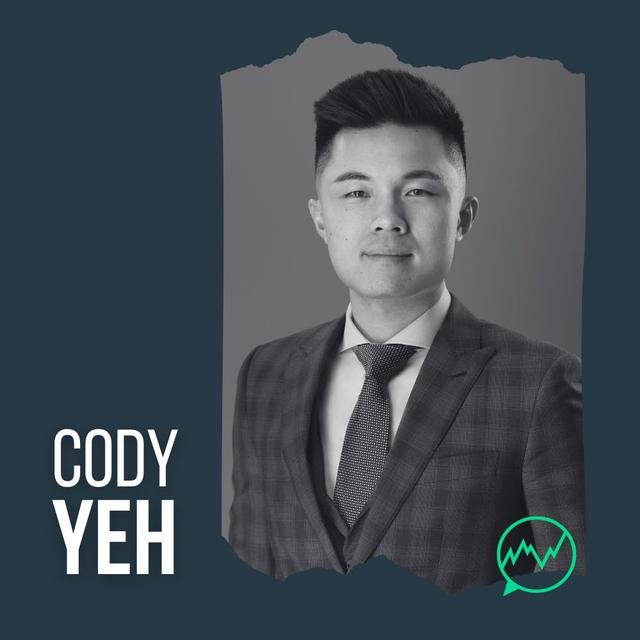
While I get us back to the main part of this episode with my co-host Ian Cox, who had the opportunity to chat with Cody Yan.
Yay!
a former engineer turned trader and investor and entrepreneur whose number one goal is always to preserve his capital first and growing it would come second. Maybe this might not sound as thrilling as you might hope, but as you listen to his story and journey into impressive double digit returns and how he describes his three main strategies which he calls it his fast, medium, and slow money, diversifying in different strategies and timelines, allocating about a third for each strategy
The practicality of it all is actually quite remarkable. Building his edge through teamwork, structure, clear rules, and consistency. His approach to the financial market is all about trading less. But earning more. Is that possible? How does he do it? Well, let's dive into the conversation now.
¶ Cody's Background And Financial Awakening
Ladies and gentlemen, we're so pleased to introduce Cody Yi from our respected neighbor to the north, Toronto, Canada.
Well, Cody, what a what a day to have an interview. Markets in turmoil. Um Vix is uh spiking. Um great time uh to do some options.
Um
Yeah.
What opening, yeah. You know, like for people who's not who's listening to this, you know, Apple dropped nine percent. you know, since January 2025, it hasn't really dropped much. So we're definitely seeing a lot of opportunity. Um I I have a lot of casting on the side. Um so I'm I have my target price set.
Some of the stocks did reach almost reach that point. So I have some limiting order to buy. But in terms of option, it's very tricky. Um, because this drop um, you know, sends the height of uh all-time height of of January, we haven't really seen any rebound. And that's usually, you know, for the last two or three drop like
It's it's been kinda like this. Usually you kinda drop and a rebound and a drop more, but last few times it was just pure drop, right? So it's kind of scary, definitely. And at the same time, you know, my team and myself, this is you know. We've seen different scenarios, but every time is kind of different. So we just had a meeting yesterday for about an hour to say, hey, how do we, you know, always learn from mistake and moving forward, but we don't really uh see a bottom yet.
Right. I would say the bottom will be when when um when all the corporation come out and announce that a recession is really here. And I think that'll be another one to two months. So I don't have to crystal ball, but uh I'll hang tight and don't over trade because who knows? It can drop to fifty two hundred S P five hundred really. Right. I don't hope we'll go there, but you know, um it's very unpredictable. So definitely tone down your your account size and don't do crazy things at this time.
Well uh uh fantastic Cody, I'd like to welcome you to uh Chat with Traders.
Thank you.
Yeah. And but before we dive into uh uh the turmoil going on in the markets, I'd love to dive into your background. Um, tell us a little bit about kind of where you grew up, what did you study in school and
Yeah, so uh I grew up in Taiwan. Uh I I'm a typical um typical kid. Uh the exception I will say I have is a little bit of uh athletic talent. So since I was a kid, I was playing a lot of sports. I have a lot of medals, trophies, all in sports. Nothing in music, nothing anything else. So
You know, there's a saying in Chinese that you're you're very uh agile, you're nymphs, but you know, you're not very developed on your brain, you know, sort of saying. So I thought it was that person. So a very easygoing, grew up in Taiwan. And, you know, at that time, you know, my family's, you know, my dad has a really good job, but he's not very good with finance. So I think growing up I have a um I was inject a lot of scarcity myself from my mom.
Um, because you know, um there's a few calls where there's margin calls. Uh call my mom and my dad need multiple six figure USD in 15 minutes. So I think my mom was very shocked by it. And I think You know, that really kinda planned the seats in a lot of what I do, try to have financial freedom, independence before I come to Canada, uh, at the age of eighteen. So yeah. Mm-hmm.
¶ Education, Canada, And Reality Check
And um so what was your family's uh attitude and and cultural attitude towards uh risk, taking risk and stock market in general?
I didn't have the best education for that, to be honest with you. Up until the age of eighteen, I was that kid, grew up in Taiwan, went to one of the best school, just study, study. I go to school at seven thirty in the morning. I leave school at nine thirty PM at night. So
Yeah.
No. There there's not much other than extracurriculum. It's all math class, this and that. There's no like read Warren Buffett's book, read Charlie Munger's uh biography. No, nothing like that. It's really until I come to Canada and then I guess the reality sets in, right? In Asia, I don't have to make any of my decisions as I go to the best school, you have the best job.
And then we all kind of know that's not the truth, right? You don't have any critical thinking. But really, when I came to Canada is when everything just kind of hit me in the face. I remember my first day. when I go uh when I went to no UFT, so University of Toronto, considered one of the best school in Canada. I went to engineering school. I remember first night I sat in my dorm, you know, I have a roommate.
Um, he's not arrived yet. I don't have I I never live on my own really. Um I don't have any pillow or bet she, so I literally just slept on the bed without any bet she. And I was thinking, but oh my God, this is for real. So if I get kicked out, I will be that kid, came from Taiwan and and spent all the parents' money and I'll crawl back there with tails between my legs. So I'm like, oh my God, I better not do that. Right. So that was like when reality really sets in for me. Right.
¶ Early Trading Journey: Stocks To Scalping
Mm-hmm. And then how did you get uh introduced to the financial markets and when did you open up your first trading account?
Yeah. Um, that was I remember second year, uh, engineer engineers, we still learn about accounting and, you know, some corporate finance. And I chose elective to really learn more about how to invest because I chose engineering not because I had passion in engineer, to be honest, was because stereotypically people from Asia are better trained in math. So I just in that top 25% percentile. And I hate writing reports, right? Because I was struggling with English.
first coming to Canada and I couldn't read a math 12 questions. So I chose engineer. And I was like, okay, engineer, if I graduated, I will get a decent job, maybe pay me 60K, maybe 80K per year. But I know that's not going to get me rich, but I'll I'll be independent. So I might, I'm trying to start learning how do people really get ahead in life, especially when they start kind of from middle class or nothing.
Right. So that's when I'm like, okay, like Warren Buffett learned from stocks. And that's when I like open my uh broker account,$1,000,$2,000 a little, but if I put in boring stocks, the bank stocks, I'm like, this is kind of boring. This is kind of boring, but uh that's how I first learned, right? Learn how to read the financial statement, balance sheets, and you know, going through
corporate finance class, but didn't really learn much besides how to derive, how does a formula of a black short formula for option work. But now that we all have computer, but back then I was the engineer, we have to derive everything. But you know, kinda help my math skills, but doesn't really help in the grand scheme of things, right?
And so you started off with kind of a buy and hold uh stocks what for the long term. Um, and did you get did you feel tempted by to get into actual trading to make more money after all, right?
Yeah, a very good question. So, you know, as a second year in university engineer, like everyone's very competitive. Right. Some of them are getting the best job at McKenzie, some of them are getting an oil job. You're like, oh my God, okay. I'm getting a manufacturing job, um, uh internship. I'm like, okay, how do I get ahead in life a little bit? I was working a lot of overtime, but I'm like, you know what?
You know, uh I I'd doing that for three years, but it's it's very boring, right? Banks, okay, three, four percent dividend, okay, sometimes it goes, sometimes it goes down, two thousand dollars, not gonna be Changing your life. Right. So really I was like trying to learn all these stuff, reading the technical, just like you know, most people who started reading these books.
And and and have all these books in in Chinese actually, not English at that time, because I was introduced to a friend. This friend uh works at the broker, one of the biggest broker in Taiwan. And You know, in Taiwan there's some room, you know, back then twenty fifteen, there's like these VIP rooms where a lot of people trade a lot of volume. They get to be in the VIP room and they can negotiate their rate. So they introduced me to this young lady, 24 years old.
Um, I I really don't know her. Uh she doesn't have a YouTube channel or anything. But then was introduced to her and she said, Well, do you wanna invest money with me? I I'm I'm kinda managing money. I might know I don't have much money, but can I learn from you? Can I pay you? And she's like, I don't take student. I mean, I don't have no time for that. But if you want to shadow me, shadow me. Right. So I was shadowing her.
Like for two years, and that's how I got dragged into day trading or really scalping the future options.
¶ Early Losses And Lessons Learned
of Taiwan, right? Kind of like the Nasdaq, so kind of like the NQ, kind of the SPX of Taiwan, right? I didn't know much what I was doing. I was purely doing technical And I was trading from from Canada. And the reason why I was doing Taiwan is because there's a 12 hour difference so that I can do it at night while holding a full-time job as a project manager. So that's how we get started for two years.
And yeah, I mean if you really wanna hear about the the sweat and tears then we can get into it but
I I think how did you do in those early years and and what did you learn um from this?
First eight months, straight up, lose money, grinding down. I have the risk management, sort of, you know, only use you know one to two percent of your capital. But I was grinding down, right? Every time the market pops. Right. And then it blows through my stop loss or something blow through my stop profit. And I wait. And, you know, all those gains are slowly getting grind down. And um, and I was telling my so-called friend coach, she's like, don't call me coach. I'm not your coach.
But I'm like, why are you making money why I'm not why am I not making money? Because I spend the same amount of time as you. Pre-market two hours, trade for two hours, I write report for two hours. She said, Well, you don't have the experience and and you know, like starting the first four months, she was losing.
Right. So, you know, back then I was just I thought I have a system. I thought technical was everything, but I didn't know how to digest all the news as of yet because I was so young, right? I was like twenty four or twenty five. I didn't know.
I don't have a life experience of when someone says something like Donald Trump right now, it might not be real. It might not be a negotiating term. Whenever they say something might actually be the opposite. They're trying to save themselves, right? So I didn't have those. wisdom back then. So I was literally just looking at technical analysis and, you know, I paid the price for it. Uh second year was a lot better. You know, uh we make 66%, but you know,$10,000, 66%. I mean
It's not life changing, right? And then I I found that as atmosphere very hard to scale. Um so you know, that kind of got me thinking is that can I do this for my whole life? Uh,'cause I was giving away a lot of my uh weekday nights, a lot of my weekends studying and you know, I had a girlfriend at that time, now my wife, but uh thank God is she's still with me, but
I just wasn't sure if I can do that for ten years, twenty, thirty until I'm eighty, right? Having that mindset of always need to be a tough athlete, kind of like driving a uh cockpit all the time, uh having eight screen. I only have two at that time, but I just don't think that's the way I want to go with my life.
¶ Transition To Sustainable Options Trading
And so did you switch into a different uh strategy on how to handle your money and where to invest?
Scalping that side was fun, but then in the meantime, I was introduced to option reading a few books. Uh uh reading about Warren Buffett's uh financial statement, I found there's one line they talk about deritative contracts. I'm like, what is that? They're making one billion, two billion dollar.
uh um per year and you know I started looking into oh Warren Buffett actually you know sold some option put options on the SPX back in 2009 and he make a lot of money on it. So I'm like, what is that? Like seems like he's on the winning side of it. And that's really when I start going to like options, you know, what is option? You know, it's a little bit more complicated than than stocks. It takes a little bit more time.
But there's more variable, but you can have more control if you know what you're doing, right? That's when I start looking to how can I spend less time. And then yield the same result, even with less results, the return, the ROI on time and stress is a lot more worth it, worth it and a lot more sustainable. Right. So that's when I start getting into options.
¶ Avoiding Leverage And Preserving Capital
Mm-hmm. Yeah. Many um um traders and investors are uh get accustomed to options from the standpoint that uh with a very limited amount of upfront investment, they can uh have high levels of leverage and make so much more money than they would if they just bought the stock. So were you seduced by by the incredible potential profits of uh buying call options and letting them rip?
It's very interesting. So early on I was never attracted to that. I don't know what's Something's different about my brain. I was never that guy that I want to hit big, um, but I was that guy that how how does the rich people keep their money? Because You know, I'm an engineer. My background in math keep telling me, Cody, if you make a hundred percent. you lose fifty percent of it. Next year you need to use this the remaining fifty fifty dollar.
And to even come back to the$100, you need to make 100% now. So I'm like, the math doesn't work that way. It's not all always about go, go, go. And you know, I start seeing a lot of people, you know, kind of having a quick success with blow up their account because they have that gambling mentality.
All right. So early on I keep telling myself and reading all these books is like these rich people don't really buy options. They actually sell options. A lot of them, whether that's scalping, whether that's wanting to own something they want to own for a cheaper price. or just getting into something they want for the for a cheaper price, right? So
That's what I'd drawn to. And you know, most of the time when I buy calls, right? I bought some leaps, you know, uh in twenty twenty one as well. Um those were actually I thought it was
You know what? I what could be wrong in two, three years? And guess what? This and all the stocks, most of the stocks I bought literally went down in twenty twenty one and come back in twenty twenty three. So And you know, definitely, you know, uh a lot of wounds there, but it's a small percentage of my account that I allocate to buy option, but most of them are more. selling and and just holding stocks for ETF and and had been doing, treating me quite well actually.
Have you ever watched a stock explode and thought, if only I had the capital, or sat on the sidelines because your account balance felt too small to matter? Good news. With Trade the Pool's limited risk platform, you don't need millions or even thousands to start trading the US stock market. Bypass the PDT and tap into over twelve thousand US listed equities. From penny stocks to big caps, ETFs, even the newest IPOs, and short anything you like, with zero locate or hard to borrow fees.
Start your evaluation. Get funded with up to$200,000 in buying power so you can go big without risking your own savings. And now you can also have unlimited time to reach the profit target. It's a game changer. Not ready to trade yet? Trade the Pool offers a free demo and educational resources. Practice on live data, master the platform, and build confidence risk-free before you even pay a cent. Click the link in the show notes to start trading with Trade the Pool's capital.
¶ Core Strategies: Fast, Medium, Slow Money
So you uh opted for more of the income strategy from options, um, kind of a high probability plays. Is that what you're shooting for?
Yeah, high probability plays, you know, we uh what I call the worn buffer cash flow strategy really just you know sell selling options on on selling put options on individual stocks And I get to own it for a cheaper price, you know, I can pay, you know, the cash flow, which is what we call the premium, right? And then I get to own the stocks I want to own for a cheaper price. And if I do get to own at a cheaper price, I have a downside buffer.
Right. And now I can turn around and sell some cover call as a, you know, at a higher price or agree to sell a higher price. and get more um cash flow in the meantime and just wait for the stocks to to go up or some of the stocks I I've I really want to hold for long term. I never want to give it away then I just Hold on to it. Right. And because the whole idea is that I gotta have for me is I call it the fast, medium, and slow money.
I talk about the T D bank interview as well, is that, you know, there's inherently different strategy, differ different strategy, different timeline. I want strategy with different timeline. our said and done strategy is more fast, you know, like like you know, one to two month cycle. And then, you know, our our Warren Buffett um Cash flow strategy, selling options on individual stocks is more like a few months. Sometimes you can get stuck for a few years.
if the saw price keep getting depressed, right? And the buy and hole, you know, has been doing pretty well for the last two years. Usually it's kind of five, ten, maybe twenty percent. But last year was exceptionally well. And this year actually our selling option portfolio is doing a lot better because buy and holds is hurting, right? So
I always have different timeline and just allocate one third, one third, one third. So anytime I feel a lot more prepared and I feel I can maneuver the market a lot better.
¶ Passive Income Misconceptions And Team Support
Uh what do you believe are the biggest misconceptions new traders have about generating passive income through options?
That's such a good question. Um like uh just just k give people a a whole breakdown, right? Back then I was doing it by myself. I was, you know, having a full-time job. And I also study a lot at night, like six hour per night, whether studying the market, books and all that. And I slowly grow into have a team. At one point my team was 10 people.
Right. I have some coaches, I have some analysts, and they're my past client. I picked the best out of them, become my coaches, analysts because we're thinking about launching a hedge fund in one to two years. Right. So with the amount of resource we have. The reason why I could be more passive is because my team is doing the work for me and doing the work for my client. But if I'm doing all this on my own,
Right. Unless I have to support certain community that I trust or have a basic understanding. It's not going to be so passive. Today I was looking at my buying whole strategy because I have multiple six figure. I'm look looking at deploying. Right. I was looking at the target price. I look at a clock again, oh my God, that cost me three hours. I only analyzed five stocks, right? I was checking it, okay, history, it dropped this much. It's it's it it's not passive, right? You know.
Why why's that? Did you get s uh uh swept up into the emotions of the market watching the uh the chart move um and the time disappeared on you or or?
Oh no, it's actually like this morning I was looking at my buy and hold strategy, right? Because my team is imagining more about the more active strategy, like the warm buffer strategy and our set and done. And for my personal side, this is my personal account, more buy and hold. I'm like, okay, you have these.
capital I want to deploy. I've been waiting for this moment. Right. So I'm looking at okay, what are some good stocks I can buy? Right. I don't know if you want me to share some ticker. I I'm I I'm never that guy to pump and dump anything. The anything I buy, I can't pump and dump anyway. But just looking at it and mean and then looking at Is that a good investment in the long term? For example, I look at the last five years in terms of
their net income, their their return equity is that solid. Has it been only growing 20% per year, but the stop price 10x? Those are I'm like, okay, I I I need to wait a bit longer. I I rather miss out that than be part of that because there's more chance of a pullback. But if it's been growing pretty good, but then get beat up because of certain reason, then those are the companies I'm looking for. So to we through that.
Right. I don't know if AI can do those shots, but that's what cost me a lot of time and think objectively. And most of the time when I can think objectively is when I don't have too much exposure in that stock yet. And that's when you're the most objective. Right. So that's why I spend quite some time and my team do more of the the option day to day supporting a client, you know, the market dropped today. Of course, there's some client panicking.
Right. Oh my God. Right. Hey, we already have planning. Remember it draw hundred, two hundred. This is what we're gonna do. Right. Neutral strategy. They handle that side thing, but I handle more of the strategy on long-term stuff. Right. And that's that's kind of what I handle now.
¶ Macro Events And Political Influence
I'm sure some of the bears are arguing now that uh we're in a whole new realm uh with the trade wars uh that d haven't occurred in the past. or at least any time during our lifetime, uh, and that the um looking at past fundamentals don't really matter right now because we don't know our company's gonna be able to give future guidance. And just w what's your take on that?
I mean, isn't that the same thing when COVID happened? They kind of say the same thing? Oh, this is a new world, you know, what's COVID gonna take us? There's no guidelines, companies that we don't know where is guiding, but every time that happened, Humanity always find out a way. And this time is is really if you really look at it, it's just really one man's action. And this man, we all know who it is.
Yeah.
pretty much, you know, overpowering, you know, the Feds, the F O MC, anything else. It's just one person, right? And I I talk about this in in in my new YouTube channel called USA Update. I think he has a four-year plan, right? People can call it conspiracy theory or whatever. But I think this first year, I I call that a month ago, he's trying to reset the market because we had a really good two years and uh, you know, before he came into office.
All right. And he's trying to resign the first year because he wanna he keep asking the Feds to drop the rate. But the Fed says, I look at all these data. Job markets, good. Inflation's not too bad. Why do we need to drop the rate? Right. Meanwhile, you know, the president is like, we want to drop the rate. We want to drop the rate. He's like, okay, you're if you're not giving it to me, I will force.
Right. So he's kind of forcing it in my opinion. So first year is kind of like a reset of every market. And then second year will be, you know, kind of like it finally start dropping the race. So we're gonna start seeing that rebound, right? I don't think rebound be going to second year. I think first year already starts seeing the stocks going back up. But I think the second year
going to first year and the second year is of the presidency, you know, will be start dropping the rate. And in third and fourth year, he will line up perfectly for a really good rebound. He can say, you know what, guys, I told you So that was my kind of uh conviction or you can call it conspiracy theory for the next four years. So that's why I'm not very, you know.
not very worry about it. It just more manufacture. And manufacture if you look at all the other data has been doing pretty well. Yeah, there's some, you know, trading deficit from US, but that's been happening, you know, over the years. So he really in my opinion, his true agenda is really trying to reset it in every way possible. Market reset, business reset, everything reset.
And then now then he has a lot more room to grow instead of like trying to carry that no momentum, no new money at all going to the market. Right. So that's my take on it.
¶ Trading Efficiency: 30 Minutes Per Week
Yeah. Right, right. Uh in your videos you've discussed uh about getting results with just thirty minutes a day of trading. Uh what does that time typically look like in practice and what's being done during that 30 minutes?
Yeah, like uh like I said early on was a more special day because market dropped. Even my wife was messaging me. Cody, is there anything I can buy? So that's when you know the market is really panicking, right? He's like, I have cash, I have cash. So but typically a th it's actually not 30 minutes per day because I have to team supports 30 minutes per week for me.
Right. The last trade we put on was yeah, it's actually per week. The last trade our team put on in the option, our set and done strategy, was actually two and a half weeks ago. I was on show actually on March 17. We're filming this on April the third. So, like sometimes I don't want to say it's 30 minutes for three weeks for the people, are you crazy? Are you buying holding? But a lot of time is.
When you're selling option, you have a big room for margin of error because we're, you know, we're selling option and then our strike price really far away. We have a lot of room for error and time is on our side. Every day that goes by. you know if the market don't move we're making money right so uh we have a lot of uh luxury on that side so typical day for me um to be honest since i have the team supporting they give me all the daily news giving to my client i see the same thing
Right. I like at this point with years of training, I I don't even need to see the drawing points. A lot of times I will look at okay, what's a first standard deviation, second standard deviation, things like that. I'm gonna look at it, be like, okay, we're within safety zone. Okay, cool.
I don't need to do much of it. But when the market dropped today, uh the thing is okay, is our position okay? Do we need to adjust a little bit? Or is there opportunity? Right? Because you know, anyone who has cash on a sideline today can be a good day to kind of You know, sell some put option, things like that. Right. But there there could be more downside, more neutral to bearish right now. But hey.
If if you can maneuver well even when the volatility index do crash tomorrow or after three days, you're gonna make a handsome, handsome sum if you, you know, if you use the right strategy. Right. So those are the kind of opportunity like is our position okay? Any central thesis change for the last, you know, every week have a meeting with our analyst as well. No change, okay.
I guess let Theta do his thing then. Then I go go work out and I go, you know, build my other business and and and you know talk to my property manager. And all that stuff, right? So don't don't try to overdo things. It's uh overdoing is not making you more money and it's actually
Making the brokers rich, right? So, you know, um, so that that just my years of learning and and pain, sweat and tears. But in the beginning, yeah, of course I'm like, oh my God, okay, every day learning new things. Okay, that could happen. Right. So anyone who's coming into the market now is like, holy cow, like this is crazy. Right. But um but you still gonna, you know. Be a little bit more composed.
¶ Set-And-Done Strategy: ES Spreads
Right, right, right. So uh break us down, uh break it down for us, kind of your core option strategy. Uh what are you doing mostly of? What type of uh positions?
So our sun and done strategy, which is um I would call it more active, like 30 minutes per week, we're selling. Bulp spreads or bare call spreads on the SP 500 future option. So the ticker is called ES, right? So we basically we are really far away with the bullet spread, bear call spreads, and then we cap the we cap the risk.
Right. And we know our what maximum how much we could get paid because with spreads you cap your profit, but you know the most of your downside. Right. And we're very far away in terms of You know, if people are listening to this, understand what Delta is. We're really far away with Delta. We're really far away for our stripe price. And you know, we're just targeting.
W what does that mean far away? Like give us an example.
For example, if if uh ES was a 6100, our position was our bulpus spread uh uh strike price was around 55.
So around ten percent. Does that sound right? Yeah, or
Yeah. Well it depends. If the VIX is higher we can go further out, right? But you know, typically a lot further out'cause the chance of, you know, S P five hundred drop ten percent. maybe happen one to two years, one to two times, you know, one to two times every one to three years. Right. The last time it kind of happened like that, well, I guess now we've seen one. Right. But it's not even within a month. Right. So we can get away with a lot of things even when we're wrong.
We still write because time is on our side. So we want that. So we want more safety, right? We're not targeting anything crazy, maybe 10, 20% per year. And that's kind of what we're targeting. Sometimes higher, sometimes less. But that's our Cash flow, like a true cash flow, like income replacing strategy, right? The most more active, but we don't need to pick any ticker. We don't have to do any stock analysis, really just macro news.
And what's the technical doing? And we study the institutional money and make sense and thinking when they're doing this, why are they doing this? And we track, you know, other stuff, you know, institutional level stuff, right? As much as we can get out.
¶ Warren Buffett Cash Flow And Buy-And-Hold
And that's our set and done strategy. And then the other strategy is really I just want to hold stocks at a cheaper price. So I go sell put options on individual stocks or even on ETF, where I get paid premium up front. And I truly want to own it. But if I don't get to own it because the store price didn't drop enough, so be it. I rinse and repeat.
Right. So that's our like Warren Buffett strategy. Right. And then of course I have my buy and hold, another one third of my portfolio, which is buy and hold. And those are kind of like, you know, any gas stocks get beat up. Right. I'm watching a few stocks right now very close to my target price, then I would just start loading up on that. And I I know that sometimes selling options might not cash the movement. So I go buy with cash. I'm not selling any option. Right.
¶ Risk Management And Buffers
So in in uh on the subject of risk management, uh, do you use any kind of risk management or is it built into how you structure your option strategies?
Yes, very good question. So in terms of buy and hold, as I'm coming by Warren Buffett, unless something about the stock fundamentally changed. I will not get off because, you know, even in 2009, nothing really changed for most of the stock, but it dropped most stocks dropped 50 to 80%. Right. So it was actually a good time to buy more instead of just cutting the losses and all.
So by and hold, I don't do so much of risk management. But in terms of option, yeah, I mean for for the Warren Buffett cash flow strategy, first of all, you got to do your fundamental analysis, really make sure, you know, as for example, the P ratio is not out of whack. Or companies have only been growing 20% per year, but the last few years, the stock 10X, those are the things I'm like, I'm not even touching it. Um, you know, I like to catch it early on things so the risk is lower.
But if I catch a one of the and drop, you know, twenty, thirty percent, and like I make a mistake, yeah, I'll take losses. But then I have to balance that off, right? That doesn't happen happen very often, maybe five percent of the time. Like so, okay, I still you know, bite the bullet five percent of times okay. Now with our set and done strategy then because it's you know
There's a active more active trading of 30 minutes going on. We have to, you know, with market like this, we have to adjust it more frequently. But the market's been doing really well in 2022, 2023, 2024. We don't have to do And we actually double the return of SP 500 with 30 minutes per week. But this kind of market
It's because it's so volatile. Everything's just fly everywhere. Right. Now we're spending the most time on on our set and done strategy. And buying holders either they're already down or hey, there's cash I can buy more. I'll make sure our portfolio sizing is fine. You know, I don't put too much money in one stock, right? But I don't I don't have more than 10 stocks in my portfolio. So
Um, in your videos you've uh mentioned about uh leaving a good buffer in your trades. Can you define this uh for us and have you found an optimum level? Uh and does it vary with volatility?
¶ Volatility And Probability In Options
Oh yeah, very good question. Leaving a good buffer. So buffer means different things for everyone. Some people might think buffer means higher price, very bullish, right? But to me, like my whole team, or especially because, you know, I come from engineering background and now have a little bit more asset than 10 years ago.
Right. So for me it's more about protecting what I have. So preserving capital is the number one goal. Continue to grow it while outpacing the market is secondary, in my opinion. Right. So when we say we leave a buffer, there's many ways. For example, I don't go for stocks that like a set. 10x over the last three years, meanwhile, growth only 30. But everyone talking about okay, those are out of this out of the way, right? That's like
risk management slash buffer that we use. But once before I think about okay, actual option trade buffer, yeah, I mean, when whenever the stock or the target ticker pull back, the more it pull back, Okay, the more it pull back, the less likely it will pull back more. Whereas most people think that whenever the stock come back, oh my god, the company is going bankrupt, it's going to zero. So people usually think that way, oh, if it dropped 20%, oh my god, it would drop 40%.
No, no, no.
If it drop 20%, that means there's less likely to drop it to 30% if it's a good stock, if it's SP 500. But if it's going up like this, oh my God, I'm like sweating. I'm like, when's that pullback and it right so when it's kept going up my buffer is actually further but when it started dropping more my buffer is actually smaller and this is when we make a lot of money because like you said the volatility goes up
but it's less likely to drop more. But you know, sometimes when we're more careful, neutral and bearish, I'm like, hey, I still keep the same buffer, for example, further away. From the money, right? From the stock price right now. But we can make the same amount of money, if not more, because of the high volatility. So To me is like same buffer or even more buffer. Now I can high instead of 10% away, I can high 15% away.
So you're
Percentage, right?
Right, right. So you're talking about uh yeah, instead of selling an option uh ten percent out of the money, maybe you go fifteen or twenty and you feel comfortable with that because the VIX is higher and volatility is higher and so you could be getting the same premium that you were at just a ten percent. Uh so you're encouraged by a um by a big drop because now you can um set your put options even m wider, even further away from the current price. Is that accurate?
Exactly. And also in terms of probability. And like I said, most people think if market dropped 20%, it would drop to 40%. But actually in terms of probability, if the stock already dropped 20%, it's less likely. to drop another twenty percent comparing to stay here would go up. Does it kind of make sense to you, Ian?
Yeah, yeah. So but a lot of people would say, Well, over what time frame, right?'Cause um many stocks uh can have slow kind of grinding um you know, bare trends that uh, you know, it drops twenty percent. Yeah, then it has a rally and a relief rally and you think everything's out of the woods. But then over the
m many months uh in the future it starts to grind down again. So um what kind of timeframe are you looking at um on selling these put options for um for income or to acquire the stock at a cheaper price.
Yeah, usually I'll say anywhere between uh two weeks to six weeks. Usually that's what I'm looking at. Sometimes it go up to two months. Right. Um, but like right now the market's moving a bit faster, so we adjust our expiration day shorter because we want to capitalize more on uh on the on the theta of the decay time decay. So we're adjusting to it, but typically you want to drag it out a bit longer.
Right. And um not just, you know, we make less return and we drag out longer, but we sweat less and we're less. uh sensitive to any of the market movement. But right now it's just very move too fast. I don't wanna sell it too far out and everything change. Right. So we're we're shortening our expiration date right now because of that. If that
Um when volatil when implied volatility is really high and and thus pushing up the option premiums, making them very juicy. Um wouldn't you want to lock in kind of long term uh prices by going out many, many months? Uh, because it's like, oh, this is a rare opportunity. I can lock in, they say, the next six months. At these high option premiums and then I don't have to do anything.
¶ Adaptability And Warren Buffett's Long Plays
Yeah, you you could, you could. But for a sun and done strategy when we're doing spreads, right, we don't want to do that because. What if it dropped another 10% more and it continued to stay there? And, you know, our active management strategy in terms of what are we going to adjust to position, what are we going to roll the position and all that? We're very limited on that side of things. Right. So, you know, we can drag it out on that side. Like for the Wimper.
you know, selling option strategy and a buy and hold, you know, yeah, drag it out was a good idea, right? Even Warren Buffett did it, right? 2009, he signed a 10-year contract selling and put options on the SPX. He made tons of money and say, I bet in 10 years SPX won't be
Wow, that's a really long
That's yeah, yeah. Google it up. He he went in, you know, big banks and did a you know, I wouldn't call it under the table, but do a private deal, right? Bet against the big banks. The big banks and say, You want to take that? Yeah. So he took that we couldn't do that, right? For most leaps or anything, we can go only go two, three years out, but because of his assets, he can do ten years.
Right. So we could do that for a more long or medium term, like selling put. I would, I don't mind doing it. But then for our more you know set and done strategy that's cash flowing, cash flowing really, I I'm hesitant to do that because of the reason I mentioned above, less adjustability. Right. And then um, yeah. Because of there's other reasons or other variables. You probably know what I'm talking about. There's other variables that will lock you in and be like, ah.
Right, right, right. Um, your strategy seems to fit those who already have money. Um, for those needing to trade for a living, uh, for income. Um, this would this work well?
¶ Ideal Client Profile And Sustainable Growth
No, I'm not the guy.
Well, you're not the same. Yeah.
I'll say
A a lot of my clients who are attracted to me or a lot of my friends who are attracted to me already have more than a hundred thousand dollar net worth. Right. And they might start with a smaller account, right? 30, 50K, but they can scale of the capital faster, right? But I I don't have a lot of clients that say, hey, this is my last$10,000 Cody. I need to flip it to$100,000. Can you do it for me? I'm like.
Uh, first of all, whether I could do it for you or not, I don't think the time frame is right. And I don't think your mindset is right. So I'm not the right person. I don't want to bring that stress onto my team or myself to do that because no one can promise that. But if you're like, hey, Cody have one million. Can we grow at single digit per year or at least protect my capital? Just kind of living a life you're living, traveling everywhere, right, to 12 country in 2024.
Yeah, I can help those people because there's a lot less stress and it's actually what I'm doing, right? So I'm not actually scalping in the market. I'm always trying to say, how do we dodge? all these volatility events, right? All these liberation there. Like, can we really close most of our trades before this day? Right. Like what's the next one? I'm literally literally tracking like Donald Trump's Twitter.
Anything is like, is that real? Is that not real? Did he give a day? Is there anything structured that we can dodge? If it is, close our position. few days ahead of that ride through it right nothing don't write to have any position through it right that's kind of like we have to adapt with what we have but usually when Donald Trump is not there then you know it's more
structure, right? F OMC meeting, uh CPI, PPI, this and that. But when Donald Trump comes in, he's just like, you know, swaying everything around. Mm-hmm.
Mm. Um, how much do annualized option yields vary depending on the volatility ranges and whether it's an ETF or a big cap stock or even a smaller cap stock?'Cause I've noticed there's a um A big difference depending on Which stock or ETF you choose.
Very good question. I I I gonna be straight up with you. I don't trade small cap. Uh most of the companies I ever touched is 20 billion plus. That was uh the rule I set in 2020. Now, you know, with all the available money, maybe 40 bill, 50 bill, maybe 100 bill now, right? Only the biggest blue chip I'll touch. Right. So Like like if you like if you look at high volatility stuff.
You can look at four percent per month, but it's not guaranteed per month because market can go up and down. Sometimes the you know stock goes down, right? And you know, for less volatile, even just SP 500, if you go sell put, you make maybe six percent. If that every year, right? Running those strategy on it, right? So you know, anywhere between single digit to fifty percent per year. But if you go like smaller cap.
High volatility, so I can go 100% or more, but how sustainable is that? Right. The more percentage you go, the less sustainable it is just based on probability-wise. So how do you stack those probability? Right. So I hope I don't confuse people, but Really, I stick to the higher probability trade. I always focus on how do I preserve capital? How can I be less wrong? If I'm wrong, it's a small percentage of my portfolio. So it doesn't impact the overall growth.
And as long as I'm beating the market by a little bit, I'm beating 95% of the fund managers out there. But even if I am shy of a little bit in a few years, even if the market is down 10% right now, like our set-and-down strategy is actually break even. So I'm very proud already. We're break-even. My friends are like, did you dodge it? And we're like, no, we didn't dodge it. We still have 25% position going into it. But because because we're maneuvering.
Right. So we're already at break-even. Right. So you know, but for a buy and hold, yeah, of course, since all time high has down 10%, someone's down 20%. Right. That's why I'm putting in more money. Right. So there's always pros and cons, but I really think the people who are focusing on
return uh Cody, I want more than 20%, 40% return. I'm just not the guy per per year. I'm not the guy. I don't want to s sell false hope. I I don't want that kind of liability or or responsibility. But if you're like more boring person, you have bigger amount of money, multiple six figure, then you know, I could potentially, you know, be that person to help you if, you know making sure you're doing the right thing if this is what you want, right? So
¶ Strategy Performance Across Market Cycles
Mm-hmm. So over the years, uh, both in the kind of the the bull years and in the not so bull bullish years, like say twenty twenty two, um, kind of what's been your performance? Um uh for your different strategies and and when does each strategy shine and when is it weak?
Very good question. Um, very cause I get asked that a lot and I track it a lot. That's why I have three strategies said and done, and then the worn buffet cash flow and then buy and hole. Buy and hold last two year. Right. Since the drop of the beginning of 2022, right? Kind of went flat for a year and started going up. So 2023, 2024, anyone is like, ah, Cody, why do you guys do option strategy? My buy and holds up 30%. I'm like, yeah, my is up fit.
But that doesn't mean anything. Right. So for the last two years, you know, it's it's been like that, right? You know, I don't have anything fancy, even if you just have Q, Q, Q, whatever, you know, it's up a little Right. But then during the flat year of like twenty twenty one, like twenty twenty one at the end and kind of dropped down to twenty twenty two to twenty twenty three is actually kind of flat going to first half of twenty twenty three.
our selling done strategy was thirty six percent. I share that with all my clients and all that per year. Right. So that's when it's shy. So flat market with a bit downward trend. Selling option strategy will work better, assuming you don't panic, do anything crazy, and you know what you're doing. But on the crazy up market, selling option strategy will last. the market will lack the benchmark because
The VIX is a lot lower and we're not we're not like chasing it. We're not like, oh my God, it's going up. So let's go closer to it. Let's go more aggressive on Delta. Like we're not, we're actually staying more away. Is that when is that drop happening? When a drop happening, that's the only time we kind of go in and be more aggressive. So on the up year, like spread like gradually up we have a chance of beating the kind of benchmarking, but on the sh more than like 30 degree.
It's hard for us to catch it. So that buy and hold will catch that. One third of our portfolio catch it, right? But I'm doing the flat or downward year, right? Or just like neutral year. That's where 60 to 70% of the time. Right. That's more like range balance slightly going up, then we'll catch that with our option strategy. So hope that answers your question.
¶ VIX Impact On Option Premiums
Right. Uh so with the VIX now at uh thirty, does that mean that selling put will generate twice the um the yield that it did when the VIX was at fifteen.
This is actually more than twice.
Oh it's more than twice. Oh
It's more than twice. Yeah. Um Yeah. I don't want to, you know, I I'm an engineer. I'm a math geek. I look at all these based on numbers. I don't have feelings for it. Like right now, make money, lose money. I don't have feeling for it. But yeah, when we study really into how does, you know, there's three things, right? Vic? And there's the individual stock implied volatility. Right. And then, you know, there's the stock price and all that. But when VIX really
Doubling, right? Amount of premium. It's not just double. It's actually more than double. When they go from 15 to 30 to 60, you think it's 4x, but it's actually more than 4x. Right. Because there's, you know, I don't want to bore people. There's that gamma thing going on. There's that excla acceleration.
move. So it's actually more. So that's why it gives us more chance and say, hey, either if we want to do the same expiration day st strike price or can we go more, you know, be more conservative. We can make the same amount. Right. So that's a decision and someone could
can make right so not just my observation you know but and that there's a lot more variables people are like I go to you wrong because I did this because we're talking multiple ver variable but if we're just talking about straight up vexed difference yeah that's what our observation
Um so uh when open when looking at options, I noticed that uh for the different strike prices, they have the probability of being um out of the money. Uh and one can look at that, you know, say, oh, as a per you know, 70% chance of being out of the money. I should be safe when I sell this option and I have a 70% chance. But doesn't that probability change on a daily basis depending on the volatility itself? uh its own implied volatility.
¶ Beyond Delta: Real Probability And Market Anomalies
Yeah, we we open uh Ian, very good question. We ordered a we open a can of worm. Um If Delta because I'm assuming you're talking about Delta, right? Yeah. If Delta is the holy grail, AI will take over our job already. But because because Delta is just one thing. People I have they're just trace straight from Delta, you're very they're very very mechanical. It's like Cody, I open trade today, I close tomorrow, I open trade today, I close today, whatever.
But a lot of time they forget to look at there's Black Swan event, there's Donald Trump event, there's FOMC event. There's a lot of variables out there that was screwed. screw those 75% within the day, right? The moment it started getting closer to to your your your stop price or your strike price, all of a sudden Delta is like, oh my God, like Cody, like it dropped really fast. And then when below is like, okay, Cody now is one to one now. Like what's going on?
Right. So like I don't think probability could be looked that way, but there's no formula you can calculate a black short is just a a very rigid formula that kind of tells you, but that's not the real probability. That's why our team are always looking at how do we Dodge some of the event. We're okay leaving a little bit of money on the table. We look at, for example, the Liberation Day. I was telling my team.
Liberation Day. Okay, more upside with downside. Everyone's like downside. Exactly. So if we have bullport spread, can we close some of it? Only leave 25%. You're like, yeah, it kind of makes sense. Because what's the chance that will go up? Is Donald Trump gonna say, I have mercy for you guys, but he's like gonna do something innovative that shock everyone anyway.
Right. So the chance of the upside we're even staying still, it's so low. So we actually should have some bigger call spread, more bearish position, not too much, more neutral and less bullish position. So that's the way we position. Right. We have a little bit of bias just based on not just based on technical, not based on just delta, be like. Based on what Donald Trump is going to do and how people is going to think, react to
Right. So that's kind of like how do you quantify that? I don't know. Like do we go from seventy-five percent now to maybe sixty-five because it's more likely to drop? I I don't know how to quantify that, but we adjust that based on our capital exposure, right? We have our limitation in any situation, but all we could do is just we just expose less. How's that? If we miss out, we miss out less. Then what's that? We miss out, fine. Everything's good now. Okay. We can put on more but
Right. So we're not trying to maximize on it, but I I can't answer that probability question. Right. The if anyone thinks the market is efficient. They shouldn't be following me. I just don't think, you know, uh if if math is a thing that you can win. All these PhD or all these AI were be dominating the market already, right? But it's it's not, right? Why is the old warm buffet still
beating everybody with his old brain, man, everything's manual and still winning. And there's gotta be, you know, more than that, right?
Yeah.
Excuse the last interruption here. This is Tessa. We hope you're enjoying this episode so far. If you love the podcast, Please give Chatwith Traders the best review you can on whatever platform you're listening from. This will help us to keep the episodes coming. Also, if you haven't subscribed to our email list, please hop on to chatwithraders.com and click on subscribe. so we can keep you posted of information that may be of importance. Thank you. Now back to the chat with our guests.
I I see. So during the the meme stock craze in twenty twenty one when uh implied volatility is not just on these meme stocks, but seemingly just about every stock shot through the roof. Um d did you play, did you uh take advantage of any of that? And if so, what kind of um positions did you uh did you put on to take advantage of those really high volatility?
No, I I didn't take advantage. I was uh I was writing up very happily. Uh so twenty I go into first half of twenty twenty two. That's Yeah, I was hit too, right? Because of of the the the good growth stock were or or the back growth stock were pulling back, right? Some of them I I really have to cut losses as well, right? Just full transparency. Like I, you know, at that time I didn't have enough cash because at that time we're writing off 2022. We're like, okay, this is gonna be good.
Who knows they're gonna raise the rate, you know, in the beginning of 2022, right? And then really shock the market that way. And my real estate, same thing. Like my real I have real estate too. So it was actually taking a hit in terms of price. I'm from Toronto, Canada. Right right now it's dropped 30% since all time high, you know, average wise across the major.
That that much for real estate.
Yeah, yeah, yeah, yeah, wow. So yeah, our our our that's for example our single family home in our core city. Right now this it's the same price as 2017. So I can go I because I look at all those transactions, I'm like, I can go buy the same house in twenty seventeen and they renovated too. Wow.
But you know, so you see a lot of that, right? So like a lot of people think, ah, Cody, what do you do to take advantage of it? I'm like, if I say I'm not gonna touch meme stuff, I'm not gonna touch meme stuff. I will continue focusing on doing the right thing, even if During certain months or a year, I lose money because I know I make money long term, but I do not adjust.
out of my rules and say, hey, I think this is a way I can pull a fast one. I can make money just for the short term. I I don't do that. I rather missed it. I get laughed at then long-term people like Cody, what do you do? Now you jump from meme stock to gold stock to crypto. I'm no, I'm I'm just a stock option guy on SP 500 blue chip. I'm that only guy. I'm boring, but that's how I seen the rich people continue to get richer.
But whereas all the other trade retail traders, you you you know, all these influencer if you look at them like this year they're talking about crypto, next year they're talking about gold, the mining stock. Then I don't know, gold e-commerce now dropshipping, like I'm like Dude, does that mean does nothing work? Right. But you have to like sit through those years that are not doing well if you have such a strong conviction about your stuff, right? Or do
Could you go through?
¶ Trading Philosophy: Rules, Research, And Giants
Yeah, could you share a little bit of uh what are your kind of your core rules if you have them?
Yeah, core rules. Um, like I said, company less than 20 billion, really now is like 50 billion market capital. I don't I don't care how good it is. Um and any any stocks as OTC definitely don't touch. Um yeah. So like I really like I said, I really try to like
rule out a lot of things. So there's only a small basket of things I can touch. And a lot of time I what I like to do is uh instead of me doing research on this company thing, have a better knowledge. No, I just look at the most well-known investor. Right, Warren Buffett. Like beginning of today, before this call, I was actually the reason why I spent three hours, I was looking at um Singaporean.
uh Singapore GI C fund. They're GI C fund. So they have three funds. They're, you know, like kind of like their pension fund right like Canada pension fund us don't have one donald trump is trying to start one right their their their pension fund overall is they're making f you know three to five percent per year true return but i was trying to look at
How they break down the portfolio and what are the heaviest holding? Because if they're heaviest holding means that they have the strongest conviction. So I like to start with, like I said, Warren Buff is top 10 holding, Charlie Munger's top 10 holding, Bill Gay's top 10 holding, Jeff Bezos top 10 holding, Elon Musk's top 10 holding. And say, okay, yeah, those companies don't work. No, no, don't fit my criteria. Okay, I only have 10 left. Okay, that's only 10 I can look at.
I like to look at from that standpoint so that everyone do their work for me and I pick, I in my opinion, I pick the best out of the best to sell options. If I'm wrong, chances are a lot lower than thinking I have the resource. I have the vision that these people don't see. I'm like, what's the chance of that? Right. So I really just trying to stand on John's shoulder. And my clients stand on.
Giant shoulder, giant shoulder, right? So um I want to stack all the odds in my favor, and I don't want to do more work. I try to do less work. and if less work makes me more money and give me a better lifestyle, I'm I'm happy with it.
¶ Rejecting Leverage And Broker Incentives
So I noticed when uh I look to put on a trade, um, for example, shorting puts, uh, and the amount of buying power required to short the puts is almost always considerably less than the all in cash required for acquiring the shares. Do you use this additional leverage for some of your positions?
Never.
Okay.
For a sign and done strategy, we don't even deploy more than 50% of our capital. For example, if you have$100,000, I never I we calculate in a way, for example, the the maximum amount of loss between our spreads. we don't use more than 50% of our capital. So that way if market drops 30% like COVID, we're never going to get margin calls.
Right. And a lot of time it's zero to fifty percent. And with that, we're still targeting, you know, like 10, 20% per year. So I mean, what else? Cause I like I don't want to fly so close to the sun. Right. That's the way I look at it. Right. And, you know, if we take a step back, you say, Cody, I I was asking you just about selling options, your one buffet strategy, selling put options that I want uh to own a stocks I want to own at a cheaper price.
That's still, I don't. Um like the your broker will give you to use the ability to use three times of your cash money. Doesn't mean you should use it. All right. So really sit on that it's kind of like, you know, I don't I don't know how to put this, right? Like broker has a different agenda than you. They want you to trade. They want you to take action. They want you to day trade. They want you to second trade almost. Not day trade. They want you to hour trade, minute trade.
Secondary. The more transaction, the better. So how do we how do we do that? That's why in casino give you a chip. You don't feel the money. They give you a chip. They give you a credit card to try to distend yourself from that feeling of money. But that is when you it's kind of you go to a casino. Okay, I'm a billion, I'm a millionaire, but I only gonna spend$100 today. Everyone's laughing at me. I'm like, Cody, come on.
A thousand. I'm like, no, it's just a hundred. I know I gotta lose it. It's for fun. So and I can tip really well. So everyone's happy. Hey, Delay, if I make money, I'll always tip you, right? So like you gotta have those mindsets, what is that limitation? If you only have a hundred thousand dollar, that's the maximum you will use. I don't use leverage because leverage is a double-edged sword. You're laughing, you think you're genius when the market goes up.
But whenever the market turns, you're the first one to go. Right. So I was actually looking at, you know, like some wealthy people, they suggested me to look at, you know, asset baseline. Right, security baseline. For example, if I own, let's say, you know, a hundred thousand dollar Microsoft, they will go two to one to lend me fifty thousand out. But then when I re-all the fine print, they're like, oh, by the way.
It's just like margin call. If it goes down more than fifty percent, we're gonna call you better have money in one day. Or we're gonna sell it at your zero, your zero out. I'm like, hold up, Microsoft. Okay, last time I went there, holy cow, in two thousand, it took them 13 years to come back, holy cow, and drop 1 in 50%.
Okay, what's the chance of that happening? Low, but who knows? So anytime I see those kind of probability happening, I'm not looking at how much more money I can make. What's the point of doubling your$100 to$200,$200 to$400, but then all of a sudden you lose.
Ninety percent of
You lose ninety percent of four hundred, you back down to forty dollar. That's less than a hundred dollar when you started, right? So I don't want that. So I hope people can learn from From this kind of thinking is like what's the worst case if there's a chance, you know, kind of like what Charlie Munger said, right? If you know how you're gonna die, just don't go there.
And I I even chat GPT asked, does Charlie Monger one buffet use security-based landing any leverage? I I asked so many times in so many different ways. The question answer is always no. That's why they never you never heard them blow up their account. Meanwhile, all these hedge funds blow up their account averaging once every four years, they blow up their account. Right. So
Uh the when they try to get their alpha, they always forget to look at the downside, right? Everyone's looking if this workout, that workout, this workout, then this. Yeah. I was like, most of the time it doesn't work out that way. So how can you say if this doesn't work out, this doesn't work out, this doesn't work out, hey, time is still on our side, stocks don't change, we still make money.
Okay, I'm like signing up for that. Right. So very different mentality than than a than a trader and yeah, gambler and all that.
¶ The Constant Challenge: Predicting Unpredictable Events
Right. So to wrap things up, uh what do you struggle with most as a trader?
Yeah.
I I will say every day is a new learning experience. With um I was just having this meeting with my team. How do we identify the next
Ruth.
That we can dodge. I would say that's what we struggle the most. We're not looking at, oh, what's the next event that we can capitalize on? We're looking at when's the next time Donald Trump can say something crazy, right? I hope he's not on his toilet tweeting too much. But like when's the next time? If there's anything structured, we need to we have a calendar that put in. say okay what's the impact of that well are we bearish bullish okay we will adjust our position before those things
That's what we I wouldn't say struggle, but we spend the most time on. Otherwise, most things like we said, more said and done. But with a wild card of a US president and we trade S P five hundred. I would say that's our biggest struggle because all the nuance of like the probability of figuring out, you know, what's the maximum capital we could use, what's the strike price, we already have those figured out, but it's that most.
Wildest car that I I can't call Donald Trump, right? And Donald Trump might tell me something that's he'll change tomorrow. So what's the point? But it's like, okay, how can we identify those events? If we dodge 90% of it, there's only 10% left, we're okay with it. Right. We we put in our best effort. That's what we struggle. I wouldn't say struggle, but spend the most time on.
¶ Conclusion And Resources
Well, Cody, I'd like to uh thank you for coming on Chat with Traders.
Yeah, thanks for having me.
Yeah. And how can our listeners uh reach you?
Oh yeah, I mean if if you guys are interested in learning more about stocks investing or stock option investing, I have a YouTube channel about thirty-two thousand subscriber. Type in my first name, last name, investing. So that's code E A C O D Y last name Y E H. Investing, you can find me.
And if you're interested in more like the general economical, geopolitical stuff, I open a new YouTube channel. It's only one month old with like 64 subscriber. It's called a US8 update. If you can't find it, type in Cody A behind it. The algorithm will help you find me and um yeah, you can find me there.
Fantastic. Thanks for coming on the show.
Yeah, thanks for having me.
🎵 Music