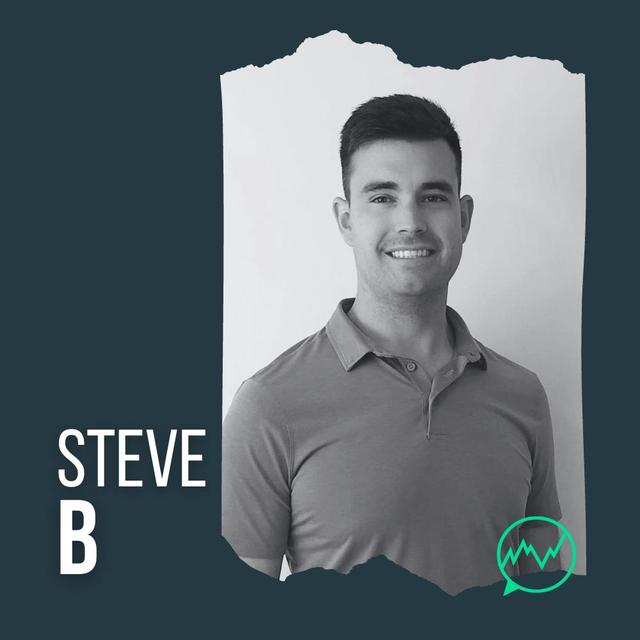



¶ Introduction to Steve B and Trading
Chat with Traders is brought to you by Trade the Pool. Did you know that every decade the market reinvents itself? Online brokers opened the doors, mobile apps made trading seamless, and commission-free trading erased barriers. Now a new era has begun. Meet, trade the pool, limited risk trading. And now you also have unlimited time to reach the profit target. From now on, your trading risk is capped, and your trading opportunities are limitless.
Trade the pool funds home-based stock traders with up to$200,000 in buying power. That means you can trade larger positions and scale your strategies without risking your own savings. It's time to trade with more capital, making it truly worth your time and effort. Ready to trade the pool? Click the link in the description and join the stock trading revolution today.
Trading in the financial markets involves a risk of loss. Podcast episodes and other content produced by Chatwith Traders are for informational or educational purposes only and do not constitute trading or investment recommendations or advice. Oh, 100%. They they have all the tools. They have all the advantages. Right. So that's why I always tell myself I only need to jump on that trend.
Once a day. And as long as I'm on that trend once a day and tr try to pick up that one impulsive move, that's good enough for me. I don't need to pick up like the entire move of the day.
I don't need to pick up all five impulses of the day because I know I don't have all the information, like you said, you know, like the institutions, the banks, the algorithm is the one that dictates the momentum shifts of the day. So it's all about capital preservation because you never know when the momentum's gonna shift. And we meet again on Chat With Traders, episode 288.
It's Tessa, your co-host, and today Ian speaks with Steve B, a professional independent trader that I consider to be a good friend, who we got to know organically through the Chatwith Traders community when we were open and active at the time. And as some of you know, Steve teamed up with our community mentor at the time, Patrick Peterson, who we also interviewed on episode 260. Together they ran the ChatTraders Community Live Trading Room.
It was started because it was driven by a group of members' desire to learn from their trading approach and strategies. And though their styles differ from each other, Patrick and Steve. Their shared trading work ethic and passion for the markets was a strong force in the community that was an inspiration to many of our members. And they traded mainly futures on the major indices.
And Steve's known to be a confluence intraday trader, which you'll get an understanding of what that is for him in a moment. I just remember many of our members were very interested in their trading approach and in fact some switched over from trading stocks or Forex. to trading futures. And one of the things I remember about their charts was that the charts were
very minimalistic with just a few things on it. But I remember specifically that they had l these lines representing key levels that were important to them. And I'm not talking about ordinary support and resistance lines that you interpret and draw out yourself.
These were different, at least to me at the time. These were lines derived from the data from the options market that helped build their roadmap, and it was part of their daily routine every morning before trading. But did you catch something?
Why are these traders who don't trade options using options data for their trading when trading futures? Well, perhaps you'll be able to connect some of the dots in this chat and gain some new insights from what Steve has to share with us today and his journey. Steve's been in the markets for about ten years now and I'm so drawn to his practical attitude towards trading and how he sees trading as an income stream to feed into building his wealth.
With the end goal, of course, to having more freedom, both financially and time-wise, to really enjoy his family, friends, and life. So we hope you enjoyed this episode. Happy listening? Ladies and gentlemen, we're so pleased to introduce Steve B. from Calgary, Canada. Welcome to Chat with Traders, or actually, maybe I should say welcome back to Chat with Traders because you've been an active member in the Chat with Traders community.
Thanks again, Ian and Tessa. And it's my great pleasure to be here and have this interview with you. Yeah. So where where are you? So yeah, so currently right now I'm out west or I should say northwest in Calgary, Canada. I'm up north. That's where I was born and raised, and that's where I currently am located right now.
¶ Early Career and Trading Aspirations
Let's get into your your background, things you studied in school and your early interests. So I'm first uh generation Canadian. I was uh brought up by a European family, immigrated from Eastern Europe uh to Canada, and of course they taught me the traditional way. was to always work hard in school, stay busy in athletics, um, always be busy with different kind of sports all across from basketball, soccer, and tennis.
and later continued my studies, uh continued my studies in post secondary college. So very traditional family um from Europe. And of course I went towards that direction and uh ended up finishing a bachelor's degree in business. uh with a minor in finance and a major in accounting, actually. Uh that was my background there. Uh which I would say definitely helped with my foundation in um understanding just the function of businesses and how they work from A to Z.
That's how I was brought up. And um with the trading side, uh, I would say later in my college years was the time when I opened up my first equity trading um account with T D Bank here in Canada. And this was early entry into investing and definitely allowed me to develop like a deeper understanding of financial markets and especially um into that deep pain that we all go through of losing. And accepting that law.
So yeah, but I definitely learned that early on. Um, but we can definitely go into that later and explain how important it was to endure those losses. So sorry, let me let me rephrase, endure those small losses, Ian. All throughout your all throughout my career, small enough, um, in in order to build those larger wins later on. And then after college, um, of course, went into my first few jobs, worked up the d traditional corporate ladder.
And slowly with various accounting roles, also consulting roles, um, I was able to gain some invaluable experience, of course, to the workforce. And um I think one was very important was uh discipline and having those um daily routines. that I find very important um in training as well. Just always being, you know, what time to wake up, understanding your meetings and what time to leave and get home. So just that day-to-day priority, I thought that was very important.
How many years ago uh did you open up your first um investment slash trading account? Yeah, so that was over ten years. So it's been about ten, eleven years since I opened my first uh broker account. So given that you uh come from an accounting type background, a business type background, what were you looking at when you would buy a stock? Are you were you a fun look at fundamentals? Uh kind of what were the criteria for you to uh buy a stock?
Yeah. So in the beginning it was all about um I was looking for those sectors that had good discounts. I always looked at those major sectors across the board which have been selling off for a while. I tried to get in early, looked into fundamentals.
And of course I I tried to look into more, more so like the medium to um like larger cap stocks. And yeah, whatever was giving me good discounts that wasn't really trending. We were at good discounts for a few years and I would buy those up and uh just kind of wait for um the rally and and like the buy side to start start to set in. So that was kind of my uh my understanding and my strategy early on with stocks. Would you consider yourself at that time more of a value investor?
Yeah, more of a value investor. Just picking out, you know, like the if if oil, oil and gas was'cause oil and gas, those are specialty where I was from. So if that was um had a few down de years and, you know, the price of oil was down near like fifty, sixty dollars per barrel, then yeah, I would just pick up the strong stocks. average down and just hold them for a few years. So that was definitely on my strategy longer term in the beginning.
Yeah, definitely had some patience uh there to to hold on for uh for quite a bit of time, right? Yes, yes, exactly. Yeah. They come to fruition. So you stuck with stocks for some time? Yeah, stuck with stocks.
I felt that my capital was definitely um a lot safer in the traditional banks. And well of course with the tradition traditional banks, once you open the brokers, yeah, like that your main assets are either mutual funds where you let the banks do the investing for you and they just pay you out three, four percent dividends. But of course I want to master the skill myself myself. So just whatever stocks were uh available.
Um, I I started investing in. And yeah, it was just very it was very long term. It was in the beginning'cause at the time I was I was busy with college as well, studying. And then once I got into the workforce, I was always Of course I had to like learn the procedures and everything going on. So I was always busy with other things um in in that sense. So I didn't have time to day trade or anything in that sense early on. And how did you like your career?
Career was fine. Of course, I eventually was having issues with not issues so much, but um just the the time it took to climb that ladder was too long for me. And I saw my parents go through it and some family friends and how it took, you know, 10, 15 years to reach that seniority. And of course, you know, and also came with uh taking your masters or it could be a CFA or CPA in accounting, which I didn't mind either, going through more education, but the time it took
s start to deteriorate for me. And it just it just it was just too much when I had other plans. Um I was I've always I was always an entrepreneur at heart. So I felt there was another path for me. And uh yeah, that's I guess that's that's kinda how I started talking or started uh the next next path of my life because yeah, I just it was just it was just taking time away from me. After being in there for seven, eight years.
Um, I was able to save enough money to create a different path for myself. I see. So so when did you uh think that investing or trading could actually become your primary source of what you do? Yeah, so I I had to create a template for myself and a strategy, of course. Um, start building a clientele while I was working full time as well as capital, reserve capital.
Because of course, you know, I was married, I had a family. Um, I would never advise um taking that leap without having the right amount of capital, as well as um like a template, a strategy. of how to um continuously start earning revenue for your company.
So yeah, that was the th like that that was that was the main part it took away. And of course, understanding the full steps of a business and how it works, not only from the sales side, but the accounting side and the back end as well. And that's something I was able to learn during uh My time on the corporate end was the accounting and truly how
The assets of liabilities mesh together and how how to correctly build your inventory. So in that sense, as a trader, your inventory is your capital and how to precisely manage that point for that. forward. Uh-huh. Interesting. So so you took uh what you learned on the job and through school as a way to what um to how you allocated your capital between different businesses and how much cash you kept on hand and and what have you. Yeah, exactly. And like I always had a natural feel
towards business as well as a young age. Um always I was always drawn um to like the sales side, the economics, and always like data driven decisions as well. So like even in the early years of high school, I was taking business related courses. So I was always already familiar with myself uh like with sales and marketing and accounting early on in high school. So that definitely like started fueling my uh curiosity about the financial markets and uh I feel like that
Uh early exposure definitely helped me kind of just tunnel vision into something that I enjoyed as a profession and I wasn't forced into anything else. Because I feel like that's the issue as well with a lot of people early on is they they waste away so many years on something they don't enjoy. I feel like eventually it could it could be too late to start something new. So luckily I found that profession I enjoyed early on and stuck with it.
When did you make the decision that uh you want to quit your job and go into trading full time? Yeah, so that was definitely it took some time. Um, but the di the decision to um leave my job was definitely there was a few factors there, I would say, first before when. Um primarily was when I was just having too many constraints with the overhead.
with just too much management above me, like too much resistance as you'd say in the in the in the markets. Just above me, market structure or sorry, management structures and just too many policies limiting uh my time. That's the biggest thing I I always value is time. And just working under all those layers of management made it difficult to pursue uh just my personal ideas and business ventures. So I realized that in order to truly pursue the greater business goals, I needed that freedom.
to take control of my professional direction where I want to head. So yeah, a significant aspect of the decision was definitely desired to uh reclaim my time because definitely a lot of time was being taken away from me. And I started to realize that later, like later in my twenties or my late thir twenties, I started to realize that as I grew older and had a wife and started, you know, building a family and got married. So I just wanted that flexibility to create my own schedule.
Um allowing myself to focus on only business man Ventures. And also just the business development and work balance. So this transition um has provided me with opportunity to build something um while also maintaining the freedom to prioritize prioritize what truly mattered to me. Cause I feel like when I had the nine to five, I wasn't able to prioritize too much what really mattered to me, more so just making that income. Being done at Friday and they're just focusing on the weekend.
Where so now I actually can't wait for Monday. I'm excited for Monday to occur, which is crazy. I want the market to open. So I'm I'm like the opposite. So kind of how Patrick would always say in our community, and we always work side to side. We're waiting for that Monday open. Like I want the weekend to be over, which is nice to relax, of course. But once that Monday comes, I I uh I can't get any more excited. So it's funny how the script has flipped.
But um yeah, now that I'm on my own now instead of through the ninth to five. So
¶ Shifting to Day Trading Income
Yeah. So when you say that uh you couldn't wait for Monday to open, that seems to imply that You wanted to make more um kind of shorter term trading rather than the long term buy and hold because the excitement of the new day of trading opening up, creating opportunities. Did you switch from a long term buy and hold investor to more shorter term? So I have a mix of both. Of course I'll always have my long term investments, but the one way where
I earn income and my revenue is now from my day to day trading. And majority of the time I am closing those days by a day's end as well. To just kind of free myself from the market, not having to check the charts. Not having to stress about it because I feel like yeah, once especially when you use leverage.
It's a different story comparatively to stocks. With stocks, there's no leverage. You know, you buy and hold for a long time is less there's less likely of you, you know, entering any sort of like margin call or whatnot. I'm not saying I use that much margin.
I always stick to the one percent rule of course per day. But uh yeah, you know, you just never have that risk of gapping and margin um and leverage. So with stocks there's a lot more flexibility and less stress. But with my day to day, my goal is always to close by day's end. So Were you ever seduced by the uh videos on YouTube of traders showing um the new Lamborghini that they bought? Oh 100%. We all went through it. We all sometimes, even now, of course, through my experience, I look at it.
And I'm like, oh, it must be nice driving a Lamborghini because I I would like to drive a Lamborghini, who wouldn't? Right. But of course when we look at it and yeah, I can get into this, it's all it's of course it's all an illusion, right? It's it's it's rent rented items. rented houses, a rented lifestyle, whether it's on a boat in Miami. But then again, it's it's not a bad business idea either, because if you lure inclined to make money, that's a that's that's a business
venture right there as well, right? Yeah. I'm not saying it's very truthful or ethical.
But that works. But that's that's never I promise you, Ian, I promise you and Tessa and Patrick as well, I'll never go down that road. I promise you'll never see flaunting at Lamborghini. So yeah. But yeah, of course when I first started trading Most of my early moves were like invested oriented, but I did I I feel like one of my biggest mistakes, especially early on, was watching these YouTubers trading the penny stock.
Trading over-the-counter low float stocks that could 100x your account, right? You bought them at pennies and they flip to a dollar. Like we've all seen it before, but I feel like that was definitely one of the biggest mistakes I made. Oh, why why is that? Share, share with us.
Yeah, so yeah, I I would I was watching a couple videos and just seeing some of these guys post their 10, 20, 100x returns in the OTC markets, penny stocks, because uh you know, you you get the adrenaline going, you get the hype. You want you want the hundred explain, right? You put in a thousand dollars. Why not? Right? To make a hundred grand off a thousand, that's that's everyone's dream. But uh yeah, that was definitely one of my biggest mistakes because
There was definitely it was more about the excitement and more about being a part of that community, even though it was the wrong community, but we can get into that later about community and how important that is. But uh, you know, I just started chasing these opportunities. hoping to replicate their success even though who knows if it was real or not, because they can always manipulate the book.
Um, but I learned quickly that those trades were far riskier than anticipated. Um penny stocks of course are notorious uh for volatility and lack of liquidity as well. So just the chances of making consistent um gains were very slim. So they were offering high risk and almost no reward. So that was the issue there. And yeah, since the re reward was almost zero.
Um, I learned my big mistake. And when once those mistakes come in and you see red in your account and they keep dwindling down, yeah, that was a big life lesson. So that's definitely uh like I would say one of those big life lessons I never go back to. Never touch penny stocks ever again. Learn my lessons. But they get then again, maybe it was good that I entered that market because I would never have that memory of having that law.
Right. So let's say I'm I I I'm at the current stage right now and I never entered the penny stocks or the OTC and then I have some friends, some community members talking about it, and maybe now I'll I'll dip into that market not knowing, not realizing that low reward, high risk.
So I feel like it was a good thing I went through that when I was young, risked a lot of capital, lost the capital and never again. So definitely um taught me the importance of developing my own strategy and not following anyone else on YouTube. Um, focusing on risk management and just avoiding the temptation of like a quick fix solution. So I found that um just very important for myself.
¶ Building a Data-Driven Trading Process
After the penny stock experience, what did you develop then? Like w what did you get into to trade? Yeah, of course. Yeah. So yeah, the neck next step was developing a process. And that's when I saw the opportunity from the day-to-day trading. Um I can go later on what like what I was trading, but first with the process.
Um, the journey of developing a solid process became with um or sorry, began with just an intense focus on data and understanding the underlying reason of why the market's moving. The market's not moving because of candlesticks. No, that's just a presentation of movement'cause you can you can draw a line chart, a graph chart, and a candlestick. Like the candlesticks is not why the market moves. So I wanted a deeper um
feeling of seeing like what is going on and realizing just uh like in the markets, just like a deeper understanding of like the mechanics of price action. And um I and this meant studying the macro events to prepare for volatility spike. as well as how these institutions, institutional players move within the markets. So I had to understand this first. So, you know, markets are very fluid, always evolving. And I found that momentum shifts can happen at any time at key points.
Um, not only at the hourly close. So the unpredictability made it challenging to always rely on chart patterns on the one minute or five minute. as well as um like increasing imbalances in candles. So beyond that beyond the price uh uh price patterns I found it was important to um not only
like look at the volatility um that we get on the VIX and the DXY, but also like the order flow and other external factors. I felt is like very important. So yeah, um in this process, because of course came a lot of, you know, mistakes. And I have to continually adapt. So incorporating lit risk management strategies, I felt like was first and most important because no single approach will work.
um without this strategy. So by focusing on the broader market and looking at the momentum shifts rather than predicting them, I was able to redefine my process to something more resilient and reliable. So Have you ever watched a stock explode and thought, if only I had the capital, or sat on the sidelines because your account balance felt too small to matter? Good news.
With Trade the Pool's limited risk platform, you don't need millions or even thousands to start trading the US stock market. Bypass the PDT and tap into over twelve thousand US licit equities. From penny stocks to big caps, ETFs, even the newest IPOs, and short anything you like, with zero locate or hard to borrow fees.
Start your evaluation. Get funded with up to$200,000 in buying power so you can go big without risking your own savings. And now you can also have unlimited time to reach the profit target. It's a game changer. Not ready to trade yet? Trade the Pool offers a free demo and educational resources. Practice on live data, master the platform, and build confidence risk-free before you even pay a cent. Click the link in the show notes to start trading with Trade the Pool's capital.
One of the I guess I would say one of the um main factors though I was able to gain an edge was my checklist. And it's similar, I would say, to an if statement in the um X let's say Excel spreadsheet. So If let's say a few checks did not clear in the morning. uh my bias would change and the setup could also change into another idea later in the trading hour. So my process was always was based on time, volatility, and data. And then if I didn't get all my checks,
that that bias or that setup would be crossed off and then it would start forming into another idea maybe later on in the day. So it's that was that was my if statement on my checklist. So ultimately developing the process wasn't about finding like a magic formula. It was about more about continuous learning and just execution based on time and the prob probability of various um scenarios. So
While you're doing this day trading, you also have your long term buy and hold investments. Is that correct? Yes, that's correct, yeah. Okay. And then so when you do the day trading, were you focused on specific stocks or indices? I mean, like what what did you trade? Since my trades were on the shorter term, I would say ninety five percent of the time I'm closing my positions end of day, right? So if I'm if I'm closing my positions end of day, I need leverage.
I need a good amount of volume uh margin. And I need to be trading markets with, of course, large amounts of volume, data, and the smallest amount of slippage. So of course these two assets are the SP and NASDAQ. Clean and simple. Uh-huh. So these so these assets were always aligned also aligned with like the location and timeframe for also where I'm living in North America.
Um, I was always gonna get volatility once New York hit. So it definitely made it uh much easier to wake up in the mornings, prepare myself for that New York volatility, and uh also close my book. later on, especially mount my time, mountain time during lunchtime, and just be able to enjoy uh my day with my family and friends later on. So just clean and simple, gave me the freedom. um to trade and not have to worry about like the London session is an Asian session as well in the forex market.
¶ Confluence Trading and Checklist Application
So let's go into your checklist. What what are the items in your checklist? With my checklist, because I'm always looking at data volume and exposure, things I always look for is because whatever happened in the previous day, it doesn't matter as much. Unless sometimes, like sometimes I would look at
let's say the daily pivot, the weekly pivot, just to look at a like a more macro zoomed out outlook. But usually the whatever happened the previous day doesn't really affect me because anything can happen during pre-market and during neuro. Like the moment momentum can shift at any time. So the first thing I look at is where are the largest areas of supply and demand or in the options market we would say exposure. So I look at these levels and I put them on my chart.
Wait, clean and simple. Okay, so where is price? So my first checklist is where Is New York opening? Or sorry, where is the pre-market opening? And where is like, let's say 30 minutes after going to be opening as well on my checklist? Is it like in bullish or bearish territory with exposure and volume?
And then second on my checklist is does the risk and reward make sense? Because if the risk makes sense, but the reward were pit price, I would start making taking profit doesn't make sense, then the trade isn't validated. Both ends have to make sense.
Give me at least a nice two to three to one, even four to one forward, because of course we're not going to be winning every trade. It has to be high higher reward than risk at the time. And yeah, if the both ends are not making sense, then it's invalidated as well. And I would say let's uh a third checklist would definitely be my um core uh my confluence.
Because I'm a confluence trader. So if I'm trading the NASDAQ, I like to bring up the VIX, I like to bring up the DXY, and I like to bring up the options market and let's say the Magnificent 7. The top seven stocks, what are they doing, especially the tech stocks, and how are they correlated? How are they responding? Because a lot of times if they're responding,
let's say 50-50 divergence, that could also play a part in NASDAQ. Or if they're all moving the same way with the same amount of volume, that could also create an idea for Nasdaq as well. So those are three of the main checklists I look at.
What are the make seven doing and how are and are my other confluences and once they react to certain zones when I set the alerts, where is NASDAQ and how is it how is Nasdaq reacting at the certain level? So that's how I I see so so you're trading uh what both Nasdaq futures and S and P futures or just the
Yes, that's correct. Yeah. That that's correct. Yeah. The futures as well as um I have a couple like CFD brokers as well, because they give me better margin. And it's also like I I enjoy using their um risk tools because that's that's usually the only indicators and tools I use is the risk parameters.
'Cause volatility every day is gonna be different. And one way to g one good way to look at is the VIX, right? Um, like today, for example, we have a good example how the Fed we had a Fed speaker, J Jerome Powell. And once you start speaking, we had a huge increase in volatility. So of course, how I'm measuring risk is going to be
um convert into dollar form is gonna be much different than yesterday because the because the volatility is much different. I'm always risking the same amount in dollar form or percentage form, let's say one percent per day. Thank you.
But the moves are gonna be much greater today than they were yesterday because we had Jerome Powell speaking. So that's that's why I'm always looking as well to protect myself. Not entering the same amount of lots or the same amount of contracts per se as the other day. Oh, I see. So so depending on how you assess the risk at that moment, you will size your position accordingly.
That's correct. Yeah. So that's another important key factor in my checklist is first wait for that volatility spike. Measure the risk. And always have the same amount in dollar form every day. Because I feel like that's important and that's how a lot of traders blow out because they don't realize that every day is different. Sometimes you're gonna have like low ranging um choppy days and other days you're gonna have Jerome Powell speaking.
And completely take you out'cause you're thinking, okay, I put on five contracts the other day and I was fine, I was safe, but five contracts today. It's going to be um offering a lot different like risk exposure uh for your trading and for your risk managing. Cause at the end of the day, yeah.
I find this or I find the term um trader misleading and it should be more of a like a risk manager because you're managing your portfolio, you're managing your equity um in dollar form. So you should be a risk manager more so than a trader. So that's why I always look at it. Uh-huh. So okay, so say you um you
Like let's dive into the process even deeper. So if say you look at the NASDAQ before the before the market opens or the SP and you notice that it's hovering down near support levels and the support levels appear to be decent. What are you doing? Are you then looking also at these top seven stocks to see their movement?
And if they are in alignment with a possible, say, bullish move to the upside, does their representation and how they move individually influence whether you go long and and the size of how much you go long? I would say it's more so of an average of the seven. I I'll I I like to look at the where the average of the seven is uh is going.
And if they start um increasing their exposure or start heading towards these, let's say, institutional levels that I uh draw on my charts and how they're responding to it relative to NASA. So if they're if they're painting a completely different picture than SP and NASDAQ, then I like to be patient and wait because a lot of times um the movements can be a little delayed when compared to the indices.
Like we when we we could also go into like how I'm trading, whether I'm trading indicators or whatnot, because for me, um, I like to stay away from the indicator. I've learned my lesson. Uh huh. So for me, they just make make my charts a little too messy because already I have my um my wrist. drawing tools, my um that are calculated on my brokers, as well as my levels that I create from data. So that's why I like to take away the indicators. Probably the only time you'll see an indicator is when
I am trailing my position. I like to trail it either on the ATR or the SMA. when I'm just closely trailing it and about to close out my position. It's probably the only time I'll use an indicator because of course they're all delayed based on candlesticks. And for me, before making decision to enter a market, I know I was never in the past, in the past I was never able to gain an edge.
on candlesticks alone, especially when I'm trading on the shorter term. On the shorter term, intraday. Swing trading, of course, is much different. You have a lot more data, you have a lot more time. You don't have to be as precise, but because I have to be a little more precise, I cannot be
um trading on the candlesticks, right? Because all those coded metrics are all calculated on past performing price action. So any script you create or readjust to your liking can can be looked at as an illusion, right? Of past performance. And will never lead to consistent future results. So I've been there, I've coded on PineScript and Trading View. You know, I've tried to give myself the highest earning profit factor.
And I've tested, readjusted, look back at the script in real time and just to readjust that PL. And then always when I started forward testing, my profit factor and my PNL would always go down. Because past performance. Because when you're when you're coding these strategies on TradingView, it's an illusion because you always try and get get yourself the best.
profit factor, right? But past results are never gonna copy onto the future, especially on day to day as structure, because every day is different. Especially when different uh like newsprints coming out and like momentum shift with the rates and whatnot going on, you know. Once Jerome Powell starts speaking about uh like economics and job reports and whatnot, so yeah.
The profit factor would always diminish and I learned the hard way. I I still had to test it out to see if I was able to code something for myself intraday. by with a my profit factor always going downhill and diminishing, it just never worked out. So anyways, I learned the Lord lesson, but it was a good one. And I wouldn't give up on
¶ Options Data for Market Edge
So I that's why I always started studying live volume and entered the world of options exposure and dealer positioning. This is where I gained the edge. This is where I started to kind of realize the cycles of markets per day, per week and where and where um
And where and why price movement usually likes to magnet magnetize towards a certain area and a certain level. It would kind of make sense. So and for my day-to-day, I didn't have to pick out the best entries. I didn't have to be as precise, but instead I always tried to spot.
The trend and pick off that one major move of each day. That's all that mattered. Whether we had three or four major moves, I only needed one for the day. And that was good enough for me. So With the option flow and dealer positioning, um, whether it was pre-market and during futures or 15, 30 minutes after New York, which I like to wait if I didn't get it set up beforehand.
I was able to find that major impulse. And once I'm able to find that trend and that major impulse, once you know, you see the institutional volume start kicking in, that's that was good enough for me. So all I all I all all all that was needed for me is to identify one major trend. And that was enough to steer away from overtraining as well. Close my book and be done for the day. So
I see. And how do you uh you mentioned prices gravitating towards certain levels and institutional involvement? How do you measure that? Like go into detail on how that works. Yeah. So of course there's a couple a couple of platforms you can go online.
to gather this information from the options market. So they're they're just large exposure levels. So you can also mix this in with high volume levels or time and sales that entered in the past, but you want to also forward test and use live data as well. And every day it's recalculated. So yeah, I would implement these institution levels onto my charts every day since it's recalculated.
and just wait for price to ar start entering these zones. And that's when I look at the live volume. So once they enter these institutional zones, right? So these insu these these zones, these levels are there.
for market makers to identify the high exposure, whether they have to start hedging or let's say the level starts rejecting, then they don't have to they have they don't have to hedge anymore. So kind of these squeeze zones. Now I'd always look at the live volume and see how price is reacting. on those important levels. So also help me not to overtrade because I just be patient, set my alert.
And once like the either the Mix 7 or NASDAQ SP start entering these levels, even even the VIX, the VIX has some option flow as well. Um, I was able to just stay patient and look and and wait for the market to show its hand, if it's getting rejected or if it's gonna start squeezing through to the next level. So that's kinda that's that's that's that's how I'm always able to trade. So
So, so uh describe uh squeezing to the next level. You mentioned uh market makers and volume. I mean, you're talking about the options market here. Uh yeah, so the options market, um when you look at NASDAQ SP of course that's spying QQQ, but end of the day it's the same chart as futures and CFTs. It's all the same chart.
But you're looking at different um sides of volume exposure. So this is a and and we all know as well that institutions use the options market to start head to hedge their positions as well. So the institutions, right, they have
If if they're um if they're positioned in Nasdaq, they have positions in the futures market, they have position in the stock market, and then they use the options market to hedge. So and then what and what's and what's happening in the options market is do you have those dealer positions in certain important areas?
And they always have to match the buys and the sells in certain areas, right? So that's why I always stay away from like the 50% range between the two levels as well, because you have a lot of chip chop. And that that always helps because once it reaches that level and I look at volume, it gives me a higher probability setup.
Whether it's going to take it to the next level above or get rejected and sell down below. So this is um, you know, because at the end of the day, we're all small, fish in the sea. We have no influence in the market. So therefore, I'm never trying to beat the market in, right? I'm never trying to beat it.
And my whole purpose is just to catch that one small move of the day that gives me the high probability setup and just be on the right side of the trend. That's all I'm looking for. I don't have to be excited so precise to the very tick. And for when the time comes, I just capitalize, put on my risk. And if the risk reward makes sense on both ends, I take the trade and be done with it. So usually one to two trades a day, but I like to minimize it to just one trade a day.
So uh you mentioned volume. Are you talking volume of the underlying or volume of the options? So the just the live volume, I usually buy this through the options uh through the futures market. Sorry. So I look at the delta. I look at how each I sometimes look at the footprint, how each let's say candlestick of whether Comparing the two candlesticks, which traded on more volume, whether the whether what like which is stronger, the buy side, the sell side pressure.
on that zone. But I but I don't I don't mess around in between what's happening, the volatility, the chip chop. I just wait until it hits my zone, hits my institutional level, and then I make a decision based on like the live volume.
So when you say when it hits the level, are you talking about levels of strong uh support, uh, say, um, where they've sold many puts or areas of resistance where there's a lot of concentrated call open interest at certain key levels, are you looking for it to break one of these congested levels?
Yeah, so these are these are like call put um gamma exposures. So gamma as well as delta exposures. And then I always look for the highest exposed levels for the day. So because they're always recalculated by end of the day and then in the morning right before New York. So I always look for these areas because these are obviously important areas. The market makers are increasing the exposure because there's a reason behind it. There's always a story behind it.
So that's why it's able I'm able to be a little patient on it. But I'm I'm not I'm not looking so much as like the live option market. I'm not looking Because when you hit when you see a big order in the options market, whether it's a call or a put, just because it's a large uh call, let's say um above ask or below big.
It you can't really decipher whether it's a long or a short because it can easily be a hedge and be wanting to go the other direction. That's why I just focus on the exposure levels. the story behind it and where it's placed um during New York, and then I look into the live uh volume on the futures end.
and line that up with my confluences. And of course I have to be quick as well because sometimes the move can happen very fast. But I've been in the markets long enough where I can kind of decipher what's going on, set my checklist, set my risk, which is most important, like I said, on both ends, if they make sense. And just let the trade play out.
I see. So it sounds like you're you're uh kind of juggling a bunch of different areas that you're looking at simultaneously, right? You're looking at the VIX, you're looking at support and resistance on the Nasdaq or whatever SP. And you're looking at also support and resistance of key areas where a lot of option open interest is concentrated. Is that correct? That's that's correct, yeah.
And then so what happens if a level if it starts to go above the area of quote resistance on the call side and it starts moving up? Um who care I mean, what is this gamma exposure and why do we why should we care? Yeah, so the reason we should care is because if it starts squeezing.
And the the market makers need to start hedging and the institutions start hedging, then the then the move can be very fast. It can be rapid. So to the upside. So this could also bring in a new strategy where you can start hedging.
I wouldn't advise especially any beginners to start hedging because at the end of the day you need capital and you need margin, right? If you're if you're risking low enough where you have plenty of margin to work with to start hedging and know where you're hedging to.
And you you're watching the live mar the live data either in the mar options market in the futures and it can make sense. But in the day, I feel like if it's rapidly moving against you, it's probably a good time to just close it and call it a day. Because if your risk reward, if your probability is always more than two to three to one.
Why risk the hedge and just be out for the day and just close the book, in my opinion? Because I just find it so important um to learn from these losses. You you sometimes need to embrace these losses. That's the thing. Because each loss becomes like a data point.
into your memory, into your journey. And it should just be a data point rather than something personal. Right. You're not you should never be emotionally attached to that outcome. So sometimes, like I said, if it's a rapid going against you, just close it, be done, journal it and see how
how you can better your probability or risk reward. But you know, then again, you're not also remember that you can't always be right and be happy for the loss. Be happy for the loss or that small loss comparatively it could have been a much greater loss.
Because once price starts rapidly moving the other direction, it's better to just close it and be done with it. Because that's another important thing. And when people journal, they should look at the timing of their losses and their wins. And if the time of your losses are much greater, that's an issue as well. You always want to cut them a lot earlier.
When you look at support and resistance areas, do you ever enter an order like a buy stop order to buy once it it crosses above that uh resistant resistance area and or um putting in a stop loss. Um do you use either of those? Yeah, so I I I always use stop loss. Um, because yeah, the market can turn anytime. You could, you know, go out for a coffee.
anything can happen with your life. You always need to protect yourself. Even though like I know I've caught myself a few times not putting a stop, even though my stop was well above that position where I didn't have to
you know stress too much about it but of course I advise everyone to always put a stop less. You never know what's gonna go on. Maybe you forget that there's big some big volatility event coming up, right? Either Jerome Powell's speaking or we have CPI, NFP, and you completely forgot about that news.
And you and you let on a trade without a stop loss, that's like that could uh put yourself in danger, right? Whether you're you know you're trading your own your own capital or prop firm capital, always put in the stop just in case, and always measure it where it's in this it's it's in an area where it makes sense.
for it to get stopped out. If it reaches that area, then your bias is completely invalidated. That's important as well. Where because the market can go each either which direction, right? Like there's n like never that's why I said before, never get emotionally attacked.
Always stay grounded and then kind of embrace that um loss as well. But where it's small enough that you gain further knowledge and then come back much bigger. So I think that's always important. You know, so you leave enough margin and enough capital for the future.
¶ Risk Management and Trading Psychology
So be out of that trade, close the book, or if you see now this setup, make sure you risk less. So it's always about surviving into the future, into the next day. I find that to be very important. What do you do for position sizing? Uh do you just uh you say you bet the same amount each time or same? Yeah, so I I I I have a position size or calculator on my brokers and then I always make sure I wa I wait for the volatility to kick in and then I measure based on the volatility.
And I always um convert it into dollar form or percentage form. Let's say one percent of your capital and then to dollar form. So it's always the same amount. Never try and bid more sizing, especially on like a crazy day like today where we had chopped, you know, like J Powell came on. We went up a hundred points and then we sold off two hundred points. It's like no, like don't that's when you
That's when you'll become you'll you'll be humbled very quickly in, right? It's like the market, the market will sit you down on your ass very quickly and uh try and like reassess it. So I always try to keep it the same every day, keep it consistent. 'Cause I don't I don't like to stray away from any crazy ideas because one explosive idea can really put you back a few steps. So I I like I always try and go forward five steps and sometimes one step back.
And create the momentum forward like the SP. You zoom out on the SP on the weekly, on the monthly, it's slowly trending up. I try I try to have my profile at the same chart as SP, slowly grinding up. Now having crazy volatile turns, of course, you know, you're gonna have a black swan event here and there, but as long as you're not risking too much of your capital. Why why do you think uh more traders are using options data uh uh when trading futures? It's a good way to um
I feel like, like you said, with support and resistance,'cause what is support and resistance or what's a good area of s of support? It's when Supply. And demand is usually equal. If price settles in a s in a strong area, it means the buyers and the sellers are the same. Price hasn't moved out from that area, right? And then when what what happens when there's an imbalance is that when the price either shoots up or shoots down from that area, there's a greater demand or greater supply.
So what the options market does, it creates these exposure levels and it can a lot of time maybe align with your supply and demand as well. So if you if you link up those strong supply and demand zones with the options market, that could create like an extra confluence as well. So I always needed more confluence. I could never just base it on time and sales and candlesticks. I always needed that third
extra extra data print to give me something just g g give me some sort of edge, right? Um and it all and I also found that the options market offers retail traders a lot more data than um other sites. So like comparatively to the stock market. or the futures market or even the forex market where you don't really get any data at all. Of course the banks own that market. So they they get to see everything, um, but supply demand. But when it comes to the options market,
Now it's interconnected with the major stocks, spying QQQ I found they just gave me the most relevant information for when uh the time came to make a decision whether to go long or short. So it's always helpful. How did your consistency evolve over time? And what factors do you believe helped to improve your consistency? Let's talk about the psychology aspect.'Cause I know this is
Everyone's favorite topic. And it was definitely the psychology part that helped me throughout the whole process. And uh but buddy, and let's let's talk about this. There's no real psychology without facing the pain. of your not only your mistakes but your loss, right? You need to build that resilience. That's what always helps. So every loss becomes a new
learning opportunity rather than failure. That's how I always looked at it. So it just time and time again. It took time. It took years. There's no way I I learned that craft within a few days. It took a long time. You need to go through that struggle. Like yeah, like so after um I analyzed it, refined my strategy uh with timing, understanding marketing conditions, option flow, um, like the psychology aspect kind of came, it just
It just naturally came with time. So, like once I got over that mindset that losses are not never to be feared, but accepted. as a natural aspect of trading, um, that's when I was able to solve the first and more the most important step of psychology, really. Uh like once I was able to just accept the loss if it goes against me and prepare for the new day. So by embracing this mindset um definitely helped me reduce emotional spike.
that also could cause FOMO and overtrading. So like I said with the example. Once once price, let's say squeezing at a certain level rapidly, instead of holding on to that loss, um, I knew right away is invalidate and I and I cut my losses quickly. So that definitely that experience gave me um um help me protect my capital over time. So like yeah, the one rule I always remind myself is um
Don't stay away from the lower time frame as well. Because that would always increase my stress levels. Either the one minute or the five minute on the candlesticks. Lower the time frame, higher the stress. Just stay away from that. That but you're day trading. I mean, um so when you day trade these futures, uh, what kind of time frame are you using? So I don't I don't like to look so much into the candlesticks. Like I said, I only look into the candlesticks. Um
when I'm live into a trade and about to take profit or trailing it down. Um, but once I'm making my decision or entering the trade, I like to stay zoomed out'cause it's not so much on the candlesticks, it's so much of where we are. what time of day and what the volume is giving me at that certain period of time, whether it's options market and the futures market. So it's more so just all those like what with time.
Where location and the volume. Like what does it give me? I candlestick doesn't matter to me. Whether it's like a bullish forming candle, like 50 minute or a bearish forming or an engulfing or a three three-bar pattern, I feel like for me, those are distract, just um distract. Mm-hmm. I stay I stay away from that. So that's definitely helped me.
Earlier when you were talking about resistance or support, many investors imagine uh looking at a chart and and saying, Oh, look at this double top, triple top or double bottom and oh, it looks like it's strong support here based on what's e the chart, but
It sounds as if that when you're also looking at the options market and concentration of positions for gamma exposure on the call and the put side, that couldn't they have their own levels that are not necessarily indicated or obvious by looking at just a chart. Oh, one hundred percent. Like they they have all the tools, they have all the advantages. Right. So that's why I always tell myself uh I only need to um jump on that trend once a day.
And as long as I'm on that trend once a day and tr try to pick up that one impulsive move, that's good enough for me. I don't need to pick up like the entire move of the day. I don't need to pick up all five impulses of the day because I know I don't have all the information, like you said, you know, like the institutions, the banks.
The algorithm, which we can get into maybe later if we have time, um, is the one that dictates the momentum shifts of the day. I never like to stay greedy. That's why I always uh look to trail my profit, either take half off at a certain level and trail the rest if it continues the sell or continues the the buy. So we it's all about capital preservation. Because you never know.
when the momentum's gonna shift it can happen at any time i've seen it happen at any time i've seen it seen it happen during new york lunch i've seen it happen even before power hour and the power hour is dead it's crazy at all like there's a shift it a shift can happen at any time And the algorithm creates that shift. Yeah.
I see. So so getting back to the psychology then when you see a big spike and you're long and you're you're on the correct side of the trade, how often do you have feelings of like, Oh, this this could be really it? And and uh You know, you're you're you're on a strong trend and you're already thinking of all the money you're you're making. How do you keep the discipline to cut
some of your position because the old saying the trend is your friend, well why not just keep riding it? Who knows how high it could go. Yeah, it's it's the experience, my friend. It's it's the experience.
Where so many times I thought this could go further and it comes right back to my break even and takes me out. Or I or I just start increasing my stop loss. It's just that nightmare or that memory. That's why I said, like you need you need that memory, you need that experience, you need to just trade.
live test, forward test, more and more, because if you don't have that pain in your mind of what happened so many other times so many years ago, then you're never gonna be able to create that discipline. So that's why I created that
Um, strategy where I cut off 50% once it hits, let's say, my next level. And then whether or not it continues, I just trail it. And if it takes out my trail, And maybe instead of a nice four or five to one, it just gives me let's say one and a half two to one, I'm happy with it and I'm done for the day because I accepted that the market doesn't want to continue further, doesn't wanna push further or start.
¶ Passive Income and Diversified Investing
start squeezing to the next level. And I I I accept that factor because for me, end of the day, trading, I like to look at it as passive income. I like to look at it as pat because if I look at it as passive income and not some exotic way to make revenue, then I can keep it consistent every day. That's the whole purpose.
Because that's another thing that I like to start increasing in my personal portfolio is passive income. Have other ways to create passive income, whether it's real estate, whether it's high yielding dividend stocks and also trading and keep it all the same. That definitely creates consistency with the corporation that I was able to build with uh my own firm. So I I see so so uh
It's is it your habit then to uh periodically take out um profits that you generate from day trading and put them into other asset classes? And if so, kind of what other asset classes do you you put in and what what are your other Styles of investing. Of course, yeah. So I usually like to withdraw weekly, more bi-weekly, keep it consistent. And first I calculate my expenses, my mortgage, everything first. That's you know, comes first.
um for the family. And then whatever I have left over, I redeploy into a new business venture, whether it could be at like like real estate. Um, it could be land as well, but land is longer term. Um, or Dividend paying st uh high yielding um stocks or funds that can just over time just pay me a nice four to five percent per quarter per annual. And kind of let that ride until um retirement. So have that capital preservation and make just extra income, low taxable income.
Um, that's steady and not not stressful. So, you know, like I don't need these exotic big moves. I just kind of keep my trading the same as I keep these other um dividend payouts. It and it takes time, yeah, right. Like I I see so many portfolios online. Probably the only YouTubers and portfolio guys I I I like to follow online are the big dividend guys.
And they all say it took ten to twenty years for them to build a sizable portfolio to st actually start generating good enough income per month where that's all they need to rely on. But it takes time. Right. Like I'm in my own early thirties. I know I'm not going to be able to build a s like a sizable amount until probably maybe another ten years, but I'm slowly building that, uh, mainly into like funds.
And other like individual stocks that pay at least on average four to five percent.'Cause I learned the lesson as well is if I try to find those stocks that pay higher dividends, like ten to fifteen percent, it's a little too risky. The the the risk is too great on that sense. I just like to keep it very conservative, you know. Right, right, right. So when you were in the chat with traders community, uh, you were known for using multiple funded accounts to to build your
portfolio. Um was that difficult to manage and and how did did that impact your trading in any way? No, it wasn't difficult. I always looked at it as an investment. That's always looked at it. So, you know, you you pay the challenge fees. Let's say you pay five hundred dollars for an account. And if I was able to over time, either in a month or two,
Um, 10 to 20x that amount, then that was a good own return on investment. But I would, of course, during my challenges, be a little more aggressive. And then once I became funded with these prop firms, I would be a lot more conservative. Just risking like a quarter percent to maybe half a percent per day. Very easy going. Um, and then once I get my payouts, I get paid right away.
And just use and just w um use as as an investment. I didn't I haven't been using um these prof firms as much lately. Um I don't want to talk too much about it, but of course, you know, with especially on the CFT side, there's been a lot of businesses going down.
But like any investment, there's a risk. That's how I look at it, right? You can't expect these companies to go on forever. For me, I didn't take it personally. I had no emotions behind it. I I used one or two of the companies as well that went down.
What can you do? Right? Like same as any investment, any stock you you play out, there's always a risk for that company going down and your investment going to zero, right? There's always that risk. So for me, yeah, that's how I always looked at it. If I was at least able to buy to 10x return on that investment.
I found it I found to be a good good decision to be honest. And uh yeah, like currently right now it's mainly mainly trading my personal, my corporate uh portfolio, but Of course, like I don't, I don't, I'm not telling anyone not to or what to do as like an early trader or even as a seasoned professional trader, but it's definitely a good way to leverage your capital as well as network.
¶ Community and Collaborative Learning
And uh build a community as well. So not only your own community, but like talk with like minded professionals. I think is very important. Yeah, well speaking of which, uh one uh person that was very prominent in the Chatwood Traders community uh and who was also interviewed um uh earlier. was uh Patrick, Patrick Peterson. And uh I'm kind of curious to learn what did you what did you learn from him and other traders that you observed in these various uh forums and and communities.
Yeah, like that of course. And then like I learned a lot from Patrick. He He's gone through it all. He has lots of experience. And I'm still learning from him and I are still, you know, we're still working together and yeah, enjoying our time. And yeah, it's it's always been always had positive positive feedback about him. And yeah, like the the power of networking is so important. I feel like it's something that's not talked about enough in the trading world. Um, because it is a lonely journey.
And I find it very important to go out there and network whether it's a community or, you know, like during l lot of these prof firm companies as well provide that um ability to network or sometimes in person.
If you are and if you're in a major city and like go out there and meet other traders as well. So it just, you know, allows you to connect with like-minded professionals with the same passion as you have. And yeah, like these connections are invaluable because they provide opportunities and exercises. That you wouldn't seem necessary unless you came across them on your own, right? Competitively to the corporate ladder. Of course, that's the one thing I do miss is you know the company parties.
Right. Like the afternoon session, the you know, like the times we're able to come together with other coworkers, especially if we work downtown in the banking sector, a lot of good times, whether during lunchtime or after work. And yeah, it's just always uh it's a very that that is definitely like a connection that a lot of traders miss.
And but yeah, with when CWT was able to provide that with the community with a lot of the Zoom calls and the face-to-face, yeah, we found that experience um uh very inspiring, to be honest. So yeah, we yeah, we When Patrick and I were able to meet you, yourself and Tessa and have all those events and create the opportunity for people, yeah. Like we don't regret anything and it was it was a good experience. So yeah, once and especially when you're surrounded by all those people.
that are dedicated dedicated as well to the same craft as you are, it even makes it even more motivating to stay in the game as well and kind of elevate your thinking and your approach and training. So yeah, and like once you're exposed to these new perspectives. Different mythologies, right? Everyone's going to trade something different, which is fine, but also can help refine uh your own process. So yeah, whether it's learning from someone else's mistakes.
for successes. Um yeah, the diversity of that thought within a network is definitely a good tool for personal growth as an investor or a day trader. So Yeah. Excuse the last interruption here. This is Tessa. We hope you're enjoying this episode so far. If you love the podcast,
Please give Chatwith Traders the best review you can on whatever platform you're listening from. This will help us to keep the episodes coming. Also, if you haven't subscribed to our email list, please hop on to chatwithraders.com and click on subscribe. so we can keep you posted of information that may be of importance. Thank you. Now back to the chat with our guests.
So then did you experience times like live during the day trade during the day? Uh you're considering to go long or short something and you maybe you throw out an idea or someone throws an idea to you like right there live. H have you found situations where um you are able to improve or you learn things on the live on the fly, uh when when you're sharing uh these ideas or is it mostly after the market is closed?
Um I would say in because of course I've experienced it all, whether it's pre market, live or post market. I found the most important time was definitely pre market and aftermarket because everyone has their own strategy. Everyone creates their own bias. I feel like it just got a little too noisy um live when you're trading. I think everyone should just concentrate on their own, focus on their plan.
And maybe come together before the market, going through some checklists, going through some ideas or just talk kind of talking it out. And then boom, we shut down, you trade, you manage, because at the end of the day, you're not managing anyone anyone else's account. It's your account, it's your money.
And then come together afterwards. Have some accountability. Talk about, you know, the post market, what happened, how you looked at it, and if someone had it like, you know, a d a different way of looking at it, look very interesting. Make a note. By the end of the day, yeah, I think live, I felt
Yeah, like my biggest slight learning curve. And of course, right now it's a little different because I'm I'm helping. I have a couple students. I'm consulting with Patrick as well. So now, yeah, we found together with Patrick it's so it's best to create that roadmap pre-market.
Let everyone manage on their own because it is their own capital and then come afterwards with some accountability and speak about it. Because you look at all of these professional desks, all these institutions, Citibank, JP Morgan, Goldman. They all come together afterwards. And talk about their trading day, talk about their ideas, their strategies, because it's important. You can never be left in the dark, especially afterwards. Like that's important.
Whether it's a winning day or it's a losing day or it's a break even. You always need to speak about it. So find a partner, find a group, find a community, even a family member. And we it's I think it's highly important. to uh speak out loud about it'cause yeah, you look at any other profession
You're never in the dark, you're never quiet. Even if it's a two-man team, you're always providing with meetings, month end, quarter end. You always have a supervisor speaking about okay, your work, your workload, whether it was good performance, bad performance. So yeah, you could call it either a performance meeting. or some sort of accountability I think it's uh highly important to have that Yeah, yeah.
Yeah, great. Well certainly we hope to uh reopen the uh Chat with Traders community um live trading room again in the not too distant future. So Mm.
¶ Unplugging From Market Addiction
Are what would you say are areas that you struggle with most? That's trading. Yeah. Yeah. question Ian because we all struggle in struggle in certain areas right whether it's you know with your strategy or could be even like after the trading day is done and for me definitely I would say the biggest challenge as a risk manager Would be trying to skip the That was that's o that's always trying to escape the market. That's always been my big escape. Market.
Yeah. My biggest my biggest um uh struggle for sure. So cause you know, we always have our mobiles in the news, the chat rooms, they're always available twenty four seven, the charts always available twenty seven. So always Trying to remain um unplugged or or not plugged into the market. That was always my big biggest issue. Trying to unplug and be focused on what's in front.
me. That's always been, you know, because the wife always commented, of course, I'm on my phone too much looking at the markets even though I'm done for the day. Cause I'cause I I I try and look at it as work, right? Cause once you're fit even when you're finished your nine to five, you're not thinking about your work, you're done.
So that's how yeah that's how I should be thinking about the markets. The thing is because I'm in so so in love with the markets and truly I I enjoy this profession so much, it can kinda it of course at times seem a little too addicting, but that's that's definitely my biggest struggle.
To pull away, to check prices, see maybe what the oil market is doing or, you know, like you always cause even though I don't trade the oil market and gold market, it's always interesting to see what those markets are doing, right?
once like that New York volume goes away. So yeah, just always read the like the latest headlines. Um and just having that convenience of the mobile phone. Cause of course back in the day we didn't have this, right? Everything was either done on the computer or the newspaper. But but because everything's accessible. 247, it definitely is a big struggle of mind to come down sometimes to reality and try and get that balance.
I'm not saying it happens all the time, but sometimes I catch myself being pulled right back into the markets, even though I'm not trading. So just just being aware of more so what's in front of me. And being, you know, like more in tune with the family. You know, of course I'm I'm not saying like I still I enjoy the freedom. I'm not working as much as I did before my nine to five, but because it's, you know, a high stress profession uh profession.
And just be being always feeling the need to stay into it at all times can be a mentally exhausting. Um, and also cre possibly create some poor decision decision making as well. So, you know, what I've learned definitely in that area is just to create strict boundaries. Um, I've definitely been better at that now than I have before, especially last year. So just establish rules of when I can access the market and switch it off entirely. So yeah, I just try and limit myself. Um
On, like, the news news sources that uh I look into and try and avoid any sort of excess information that could lead into like overload. So that's definitely, yeah. Yeah. Struggle of mine that I'm working on again, so Yeah. Well, I can certainly see the passion expressed through your face and hear it in your voice. And it's great that you found
uh an industry, a hobby, a passion that uh you're really excited about and love to learn. So thank you very much for coming on chat with traders. How can our listeners get in touch with you? Yeah, of course. Yeah. So all my uh business information is on Twitter or X. Um it's at Libra underscore trading.
So I was I was born as a Libra. So that was that was the handle I of course stuck with. But yeah, you'll see me on there as Steve B and all f all my information and the company I work with with options flow data and everything. So yeah, like if any wants to reach out and follow me, all my information's there. So yeah. Thanks again, Ian and Tessa. Um, and glad uh to be here and maybe one day do this again. So, yeah, thanks again, appreciate it. Yeah, fantastic.
You've reached the end of this episode of Chat with Traders, but rest assured there are more. We love it if you leave a-