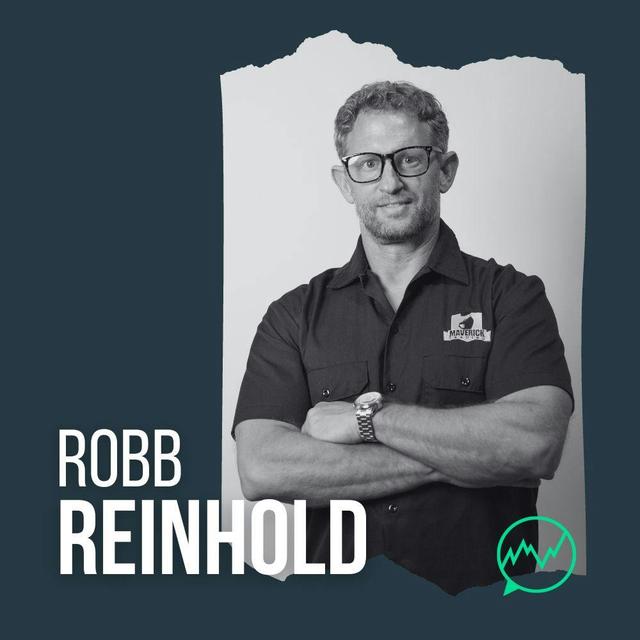



¶ Introduction, Sponsor & Experiment Overview
Chat with Traders is brought to you by Trade the Pool. Did you know that every decade the market reinvents itself? Online brokers opened the doors, mobile apps made trading seamless, and commission-free trading erased barriers. Now a new era has begun. Meet, trade the pool, limited risk trading. And now you also have unlimited time to reach the profit target. From now on, your trading risk is capped, and your trading opportunities are limitless.
Trade the pool funds home-based stock traders with up to$200,000 in buying power. That means you can trade larger positions and scale your strategies without risking your own savings. It's time to trade with more capital, making it truly worth your time and effort. Ready to trade the pool? Click the link in the description and join the stock trading revolution today.
Trading in the financial markets involves a risk of loss. Podcast episodes and other content produced by Chatwith Traders are for informational or educational purposes only and do not constitute trading or investment recommendations or advice. You can't solve these things by discipline. So, so if you keep making the same mistake over and over again and you think I'll just be more disciplined next time, and then you make the same mistake again, at some point you have to recognize, oh, this is me.
This is who I am. And I obviously have zero power to change this. How do I trade successfully in spite of this? Once a trader gets to that moment. It's a beautiful moment because they no longer beat themselves up, they no longer feel bad at themselves, and they start to build systems. They start to look at this saying, I am terrible. I'm always going to do this. How can I possibly trade? With this flaw of mine. Hey, welcome everyone to Chat with Traders. If you're new to the podcast,
A special warm welcome to you and to our loyal listeners. Thank you for your support and listenership. You keep us going. So we're on episode two eighty seven and I'm your co host, Tessa. Can I say wow? I'm so excited about this episode. What do Ouija boards, scrabble tiles, Kiwis, and March Madness have in common Specifically with trading. And when was the last time you ran an experiment to test a hypothesis?
I love experiments, especially when they're complex and someone else has already conducted it, and all I have to do is review the results and reap the benefits of their awesome work. But I suspect I'm not the only one. Well today our host Ian Cox chats with Rob Reinhold, a veteran trader of twenty-seven plus years in the financial markets, and he's also the head trader and founder of Maverick Trading.
We reached out to Rob because we recently learned about a very intriguing year-long trading experiment that just concluded. That Rob calls the Flat Earth Trading Society experiment. Yes, you heard it right, Flat Earth. I just love it. Well, I won't spoil the details because I don't want you to miss this episode. And all I will say now though is that as a day and swing trader I found this discussion
So refreshing and so eye opening. After learning about Rob's trading experiment in more detail, which by the way was conducted in a live trading account and shared publicly, I felt So relieved and hopeful for all of us traders trying to make it out there. Friends, if you have been beating yourself up because of trading or had a rough trading summer, please don't give up. I promise this episode will recharge you.
On behalf of Chatwith Traders and I dare to say the entire trading community and the whole wide world, thank you so much, Rob, and your team for conducting and sharing this groundbreaking trading experiment. And by the way, we'll have links and information related to today's discussion in the show notes for this episode. on our Chat with Traders website. So make sure you visit our website, chatwithraders.com. And if you haven't subscribed to our email list, please do so so we can stay connected.
Now without further ado, ladies and gentlemen, we are so pleased to present Rob Reinhold from Salt Lake City, Utah.
¶ Robb's Early Career & Learning Curve
Well, officially, Rob, welcome to Chat With Traders and let's dive right into your background. All right, well it goes all the way back to 1997. Got a hold of some early books, and this is the very beginning of online trading. I decided that that's what I wanted to do with my life is be a trader. And I uh decided to play around and kind of do it on the side and end up doing pretty well.
And then like most people, pretty much common theme in trading is you do pretty well at first and then all of a sudden you find out it's a little harder than you thought. It's the Dunning Kruger effect for sure. When we all start trading. Are you familiar with the Dunning Kruger effect? No, no, tell us, what what what is that? Sounds like uh uh something related to psychology. Absolutely. The Dunning Kruger effect is basically you start with zero confidence and zero information on a subject.
And typically what happens is once you get a little bit of information, your confidence skyrockets to the highest point it will likely ever be. Even though you don't have any of the actual experience, you have this confidence that you do. And then the confidence comes down as you realize it's a little bit harder. And then at some point it bottoms out and actually starts to go higher again in the future, but you never really get back to that very first point of.
Where you knew it all. And that's really probably around the three to six month mark of trading. I don't know. D did you ever experience that? Oh yeah. Um yes. Uh but maybe thankfully for me, I started off with some losers, so uh I got uh the education done early. Perfect.
Perfect. Yeah. So I I lost some of my money that I gained and I learned about a trading firm called Maverick Trading in Salt Lake City, Utah. And I went in there and I was able to sit with other traders who had a lot more experience than me. And I can't tell you how much I learned just sitting next to people because I had my way of doing things and I thought, hey, it's gonna work. I've done some backtesting and I was a real big fan of indicators.
And the guy next to me, he was always buying things that had already gone up like 10, 15, 20%. And I thought, this guy's insane. This guy's crazy. I mean, he's just chasing things. And so I would buy the things that, you know, quote, hadn't moved yet or were trading at a good price. After about a month and watching him pretty much win every day and me, you know, have okay results, I realized, oh, there's a lot more that I need to learn about this.
So that's really where I started out was 1997 and very early in the online trading game. Nineteen ninety seven. So that was during the dot com boom, right? Yep. Right. Boom and then the butt. What made you seek out a prop firm? Because I I remember I was trading back then and I didn't even know such a business existed. Uh all the traders I knew, they just traded from their computer and and they thought that was good enough.
At that point, Maverick Trading actually was not a prop firm. They were just a regular broker dealer. The difference was you could go into their office and they had a T1 internet line, they had all the systems. to where you could actually trade real time. Because if you remember back in 97, you really couldn't get internet in your house that was reliable at all enough to trade. So the the only way you could really do this was to find a firm that had an office.
So um you didn't have any other career aspirations? I mean, did you get sucked in um b back then I there weren't any Lamborghini videos uh showing off uh how much money traders made, right? Where did someone introduce you to it? Well, I'm trying to think of how I got introduced to this first. Um, you know, I met a gentleman who did some real estate when I was 19, and I thought that was just really cool and just a really cool way to do business. So
I got all fired up about real estate and I started doing stocks on the side. And I just realized that stocks were a lot easier than buying and flipping houses. I love buying and flipping houses. It's still something I think is just phenomenal. Uh, but it's a lot of work. And your capital is tied up for like six months.
So I was having this boom and bust where either we had a lot of money or we we had a bunch of houses that needed to sell. And I just said, you know what, I want a more smooth existence. And of course, again, Dunning Kruger effects. Oh, I want a smoother way to make money. Let me be a trader.
¶ Mastering Position Management & Experiment Origin
W when you started taking losses, is that when you discovered the Dunning Kruger effect? Did you seek out uh this this knowledge? Um seeking out this knowledge. I'm not totally sure what you mean by that, but just the knowledge of being a profitable trader. There's, as you know, thousands and thousands of ways to be a profitable trader. And the entry is the smallest part of a trade.
And what really got me over that hump was position management, is having solid position management. And I found that through the use of options. I found out that as I I got a little bit more seasoned, I could be disciplined nine out of ten times. And nine times out of nine, I was perfect. And then one out of ten times I would just mess it up. So I got into options and I realized, hey, with an option, I can position size for max loss.
where I literally can't lose more than whatever it is I have determined. That right there made it to where I didn't have to fight the battle nine out of 10 times and doing it right and then losing it. I automatically made it to where I literally couldn't lose any more than just my, you know, half a percent of risk or 1% of risk or whatever I set it at.
That really helped get me over the hump because as we all know, trading mistakes are pretty much what kill young traders. And it's all on the position management. It's not on the entry, it's on the exit. And uh so it sounds like you you at a early stage. You got into um trading aspects that many traders sometimes take years to learn. Was that a result of being around other traders that really helped ramp up your uh education?
Absolutely. And one of the first uh stories I remember hearing from one of the guys at Maverick Trading. Is he told the story about there was two guys, and again, it was all like second and third hand stories that you heard back then before the internet. And the story was that there was two traders, and they had a premise that it didn't even matter how you pick stuff.
And to prove this, they hung up the Wall Street Journal pages on a on a wall and threw darts. And whatever stock the dart hit, they flipped a coin, heads that went long, tails that went short. And their premise was It doesn't matter how you choose them. All that matters is how you manage them. Basically selling losers and holding winners. And the story went that they did this for 18 months straight, picked 10 new stocks every month, and they never had a losing month.
I have scoured the internet for this information. I have gone everywhere and I've even asked in public forums and I think it was part of the Turtle Traders system, if you've ever heard of the Turtle Traders. Yeah. But but it only exists as a story. The data does not exist. So that's actually why I started what is called the Flat Earth Trading Society, is because I wanted to have this data to prove to the world that It doesn't really matter how you pick them, it's all about the management.
¶ Experiment Design: Name, Focus & Rules
Well that that is a good segue. I uh watched many of your videos on YouTube on the Flat Earth uh trading experiment. It's kind of a funny name. Uh what was the catalyst for your t for choosing that name? It's uh quite amusing. Oh boy, it was it was fun. I I wanted to do something that, you know, was conspiratorial, you know, or something like, oh, get catchy.
In retrospect, I actually hurt myself because all of the videos on YouTube are labeled with a disinformation warning that the earth is not flat. that the earth is actually round. And so I probably got punished by the algorithm, uh, but not a big deal. But I wanted to basically say, hey, the the thing that you've been led to believe. That the entry is so important because if you go out there and you look at all the books, all the magazines, all the websites, 99% of it is about the entry.
It's all about the entry. Oh, getting in at the right candlestick, getting in at the right moment. And there's very little about the example. And the exit is where the money's made. And we've all heard that, even new traders know that's true. But yet 99% of the information out there is all about the interest. Uh, why do you think that is? Is it just sexier to talk about the entry? Yes, it's absolutely sexier to talk about the interesting.
And if you think about, you know, you know, stories you tell about, you know, when you got in, you never brag about really when you got out. It was always like, oh, I got it at the perfect moment or I got in at the right thing here. You know, very rarely do people ever talk about the The the entries are just much sexier. So you created this uh experiment and then uh what were the rules uh for this experiment? So I determined we're going to do a hundred trades.
And in the initial video, I talked about why I believed this was going to work. And the whole premise is, and we we talk about this with our traders and Maverictrading all the time, is that You're going to make 10 trades. So let's just say that any trader out there, they're going to make their next 10 trades and they're going to do their research. They're going to look at their charts. If they do fundamentals, they do fundamentals. The only
Trades they're really going to make are the ones that they think are actually the best. Those are the only trades you end up making. Here's the irony. Even though you tried as hard as you could, you got into the charts as much you could. Here's the irony. Four out of ten are going to be losers. Right off the bat. Four out of ten. You did everything perfect. Did it all right. Yeah, why is that? I mean why why four out of ten would be losers?
Okay, I'm just throwing out a number. Um, okay. So let's let's say you had a 60% win rate in your trading. You know, that means that 40%. of those ones you thought were great were actually terrible. The only reason you made them cause you thought they were good. So I'm just throwing a number out there. Uhhuh. And then out of, you know, let's say three or four of them, they're going to be okay winners. They're gonna be okay, not not fantastic, but okay.
And then in that group, you're going to have one. Only one or two of those trades are going to take off and either run if you're long, go down if you're short. Only one out of two, one or two out of ten. And actually, if you take a look at the worst ones, you will likely have one or two that turn into real serious losers. Now remember
You took all these trades because you had all the lights. You had all the green lights. You had all the everything. And I talked about how this is trading. You need to understand. that whatever system you use, you are going to get a bell curve distribution of results.
It's always going to be a bell curve. Most of the trades you make are going to be somewhere like pretty good, pretty bad, somewhere in that middle. And then you're going to have your your next ones that are, ooh, these ones were really good or really bad. And then out of a hundred trades. You're going to have at least One or two that are absolute home runs that just run and run and run and run.
And then on the other side of the bell curve, you're going to have one or two that are literally the worst trade you've probably ever made in your life. Now that is a guarantee. Now we all think, oh no, I just won't pick those. Yeah. So the premise was: hey, if we simply cut off the left side of that bell curve with a, and again, we used a 2x ATR trailing stop.
It was a pretty simple strategy. I wanted it to be simple. I've had people reach out and say, Rob, is that the strategy? I'm like, no, there's there's much better ways to do this. But it was a simple two ATR trailing stop. So for people that aren't in or are familiar with average true range, it actually measures the average volatility of a stock. So a more volatile stock gets a wider stop and a less volatile stock, it's a narrower stop. So it's just dynamic on the volatility of the underlying.
And then our rule was that again, we put in the 2x ATR stop. So if it goes against us, as soon as it hits 2x ATR, it's gone. And we did one percent rip. 1% risk on every single trade. And then the rule was if we did get to a 2x ATR profit, then we'd use a dynamic system and we'd move up to 1.5x ATR. So just snugging up that that gain a little bit or that stop to make sure we have a gain. And if we got to 4x ATR, we then moved to a 1x ATR stop, and that was it.
¶ Experiment Logistics & Random Selection
So we ran this over a hundred trades. I started this experiment on August first. 2023, and we finished it somewhere around July 20th of 2024. So it took almost an entire year to go through this. Did did you expect that it was going to take this long or uh what was that your expectation from the beginning?
I really didn't have an expectation of of how long it was going to be because I was just making these trades when I had free time. You know, whenever I had some free time, I'm like, hey, I got time to do one of these because Unlike just making a trade, you have to go live, make a video, do editing, do all the stuff. So it was, it was a probably 30 to 45 minute process. to actually make a trade, make a video on it and and produce it and upload it. So it it ended up being about
three to four trades per week and we were trading off of the daily chart. So these trades weren't, you know, super quick trades. They typically lasted, oh, I actually don't have the data for that. I got a lot of data for you. But I don't have the data for the average holding period. My guess would be the average holding period was around 12 days. Uh and that's because of the of where you put your stops or where the your system
that uh that you followed, you would either raise a stop um or you'd get stopped out early. And so that was just as a natural it just happened naturally. Correct. However you're Yeah. And if we used if let's say we used a 1x ATR stop, that would have definitely shortened the length of a trade. And if we made it wider, we'd be in things for longer, for sure. Well, how how did you get a chance to pick the stocks? I mean, what was your method?
Well, I use a lot of methods and I wanted to have fun with this. I wanted this to be a fun experience. So uh we did some Scrabble tiles. So I bought some Scrabble tiles and dumped them out on my desk and filmed it and I just flipped them over at random and uh whatever ticker symbol they made, then that was the stock that we picked.
And then what did we did? We did have a trend following rule because we're big trend following adherents at Maverick trading. All of the, all of the data, all of the research shows that there is an edge in following the trend. Our basis or our decision of long or short was based on the slope of a 13 period estimated moving. So just whatever the slope of the EM EMA was at the moment, we went either long or short based on that.
Uh we use lots of other fun things. I even bought a Ouija board. Um my wife was not happy about that. She's like, you can't have that in the house. So I had to leave it out in the garage when I wasn't using it to pick trades. And Amy is dumb. I I, you know, I closed my eyes and I ran my hands over and whatever letters it hit, those were the letters. And then we made a ticker symbol out of it. Um, I do a lot of travel.
So uh I traveled over to Europe for about a month or two during the experiment. So when I was in Spain, we chose some some stocks headquartered in Spain. When I was in Germany, we did some some stuff with Germany and some ETF. So had a lot of fun. I tried to keep it pretty interesting, uh, lots of some sports stuff as well. We did some March Badness picks. You know, based on the teams and and where they were headquartered.
I tried to make it as random as possible, just to show that, hey, you know what, there is no cherry picking here. It's truly random. Uh d did you use the thirteen uh day EMA because you've used it in the past with uh good results? Yes. But again, that 13 was selected for the 2X ATR. You know, you gotta make sure you're matching up all your indicators with your position management. you know you can't use really short term things to get into a position then have a very loose stop.
I mean, you could. Look, if it tests out and you back test it and test out and it it tests out well in demo trading, sure you could use it. But typically you want everything to match up as close as possible.
¶ Understanding Stop-Loss Mechanics
Have you ever watched a stock explode and thought, if only I had the capital, or sat on the sidelines because your account balance felt too small to matter? Good news. With Trade the Pool's limited risk platform, you don't need millions or even thousands to start trading the US stock market. Bypass the PDT and tap into over twelve thousand US listed equities. From penny stocks to big caps, ETFs, even the newest IPOs, and short anything you like, with zero locate or hard to borrow fees.
Start your evaluation. Get funded with up to$200,000 in buying power so you can go big without risking your own savings. And now you can also have unlimited time to reach the profit target. It's a game changer. Not ready to trade yet? Trade the Pool offers a free demo and educational resources. Practice on live data, master the platform, and build confidence risk-free before you even pay a cent. Click the link in the show notes to start trading with Trade the Pool's capital.
Mm-hmm. And what's a chance using a two ATR stop, what is the chance of getting stopped out, say within a certain period of time? Well look, we actually didn't even discuss this beforehand, but if you watch the first video, we talk about there's around a 33% chance that it's stopped out within the first five days.
And the way we measure this is through the options market. So if you if you pull up some options chains and you run some analysis, it tells you, hey, this is the odds of a stop out in the in the first five days. So we knew right out of the gate. You know, roughly a third of our trades we made would be stopped out in the first five days. We just knew that based on statistics. Uh-huh. Uh-huh. When do you when do you move up the stops again? So the rule was if we got to a 2x ATR profit.
So for example, if there's a hundred dollar stock that has a two ATR, that means the the trailing stop would start out at four dollars of a trailing stop, which is at ninety six. And then for those of you that don't know what a trailing stop is, it moves with the stock. So if the stock goes up a a dollar, the stop moves up.
If we would get to 104, which would be the 2x ATR target, we would then move our trailing stop to 1.5x ATR, just snugging it up a bit. At 4X ATR, we'd snug it up a little bit more to 1X, and then that's it. And then nothing was done after that.
¶ Outliers and Universal Trading Truths
Did you ever get any stocks that uh continue to run, uh, even with such a tight stop? Yes. And it was actually our biggest win. It was when I was traveling down to New Zealand and I was at this just amazing waterfall. And for any of you who've been to New Zealand and any Kiwis out there, I I can't wait to come back to your country. It's amazing. It's covered with water everywhere. So I'm like, hey, let's do something with water.
So there are a few water ETFs. ETFs are just bundled, they bundle together some stocks that have to do with water. And that was our largest and longest winner. Uh so we made, I think it was like 7.5 X ATR on that one. And I want to say we got into that one end of January and didn't get stopped out until like mid to late March. So that was like four probably 45 days of length. that it just continued to move without a big enough pullback to to knock it out.
Wow. Yeah, that is a quite a quite a long time. But out of a hundred trades, that's guaranteed to happen. I mean, out of a hundred trades, if you let your trades run that are going to run, you will get one or two out of a hundred that are going to do that. Hm. So that's a s statistical fact or or figure that you're just going on the laws of statistics that eventually you don't know when you're gonna hit that um that big gainer, correct? Correct.
Correct. But we also need to admit that we're also going to pick a stock that goes against us like that. that just goes against us and over and over and over again, every day going down without any sort of meaningful bounce. That's why we have the trailing stop in there to cut those off and limit them to a 1% loss. Wow. Uh one of your videos you uh said Trading is trading. It doesn't matter what you trade. So just curious, uh, how is this? Um, are all markets the same?
No, all markets are not the same. All trades. It's a ticker symbol and a price. That's it And that the ticker simple, whatever it is, the underlying, is going to go up or down based on supply and demand. Period. So that's what I mean by trading is trading. It's universal. If you're trading gold, if you're trading bond futures, if you're trading forex.
Everything you're trading is a simple that has a market price that goes up and down based on supply and demand. Now there's lots of little rules you got to learn for different markets. a lot of you know leverage rules or margin rules and every market is going to have different levels of volatility. Some markets are going to be much more volatile. But in the end, I use the example of that driving is driving.
You know, you could drive a go-kart, you could drive a steamroller, or you could drive an F1 car. In the end, the mechanics are pretty much the same. The they all work the same, but Some go faster than others and some are more dangerous. And there's little things you have to learn. But that's what I love about trading. It is universal. Once you really get it down, you should be able to trade every single market out there.
¶ Performance, Purpose, and Psychological Streaks
I noticed then after you've done fifty nine trades uh through the system. Notice that your account was near break even. And so I'm just curious, after so many trades, one might think that this experiment is a waste of time. Yeah, and at trade number 59, I was thinking that myself. Okay. As you can see, look, when I did this, I said, look, this could fail terribly. You know, if if we just got a bad batch of statistics.
where hey something happened and just this it didn't match up to the market at the certain period of time. I knew that at the end of 100, there was a possibility that it could be at a loss. Like I fully knew that and understood that. And at trade fifty nine, I said, Oh. We'll see where this goes. We'll see where it goes. But look, that's trading. That's trading. You you slug it out day after day after day after day. Have more winners than losers. Win bigger than you lose.
Do it over a long period of time and you're gonna be really successful. So tell us about the uh losing streaks. What what happened with there? I imagine you probably had a uh a losing streak somewhere along the way. Yeah, we did have a losing streak. And just I we haven't yet talked about total return. Let's just get that out of the way. So the account was up like 15%. So we started out with a hundred thousand dollar account and it ended up right at$115,000.
So it you know, overall there was a return on it. Did it beat the SP 500 during that time? It did not. It did not. And I've even had some people say, oh, this experiment was dumb. It didn't even beat the SP 500. I'm like, look, that was not the point of it. I was using a Ouija board for goodness sakes. Like like with with good entries, you can add on that. And that was the point of the whole experiment. If you have your position management down. And it's really good, you should be profitable.
I I don't want to say right away because that's Giving people too much vocal. There's a lot of work to do. But you're at least starting in a very good situation as a trader to where then your entries really start to matter. Really start to matter. So let's talk about the streaks because this was the most interesting part of the entire experiment. And I've been trading now for 27 years and it still surprised me like, oh my gosh, this is amazing.
So our best streak, we had we had three streaks that were the same. All the most we had was uh a five win streak in a row, but we had that three separate times. The largest streak we had was from December 11th to December 20th. And that was a gain of$8,600 or 8.9%. So we had this really big gain right in early December. Now interesting. When do you think our Longest or worst losses. Uh probably right before or after it's Right after. Right after.
And so again, this is this is just totally randomized trading. This is picking stocks out of a hat. But just like in real life trading, you have street. And one of the things we talk with our traders is about is we give them charts that show like if you flipped a coin a hundred times, what are the odds that you would have seven losers in a row? I actually do know the odds. Um it's about 42% of the time.
Well really forty two percent of the time you you would have seven you would flip the coin in, you'd have like seven tails in a row. Seven tails in a row or seven heads in a row. Really? So statistically speaking, you're highly likely, very highly likely. to have seven winners or seven losers in a row. That's just statistics.
Well, what happens in trading is once we have these streaks, we either start to think we are the dumbest people in the world. Or what is my Achilles heel in trading? And really hurt me in my first probably five years in trading. was after I had the winning streaks, I started to think I was really smart. And I'd say, Rob, man, you got this. You did it. You found the holy grail. You did it.
And you get, you know, lots of confidence. And for me, I'm a big extrovert. So when I get like excited, I want more. I want more. So I want more gains. I want more trades. I want more position sizing. I want more of everything. So what happens is, you know, of course, that leads to a really big drawdown.
¶ Consistency, Drawdowns & Overcoming Bias
That is all psychological problems that we bring on ourselves as traders. But this is just purely statistical. So we had our worst drawdown was from December 20th to January 24th. And that was uh 10 out of 11 losses. And the the one in there that wasn't a loss was a break-even. So let's just call it 11 losses in a row. So right after we had that big run, we had the longest and largest pullback of the entire experiment.
Now again, as traders, this is exactly what happens. And we get into psychology of what's going on in our minds. We have the big runs, we start thinking we're smart and we get aggressive. And then we have these big pullbacks. And then we start thinking we're not good. And then we talk about things like, well, maybe I shouldn't uh take the next trade my system gives. Maybe I should, you know, just sit out for a week or two. When do you think we got our largest gain of the entire experiment?
Oh what, maybe after a long losing streak? Yep. Yep. Interesting. Yeah. stock I picked in New Zealand was the largest gain and that came after an eleven loss straight. So if you would have chickened out, if you would have backed away, if you would have deviated from your system, you miss those moments. And I really, the whole point of this experiment.
And this has kind of been the tagline at the end is that consistency beats intelligence every single time in trading. If you want to be good at trading, Stop thinking you're so smart. You're not smarter than the market. Start thinking about how do I consistently enact a system that has an edge in the market. And that's what this whole experiment was about. It's just to show people what an absolutely robotic system can do for you if you don't deviate from the rule.
So in this experiment, did you use any top down or sector analysis to manage your positions? No. None. Interesting. Well again, but that was the point. Now in real trading, you should absolutely do that. But remember, I wanted this to be as close to 50-50 randomized as possible. So no, we didn't use anything like that. This was purely just 2x ATR.
Uh, I like to go back to when you said that uh after you have a had a long winning streak uh in your earlier years, uh, that you would uh get overconfident and then that would end up leading to uh losses afterwards. And I'm just curious, what about the different quality type of setups and and increasing position sizing based on the quality of the setup?
¶ Personal Trading Mistakes & Dynamic Sizing
Great question. I think there's a couple questions in there. Um let me first tackle the first part of my Achilles heel of getting overconfidence. Um, it's something that really just got me, it really took me probably about seven or eight years to really do it. And the last major mistake I made on this was 2008. And I still remember, and I got to tell the story just to help everyone out to a way they don't do this. During the collapse in 2008,
I love pyramiding in forex. That's one of my favorite strategies is to pyramid. Now, pyramid is you take a position and then you add on to the position if you have a gain. And if you have more of a gain, you add on more of a position. Now it only works when there's a major move. But I pyramided into forty-four lots. Of Aussie Yen short. And the market dropped, everything fell away. The yen was spiking. And I remember that trade was my biggest trade up to date of like$185,000.
And it was like awesome. I I'd been building this trade for a couple of weeks, adding on, adding on, adding on, adding on. And then again, the all the banks started collapsing and it was just a great gain for me. And I remember just being on top of the world. On top of the world. And I even told myself, Rob, this is where you're dangerous. So why don't you just not trade for a week? Why don't you just not trade for a week?
Well, I didn't have the discipline to do it yet. So my next trade, and remember I I said as an extrovert, my next trades need to be bigger and better and more. I started with a hundred lot position. In a forex trade. That is a giant trade. And I remember when I hit the button, my PL showed negative 3500 just from the spread. Oh my god. And I remember when I saw that, I thought.
Uh-oh. But again, I didn't want to take that loss and it went against me. And I closed it out finally and gave back about half of what I had made, building that trade over weeks and weeks of very meticulous methodical trading. That's that's something that I am just have really struggled with. Now I'm so happy to say that I've I haven't made that mistake in what is it, fifteen, sixteen years now?
And I just I don't have any compulsion anymore. And that's what's really nice when you trade long enough to where you don't even have the compulsion to mess it up. Right. So that's the first part of your question. The second part was about a dynamic position sizing. System. I love it. I absolutely love it. I'm a big fan of basically having a system where you take larger positions when you have better odds in your favor.
And we teach this to all of our traders in Maverick Trading and I give a poker analogy. Now, if you do you play any poker? Uh no. Well poker works just like trade. You get a couple books, you learn about the odds of the of the hands, and all of a sudden you go to you know Vegas or something and you think you're pretty good. Well, there's a lot to learn about in poker. Even if you have an ace eight.
Depending on where you're sitting on the table, your odds are dramatically higher or dramatically lower. I didn't understand that when I played poker. uh at first, but I learned it and I realized, oh, my odds completely changed with ace Ace. If I'm on, you know, if I'm on, you know, the worst position on the table and there's nine other players trading, I might only have like a sixty percent chance to win. But if I'm in the best position on the table, I might have an 85% chance to win.
You're saying your location relative to the dealer? Yes, absolutely. It's basically when you get to bet. There are places where you have the ability to either fold or to raise. they give you a big advantage. It's really about when you are betting. not specifically where you're on the table. It's, I mean it is where you're on the table because you that changes as the the dealer goes around.
¶ The Psychology of Trading & Systems
So yeah, they're different odds. So I absolutely love the idea of dynamic position sizing, but it has to be done the right way. Most people use it. with how they're feeling at the moment. And you know, I shared this with you a little bit earlier. One of the things uh I love to study psychology.
And I tell people, I haven't read a book on trading in probably 15 years. All I read is behavioral psychology and how the brain works. And one of the studies they did, they hooked up people up to an MRI machine to measure their brain activity. And they made them play blackjack. And during the game of blackjack, they were just playing, there was no money involved. Pretty much all of the um brain activity was in the pre-frontal cortex where logic and reasoning.
Then they gave them money, and they got to keep the money that they either won or lost. Um I keep the money at one. And all of a sudden, the MRI showed less brain activity in the prefrontal cortex and a lot of activity in the insola, which is where our fight or flight response. When there's money on the line. You are literally using the wrong part of your brain to make decisions. And so we we talk to our traders about this and we say, look, your position management.
It has to be clearly defined. And if you can automate it, automate it. Because you are literally incapable of using your prefrontal cortex. when you have a position with money on the line. Now look, as you get better as a trader and have more experience, you'll probably be able to use more of your prefrontal cortex in those moments. But in the beginning, as a trader, I'm guessing it's almost all fight or flight.
Interesting. So so some say that um again that we are not the same person after entering a trade that we were just prior to the trade because Why um that other part of our brain kind of takes over because there is money on the line. We have skin in the game. Yes. And there was a fantastic book called The Hour, The Hour Between Wolf and Dog. That's the title by Dan Coates. It's a great book. It's a trader who used to work on trading floors.
And when he was there, he saw some people rise to the occasion and and seem to make the best decisions when there was pressure on the line. And then some people just fell apart and made the wrong decisions. He was super fascinated by that. So he actually went back to night school to get his uh neurological degree. uh to study the brain. And the book he wrote was about what happens between wolf and dog, you know, to where it's kind of like Dr. Jekyll and Mr. Hyde.
What actually happens in the brain. And there's tons and tons of research in that book of what scientists have gone through and shown that yes, we are not fully. capable of using logic and reason in situations when money is on the line. It's just a phenomenal book. I highly recommend it to everybody. It's a tough read. It's a tough read. It's very scientific, but it's fantastic. I see. So so creating a system is essential for protecting ourselves from our other selves.
Absolutely. 100% true. I mean, you nailed that one. Interesting. So so this process of you kind of discovering yourself and your tendencies, uh you started in nineteen ninety-seven and it what wasn't until 2008. that it really hit home for you, um, the need to establish a system. Oh no, no, it was definitely before that. That was just the last time I had, you know, really messed up.
And deviated from my system. And and dung, you know, dung something I probably, you know, in hindsight, said that was an emotional decision based off of emotions, not on logic and I see. So if if you if you were hooked up to an M R I machine back then in two thousand eight, then uh maybe you were using other the other part of your brain that uh That's not necessarily good for trading, right?
No doubt about it. Absolutely. If I was hooked up to an MRI machine, you would you would be able to look at the graph and say, oh, he was out of his mind. And that's why it's so important. as a trader to to really understand this because you that that's why traders fail. Traders fail because in those moments. They deviate, they fall apart, they they move stops, they they or or they're scared and they don't take a position that they know they should.
So, you know, out of their last 10 trades, they missed the two good ones. You know, we talked about how there's going to be two great ones in that group of 10, but what if you chickened out on those because you just had three losses in a row? It's all about following systems and being consistent. It's just so important. And I learned that early on in life. And I was really happy that I took a real deep dive uh psychologically after about two or three years.
and just really started to learn everything I could about this. Cause I a I asked myself the question, and I'm sure you and every other trader who's ever traded before How in the world can I be a disciplined person? I love to go to the gym. I love to eat right. I have no problem in all other aspects of my life. Why can't I follow my rules in trading? Have you ever asked yourself that? Yeah.
Yes, uh uh certainly. And what do you attribute um why traders can't follow their their their own rules? Is it just uh it's just a weakness of human beings, how we get overwhelmed by Um, you know, prior to making the trade, we can be very analytical and logical. And once we're in the trade, we're a different person. Yes. And again, this is where, and this is where I got to that that I think is a really healthy place for all traders to get to. I used to beat myself up.
¶ Embracing Flaws and Realistic Self-Assessment
You know, I tell people trading has brought me to tears on two occasions. We can talk about those times later if you want to. But you have to understand that there's no way you can do it. So once you get rid of the fact that it's not discipline, you can't solve these things by discipline. Mm-hmm. So so if you keep making the same mistake over and over again.
And you think I'll just be more disciplined next time. And then you make the same mistake again. At some point, you have to recognize, oh, this is me. This is who I am. And I obviously have zero power to change this. How do I trade successfully in spite of this? Once a trader gets to that moment. It's a beautiful moment because they no longer beat themselves up, they no longer feel bad at themselves, and they start to build systems.
That work. They start to look at this saying, I am terrible. I'm always going to do this. How can I possibly trade? with this flaw of mind. And then they change and they build systems around their weaknesses, not trying to just be disciplined on their weaknesses. It's a beautiful moment for traders when they stop beating themselves up and start really saying, I am terrible at this. Let's never put me in this situation.
Mm-hmm. So the discipline then um that's needed comes in designing your system and setting clear rules and just following the system. Yes, yes. And again, we we've heard differently. And so many people are still, you know, fighting for that discipline. And it's because they're doing things that that is inherent in their nature. At one of the Trader Expos years ago, I gave a guest speech. And the first thing I got up and said, I said, Look, and it was
Probably not all that nice is that hey look, we have all of these booths here with all this software, with all of this help, with all these wonderful products to help you as a trader. Here's the problem: none of them are going to work. Why? Because you suck. And I sat there quiet for about two or three seconds. And everyone was like looking around like what? What did this guy just say? And I said, look, look, I suck. I suck. Let me tell you about me. I'm a chronic over trader.
I get really confident after a long winning streak and then that's when I do dumb stuff. So it started to become like an AA meeting. Like, hello, my name is Rob. I'm an alcoholic. Hey, my name is Rob. I'm an overtrader. I do this all the time, and I can't seem to not do this problem in trading. And I started talking about, yes, admit it. It is liberating when you just ad own it. Own your failures. Own your things you you cannot use discipline to overcome. Own them.
And then really start thinking about how do I trade in spite of my negative. Uh personality. Uh, why do you think many traders believe they can significantly beat the market? I mean, is it just the Dunning Kruger effect, uh just general overconfidence that's built into human beings? Yes. I mean the answer to that is yes. You asked people, you know, how many, if they did a poll on this, they asked how many people thought that they were above average intelligence.
Now again, average is fifty percent. But eighty one percent said yes. That they were above the average of intelligence. So yeah, we we do this as humans. It's it look it's one of the things that makes us amazing. We're optimists, we think we're great, we're we tackle things that we should have never had any right to tackle and yet somehow succeeded them. It's it's a really good feature of humanity, but it also, you know, you need to be realistic about it as well.
So if you were to run the system again or something like this, or in how you trade, uh, what are some entry strategies that you would implement? Over the years I have um Really gone towards this experiment where entries are very important in the fact that you need to have entry strategies. Just for the reason that you're not following emotions in trading. But when we come to entry strategies, there's there's thousands of strategies that can be back tested and shown to have an edge.
So uh at least for again, I do all styles of trading, but I mean, are you should we talk stocks? Should we talk options? Should we talk forex? I mean, they they all have some different strategies.
¶ Effective Entry Strategies & Research Pitfalls
Yeah, yeah, let's do stocks. Okay. As I said earlier, big fans of trend following. So we like to get, you know, multiple timeframes. all in the same direction. So, you know, you got a a weekly chart going up, a daily chart going up, and let's say you're trading on like a four hour chart. You know, the best trades you're going to make. are going to be where everything is lining up and it's in a major trend. If you're trading stock.
You are trading Delta or you're directionally trading. How much money you make is going to be determined by the trend of the market, the sector, the industry group, and the stock. All of that is going to determine how much it runs. That's going to make the best trade. So when we're out there looking for, quote, the best trade. The best trade is the trade that went up the most in the timeframe that you've traded.
So the question is how do you find that? How do you find that? And you know, we we like to go in and get multiple time frames in order. And then we're big believers in relative strength. to where you finally identify that right now, you know, well, let's talk about where the market is right now. Technology is is the worst sector. Semiconductors are the worst industry group. So we believe you go in there and you find the worst performing semiconductor.
And that's the one you go short. Now here's the problem. That one's already gone down 30%. My early trader, Rob, would say, I can't short that one. It's down too much. Why don't I get one that hasn't gone down yet? Have you ever made that mistake? Oh yes. Yeah, very much. So find the find the ones that haven't yet caught up um and are overperforming because the idea is that oh maybe they'll catch up to the pack and right. Yeah.
I always like to boil trading down to the to the most basic premise. The only reason, there's only one reason that a stock will go up. That there's more buyers than sellers. There's a million reasons why people buy and sell stocks every day. There's a million reasons why on any given day Tesla, people are in there buying and selling. We'll never know all those risks. But we do know that if Tesla went up today, it was because there was more buyers and sellers today. We know that for a fact.
So if you want to make money in trading. You're not trying to figure out anything about Tesla other than is there going to be more buyers or sellers tomorrow? If that is true and you buy it today and sell it tomorrow, you're going to make money. We we use a lot of things in trading to try to figure out what the supply and demand imbalance is going to be. We charts, we use moving averages, we have stochastics, MACDs, we use all these things.
But to boil it down very simply, you are simply trying to find supply and demand and balance. So go back to our example. If you're trying to find supply and demand and balance. And you look in the semiconductor sector. And there's one that has a big supply imbalance to where it's it's selling off because there's so many sellers and not new buyers. versus the one that right now there's an equal amount of buyers and sellers and you go short.
It can always reverse. Things can always change tomorrow. But you at least are starting the trade in the right spot. But if you choose a semiconductor stock that's actually going up right now, you're hoping and praying that that supply-demand pitcher turns around before you get stopped out. You are fighting against the wind. That's why it's just so important. Price action, so important. And we're just big believers in relative strength and weakness.
Going back uh to your earlier years, um, did you ever find that When you spent a lot of time, say researching particular stock to go long or short, and I don't know if you looked at fundamentals or or whatever, and then you thought that, oh, I've really picked out this gem to go long or short, uh, did that impact your decision to sell because of the t the time that you invested uh researching. Yes. And that was the absolute beauty of the Flatter Trading Society.
Talk about not having any any stake in a position. If you chose your position based on the Scrabble tiles that you turned over on your desk. And then it approached your stop and you say, you know, I know I'm right on this one. You would never say that. You would never, it would be the most ridiculous thing that you've ever had in your brain be like, oh, I know the scrabble tiles aren't going to leave me wrong or the the Ouija board spirit.
You would just get out. You would just get out because you've got nothing attaching yourself. The more research you do will actually hurt you in a trade. And we tell this our traders all the time: look, you've got to do enough research to where you're not just guessing. but too much, you're actually now making your position management a lot harder.
Because imagine if you, you know, I remember listening to conference calls after earnings reports as a young trader. And you know, you'd listen to all the people all the directors and CEOs on the conference calls and they'd say, We really like where it is. And and you're like, oh, I like how that guy talks. You know, he's really cool. I think he's I think he's right. I think the stock's gonna go up. And then tomorrow the stock doesn't go up.
I'm gonna have a hard time getting out of that. Why? Because I had a favorable opinion of the CEO on a conference call. Who maybe wasn't even telling the truth? Who knows? But remember, the game I'm trying to win is what's the supply and demand imbalance. Who cares what they said at the conference call? I I love to boil trading down to that very simple premise. Where is the supply and demand imbalance?
Excuse the last interruption here. This is Tessa. We hope you're enjoying this episode so far. If you love the podcast, Please give Chatwith Traders the best review you can on whatever platform you're listening from. This will help us to keep the episodes coming. Also, if you haven't subscribed to our email list, please hop on to chatwithraders.com and click on subscribe. so we can keep you posted of information that may be of importance. Thank you. Now back to the chat with our guests. Mm-hmm.
¶ Experiment's Impact & Statistical Outcomes
Uh so what did you um like best about this experiment overall? The thing I liked best at the end of it. We're the comments. Um, I had people that stuck with me for an entire year, cheering me on and being like, Hey, thank you for sticking with this. I didn't think you were gonna do all a hundred, but hey, good job, you know. And the best thing was, is the comments on my last video of people said that this got them over the hump.
to where they're now profitable traders. And they said it took this experiment for me to realize that I was the reason I wasn't profitable. And they took themselves out of the explanation. They removed themselves from the equation and they went to a systematic method of trading. And it got them over the hump. Well. That was the that was the whole point.
I wanted the data. Remember, I started out telling the story about those two traders. That's just a story. I want the data to where in five years, in 10 years, in 15 years, 20 years, traders are going to come across. And it's still going to be relevant to show consistency beats intelligence every single time.
And that's what the whole, hopefully the goal and the purpose of this experiment and what I achieved at the end of it. Uh it doesn't matter that it made fifteen percent. Who cares about it? It doesn't matter that it delivered a two to one risk reward. Like That those numbers could have been randomly different across any 100 trades we did. But the fact that it was profitable. then people can now add on their entry strategies and become more profitable.
Wow, fantastic. So could you uh review again uh the experiment uh takeaways? Well let's just go over the numbers. 15 return, 40 win-loss. I had a question on one of the videos saying, well Rob, why isn't this a 50-50? If it's random, why isn't it 50-50? Well, it's because of the stop. If we had no stop, then it it should be around fifty fifty.
You know, it should be around that number. But the fact that you have a stop means that some of the trades that, you know, uh go up a little bit. So with a trailing stop. If a trade goes up one ATR and then pulls back two ATR, it gets stopped out. But instead of being a thousand dollar loss, it was a five hundred. So that trailing stop is going to chip away some of your your stocks that potentially could have been winners, if that makes sense.
Because if you just kept your stop at 2x ATR, even though it had that big pullback, it could have reversed and gone much higher. But the fact you have that trailing stop, it's going to get a couple of those those stocks. It just had big pullback. didn't, you know, would have gone much higher. So again, forty percent win loss, uh profit factor one point three eight, risk reward two to one. Th those are just the numbers, but really. Wanted to show that just methodical trading.
over and over again, doing the same thing. And I was really happy I I had some of our traders at Maverick help me out because we did updates every time a trade was stopped out or every time we did an adjustment, we did a live update. to show this all when it was happening. So I was really happy to have some staff help me because it got to be a bigger job than I expected at first. But at the end of it all, you know, the results came out good.
¶ Personalized Trading Systems & Personality
Do not think that this is the holy grail, that you can just take what the Flat Earth Trading Society did and that's going to make you a great trader. That's not the point of this experiment. Figure out your own position management strategy. Backtest it, demo trade test it, test with some money, and craft it to where it really works for you. One of the first things we have our traders do is they take a trading personality test. It's based on Myers Briggs.
And they take the test, basically and ask you some trading questions and gives you what should be your Myers-Briggs score. And we talk about this is who you are. You cannot change who you are. I am an extrovert. I'm an e I'm very extroverted person. So if I if you took the test. And you came in as a big extrovert.
I can already tell you before you start trading that you're going to have problems with over trading. You're going to have problems with overposition sizing. I can already tell you the problems you're going to have. Based on your personality. If you're an introvert, if you're a strong introvert, you're gonna be an under trader. You're going to miss out on a whole bunch of trades. You're gonna chicken out a lot. I can already tell you.
So when you do build your system, you can't build a system that doesn't work for who you are as a person. So I really highly recommend. Um we do have a trading personality uh website out there. If you want to put it in, great. If not, look just take a Myers-Briggs test. But we talk about the strengths and weaknesses in trading of all of the personality types and what it means to you. You can either be a judger or a perceptive person. A judger sees the world in black and white.
So when they go out in trading. It's either a win or a loss. It was either right or wrong. That sets you up with such a difficult psychological challenge because you equate win with good, loss with bad. And you have a very hard time accepting that this is just an odds game because you're just flipping flipping a coin a hundred times and you're gonna try to be heads-on more than you were tails on.
People with a very strong J, they have a very difficult time understanding this because right or wrong, good or bad, it's just very difficult for them. So we go through a lot of those things in the trader personality test. Uh interesting. Yeah, the uh the Brig Briggs Myers test, as I remember, has sixteen different possible combination of uh uh personalities. So that's uh quite
Uh I imagine that's quite insightful. Your description of the introverted uh uh trading definitely fits me, so I resonate with that. Yep. Well and look, and this is this is where You've probably beat yourself up for it over the years. Oh yeah, definitely. Guess what? You can't change it. Just stop beating yourself up. Stop beating yourself up because this is who you are. So embrace it, love it, accept it.
And say, how can I trade in spite of this? And that's when you get over the hump as a trader, to where you're no longer fighting your battles. You're just building and planning and perfecting systems. And that's all you're doing. You're just trying to find systems that work. You've overcome everything that you know you're not good at. Fantastic. Rob will be sharing Rob's links to this experiment in in the show notes. Uh Rob, thanks for coming on uh Chat with Traders.
You bet. Thanks for having me. the end of this episode of Chat with Traders. But rest assured, There are more.