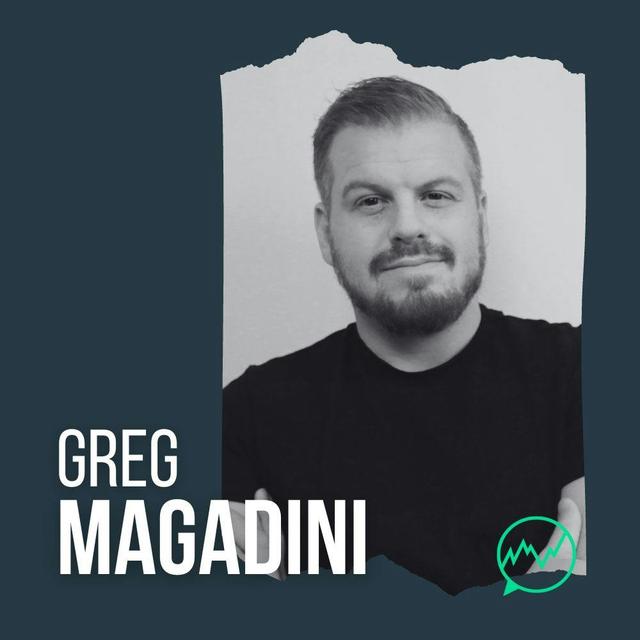



¶ Episode Opening: Sponsor, Disclaimer, and Host's Insights
Chat with Traders is brought to you by Trade the Pool. Did you know that every decade the market reinvents itself? Online brokers opened the doors, mobile apps made trading seamless, and commission-free trading erased barriers. Now a new era has begun. Meet, trade the pool, limited risk trading. And now you also have unlimited time to reach the profit target. From now on, your trading risk is capped, and your trading opportunities are limitless.
Trade the pool funds home-based stock traders with up to$200,000 in buying power. That means you can trade larger positions and scale your strategies without risking your own savings. It's time to trade with more capital, making it truly worth your time and effort. Ready to trade the pool? Click the link in the description and join the stock trading revolution today.
Trading in the financial markets involves a risk of loss. Podcast episodes and other content produced by Chatwith Traders are for informational or educational purposes only and do not constitute trading or investment recommendations or advice. Don't expect to have like this perfectly linear PL curve that you're making money consistently every day. Expecting that is like having a boxing career with n without accepting that you're gonna get punched in the face.
Like those things go together. And if you look at traditional firms, there's a reason why hedge funds have an asset under management fee. There's a reason why big banks who don't have prop desks anymore, but have principal desks also sell services. There's a reason why like prop shop.
give their traders a draw. You gotta smooth out that PL. So expect that. Otherwise, if you have like this unrealistic expectation of like an Instagram trader, which is like very popular right now, where everything is a profitable trade, you're not giving respect to the game.
¶ Introducing Greg Magadini: Trader and Entrepreneur
Welcome to Chat With Traders, episode two eighty five, I'm Tessa. Two years ago around this time, Ian and I took the helm of Chat with Traders and what a journey it's been. Hosting alongside Ian has been an incredible adventure and as always, thank you for your listenership and support. We hope you're doing well. So I'm not athletic and I don't usually watch sports, but I've been inspired by the twenty twenty four Olympics this year.
Have you been watching? My favorite things to watch are gymnastics and swimming. It's just so thrilling and exciting to see them perform. The Olympian's focus, practice, hard work, sacrifice, and winning mindset is truly amazing. Does this sound familiar? The mental toughness, discipline, and hard work? Those aspects of the Olympians remind me of the similar levels of commitment required for success in trading. Some of you know that I've gone all in on trading in the past couple months.
being even more quiet than I already am naturally and completely laser focused because I am going to be a successful trader there. I said it. You know, for a long time I found it hard to say those exact words to myself. out of fear of failure and being embarrassed. You know, like what if I don't do it? What if I don't make it? What if I can't do what it takes? I've come to learn that having the courage to believe in ourselves first is key because no one else can truly do that for us.
And second is that we must embrace We must want to embrace the journey and the hard work because guess what? There are no shortcuts that work in the long term. So if you're in that stage in your journey and this resonates with you, I hope you have the courage to tell yourself with conviction that you will become a successful trader. Say it out loud, believe it.
Hey, and by the way, listening to the inspiring guests we've had on Chat With Traders can also be a great way to stay inspired and motivated and not give up when things get tough in your journey. Speaking of inspiration, today Ian chats with Greg Magadini, a seasoned trader who started his career as a prop trader for DRW and chopper trading in Chicago, and also at some point he traded with SMB Capital.
He eventually ventured out to trade his own book, basically bootstrapping crypto volatility through options trading and transforming fifty thousand into one point three million in profits over nine years without a down year. He also had the time to be an entrepreneur and co-founded an analytics platform. How did he do all of this?
Well, you'll hear more about his journey and interesting strategies. By the way, for some, there may be some advanced trading terms and topics in this interview, but I see it as a chance to expand our horizons and learn about what other amazing traders do.
¶ Early Career, Prop Trading, and Options Focus
So without further ado, ladies and gentlemen, we are so pleased to present Greg Magadini. Greg, uh welcome to your first time here on Chat with Traders. Yeah, thank you so much, Ian and Tessa. I'm very happy to be here. It's an honor. Yeah, great. So tell us a little bit about your uh about your background. Yeah, sure. I'd love to jump into it. So uh I'm 36 years old, uh French, Canadian, American. So I I started trading about 15 years ago, been trading derivatives, was really a uh focus on vol.
My career really started in prop trading. So I did prop trading for about five years at a few different firms. And then in late 2015, uh, I quit my my prop trading firm to go trade my own book and have been trading my own book for about eight or nine years now. What got you into the financial markets in the very beginning?
Early on, uh, what really piqued my interest was the 2008 financial crisis, really trying to understand what was going on there. Um, you know, what was the kind of the background history to the uh housing crisis and what kind of opportunities does that provide? And that's really when I first discovered the market.
And then uh I think about a year later, uh discovered options, me and my good friend Will Warren, who's very successful in his own right now. We decided to start doing options trading together and really kind of start digging into how do those dynamics work. And ever since then, options have kind of always been a focus of mine. Mm-hmm. And what what drew you to options specifically instead of just going long or or even short stock?
Yeah, uh initially it really kind of the shortfall side of the trade was something that was really interesting to me. It almost seemed like you could get paid for like putting in limit orders type of deal when you're selling uh cash secure puts, things like that. Uh and then my friend was very focused on the long side of the trade or long ball. So we kind of he kind of dug into that side of.
the aspect and we kind of discussed a whole bunch and I just realized that uh options were kind of like this never-ending uh pursuit. So you you understand how the instruments work. Obviously there's a lot of dynamics in the market itself that you're trying to learn. But then but then you get into the math behind non-normal distributions and and why are options priced with them skew, why is there a volatility surface?
Why is the term structure different between different expirations? And then finally you start getting into working with the options data and essentially understanding different types of models and and calibrations and things like that. So it's just kind of this never-ending journey. And it's one of those markets that it's since it's so complicated, there's there's just more opportunities for edge in it.
¶ Solo Trading Success: From 50K to 1.3M
Uh, well that you you dived right in uh after only a year, dived in dived into the more complicated aspects of options. Do you have a math or uh finance background um in school or something that drove you to that? Yeah, so my background is in finance. Uh did economics and accounting in school and then uh did the CFA, which is not really option.
Uh trading related necessarily, but it's just something that was interesting to me. Um, currently doing the FRM as well. That's just something else that's very interesting to me uh that I've just been working on, but it's very kind of a personal goal as I've developed in my
career, I've been more focused on you know learning to code, working with the data, analyzing sort of historical data, which I'm sure we'll talk about crypto vol a little bit later and as as well as just regular vol. But that was kind of the journey into into my own trading. So give us an example of some of the early trades that you made and what were your thought processes around that and kind of your some of your early results.
Just kind of starting with the back half of the question. So when I started trading my own book, this was in late 2015, it was very kind of scary at first to to sort of quit and go on my own. I had a little bit under 50K. I wasn't sure if that was going to really work out. Um was that going to be enough? Um and so ended up working out pretty nicely over the next eight or nine years.
I went from 50K and I and I pulled out about 1.3 million in profits from the market, all short term trading, about 90% short term trading, uh, not like long-term investments or anything like that. And then really kind of my risk management strategy is just a hard line. So basically what I do is I trade a low six six figure account. And then every year I pull out the PL. So I'm not trading for capital appreciation. I'm trading for income.
Um and the like the average PL or the median PL is about 120% per year. I try to target 100% per year and really make enough money to sustain a lifestyle, so to speak.
¶ Volatility Trading Foundations: Mean Reversion
In terms of different types of trades and setups like that, so one of the things about ball trading that's really interesting, or kind of broad picture, starting with ball trading, what's really interesting is ball has a couple components. That you know, day trading equities or something else uh doesn't have. So mean reversion is sort of the core.
value proposition to vault trading. So what I mean by that is if you look at sort of the median value of the VIX, for example, the median value of the VIX, depending on what time range you measure is about 16. And so you know when the VIX is at 11 that In the long term, we're gonna go back to that median value or that, you know, the fifty percentage percentile.
If we're at 35, we know that we're going to go back down to that 16% level. So what what happens is you don't really need to guess on direction anymore. You start guessing on timing. And so Even though everyone knows that the median is sort of the target of mean reversion, the tricky part becomes that the obvious trade, or how I like to think about it, the obvious trade becomes expensive to hold.
So for example, VIX is a great example. If you look at cash fix, cash fix is at 11. Well, if you wanted to to bet that VIX is going to go back up, you can buy the VIX future. And so the VIX future will usually trade at a premium when you're in a low ball environment. So You'll be trading at 12, cash fixes at 11, all else held constant, that future is going to lose, you know, about one point down from 12 down to 11, or call it about 8%.
Um, so over 12 months, that that really adds up. And so what happens is in my mind, one of the nicest trade setups is to do the counterintuitive trade. So when vol is low, you sell vol. When vol is high, it's actually a great time to buy vol. Uh one of the things that really like stands out is if you, for example, looked at some of these fixed ETPs. Um, let's just say UVXY, and you really compare 2017, which was like a record low vol year, persistently low vol.
And you compare it to say 2020, which was obviously the COVID year where Vault did a massive rally. I think the fix hit the 80 handle. One of those situations where if you were gonna sell the top tick of vol in 2020, UVXY and hold that short for 12 months, you would make about the same PL than if you just sold UVXY at the beginning of 2017 and hold that short for 12 months throughout the year. So selling ball at the low is basically
you know, give or take, as profitable as top ticking the 2020 COVID crisis and selling the tippy tippy top ball and holding that short for 12 months. So that really is kind of sort of the underlying core setup that I try to think about when I'm looking at vault trading. I'm happy to jump into a couple more like distinct scenarios, but that's kind of the the broad picture.
¶ Prop Firm Experiences: SMB, Chopper, DRW
Uh-huh. Um yeah. So uh my understanding is you had uh some experience at um uh prop firm. And I kind of like to go back to that time frame. Um, and I'm assuming that's before you ventured out on your own. And what are some of the things that you learned uh at the prop firms? Um And what did you trade? Yeah, absolutely. So I traded a couple places. I was actually pretty lucky to start uh while I was in college, like trading for a small prop firm, a family office.
I didn't really learn a lot of strategies here, but I learned really what it was like to trade other people's money. Uh someone gave me a small five figure account. He wanted me to try to make twenty-five percent per quarter. That was sort of the the benchmark that we're aiming for. It's pretty high. And he he didn't really have any strategy. It was kind of like do what you want to do.
So one of the things that I I started trading was kind of options on a delta basis to try to essentially make that money. Um, I think the first quarter I actually did make the 25%. And then the next quarter was like a small loss. And after that was a scratch, and after that uh we just decided to unwind positions and i was happy to have one year of experience
But it was one of those situations that, you know, most of the experience came about dealing with someone else's money and trading with someone else's money. Um, but along the way, I I was reading a lot of books consistently. This is my early years. I think I've been trading for maybe two or three years at that point.
Spent a lot of time reading books, trying to find strategies that would work, things like that. And I came across uh one good trade, which is Mike Belafure's book. Mike Belafure, for listeners who don't know, is uh who runs SMB Capital in New York. He's one of the co-founders. Um, and that was a really interesting book because, you know, day training equities is kind of its own beast. And when you think about day training equities, a lot of sort of the mental uh preparedness comes from
almost being like an athlete, looking at charts, practicing your setups, having, you know, game game set mind in the mo in the morning and getting ready to deal with contingencies and stuff like that. Very different from sort of maybe the nerdy quant. sort of uh model of trading. Um that was very interesting to me. I had never really come across that. So I ended up
You know, getting in touch with those guys, doing a summer internship there. I met some amazing traders. Um, Peter Toe, one of them who became one of my great friends, who's probably one of the best. you know, equity uh day day trader equ equity day traders that I've ever met. One of the great things about a prop desk.
is you get surrounded by like these amazing, amazing traders. You get to chat about different ideas. So that was kind of interesting, but truly my professional career and prop started when I finished college. So I went to Chopper Trading in Chicago and DRW in Chicago. And um that was a very different model. So if I look at You know, a lot of people when they think about finance, they think about London, they think about New York, Chicago is kind of a
A lot of people don't don't think about Chicago, but Chicago is really the capital of prop trading. Um it's a very different model for prop trading than what you would see in sort of the New York style. So A lot of the traditional prop models are, you know, you put up zero capital, you get to use their capital, but you get like a straight fee split. So call it 50% fee split.
The Chicago model is also you put up zero capital, but they invest a lot into their traders at uh up front. So for example, um, most Chicago prop traders start off as a clerk. They also pay you like a base salary. So they call that a draw. So you're either, you know, making between fifty and a hundred K base salary. And then the capital that they all did that they allow you is just kind of on a bigger scale.
Um, and then also there's sort of a technology edge. So it's never really something you could reproduce on your own necessarily as sort of an individual, because you can you have sort of like these. technology infrastructure stack that helps you get in and out of trades. So kind of a a really good example is when I was at Chopper Trading, really where I got started professionally is trading the Treasury Basis. Treasury Basis is a very kind of interesting product. It's a convex product.
So if you think about Treasury futures, for example, for anyone who's new to Treasury futures, you know, futures have a deliverable behind them, but Treasury bonds are are Kind of kind of not fungible. There's a bunch of different bonds that are closely related, but they're not exactly the same. So what ends up happening is that short Treasury future holders are given sort of a basket of potential bonds that they can deliver. And so what happens is that you get this cheapest to deliver.
sort of uh methodology behind the future. And so what happens is as bonds rally, um, the cheapest to deliver would be sort of a uh low duration bond and as bonds sell off, the cheapest to deliver will be sort of this high duration bond. So long Treasury future holders end up kind of having this negative convex exposure.
And on the flip side, treasury bonds themselves are convex products. So the dollar value of a basis point as bonds increase in value increases, and as the dollar value of a basis points as bonds sell off decrease. So if you combine those things together, long bond, which is positive convex, short future, which is short negative convex, you get like this convex convex exposure.
And that really starts to look option-like. And so a lot of the strategies there that you learn about are mean reversion strategies. And you're trading sort of these massive packages of bonds, you know, might be 20 futures by 10 bonds, something like that.
um or 100 futures by 10 bonds, depending on on how big the bond size are, usually it's a million dollars. And then you you do these mean reversion strategies. So that was something I was kind of interesting in a very different way of thinking about the market. Mm-hmm. Did you trade any other type of um uh commodities or securities while you were there?
Yep. So the other, the other type of security that I traded was uh uh grain vol. So that's kind of another interesting sort of strategy, very uh tech uh tech centered as well. So all the bond trading was all on screen, but in grains, for example, there's still sort of these natural commercial hedgers.
So, you know, people were growing corn and wheat and all that stuff. And they're not necessarily gonna have, you know, General Mills is not gonna have a training desk necessarily. Uh so what they do or what farmers do is essentially they'll they'll want to hedge out their their future crop.
um uh crop production. And so we'll just route an order down to a broker. The broker will essentially split that order up with traders on the floor. And so there's kind of this natural commercial hedging flow. And so that's why there's still a a a pit. on the floor for trading uh grain options. And then there's sort of the upstairs on screen uh where you can, you know, obviously trade options on grains just like you would like an equity option.
And so what happens is that you know the sophisticated firms will have uh a desk that straddles both centers. both on floor and on screen. And essentially as you know, flows come in, they'll essentially take the other side of it and try to get some edge, getting in out, in a position and out of a position. And then kind of as a broader portfolio context.
Uh you trade this across multiple floors and essentially you start looking at relative vol between say corn and wheat, what are sort of the the nat the normal distributions. uh of that relative vol, what are the typical correlations between the assets, things like that, what's the typical beta between the asset. And now you have sort of a a you straddle the venues to get in and out of trades. So that really helps you trade sort of a
uh a type of trade that doesn't necessarily have like a super large edge, but it's sort of a persistent edge. And by being able to get in and get out at favorable prices. you can essentially really trade a nice core portfolio around that. And so that's kind of the the thinking there as well.
¶ Sponsor: Trade the Pool
Have you ever watched a stock explode and thought, if only I had the capital, or sat on the sidelines because your account balance felt too small to matter? Good news. With Trade the Pool's limited risk platform, you don't need millions or even thousands to start trading the US stock market. Bypass the PDT and tap into over twelve thousand US licit equities. From penny stocks to big caps, ETFs, even the newest IPOs, and short anything you like, with zero locate or hard to borrow fees.
Start your evaluation. Get funded with up to$200,000 in buying power so you can go big without risking your own savings. And now you can also have unlimited time to reach the profit target. It's a game changer. Not ready to trade yet? Trade the Pool offers a free demo and educational resources. Practice on live data, master the platform, and build confidence risk-free before you even pay a cent. Click the link in the show notes to start trading with Trade the Pool's capital.
¶ Transition to Crypto: Why Volatility and Early Days
So did you specifically seek out these um you know, kind of trading these volatility opportunities, or did the firm specialize in that? Because it's it seems like you you almost went straight to uh the these volatility plays from a very early on, right? Yeah, so that's a that's a great question. So uh Chopper, the first firm really specialized in trading the basis.
Um, so that was really their core product. And they they were basically one of the biggest players in the game there. Um, and they spent a lot of time figuring out the technology stack to get in and out of those spreads and things like that. So that kind of just happened to be. how I got that dri like it just happened to be that I fell on that desk, so to speak. It was a very interesting product. It's not something I would have ever sought out personally, uh, but what I really
wanted to trade and have always wanted to trade i is volatility. And so eventually I sought out the desk for for trading volatility at DRW. That ended up being sort of the the last one that I did before I went and traded on my own. And one of the big reasons for wanting to trade on my own is that, you know, typically with these types of role, you start off as more of like a clerk position. And so typically the new guys get stuck on the floor.
But training on the floor is actually like a very difficult skill set. So it's an old school skill set where you're doing a lot of like calculating spreads in your in your head. You have to be able to like know all the hand signals. You kind of gotta like out bully the other traders. So you get you get heard. from the brokers and can get a piece of the flow. Sometimes, you know, you sometimes you take a bad trade just
in order to have sort of favorable, uh consistent treatment from the broker. You know, no one wants to take the trade. You'll be the guy who takes the trade. So when there's a good trade that comes on, the broker will kind of return a favor. There's kind of all these like little dynamics. The problem is that it's kind of a dying sport, so to speak. So it's
It felt like it was a dead end and the investment to become an extra extraordinarily good floor trader uh wasn't gonna be worth it. Like in 10 years this thing might be gone or or whatever it is. So Um got to learn a lot, but definitely wasn't where I wanted to end up. Were you able to trade your own account on the side? So that's very difficult at a prop firm. You typically need to get clearance for every single thing that you do. So yes, you can put on like investments.
But if you're going to be an active trader on the side, not really feasible, at least where I was, um, because you just got to get compliance uh, you know, right off on every single trade. And and these firms. Um, like especially in the case of DRW, those are multi-strategy firms. So they do like everything. They trade bonds, they trade equities.
They trade futures, they trade future options, they do so on a discretionary basis, they do so on a high frequency basis, they do so on a quantitative model basis. And so everything is being touched, so to speak. So there's always a compliance kind of sign-off that has to go through. Mm-hmm. And how long were you there and what motivated you to uh leave and venture out on your own?
Yeah, absolutely. So I was there total about three and a half years. And then what really motivated me to leave was is really kind of a Not being stuck on a floor. And then B, uh one of the things that was really interesting is that A lot of people started going out and venturing out into crypto. So DRW is famous for, you know, Michael Moransky starting the the crypto desk over there.
uh inspired a lot of people. And so essentially, you know, a lot of entrepreneurs in the crypto in the crypto space have come from from DRW. And for me, that started kind of like ringing some bells. I had been following those markets for a little while, but I never thought about sort of going into them. And then
Um, there's just kind of this wave of of people who who eventually left DRW to start projects in crypto. Um and so I decided to to dip my toes by a trading a ball book and trading a crypto book. And eventually I fell into crypto ball. Uh-huh. So uh to give give the the listeners some perspective, what was Bitcoin trading at back then when you decided to get into this?
When I first started trading Bitcoin, this was in 2013. It was about$600 or had just broke$200 going on to a thousand. So it was$600 when I got in. Um, and then late twenty fifteen, I think Bitcoin was maybe fifteen hundred and then Ethereum was maybe eight dollars. Um, so very kind of low prices, yeah.
¶ Exploiting Crypto Market Inefficiencies
What were the main attraction uh, you know, points about crypto for you? Uh did you because after all, a lot of people saying, oh, it's it's worth nothing. Initially, it was basically just looking at charts, like when Bitcoin broke 200 when I first got into crypto myself. Um, that was just like you buy the new all-time high break. Like this is a new asset class, no one knows what it's worth.
it's it's making new all-time highs. Like you don't sell that. You have to buy that. That's it's almost like a no-brainer, especially with an asset that isn't crowded yet. So that was sort of the first initial aspect. Um and then there's kind of all these different sort of waves of um sort of crypto opportunities for like the ICO wave. There's been essentially like today like an airdrop wave, things like that.
But to me, what's really interesting about crypto and especially crypto vault trading is that because no one knows what this is worth and no one has 50 years experience trading crypto, it's really a truly even playing field.
And not only is it a truly even playing field, but for the most part, especially at the time, there was maybe like four or five professional firms trading it, DRW being one of them, but everyone else was kind of a retail trader. And so a lot of You know, in economics they would say efficient markets would make sure this never happens, but a lot of like
kind of opportunities that you would see just like a triangle arbitrage between three exchanges, for example. Well that existed in twenty fourteen, twenty fifteen, twenty sixteen. Um and then really in m even to this day in the in the in the vol space, which I'm sure we'll talk about, there's a lot of opportunities that you would see in crypto vol that you wouldn't necessarily see in traditional markets because A, there's more players in traditional markets.
Um, so if flow is very one-sided, there's someone on the other side who's willing to take take the other side of a trade. But in crypto, um, sometimes the herd just goes one way and the prices go crazy that there's so much. pricing edge to be taking the other side of different types of trades.
that it it's just kind of a profitable strategy. So if you have experience, you know what you're looking at and you know what you know what to look for, um, there's good opportunities there that you wouldn't necessarily find. So you you weren't just simply uh going long and holding on to it for months, kind of a buy and hold investor. You what were you doing? Like, give us an example of these inefficient opportunities you were taking advantage of.
One of the things that I've seen as very interesting trading vol is the SKU. So, for example, if you're looking at uh the Bitcoin skew compared to say, you know, traditional equity skew in the S P 500, for example, puts are usually skewed over calls. And that's kind of a persistent dynamic. One of the dynamics is the spot ball correlation. Another dynamic is the index correlation. Uh, so meaning that when the index, you know, when
Prices crash, correlation goes to one. So the diversification effect of the index uh goes away. So there's more volatility to the downside. And then there's sort of the fear factor, panic. uh as prices crash, there's volatility uh uh as prices go to the downside. Crypto is very different. Um it's almost like no one cares about it in a bear market and bear markets are kind of a gentle grind lower.
And then there's sort of this fear of missing out on the upside uh when when markets rally. And so what what some of the types of opportunities that have been able to trade is, for example, when the um let's say Q4. uh 2020, the calls, the 25 delta call for Bitcoin uh was trading about 40 vol points above the 25 delta put. Typically a a normal SKU range would be, you know, five to eight ball points. 40 vault points is just like absolutely insane. And so
So for for our listeners just so uh so they understand. So that's saying that the the price of the call options are uh essentially very high relative to where they should be or have his been historically. Is that correct? Yep, exactly. And so what what that means you can do is that you could do some sort of like caller strategy. So basically you buy Bitcoin, you buy protective put.
and you sell uh uh a covered call. But because the call is so expensive, you could you could lock in uh three times the potential upside. Uh, you know, the call is three times farther away than than the current price. uh compared to the put. So you have like a built-in one to three risk reward. So that's a a type of strategy that's you know very low risk, very safe, because you know you have maxed out all the the potential losses.
and you can like really leverage that thing up and then you wait till the market gets a little bit more normal and maybe the the risk reward goes from one to three to one to two and then you take that off and so you don't necessarily even have to wait for this thing to come all the way back.
¶ Bitcoin vs. S&P 500 Volatility Dynamics
So typically in the in the regular stock market, how often does this occur and what would be a more um normal range so we can get a perspective on the difference between Bitcoin and and a regular financial market? Yeah, absolutely. So for example, if we're just looking at SP 500, let's just start with the vol level. So Bitcoin vol uh on average is about 50 in the recent years, but it's been as high as 150 for 30 day at the money vol.
Um, and then if you just look at the VIX, the air the median or the average between 16 and 18. So the absolute ball level is a lot bigger. And then if you're looking at that that skew, for example, like the 25 delta uh skew, typically in the SP 500, the uh 25 delta put is going to be about three vault points above the 25 delta call, give or take three to five.
Uh and in in Bitcoin, not only is it reverse where the call is more expensive, but it there's a typically it's about eight, but there's been scenarios like I just talked about where it's as high as forty. Um, so that's kind of just a perspective. And one more kind of quick perspective there is that in traditional markets, the skew is like the dynamics of the SKU are pretty consistent and stable.
But in crypto, what happens is that if crypto is euphorically bullish and it becomes bearish, you'll actually get a scenario where the puts become more expensive. So like the variance of the SKU itself is very high. So that's kind of another dynamic that's very interesting and that that people don't necessarily think about.
Um, but that's that's just the the nature of this being a new market and you know, things are figuring themselves out. As the market has more consistent players and consistent flows, this type of like variance of the volatile surface will will go away.
¶ Crypto Options Evolution and Crisis Opportunities
So you first got into crypto uh twenty thirteen. When did options start appearing uh for Bitcoin? Yeah. So the very first options uh really started appearing on Derabit. And so I think the very first option traded in November 2016. Um, and then really when I started trading it was in 2019, April 2019. And so to this day, just remains sort of the main venue. People trade uh crypto options.
But we're starting to get new products. So CME obviously has the CME Bitcoin futures and future options. Um we've seen products built on top of those uh Bitcoin futures like Bido. And that type of product has options as well. So that's an equity product that's built on top of rolling the CME futures. And then there's options on top of that ETF.
And now we have the spot Bitcoin ETF live and hopefully we'll get options on that soon. And so what really I'm thinking is we're we'll start to see a lot of traditional flows from the equity market. uh start to affect crypto under crypto wall surface. And so some of the different dynamics will start to be priced out.
So um speaking of these inefficiencies, what did you notice over time period? Say for example in the early bull markets of twenty twenty one, twenty twenty, twenty twenty one, and then uh the subsequent bear market. uh and the FTX debacle. Did these uh inefficient opportunities did they expand or contract significantly during the bull markets or the bear markets?
Yeah, that's a great question. So um just for context, just for listeners for context, there's a couple of things to think about when we're trading ball. So, one of the aspects besides mean reversion is uh the variance risk premium. So basically what that means is you know, because Owning a convex product is so attractive. Typically to be a seller of a convex product or a seller of options, you need to get paid above expected value. So by definition, you know, in the long term.
you know over a large sample size selling options has a positive expectancy versus buying options. And so in crypto, um in the bull market, for example, what what what we would see is that because everyone wanted wanted to get long exposure, a few things would happen. A uh vol started trading like huge levels over implied. So for example, if you look at SPX versus fix, the long-term variance risk premium of selling options in SPX is about five vol points.
In crypto, the the average variance risk remote is 20 vol points, but that includes the times that it was negative. So the really the extreme extended portions has been as high as like 35 to 40 vol points. And so options as a whole start to become uh very expensive because of sort of this euphoria and I'm willing to get long at any price. So that's one component.
The other component, and this is a lot simpler, but it comes back to the rates trading portion of of my career, where you could trade the basis in crypto. So In crypto, the basis really compares the future price of Bitcoin versus the current spot price. And if you annualize that differential, uh, you can get the annualized basis. So the annualized basis in Q4 2020 was as high as 40% annualized. So that means you buy Bitcoin, you sell the future.
And you do nothing else. You just hold it to expiration when both converge and you have an annualized return of 40%. That type of trade still exists today. In uh April 1st of 2024, uh the annualized futures basis was 30% annualized. So that type of trade still comes in. And so something else that we have to consider is not only do options become extremely expensive.
when we're in euphoric markets like 2020 or Q4 2020, uh and then the option skew becomes very extreme. So the calls are much more expensive than the put. And then add in the rates component where the basis is very extreme. So you're trading futures options. The future is trading 30% above spot annualized. The call is way more expensive than the put.
uh in terms of relative all and then calls and then options as a whole are too expensive. So all those three sort of dynamics together create this very interesting opportunity. And then to your point, when we have market crashes, um, some of these opportunities flip around. So uh when the FTX uh crisis happened. So before FTX, we had Terra Luna, that was in June. Then we had Three Aeros Capital, which is a big hedge fund in or not a hedge fund, a big prop desk in crypto that went bankrupt.
Uh, and they had to liquidate a bunch of assets. Well, those created huge sell-offs in 2022. So June 2022 and November 2022 for FTX. And the basis actually went negative. So futures were trading below spot, the the put skew completely reversed. And so um you had sort of the inverse situation of the bullish market. So to have that huge variance. in the vol surface and in the future's term structure uh creates very interesting opportunities on both the long side and the short side.
¶ Case Study: Solana Perpetual Futures Discount
Uh-huh. So when the market crashed and the futures were trading for less than the spot, what strategy did you implement then? Yeah, absolutely. So one of the the most interesting one was on Derbit. So uh Derbit had Solana options. FTX was a huge backer investor in Solana ecosystem. They had a bunch of Solana on their balance sheet.
And so when FTX went bankrupt, Solana took a disproportionate hit. And then the market was anticipating like this law on a balance sheet to be liquidated to push prices even further down. So in the futures market, uh, crypto likes to trade this perpetual future, which you can basically think of it like a future that never expires, but the uh the basis is paid out every eight hours in the inter in something they call funding.
And so uh in that type of situation, we had a uh a crisis where Solana uh Solana cash prices were at about, we call it nine or ten dollars. And then the Solana Perpetual Future was trading at a 30% discount. And that 30% discount, that differential is supposed to be paid out every eight hours. So in annualized yield terms, it's just like, you know, a crazy percentage number. Um, and so there's there's those types of strategies where you can basically buy the underlying uh future.
And then uh either sell the perpetual or buy the perpetual and sell the spot or or do that type of of trade, uh basically betting for convergence, or you just buy the discounted perpetual and just hold it and hope it it pops back up. So those are some of the interesting strategies that were available.
Uh-huh. So what if one bought the perpetual at that time, uh during the sell off at a thirty percent discount to the underlying, and if they just held it, what what would happen uh then, say, as Solana starts to recover? They're continuously getting like these dividends streaming into their account. Um, and then would the dividends stop when the f when the perpetuals, uh the i.e. the futures were equal to the spot?
price that's exactly right yeah so there's there was uh three bucks of convergence on a six dollar perpetual and the longer it took for that convergence the more often you would get paid that three dollar difference while you wait So wow. Yeah. So it it adds up pretty quickly for sure.
¶ Wall Street's Entry and Eroding Alpha
Why is it that uh these opportunities weren't pounced upon by Wall Street? Uh it would I mean, this seems like a no-brainer. Yeah, so that's a that's a fantastic question. So the first question is like, why do these things exist in the first place? And then why is no one like taking advantage of them? So really cut kind of quickly speaking, why do these opportunities exist in the first place? Well, the first thing is when the market is in sort of this extreme fear of missing out.
uh people are willing to pay a 40% premium on a future because they feel like the assets gonna go up two X or three X in the next two months. And so, you know, 40%. Per year, but you only hold it for three months, it's really 10%. But the asset went up 200%, you're willing to pay sort of that um that difference. Now, another aspect is
Uh you know, you and I coming from traditional finance backgrounds, we say, okay, forty percent annualized, like you you take your, you know, some guy with a hedge fund has a billion dollars under management, he just puts that trade on and then and then walks away. Why even mess around trying to make a two hundred percent return? So, one of the things that we have to realize is that the crypto ecosystem has a different cost of capital basis. And what I mean by that is that.
If you wanted to sell the perpetual, there wasn't necessarily a direct TradFi or direct traditional finance infrastructure way to do that. Uh there's the CE contract, and I'll jump back to that in a second. But in the traditional finance, in traditional finance, a lot of people have prime brokers.
So even though they might have, you know, a certain amount of capital, they can use let's say Goldman Sachs is your prime broker, they can use Goldman Sachs's balance sheet to essentially put leverage trades on. But in the crypto ecosystem, once you get in the ecosystem, you don't necessarily have a source of capital for leverage. And the only source of capital for leverage ends up being these futures, these perpetual contracts.
And so they're reflect that 40% annualized reflects sort of the the leverage cost of capital in the system. And so it's not that anyone has an alternative. It just happens to be that. your your opportunity cost of taking that trade is essentially whatever the opportunity cost is of being invested in crypto. Now in traditional finance, um the CME future
Yes, you could actually sell the basis on a CME future. The problem with selling the basis on a CME future is that it's a difficult trade to manage from a cash perspective. Within the crypto ecosystem, you own Bitcoin, you deposit Bitcoin at the exchange, you sell the future against your Bitcoin. In the CME world, you have US dollars. And you kind of have to hedge those US dollars or you have to invest those US dollars in some side of crypto in order to hedge.
The short CME future. And a short CME future has a pretty high margin requirement. So, what do you do to do that? So Really, this is where I think we're going to start to see these types of opportunities disappear because Wall Street will be able to step in. But one of the things is that now that we have the Bitcoin spot contract.
Because before we didn't have this uh excuse me, the Bitcoin spot ETF, because before we didn't have a Bitcoin spot ETF. Well, the Bitcoin spot ETF is a perfect hedge, not perfect, but it's a really close hedge. to the CME uh Bitcoin future. So you can sell the future and as prices rally, your long ETF position is going to offset the future losses.
You couldn't do that before because the only ETFs were built on top of the CME futures themselves. So you can't sell the basis and buy a product to hedge it that also is on the other side of the basis. So um now for the first time ever, you can actually, you know, the Wall Street can take the other side of that trade. Wall Street has a much lower cost of capital that mimics risk-free rates.
So the Wall Street Cap cost of capital for one year is around five or five and a half percent, where in crypto is as high as thirty percent. So now we are in my mind, we're gonna see that convergence come in. And to my earlier points around vol trading, uh, where the variance risk premium in crypto is on average around 20 vol points, while
Once we get the spot Bitcoin ETF options, uh we'll see Wall Street be able to squeeze out that variance risk premium as well. That's what I think is going to happen in the next couple of years. I see. So for right now, uh now that they don't yet have the options available on the ETF. that's working uh in favor of you because you can take advantage of this, right? Uh but once that once those options come uh once those options become available.
then the big guys are going to get involved and then uh your opportunities that you've been taking advantage of will diminish. Is that accurate? Yeah, that's absolutely accurate. And and that's structurally accurate. Cyclically, it's kind of hard to say because maybe the first day options trade. All the retail people buy a bunch of options and the opportunity is even more true. It's hard to say exactly the dynamics of the flows.
But this is why I love to share these ideas because these ideas, um, there's an opportunity to take advantage of them now, uh, but they're not going to be around forever. And so, you know. It's not like some some forever secret. There's no magic recipe that's just gonna be a perfect winning strategy and stick around forever. So yep, I'm happy to share them now and they will go away in a few years.
¶ Leverage, Liquidations, and Gamma Dynamics
Yeah. Uh so I've been hearing from some uh uh Bitcoin people on YouTube that supposedly since the Bitcoin ETFs were approved. uh that Bitcoin cannot make meaningful advances when the futures open interest is very high, uh, meaning there's a lot of leverage in the system, a lot of traders buying the futures uh'cause they can lever up what to one or twenty to one or more.
Um, and that it's in the uh interest of the people who wanna get Bitcoin for the long term, maybe the ETFs or the whales, to shake out these leveraged longs periodically by hitting their by instituting uh short attacks to liquidate them. Is that much of an issue? Is that um, you know, is Bitcoin being held back by these Ultra leveraged long. I think there's kind of two sort of answers to this this question. The first part is Bitcoin being held back.
So in my mind, no, because what happens is people get so I think the thesis is people buy the future instead of Bitcoin. So then the bid for Bitcoin goes away. So then there's no reason for Bitcoin prices to go up. The problem is that if people are buying uh the future or the perpetual, there's a transfer mechanism, which is the funding rate or the basis that creates an incentive for people to sell the future and buy the underlying spot market against it. So the bids.
end up still going into the spot market and moving the price higher. Now the second part is is there an incentive or a trade where the market is levered long to maximum And then there's an opportunity to essentially shake them out and and trade against sort of those shakeouts. So yes, that is a hundred percent uh an opportunity. That's something um, you know, I started a company around crypto derivatives, crypto volume, crypto futures. One of the things that we've looked at.
a lot and started researching a lot and and building sort of uh analytics around is where at what prices does the open interest in futures uh really occur. So you can get a good idea of sort of the total concentration of levered longs or levered shorts in in bull markets and bear markets, what prices those
we're done. And then you can figure out sort of the leverage ratio of the exchanges as well. So just kind of give a good example. So in traditional finance, uh, you know, all the trades get settled at the clearinghouse. And then the clearinghouse will publish sort of the end of day futures open interest. But in crypto, it's very different because every exchange is its own sort of settlement layer. And so they publish instantaneous open interest marks.
And so what happens is you can actually look at all the trade data, you can measure who's paying the spread, and you can assume for the most part dealers are passive and takers or so that are the aggressors who are paying the spread and establishing longs.
And then what else you can do is you can look at the total open interest of the exchange and you can look at on-chain, you can look at its asset base. So from there you can see okay, there's you know a billion dollars in deposits, but there's ten billion dollars of notional open interest. And so that gives you a good estimate of the leverage ratio. And so now you can say, okay, the leverage ratio for these customers is XYZ.
They there's this much open interest that got established at this price. There's this much open interest that got established at that price, so on and so forth. And now you can figure out sort of what are what are the liquidation pain points and all that data is uh collectible as well. So you can see liquidations in real time.
So yes, that gives us a perfect idea of like where people's stops levels are, where people's uh pain points are, and like where there's potential forced selling because of liquidation activities. And yeah, those are great sort of trading strategies and opportunities. Uhhuh. D do you ever try to take advantage of those yourself?
So uh I mostly trade crypto vol. Uh I haven't done sort of momentum trading strategies like that personally, but we definitely have um customers and partners who who definitely do do that. So in the stock market, uh, we've heard a lot about the meme stocks and uh market makers supposedly needing to hedge their um gamma exposure, meaning there's so many options being bought.
that they can be a driver for the stock itself when they try to maintain their delta neutrality. Does something like that exist in crypto? I mean, are the are the the number of options being traded so high? that the market makers end up having to do that themselves. They have to buy the underlying to hedge their exposure.
So yeah, so that's a so that's a really great question. So In terms of market sizes, if I look at SPY open interest in the option market versus the market cap of SPY or the SP 500 ETF, the open interest in the option market is about 200% the market cap size. In crypto, the open interest in the option market of Bitcoin is about 6% the market cap. So the relative size of the derivatives market is really, really small compared to spot.
Um, and so I don't think we're at the point yet where uh gamma uh or delta rebalancing from gamma exposure uh affects the underlying spot price, but here's what I do think it affects. So we spend a lot of time doing research and building tools around gamma exposure. Again, same type of thinking here where we have instantaneous changes in open interest. We figure out uh the way that we do this is we look at the spread.
or like the top of the order book right before trade occurs and the top of the order book right after a trade occurs. We figure out who you know who paid the spread, how did the best bid or best ask react. Um, is this a big iceberg order that's chopped into smaller orders? If so, then they should be all grouped together, so on and so forth, bunch of different rules.
And then from there we get a final gamma exposure of dealers. And so for example, today uh dealers are short a lot of$70,000 strike calls. Uh that's what the street wants to buy. They they feel like there's gonna be a a a a rush to new all-time highs, so to speak. Um and but because the market's so small, I don't think it affects the spa market. But You know, Derbit being the exchange where all the dealers have their options positioned.
The only way that they can hedge or rebalance their gamma exposure, excuse me, their delta exposure is by using the futures market at derabit or the perpetual futures market at derabit. So what happens is as as we start to violate these levels. uh dealers hedge in the underlying perp funding is the translation mechanism that reflects this. And so you could get these sort of blowouts and funding or these these new levels of of funding exposure expansion and contraction.
¶ Discretionary Trading and Counter-Intuitive Trades
Mm-hmm. Uh, so how often do you actually take a directional trade? Are you kind of delta neutral yourself, always looking for those spreads and locking them in so that you you're not taking a direction bet one way or the other? No, I I definitely like direction. And one of the things is is that even when you're trading vol, because the nature of volatility correlation, there's almost always sort of a depth.
Unless you're hedging that component out as well, there's almost always sort of a directional exposure as well. So for example, I like, and this is really what I've learned in prop trading, especially trading uh uh those last two firms. A lot of traders will trade will fade the move. And what that means is that you're not trying to guess the future like an investor would. You're actually react, you're actually taking the other side of a reactionary moment.
And so for example, you know, um the SVB banking crisis, that was a that was a big moment. Um, well, that will cause uh a lot of markets to instantly kind of go haywire. And really as a discretionary trader, what I like about this, we me and my friends like to call this cowboy Christmas, is because it's one of those situations where there's no, there's it's a sample size of one. And so the there's no like.
high frequency firm that's kind of you know figured out how everything should move in this type of situation. It's actually the type it's these are the times where like quant strategies break and discretionaries traders have an edge.
So I like to do fade moves and one of the structures that I'll do is typically like a one by two. So um When vol explodes higher and for example, I expect vol to like go down a little bit, I'll own the one and I'll sell two of the out of the further out of the money uh trades.
uh excuse me, options. And at the beginning of the trade, this might be delta neutral, but there's still sort of a directional component to it. If the market goes back down, if fall exploded higher as the market moved higher. Vol is going to go back down if uh the market goes back down a little bit or does nothing. But if it continues higher, you're you're still gonna get.
hurt on the ball side as well. Um so those are sort of the ways that I like to think about it. And really sort of the secret there is kind of managing that type of trade. Typically with mean reversion trades. You leg into the position. Uh it's usually not like a one clip thing. Um, and then you kind of you know, scale into it and manage that that trade over a few days and and then kind of hold it for the meat of the move.
I I see. So if we go back in time, say when the market was getting routed uh in late twenty twenty two after FTX blew up. uh and Bitcoin would say right around 17,000. Give us an example of an e actual trade that you would put on um, you know, going long or short, these different options, and how long did you typically um uh hold them for?
Yeah, absolutely. So a great example of this in uh the FTX financial, like the FTX crypto crisis, um, you would have the skew, the put skew become very expensive. uh compared to historical levels. So the out-of-the-money puts are very expensive. Fall is high altogether. So the type of trade that I would do is I would uh like buy an at the money put.
sell two of the say the 25 delta put, try to put that on at a zero cost or maybe a slight credit. And then if I feel uh like the market's still very sketchy. I might buy like a very short dated way out of the money insurance, like premium, like just a throwaway option to cover that second unit.
Um, and then I typically hold that for about three days to maybe a week. And then that that trade will come in. So One of the things that you want to keep in mind is that if you this is really kind of a an option pricing thing uh that I discovered over the years or the way that I think about it anyways, if I look at uh a high volatility option that's at the money.
Well, an add-to-money option will have a very high Vega, but the the Vega value compared to the premium is relatively low. So for example, like a one year SPY option uh that's add to money, maybe caught costs about$28. but the Vega is going to be about two bucks. But if I look at say a five Delta uh SPY option, like something that's really far out of the money, the premium is about call it two dollars, but the Vega is about 50 cents.
And so the Vega in terms of in percentage terms of the premium is a lot higher. So what happens is. Um, if you think about it mathematically, if you have an at the money option and you increase volatility, you own an at the money option and you increase volatility.
The value of the option goes up because um you know you might become more in the money from the higher of all, but the probability of being in the money is still 50 percent. You're still an at the money, it's still a coin flip. But if you look at a way out of the money option. And um, you know, call it when you put it on, it's three standard deviations out of the money.
Well, the prob the probability of being in the money is about 15 basis points, but if fall goes higher, so 15 basis points is about one in 650, one in one in 650 times. But if vol goes higher that you go from being three standard deviations out of the money to two standard deviations out of the money, um Then you go from one in six hundred and fifty to one in forty. Uh and so the
It's less the about the extent of being in the money versus the probability of that option being good goes up so much. So that's why out of the money options have like a higher percentage sensitivity to Vega. And so in that type of trade with the Bitcoin trade, any sort of, you know, calming down of fall, those two out of the money puts quickly decay. compared to the at the money. And so now you got this very different uh type of profile and payout.
¶ Long-Term and Event-Driven Strategies
Uh-huh. So uh during that time, did you see any opportunities that were uh so unusual, so good that you say, Well, forget just uh doing it for the next four to seven days or however long short term you were? Can we lock in something, say, for the next six months or a year and then just go off, you know, go off on vacation or something? Is it any opportunities like that uh during those extreme times, either bullish or bearish?
Yeah, so there was a there was one that was very interesting. This was actually during the COVID crash. And this is a kind of a longer term uh trade that occurred in the rates market in the crypto rates. Uh but basically during the COVID cycle, um, you know, long-deductures typically trade at a premium to short data futures.
And so when COVID crash came and Bitcoin dropped from like 5,000 down to 3,000, what you could do is that you could buy a lot of the long dated futures, you know, six months out, and they were trading at like a pretty significant discount, maybe 5% to spot.
And then you hedge that by essentially selling the the perpetual. So the perpetual also has negative funding. So when you're selling it at the beginning of the trade, you're kind of making money on the right hand, but losing money on the left hand. But what you're betting is mean reversion. And so the mean reversion is that when the market calms down, people want to buy Bitcoin again in that long-dated future is going to start pricing in, you know, positive carry once again.
And then the perpetual will start trading at a premium once again. So your elongated future uh you'll make the appreciation there in in terms of price, but then the short perpetual um will flip from being negative funding to positive funding as well. And that's one of those types of trades where, you know, you can hold that thing.
for a long time and you can just kind of continuously make money on it, both on the perp side from funding and then on the elongated side from the the relative appreciation. And so that's kind of a one of those types of rare trades like that. So the funding rates. uh are definitely something to to look at in in sort of tail situations.
Mm-hmm. Uh and what about for like say the last four months when we've been in this choppy sideways kind of market? Uh what has been your strategies uh during this current market? Um how do they differ from before? Yeah, so we've had a couple of really interesting strategies. Um in the past, recent recently with a spot Bitcoin ETF, but also in the recent past as well. So one of the things in crypto vol that is not figured out, that's been figured out in traditional finance.
is volatility events, quote unquote. So volatile volatility events are something like earnings in the equity space. Or non-form payrolls in the bond space, or the CPI number. So one of the things that we've noticed is that. A lot of the events in crypto, people don't know how to price them yet because there's just, again, sample size of one.
So uh going back to September 2022, which I know is not four months ago, but just for example, um, we had Ethereum go merge to uh proof of work into proof of stake. And so when that happened, uh essentially the one day implied volatility into that event went from 80% annualized to 190%. So yeah, about 110%. 110 vault uh expansion going into the proof of stake event.
And really when the event happened, like the the market didn't even there was like not even a tick in the underlying. The underlying realized fall was basically zero. Nothing happened. And so the option market kind of really, really overpriced the potential. for disaster. You can maybe argue maybe a disaster would have happened and it's not overpriced, but in my mind, it's one of those things where um there's a really good opportunity there.
In the past four months, when we had the spot Bitcoin ETF, we kind of had that same type of event where Vol got really bid into the spot ETF announcement. Then we had sort of the fake announcement tweet where the SEC kind of fake tweeted or got hacked or whatever that the Spot ETF was approved. And then we saw we got a preview into the market reaction.
Then uh vol remained consistently high, didn't really adjust at all. Then we actually got the reaction, we got the approval, and vol for the next four hours didn't even come in. Um so it was one of those situations where We're so used to traditional finance where the market instantly reacts and people have like iterated and thought through all the different trades so many times there's very little edge left.
But in crypto, like we had the situation where not only did vol get bid, but it was uh not even uh a reaction post-event. There was one good counter argument to that where, you know, well, maybe the real ball event is when the ETF actually starts trading. So we can understand the flows and maybe that moves the market. But my counter argument to that is is that you you still have this conditional probability that changed because you could have
The denial of the ETF is now off the table. So Vol should at least uh adjust for that conditional probability changing. But nonetheless, um, that was a great example of an opportunity that that has existed.
¶ Personal Trading Setbacks and New Products
Mm-hmm. Uh how have your returns varied during the different um market phases uh from the uh bear market? to um the mega bull market, to the sideways market, or or can you uh differentiate? Is there much differentiation between those different times and then the type of returns that you've been getting? Yeah, yeah, that's a that's a great question. So my personal prop uh
trading profitability has been uh pretty consistent year to year. I've never had a negative year. I think my my worst year uh is maybe up 20%, but the the the median year is still about 100%. But that being said, the reason why I trade uh, you know, I don't compound my account and I pull money out all the time. 2021 is a great example where uh, you know, I blew up a C5 count. I was able to recover the rest of the year, but I took I took a like a really stupid risk. Uh
And it's just one of those things where uh uh the pullback in crypto cost me a lot. So basically, long story short, just to dig into it a little bit, uh, we had sort of this mega rally. And then I kind of missed a a bunch of of sort of the trades that I wanted to put on and I kind of missed a lot of the move and I was just kind of frustrated. And so I decided to just sell like a couple of puts that I figured like I'll buy crypto if it goes down here.
Um, and I oversold some puts thinking like, oh, you know, like it won't get too bad. Um, and then the market kind of had this nasty pullback and we had all this dynamics that I talked about where the futures basis. contracted and went negative, ball. Went up as market went down, put skew kind of blew up in my face. And it was one of those situations where like You know, you lose like 50% of your value and you're like, I don't want to close this out. I don't even want to lock this in.
Um, and that ended up, you know, that ended up being probably one of my worst blowouts in my career. Um, very unpleasant, unfun. It's one of those things where, you know, anyone who's been a trader knows that
There's times where like you really hate yourself if you uh trade poorly. And so it was it was really kind of a a tough time, but I was able to to make it back throughout the year and end up the year very good. Twenty twenty one was a great year for me, but Halfway through did not feel so good. Uh-huh. So was that uh did that experience um drive you toward those um um more neutral positions where you're capturing reversion to the mean and and out of whack prices?
So I s I still think um I'm I'm not against betting on direction. I think direction is is very valuable. Um, but it was one of those situations where if you're gonna sell something like that. start like a you know start buying uh a tiny insurance like a throwaway insurance like a very short dated option against your long dated option something like that because what what can happen is that these things can just like move so fast.
Yeah, you're kind of stuck in a position that like you you're just jammed with it. You don't there's nothing you can really do about it. I mean, you could just take a huge loss, but it's just you get stuck between a rock and a hard place. Tell us about uh any new TradFi crypto products on the horizon. Yeah, absolutely. So uh obviously we have the spot Bitcoin ETF. We got the ETH ETFs to start trading today. So that's very interesting. Um so these spot products are game changers.
for traditional finance to start getting into the market. And then we're going to get hopefully options against these products. But one of the things that's really interesting is the existing products, Bit O and Bit X. Those are very interesting because I I I alluded to earlier today that they are ETFs that are built on top of the CME futures, which means they capture and are affected by things such as like the futures roll down or the Contango, uh the basis.
Um, but then there's also different dynamics to them. So Bit X is a 2x bit O. And so anyone who's traded sort of levered ETFs before understands sort of the decay component into these ETFs. So an ETF, you know. If something drops 50%, it has to rally 100% to come back to even. So a 2x product, you know, it's is
really affected by that sort of that uh compounding decay where it always falls from a higher denominator and rallies from a lower denominator. This is even more true in a high volatility product. So that gets exacerbated more. So in a uh you know, uh seventy-five vol product has three times the effect of the two time decay than a twenty-five uh vol product. Uh and so crypto is a very good candidate to make that decay product play.
And then the other thing to keep in mind is a product like Biddo also pays out a dividend. So because Bid O is a futures product, a lot of futures PL as the market rallies gets paid out as a dividend.
So this creates sort of like a concavity to the prices. So as Bitcoin rallies, Biddo will underperform in price terms. So if you're trading something like that one by two structure, I guess really interesting because when you're trading sort of these out-of-the-money options, um the the out of money is really affected is really being priced on vol.
But as you become closer and closer to in the money, then the price path of, you know, the future expected uh or the forward essentially uh starts to affect it more. So um you basically have this really interesting aspect. Where the one by two, like the twos kind of flatten out as your one starts to get into the money. So there's a really kind of interesting structure there that I like a lot.
¶ The Decision Not to Manage External Capital
Hmm. Have you have you ever considered um trading other people's money or or uh introducing other outside money into your system because or is the liquidity there for you to do that? So I've thought about that. I have like some some really good friends and and partners that I work with today that would be good for that. Uh, I've actually decided that that is not something I want to do. That's um a level of stress that I don't want to deal with.
And it's one of those things where you're making a trade-off between time and money or freedom, flexibility in money. So there's a lot of stress in managing other people's money. Even as a on a prop desk, there's a lot of stress there. that I don't necessarily feel with when I'm trading my own money.
And I I think I will forever not trade other people's money is my conclusion. But I I have considered it. But no, I think that's that's my conclusion. I'll forever just trade my money. And it's nice to have the flexibility to do what you want to do. So for example, When I started Genesis Volatility, which was a crypto options analytics company, and later sold that to Amber Data. Well, the reason I could start that company is A,
I had the trading profits to fund it, but B, I also had sort of the flexibility to double up my time. So Instead of just doing my own trading research and keeping that for myself and trading it, I decided to make sort of that aspect, the data research, data management, uh data analytics part of it public, share that and sell that as a product and still trade it myself. So there's kind of that double use of time.
And it's slightly different than trading other people's money in a little bit less stressful.
¶ Mid-Episode Sponsor: Chat With Traders
Excuse the last interruption here. This is Tessa. We hope you're enjoying this episode so far. If you love the podcast, Please give Chatwith Traders the best review you can on whatever platform you're listening from. This will help us to keep the episodes coming. Also, if you haven't subscribed to our email list, please hop on to chatwithraders.com and click on subscribe. so we can keep you posted of information that may be of importance. Thank you. Now back to the chat with our guests.
¶ Trader Psychology: Realism, Stress, and Growth
Kind of closing thoughts for our listeners. Um, what what do you think is realistic in in this market in trading crypto and in what doing what you're doing? Yeah. So okay. So I would say as a trading career, um, and you'll anyone who's done data science knows this as well. Like edge is noisy. Like parameters are noisy. So when you calculate, just like when you calculate correlation or vol, the change in the level of vol is noisy along the way. And so your edge.
as a trader is noisy along the way. And what I mean by that is that Um, don't get don't expect to have like this perfectly linear PL curve that you're making money consistently every day. Expecting that is like having a boxing career with n without accepting that you're gonna get punched in the face.
Like those things go together. And if you look at traditional firms, there's a reason why hedge funds have an asset under management fee. There's a reason why big banks who don't have prop desks anymore but have principal desks. Also sell services. There's a reason why like uh prop shops uh give their traders a draw.
to it's you got to smooth out that PL so expect that otherwise if you have like this unrealistic expectation of like an Instagram trader which is like very popular right now where everything is a profitable trade uh you're not you're not giving respect to the game. Like there's two sides to trading. And there's the just like yin and yang, there's there's the things are going well side. And then there's learning how to deal with things are going bad side.
So I I think that's a really you know realistic way to look at these markets. And uh how do you uh deal with stress? So this is a this is very interesting because dealing with stress and you anyone who's been in the training community knows. knows what the main trap is. The main trap, you don't want you don't want to turn to substances to like deal with stress because
It's very easy to fall in that trap because just like PL is volatile, like the emotional journey of a trader is very volatile as well. And so there's a lot of like um incentive or like you know, it's very tempting to like start drinking or doing drugs and stuff like that in order to manage stress.
um, you know, or even eating bad food. That's probably always been my hardest one is eating bad food. Uh, cause it like numbing yourself is very tempting when your emotions are going super haywire. So really The way that I like to think about it, and this is again kind of back to my own risk management. This is kind of back to my decision of not trading other people's money. Um
Trade in a way that like you can handle it. For me, if I traded my whole account and I lost all the PL I had made over the past decade. I couldn't psychologically handle that. And so the way that I deal with that is that I don't put All my money. I take money out. And like we just talked about, I had a bad situation in 2021 where I lost a lot of money.
It sucked, but like it wasn't, you know, it wasn't the end of the journey, so to speak. And so I think that's really a way to think about it. Um also like. Trading is a long, long, long term journey. It's not like You'd be much happier consistently making a little bit of money with a lot with real skill.
than getting lucky and making like ten million dollars on on some luck. I know it sounds like you wouldn't you'd rather have the$10 million. I promise you, like you want to use it as a self-development journey. That's like that's the true fun of trading. It's getting lucky on some trade, it's it's almost like it's like being like born rich. It's not the same thing as like building your own business and like earning it. That's how I think about it.
So is there anything that you struggle with um as a trader? What do you struggle with most? Yeah, so I think that while psychologically speaking, I think uh the emotional component has always been sort of the the hardest struggle. for me in trading is like basically not hating yourself when when you suck. Um and that can lead to like a bunch of like hard struggles like doubling down or like
trying to trade larger to like just make the pain go away. So like make the money back to make it go away. Over the years I've learned how to deal with that. So now instead of like doubling down or like having bad trading behaviors.
Not only do I feel disgusted with the markets that I just like don't even want to look at the screen. Don't even I close out all my positions is step number one. Two is like I just decide I'm not going to trade for a while, a couple of weeks or a month. And then three is like kind of take a mental break. almost go on vacation. So that's that's something that's helped me deal with that.
Uh but in in terms of like actual trade uh sticking points that I've that I've been working on, one of the things is I'm very good at scaling in and out, uh, but I think Some of the other traders that I know, some of the best traders that I that I've learned from, especially at Chopper Trading, they're very good at holding winners for a long time. That's that's always been something that's hard for me. Um the larger the winner gets, the more nervous.
¶ Closing Remarks and Guest Contact
uh I start to feel. And so that's a a sticking point that I'm working on. Mm-hmm. Uh well great. Uh Greg, uh thank you very much for coming on with Chat with Trader. Thank you so much. Really appreciate it. Yeah, and how can our listeners uh get in touch with you? Yeah, absolutely. So uh you guys can follow me on Twitter at Genesisfall. Uh if you also want to check out crypto options analytics, you can go to pro.amberdata.io.
And then I actually write a weekly newsletter talking about crypto ball, crypto ball trade ideas completely free. That's uh amber data derivatives.substack.com. Fantastic. Thanks for coming on the show. You've reached the end of this episode of Chat with Traders, but rest assured there are more out of the Market insight and zero