


¶ Intro / Opening
Chat with Traders is brought to you by Trade the Pool. Did you know that every decade the market reinvents itself? Online brokers opened the doors, mobile apps made trading seamless, and commission-free trading erased barriers. Now a new era has begun. Meet, trade the pool, limited risk trading. And now you also have unlimited time to reach the profit target. From now on, your trading risk is capped, and your trading opportunities are limitless.
Trade the pool funds home-based stock traders with up to$200,000 in buying power. That means you can trade larger positions and scale your strategies without risking your own savings. It's time to trade with more capital, making it truly worth your time and effort. Ready to trade the pool? Click the link in the description and join the stock trading revolution today.
Trading in the financial markets involves a risk of loss. Podcast episodes and other content produced by Chatwith Traders are for informational or educational purposes only and do not constitute trading or investment recommendations or advice.
¶ Musician to Trader Introduction
And I basically turned like a very big win into an outsized loss. After that, I said to myself, I know how to make a good trade, but when I'm making these swing trades, like I need to have better rules for getting out, right? Because there's many fish in the sea. So rather than get emotional about it and attach my bias to the trade, I'd much rather have rules for when A, B, and C happens, I cut half. And when D happens, I cut the full thing, no matter what. I don't care. On to the next one.
That thought just kind of spurred me into this very systematic way of thinking. And once I came up with rules for everything, then I started to ask myself, well, you know, maybe I can automate this.
🎵 Music
We're happy to bring to you another awesome episode on Chat with Traders. This is episode 277, and I'm Tessa, co-host of the show. When I think of algo trading, what immediately comes to mind is complex programming, testing, a lot of number crunching, steep learning curve, lots of time and all that. Some or a lot of that could be true and sounds overwhelming, but I have to remind myself that it can feel this way with many things when we don't yet know or understand something.
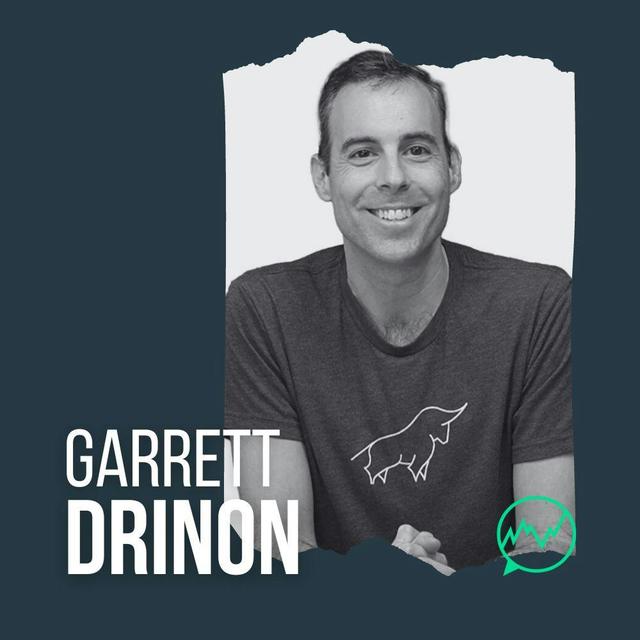
Ian Chats with an awesome guest today. What I love about this episode is that you get to hear more about the bridge between discretionary trading and algo trading. And it's not all black and white, right? You'll see what I mean. Well, let's introduce our guest. His name is Garrett Drynen.
The lure of the markets seduced a successful musician into full time trading at a well known prop firm. Collaborating with other traders, Garrett learned the market signals and other ingredients which go into great setups. Wanting to expand his reach, he uses his programming skills to create new algos which help him and his colleagues find the unicorns and ponies and manage a larger portfolio than he could normally handle.
Let's dive in, shall we? Ladies and gentlemen, we're so pleased to present Garrett Drinen from New York.
Hey Garrett.
Welcome to uh chat with traders.
Great, thank you. Thanks so much for having me. I've been listening to this show for longer than I can remember. I'm a big fan. You've had some serious legends on the show, so it's it's really an honor and it's humbling to kind of be a a part of that.
Great to have you uh join us. So where where are you at right now?
So I'm in Brooklyn. So I I'm in my apartment. I usually trade at the office, which is in midtown Manhattan. Today I stayed home to do this. Yeah, I'm in New York City.
Oh great. Where where did you grow up?
So I grew up in New Hampshire. I grew up on a farm very different than New York City. You know, we we actually had pigs and sheep at the farm. So I mean when I was a little kid, I would be, you know, jumping in the pig shit and stuff like that. So and you know, I remember that one of my earliest memories is my parents delivering twin lambs in the barn.
While reading, they had an open book called, I think it was called Raising Sheep the Modern Way. And they're literally like reading from this book, delivering these baby lambs. And kind of just learning how to do all that kind of stuff on the fly. So it's pretty it's pretty interesting.
Oh wow. Did did you want to get into uh being a farmer or raising sheep when you were young?
No, I mean I am a no I am no expert on raising sheep. That's that's something to ask my parents about because I think by the time I was probably in junior high, they They kind of got rid of all the farm animals and uh then it was just a farmhouse.
Hmm. So what did you end up uh studying in school? Or what was your main area of interest and focus?
So I studied English and music at the University of Pennsylvania. during school was heavily into music. Played the guitar, studied it, played with other musicians. You know, we had a group there. We were playing every week. You know, I actually did the crazy thing of right after school going and being a musician in New York City, being part of recording sessions, going on tour.
All that crazy stuff, which is of course exactly what my parents wanted me to do. Um but it was a fantastic experience and I learned a lot. It was a great time and you know, I was lucky enough. During all that, to also have a job in the music industry, um, in marketing and in sales, um, for a For a pretty cool company. And and what was kind of nice was they understood because a lot of musicians worked there, they understood when you had to go on tour.
do some things like that. So so I did that for a little bit before trading, which is so it's a quite a quite a transition.
¶ From Music to Trading Career
Yeah. So what what uh what triggered the transition? How how did you get introduced to the financial market?
I was always interested. From the time I was really young, I would look at stock charts just because I thought it was fun. It was like a game. But you know, it was just a hobby, right? I'm not I'm not pursuing it. I just thought it was kind of cool. So I would uh always sort of follow it. But when music started to cool off a little bit.
I just had all kinds of more time, right? Because like after work every day I was rehearsing and of course I was leaving and you know going on tour and recording and doing all these things. So when that cooled off. what kind of naturally started to fill the void was my love for the markets. So I started reading everything I could get my hands on. I started trading a a paper trading account, you know, just to experiment. I I was trading my own account, more of like an investment style, but
um really focusing on it. Just it just kind of happened. And I was studying, I started studying for the CMT certification and and went through a couple rounds there before I got hired at SMB. I didn't finish it. Um And so that just kind of snowballed. And I was just all all my extra time was being used to study the markets. And even a little bit like during the work they had be, you know, looking at the market and stuff like that. And so it kind of came to a point where
I was like, this is this is what I want to do. You know, like I I loved my job, the music industry. I mean it was I worked for a guy who basically invented effects processors and basically Analog and digital devices that uh change the sound of your instruments if you're playing a guitar, you know, it can it can get provide a distortion or reverb and stuff like that. He basically invented these things.
in the sixties in in the village and was handing them out to guys like Jimi Hendrix and Carlos Santana. And like, you know, he still ran the company and I got to work really closely with him. So I loved that job. But, you know, there was only so far I could go with it. And I felt like I had kind of like reached my max there. And so I was like, God, how how can I get into trading? I mean, this seems like such an enigma, right? Like I mean, I was like, am I gonna have to just
try to find a job kind of in the financial industry just so I'm near it. And then maybe like I meet some traders and and kind of get into it that way. And so
So what what year was this to that you first got into the financial markets and what you know, how old were you when you um opened your first brokerage account?
So I mean, I was, I don't remember how old I was. I was in my twenties when I opened up my first brokerage account. I started at SMB in 2017. It's been what, six years, something like that?
I mean to be honest, like I didn't know anything about intraday trading when I started there. I knew what I knew really if anything, was the macro landscape, like how things kind of worked with interest rates and sectors and and bonds and how you know how the Fed affected things and and the you know the fact that gold you know was affected by real rates and sort of this intermarket big picture analysis but I had no idea about the intraday
volume cycle volatility at the open and then things calmed down and then volatility back into the close and you know these intraday setups were all new to me. So um it was sort of trying to marry you know, my overall sort of big picture knowledge with, okay, like how do I trade this stuff now?
¶ Early Trading Lessons
Before joining a prop firm, what uh what did you trade and um what were kind of your early mistakes?
So I would trade oil stocks and I would look at crude oil. And this was a time when I think that that made more sense, like around 2015, 16, the whole market was moving with crude oil. And a lot of those oil stocks were in play. And so it's a little, it's it's very different now. It's not something I do anymore. But back then I would be looking at the oil features and I would find these.
you know, oil pure plays. And and I if I saw a big breakout in crude oil, I would look to the oil names and see like what's about to break out. So that's one thing I would do. Um, another thing I would do is just trade relative strength, which is something I still do every day. Right. So I do I would just find the leader. I would try to identify the strongest stocks in the market and the strongest sectors in the market and then either look for pullbacks to buy them or look for breakouts.
I see. So when you were trading these oil stocks, did you uh and you saw that there were some early movers as the price of oil was going up, did you ever feel tempted to buy some of the laggards, knowing that historically They tended to uh catch up uh in a major bull market that, you know, a rising tide lifts all boats? Or did you just uh were you pretty disciplined and just stuck with the big names that moved first?
It's so funny you asked that because this was one of my biggest mistakes early on. You know, I was always the sucker who would be going after the sympathy play that hasn't moved yet, right? Because it's like easier to buy. And of course it would never move. And so I learned really quickly to Find the strongest stocks, go after the leaders. And also I learn how to pay up. A lot of times, you know, we're working on different time frames. So
One of the things I like to do is think about paying up on the higher time frame, but fighting for price on the lower timeframe. And that's one of the ways I think about getting really good risk reward and probabilities because You know, you might have something that's really strong intraday that's breaking levels on the daily chart. So it's already up more than everything else.
But I still want to buy that stock, right? Not not everything else. And so then I'm looking, I'm drilling down, I'm looking at the lower time frames to see. Where I can get a price where I can actually get in with good risk reward and have a reasonable stop and control my risk.
That way.
Did you look at all uh at many of the stocks within the oil sector and see that, okay, there's certain uh oil stocks that are tightly correlated with each other and that historically they tend to move as a group and and say even some big name? And did how often did you encounter and weren't tempted to, you know, even though it's a laggard, but you s look back and say, historically, these stocks move in in unison?
Yeah, what what I would do is find I would just find the pure place, right? Because you've got like you've got the ExxonMobil of the world. that have a lot going on, right? There are refineries They're drilling and they're doing all kinds of things. So I would try to find the pure plays. And back then it was like the Permian Basin. And uh and I would just go after those because those were the ones that would tend to get momentum when crude really moved.
And at least back then. And so that's what I would go after. And I would have my handful of stocks that I liked. They were usually the strongest. You know, you could call them momentum oil names. And you know, there's probably five or six of them that I would look at and I would just look for setups on the daily chart and then kind of look for my trigger. You know, with crude oil.
I've at this point I barely knew what I was doing. So it wasn't like I had mastered this, but this is kind of what I the first thing I kind of fell into because I think oil was in play and so I gravitated. to that at that time because whole market was following crude oil around, which you know doesn't happen anymore.
¶ From Discretionary to Systematic
Were you doing this um full time and how did you do in your early years?
Oh I mean I was I was all over the Like, I mean, I and I didn't do it full time. Like, I mean, this is when I was working at my job in the music industry. So I'd be just checking the quotes during the day. I'd be making trades when I could. And yeah, I couldn't focus enough on it to really in.
You know, I wasn't learning fast enough. Um, I didn't have anyone teaching me. You know, I was reading books and stuff like that, but this was really just to get my feet wet. It was out of interest. I wasn't trying to make a living doing it. You know, I was just trying to solve the puzzle. And that's the only thing I was really interested in at that point.
early on when you first started trading by yourself, did you have um specific goals or expectations like, well, I've heard people can make, you know, a hundred percent per year or two hundred percent or And and I'm gonna quickly be self employed, or w what was your viewpoint on on taking risks and your expectations?
I had no expectations. And I in in no way was I trying to do this full time or be employed by it or, you know, quadruple my account. You know, my account was very small. You know, it wasn't like I I was sitting on some giant account where I had all kinds of capital in order to leverage. I mean, it was tiny. So all I wanted to do was make good trades and kind of feel what that was like. And that's also why I did the paper trading account because
I could actually trade a multi-million dollar account and see what that was like. So no, I I was just trying to learn. Like I said, I mean it was, it was a it was a passion project. I just wanted to kind of see how good I could get. I didn't I didn't care about the money. I wasn't expecting to to even make money.
So what does a typical day look like when you when you go into the office? Kind of what are your setups? What are you looking for?
So do you mean a pat typical day in terms of my routine or or
Yeah. Say you start off with the routine and then your process of uh of selecting stock.
Yeah, so I wake up at 5 a.m. and that that's either me going to the gym or straight to the office. When I get into the office, I usually have a number of things that I'm working on outside of you know, direct trading. And so that could be coding an algorithm that I'm working on, which just takes way more time than I care to admit, or even, you know, I just I wish it didn't, but it does. And so I'm always working on that. And so sometimes I'll come in the morning and try to knock off a few hours.
of coding before I start preparing for the day. And otherwise if it's a really busy market and we've been in one, we've been in a great market and a very busy one, you know, I'll just start preparing for the day. So What does that mean? It means looking at charts, it means reviewing the stuff from yesterday, seeing what's setting up during earnings season. I'm looking at all the reports. I'm figuring out what kind of trades we might be inputting into some of our models that are.
you could say half discretionary and half algorithmic where there's a component that requires us to actually put the algo on a certain name that day. Um so I'm scanning for these things and then I'll meet with my training partner who I develop these algorithms with. And we go over what we're seeing and we decide, and it's very process-oriented. There are rules for everything, and we decide what. We're going to put on our algos, right? So which names are we gonna
apply our algos to. Which algos are we going to turn on? Which ones are we going to turn off? So we go over all of that and then we meet with our bigger team. And so this is about six traders, six, seven traders, led by a guy named Kayfitz, who's a fantastic trader. And we all share our ideas. And I've been on this team, you know, since I started. And we all will go through what we're looking at for the day. And that really helps because of course now you've got seven eyes on things.
And then I sit for about half an hour and kind of pre kind of just visualize and get ready for the open and then we get on a call. Our our bigger team gets on a call at the open. We go over Anything we're seeing, we call out and this will last maybe until 11, 11, 12.
And then as things calm down in the afternoon, I usually get back to coding. I might I might get back in with my partner and and we might work on some of the models we're working on together. Or of course if it's a really busy day, I mean we just stay. watching the market all the way in the close.
Um, and then when the market closes, I usually get right to reviewing and I I always playbook all the best trades of the day. You know, I've been doing this for a while and I still do it. It's just part of my process. And I just catalog them uh on a notion. And that really helps me stay in tune with what's happening and you know what's what are the themes out there.
what setups are working. And you know, to me, those are things that are really important to me. And then if I have any time until I usually leave around six, um, you know i'll i'll do a little bit more coding or some research or something like that and then i'll get get out of that
So early on, were you just a discretionary trader kind of without the algos and and what drove you to get into algos? What were you not satisfied with your performance as a discretionary trader or
No, it was it it was a it was an add-on because I still trade discretionarily, um, especially during markets like this when the market is very active. You know, I'm I'm still very active in the market. You know, I started fully as a discretionary trader, right? And they that's what they teach when you get there.
Right. And that's that's how we're learning to trade. And you know, as I started to develop, certain things would happen. And you know, I could tell you a story about a trade I took and this was sort of ended in a disaster. Uh and th this was sort of the turning point. For me, going systematic and algorithmic. Um, you know, I'd been waiting for an IWM breakout for months, right? It had just a beautiful pattern on the on the weekly chart, the daily chart, gigantic base. The trade triggered.
And I on volume, everything looked perfect. I got in calls, I got in stock, you know, I was probably the biggest I'd ever been. I I entered perfectly. The thing ran all day. And then ran another day. And I'm thinking, you know, this is such a big breakout. My plan, my visualization is that this is going to go for a couple of weeks. Like this is, this can be a really big trade.
And that that wasn't my mistake to think that. But what happened was the market started to shift. And I mean, this was probably the last breakout before the before the bear market, right? So of course everything started to fail, but the the breadth started deteriorating. All the signs were there. I mean, the IWM started holding below the five day moving average as the breast started to deteriorate and certain names started to fail and certain names, you know, started to break out and fail.
And it just didn't feel right. Yet I'm thinking, well, gosh, if this thing pulls back to the breakout level, I'm just gonna wanna buy more. So Yeah, I can't get out of here. And of course, this is just a terrible mistake, right? Because you gotta have some sort of a process for managing these trades. And I was going purely on the field.
And I think it was Thanksgiving and I went to my now fiance's family's house for Thanksgiving. I wake up the morning after Thanksgiving and the whole market's gapping down. you know, many handles. And I think it was a Coronavirus variant. uh news piece, which I mean at that point it's kind of laughable because the the coronavirus thing had kind of blown over, but for whatever reason, the market just got destroyed. And I basically turned like a very big win into
an outsized loss for for no reason after absolutely seeing all the signs of these things deteriorate. And so after that I said to myself, you know I I know how to make a good trade, but when I'm making these swing trades, like I need to have better rules for getting out, right? Because there's many fish in the sea. We're gonna make many more of these trades. The best ones keep going. So why am I sitting in this one that's not working? So rather than get emotional about it and
attach my bias to the trade, I'd much rather have rules for when A, B, and C happens, I cut half. And when D happens, I cut the full thing, no matter what. I don't care. On to the next one. And that thought just kind of spurred me into this. very systematic way of thinking, coming up with rules for everything. And once I came up with rules for everything, then I started to ask myself, well, you know, maybe I can automate.
Like this this seems like something that I could actually have an algo do since there are so many rules involved and then that would make it even easier to make. And it would also allow me to trade multiple names at the same time. uh especially on the entry when these things trigger, especially a lot of times these things trigger like right at the open. And so if I'm able to trade many names at the open that meet my criteria, that's more bandwidth than I would be able to have.
As a human. And so we started to code up these things. And then everything just sort of went from there, just kind of snowballed.
Have you ever watched a stock explode and thought, if only I had the capital, or sat on the sidelines because your account balance felt too small to matter? Good news. With Trade the Pool's limited risk platform, you don't need millions or even thousands to start trading the US stock market. Bypass the PDT and tap into over twelve thousand US licit equities. From penny stocks to big caps, ETFs, even the newest IPOs, and short anything you like, with zero locate or hard to borrow fees.
Start your evaluation. Get funded with up to$200,000 in buying power so you can go big without risking your own savings. And now you can also have unlimited time to reach the profit target. It's a game changer. Not ready to trade yet? Trade the Pool offers a free demo and educational resources. Practice on live data, master the platform, and build confidence risk-free before you even pay a cent. Click the link in the show notes to start trading with Trade the Pool's capital.
¶ Hybrid Algo Strategies
Could you break it down to us? Uh what are the aspects that you look at uh to help you determine w when to go long, when to go short? What do you look at in the markets in general? And what are the trigger points to trigger longs and shorts?
So it totally depends on the setup. And I trade multiple setups. So I can give you an example. I can just go into one. Um, I'll kind of Go over the the first algorithm we developed. And this really came out of the story I just told. And also, you know, before I kind of go into this, I think it makes sense to kind of break down the two different types of trade categories that I think about, especially when we're developing these algorithms.
You know, you've you've got your unicorns and your ponies. That's kind of how I think about it. And your unicorns, like if you put all the trades on like a distribution curve, you know, the tails are the unicorns, right? They're the super rare. occurrences that have tons of opportunity, usually in the discretionary space. And this is sort of what we're doing on the desk a lot of the time.
is finding these unicorns because that either means a lot of people are caught off guard because this is a very rare situation, or it means that Um, there's something going on in the market that can't really be tested. It's very hard to back test something that barely ever happens, and it's very hard to create a model for something that barely ever happens because you just don't have a big enough sample size.
But because we kind of came from this place of finding unicorns, you know, we started to try to automate some of these unicorns, right? And the other thing is the the ponies, which is the middle of the distribution curve. And that's going to be many trades that probably have a smaller edge overall, and you're just trying to grind out edge trade after trade after trade. And of course that lends itself
to m creating models and algorithms because you have a very large sample size and you can actually study the data. Um, but when we started, we were used to Looking for unicorns. Like that's kind of in our DNA, at least me and the partner that I work with, and you know, a lot of people on the deck. And you know, SMCI has been a great example of a unicorn, of course, right? And You know, it's very, very hard to back test some special theme that's happening in the market, right? Or some sort of
earnings report that has a component in it that's not just a beat and raise and guide, right? It might be an X factor in the earnings report that you know, given the market environment means a lot versus like something that might not have meant a lot a couple of years ago. And so our way of sort of getting around that was creating these hybrid strategies where we would have an execution algorithm.
Execute on our idea, but then there was a discretionary component where the environment and the themes were very important. And so an example of this is an earnings play algorithm that we have. And we run this every day during earnings season. And the discretionary component is looking at the report. and looking at the overall environment and assessing what is working in this environment, right? Is it is it big double beaten raises and big guides in megacap stocks that mention AI?
Right. Or is it all-time high breakouts that beat expectations? Or are things breaking out from the bottoms of ranges? Maybe things that are breaking out to new highs are actually failing. Right. So every earnings season is different. And so what we like to do is first try to get a feel for what is the theme right now and what is working in this earnings season. And then we'll scan the reports and see what fits into that.
Okay.
And then we put our algorithms on those. And so typically in the classic setup here, and it's very simple, and this is, I'm not reinventing the wheel in any way, shape, or form, but you know, you have your classic double beaten rays. Full year guide up, breakout to 52-week highs in a growth stock. Right. And that's that's sort of the default. Um most earning seasons, you know, those are the trades.
And so we'll look for those. And of course, right now, you know, we're gearing it more towards megacaps, towards semiconductors, you know, things like ASML and video. SMCI and you know, big big growth, big liquid growth names that are have huge guidance and are obviously involved in AI. Like that's what's happening right now. So so that's what we're doing. And so we find it very hard to backtest for that. So we don't make it fully automated. We just make it kind of half automated.
Um yet it really helps us trade'em because we can kind of trade them all at the same time and you know, they they don't make mistakes the way, the way I do. So
So you have your system scanning the overall environment, um, kind of get to gauge the temperature of what's going on in the markets so that when say an SMCI announces a beat, uh beat on earnings like it did uh last summer, for example, would it then trigger uh because it has certain qualities and the nature of the move? that it would trigger like bing, now it's in the unicorn category. Uh and here's, you know, take an outsized position. Would that be an example uh would fit your A type setup?
¶ Algo Execution and Market Action
Yeah, 100%. In fact, we took that trade. What we did was like the other component to this was studying, you know, hundreds of these things. And how they act on day one. And how do the good ones act? And when they follow through after day one, how do they do that?
And
How far do they usually run or how far can they run? What do they look like when they start to fail? And where are the best places to buy and when? And so that sort of informed us as to, okay, when we have a really good one that's acting well, this is how we want to execute. And that's sort of how we built the algorithm.
Um, you know, a lot happens in that first 15, 30 minutes on day one. And there's a lot of information in that first 15, 30 minutes on day one. And sometimes we will have what we think is a fantastic idea. In an A plus setup. And our algo just won't trade it. It just, you know, it just doesn't meet the criteria as soon as the market opens and we're not in.
Why is that? I mean, d does it do you ever second guess your algos and say, Well, the o I mean I mean, to us it's an A plus setup and our algo doesn't like it, but who cares? I'm gonna go along anyway.
I mean we find that most of the time our our bias is is probably worse than than reality. And at the same time When we say it's an A plus setup before the market opens, that's only half of the information. It's only half of an A plus setup because the other half of that A plus setup is that it's acting right.
And so if it's not acting right, we don't want to get in. And I I mean, I can't tell you how many times, like discretionarily, I've got like a big idea and I'm all keyed up for the play, but it doesn't act right and I'm trying to buy something that's that's not acting right and of course I'm I'm losing money doing it. And so the algo assures that it's acting right based on the criteria that we've laid out.
And so the Ago will will either enter the trade and it'll enter the trade big size or it'll enter small size or it'll not enter at all.
I see what's an example of acting right? How how what can we see on our charts to uh show us like oh that stock is acting right?
Well, we want it to be going higher if we're buying. Okay, we're not we're not interested in buying weakness if it's selling off on day one. Um that's a different play. Like you um there's nothing against doing that, like that is an actual thing you can do, but for us, for what we've studied. We don't want to be doing that because we found that most of the time, you know, the best ones don't wait. The best ones just go.
So it's gotta be doing a lot of volume, at least five times its average daily volume. And it's gotta be trading higher. And then we just have a time component to it. So we have like certain areas that we want to be executing, you know, preferably earlier in the day. Um and so it's pretty it's pretty simple, but when you kind of put all this stuff together, it is a lot of information at once to sort of process. And so
Again, it's kind of nice because the algo can sort of figure all this out instantaneously and then size accordingly, you know, with the correct stop. And so it's very consistent in that respect.
¶ Flexible Algos and Teamwork
Uh so getting to quality setups, whether say it's an A setup or a B setup, does the how you would rank a setup does it has it varied over the years? Does it vary depending on the type of market you're in or the type of securities you're trading? Um, how does that work? Or is it just standard across all timeframes, all markets?
I mean, there's different criteria obviously for for each setup. What I would say is, I mean, if we just take continue with this example, is that of course our A plus setup change based on the environment. And this is not something that we always did. I mean, we had to make mistakes first in order to figure this out because when we started trading this strategy, it did great. And I think for three
three or four quarters in a row, it was extremely consistent. And it felt like we could just put the algos on any name we thought was a good idea and it would just print money. And then we of course bumped the risk way up, you know, gradually, and then kind of a big jump. And then of course, as soon as we did that, the market environment changed.
And we learned very quickly that when the market environment changed, that's not true at all. And so rather than being you know, super systematic where you're sort of rigid in your systematic approach, where you kind of have one way of doing things and you're just grading things based on that criteria and closing your eyes. We realized we needed to be flexible with our systematic approach and sort of build that into the system. And so what I mean by that is, you know, if our classic setup is.
a double beat and raise in a growth stock that breaks to 52 week high. If the quarter is telling us something else is actually an A plus setup, we need to adjust the criteria to that. And so then that becomes, you know, the new A plus setup. You know, we also have environment. checks in the model where the environment will get upgraded or downgraded based on, you know, are these things failing or are these things falling through? And then that will actually reduce the risk.
significantly in unfavorable environment.
Do you program uh dynamic changes into the code so the algo can modify, say, strategies on the fly or
So the way we think about it is like we would rather have like for every sort of iteration of a strategy or for every strategy, we would we would rather have a separate model for it, a separate algo. rather than trying to put too much into one. Um, because things can get very complicated very quickly. And it's also it also becomes more difficult to assess the progress of a model when you're kind of putting many different iterations into one. So we would rather split them out.
you know what we call it call it like having babies like we'll come up with a model and then We'll have like different iterations of it and then the model will kind of have babies and then we'll put those out and then we'll sort of monitor. you know how each iteration is actually doing and it's a lot easier to sort of keep track and figure out like what we need to be um increasing the risk on and de decreasing the risk on.
You mentioned um the word we several times. Um are you and many other traders kind of working together on this algo system and that you trade the same names, you go long kind of at the same time and short at the same time or
I have a team that works on these. You know, we work on them together and we trade them on a joint account. You know, I I couldn't do all this alone, you know, for two reasons. I think maybe my biggest strength is probably making friends with people who are much smarter than me. You know, I've uh I've been really lucky at the firm to kind of
you know, make be really good friends with like the head of the the coding department and he taught me everything that I know about Python. I mean I did take um some trade school classes on coding and stuff before. And I was always interested in it, but you know, couldn't couldn't really do what I needed to do until I got to S B. And so I've learned a lot from from him. And then I work with, you know, another guy and we kind of
work together. And I mean with the with the quant stuff, it's very, very time consuming. And, you know, honestly, I don't know how I could take on the load just by myself. I mean, I know people do it. Um Some people do that really great and maybe, maybe I'll get to that point. Um, but right now, I mean, I love working with other people. You know, I've always been sort of a collaborator at heart, you know, just being just playing team sports and stuff like that.
You know, it's sort of an assembly line approach because when you're building these things, it's not just about coding of it. And it's not even really just about the research to kind of figure out the idea, it's also the you know analyzing the data, you know, the cleaning of the data, you know, making sure that your data frames are right when you're looking at
the data in order to improve the model. And so there are all these steps that take a lot of time. And that's probably the biggest drag with this approach because the results are very great. But It takes a long time, at least at this point, to go through all those steps. And so I think our biggest improvement probably over the last year has been, you know, getting much faster, exponentially faster at this stuff.
¶ Algo Development Difficulties
So you mentioned it takes a lot of time for, say, for example, a trader who's ex really experienced and has their system or their process down and everything's down really well.
Would they save quite a bit of time um in the sense that they they know what to program in? Uh they don't maybe they don't need to do uh extensive back testing. They just program these algos to save them time, uh, or is it the the nature of the beast that no matter how much experience you have, it As I've heard some um algo traders say, uh programming algos can be a bottomless pit of time, if you found that to be the case.
It can be. If you're barking up the wrong tree for sure. And so I think part of the trick is knowing when to stop and when to move on to something else. And I was talking to a quant the other day who who's outside the firm. And, you know, he was talking about how he he finds it difficult to find a computer programmer that, you know, truly understands the market really well or, you know, a really great trader that can computer program because both of those skills.
are very they they both take a long time to develop right and so to have both is is a lot and so I think that you know the people on our team had the the trading part first And then we kind of attacked the quant side. just from a coding standpoint in the beginning. And like our approach was to just be really simple about it, right? Because we're not Jim Simons like from Renaissance as much as we wish we were, right? And
Uh
We're not data scientists either. And so we're not gonna be data mining. And kind of leading with the data and like starting with that and trying to come up with strategies based on the data, we're gonna actually draw from our experience. And when we see something.
that works in the market, we're gonna look to try to automate that and we're gonna kind of work that way. And then once we have the strategy, you know, we're able to take to pull all the data and try to see which features actually might improve the model, which features might have nothing to do with the performance and and fine-tune it that way. But we always start with an idea, at least at this point.
Have you looked at any of the off the shelf commercial algo systems? Is it really necessary for everyone who wants to get into uh algo trading to have to program their own?
Yeah, I don't know. I I actually haven't I haven't looked at those. I don't know how good they are. I do know that it is very hard to come by great data. That's one of the key things with this. And you know, a lot of times I mean depending on how often you're trading, like execution matters, right? So if you have a backtesting system that's not giving you the correct fills that you would realistically get in the market, like that can make a huge difference.
in the performance. So you might come up with something, back test it, think it's really good, and then trade it live and realize, you know, I'm not, I'm not even getting filled. That stuff does matter. I I only have experience with what we have at the firm, which is extremely customizable. It's very raw. So you kind of have to build everything from the scratch from scratch up on Python. You know, there's no plugins or anything like that.
But it's very customizable so you can do pretty much anything that you want to do.
¶ Algo Management and Signal Filters
So once you have your algos running, how much time do you have to put into managing them and how often do you turn them off, if ever?
So we tend to manage them. Quite often because like I said, the environment really matters for these things. Um, we are currently working on some things that we hope we don't have to manage that much because I know that's kind of the dream, right? To just set it and forget it and not have to manage it. Um I think that when we're making algorithms that are Finding these unicorns.
There's a lot more managing because you're dealing with the tails, right? So most trades are not these. So you can't just kind of go fishing everywhere and just come up with tons of junk.
trying to find like one of these really great trades. And so environment really matters. I think if um You know, I think if you have something that's trading ponies and just kind of pulling edge out of the market, like grinding it out, and it's there's just sort of like an inefficiency or some mathematical edge. I think it's a lot easier to let that ride and just kind of deal with the strings of losses because you just have such a bigger sample size and a lot more trades and you can kind of
Um just let it play out. It's, you know, it's basically a numbers game.
I hear that uh some quants say that um near not all strategies are automatable. Have you found uh like for example, support and resistance lines? Have you found any hindrance to uh automating any particular strategy? Or in your view, are they all automatable?
Oh yeah, absolutely I mean I've found So much hindrance. You know, like I mean in and of course it just might be me not doing it right. Like that could be part of it. Like, I don't know, maybe someone else figured out how to automate it. So it doesn't mean that it's impossible, but yeah, that's absolutely our experience because. You know, we like we come from this discretionary side that's looking at
These very unique situations in the market. And like I said, that's in our DNA. Like those are the trades we see with our eyes. Those are the things that we're still trading discretionarily. And a lot of this stuff is just impossible to back test. And so, you know, I've never tried support and resistance strategies or anything like that, but we've we've tried tons of things that we know is a good setup.
Like we we know, like we know we have edge and trading it, yet we try to automate it and we just can't seem to filter out the jump.
Mm. What what junk? Like uh can you dive deeper into that?
Yeah, so you might have a you might have a volume breakout strategy in a small cap. There's a very specific pattern that triggers this trade and it's very rare. And it's a very powerful trade. And you know discretionarily that this is a trade with a lot of edge.
But because there are so few of them, you don't want to miss it when it's there because you'd have to be sort of manually scanning for these things all the time. And if you miss one, there might not be another one for another month or two. And so you want to automate it and you put in all the criteria that you think has you know has a has a correlation to the performance in the trade and then you find that it's taking 900 trades in stocks that
have nothing to do with this setup and it's performing terribly. And you're you you try to define the setup. And it's almost like no matter what you do, you can't get rid of a lot of bad traits. We've gone through this a number of times. And, you know, I think that it it has to do with trying to automate that unicorn. because these are such rare special occurrences. And it's very hard to study a model that over a three-year back test has five traits.
because it's not enough data to understand if the performance is random.
So does the algo uh completely miss the unicorn when it's happening, or does it catch it but uh undersize, underweight the position size in it?
It catches the unicorn but it also catches a million other Terrible trade. So so so the so that do not you know that overshadow the the greatness of that one trade that you're trying to catch.
I see. So when it catches a lot of junk trades at the moment that it puts on the trade and you look at the chart, would do you disagree with the algo or do you agree with it and say, yeah, you know, actually it looks pretty good or no, clearly this is a junk trade. And if so, if it is a junk trade, do you are you tempted to simply override the algo and say, No, I'm gonna get get out of that position?
So I mean what we would do is probably just not put this strategy live. So we wouldn't even be getting to the point of overriding the algo because we just don't we wouldn't feel comfortable having this live. But when we look at the back test, yeah, we're seeing a lot of trades where we're like, that's not the trade. You know, that doesn't look right. That doesn't feel right. How can we How can we filter out this either?
Right. And you just kind of go down this path where you're studying, you're you're taking a data frame of all the features you're putting into it. Right. That might be might be volume components, it might be technical analysis components, it might be sentiment stuff, it can be anything. And you're looking at this data frame of all your values for every single trade. And then you're just spitting out, you know, scatter plots and charts of these things to see.
what feature might correlate to the performance. And if it doesn't correlate really clearly, right? Like like you can see it with your eyes, then it probably doesn't matter at all. And so if you're trying to make really small changes that are that kind of make it better.
¶ AI, Curve Fitting, and Algo Longevity
You know, usually we found that that's that's probably overfitting and it's probably you're probably just fitting into noise. But when you find something that you can see with your eyes on a scatter plot, like okay, the the higher this value gets. the better the performance of this trade. Like then then we know we have something.
Well speaking of curve fitting, uh what are the best ways to avoid curve fitting? As uh is simpler better?
Yeah, I think so. Safer, it's more comfortable. Um No quiero decir que... with all the confidence in the world because I do know that, you know, we're we're absolut we're certainly not doing like everything that someone could be doing. And I'm sure there are quants out there doing very complex things that are Fantastic. And so I don't know if simpler is better, but I do know that like if you don't have a very good
Data analysis background, right? If you don't have like a PhD in in math and statistics. Um, it's it's very easy to go down the wrong path if you kind of just start with the data with no clue as to what you're trying to do. And given the fact that we are traders, I think our best way so far has been to always start with an idea that makes a lot of sense to us. You know, is this a trade I would be taking?
Right. And if it is, then okay, now we can dig deeper. Now we can look at all the things that actually make this play tick. Right. Like Like, is it the volume? Does volume matter? Maybe it doesn't. But if it does, we probably want to input that into the model. So we just take ideas that make sense to us and then we just get much deeper into it, almost the way we would anyway. If we were just creating a playbook for a discretionary trade, but now we're obviously automating it.
Have you used Chat GPT or other AI in uh helping you with this process?
Yeah, we use it every day. I mean It's fantastic. You know, whether whether it's coding, um, a little bit of coding help here and there. You know, you run into an issue, there's a bug, and you you want to kind of run it by chat GPT to See where where we could fix the bug or
You know, and it might be a variable that we're looking at, right? And we're trying to measure say liquidity. And we have a couple ideas on how we might want to measure liquidity. Sometimes I'll just input that idea into Chat GBT and And you know, just see, okay, is there a better way we can do this? Like what if I combine these two things? Does this formula make sense?
So sometimes I'll sit on my couch at night and just talk to chat GPT about you know math stuff for like an hour. It's like the dorkiest thing ever, but
Well, uh s some say that algos lose their effectiveness over time. Have you found this to be true?
So we haven't found that yet. Maybe we will. And I from my understanding, I I do think that it is. Strategy specific. You know, I think that there are some strategies that do lose their effect over time and they're very market specific. And then I do I do believe that there are some strategies that are You know, is all that's the market is.
And it just depends, you know. And I think from what I've from what I've read even from Jim Simons, like he says the same thing, right? Like I think it was, I forget if it was like 30 or 20 percent of their strategies um sustained over time and maybe 70 or 80 percent. I might be getting these numbers wrong, but something like that. 70 or 80 percent degraded over time, and they would have to either Rebuild it or just can it?
Huh. So why why why is that? Is it more people are discovering these strategies and then so more people use them the less effective they become? Or what's the what do you think the cause is?
Yeah, I don't I don't know what it why it is. It that makes a lot of sense to me if if that's the reason. Of course, you know, nobody really knows, but that that would make sense. I think Sometimes when you're developing a strategy, you're developing it for the market you're in.
And you might even know that this is not going to last. You're just saying, okay, you know what? Like this is working right now. We need to do this until it stops working. And so you're not even really caught off guard if it stops working. You just know. This is for this market and this is something that is happening and maybe it won't be any year. And then there are other strategies like our earnings play that, I mean, you can read about people doing this in the 1920s.
And it's the same setup. There's like not really any different. You know, maybe maybe the way the market acts now is different, you know, because of options and because of all this, you know, different mechanics in the market. Um, so in terms of studying those day ones and studying like how the algo might execute, like maybe that stuff changes over time. But you know, the classic
big inflection, fundamental inflection, like double beat and raise, you know, earnings surprise is not a new thing. And, you know, that's been going on forever. So
¶ Options and Market Leadership
Mm-hmm. Uh do you use uh options in any of your uh trades?
Yeah, I trade options a lot. In my on the discretionary side, most of my trading is options, actually.
From a what a long or a short side mainly, or kind of are you Depending on the situation.
Um yeah, it depends on the situation. Could be buying calls, could be buying puts, it could be spread. You know, it could be a butterfly or an iron condor, but most of what I'm doing is buying calls in this market, at least, you know.
Oh in this market. Uh because of the nature w of the market that we're in, uh steady, nice.
Yeah, when there's when there's a lot of momentum, you know, that's when because you know to to To really make money buying calls, like things have to really be moving and they have to be, you know, exceeding their, you know, implied moves and stuff like that. So when you have a momentum market where breakouts are working and things are running. then it can be a good environment for options like that. But you know, in a quiet market where things are kind of
sloshing around or even moving slowly, you know, that's not going to work as well. And so, you know, I would rather be buying stock in that case or, you know, doing some other thing.
What indicators do you look at to help you determine kind of what kind of market are we in for that day or for that week? Are there statistics, um, any off the shelf indicators that we can look at.
Yeah, I mean for me this is this is just pure feel yeah and but it but it is very specific and I can I can explain it and it's super simple. It's kind of like okay what's leading the market are the leaders leading right so right now that's nvidia smci the semis um and our breakouts working So if the leaders are leading and breakouts are working, like to me that's a momentum mark.
Um, if breakouts st start to fail, like if stocks start to get above big levels and then don't run and then fail, to me like that's a change in character. Or if the leaders stop leading. That's a change in character. And so like right now we're seeing a big inflection in all this AI stuff, and we've been seeing it.
for a bit now. And of course, in every bull market, there's pullbacks and that's just a feature of the market and there are corrections along the way. But you know, we're seeing a lot of momentum in these semi-names. And so As long as that continues.
you know, I consider us in a momentum market and you know we see that kind of carry over into Bitcoin names and things like this. And so um as long as I'm seeing that, then I'm seeing it. And then I just have to be really quick and honest with myself if we start to see
things fail. Um, and you know, one of the things our team leader was saying today, like, you know, he's always been talking about out of a bear market like we had, there's going to be new leadership. And like keep an eye out for new leadership.
And this is holding to be true, you know, as we speak, as we watch this market, because we're seeing things like ASML, SMCI and the stuff I've been talking about breaking out and kind of taking the reins from, you know, if you look at like the Google and the Apple and the Tesla charts, you know, they're not, they're not leading any.
Um, which is really interesting to me because it's very easy to kind of get stuck on Apple and Tesla after a bunch of years of them just being like the strongest stocks in the market. And so um I pay attention to leadership and bread. Um and things like that.
¶ Sizing, Growth, and Trading Psychology
I noticed a retweet on your Twitter that uh this quote that says, All pain in life is an indicator. It is a catalyst for change. So I'm curious, how do we position size our trades such that when losses occur, we experience enough pain is created to induce the change, but not devastate our portfolio?
Yeah, such a great question. Oh man. And I actually read something, I think it was last night from Linda Rajke, who I know has been on the show and she's one of my favorite traders of all time. I just, I just love everything she has to say. And I think she said something like You know, don't trade too big that you're gonna trade it wrong. I'm gonna mess this quote up so Don't quote me on this, but it is this is the idea.
You know, don't trade too big that you're going to trade it wrong, but don't trade too small that you're going to be careless. Right. Cause I've I've been in both situations and it's not fun, right? You're You're too small. So you're like, oh, I can just I can just let this thing ride. Right. And then you're just ruining your edge. Like no matter what size you have in the trade. It's like not the right thing to do.
Or, you know, you're so big that you're hitting out like before your stop and then, you know, you're getting back in and all that kind of stuff. And so that's one of the biggest challenges. As traders, in my opinion, and you know, for me personally, like we're all trying to grow, like no matter what level we're at. We're all trying to get bigger, more consistent, and get to that next level that we kind of see ahead of us. And in in order to do that, we have to
Trade bigger. And so one of the things that I've learned from you know Mike Bella Fiore and Dr. Steinbarter. you know, all these great mentors that I have in my, you know, uh K fits as well is that, you know, when it's time to push it and grow. You really want to do that on your A plus setups. So you really want to wait for those moments where you can control your risk.
the risk reward is there, the probabilities are there, like this is worth it. Now's the time to get to that next level. It's not every single day, let me let me just triple my size on every little thought I have, right?'Cause that's not gonna turn out great. Um so that's that's one of the things that um that I try to focus on every single day because it it's not easy. Cause you get
Um, at least I do. You know, some traders are great at this. Sometimes you get set in a routine and you're just used to a certain size. And so it's not even that you don't want to be bigger, it's just reflex, right? You're you're kind of like One of the things that I learned from playing music is that, you know, we're learning systems, right? Scales and music theory and all this stuff, but we have to learn it so well as to make it sort of
part of who we are. We have to like ingrain it into us so that we're not thinking when we're actually executing. Because like when you're playing music, like you can't let the thinking get in the way of like hearing the band. You have to be listening to the other musicians. You can't really be thinking about what you're doing.
Because it's happening too fast. And trading is very similar where everything is happening very fast and you have to be listening to the market. And so if you're thinking too much. about what you're going to do and all the different steps. It can really take you out of reading the tape or understanding what the market is telling you, at least for me. And so to me, that's the biggest challenge. And so when we're trying to size up, sometimes that can take you out of that sort of flow state.
So this is why your question is so good, is because it really gets to one of the biggest challenges of trading, in my opinion.
Excuse the last interruption here. This is Tessa. We hope you're enjoying this episode so far. If you love the podcast, Please give Chatwith Traders the best review you can on whatever platform you're listening from. This will help us to keep the episodes coming. Also, if you haven't subscribed to our email list, please hop on to chatwithraders.com and click on subscribe. so we can keep you posted of information that may be of importance. Thank you. Now back to the chat with our guests.
¶ Hybrid Trading, Growth, and Outro
Mm-hmm. Well then um if one were to go fully automated where they all their trades were done by the by the algo. Wouldn't that raise a risk of of that person becoming more disconnected to the market and losing their feeling and connection with the market? Couldn't that be a detriment because they're not in the now? They have now have this automated system doing everything for them.
Yeah, I think there are there are advantages and disadvantages to both. You know, and when you're discretionary trading, you're getting, like you said, you're getting a great feel. For how the tape is acting and what's going on in the market. And you can really keep track of that every day. Um, when you're when you're algorithmic trading you can trade a hundred things at the same time and you can execute
With precision on all of those and execute really fast. And you can size them perfectly to the risk that you want to take against the correct stop. And the consistency will be there. Um So I think that both of them have their pros and cons. What we've chosen to do is both, because we did start as discretionary traders, and I would feel kind of
odd not following the market and just letting our algos trade. As much as like I think, you know, probably the best quants in the world would tell you, you know, don't mess with your models. It doesn't matter. It's just math. And they're probably right. But I might just be too much of a discretionary trader to fully prescribe to that.
Uh uh well so to wrap things up, uh what do you struggle with most as a trader?
Oh, I mean it's definitely what you brought up um earlier, which is which is just growing. It's just it's the It's taking what you do and what you do well and the edge that you have in the market and having the patience to apply that at the next level. when the moment arises to do so, right? Like it's so easy to have a big trade.
Right. You might have a record trade and then you're like, all right, I'm at the next level. I'm just going to trade everything bigger. Right. And then you go and you're you're careful, you're a little careless. You know, and you you give a bunch back because you're taking, you know, C setups with bigger size.
And you're just like too amped up, right? That's one thing. Or um, you know, you're like, okay, I've been really consistent. I've got edge in this setup. Um, I need to trade bigger. And that setup comes around. And you're so ingrained in how you do things, which is not always a bad thing, right? We want to be automatic, but you know, you're so ingrained how you do it that you don't get bigger and that you just trade it the same size, right? And so to be consistent.
is one thing, but to be consistently growing is another thing. And I just know that I mean, I'm not the only one. Um, that's, you know, for all the traders that I know, it's something that um the traders around me are constantly focused on, right? Because that's the goal. Everyone. Everyone's trying to grow. And so that's that's always the challenge, right? In the beginning, it's not that because you're just trying to find edge.
But once you find edge, it just becomes about that really. And as as Lance uh who's you know I think he's been on your show too. Um Lance always says, uh Hey, you know, you could have done the same thing there. Like that was a great trade. You can do that 10X. Like it's, he's like, it's not that you should, because you have to grow slowly, but just as a mental exercise. Like hey, you could have done the same exact thing with, you know, ten more
t uh ten times the size you have and you could have made ten times more. So just think about that for a second. So
Yeah. Well great. Thanks, Garrett. Thanks for coming on uh Chat with Traders.
Thank you for having me.
Yeah, great. How can our listeners reach you?
So I'm on Twitter at Garrett Dryan. Um feel free to message me. I'm always tweeting my indicators, you know, different things like that on the market and some of the code that I'm writing. Um and then Yeah, I mean that's actually the best way to do that. That's probably the best way to do it.
Fantastic.
🎵 Music
You've reached the But rest assured.
🎵 Music