


¶ Intro / Opening
Chat with Traders is brought to you by Trade the Pool. Did you know that every decade the market reinvents itself? Online brokers opened the doors, mobile apps made trading seamless, and commission-free trading erased barriers. Now a new era has begun. Meet, trade the pool, limited risk trading. And now you also have unlimited time to reach the profit target. From now on, your trading risk is capped, and your trading opportunities are limitless.
Trade the pool funds home-based stock traders with up to$200,000 in buying power. That means you can trade larger positions and scale your strategies without risking your own savings. It's time to trade with more capital, making it truly worth your time and effort. Ready to trade the pool? Click the link in the description and join the stock trading revolution today.
Trading in the financial markets involves a risk of loss. Podcast episodes and other content produced by Chatwith Traders are for informational or educational purposes only and do not constitute trading or investment recommendations or advice. We all know about the comfort zone and we all know about the growth zone. Typically when people are content is because when they go into the growth zone, they're like, ah, the return does not justify the investment.
Then if they go a little further, there's the panic zone. They're like, I don't want to experience that. I'm pushing myself too hard and it's painful. So people come back to comfort zone. We've seen this in new entrepreneurs, new new traders, new investors, new business owners, all the way to people that are doing really, really well. The trick is actually. Set a goal so much bigger than a panic zone. It will go and find creative ways to bring us into that hyper growth.
¶ Episode Introduction and William's Work
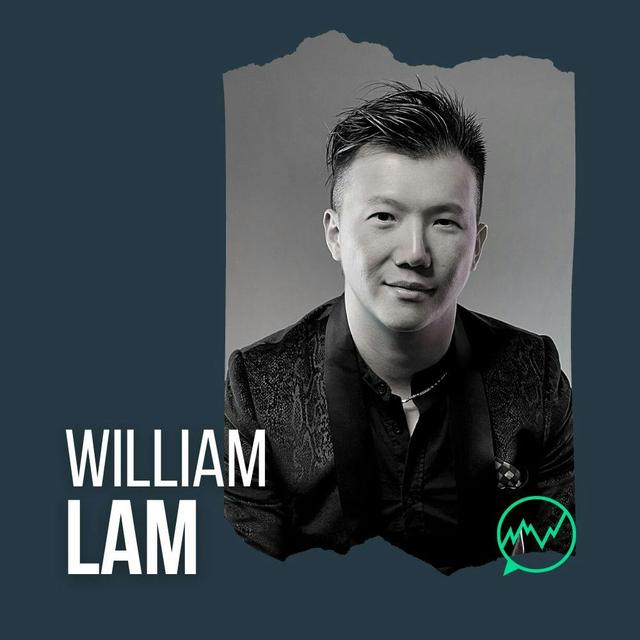
And we're on episode 275. This is Tessa, co-host of Chat with Traders. What does finding the love of your life and trading have to do with each other? This episode may seem irrelevant at first. But guess what? At the core it's intertwined. Why? Because it has to do with the mind. Well, you'll see. Today Ian is engaged in a fascinating conversation with our guest, William Lamb. William is an expert in strategic mental and microbehavioral programming and founded upgrades.
He helps elite investors, traders, entrepreneurs, and sales professionals. assisting them in visualizing and organizing the data and functionalities of the human mind, which can lead to improved mental efficiencies and optimal performance. Experiencing the noticeable communication differences between his childhood culture and his new home in the US, William was driven to become aware of how his limiting thoughts
imprinted from his family drove unhealthy, unconscious actions. Learning how to shape his mental thought process played key roles in fulfilling big desires and creating a richer life. Hear how our minds are like operating systems to which we can influence for better or worse. And guys, we're just scratching the surface in this episode, but it's enough to get us to reconsider our thoughts and behaviors from a fresh perspective.
Enjoy the ride. Ladies and gentlemen, we are so pleased to introduce William Lamb, currently in Arizona. Well, welcome William. Thank you, Ian. Great to be here with you. Before we dive into your uh history, if you could summarize very briefly kind of what's top line, big picture, what do you do? If you were to look at big pictures, we're essentially programmers of the human mind. We take into account how technology uh technologies have evolved.
for the actual technological space, but much of the mindset tools or tools to optimize the human mind has not actually evolved that much. So we took upon ourselves not only the mission, but the development of tools that are backed by science and test, as well as actual tangible outcomes. uh to develop tools for people that want to perform and have elite results.
So now if we go back in time, say to your younger self when you're in school, how did you get interested in it? What was the catalyst to get you on this path?
¶ Early Cultural and Communication Challenges
In the beginning it had to do with me just moving to the US and not really understanding the social dynamics. and the communication the difference in communication, not just in terms of language or linguistics. But culturally as well as what's important to people. Depending on their their demographic, people would have different interests and different values and different beliefs.
And America is such a melting pot, right? So people have so many different values and beliefs. And so when I first came to school in the US, I noticed that, but I didn't know how to label it or systematically understand that. So that began my early curiosity that caused me to become very curious about how do I address this systematically.
and optimize my own communication and thinking so that I can at least fit in, but then create my own social circles that brings me, you know, the friendship and all the things I desire. What were a few differences, major differences between uh the culture that you grew up in in your family and uh and then the difference what you saw and experienced in the among your classmates?
There are so many. And frankly, I wouldn't say just differences. There are similarities. However, one of the first things I observed was how open people are in complementing each other. in here in the US, which was quite wonderful. Um, it's not a common thing in where I was growing up. And uh in fact, most of the time people point out faults and problems more so than the good things that that you know we observe. So that was quite a pleasant surprise.
Uhhuh. So where what culture did you come from? Came from Hong Kong originally. Mm-hmm. Yeah. Yeah. Lots of traders there. Oh, okay, great. Yes. Yes, indeed. Uh so in um the culture you grew up in in Hong Kong, you experienced more critical aspects? I mean, th that were Were your neighbors and family less likely to praise you for accomplishments and more likely to pick out things that you should have done better? Yes, and if someone let's say could
Um you see, here's here's the thing. In in the States, we normally wouldn't call out our family members or friends or especially strangers and say, hey, you need to lose weight. But in where I was growing up, people would be like, Well, this person's fat. And they would tell them to their face and they'd be like, you should lose fat. And they would be very and they would act like that's normal. And it is normal over there.
Yeah. So did you find yourself uh in situations where you just spoke your mind um here in the US and did it get you into any any trouble? Oh, in the beginning, certainly, and probably some things that I don't even remember that I did. Um, I found myself probably being too blunt and yet I learned very quickly how different it was. And so That sparked my curiosity of is there a way for me to to not only communicate better, but it's it's
Communication is simply a sign or or a symptom of our thinking, right? If I may put it that way. So how do I think in a way that allows me to not only flexibly, flexibly fit in, but effectively fit in? to different cultures and different scenarios, different demographics, different communications. So I think that to me was the key to my success in terms of in my mind, I'm like, I need this to be successful. So that was the beginning of it.
I see. Need what? So uh you're I imagine you're trying to cultivate friendships uh there in school. Is that this is part When I when I moved here I was sixteen years old, so friendship was definitely a focus. Mm-hmm. Mm-hmm. So this experience from one culture now in now in a new culture, did it heighten your sense of awareness, how you speak, the tone that you use? And did it make you more cognizant of things that you would have would have taken for granted back in Hong Kong.
Well, you know, not at first, to be honest, because when you first move to a different culture, it's it's uh it's not that different than getting a brand new job in a new company, even if you speak the same language, even if you understood the same words, words may have different meanings. So I didn't quite notice all of those minute details, probably until I would say
uh two, three, maybe even four years later. And then when I really began to study language and the culture here, I mean, not like just taking a history class or anything like that. It was when I got into college And then I really began to observe how people communicate and I began to have tools that's that helped me. That was when I really began to notice.
¶ Learning Through NLP Training
So you're doing this kind of um from the ground up, or were you reading any? Like a baby. Yeah. Were you watching any particular videos or reading any books that that supplemented this learning, or was it just just on the ground observation and processing? So unfortunately in the beginning it was just on the ground observation and trial and error, which is how a lot of you know, babies or a lot of humans learn it that way in their jobs too. But nothing beats
being able to learn from other people's successes and failures and experiences. So in I would say the year two thousand fifteen or so. Um, and I was already graduated. I was already running a startup. I was actually building different uh products and selling them online and we had raised a decent amount of money um as college students from from Kickstarter. We were doing all those things. And I still noticed there were hiccups in my c communication and in my performance.
So at that time I decided to take some time out to go take some training. Because I thought, you know, I've been learning over a decade on my own using trial and error. It hasn't gotten me far enough or as far as I'd like to. So I decided, you know what, I'm going to go find people that have aggregated this knowledge.
And put them together, I'm gonna go learn from them. So I found some people, uh, various groups, and that was the actual beginning of when I experienced a rocket shipped type acceleration in my growth. What type of class or seminar was this involved in? I mean, is it it sounds very psychology related, right? Yeah.
So um there were a few. One of them was in the the world of neurolinguistic programming. Yeah. I I don't know if you have heard of that world. Probably have. And uh NLP is an interesting thing because some people are like, well, this is total pseudoscience, and some people are like, well, it's
It's from a black budget program that was developed to influence the mass. And then there's everything in between. And then there's people that says it really works. Some people say it doesn't work. But it really depends. It's like any tool. Some people really good at using it, some people really aren't good at using it. And they claim to be very proficient. So it could bring good or bad rep to the set of tools.
And I was very fortunate to have learned from some individuals that and I was very skeptical. And I came from a computer programming background. So to me, if it's not scalable, repeatable, and systematic, to me, it was like, okay, this is definitely pseudoscience. But during the process of My training, I began to witness some pretty phenomenal, some would even say outrageous things that I'm like, wow, that could not be explained by. Just conventional thinking.
¶ Designing a Romantic Relationship
Give us uh an example of what you're talking about. I'd be glad to. Yeah. So in the training I was asked this question. They said, if you could design what you want. And you got it, right? What is that one thing when you got it that will make this entire training the greatest investment of all time?
Now I'm like, this doesn't sound like a normal question. This sounds like they have mathematically pieced some cost and effects together. Because coming from programming, I'm thinking cost and effects, this means that. So I'll ask the question again. They said, what are what would you like to design that when you do have the outcome of the design, because you've taken this training?
Will make this training the single most valuable investment of all time? And I'm like, wow, these are that's a genius question. So I'm like, okay, I'll go along with this. I already invested my money. I'm gonna go along with this. I think that if I could at first I wanted to save money, but then I was like, well, you know what? Money, I'm gonna make money regardless. Money comes and go. What is something that I have been working on that I haven't gotten massive results on?
And I was like, well, I want to find the one romantically, because I've been looking, I've been dating, but I just can't seem to find the one. Long story short, they were like, When? No hesitation. I'm like, these people have done this before. So they said, when? And I said, five months. And four months and three weeks later, I was engaged. Wow. The design. It gets better though. The day I set the goal and made the design? So strange. At the time I was like, I can't believe this.
The day I set the goal, my fiance, my wife later, right? She had she was actually engaged the day I set the goal. And the day I set the goal, she decided to break up with her fiancé of the time. And we didn't know each other. I thought, whoa, what are the odds? This could be a pure coincidence, but That's some pretty wild thing.
Wow. Uh so the the day that you set this goal, did you view that as a super low probability event, sort of like winning the lottery or something? And you thought, oh what the heck, I'll just throw out something just uh that's beyond my imagination, uh that's super low probability, rather than shooting for something that's, you know, you you would think would be very achievable.
I love that question. That's exactly it. I was like, this is a low probability. I've been working hard on this, and I felt like I had a lot of friends, good social circle, because this is You know, years after me thinking about what I was talking about, and I've been improving my my n my communication. I felt like I had a great social circle. So I was actually like, you know, I it's not like I didn't go on dates.
I just haven't found the one. So this is probably a low probability. And I was still involved in my startup. So I didn't have all the time in the world to go out and and date. So in my mind, I'm like. The chances of this happening would literally be like winning the lottery. So we'll see, right? I wanted to prove them wrong. That was really what I was having in mind. Wow. Um so how much um how long was it after you set that goal uh there in the class before you first met your uh wife to be?
Let's see, that was roughly June. Uh no, July. So uh I set the goal about so we're talking about three and a half months. I'm at her. Three and a half months. So three and a half months go by and then when you first met her. Um, how did you feel at the time? Did you did you did it strike you like, oh my God, this woman is it? Or did it take some time of talking to her and finding out, you know, what you had in common and that kind of thing? And then later
thinking that maybe. W so how did it strike you? So one of the biggest things I took away from the training was my design needed to be so specific. But I coming from you know, a computer programming and engineering background, I thought, you know, I'm gonna take it to another level. So I had created rows and columns on a spreadsheet that was uh prioritized left to right, top to bottom.
83 attributes by design. And I actually made a a uh a rec not not not a recommendation. I made a requirement for myself that it has to hit, and I had a scoring system, it has to hit over 90%. So that because you know, if I just set a goal and go meet someone and then I'm like, oh, maybe she's the one, then I might or may not have a standard to hold myself to. So I was like, I have this design and these are all the attributes I desire. They're prioritized.
And there's a scoring system and I'm gonna hold myself accountable to ninety percent or above. And so I can actually experience the result by design. Well, she was the girl after three and a half months that I met. I was like, this is a ninety-three percent match, and I could foresee her going to a hundred percent match. So
Frankly, not only that, it's not just a logical thing, because you know, you get that gut feeling or you just feel right. Uh it was in the middle of our first date. So after the date, I was already like, she's the one. And I I just I couldn't believe it. I was like, is it does she feel that way? Is it just me that feel that way? And so sure enough, we were engaged like roughly a month later. Wow.
Well, uh so uh how soon after the first date or uh or even during the first date did you tell her that uh you had designed this? Um I didn't tell her. I didn't want to tell her that I thought that was kind of weird at first because I was like, you know. This is not a normal methodology. I was I was simply experimenting. I did tell her probably day three or date four, and we got engaged like shortly after.
That's uh quite a story. So I imagine after this experience, you were probably all excited to implement this in other areas of your life?
¶ Applying Design to Business Success
Exactly. I thought, you know what? Once again, coming from an engineering background, I was like, this could be a coincidence, or I could prove myself. Right or wrong. I'm gonna set up a bunch of experiments. So I thought, you know, what's something tangible that I can. So I began to design my ideal client. I'm like, I I have this startup that I just left and I began to
You know, I I was doing a lot of 3D printing projects, but I was like, you know what? If this really works, maybe I'll go into sharing this information. So I went back and took some more trainings, some more trainings, and then I took a lot of trainings with them. It was really for me, but At the end of the day, I was like, you know what? I would love to be able to have clients that allow me to continue to fund this research and take more training.
So I designed some clients and I wrote down twenty-five attributes. I figure clients don't need to be as rigorously designed. Um, not trying to find one client, you know. So I'm I made some requirements for myself, once again prioritized. And then I follow some of the methodologies that I either learned or developed over time. And my very first client that showed up in my life, I designed him this way. I said, mildly to intensely interested in the mind.
And then second attribute, I was like a self-closer. So I don't have to waste my time trying to close the guy. He will immediately know this is something that is a good match. And then number three, I wanted someone who was a referral machine because I didn't have a marketing budget. I was just, I just left my startup and this is a new thing. Fast forward.
I helped a guy go from about thirty to forty K a month to over a hundred thousand dollars roughly in five months in his monthly income. And he was blown away and he actually broke some records in his sales company. And uh he was actually do some doing some investment as well at the time. So his buddies in the investment community were like, hey, who did you, how did you get here? Who did you work with?
So I ended up getting roughly seven or eight hundred thousand dollars worth of referrals from one guy. And I went. Right. From one design to another. Interesting. And so you're you're you're dealing with your first client while at the same time you're also taking additional classes from the same group that's involved in the number of Here and there.
Uh-huh. I I I see. So you're expanding your knowledge while you're also sharing what you learned with your first client, uh, which you designed, so to speak, right? Because you said you wrote down or at least were really clear on the type of client that you wanted to attract.
Yep. I see. So wouldn't a lot of people come back and say, Oh, well, I I always fantasize about getting, you know, the perfect uh wife or the, you know, not or the ideal wife or the ideal husband. And I fantasize about that all day. And uh because, you know, people like to daydream and but those people might say, Well, I, you know, these miracles don't happen to me. Am I not daydreaming enough? I mean, I fantasize about it. So what made it different, do you think, in your case?
¶ Understanding Your Mental Operating System
Yeah, to answer that question, I spent the last eight years and tens of thousands of hours and a lot of money. Um, a lot, a lot of money taking different trainings, also even testing our own trainings and hiring some of the world's best scientists, behavioral scientists, to come and validate some of our our theories into practices.
So um we've since gone from working in my basement apartment to we have a team of 20 plus people. We train all over the world. And the answer to that question is it has a lot to do with our mental operating system. Have you ever watched a stock explode and thought, if only I had the capital, or sat on the sidelines because your account balance felt too small to matter? Good news.
With Trade the Pool's limited risk platform, you don't need millions or even thousands to start trading the US stock market. Bypass the PDT and tap into over twelve thousand US licit equities. From penny stocks to big caps, ETFs, even the newest IPOs, and short anything you like, with zero locate or hard-to-borrow fees.
Start your evaluation, get funded with up to$200,000 in buying power so you can go big without risking your own savings. And now you can also have unlimited time to reach the profit target. It's a game changer. Not ready to trade yet? Trade the pool offers a free demo and educational resources. Practice on live data, master the platform, and build confidence risk-free before you even pay a cent. Click the link in the show notes to start trading with Trade the Pools Capital. Imagine
were trying to download a 4K movie into MS DOS or Windows 3.1. The operating system couldn't handle Now, I'm not saying the person couldn't handle their ideal design of their spouse or a loved one or romantic partner. However, e even if they could handle it. their mind might delete what they don't believe they can have.
So a lot of it has to do with if their operating system is ready for what they design. So as part of our methodology in upgrade, which stands for upgrading our mind, therefore upgrading our lives. Our lives really is a projection of our mind, and there's an operating system that governs. the outcome that we experience. So long story short, if you could
optimize your mental operating system, which is really in charge of your reality. Then when you design, whatever you design can actually be a match for what's going on in your mind, then you can have what you design. Otherwise, we need to optimize our mental operating system. So It sounds like you're saying that while many people may imagine or dream about uh uh having an improved life or having uh a great partner or business situation, that what is it a form of because they haven't
prepped their mind properly enough that it it that they what sabotage themselves toward getting it? Is it is it a lack of concentration or focus in on the desired goal? Like what How would people what would people have to do? to upgrade their minds.
¶ Ancestral Programming and Unconscious Beliefs
So it's more of a structural mismatch than anything. So if I may explain what the structure means. So within a human being, within our identity, Or what I have been calling it the operating system, there is, imagine within the operating system, there's a bunch of software in the foreground and in the background. And what we call them are they're essentially our values and beliefs. Values are Essentially clusters of beliefs. And cluster, these beliefs manage our behaviors and our communication.
So if we have a belief, let's say, um, that we can only make as much money as our parents. then I'm not talking about consciously because everyone's like, oh yeah, of course I can justify making more money than my parents. But if it's unconsciously somewhere, it's and it's important to honor the parents or or or not
you know, make our parents look bad. And underneath that there's a belief of, oh, I can only make as much as my dad or mom. Then our behaviors will illustrate that. Or you've probably met the person who complain about their love life. They can move to a different city or even a different country. They still end up dating the same type of people they complain about.
That is our mind's ability to filter what that which is a match for our operating system and filter out anything else that's not a match. I see. So uh are you saying that our operating system is directly tied to our unconscious mind? So our operating system, yes, it's what governs our unconscious mind. I see. So even though uh we may say to ourselves verbally out loud and to our friends and family, like, well, of course I can make more money. I'm fully capable and
And we can see evidence of our friends making more money than their parents and stuff. Well, yeah, logically, of course, I could make more money. Unconsciously, they are at a mismatch. There's a disconnect between their men, their conscious mind and their and their unconscious mind. How would they know? what's going on in their unconscious mind. How would they even know it's there? How could they access that, those beliefs? It sounds like a
that question. Yes, that's a great question. A lot of it is we observe our outcome. Because we could we could think about what we want. We could even write down what we want. A lot of times it's not just what we tell ourselves that we want or what we say to the world. It's the outcome, right? The outcome is a direct map. of what we actually believe we can do in the unconscious level.
Because between our interaction consciously, uh our conscious mind does not actually interact with the world directly. It interacts with the unconscious, and the unconscious interacts with the world. So the outcome that we experience in life, the result. Actually, are directly influenced by what's going on in the unconscious mind. And if I may add this one perspective, I think this will help.
In the last 400 years alone, and humanities have been around much longer, but just the last 400 years alone, we have to have 4,000 individuals, ancestors to create us. Like parents, their parents, and their parents, so on and so forth on both sides. Well, these four thousand people have had dinner conversations, lunch, playtime or family vacations or just in general spend time together and pass on what they believe. That's what we call
Nurture in a sense, right? And then there's nature. Well, between nature and nurture, we download a lot of beliefs, values, and identity data into our own operating system. And unfortunately, humanities operating system has been largely improvised. So we don't see a systematic increase uh in terms of we don't see more and more of the population that's naturally just creating more and more wealth. They typically hit a ceiling and then it tapers off.
What we're observing is that in order to change drastically one's outcome, we have to upgrade our operating system. because all of our ancestors' beliefs and and values and all that stuff, they've gone through a lot of wars. They've gone through a lot of famine. They've gone through a lot of conflict. Those can actually be baked into someone's operating system.
¶ Identifying and Erasing Limiting Programs
So to give you one specific thing to make the story short, my mother's parents went through war, my father's parents went through war just like many of people's parents and grandparents. Well my mother told me when I was a kid, out of what she observed in her childhood, she said, Hey, we can't tell people we have any money. I was five years old, we bought a new TV, so I'm like, Mom, we're wealthy. We we got we're rich. Can I invite my friends over?
She's like, Don't you dare, because if we're wealthy, if people know that and we're not, she's like, But people will think you're wealthy. If they do, they'll want to take your money from. Now that's a terrible belief. She actually doesn't believe that anymore, but that was what she told me in her 20s. And so in my mind, I'm like, oh crap. I can't let people know I have any money. So growing up, this became an unconscious part of my operating system. Anytime I made money, I would spend them.
And I couldn't figure out why until I resolve that in the unconscious. that behavior state to protect me from people taking away my money. Mm-hmm. So it sounds like uh as a young kid, she was sharing with you, uh, as kids are very impressionable uh at a young age, her trauma, right? From the past. And that that trauma got imprinted uh it
onto you, uh unbeknownst to you, and then your behaviors as a result of that changed. And uh uh how long was it before you um realized uh kind of what was going on or or did you? So I realized it um one day when I got home from training. So I actually took my wife with me to do trainings'cause she became fascinated and interested as that was the You know, the methodology in which I found her. So she went with me to a number of trainings. And one day she was like, hey, I noticed.
You spend a lot of money as soon as you make'em. And then she asked this question. And I think this is very useful of a question for everyone who may be listening. She instead of asking why, which many of us ask why, and why we typically when we answer that question, we come up with reasons, which doesn't help us. She asked when, which It's crucial. Think about so think about this question. She said, when did you decide that you would have to spend all your money the moment you collect the?
And the geniusness behind this question is just like a computer program. Before you install the program, the program's not there. So if you can identify when the program was installed, you can go back and wipe the program away. You can wipe it clean. And so when she t asked me that question, immediately the memory, I wanted to say I don't know because I consciously didn't, but immediately a flash of the
moment when my mother yelled at me and said, Hey, you cannot tell people that you have money because otherwise people will take it. That came up and I knew I validated it with my mother. I mean, I I remember that very moment. And I removed that. That was the outcome of when we were in a training and she brought it up. Interesting. So her question, uh
triggered a flashback in you back to that time. And then you it you just kind of popped in your head this realization that, oh my God, I've been carrying this for multiple decades, right? So that that allowed you to become conscious of it, right? It moved from the unconscious mind to the conscious part. And then you could decide, like, yeah, I need to let go of that.
Bingo. It's like on your computer, there's a lot of files and and programs that are running. We don't always know what's what's running. until it becomes conscious and it shows up on the screen and you know how to find it. You know how what kind of query you need to input to find the file or the program. It's just running in the background until then, right? So when we found that, and and part of a big part of training the mind to become excellent is knowing how to ask these queries.
And so when we find those problems or those programs running in the background, then we can say, I want to delete this content. So you were lucky that your wife to be or maybe you were married already but the time uh that she uh recognized this in you. What about for the people who um don't have someone nearby that knows them really well and asks these kind of very uh uh pointed questions?
¶ Strategies for Mental Upgrade
So there are three recommendations that one can do and and if one does all three, it will be inevitable. So first one is we can create an inventory of the results that we desire that we lack. Meaning I want these results, but we I'm clearly lacking in these areas. If I want to make X amount of dollars, but I'm clearly falling short, I would mark that down on a piece of paper. And ideally, I would write down the amount that we know of and then some more.
So I recommend a number that's around a hundred, which is a lot. It's a lot. But the goal is to go beyond the conscious boundary of what we know we have problems. If I only write down what I know to be lacking, I might only I I may run out at some point. But I would only know the conscious problem.
I want to go beyond that. So typically if we go to a hundred things that I know that I'm not performing well at and being very honest with my own personal inventory of it, then I can get to the unconscious or the background. programs are running. Then I can actually look at them and say, I want to modify.
Now, the the second way is obviously, you know, we created a community of trainings uh where people come and it ranges from new entrepreneurs, new traders, new investors, all the way to people that are doing hundreds of millions, if not more. And everything in between. So people can come together and keep each other accountable, but these are not just people that have created success.
These are people that have the ability to program their mind. So when one surrounds themselves with people that have the success and the experience, but the skill to program the mind and optimize the mind, that's really ideal. Number three would be finding yourself, even if someone doesn't join any training with us or any training at all, I recommend that they shift their environment.
They find an environment of people that are constantly seeking to have the most excellent results. Because when you surround yourself with people that do that, Like in your community, right? When they come to your community, people begin to elevate themselves. They begin to keep themselves accountable. And When they notice, oh, wait a second, this person, not in a way of jealousy or whatever, this person who's no smarter than me is doing better. What can I learn from that?
There must be something that I want to do that I'm not doing. So they can create an inventory from that kind of Yeah. Okay, so you recommend that a person writes down the areas that they're not doing either very well at or doing poorly or want to improve on.
What about for people who say, well, you know, they, they're reasonably content. They're kind of in this middle zone. Say, well, yeah, there's nothing that's really bothering me. I don't feel like there's anything I'm doing horribly, but they don't know what they don't know. And so how do how do we how does a person uh get at um to activate their imagination or their unconscious to drill in to raise their awareness?
of the things that they're not doing exceptionally well at. So they feel inspired to have something to work on.
¶ Setting Hypergrowth Goals and Reframing Desire
This is one of the single best questions that anyone's ever asked about this topic. So I appreciate that first off. Yeah. Um so to answer that is a lot of times people don't know this, but the best time to solve a problem is when there's no problem. And how so? So when they don't think there's a problem. That's the single best time to look and see if there's a way to prevent.
Right. Because no one wants to really go to the hospital when they need to go to the hospital. It's ideal if they can prevent it at all costs, right? So it's the same thing within the mind software, the software of the mind. What can I do to do that then? Right? If they are reasonably content, they're happy with where they're at, how could they do that? Well, here's the trick. We all know about the comfort zone, and we all know about the growth zone.
Typically, when people are content is because when they go into the growth zone, they're like, ah, the return does not justify the investment. you know, you're growing maybe 10, 20 percent. That's typically what a growth zone yields. And then if they go a little further, there's the panic zone. They're like, I don't want to experience that. I'm pushing myself too hard and it's painful. So people come back to comfort zone.
And and we've seen this in new entrepreneurs, new, new traders, new investors, new business owners, all the way to people that are doing really, really well. Well, the trick is actually set a goal so much bigger than a panic zone that they have Hypergrowth in order to they have to have hypergrowth in order to reach that. But the good news is. If the goal is so much bigger than us needing to work hard, the mind will find a different way. Meaning if we set a goal that is just hard enough.
That it requires us to work hard, our mind would be like, Well, the investment does not justify the return. But if we set a goal that we cannot work harder to achieve. And it requires a new strategy, new network, new way of thinking, then our mind will actually skip the I'm just gonna work hard mentality. It will go and find creative ways. to bring us into that hypergrowth. And when we set hypergrowth goals, goals that are not only 10x, but maybe 20, 30, even 100x, And and not just in size.
I'm talking about can we conceive goals that are thirty, fifty, ninety years into the future, we have some of our private clients set a thousand year goals. Not saying they're gonna live for a thousand years. I don't make such promises. What I what I am saying is I want to stretch their mind to think in terms of time frame to that degree where it's at the level of a civilization. Then they begin to think about think about goals that are thousands of years in terms of impact.
That will cause them to be able to fish out those potential problems, downfalls, or things that they can improve on, even when they're content. Because we deal with people that just exit their companies and they're content. They're like, ah, I don't need anything. I'm happy. I could let it sit in interest and I'd be fine. But when we ask this question, they all of a sudden get excited. They look for new ways to improve.
So the goal here, if I understand you correctly, is to uh focus in on a desire that you think has a very low probability. It's it's like a almost outlandish desire. You know, it's like, oh wow, that's way beyond what I would possibly even imagine. And then that action, that the action of doing that, then um stimulates a creativity in our minds that we wouldn't normally have, uh, to come up with unique innovative ways to getting there. And uh so, but from another point of view.
I'm just wondering, should we be cultivating more desires? when I often hear some people say that uh desires create attachments and attachments leads to suffering. Well do we set ourselves up for being really disappointed by having these very high, uh difficult to achieve desires? Ooh. Another great question. Man, these are so good. I I love that. So that's a program right there. Equal sign or cause and effect, right? So what you just said is people's mental program.
that they have downloaded from either their ancestors or their predecessors. Because in their mind, if someone has a goal that's so outlandish, it equals attachment. So in their mind, that is creating a program where they're going to have emotional attachment. Because it doesn't mean it doesn't have to mean that, right? And then that could lead to, which then is a cause and effect sign in the math formula of a mentor program, that leads to potential disappointment.
But if we change the formula that says Well, massive goals equals the mind has to unlock because if we set goals that we know we can work harder to achieve, our mind will perceive that as the most predictable path of least resistance. So our minds will make us work harder, sacrifice more hour, more time, and sleep less to achieve that goal that we can work harder for. But if we set a goal that's so much bigger,
Our mind has no other choice but to unlock. And that could mean and may lead to potential massive surprises. If we frame it that way, our mind will take us down that path rather than the other path. So a lot of it is how do humans structure programmable paths for ourselves? So then our behaviors will take us down that
¶ Daily Habits, Media, and Negativity
Mm-hmm. I see. So then what does a day-to-day life look like for somebody who has uh has this very high level desire goal that they previously thought was impossible? How does their habits, I mean, I imagine they would be wouldn't they be extremely busy at at they'd be working 247, uh trying to brainstorm up uh these creative ways to get to their destination, right? Or is there Another way.
No, here's the beautiful thing. It's um it's imagine using Microsoft DOS or or Windows 3.1 to create uh virtual reality gaming experiences. Now if someone understands technology, that would be not only a daunting, but possibly impossible task.
to achieve. So then the easiest solution with our modern understanding of operating systems is well, why don't you use a modern Windows or or a modern I you know Mac OS or a modern operating system would easily accommodate The shortest answer is if we upgrade the operating system, things can actually be not only easier, it can feel less dominant.
And because we can't have emotional attachment to something so our landish, the only possible emotion would be excitement. So and and another way to answer it is the life of that person doesn't necessarily look that different. But their focus would be different. They would focus on things that are not necessarily things they have to work harder, harder for. They would focus on the why and the who.
They would focus on how to because you've you know this. I'm sure many of the listeners who are hearing this know this. Making uh$100,000 more versus making a million dollar or even$5 million more is actually not that different, but it's a different difference of focus. So the focus would be different if we set a logical Would this also include that um the person would likely have to give up many of their um
news consumption habits, given that the news is often so negative. And even even family and friends and coworkers and stuff, uh, they get affected by the news and they share this negativity that's going around. And that Couldn't that act as a great limiter? Uh, would we want to uh really be careful on what we consume for our brain? Extremely. It's like the food market, right? If you get a euro.
socialized medicine, they don't want people to get s as sick. They don't want people to get sick because then they have to pay for it. Whereas here, it's different. It's very different. Where people get sick, there's dollars behind it. Well, same thing with the mind. And and I'm not saying one's good, one's bad. It's just different. It's just different methodology of driving profit and and effectiveness in the system. Well, if someone looks at the media, right?
Um humans are very interesting. If there's fear, if there's things to be anxious about, it really can grab their attention like no other. Right. If you turn on the news and it's just all nice things. Oh, this person's walking the grandma
across the street. What a nice guy, right? You're not going to be interested. But if you watch, oh, here's war, here's this crime, here's this thing, all of a sudden, that content makes perfect for the next moment in time when they go to commercial break to sell a product because they've got your attention. the methods of attention grabbing, right? Or general attraction. I see why why do you think uh humans are so uh attracted to uh negative news?
So a couple of reasons. One can say it's evolutionary, where our ancestors has to, for survival reasons. watch out for what they are most fearful of, right? Animals on the plane. They need to know if there's a lion over there, they need to run, right? They need to pay attention to things that are dangerous. Another thing, another way that's a little bit more modern.
A perspective that we can look at is if we look at the last hundred years, and previously we talked about four hundred people in the last Uh well, 400 4,000 people in the last 400 years has to exist to make us. Well, in the last not only not even 400 years, but 100 years, how many wars did we go through? How many trauma did they go through? Right. When someone experienced a trauma, they retract.
they need to protect they need to make sure that hey i don't make the same mistake that i made last year when i did this or that because there's a war there's scarcity so in short when there's scarcity people learn to program themselves to retract Well, when there's news on scarcity, economic downturn, things that cause people fear, that cause people to retract. That cause people to not take certain action.
And some would say that's a that's a way to influence the economy. Uh, and of course, if if we look at trading. There are ways to trade based on movement. Rather than So if I'm dropping hints there. So if there's movement, there's if there's retraction, there's movement. If there's progress, there's movement. So either way, someone wins. Mm-hmm. And so how does one uh what what can one do? Um, is there any mental techniques or practices that one can do to
¶ Techniques for Positive Mind Saturation
get over these uh fears to uh because I imagine it it could be so embedded in us um for many, many years. Uh any tricks that we can do to bring this to light? Uh once again, love your question. This is absolutely a um a tool that we developed, a a methodology. So We, because we're so saturated with negative thoughts, if we turn on the news, if we go out, sometimes we just hear these things. Even turning on music that's supposed to be good entertainment has a lot of negativity. Well
We have to not only desaturate that, but we have to saturate our mind with the opposite. So how do we do that? How do we saturate our mind with positive, you know, not only happy chemicals, but truly positive news? Well we can actually begin to design So that's where my design formula began to come into play. You can begin, and I can share this here. If you sit down one
And you're like, okay, what are a hundred things I want and a hundred experiences I want? And I want the things that I want to be material things because I can measure it. Right. And the experiences to be tangible as well. So two hundred total items, a hundred things I want, a hundred experiences I want. Most people are gonna get to ten, twenty, maybe forty and they're stuck. They're like, I don't know what else I want, right? Mm-hmm.
But if we keep pushing beyond that boundary, what happens is we will then come up with more and more and more, and it will saturate our neurology beyond the conscious level. of things that we desire and things that we want. And that makes it That that change the dynamic, the the the temperature gauge from focusing on negative to now. It's all about the positive.
So uh sounds like then our upbringing and our being our programming in this culture and our family uh has in a way limited our imagination. to um for new desires and experiences that we didn't we're not consciously aware of that could be great to have. Certainly. Certainly. I think that uh something as simple as I was walking in a grocery store the other day and and um a lady was pushing the cart and her daughter's sitting in the cart, maybe three or four years old, and she said Don't lean over.
Something as simple as don't lean over. The little girl kept leaning over. And she's like, Don't lean over, I'm telling you, don't lean over. Now in my mind, I'm like, she's technically telling her, don't think of a pink eloquence. Right. Of course you have to think about it. And the more you think about it, for a three or four year old, they'll act on it
So don't lean over, don't lean over. Well, she finally fell over and she's like crying. And the mom's like, I told you not to lean over. See what happened? This is what happens every single time. It always happens. She's literally programming her daughter. To do that. Is that because the mind uh does not uh differentiate a don't uh that they the mind does not recognize that negative term? Yeah. The unconscious mind has a hard time processing negation.
Hm, interesting. So um So then before uh you got into all of this and then now that you've been into this for quite some time, uh are you very aware or have you cultivated an awareness when you're talking to your wife, uh your friends and family to always use positive wording rather than, you know, negative.
Yeah, I became aware that no matter what I say, whether I say don't or not in there, it simply doesn't it just imagine that it's just there as a decoration. So for example, if I were to want to close a deal Um, and I'm like, hey, I don't want you to buy today. that will have the same effect as I want you to buy today, except there'll be no resistance to something like, hey, I don't want you to imagine going on a vacation with a
during Christmas time. Uh but if you were and you'd be open to it, where would you like to go? That's a great way to persuade a family member while reducing their resistance to gronification. To everything else in between.
¶ Mindset for Struggling Traders
What would you uh suggest or say to traders in the financial markets uh who are struggling and how they can upgrade their minds? Ooh, one of the first things I would do is begin to examine what they think about all day. Now that may seem like a difficult thing to do. But it's there's a simple exercise. It starts with what I just mentioned. Can they sit down and in one go, maybe two go, or over the cross uh the the the the course of two or three days.
Write down a hundred things they desire and a hundred things they a hundred experiences they want. When they begin there. What they will find is their focus shifts. Because if we find a trader that is per underperformed,
and they're not getting what they want, they're most likely they're most likely not focusing on the outcome that they want. And I think that this would be a good explanation. Think of our external outcome and result in life like a projector screen, the content on the projector screen. And think of our mind and our our our brain as like the computer. And we plug it into our projector, we project onto our physical world. Well
What's the easiest way to change what's being projected on the screen? It's not to go mess with the projector screen. It's to change the content inside the mind. So if they're underperforming, their mind is underperforming. They're focusing on what they don't want. That is one sure way to de-incentivize the mind to perform. So we tweak that and change it to what would incentivize the mind to perform? So a fast question that I would ask is, do they have a reward?
set up a reward system for when they do win or when they do earn extra income or when they increase their performance. Are they gonna take themselves to dinner? Are they gonna go on a vacation? Are they going to do X, Y, and C for themselves? Because as we learn to reward ourselves, think of our unconscious mind like a little kid, five years old, who's like, I just want, I just want to have some snacks or some candy or cake.
But you're like, well, you're just gonna keep working. Over time, it's gonna lose interest. But if you're like, hey, let me entice you, there's a vacation. If you do exactly this number. And I did that same thing when I found the one romantically. I was like, if I do this, this will happen. These are the rewards. And I was like, whoa, this actually happened. I gave myself a reward. Now my mind trusts me even more. Do it again, do it again, reward myself, do it again. Yeah.
Excuse the last interruption here. This is Tessa. We hope you're enjoying this episode so far. If you love the podcast, Please give Chatwith Traders the best review you can on whatever platform you're listening from. This will help us to keep the episodes coming. Also, if you haven't subscribed to our email list, please hop on to chatwithraders.com and click on subscribe. so we can keep you posted of information that may be of importance. Thank you. Now back to the chat with our guests.
¶ The Power of Consistent Design and Rewards
Uh so are you talking about short term rewards on a path toward a long term goal? Yes. And a long-term reward. In fact, how much pleasure can you endure? Hmm. But wouldn't that isn't the goal, the long term goal in itself enough to uh reach uh towards? Isn't that path rewarding enough? Um, why do you think uh we as humans should be periodically rewarded along the way to our long-term goal. I love that. So enough is the keyword because in our mind we may set this conscious.
meter of what is enough, but our unconscious mind will only respond to what's actually enough for So sometimes we have a mismatch of consciously, I think this is enough. This should be justified, but our unconscious mind is like, no, I need more reward. So what I'm interested in is always the outcome. Can I get the unconscious mind to be incentivized? Even if I have to reward it more, I'll do it. I just want to get my unconscious mind to be inside.
I see. So is this part of a process of uh kind of feeling your way through a testing, seeing what kind of results that take a period of time, uh, so that the person over time can realize, oh, okay, this level of reward. is just the sweet spot. Yeah, exactly. It's like a light bulb, right? If you give it just enough electricity, it might shine, but it might not be super bright. But if you're like, hey, here's more electricity, more power, it might be super bright.
And then how you direct that energy also matters. Mm-hmm. Uh can you uh share with us a little bit about kind of your typical daily habits, uh news consumption process, things that you did uh typically day to day or week to week before you came across this? And what are your habits and processes now, typically day to day, week to week, now that you've implemented or are implementing these?
Gladly. So prior to it, this is roughly eight, nine years ago, um, social media was not the way it is now. Uh but I still spent a lot of time on social media and I was reading everything that there was. as a distraction from the pains of my at the time, right? Uh like many people would, and you know, speaking vulnerably. And I would say I spent a good amount of time thinking that I was working hard, but really I was just distracting myself from the pain of. Not getting the results I want.
Um, but I don't know the exact number. I the first thing that comes to mind was probably 50% of my day was just being distracted. Yeah, that's a lot, right? And no wonder I wasn't getting results. And and then fast forward, and I I still took action. Don't get me wrong. I still took action. But every time, you know, I had a moment in, you know, to sit down, I'd get distracted. Fast forward.
I don't really I don't really watch any news. And if I were to watch news, it has to do with wanting information for me to gauge how the pup public may perceive a specific event. And I typically like to read both sides and read between the lines. Um, because typically the opinions of the news in the news is the threshold in which, you know, there's a boundary of how far the population is thinking. How far? Right. And so nowadays I spend more time doing the work that I enjoy.
And researching how to improve the methodology. So I would say my news consumption is about 2% out of 100%. And um social media is something that I don't really touch much. It's mostly my team that handles it. I just spend my time thinking about these goals and designs. So my design is roughly forty to fifty percent of the time. I'm constantly tweaking it, testing.
And then I spend the rest of my time essentially building the skills and or the system to test the design. And I would recommend this for frankly any of my clients who are just starting out all the way to billionaire. They they if they and I'm not saying the exact percentage, but if they design more, they're gonna find more and more of what they design show up. It's when we don't design, we're living on default of the programs that our ancestors have passed down.
Hmm, I see. So uh by having a design, a goal, something for you to reach for in the future that that helps to kind of pull you along a path. uh that makes it much easier to uh shed the bad habits, the wasting time, uh, because you're more energized and focused on what you want rather than trying to think of how to avoid the bad thing. Yes. And our human body and mind is programmed and designed to execute on what we focus on.
So think about what we focus on as the command prompt. So if we focus on these hundred things and hundred experiences, then it has a place to utilize that energy. And if it doesn't have enough energy because your goal is so big, it will it will actually unlock itself. And or especially with proper training, it will unlock even further.
But if we just think about whatever that comes into our mind, then we just go and buy whatever that's coming into our mind. Like, you know, toothpaste that is being shown on the internet or or underwear or whatever it is that we see.
¶ Conclusion: Design Your Life and Resources
Mm-hmm. Interesting. So this helps us get more focused and disciplined and and uh and creates for a a much more interesting, adventurous life. Yeah, and uh quick way to to also share that in a different perspective, it's what gets repeatedly shown in on our stage of mind is the very thing that we're gonna do now.
So what we get get repeatedly shown on the stage of our mind becomes what we behave towards and or execute on. Well, if someone else is in charge of what's being shown on our mind, the stage of our mind, then we do what someone else asks us to. But if we design what we want to do. And show that repeatedly on our stage consistently, then that is why we can have the results we desire.
Interesting. So uh it's like this sounds like this whole process makes it easier for us to become mindful of the thought. going through our mind, you know, is my God, am I repeating the same thing that I thought about yesterday and the day before? Uh, and therefore create better mental habits.
Yeah, and if you ask a lot of successful entrepreneurs, whether they're good teachers or not, they'll say consistency is the key. Well, consistency in what? Right? Behavior? Well, behavior is generated based on our thoughts and emotions. And if we f consistently focus on the desire and the outcome that we want.
And if they're big enough, our mind will actually create a shortcut to get there. But regardless, it needs to be something we desire. Otherwise, someone else will dominate that attention. Someone else more skillful will dominate that attention.
Int very interesting topics that you've uh dived in today, which I'm sure we just barely scratched the surface. Uh, but William, I want to thank you very much for coming on Chat with Traders. And how can our listeners learn more about this and uh and reach you? Ah, Ian, it's been an honor. I love the questions you asked and they're insightful. As I'm listening to your question, I'm like, man.
This is this is a profound interview. And I think that the people that are listening will be greatly benefited. So to to find us, it's easy. If you're into speaking of social media, if you're into social media, you can find us uh on Instagram. And our account is called the Upgrade T-H-E-U-P-G-R-D. And you can even find me William dot upgrade upgrade spelling as U-P-G-R-D.
Um, and if you don't use social media or Instagram, you can go to our website, upgrade.com, U-P-G-R-D.com. And we have some free gifts. People can jump on. They can sign up for our 21-day focus challenge. And it's completely free and they can learn about how to design and focus on what they want. Fantastic. Thanks again, William. My pleasure. Thank you, Ian. You've reached the end of this episode of Chat with Traders, but rest assured there are more episodes.
Insight and zero high That with traders.