


¶ Podcast Intro and Host Welcome
Chat with Traders is brought to you by Trade the Pool. Did you know that every decade the market reinvents itself? Online brokers opened the doors, mobile apps made trading seamless, and commission-free trading erased barriers. Now a new era has begun. Meet, trade the pool, limited risk trading. And now you also have unlimited time to reach the profit target. From now on, your trading risk is capped, and your trading opportunities are limitless.
Trade the pool funds home-based stock traders with up to$200,000 in buying power. That means you can trade larger positions and scale your strategies without risking your own savings. It's time to trade with more capital, making it truly worth your time and effort. Ready to trade the pool? Click the link in the description and join the stock trading revolution today.
Trading in the financial markets involves a risk of loss. Podcast episodes and other content produced by Chatwith Traders are for informational or educational purposes only and do not constitute trading or investment recommendations or advice. If we can argue that the market is the sum of the psychology of its individual participants, well then the market itself has its own psychology and it is on display in those graphs.
And charts that we see. The market will try to manipulate you as a sociopath would to make what Mark Douglas would call. Trading errors and it will try to make you hang on to those trading errors as long as possible to try to take as much money from you as possible. Yeah, you got it. This is Chat With Traders, episode two sixty-eight. I'm Tessa, co-host of the show. Listeners, we appreciate you for taking the time out every few weeks to listen.
and to share the podcast with others who you feel can also benefit from chat with traders. And as we enter the last quarter of twenty twenty three, I wanna ask you Have you been thinking about how you want to end the year and make that extra push on the things that will make the most impact in your life? This could be related to trading or not. It could be our health. our relationships, our jobs, our financial situation, anything
Are you experiencing setbacks? If you are, why don't we reframe this and see that our setbacks are setups for something better? Let me repeat this. Our setbacks for something better. Now this saying did not come from me, but I heard it somewhere. It just stuck with me because it's so powerful. I think reframing it in this way has been helping me tremendously in my own life.
So in this context, it is actually not too early to begin thinking about how we want to prepare, plan, and show up for the new year. Why wait until January 1st?
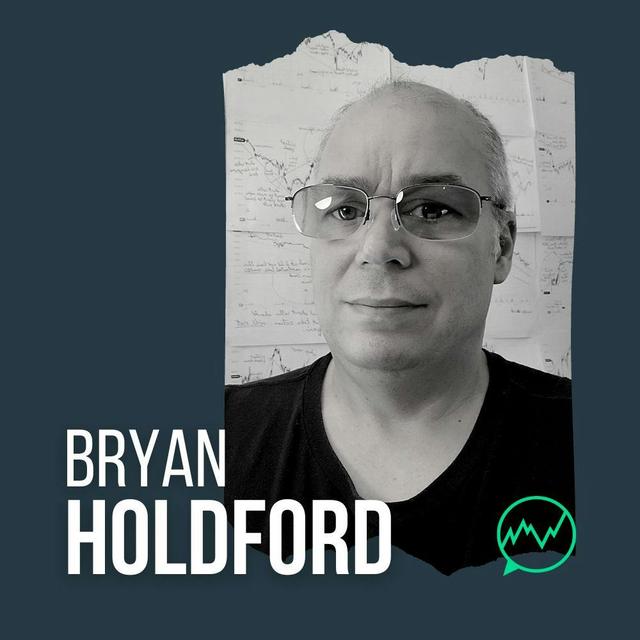
¶ Guest Introduction: Bryan Holdford's Profile
Now without further delay, let me get back to the main part of the show and introduce our next guest. He's your guy next door and a very relatable fellow trader, Brian Holdfort. And I think you're gonna really enjoy Ian's interview with Brian and pick up some golden nuggets. Brian paid to take and pass the Series seven license as a teenager in the eighties, which then led him into the high commission world of stocks and options without mentors or the internet.
Starting with investment newspapers, Brian tried many trading ideas without any risk controls. Despite frequent and numerous losses, he was hooked in the game of trading. But obsessive determination is what drives Brian to stay in the game despite a boom bust performance. Recently, he seems to have found the right balance. Ladies and gentlemen, we're so pleased to present Brian Hodford from North Carolina. Well, Brian, welcome to Chat with Traders. I'm glad to be here.
¶ Early Market Passion: Investing in Apple
Yeah. Tell us a little bit about your background. Where did you grow up and where where are you now? I'm in a I'm in a rural community. I'm in Roanoke Rapids, North Carolina, born and raised here. I've always kind of had a had a passion for the markets. Uh studying them all the way back, going back into high school, and I'm in my mid-50s now.
And I have found out that it's quite an adventure to get to a place of consistency in the markets. Well, when I was in high school, I used to subscribe on and off to investors, investors daily. And I saw some ads in Investors Daily where you could uh pay a firm to represent you to take the series seven.
And so when I graduated high school, I took the series seven and I passed it. And I was always dabbling in markets one way or another. I can remember in the early days I was pestering my dad that I wanted to buy some Apple computer stock. And it was about seven dollars a share and I just kept pestering him and testering and testering him, let me to buy that stock and we didn't know anything about how to do it or what you had to do or that's how far.
Back we were. I guess he got tired of my pestering, and we went to a stockbrokerage office and we had to open up a uniform gift to miners account. I guess that's the same method that you use today if if someone is below the age of 17 wants to buy securities. Well I bought those that Apple stock and by then it had gone up to seven. So you know you can't you you're kind of missing the boat, right? Wow, you missed out on a on a ten bagger so early on.
It's early on a t yeah, early on a tenfold game. And uh it was in the early days when Apple was really in a lot of height. And people think that Apple's in a lot of height, and it is a lot of hype right now around it. But back in those days in the Apple I and Apple II days, it was a very hyped up stock.
And it almost went bankrupt a few years later. I don't know if people r do some research into the history of the company. The company really fell on some hard times in the early nineties. But anyway, that was before the crash of eighty seven.
¶ High Commissions and Brokerage Evolution
I bought twenty-three shares of Apple computer stock in a uniform gifts to miners account. And after I bought it, it doubled again. If if and memory serves me correctly, it started off at seven, went to seventy. I bought it at seventy and it split two for one and went back to seventy again. before just before the crash of eighty seven. You'd have to go look up some of these prices to fact check me on it. But if if my memory is serving me properly.
That's the way it went. But anyway, I got out in September of nineteen eighty seven and I was all fired up then. You know, I wanted to get a a brokerage account that I could Discount brokers were really coming on strong then. And people today don't realize how much we used to have to pay for a ticket back then. My loss parameters now would not even cover the commission. How much were the commissions back then in nineteen eighty seven?
I believe that uh I was paying a ticket price of around fifty bucks. Wow. So uh and I believe that twenty-three shares of Apple cost me somewhere around forty or fifty dollars just a place to trade. But the proliferation of discount brokers was not coming along and that's a long backstory about how the New York Stock Exchange had set commissions for two hundred years. I mean that's why the exchange existed. It was a group of people that got together
to set prices. It was a monopoly on securities prices based on the equipment. for conducting transactions. That's why the New York Stock Exchange is the New York Stock Exchange. It was to regulate the cost of um of what people could uh you know, the ticket price. What we call ticket price now, right? It cost to enter a ticket. Now you can do it for pennies.
¶ Series 7: Sales Training Not Trading
And you can even do it on some of these apps I'm told for free. What a, you know, what a revelation that would have been for me back in those days. I did not understand in the early years and even after I passed the series seven, you would be amazed at the things that I found out after I thought I knew everything. Well, don't they include uh everything you need to know in uh in a series seven exam? I mean, that's to get to become a stockbroker, right?
That's to become a stockbroker, but it's really to become a sales rep. You do have to know about trading and you have to know the terminology. And Mark Douglas. Uh that he wrote the uh Trading in the Zone and a another good book. I got to give him credit for it, but he he went down a path, but he went down a more professional path than what I did. And he said he was taught how to talk about trade.
But he was never taught how to trade. And he's he's spot I'll concur with that. He's spot on with that. I see. Did you uh have desires to actually work in the industry, like as a stockbroker, or what were your main motivations to getting the series seven? Uh, I would I would have liked to have tried to have done it, but I tell you, I don't think I could have been a good salesman. I don't think that that would have been a good fit. I just thought that that was the entry level into the industry.
And and I saw that in the paper and I thought that hey, I'd like to try it. But uh to be a broker like that though, to be a a stock broker when you have clients that you're calling, you have to be able to sell these people. And I'm not I'm not going I'm not a salesman. Mm-hmm. So So really your series seven is really a sales rep exam, but it does talk a lot about finance and I don't regret taking it. Is I learned a lot. I got s I learned a lot about securities through that exam.
But I knew about options and things like that back when I was in high school. It it taught me a lot about the bond market and interest rates and things like that, how bonds when they're going up. interest rates are going down, you know, I never put pieced all that together until I started really studying for that exam.
¶ Undercapitalization, Impatience, and Early Losses
So um studying for the exam and then subsequently getting the series seven, did that change the type of securities that you uh became interested in? Did it did it broaden your horizon as far as what to invest or trade in? Uh I started to look at things like commodities. I never traded them. I did not trade commodities until the mid two thousand.
And I never uh never traded outside of just general stocks and and I was naive, very naive, and I was also very undercapitalized, but I was starving to get trades in and I was uh I I got to say I was pretty good at picking the industries that were moving up because uh you know CNBC used
sponsor a uh a competition, they may still do it. I don't I don't really I don't watch C N B C anymore. I don't really watch any of the news networks. But the uh they had a competition that usually ran for a quarter, a stock trading composite uh competition. And I entered that and they give you a half a million dollar paper account and in ninety days I turned it into a million dollar.
I've got that paperwork. But it was in the early it was in the first quarter of nineteen ninety, so you could a blind man could have done it if he would have bought stocks in the Nasdaq because that's when Cisco systems And Dell Computer and uh some high flyers were really starting to get on the launching pad. Of course, I picked Cisco. That was and that was a few other big ones that that doubled and tripled.
And I actually bought Cisco in that time period, but I but I I had a problem and I still have problems. Every trader at in that marketplace has got problems. And one of my problems then and I still have a little bit of it in me now is that I was impatient. Time is an ally for the patient, and it is a thief to the impatient.
¶ Impact of Margin and Small Losses
Hmm. What a good quote. But being undercapitalized, life getting in the way, school, school loans, going through things uh just paying for everything. Uh it really starved my capital account, but I did trade some stocks along the way and I generally lost money, even though I was picking some of the best companies in the country, like Cisco Systems.
I had bought I was in and out of Dell Computer a few times. And these stocks went up a hundred thousand percent some of them over the next ten years. And there was another one that I bought called Stratacom. that was actually taken over by Cisco and I'm like, but that, you know, the good Lord wants me in Cisco systems, but my impatience won't let me stay there. But I could I could have made a fortune there, but uh it it didn't work out.
Just cu uh just curious about your while you're interested in the markets and and tr trading different stocks, did you have a regular job or kind of a career that um you were also doing at the same time? When I was in high school I was a manager, a department manager. Uh when I was in college and when I graduated from college I was a department manager in a grocery store. So we you know, didn't make a lot of money. It's uh, you know, it's typical of my generation.
What over educated and underemployed, I guess is the way you would call it And but it always caused a problem for me being capital starved for my trading account, if that makes any sense to you. So were you uh funneling uh as much as you could uh savings from your uh regular job and just pumping it into the market? Right, right, right. That's right. And you go in there, you're undercapitalized, you're taking positions and I would take them on full margin and
Even if you have good stocks, when you have a drawdown, it's gonna take you out, right? It's you you can't support it. And then the interest payments start to eat you up. And you're trading such small lots back then where the commissions were coming down in the mid-90s, your ticket cost in was probably around 20 bucks. But it's still, if you're doing a thousand dollar trade, it's still a significant percentage of the trade just to get in it.
And that doesn't that doesn't include that doesn't include the slippage. Were were margin calls then uh uh common for you, uh given that you said uh you use a lot of leverage. I would generally get out before the margin call would come, but it would always be at a loss. Right. It would always be, you know, it would it would just eat your capital away. Jumping from one stock to the other, losing two percent in, two percent out, that'll eat you up.
Just you d if you did that five times, ten percent of the account is gone and there's been no securities price change, right?
¶ Risky Options: Credit Card Debt and Level 5
Right. Yeah. Yeah, exactly. So did you uh how did you end up picking the stocks that you would trade? Where would you get the ideas and what kind of strategies did you uh utilize? In the early days and it's still a good paper to read, I would I I would subscribe, like I said, to investors daily on and off. It was such an expensive paper to me.
It was like a hundred dollars a quarter, I think, is what it was. But it was heads and tails better than the Wall Street Journal for what I was using it for. Wall Street Journal was probably better global news coverage. But the investors daily really tailored to the investor. I don't really think I'm an investor. I'm more of a speculator. So it was kind of a mismatch there too. As time went by, I even tried to start selling options.
In the mid nineties and I borrowed a lot of money to do it, and I was lucky to leave that leave that alive. Because you have to have You say uh borrow money um to trade options. You're Yes, I thought you know Being that I know everything, why not try it? You know. Uh I wish I could remember the seminar that I uh I watched on uh I watched the guy give. I wish I could remember it. I think it was a British fella.
I wish I could remember his name because he really deserves to have credit for it. He said, If you if you know you're right about the price of the security, you need to just go all in. Oh my god. And and he was talking about taking your risk controls off, right? That's what he was getting at. He said he said, if you know you're not gonna lose money, why don't you go all in? And I was like, Yeah, that's he's right. And to a novic trader, to a novic trader, they'll do that, right?
I see it. How did you borrow who did you borrow the money from? I borrowed it from credit cards. Oh wow, And I would not recommend people do it. I I avoid debt now like uh like cancer if if possible. And uh so what were some of these early experiences with options like for you?
Well, the first thing I had to deal with was I was dealing with waterhouse securities and they had uh they had a lot of Stringent requirements that you have the reason why I was borrowing money is because I wanted to reach the level where I could get to why I think it was level five options trading.
Well, you know, level one is just your basic buy and selling puts and calls. Level two gives you something else. And but level five gives you everything naked and naked selling and the whole nine yards, the whole McGill, so to speak.
And I was but in order to get to level five, you have to uh for one thing you're gonna have to go tongue in cheek on your experience when you don't have any because they want you to have experience. Well, if you don't have level five, obviously you don't have experience. selling options. And another thing that you had to have was a high capital requirement. You know, you'd have to have like$25,000, I think, back then in the account. That was a that and that was a mountain of money to me back
Interesting. So what uh what attracted you to go for a level five option account uh so early on? I thought and this is a when you talk about a good quote, this is another good quote and this is another novic mistake. Um I was under the impression that, hey, this option thing is going to be easy. All I have to do is sell options far enough away from the current market price.
And I'll be safe. And option traders make that mistake a lot, I believe, as far as uh option sellers. And I don't care what strike they come in, I don't care if they're doing uh selling put options, cash of co s cash of co secured puts or wheeling stocks. Uh I don't care what strike they come in, they they have miscon they have a misconception About probability and edge. Probability and edge are two completely different concepts.
¶ Current Strategy: SPX Credit Spreads
You can lose a whole lot of money thinking that you have very high probability. I I had a pushed move a few weeks a right now. My main focus now is I'm selling credit spreads on the uh SPX right now. You you get some f uh interest rate favor and you get some uh ten forty uh uh uh twelve fifty six. gains from straddles and losses on tax returns by dealing with the SPX contract. And I had an option last week that I sold, I think I sold that option for like sixty cent. And we had that big
Pressing day and and today is what September the 8th, 2023. If anyone wants to go back and look at it, go back and look a week back. You had a big upday in there, a big green candle on that chart. That option that I was short went in the money by thirty dollars. And I think that that's correct. I think it was like twenty-nine dollars or something like that.
And if I would not have had long control and I still overran my loss parameters a little bit and and you can see that in my equity curve on that Tayo. And I was, you know, I overran my loss parameters a little bit. But had I not gotten out, if I would have frozen like a deer in the headlights on that tree, I would have um I I would have given back a significant amount of because I think I was doing it was a ten lot. I know it was a ten lot because I was trading ten lots at that at that moment.
That would have been about they would have took about thirty thousand dollars on that if I wouldn't have'cause the the credit The long part of the spread was way out of the money. You know, it was like a like fifty, sixty points away. So it didn't get hit, but I would have ate every bit of that move in the money that it went.
¶ Lessons from Past Flash Crashes
Yeah. I'd like to go back to when uh when you first got into options uh and you immediately wanted to jump to level five uh trading of options. And this is before is this before having much experience uh with just going straight A long calls and puts was like most
I had never bought an option in my life. I don't uh well no no I've gotta take that back. Yes, I did. I bought um uh I was looking for a trend trade in the banking sector one day and I saw Citibank was moving up and I bought a tin lot and I lost every bit of So yes, I had bought some options before that. And I had bought some one time in the uh in the flash crash on the uh on the on the S P five hundred.
It's the same flash crash that uh had destroyed Victor Nidoroffa when he blew up the first time. He had a black uh uh a black pigeon went swimming by and uh took him out and um but on that day Just on a whim and I was going to cash machines around town, you know, like a crack addict, right? Well this is this is to to uh borrow more money to no no.
Not to borrow money. This is money I had in my checking account. I think it that because I know I I'm always a saver, right? I'm always a saver and I've always fed the markets with what I say. So anyway, I'm going around town to at a cash machine. going to get five hundred dollars here where I where I can get it from or from a teller because I needed to get the money quick because I had a stockbroker here in town and I wanted to be in his office first thing in the morning
And this was the day before the flash crash. I just had a ink uh uh an inkling that the thing was gonna crash. Is this two thousand ten? No, this is not two thousand ten. This was nineteen ninety seven. Uh You have to go way back. I think it was 97, October 1990s. I can't remember the exact day. I've got a picture on my phone of uh when Victor Niederoffer made his mistake. But the options that he was short because he was he was uh he was he's a infamous theater.
And he did blow up that hedge fund. I I felt sorry for him, really did. Uh I because I have a lot of respect. I think he's a very knowledgeable trader, even though he did blow up, but I've got a stack of books right here on my left over here. I can name names.
¶ Gambling Tendencies and Initial Loss Control
What? Was your interest in getting a level five account prior to having much experience uh trading options? Yeah. Yeah. Who was this uh uh influenced do you have like a gambling nature inside of you? Do you you do you like playing risky? Uh sometimes I wonder about that, and I have thought about that a lot. Yeah, yeah. Sometimes I do think I have some gambling uh issues. And
Trying to get that under control. And I think it shows up. The gambling issue shows up in hope, right?'Cause you can picture that person at the slot machine just hoping that that that that the wheel comes up right or at the roulette wheel. And and I have been in that position before and
It usually doesn't work out. And what you need to have, and this is some advice for people that are trying to make it in this game, you have got to have lost controls in there. Once you start running out on your lost controls. You have got to get out of the trade. And I know it hurts. It it really it hurt me anyway. It still hurts me today. I hate it when I have to take a law.
Right, right. So did you have in those early days, say in the nineties, um did you have any kind of uh lost controls? Was it just like a mental uh No. lost controls, didn't didn't even under didn't have any concept of it. Didn't did not have any concept of it. And I was and like I say, I was selling options against the company, you know, I Omega. Oh Iomega, I remember them.
Yeah, they finally went bankrupt, right? Mm-hmm. But I had built up a substantial short call position. And that's back in the days when they traded in what they call teenies, right? Sixteenths of a point. They called them teenies. And I would say I finally found a broker that would take my account, took my twenty-five thousand dollars and
It was the most stressful thing I'd ever been in in my life. I mean, if if I Omega had a turned around and shot back up because I was selling calls on I Omega, if it would have shot back up, it would have bankrupted me. Oh wow. Uh did you um uh were you able to follow the implied volatility to help you pick stocks to sell options on? Or did that exist back then?
Did didn't even know what it was. I'm sure that I'm sure it existed and I'm sure that the major major brokerages did it. You know, the the uh for their proprietary trading desk and all that stuff. They're running those uh high level algorithms. I'm sure that they use the uh IV rank.
But uh I I didn't even know what it was. If you asked me what in pro implied volatility was, I would I couldn't have given you an answer. I I did get a lot of trading experience so but as far as what happened to the twenty five thousand dollars, I think I lost a couple thousand dollars. And I can remember being at an amusement park and I was thinking about what these options were doing to me while I'm down here.
And I f I got back home and I I closed the account. I took the money out. I paid everything back. I and you know, that wasn't gonna work.
¶ Market Wizards and the Need for Mentors
Oh, so you uh paid back your debts? I mean you Yeah, yeah, I've I've I've never had to go bankrupt. I've never had to go into bankruptcy or anything like that. I've always paid everything back. It has been a burden at times, but um I have always paid everything back. Uh during the nineties, was most of your um trading involved uh options or did you also trade?
Early nineties it was sto early nineties it was option. Uh early nineties it was just straight bets on stocks and then uh later nineties it became options and Then I migrated in early 2000 to a to a job that paid me better. And I was still giving money back to the markets. And I started Do a lot of research online.
And I ran across books and one of the w and one of the best books I've ever read about the market was the Jack Schwager book, The Market Wizards. A couple of interviews in there really changed my whole perspective of market. And uh that was the Michael Marcus interview and the Ed Sakota. Ed Sakota the wise. It uh that knows everything. those two interviews. And there's a bunch of other good ones in there. Marty Schwartz has a very good interview.
And the uh Paul Tudor Jones and a bunch of others, too many to mention. What were some of the key takeaways that you got from the Market Wizards book? And what changes did you implement in your in your trading? Okay. I still had a problem with loss control, right? But some of the things that I really enjoyed about the book was you're going to have to find a methodology that fits you.
And you're going to have to make it your own. And I could have really benefited in my early years instead of feeding money to the markets. What I really needed was a trading mentor. And one of the things that They didn't really talk about in the book, but almost every great trader in there had a trading mentor, one way, shape, form, or another that they mentioned in that book. Michael Marcus, he was basically mentored, I think what he said by Ed Sakota.
Ed Sakota, he was just a genius, I guess, but uh I think he was in mentored by Uh he he mentioned it, but I can't remember the name. I may have been Amos Hostetter or someone like that, or it may have been I can't remember who it was now. But if you l look at what these people went through and what they did They were trained. To think and behave as traders and not people coming into the marketplace with the idea and just trying to execute on it.
Did you know anyone uh during all these years who traded any family or friends who you could talk to? No, I did not. And generally the general public, they're not going to be very supportive of you trying to do something like this. My dad was always supportive of it.
¶ Market as a Sociopath: Managing Manipulation
And in the late in in the later years he really became a staunch ally for me because he had seen m some of my capabilities. And um but he didn't really un he didn't know a whole lot about markets. And I and what this is another good quote that you can get from me. If we can argue that the market is the sum of the psychology Well then the market itself has its own psychology and it is on display
in those graphs and charts that we see. Now I know I get a lot I you'll get a lot of ridicule from the fundamentalists. Jim Rogers is gonna he's gonna he's gonna bow up at that. It'll make his necktie. It'll make his bow tie spin. You quoted us um earlier. You said that the market is the most insidious sociopath on earth. Uh care to care to elaborate? It is because What do we do as traders? What are we doing every day as traders? We're trying to take money from other traders.
So if the market it now we've established that it that it has its own Psychology, the market will try to manipulate you as a sociopath would to make what Mark Douglas would call trading error. And it will try to make you hang on to those trading errors as long as possible to try to take as much money from you as possible. So it does have the traits of sociopathic behavior. Now what stops a sociopath in your life? If you run across one in your life, in a relationship or something like that.
It stops when you cut it off. It's a choice that you have to make. But people get so vested into it that they run, they run way past. their lost parameters and that's in life and it's in the markets too. Yeah. Have you ever watched a stock explode and thought, if only I had the capital, or sat on the sidelines because your account balance felt too small to matter? Good news.
With Trade the Pool's limited risk platform, you don't need millions or even thousands to start trading the U.S. stock market. Bypass the PDT and tap into over 12,000 U.S. listed equities. From penny stocks to big caps, ETFs, even the newest IPOs, and short anything you like, with zero locate or hard to borrow fees.
Start your evaluation. Get funded with up to$200,000 in buying power so you can go big without risking your own savings. And now you can also have unlimited time to reach the profit target. It's a game changer. Not ready to trade yet? Trade the Pool offers a free demo and educational resources. Practice on live data, master the platform, and build confidence risk-free before you even pay a cent. Click the link in the show notes to start trading with Trade the Pool's capital.
¶ The 2008 Commodity Boom and Bust
So would you characterize uh your early trading in the nineteen nineties and maybe early two thousands, uh after the advent of the internet as uh a time period of um of what exploration uh Right morning. Learning. Learning I was I was learning about the markets and I had just enough information going into the going into the financial crisis to make a fortune and give it all back. And please tell us how how did this happen?
Well, uh, I went in and I and I had accumulated an account. I won't get into the details, but it the money that I had saved. And this money became freed up to me and it was in a IRA. And I know I'm gonna get a lot of ridicule because I've had to explain this before.
People tell you that you can't trade commodities in IRAs, but you can. Interactive brokers, and I'm not trying to plug them, but that's the brokerage that I use. When you establish an IRA with them, it's established, it's established in trust. And it allows you to trade more exotic instruments. And back in those days, you didn't have these daggone exposure fees. So man, you could really lever it up, right? It doesn't really cost you nothing but the commission.
But when crude oil started peaking, went into a parabolic, I felt like that crude oil was going to probably collapse. What what time frame are we talking about? We're talking two thousand seven. Okay, two thousand seven. Okay, so you now you're you're trading with your IRA account, correct? I'm trading with IRA account and I had uh little I had more than a hundred thousand dollars.
And I and the loss pattern initially showed up because I got too early on the parabolic and I was sh I was shorting soybeans, I was shorting crude oil, and I was shorting copper. And I can remember And I think it was 2007. I think I have to go back and look at the chart. If I saw the chart, I could tell you exactly the day when it peaked in there. Crude oil peaked at like around$148 a barrel. Yeah, I think that was in the summer of uh twenty two thousand eight, just before the
There we go. So so that would be that would be it then. That would be the time frame, 2008. The IRA I had I had a little bit before that, right? So I was trying to catch this top in crude oil, but when you're trying to catch the top in a parabolic, it's very dangerous. Because parabolics move, look at look at some mathematics things, right? Parabolics move fastest at the end.
My hundred I think I had one hundred and forty some thousand dollars in that account. By the time crude oil had finally peaked. And man, this got me to doing some drinking and thinking. I had whittled that account down to$75,000. So and it's and I'm talking about an IRA, right? This is money if you've been saving for the past eight for the past 18 years here. And and you and you've gone through half of it in ninety days, but the trade size was too large. It did finally work out in my favor.
Because I eventually caught the crude oil market just right and it rolled over and by the time it broke down below ninety five dollars a barrel, my seventy some thousand dollar account was worth over a million.
¶ Skill, Deflation Bias, and Parabolic Peaks
Wow. And that that's a very short period of time, right? short period of time. We're talking weeks. And it came in chunks like this. I can remember my dad one day, he would, he would talk to me about markets every now and then. And he asked me, how'd you do today? And I told him, I said, I did all right today. I made seventy-two thousand dollars in one day. He he froze he froze rooted to the spot. He he couldn't believe that it that I had made that much money in one day.
So reflecting back at that time, uh, based on kind of what you're using, the strategies and what have you, do you attribute that to just luck or w was there some level of skill in that? And if so It was some skill and it was some skill and uh I've got a I've got, you know, talking about the psychology of it and this kind of branches off in here. Um I read a book. By Robert Prector and Prector is a notorious deflationist.
And I read that book in the mid nineties. It was at the crest of the tidal wave. It's a decent book to read, but you shouldn't trade based on it. And you should never let the hyper-inflationist, which is going to be the bullish case, or the hyper-deflationist, which is going to be the bearish case, influence your trading. That is very difficult for me to break away from.
Because you're trying to break away from the very fabric of who you are. You're like Peter Schiff. He's a he's a hyperinflationist hype. Peter Schiff would never short oil, I don't think. Right. He's a he's a avid hyperinflationist. But like Jesse Livermore, I guess it was Jesse Livermore was talking about it in uh his book. He talked about uh There's two uh there's the bullish side and there's the bearish side and then there's the right side. Yeah. You have to be on the right side.
So qu uh going back to your crude oil uh win, could you explain a little bit um the skill aspect that you felt? Uh trend following model when I was looking for the trend to break. And I also had seen enough markets go into parabolics. I know what's gonna happen to a parabolic. I had a guy one time talking to me, he he dealt in cows and I was heavy in commodities back then and he, you know, we're in a rural area here.
Bunch of uh uh guys around here that do cat uh deal with cattle and stuff. Well they had a drought out west and it uh decimated the cattle population. Uh it's been years ago. This was after the uh after the the collapse in two thousand eight and nine. And uh and I told him, I said, Look, that cattle market is in a parabolic and I could I can s I started pulling up charts of parabolics. I said, one parabolic after another.
I said, you know what happened to every one of these parabolics? Here's a cotton parabolic where it went up to like I think almost two dollars a pound. Guess where it went to? It went back to where it started from. Uh just curious and what are some of the indicators uh that a parabolic is very near its end? I mean, are there have you found any methodologies to, you know.
You never know when a bubble is gonna burst. You never know. You never know how far it can go because oil set up before it finally did collapse in that in that 2008 collapse. It had a parabolic. And then it had a and then it had a retrenchment from a parabolic that like went up into like the seventies or eighties and then it and then it consolidated. If you see a consolidation and it's very shallow and it starts to break back to the upside,
You know you're probably gonna have another leg to the parabolic, right? Now, what's uh someone who's who thought oil was gonna uh collapse from the from that, I guess it was in the mid eighties back then. I'm trying to remember this from memory. from the from that price and it d actually got down maybe into the mid sixties and they've been shorting along along the way and they get stuck in that line of thinking. Well they blew that account up when it came into the next leg of the parabolic.
You see what I'm getting at?
¶ Reaching $3 Million and Becoming Debt-Free
Yeah. Uh so when you uh were having your big wins with the uh crude oil, what happened? Where did your account top out at? And what timeframe are we talking about, what year are we talking about? By January, by January 2009, I had it over three point one eight eight million. Wow. So this is um so what were you shorting? Uh you were shorting oil? crude oil, copper, uh and it was a ludicrous thing for me to do. A ludicrous thing for me to do.
I was also trying to short the treasury bond, but uh I had enough knowledge that uh when it breaks out and and I don't know if you can remember that market, but uh treasury bonds went into a parabolic during that time. And they skyrocketed. I can remember the Treasury bond market. I was short at that one nineteen on that Treasury bond and it went all the way up to one sixty four. But I got out when it broke out of a face that it had made.
I wish I'd have went long that market. I could have made a I could have really made a killing there. The problem was I still had a lot of weakness in me. I was still and I can remember Mark Douglas. He got he talked about a trader that he had uh uh was dealing with. And and he talked about this guy and and then this is outside the bond market, right? This is kind of like the book uh at what uh Prector's book did to me.
Uh, and I'm not blaming Practor. All the flaws that I've ever had with trading, they're mine. They're internally, they are mine. I'm not trying to blame anyone or cast blame, anything of that nature. But Mark Douglas talked about this guy who had made six million dollars. He goes on vacation. It's in the early nineties. He takes a book with him that talks about how the US economy is gonna go into inflation.
and how the bond market's gonna crash. And this guy, he comes back, goes to the Chicago Board of Trade, down uh wherever uh to the bond pit down there, and he starts shorting treasury bonds like crazy. And he takes a six million dollar account and he decimates it down to two million. This book influenced him to do this, and his wife had to call Mark Dove, didn't even know who he was, but she knew that her husband was
was uh kind of being taught behind. He had given up on and the guy had given up on Mark Douglas and she told him, please come help my husband, because if you don't, we're gonna lose our house. Right. Right. Uh so uh when you got your account up to about three million dollars, did you think of like, hey, I've got this down, uh, maybe I should just quit my job or maybe even quit trading and just just retire.
¶ Post-Peak Challenges and Undisciplined Trading
I had I I should have put I should have put uh I should have took it all out, put it in a R A and just made interest and Well, actually I should have just went long the market. And it's it's very evident. You could have you could have drew a trend line on the SP 500 from the top of the market right down into the trough where it bottomed out into the mid 660s.
You could have gone long to market there and the three million would have turned into 30 million, probably if you, you know, the way I was trading. Uh so uh but when you got up to three million, um what were your thoughts then? Were you at that time, were you did you think, okay, I'm I want to quit my job or I'm going to quit my job and and I'm I've succeeded. I've I'm successful.
I was having such massive equity swings. I knew and I had and I had I was at a at the Ford dealership in Raleigh and I was talking to a car dealer over there and I told him I said I said I know what my problem is. I said, I am married to a deflationist slant. And I said, I know the risk if this market turns around. and starts to go back up that it could decimate me. I know that that is out there. I I foretold my own doom. But I got to say I did I I had a I had a mortgage at the time.
I had some other things when when I made all that money, I took uh that 3.1 million I'm telling you about, that's after I took a half a million out. And I paid every scrap of debt. I paid some of my dad's debt off. I paid some of my debt off. All the debt was basically gone. on my end everything was gone. So it did free me up in many ways. I still feel the after effects of that right now. Because being debt free was a was a big was a big leg up for me.
I see. So January two thousand nine, you're at your peak. And uh what did you do from January two thousand nine onward? Did you did you stick with uh the commodity short? Um uh thinking that more deflation's gonna happen? Uh I was I was waiting for the it ca uh I did catch a long trade in there right off the bottom and I my account actually probably peaked in March. And I cause I caught uh I caught a long trade, I think it was in I think after oil had gone down into the mid thirties.
And I was trading at the time like a quarter million barrels at the time. A lot, you know, uh t way over way too much. And that's that's what was giving me these huge equity swings. Like I can remember when I broke a million dollars. It wasn't three days later. I was back down to eight hundred thousand. So I still had no respect for loss control.
¶ The Addiction of Trading and Need for Coaching
And I still and I'm like a I'm like a recovering alcoholic on that. Yes. I'm uh I'm a recovering loss. So question, uh during this time you had a full-time job. Did you feel that uh because you had the full-time job to rely on uh for regular income, that you could get reckless in the markets? It did I mean, what was your kind of your attitude?
You know what? You probably have hit on something that was underlying under there. You always felt like you had something you could go home to, right? Yeah. And and I think that that was part of it too. But if I I I knew that I I knew I had that deflation as slant and it it was quite obvious the Federal Reserve was pumping money into the system a at a scale unseen in in modern in in history.
And uh the deflation of course got stopped. But you know, I still have that inkling that this economy could deflate. I still feel it right now, but I don't trade based on it. And I would recommend no one trade on it. You can use a 10-day moving average to get you out of trouble. If it's like if the market's above the 10-day average, just stay long. If it's below the 10-day average, just stay short. That'll get you out of ninety nine percent of all the problems.
So what happened uh uh with your account um after you peaked in uh two thousand nine? What what uh did you continue to trade? I continue I continued to trade and I whittled it down a little bit at the time, uh like fifty thousand dollars a day here, fifty thousand dollars there. Uh a and I can remember one month I lost a million dollars in a month. was really kind of devastating to me on that. Did you ever think of just walking away from trading and just giving up on I can't do it.
I've had I've had relative I've had relatives tell me she said they told me she said I think They told me they said, you know, you really are kind of running two full time jobs doing what you're trying to do. And she said, I don't think that you could give up trading. I said that and she said if if if put to a gun barrel to your head which one would you give up and I said I it would be very difficult for me to give up trading
And uh why is that? Are you uh addicted to the uh to the thrill? The dopamine. I'm trying not to be But I'm trying to figure out how to get to consistency and have a consistent income from it. I I don't necessarily Mark Douglas called it a boom bust era, right? You're in this boom that's what I was. I was in a boom bust era. That's what it was. I didn't have the right time type of tutelage to really deal with what I was dealing with.
And uh you really need a good mentor and you probably really need a good coach along the way to, hey, hey, somebody that says you, hey, look, you're getting off the foul line here, you need to get back in line.
¶ Strict Loss Control: The Trader's Lifeline
Uh so it it's it seems clear that you have the talent to make the money through trading. Uh, but how does one uh keep it how do you how do you keep it? You've got to have strict loss control. And you cannot marry yourself to the idea that a market is going to go up or that a market is going to go down. A market can go either way.
It's just it's just so happens that you landed on the right side of probability. Um, and as a fellow by the name of Randy Howell, who's uh that's somebody y'all might would might want to consider interviewing. He talks about that and he said and and and he's I I got to say something about losses that he a point that he brought up. Our minds are not adapt to trading. And I've got to kind of agree with that. He said, because we come from a evolutionary background where losing costs you your life.
He said, if you would go back and fight back to the caveman days and you had caveman there with his spear and he's fighting a saber-toothed tiger. You're gonna fight that saber-toothed tiger till your spear breaks, till you're throwing sticks and stones at it, till you're throwing sand in its face. Because if you lose that battle, you're gonna lose your life. And the sand that you're throwing into the face of the market is your equity curve.
And you can easily step back and step away. When your lost control, when your loss point gets to a certain point, you need to step back and step away. And you need to have the discipline to re-evaluate. What you are doing. You've mentioned uh earlier when we talked with you that uh there are psychological traps that wouldn't allow famous traders like, say, Jesse Livermore to pull away.
Way. Could you go into more about what are these psychological traps that even someone like Jesse Livermore couldn't pull away from? Or there uh and it's a it's a whole list of um traitors that uh that went through this. I can imagine what Victor Niederoffer was feeling in nineteen ninety seven during it's during the Asian Asian contagion is what they called it. I can imagine what he was feeling.
when his when the when the S P five hundred was breaking down against him. He didn't want to take the law. But his position side, the market had established positions down there that it was going to make you take the loss because your blood was going to carry it there. And that's a trap that you're in. He couldn't pull away. He wouldn't pull away when it broke down initially.
Or at least hedge it out. What you call armchair quarterbacking. But when you get into the f fight of the battle and you're sitting there and you're dealing with millions of dollars like he was And you sitting there and you're looking at a five million dollar loss. Well, what's it what in four penny, in four pound, so to speak, and it can cause devastation in your account. What am I doing?
What what about you? What um what specific trades are you able to share that you felt that you had the legs taken out from underneath you? And then how how how was that it for you emotionally? Uh it's tr it's traumatic when you lose a lot of money like that. Um In the uh two thousand when it started going back up in two thousand nine. It uh
It just whittled, it just took money away, whittled it away a little bit at the time. I don't think that I really felt the trauma of it, but I really felt the equity loss, so I really did not like it. Is that um it did you stay short because you had bought into the deflationist ideology put out there and then you you that erode your your trading uh instincts and procedures?
It overrode my trend following model. I believe that to have an edge in the market, you have to have some type of trend following model because price is what's gonna pay you. And you have to have uh and and I like pattern recognition. Now I know fundamental the fundamentalists they're not gonna agree with that. They're not gonna they're not gonna accept that. But from a technical standpoint, from a from a standpoint that I like to deal with the market, I like to look at a trend following method.
And I like to look at patterns in the market, like you know, triangles, uh, head and shoulders patterns, uh, breakouts, breakdowns. uh flag formation. These type of things are very important. But what's gonna really keep you out of water though is lost control. And I call it I call it puking positions up. Like right now, I'm getting a little bit older. I can't go out there and blow myself up like I did before.
And I've come close in the past few years, but in the past year and a half, I have really started to work on this and I've compressed it down. And you can see it in my equity curve. It still has some sharp drops in it at times. I can think of one in the past year where it got out of control too much and I puked positions up. Well, I we'll use a more polite term. We'll call it coughing positions up.
¶ Practical Loss Control: 1% Rule
Yeah. Uh could you go more in depth of what is your loss control? Can you break it down for us? Look, if I see a loss right now on the account of say$1,000, I start to think uh oh. We're getting it we're getting into the red zone here. I see. What is that percentage wise uh uh like what percent drop uh would that equate to? Uh uh it's gonna be like a what close to maybe a third of a percent, maybe a little less than a third of a percent. Okay.
But but I would not take the loss at that point. Usu usually I don't. I have done it depending on what the pattern is, but the market's not going to let you out free, right? When it when a pattern starts to break against you, it's going to show up quick in those prices. Yeah, like right now you might be down five hundred dollars.
Okay. And we get ready to break out of this triangle pattern. Well, you're not the only person in the world seeing this. Every market participant out there sees it. They're not going to let you off the hook for free. They g it's gonna they're they're gonna take some of your hide when you go.
¶ Trading Hiatus and Options Writing Return
So after peaking then in the, you know, early 2009 with your account, uh, what happened over the next uh year or so? Well, over the next I'd say over the next uh five or six years I really did not trade a whole lot. I always kept my trading account. I kept watching markets. But I finally I told my dad one day, I said, Look, uh I'm gonna start building this trading account back up. I want to go into I want to try this option writing.
uh system that I've been working on. I said I know it's not a loss free Nirvana, but I want to uh start to try to apply more rigid loss control. And I had some periods in there where I had some rather steep drawdowns in there also. Uh because uh the market that that four letter cuss word in the market of oat Was still creeping there for some reason. And I think that Randy Howe had said it the best when he talked about his saber-toothed tiger.
I just cannot, I could not let go of a trade. As long as I'm still in the trade, I still have a chance to make money. And I and that has been a problem, but over the past few years I have uh been able to kind of quail that in quite a bit. And I th I think I sent a sent you a picture of the equity curve for the past year or so. And you can see some drops in there, right? And you can see one in there where it almost got out of control.
But you asked me about the control limit. If I see a one percent loss in a day, I I'm I'm gonna cough the position up. I'm just gonna I ca I can't stand it anymore. I can't go through that trauma like that. Yeah. Excuse the last interruption here. This is Tessa. We hope you're enjoying this episode so far. If you love the podcast,
Please give Chatwith Traders the best review you can on whatever platform you're listening from. This will help us to keep the episodes coming. Also, if you haven't subscribed to our email list, please hop on to chatwithraders.com and click on subscribe. so we can keep you posted of information that may be of importance. Thank you. Now back to the chat with our guests.
Uh so w what was your position sizing like? Do were you spread out uh among many positions or did you have highly concentrated positions? positions. SPX only and I could tell you like right now, I can look at the account right now and I could tell you that I'm only d I've only deployed uh uh
little more than a third of the account of total equity. I just looked at it. I just looked it up. So I've only got a third of the account deployed in the in these spreads right now. And the only spreads I have on are the option spreads and most of that's gonna go away in two minutes because the market's getting ready to close and and of course these options are gonna expire on the close.
So uh from um having that traumatic experience uh about what thirteen years ago or so, you took a break from trading and then you got back in uh with a option writing strategy. I've been doing that since 2015, and I've had a lot of success with it because let me tell you how how low I was in this trading account. Yeah. I was so low that I did not realize, because I don't keep up with the regulations. I did not realize that they had day trading limits.
And I was like, what is a day trading limit? I never Yeah. I've never heard of such a thing before. Well, I r I I had my capital base had gotten that low that um that I was running into those uh what is it T three day trading limits what you can do three or I I don't know what it is, but you can't do so many in a week, right? Right.
¶ Position Sizing and Account Recovery
And uh I was that low. And I was so what you then and and I made a workaround on that. I I just went over and I traded the E Mini S P five hundred contract. That's one half the SPX, right? It's fifty times the index. So I just went over to that to that market and traded those. And I was still going through the loss period, but but I was cutting them off quicker. But I still had a few periods in there of fifty percent drawdown.
And I can say this about option sellers like a like a put seller. I it's a stock I don't mind owning, so I'm gonna sell a put against it and I'm gonna just collect the cash. Well, what does that do? That insulates them from ever having to face that psychological weakness that I could be wrong and I could have a devastating loss. Because and I'm sure that there are people that were putting selling cash-secured puts or wheeling on Enron that are still waiting to get back to E.
Yeah. So uh did you do much uh cash curved put put? Uh I I would always do uh credit spreads. I would always hedge them. And now that I'm starting to put this one percent loss control in there, now sometimes the loss control It's not gonna be not gonna be exactly one percent because by the time the market gets to a point where I think it's gonna break one way or the other.
I've already overran my parameter, but I wanted to give it that much room because that that's where the next resistance point is, right? or the next support zone is. So you could run into it and what that but but that's still a flaw too, isn't it? What that tells you is your sizing is wrong. You you're trying to trade too long. Your emotional experience throughout your trading career, has that forced you to um lower the position size limits and then really adopt these strict
¶ Lessons from Account Blow-Ups
uh loss control, you know, parameters. How many times did you end up blowing up your accounts or coming close to blowing them up? Uh I only blew up well in the early days when he only had two thousand dollars. Uh I mean money just went it just went right. I I wouldn't consider it blowing up, but um i it it like I'd take two thousand it'd be down to a thousand It's it just I was undercapitalized. I was undercapitalized and I was underknowledge. I and and no respect for risk controls at all.
And you needed to have more patience. You needed to have some patience to build up an account. And then you really need to have the right type of mentorship to tell you, hey, you can do a lot of damage to your finances here. And a lot of famous traders have gone through it. George Soros, I watched a video about him and he was talking about some of his disasters.
But how many times did I blow up? I just say the big mic the big mega account that I would I would consider that to be a blow up because almost all the equity was gone, right? But uh that's the only time and I hope that's the only time that I ever go through that. Now, since then with the option selling program, I have had some 50% drawdowns where I let things get out of control.
¶ Major Loss: The 2020 Election Trade
And one time I had a very big drawdown, it wasn't fifty percent. But I lost like forty thousand dollars. I was at work and I was going into work and the election had just taken place between uh uh Trump and Biden. And you know it was contested in there. It takes a week for'em to figure out who won. So we're going into Friday.
Some of the states still haven't reported. I put a credit spread on on the call side and a little bit on the put side. I'm more cautious on puts because I can still remember the flash crash. I went into work. And of course we're coming out of the out of COVID and it's been rumors going around for weeks on end about the vaccine. This one's got a vaccine. That don't have a vaccine. But on
Monday morning at about 645 in the morning, the news drops, and these are gave a lot of impetus to the market. The SP 500 rocketed nearly 100 points. And just a handful of minutes from the time. That I could walk up three flights of steps. I had lost over forty thousand dollars. Needless to say I had a bad day at work. But that was my fault too, because over that night.
Like like right now, if I look at at my positions right now and I lose$1,000 in the overnight, that's probably a pretty good sign that the day is not going to go well, right? You're already down quite a bit overnight.
You need to do some adjustment. And what I should have done back then, I should have turned it into a ratio spread because with a move of that magnitude, I would have actually made money on it. And to add insult to injury, By the end of the day, the market had turned around and gone right back to where it was.
¶ Psychology of Losses and Confirmation Bias
You know, quite often traders are more afraid of losses than they get f uh than the benefit than they get from gains, uh, which is common among humans in general. Do you ever felt that um Your excitement for potential gains outweighed your fear of losses. I don't know if I ever really, really got excited about about a a potential gain, but uh it was kind of like a scientific experiment to be quite honest with you. And let's let's see what happened.
But I do wish that I would have applied more uh loss control parameters to it. But because I would marry to my ideas, right? And I noticed something too I would do in those days too. I would go data man. Go try to find articles that would support my position. This is all rubbish. This is all rubbish. You're in chat room rooms talking to people about about disposition. This is all rubbish.
The only thing that's going to save you is a loss control parameter. That is the only thing that will save you. Do not let your losses run out of control. After you experience these losses and then you tell yourself, Oh, I gotta have loss control and intellectually you get into that. But w later on, once you get into that uh losing position in the future.
Uh do you tend to rationalize it, say, oh, well, you know, this time it's different, or you come up with all kinds of reasons why, or do you get swept up in the emotions of the moment and you forget? the rational uh arguments that you made some time prior to about lost control. You mean like the deer in the headline? Yeah, like a deer in the headlights, exactly.
You're you're overwhelmed, your sensory perception has become overwhelmed because you can't believe that you're staring at that loss again. I have felt it and I think like well I'll just give it a few more ticks. I have felt that many times and it usu and and I've I've done it and it and it worked out. But that's that's a trading error. That's that is a trading error when you do that. You're already overrunning your loss parameters. You need to get out.
That's what you need to do. And you really need to get out before you really even get close to hitting your lost parameters, especially if you're trading when you start to cut your size back, because now it's going to take you that much longer to get back to uh get your underwater curve heel, right? Because you don't have the size anymore. And and another error would be well doubling down on the next one.
And uh I've I haven't done that very often, but I have added to losers in the past and I never and I don't do that anymore either. But uh that's another story.
¶ Prop Firms, Mentors, and Trust
You shared with us your performance on Funseeder and uh you got up uh fairly high up there. You were in the top thirty, uh, which shows that uh you're doing quite well. Have you ever considered trading for a prop firm? Um I've considered it, but I don't know if it would if it would match if it would match my personality. I know that there are some good ones out there. I know SMB Capital is a is a good
But you know what? You go to those prop firms and you look around there, all those guys are young, right? Mm-hmm. And um, but you notice you don't you don't see very many old traders. Well you might have some things to uh to teach them perhaps as They probably could teach me things, but Yeah. Well uh um what there are old traders and bold traders, but there are a few old bold traders. But a prop firm, I mean I I I I I've never
Wanted to go on the internet and and meet a prop challenge. I've seen that advertised a lot and I I've never done anything like that done. Uh because just thinking that if you're trading with someone's else's money, maybe the pressure uh that you get from losing money is not nearly as great. And maybe that could allow you to focus in on the merits of the trade. I did uh I did manage some money for a friend of mine one time and he passed away from cancer. And um I told him, I said, look.
His name was Philip. I said, look, Philip. And I would I didn't have the size that I've got now. A count was like one third, like one fourth of what it is, less than a fourth. I said, look. I'll take you twenty thousand dollars. And I'll put it in this account. And we'll write up a loan agreement. And if I make money with this on this account, I'll send the gains back to you and I'll pay you a flat interest.
And your gain will come from if we make money you'll get paid back really quickly. And I and I paid him the interest up front. And uh I said and We did it one time, and halfway through it, he called me on the phone one day and he told me he had terminal cancer. And I said, man, that really put the pressure on because I n I want to get this money back to this man before something happens, right? It was twenty thousand dollars. I paid him all the interest up front.
And within four months I had made enough money between working and the job that I paid every cent of it back. And if he was still living, I still believe that we would still be doing those same type of deals today. But I was paying him like four percent interest, which that's not much now, but interest rates then were zero. And I told him, I said, if we could turn it over two or three times in a year, you'll make 12, 15%, whatever it would come to. Pero...
That was a sad case. But that's the only time I ever really managed someone else. Someone had enough faith to invest in my system. Because you know, you have somebody you're talking to. I was talking to them about the trading system all the time. and the modifications I was making and what I was trying to do. Did you ever feel more pressure because you knew him and um you didn't want him to have a loss?
I didn't want him to lose money and that's why I didn't want him to be a uh a a hundred percent equity state. And i if I were to manage money for someone right now, I wouldn't take a fee unless I did make money. And that kinda ups the pressure too, though, doesn't it? But I just don't think you should I just don't think you should take a fee unless you make money for someone. Right, right. Yeah. Sorry about your friend there. That's uh Yeah, but...
¶ Current Trading Performance and Strategy
Yeah. So how about your performance uh now and h how have you um built yourself back up? Uh well, through uh c uh consistently saving money and my market performance has been m much better the past few years. Uh uh last year was uh Was a f was a very was a decent year, and I'm up this year. I can look I'm up nearly uh six figures uh this year. Well uh what does that translate to percentage? Uh I can look on here uh uh twenty-nine percent so far this year.
Oh good. Good. I is this uh you're doing credit spreads? Is that your main Credit spreads, you can almost you can take a credit spread and you can take it into a and make it into a total directional bet, right? It depends on how far deep and it you you could go deep into money and sell a credit spread. Like if you have a conviction that the market's gonna drop You could sell a deep into money uh call option.
And that call will uh fade away in value as the market drops, but you have to have the conviction that it's going to do it. And of course, you know, the closer you are to the money, you're gonna have to adjust your size kind of in that you don't want to over trade because you're gonna run into those loss controls very quickly. It can happen out of the money too, but
Yeah. So since you're uh big into selling options, were you attracted to selling uh out-of-the-money options on any of the very high volatility stocks uh that we saw? Say in the last two years when the VIX index went way up and and some of the meme stocks with their uh crazy implied volatility.
¶ Reflecting on Extreme Market Events
I almost did credit spreads on the GameStop deal when it went parabolic because I I felt like that parabolic was not gonna hold. Yeah. And it didn't hold. But I but my capital was tied up. Of course you would never when you're in the middle of a parabolic like GameStock was in, you would never want to do a credit spread on the and I'm talking about on the call side. I felt like the stock had topped out.
And this was before the split, it was like$400 a share. I couldn't believe what I was seeing. And you could sell, I believe you could sell$600 calls for like$50. I remember those times. Yeah. Yeah. And and but you would you definitely wouldn't want to do that naked because if it got out of control, something like that could have collapsed the whole financial system. Uh because what will happen is
These brokers and these market makers, uh it could destroy the firm. If somebody that's on the wrong side of it. It could destroy and it could just it you could get into counterparty risk. It's hard to believe that something like GameStock could have took the whole country down, but it probably probably could have. Well, yeah, that's uh Kind of scary to reflect on.
If it were I mean I mean there was a there was an episode you know remember when crude oil went negative for that short period of time? Yes. Mm-hmm. Okay. Interactive brokers had a client. That uh thought that uh, hey, buying crude oil for a penny a barrel, that seems like a pretty good deal. Ha ha. And he bought uh two hundred and seventy two contracts.
I believe was the number. I uh I get so many numbers in my mind I forget them sometime. He bought 272 contracts and in the overnight session he had a nine million dollar loss. Yeah, imagine taking delivery of that oil and having to store it somewhere. I hear that the uh oil storage was uh full back then. Right. like eighty thousand dollars in his account and he lost nine million. Well suppose a whole lot of their clients would have thought oil was a great buy at a penny a barrel.
And you would have had thousands and thousands and thousands of contracts. Something like that could collapse the whole financial system because it does it would destroy the banks that are back into trades at the end of the day and the brokers capital at the end of the day. But that's a you know, that's a theoretical thing.
¶ Accountability, Journaling, and Mental Prep
Mm-hmm. Uh so now that you've um Do now that you're doing a better job with uh managing your risk, uh, is there a way that you hold yourself accountable? Do you have anyone to share your uh uh you have any m any mentors or Uh no, I don't have any mentors and there's very few people that I can talk to. My dad, he passed away in twenty twenty one. And of course, this friend of mine that I had, he passed away
And those two were the two that I really kind of bounced ideas off of. And uh But no, it's and it's a void really because most people are just not interested in this type of thing and they're definitely not interested in it to the level that I am. Well, you can uh join our chat with traders community and we have many uh fellow traders that uh like to share uh what's going on in their trades and then you can share as well.
Yeah, I have read a lot of them. I'm thinking about doing that actually and uh And the um Uh most people, and I I do have people around me that trade, but you know something I notice about traders thing? They're asphyxiated on their own ideas. And I believe that that dovetails into the loss control too, because They're not gonna modif they're not modify they're not open-minded enough. And you've got to be very open-minded because what? You got to be flexible with your position.
You can't be married to one side of the market or the other. And I think that when you come up with your own ideas, you don't want to be They call it data mining when you're looking to facts to support your case. Well, you don't want to be people mining either when you're looking for people to support your case. Ha ha. Exactly. And uh but you see but you see how that could be similar though, how you could have uh you could have uh
People could have some animosity. I guess is the way to say because you don't agree with their position or you don't agree with what they're thinking. Right. Uh so what it sounds like you've You're doing a pretty good job with lost control uh currently. Is that accurate?
That I would say that's accurate and it's very much accurate compared to my past trading for the uh uh to my past uh boom bust era and it's the struggle to get to consistency and it really is a struggle and it's the most difficult thing I have ever done. I I see. And how how did you get better? Did you do any journaling? I've got a stack of papers over here next to me right now.
that when I started taking when I when I took some large losses, that I was starting to write them down and chart'em and see where I made my mistake and where I let a market run against me too far. Because if you notice over the past few years, I call them left to right days. We've had a lot of days in here where you've had major moves on ST five hundred
where it moves 70, 80 points in a day and it moves from the left side of that chart to the right side of that chart and it has very little reprieve in there. It's almost a straight up line. It doesn't give you any chance to get out.
Because you what what do what when it's moving against you like that, what do you want? You want it to take a step back and maybe that'll give you your chance to get out. You just need to get out when it uh absolutely when the p you know, I hear people say you need to turn the PNL off. I leave the P and L alone because if the P and L gets too red, I got to go. Mm-hmm. So you keep track of your P L.
I watch the PNL. And the one and uh one of the reasons I do it is because it's so difficult to manage a position like this with stops because you got multiple options going on here at one time. You may have some puts in here going on and you may have some calls going on. Uh whatever side of the market is giving me trouble, that's the side that I get out on, but I let overall PL dictate it.
Not not one of option, but you could go back and ca and calculate where it would give you problems and put a stop there. But when that stock gets hit, it's probably going to be ran through in an options trade. You have a liquidity problem there. And when a market starts to break out. it will you'll see option prices move from a dollar to a dollar and a half and it'll might be two and a half on the next tick. So it's some risk with stops there too.
So what does your morning routine look like in preparing for the trading day? Uh, do you ever meditate as well? Uh I like to uh sometimes I do go like on a like to go like a walk on a nature trail or something like that and try to think about think about really kind of think about arrows that I've made and arrows that other people have made. Not the potential of what I can make, but where I have made trading mistakes.
And I need to really focus on identifying that, incorporating it. And uh uh I think it was Randy Howell said this too. He was talking about uh you need to uh mentally prepare yourself Like an athlete does, because you have to condition yourself. And one of the things he was talking about was losses. A lot of people don't have the conditioning to take a law. And I and I could see that in myself.
And that's the that that is the initial stages of letting a loss get out of control. Uh if you like like he was talking about people that were making free uh free throw shots. You sit down there, that may have been Mark Douglas that was talking about it. You're sitting there and you're making these free throw shots and they don't, you know, you condition yourself to make it. But when you get into the game
The pressure is on. And now that reflex that you built up, it may fail you. And I'm kind of circling around it, but uh you've got to build up a tolerance. to take the loss at the early stage.
¶ Refining Trading Edge and Future Goals
What you're saying there would seem to suggest that uh trading small lots and trade frequently so that we're conditioning our mind repetitively to take those losses. Relative to your equity, your account equity, you have got to pull your trade size down in a method that I'm that I'm using, you pull your trade size down. so that you don't run into your one percent loss threshold too often.
And I think you were talking about the fund seater account. I think that my drawdown on there has been about my max underwater curve was like four percent. I'm telling you, I overran my loss parameters when I had that four percent loss. And I had it over a couple of day period. I overran my lost parameters. I think my trading size was right. I just did not get out fast enough. But I can remember that trade. Had I not gotten out when I did. That 4% loss would have probably been about a 20% loss.
No wow. Uh So do you trade uh while you're working full time? I mean any Yes, I do. And I do. And uh and I'll say this again for options traders, for anyone that's listening, and this is my opinion. Probability and edge are two different things. Just because you put on a very high probability credit spread trade and credit spreads of high probability trades. And I don't care what strike they're in, Iron Condor, Uh just selling cash secured puts, whatever. Theta decay traders.
have a high probability of winning on every trade they engage in. But that does not necessarily mean that they have a overall expectation Or are we going to have an overall realized gain because the concept of edge and probability are two different things. And I had I struggled with that in the early years, but now With the loss control parameters in place, I I'm getting a little bit better about not letting it eat my eat my equity curve up.
What would you say is your edge? Lost control or something else? Lost control is part of it. Probability is part of it. But uh trying to be in the trend and uh uh being able to identify trend and the pattern of the market and then put probability in your favor and then use loss controls. And in the options market you can do losses in different ways. Uh one way would be just to close the trade out and walk away and most of the time that is the right thing to do.
Or if you have a very wide credit spread on, you just take and uh you turn it into a ratio spread and you buy maybe the next strike. price or stretch strike price or two up so that you wall off the risk, right? Like I'm gonna just use a hypothetical. Let's say I do a 10 lot on the SP 500 and the credit spread is 100 points wide. Well, that's a hundred thousand dollars worth of risk. That's a thousand times a hundred is a hundred thousand. Let's say the market starts to move against it.
Ah, I've I'm all of a sudden now I'm showing a fifteen hundred dollar loss. You could go in there and take and cut that hundred thousand dollar risk, cut it down to five thousand dollar risk. By buying the next credit the the next strike price above the one that you're short. worked around some things like that. And I've done that before and actually been able to pull it out, but it was about
skin of my teeth because what'll happen is that option that you're buying is almost cost as much as the option that you're short anyway and you still got five thousand dollars worth of risk on. But then I could turn it into a straddle by doing By getting half of it back on the put side. I've done things like that and I've made it work out. It's no such thing as I'm going to turn it into an ATM cash machine, right? Because the market just doesn't work that way.
¶ Final Thoughts and Contact Information
Right, right. So uh wrapping up, um, where do you see yourself in the next two to five years? My goal is to continue to try to is to I'm gonna do this. It's not what I'm gonna try to do. I'm gonna do I'm gonna control these losses. And I'm going to press this loss curve down. And if this account balance continues to grow as it has for the past 18 months.
I want to get that loss parameter from 1%. I want to crush it down to maybe three quarters of a percent. Because if you blow your account up, you don't trade anymore. And what blows your account up are out of control losses. What's going to mess you up on consistency is on consistency is an out-of-control loss.
you know you're talking about fund seeder you could take an account put a hundred thousand dollars in it put it at a brokerage that pays pretty uh pays the interest the money market interest rate and you'll get a good fund seater score just on the interest Oh really? Yeah, because it you you'll have no drawdown. Right? Yeah.
you'll get a decent score. You probably you're not gonna be very high. You probably not gonna be you might be in the top ten, but I don't know what metric. They use an internal algorithm to determine how it goes. But drawdown is a critical number in there. And if you look at the top accounts in there, and there's a few of them in there I'm jealous of. One in particular. My hat's off to that trader too. If you're out there listening, you got it going on.
Well, congratulations on on your evolution from uh you know a novice trader to a boom bust cycle trader to now uh getting consistency and getting a handle uh around your losses. Uh, how can our listeners uh reach you? Well, they can send a text message to two five two five three two zero eight nine two. Or you could send the email to B-R-Y-A-N Holdford H O L D F O R D at Gmail dot com. I'm pretty open to talk to about these things. Um And uh let's hope we don't fall off the loss wagon.
Well, you certainly have uh a lot of experience with that and uh and have shared some valuable lessons with us today. Thanks for coming on the show. All right, thank you. Thank you for having me. You betcha, Brian. Alright.
¶ Episode Outro
You've reached the end of this episode of Chat with Traders, but rest assured there are more approaches. And zero. to the podcast. if you leave a race Chat with traders.