


¶ Intro / Opening
Chat with Traders is brought to you by Trade the Pool. Did you know that every decade the market reinvents itself? Online brokers opened the doors, mobile apps made trading seamless, and commission-free trading erased barriers. Now a new era has begun. Meet, trade the pool, limited risk trading. And now you also have unlimited time to reach the profit target. From now on, your trading risk is capped, and your trading opportunities are limitless.
Trade the pool funds home-based stock traders with up to$200,000 in buying power. That means you can trade larger positions and scale your strategies without risking your own savings. It's time to trade with more capital, making it truly worth your time and effort. Ready to trade the pool? Click the link in the description and join the stock trading revolution today.
Trading in the financial markets involves a risk of loss. Podcast episodes and other content produced by Chatwith Traders are for informational or educational purposes only and do not constitute trading or investment recommendations or advice.
🎵 Music
¶ Yvan's Early Life and Trading Genesis
Episode two fifty two and I'm Tessa, co-host of Chat With Traders. If it's a statistical fact that most traders fail at trading and that trading psychology is a very big part of trading successfully. Why don't we pay more attention to this aspect of trading?
But even if we understood why we get in our own way in trading, would we even do what it takes to get out of our own way? Or do we continue to hang on to what doesn't work out of mindlessness, habits, Comfort and ignore the need to do the uncomfortable and real work that requires patience and practice.
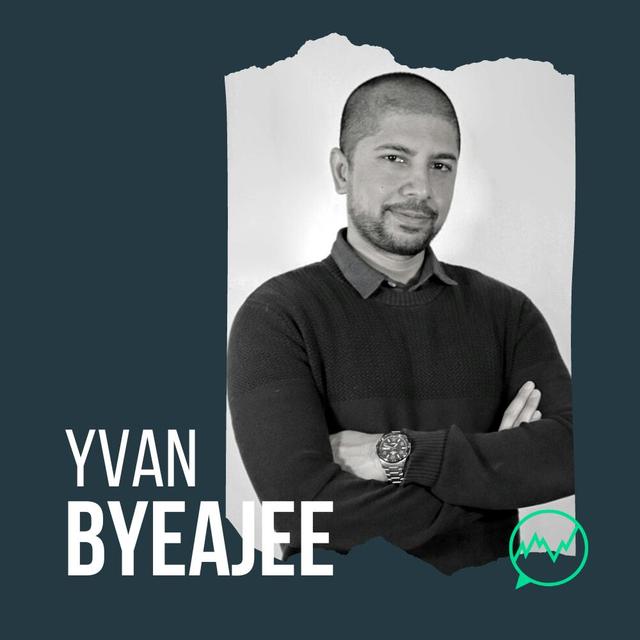
Perhaps we ignore doing the deep work because instant results are more appealing, or if we do do the deep work, we would have to face our demons. Today Ian and I present to you a very special guest. His name is Ivan Bayaji. Growing up poor with learning difficulties, Yvonne's early trading failures drove him to understand his own emotional turbulence and instability in the mind through deep inner work.
With a heightened sense of mindfulness, he embraced uncertainty and became systematic in his trading that contributed to his edge. Yvonne discovered trading in the nineties and has been trading for a living since two thousand and six. He struggled and failed his way to achieving consistency and market success over time.
He's the man responsible for the creation of Trading Composure, where he generously shares with traders all over the world his knowledge, experiences, and wisdom of the inner game of trading. Ladies and gentlemen, coming to you all the way from Montreal, Canada, we present Yvonne Bayage.
So diving into the world of financial investments and trading, if you could take us back to when you were younger, how old were you when you first got into the stock market?
So first first of all, despite my youthful looks, Ian, I'm I'm a seasoned trader with twenty plus years of experience in financial markets and and I don't have a glorious background pre-trading. You know, I I was raised by a single mother. And um, you know, we we were very poor. She she had four of us at the time and and didn't work. So we lived on welfare, food stamps and all of that.
Since I didn't do well at school because of a learning difficulty, I didn't amount to much professionally speaking, so I took odd jobs here and there. Um I'll also spoke with a stutter. I still do by the way, but now with a lot of self work, I'm able to manage it much better. But um yeah, that, you know, that's my background pre-trading. What got me interested in in trading was basically as a teenager, you know, one day I was hanging out in my high school's library during recess.
We're talking about the year uh nineteen ninety eight, ninety seven. Sorry if I'm a little bit fuzzy about the year. It's been a long time. That's when I discovered the book, How I Made Two Million Dollars in the Stock Market by Nicholas Darvis. And I took the book, brought it home, studied it little by little each night while listening to Guns N' Roses on my walk, man, good old days. And look, slowly I became fascinated by the man, by by Darvis and and what he had achieved in the market.
I I didn't fully understand what financial markets were back then, but uh I was just so inspired and fascinated by how one could earn a living taking calculated risks like that. And so so so that's my initial experience in the market. I was probably 16, 17 years old.
Did you consider yourself a risk taking type of person? Did you have any other hobbies or interests that showed your kind of risk taking attitude?
Interesting. I've never been asked this question before. Um, I would say yes. I've always had, I've I've always been a risk taker at my core. When when I look at my life, you know, the things that I've did.
you know the kind of sports that i did for instance i was uh you know i was into running back then and you you know you know i like uh just a very active person i've always had this inclination towards risk towards taking risks And and that's what got me so fascinated by this endeavor from an early age, you know, and growing up, you know, I go don't come from money to begin with.
Growing up, you know, in this lack of financial stability, uh, was just mesmerized by this idea of taking calculated risk. And then seeing whether it works or not.
When was the first time you opened up your brokerage account and bought your first stock?
Right. So I began studying trading and and the market, as I said, you know, in 1997, 98. I jumped full-time into trading actually in 2006. So this is when I opened my my first trading account and it was with a firm called uh Options Express back then. I I think they closed door now. Um, long story short, Ian, I wasn't successful as a trader right from the get-go. It was a very difficult journey for me. Lots of ups and downs. And I struggled like that for many, many years.
But those were very formative years for me, I would say. And and in hindsight, if I if you know, if I could go back, I wouldn't change anything because those experiences made me the person that I am today.
Mm-hmm. What drove you to study the psychological aspects of trading?
¶ Embracing Market Uncertainty
You know, long story short, my my failures in trading led me to uh to explore that area of trading. And and and so this led me to quite an in interesting monastic sort of journey. I lived in Buddhist monasteries and and meditation retreats for a few months. You know, learning about meditation and the art of introspection. And and and all of that kind of kick-started my fascination with trading psychology.
And so you know, thanks to the consistent work I've been able to do on myself, I was able to to uh vanquish most of my demons or befriend them. I mean, seen through a more positive angle. Because I did that whole transformational process without a coach, without a support structure, it took me years, Ian, you know, years of trial and error to get from where I was to where I wanted to be in the market.
You mentioned in in s on your website that you said that the consensus is nearly always wrong. Uh have you been or did you become a contrarian investor?
I wouldn't say that I'm a contrarian investor. I'm I'm not a blind contrarian and that's not how I see myself. I like to think of myself as an independent thinker. You know, I follow the crowd when I I feel it's It's the right step. And I bet against the crowd when I feel that's where the odds are. So I I wouldn't qualify myself as a contrarian, no. But you know, that's what's needed as a trader. You need to be an independent thinker. You can't be a
blind crowdfollower or blind contrarian. You you have to learn to think for yourself and by yourself. And uh for those people that are able to get to this point, I mean, this is this is where the money is.
So one of the aspects of uh psychology and trading that you mentioned uh frequently in your on your website is the idea to embrace uncertainty. Can you um elaborate on that a little bit for us?
Right. So I I know you've had you you guys have hadn't you know had different trading psychology experts on the show and they're great at what what they do, you know, some talk about uh the importance of having the right money beliefs. Others talk about um just having proper routines and and habits in place and focusing on the process and all of that. All great. Very, very important. That being said, My approach is a little different, you know, in in my one-on-one work.
With uh with traders, I focus on three main pillars. First, as as you mentioned, it's the embrace of uncertainty. Second, it's self-awareness and emotional management. And and third, it's accountability in my experience, in my own personal experience, but also from having worked with so many traders around the world. without a thorough understanding and and a thorough appreciation of uncertainty.
uh um w without proper emotional management, without proper accountability, you're just not gonna approach trading with the right mindset and and you won't be managing your risk in in How it's in a sensible and meaningful way. And and without those, without the right mindset and commitment to risk control.
There's just no way you'll survive long enough in the market to experience success. You you'll you'll continually fall off the bandwagon. And to come back to your original question about uncertainty.
Real real story here, by the way. My partner calls me Dr. Uncertainty. My my friends call me the uncertainty guy. Uh just funny nicknames that they've they've given me because when discussing just about anything from politics to religion to philosophy, I'm always issuing caveats and reasoning and probabilities and expressing humility towards incomplete knowledge.
And I mean, that's, you know, that's what being in the market for so long does to you. That's that's what it's done to me at least. It's giving me this framework to think about things more, more, uh, more sensibly.
We we would think that most traders would um naturally understand and uh say, oh yeah, of course there's uncertainty. There's no guarantee that it's gonna go up. Uh but what what is it about uncertainty? I mean, what is the egos interaction with uncertainty. Don't we we can intellectually know that it's uncertain, right? Um how how does the ego play into the concept of uncertainty?
So, Ian, look, for your audience, trading doesn't require you to be a rocket scientist. All right. It doesn't. you do need to understand what uncertainty is, how it manifests itself in the market, uh, you know, um, what what that means for you as a trader and and what that means for your trading strategy or your your or your system.
And and only then can you get clear, right? I mean crystal clear about your risk management protocols and and and just your overall mindset, your your overall mental approach to trading. So so so Ian, be before I jump to your question, let's just dumb down this concept of uncertainty so that everybody can understand.
First, let me ask you and your audience and your audience just a rhetorical question. Is there certainty in the market? Like when when you place a trade, do you know for sure whether you'll be a profitable trade or not? And the answer is you don't know, right? You you can't know. And and so this begs another follow-up question. Why don't you know whether the next trade or the next series of trades will be profitable or not?
Well, the very simple tell it like I'm a five kind of answer is that markets are composed of people, right? And different people. are always getting in and out different people with different time frames, different methods, different beliefs. About what is high and what is low, different outlooks on the underlying, right? Different reasons to buy or sell, different agendas.
And and you can't get into each and everyone's head and see what's motivating their buyer-sell decisions, what what they're gonna do next. So that that's a very simple answer to why there's uncertainty in the market because Because we're dealing with people. All right. And and people are always trying to imitate each other. They're always trying to outsmart one another. They're always trying they're always changing their minds based on facts, but also based on whims and fantasies and emotions.
I mean it it's very messy. Human affairs are a very messy thing, hence the omnipresent uncertainty that's in the market. And so When you place a trade, you just don't know what's going to happen next. And that means that there's a lot of noise in the short term, even though your trading system or strategy wins statistically speaking. I mean, over a big enough sample.
In the short term, anything can happen. Anything. You could win more than you lose. You could lose more than you win. And that's something that's very hard for people to accept. Because they're coming into the market with this mindset of having to make money over the next trade. And as we've seen, as I've just discussed, as I just explained, the market doesn't work like that. Trading doesn't work like that.
So uh prior to making a trade, when participants or a trader is just looking at a variety of different stocks, they're not attached to them uh one way or the other, whether they go up or down. And then does the act of actually choosing a stock and then putting money on the line, actually investing in it, putting skin in the game, does that act then change the psychological bent toward
wanting to ignore the bad news or ignore the reasons to sell and then over inflating the reasons why uh the stock is gonna go up more so than they would intellectually reason that prior to making the trade.
Yeah, well, look, people, most people approach the market and they you you know they learn about technical analysis and they think that technical analysis is telling them what's going to happen next over the next trade. And that's not how things work. Technical analysis has helps you assess the broader trend.
and and gives gives you a probabilistic, you know, guesstimate about about you know you know the possibility of w whether the trend will continue or will turn around. That's what technical analysis does. Technical analysis doesn't tell you what the market will do next. Most people, most traders will approach trading with this mindset that TEA is telling them or the system is telling them that they're going to have a winning trade on the next trade.
And as I just mentioned, there's uncertainty. But almost all trading errors have roots in the intolerance of that uncertainty. It's it's it's because people are not seeing or refuse to see that that that there's uncertainty. They might understand it intellectually in a sort of loosey goosey way, but they're not they they don't understand it, you know. you know, viscerally within their core that there's uncertainty and that there are risks.
Almost all trading errors, almost all emotional struggles have roots in that intolerance of uncertainty. When traders remove their stop loss, expecting that the market will reverse. and go back in their d desired direction. That's intolerance of uncertainty right there. They they're expecting something from the market that it cannot provide. They're expecting that it caters to their needs.
When traders hesitate to pull the trigger on their trades, that's intolerance of uncertainty. When traders close a winning trade too early, only to see the market ramp up higher and higher and higher, that was fueled by their intolerance of uncertainty. FOMO, that too is a discomfort. It's it's an intolerance of uncertainty. So so they jump the gun on their trading process because they they fear missing out on what could be an amazing opportunity.
Once again, Ian, most trading errors like that, most headaches that traders experience in trading in the market. come from them expecting something from the market, something it cannot provide, which is certainty. And that's what drives, once again, 99% of trading errors that traders make, that that intolerance of uncertainty.
And look, it's it's not really uncertainty that's a problem. I hope I'm making this clear. It's really that intolerance of uncertainty that we have within us, right? It's it's all this sort of overintellectualization that you know that we do that causes us to worry too much and that causes us to to make emotions based rating this decisions in the market. That's what's a problem. But that's fixable also. There's a few ways to fix that.
¶ Overcoming Fear and Managing Risk
First one is to learn to embrace that uncertainty, right? To to learn to understand why there's uncertainty, how it manifests itself. what it says about you, what it says about your strategy, and it's being crystal clear about those those different things. Then you can then learn to to sort of relax in the midst of that uncertainty.
Yvonne, when you say embrace uncertainty, I equate it to like being comfortable with discomfort and'cause you don't know what's gonna happen. But I think a lot of it stems from the fear of losses in the market. Um, the fear of losses. How does that play into uncertainty?
Right. Well this is the this is the primary uh uh reason why there's a there's a fear of uncertainty because people come into the market but they they haven't truly embraced the you know you know the idea that they can have losing trades. And and so but that's what the market does, Tessa. It hands us opportunities coupled with risk. The market, once again, will hand you opportunities and couple those opportunities with risk.
And so on a trade-by-trade basis. If if you're following a system that has a long-term positive expected value, if each bet that you make, Is a bet that is sound statistically speaking. Then no matter what happens on a trade-by-trade basis, over the long term, you're virtually guaranteed to win more money than you lose. But the thing is that.
People approach trade trading with this mindset of having to make money on the next trade. And and that's a wrong mentality to have in an environment that has so much uncertainty.
Because you know, it's it's you're approaching the market with the wrong expectations. And and that's what causes those those traders to lose at the end of the day. And look, I myself have been through this. I I've struggled a lot with That's why, you know, in my mission as a trading psychology coach and consultant, I really try to sort of help traders embrace.
the fact that there's uncertainty and and and that risk is always present. And I always try to to help them internalize the idea that survival is absolutely key. It's the the first thing traders should learn to focus on and get good at it's risk management. It's focusing on survival. Because if you have that in place, that ability to survive, to take small losses and to move on to the next opportunity and the next
And the next one and the next one. Then, you know, it's just a matter of time before the market first starts to favor your your specific trading strategy, right? Because the market won't favor your trading strategy all the time. Sometimes you'll reap losses, a series of losses, sometimes you'll reap profits, series of profits. But if you can stay in the game like that, uh by by betting small, by keeping you know your risks small on a per trade basis.
you you're you're you're more likely to suc to succeed and to take advantage of whatever opportunity the market is constantly handing us. But you know, that's one. And and the second point is that If you stay in the game, if you can survive long term, what's happening is that you're building you're slowly building competence as a s as as as a trader. Because Look, you you learn to swim by swimming more, not by swimming less.
All right. You need to have skin in the game. You need to be able to to refine your skills. And the only way to to do that is by staying engaged with the market, by trading small and and and and and focusing on on developing mastery. So that's the message I I try to impress upon traders. It's to not be too impatient to make money in this field. Focus on building a set of money making skills first and then the money will naturally follow after that.
Is it safe to say when you trade small, you lose smaller? And then when you lose smaller, you can learn through those losses. You know, those are lessons too when you're losing. I don't know if that makes sense, but you're learning through your losing. But you're losing smaller because you're trading smaller. Does that make sense?
Absolutely. Look, ev everything is a learning experience in the market. Ev every Every outcome that you go through, every trade that you that that that you place is an opportunity to learn and to better yourself and to refine your strategy and to become a better trader.
Have you ever watched a stock explode and thought, if only I had the capital, or sat on the sidelines because your account balance felt too small to matter? Good news. With Trade the Pool's limited risk platform, you don't need millions or even thousands to start trading the U.S. stock market. Bypass the PDT and tap into over 12,000 U.S. licid equities. From penny stocks to big caps, ETFs, even the newest IPOs, and short anything you like, with zero locate or hard to borrow fees.
Start your evaluation, get funded with up to$200,000 in buying power so you can go big without risking your own savings. And now you can also have unlimited time to reach the profit target. It's a game changer. Not ready to trade yet? Trade the Pool offers a free demo and educational resources. Practice on live data, master the platform, and build confidence risk-free before you even pay a cent. Click the link in the show notes to start trading with Trade the Pool's capital.
¶ Statistical, Systematic Trading Approach
Look, you can make consistent money in the market despite the presence of uncertainty, despite the fact that you don't know what the outcome of your next trade will be. You just have to learn to approach trading from a statistical probability sort of lens. And this kind of approach demands that you do not get emotionally attached to any single one trade outcome, to any single one trade.
And it asks of you that you s you you start to focus on the long-term picture and and sort of letting the numbers work in your favor and sticking with a consistent method is a statistically viable method. A method that has a positive expected value, positive expectancy. You you just keep placing those bets, those those positive expecting bets over and over and over and over again without getting destabilized mentally, emotionally by any one single outcome.
Mm-hmm. You mentioned on your site that uh loss aversion is the reason most people go bust and fail to make money. And my question is, if if this is so, wouldn't traders be placing tight stop losses and cutting their losers quickly because they hate to lose?
Right. It's quite insidious because yes, they hate to lose and you know when when you think about it logically, you would you would think that, you know, this would uh make them uh, you know, control their risk better. But but it's it's in it's tedious because i i it's there's there's also a desire to win there and to win a lot of money in a short period of time.
And and so people are willing to sometimes to take bigger, big risks with poor odds just to have a shot at earning a lot of money in a short period of time. So look. Hum human psychology is a complex thing. I I I I don't pretend to to sort sort of uh understand it thoroughly. I like I just know what has been proven to work time and again in the market. And it's this, it's embracing uncertainty. It's working on on developing emotional stability, emotional maturity, however you wanna call this.
And third, it's focusing on the long-term picture and approaching trading from a statistical probability lens. And if you have that in place, once again, you're virtually guaranteed to make more money than you lose in the long run. Personally, I you know I'm not a I'm not big on discretionary trading, and I know a lot of your audience. you know, sp specialize in in this. And personally, I, you know, I know too much about human fallibility, about the kind of biases that we have as human beings.
I'm I'm just not a big believer in discretionary trading. I think that winning consistent discretionary traders are few and far between. And and you you have a better chance at succeeding at trading with a systematic approach. And and and so it's it's sad that most people will not focus on that because for some reason people like to to use their mind. They like to
fancy the idea that they're using their intellect to be able to to make money, you know, out of the market. But uh that's also the reason why why most traders fail, because they There's a side of them that refuse to follow systematic rules because it's too boring, it's too monotone. Fair enough, but this is what makes money money in the long run. You you have to sort of graduate from this gambler's approach.
and and start focusing on more of a systematic approach because that's what that's how casinos make make their money. You know, they're applying a is a methodology that puts the odds in their favor. And this is why they win money in the long run, even though Some gamblers will hit a jackpot here and there, but over the long run, uh should should the gambler keep playing, the house is virtually guaranteed to make more money than than they lose. That's what wins in the market as well.
Just real quick, when you say systematic approach, it doesn't necessarily mean algorithmic. Right.
No, I I'm not I'm I'm talking about the rule-based approach, one that structures your behavior, that helps you, that helps protect yourself from your Right. And this is this is what works. This is how I've been able to be super consistent in terms of my performance in the market. Look, I'm I'm not the best trader out there, Tessa. Uh y you know, I'm I'm an average trader, I would say, but I'm very
very consistent. I'm very consistent with my rules and very consistent with my performance as well. Usually I'm going to be up anywhere between 10, 20 to 30% on a per year basis. And and you you could say, okay, oh, well that's not not that impressive. But when you add the element of consistency to it, you can see how impressive that is. I'm not interested in in being up, you know, you know, a hundred, two hundred percent one year and down as much.
you know, the next year. I it as a trader, I've come to a point in my my own trading in my career, especially now since I trade a a fund for a small group group of investors. What matters to me is survival. It's allowing myself to be in those situations where I'm just taking trades that have a positive expected value and I'm doing that time and again, over and again.
y and in in the market and I'm letting the numbers work for for me. And more traders, my my whole point is that more traders would be successful in the market if they were able to adopt a similar kind of process-based, numbers-based approach in instead of desperately trying to use their intuitions or their discretion to make this or that decision.
¶ Cultivating Emotional Stability Through Mindfulness
Transitioning to the topic of cultivating emotional stability. Don't you think most traders already consider themselves logical, numbers oriented, oriented people? And, you know, they might ask you, you know, why do we need to cultivate emotional stability? I'm a I'm a numbers guy. I I can think logically.
Right. Well, the the thing about the human mind to understand, Ian, is is that it's it's not The human mind hasn't evolved to do trading, all right? It's evolved to survive in a physical world fraught with physical danger. Right, uh lions, bears, w what have you. Trading it's been like what, like a hundred years or so since since it's been around.
And it's still new. We haven't developed the sort of mental heuristics to help us to for for us to be good at it naturally. I mean, to be good at it yet. That's why we need rules. We need a certain element of emotional stability and and just emotional maturity so that we're not blindly following our impulses or or our just uh short-sightedness.
Uh and and and and so that's why it's important to develop that emotional stability. And personally, I'm big on mindfulness, uh some some people in your audience might might know. And you you you'll often hear plat you know, platitudes around mindfulness, like you know, it's living in the present moment. But this isn't this doesn't fully describe what mindfulness is, in my opinion. Mindfulness is something deeper than that. It's disability to cultivate
this certain composure, certain uh emotional stability in the midst of life's ups and downs. And and so that's why I think that mindfulness and trading is is such a It's so much made in heaven. You know, it's it's just a perfect combination. And, you know, that's what I teach traders as well. I teach them to develop a strong meditation practice given my my background as as a Buddhist monk.
uh had the chance to study you know meditation in um extensively on retreats and and it's silent retreats and all of that. And so I like to think that I've developed a certain understanding of the practice. You know, that's what I focus in in my work with traders as well. It's to develop that strong meditation practice that helps them develop this um. This emotional stability, this this emotional maturity in how they deal with the markets of ups and downs.
Mm-hmm. So do you believe that uh without mindful awareness, do you think that we can easily become puppets of our emotions?
Absolutely in you know, I would even add, uh, Ian, that most people live like that. You know, they had they they don't have any awareness of their inner lives. They don't suspect that there's a thing as as you know, what uh as as an inner life. You know, they just live their life lives outwardly, right? They're constantly reacting to what's pleasant, constantly reacting to what's unpleasant. And and and so that's also part of the reason why trading is so difficult. It's so challenging.
Because most people lack that that self-awareness and that capacity to introspect and to look at themselves and to look within themselves. You know, I would say most people are living like that. They're living like puppets. But once you you develop that capacity to look at yourself, that ability to look at yourself, your flaws, your strengths.
you know what's good within you, what's bad within you, your difficult emotions, your your your your your difficult thoughts, you know, without trying to uh to sort of uh escape from them, move away from that, but uh actually facing them frontly. Um I mean your whole life has changed because when when you do that you gain certain insights into the nature of these what we call phenomena, you know, thoughts, feelings, emotions, those are those are phenomena that are arising in the present moment.
And and when you look at them, when you observe those phenomena for what they are, you realize that they're impermanent, you know, they're selfless, and that you don't have to follow each and every one of them. You can pick and choose which one.
To follow and when you get to this point, I mean your your whole life has changed, you know. The the way you approach your life is changed, the way you approach trading is also changed because there's more maturity in how you deal with your internal states now.
So by developing mindful awareness, which from my understanding is like an internal awareness of the emotions that are cropping up, starting to develop. as they develop and you're able to catch them like, oh, uh there I go again with the greed or with the fear. And so uh is mindful awareness and do you think that pretty necessary to separate ourselves from the the fear of missing out or the fear, uncertainty, and doubt.
Oh yeah, absolutely. Well Here's a quick definition of mind mindfulness. It's the awareness that arises from paying attention on purpose in the present moment and non-judgmental. non-judgmentally very important. It means that you, you know, you're feeling whatever it is that you're feeling. You're experiencing whatever it is that you're experiencing, good or bad, pleasant or unpleasant.
And you're being aware of it with exquisite detail and you're doing it, you're observing it all with complete acceptance. uh without an ounce, without generating an ounce of craving for what's pleasant and aversion for what's unpleasant, for what's uncomfortable. And and when you can observe yourself and your inner lives and your thoughts, no matter how difficult they are or they seem to be, you're in your feelings. From this place of freedom.
then then you you can see how how how much of a game changer that that can be for you know in trading. Because money is on the line and because we're so attached to the value of money, to what money means. It's it's so difficult to maintain a rational frame of mind and to not sink into those that default loss aversion bias that we all have.
Um, as as you can imagine, people that are able to cultivate that mindful awareness have they they have an edge, they have a psychological edge that a lot of market participants don't have because they're able to To experience their emotions from that place of freedom. And instead of acting them out blindly, they're able to.
Create some state some some space there between reaction and emotion and and choose to to stick with that trading plan and and their trading process and all of that. And so it can be it can absolutely be a game changer provided you cultivate a a consistent practice, provided you give the practice the time and attention and and and the commitment to the practice. That's what I meant to say.
¶ Equanimity, EQ, and Long-Term Vision
Mm-hmm. Uh, on your site, you mentioned the need to cultivate equanimity. What is this and how does this apply to trading?
Right. So equanimity is is equality, is is a byproduct. uh you know of of a consistent meditation practice that you're that you're cultivating, that you're developing. And it's that that that quality of being at ease with whatever happens. Right, whether in your life, you know, in the market, out of the market, with whatever your emotions are or or your thoughts are, that quality of equanimity, I feel is so important for traders.
Because this is what helps you stick with your trading strategy or system. And uh yeah, it helps you process emotion from a more rational frame of mind. And you know, once again, it's a quality that you can develop and cultivate on on on a daily basis by adopting a practice like meditation. And you don't have to do it for extended hours every day.
Yeah, you can do it for just 20 to 30 minutes per day, you know, in the morning, preferably before the market opens. You you just take some time to be with yourself, to sit with yourself and you observe your breath and your thoughts and your emotions. You observe whatever is arising for you in the moment and you try not to react blindly.
to to what is pleasant or what is unpleasant. This is how you'd reinforce, develop, cultivate that that quality called equanimity. And it's a very powerful quality in the mind. Yeah, you can also sp especially in the market.
So for traders or people who have high EQ, do you think that they have an advantage in this area?
Yes, I I definitely th you know believe that p p people that have a high EQ have a uh have um you know a certain mental edge that that uh other people don't have. Doesn't mean that other people can't div develop that EQ because it's something that you can work on, that that you can get better at.
Uh, but you know, eventually, you know, people that have this innate ability to be emotionally stable and emotionally calm in the midst of pressure, in the midst of uncertainty, they they have an edge that a lot of people don't have, uh certainty.
On your uh site, you mention what the mind wants in the moment is not the best for it in the long term. Um, why is there a difference between what the mind wants now and what it wants uh in the long term?
Mm. Basically the the the way the human mind works is that we're we're basically short term oriented in in in our perspective, in our wants and our needs. And this is why, you know Professional traders, they're able to think long term. Those that make money on a consistent basis, they're able to think long term because they're not blindly reacting to what they want right now. Because what you want right now.
What you'll find in the market is that what you want right now is often at odds with the way you know, you know, the market is devised to make money available for you. Really, you have to find a way to drop. this uh sort of get rich quick mentality and and really foc focus on on uh trading as a long term thing because you know success is a plan. It it really is and and suc success is a long haul game.
Most trade traders would do better if they were to embrace this. Like I mean, seriously, thoroughly, not just
understanding it, you know, intellectually in a kind of loosey-goosey way, but really uh feel it viscerally, you know, in their guts. That trade your success is gonna take time. And paradoxically, when it when you're able to do this, That's what when success comes to you much faster than than if you were to just uh you know follow these your short-term impulses to get rich quickly in the market.
Uh you also mentioned that uh if your position size is too big, you'll care too much. But if it's too small, you won't care enough. How do we uh then optimize our position sizes for the at sweet spot?
Right. But that's where self awareness comes in. Because it, you know, when you know yourself, you n you you know when you're venturing a little bit too much out of your comfort zone. The goal is not to venture too far out of your comfort zone, but it's not to stay within it as well. It's to to really find that sweet spot. And that you, you know, where where you're actually challenging yourself, but when you're not sinking into complacency as well.
¶ The Critical Role of Accountability
So this is where your self-knowledge comes in, the ability to look at yourself and your emotions. And this is why I'm so big on that, you know, uh self-awareness, just emotional awareness.
a big, big part of what constitutes a winning, uh, winning approach to the market. Look, most institutional traders will outperform retail traders time and again. And the reason they do is because they have a a risk manager or or an accountability officer that's behind their back, that's looking over their shoulders and that's making sure that they're sticking with their risk allotments and that's sticking with with the process and the trading rules and all of that.
And and we retail traders, on the other hand, we we don't have that luxury. You know, right from the get-go, we're we're our own bosses. Which is great, right? We're working for ourselves, by ourselves. This is amazing. But at the beginning, when when a trader hasn't yet developed self-mastery or hasn't hasn't yet developed the proper trading skills. Uh it's a big, big disadvantage. This is why, as much as possible, retail traders have to find a way to keep themselves accountable.
And
That's why I always rec recommend people to join you know, trading groups or or to hold a journal, right? Because it's a it's it's like a mirror that you can look at and and and and where where you can see where where you are. where you are now and where you're going forward. That accountability is so, so important. Yet most traders, they you know, they could, you know, they couldn't care less about that. They just get into the market.
and and they they just plays place trades based on whims and fantasies. But that's not how you win in this field in the long run. So so that countability is is central to the project of of good trading.
Yeah, I wonder if a lot of traders don't take accountability seriously or are as interested in it. Is it because oftentimes accountability is often associated with um, negative connotations, you know, it's consequences, you know, whether it's related, you know, something in school or work. But as you said, in trading, it's so important because a lot of us traders, we're alone. We're trading alone. We
uh oftentimes don't have a support group and we think a lot inside our heads and and um I mean ultimately we are responsible for our own actions and we are accountable to ourselves. But I feel like a lot of times um it's not enough. You know, at work you have and a normal job, you would probably have someone to um, you know, report out to and provide your progress and things like that. But as a trader, you don't.
Yeah, for sure. And you know, in in in my coaching program I I provide that. institutional grade level of accountability. So basically what I mean what I expect from my students is not your profits at the end of the month, at the end of the day, at the end of the week, whatever. Uh what I'm really interested in is seeing them be and stay consistent in the market. I don't care about
winning trades. I don't care about losing trades. What I'm look really looking for is that consistency of behavior. It's it's that consistency of of following one's trading process and and and and rules because I know that should you do that, should you stay behaviorally consistent like that?
Consistent results it's is what you will get because consistency begets consistency. In an uncertain environment like the market, consistency begets consistency. And and so that's why I'm so I'm so um strict with that because and and and so you know, I try my best not to put any sort of pressure on my students to to perform because once again, I'm not interested in the uh in in how much money they're making and and losing. It's really that the that consistency of behavior.
If traders had had a way to get that level of accountability, I'm confident that the the failure rate in this field wouldn't be as high as it is. You know, that first that understanding of of uncertainty, second that emotional management, and and third that accountability. This this is this is a killer combination there.
Excuse the last interruption here. This is Tessa. We hope you're enjoying this episode so far. If you love the podcast, Please give Chatwith Traders the best review you can on whatever platform you're listening from. This will help us to keep the episodes coming. Also, if you haven't subscribed to our email list, please hop on to chatwithraders.com and click on subscribe. so we can keep you posted of information that may be of importance. Thank you. Now back to the chat with our guests.
¶ The Never-Ending Psychology Journey
Right.
Why do you think many people or many traders, and especially um beginner traders, don't take the mindset and and trading psychology Seriously from the beginning or maybe they don't have the tools to do so, is it because it's such an intangible thing, right? It's you know it's important, but it's it's intangible in some ways. And maybe at the beginning of uh a trader's uh trading journey. Um they're more focused on just kind of understanding the market and the mechanics.
But so they put the the mindset and trading psychology practice like maybe later until they get in trouble or I'm just wondering why why is it such a challenge to get this right from the beginning?
Right. I I feel like uh it's such a challenge because right right from the get go, they're approaching trading from just not the right frame of mind. You know, they they they approach trade trading, they learn about trading and they see how potentially easy it is to make money and they learn about technical analysis and they start to entertain that. thoughts I mean everything around them, everything about the trading world.
is leading them to believe that okay, this system, this pattern is is gonna help them get consistent results in the market if they were to trade it consistently. But thing is that it doesn't work like that. You know, once again, there's uncertainty. Right. And this is so poorly understood. Um, a lot of traders, they don't see that uncertainty or or they refuse to deal with it, to, to address it frontally.
And so once again, they put an excessive focus on analysis and then they feel exhausted because everything they try to do to manage their worries and fears of the unknown, well, it doesn't help. It's the wrong approach. Be because under you know, what's what's on underlying that approach, it's the the the idea that they're trying to eliminate uncertainty. And uh what they're really doing is upping their expectations and confirming and re-in-reaffirming their their own biases and fears.
And Tessa, look, we'll never be able to fully eliminate uncertainty in the market. We'll never be able to fully eliminate uncertainty in the market, no matter how hard we try. You know, it it's it's like by by trying to avoid uncertainty in the short term, what we're really doing once again is upping our expectations and bringing a certain amount of emotional struggle, of of psychological struggle into our trading process that's quite frankly unnecessary, let alone unpro un profitable.
The the only way of dealing with it. is to see how much of a psychological game trading really is and and and to see that there's uncertainty and and to make peace with that uncertainty. This is the only way of improving your trading. uh and and just just just your performance overall. It's to to make peace with the fact that there's uncertainty and to to focus more on the you know, mindset management aspect of it all. And um
Yeah. So I I see like these three pillars that you mentioned, um, it's it's essential. And I feel like it's it's a constant practice. It's I don't feel like we can ever graduate from it. I mean, even the veteran traders. And seasoned traders, they um will run into issues, right? I mean, it's a constant battle and a constant practice. You just get better at it. Do you agree?
I oh absolutely. I you know I myself I'm still a work in progress, Tessa. You know, I you know I still I you know I can I can't say that I'm a point in my tree trading where you know I'm very, very consistent. uh with my rules. But that that doesn't mean that I'm in just an emotional, an unemotional robot. No, you know, when I get losses, it's it still hurts. You know, I still get frustrated by them.
uh when when when I miss an opportunity, I still get frustrated by that. But it's not an afflictive experience anymore. Right. And and because uh you know there's this thorough understanding that You know, okay, you know, each trade outcome is quote unquote random. Yeah, you know, there's emotions involved, but you know, I try as best as possible to befriend my emotions, even the difficult ones, and and that's
This this is what wins in the long run. It's is is changing your whole mental approach. to the trading game. Now most people are just just focusing too much on making money on in you know in the short term on this trade, on that trade. And and it's really first what must come first. Is uh just managing your risk because you understand that there's a real downside potential. And when you get good at that,
at this, at managing your risk on each and every trade, then you can get better at uh at uh managing your profits a little bit more. But um Yeah, it's it's all about viewing this as a long term game instead of it just this sort of get rich quick scheme.
You mentioned in our pre-call that uh you are a work in progress. Uh of the three areas. Uh embracing uncertainty, cultivating emotional stability and accountability. Which area have you found it to be the most challenging for you?
Right. It's definitely the the emotional stability part. Uh because uh it you know, you know, I've I've always been a very sensitive person. This is who I am as a person, it's my nature. All right. And so when I first came into trading, I needless to say I was an emotional mess. I would take
You know, every losing trade personally, I you know, I I would I I would think that it this says something about who I am as a person. Okay, I reaped a loss, so I'm a failure. And and and so It's only through repeated practice, repeated engagement with the market that I was able to sort of de-energize those beliefs a little bit. But they're still hate there, you know, in the background lurking. You know, when I don't pay attention, sometimes they sneak up on me, those insecurities.
So once again, I'm I'm a work in progress. This is a never ending journey. It's not a journey with a destination. And and so this is um uh why it's also important to learn to love that journey, no matter where you are, you know, on that journey. Learn to love it for what it is and and learn to to see it as a learning experience. And when you do that, you'll you'll make giant leaps of progress in your development as a trader. At least it was the case for me and it still is.
¶ Final Advice and Contact Information
Yvonne, do you have any final thoughts for the beginner traders?
It's it's useful to see the market as if it's it's a random system. And this way your your expectations will be more aligned with the way the markets are, which is, you know, there's an uncertainty component to it. Right. And so so that's first. Second, you know, try to focus more on on the mental aspect of trading.
And this is a all too important aspect that so many traders will will ignore because they think they've already had it figured out. But the reality is that most traders lose money in the market. I mean, that's a statistical fact. and and they don't lose in the market because the market is rigged. No, there are cycles, there are trends in the market, and you can take advantage of those cycles and those trends.
And you don't necessarily have to pick bottoms or tops to make money, just just uh piece of the action is fine, you know, if you can do this consistently through proper risk reward. Uh, you can make consistent money in the market. But the only problem is that most of the time traders get in their own way and they're not able to make consistent money like that, even though it's possible.
It's just uh the theoretically it's pretty easy. It's it's pretty simple, I would say. Not easy. It's pretty simple. If you were just to follow a a structure. it like it's a trading system that has a positive expected value over the long run you should make more money than than you know than you lose but most traders aren't able to make money because they you know they make this unnecessarily complicated on themselves. You know, they they they approach trade trading
with um too much attachment to the outcome, the approach trading, they're while focusing too much on the money, what's being lost, what's what's being won. I mean, I mean they're they're they're they're not viewing it as this. long-term statistical probability game. If you can learn to uh learn more about this, I'm I'm sure you you guys have a lot of
Have had a lot of great guests that expound more on that and just focus on learning. Don't focus on making money right from the get-go and just focus on building skills. And when you have those skills, when you have that self-mastery. As they say, the the world is your oyster.
Great, Yvonne. Thank you very much for sharing. It's great having you on the show. How can listeners get in touch with you to learn more about you?
Right. Thank you so much for having me on, Ian Tessa. Just uh you know, p people can choose follow me on social media if they wish. I'm very active on Twitter. My handle is trading uh at Trading Composure. Um, I'm also present on YouTube. I just type trading composure. I I share a lot of information on those different platforms for free. Just no strings attached, none, none whatsoever.
And uh that said, should you require some more hands-on help, just check out my pro my my coaching program. And and that's all. Thank you so much for for having me on once again, you guys.
Thank you so much, Ivan.
You've reached the end of this episode of Chat with Traders, but rest assured there are more episodes loaded Insight and zero high
🎵 Music
to the podcast and That with trader.