


¶ Intro / Opening
Chat with Traders is brought to you by Trade the Pool. Did you know that every decade the market reinvents itself? Online brokers opened the doors, mobile apps made trading seamless, and commission free trading erased barriers. Now a new era has begun. Meet, trade the pool, limited risk trading. And now you also have unlimited time to reach the profit target. From now on, your trading risk is capped. and your trading opportunities are limitless.
Trade the pool funds home-based stock traders with up to$200,000 in buying power. That means you can trade larger positions and scale your strategies without risking your own savings. It's time to trade with more capital, making it truly worth your time and effort. Ready to trade the pool? Click the link in the description and join the stock trading revolution today.
Are you ready to get serious about trading? Then join Tasty Trade, Investopedia's best platform for options trading in twenty twenty six. Options, futures, and more. Tasty Trade has everything you trade all in one platform. Get low commissions, including zero commissions on stocks. So you can keep more of what you earn. Trade smarter with advanced charting tools, a pre-built strategy selector, risk analysis tools, and more features. Visit Tastytrade.com slash.
Chat for more information. Tasty Trade Inc. is a registered broker dealer and member of FINRA, NFA, and SIPC.
¶ Introducing New Host Ian Cox
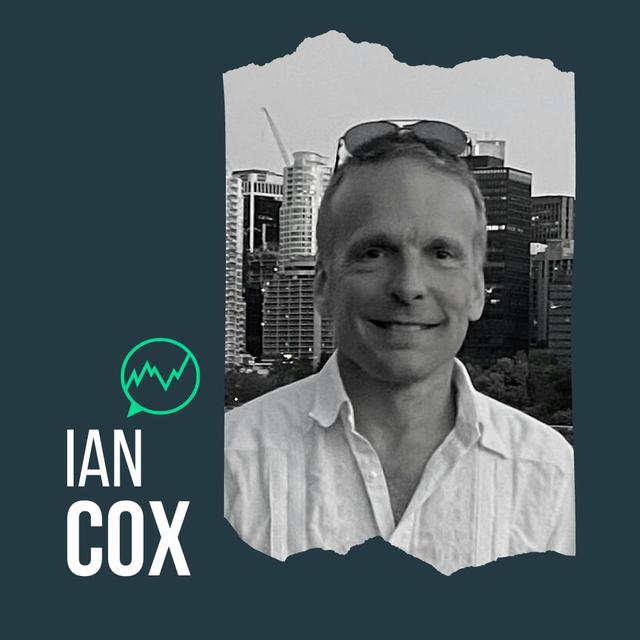
This is episode 244 on Chat with Traders. Hey there listeners. This is one of those announcement episodes, a little break from our normal programming. As I mentioned a couple of episodes ago, back on episode two forty two. We have a new host joining me on Chat with Traders, and I'm so excited to finally be able to share a little bit more about him today. His name is Ian Cox.
From Seattle, Washington. He's been trading since the 90s, has attained success in trading, which afforded him financial and more time freedom. He's passionate about the financial markets. Steel trades stocks and very much into crypto. It continues to stay curious and Continues to learn and grow, even as a veteran trader. We're doing things a little bit different here on this specific episode.
where you're going to learn more about Ian right off the bat through an interview I did with him not too long ago. Um, it was around late April, early May timeframe of this year. And it aired on a trading related podcast that I started earlier in the year called Affirmations for Traders Podcast. I was grateful, so grateful that he was willing to, um come on to that show and open up and share about his trading background and strategies, successes and failures.
the whole shebang. So I'm bringing it to you again here for those who want to know more about Ian Cox, who is joining me as a new host on Chat with Traders. And you will actually get to hear more from Ian himself. starting on episode two forty five, where he interviews a contrarian trader. Uh, we can't wait to introduce our newest guests on that episode as well, which will come out a week from today. So you don't want to miss it. In the meantime, I hope you enjoy the interview I had with Ian.
Uh slightly more of a conversational style interview than you're used to, but um nevertheless, I hope you gained some insights from it as well. And most of all, welcome our new host, Ian Cox.
¶ Early Trading Journey and Lessons
How did you get started in trading? Yeah. How to get started in trading. Uh right around the start of the internet back in nineteen ninety-five, nineteen ninety-six, it was a very quick and convenient way to look at stocks and Dive into um looking at company fundamentals and message boards. And I became addicted very quickly. So uh So yeah, that's been um what uh more over 25 years ago. And uh so that was during a time a pretty pretty challenging time during the dot-com days or a
Yeah, it was actually it was it was just at the start of the dot com days. Uh yeah, mid nineties, ninety five, ninety six. Got a job with um with a uh software company and uh over in near Seattle and and I had plenty of time during the day to um to look at stocks and and when I wasn't working. So Uh quickly got into technical analysis and and looking at company fundamentals and reading the message boards and uh and then started the trading. Uh it was uh
Yeah, very addicting. Yeah. And so uh if you don't mind me asking, maybe you can give the listeners an idea of, you know, your best moments of the trading back then and In general, what contributed to the success of your trading? Well, the success success came usually as a result of many painful lessons, painful lessons of of uh greed. mismanagement and
watching the markets with studying sectors, I should say, and getting to know all the companies within that sector and learning kind of how they trade and what have you. So Um best moments, of course, is ostensibly is when you make lots of money. But um But the problem with that, if you don't manage your um your greed, you don't manage your emotions, uh
You get to get overconfident very quickly. And that just sets you up for a bigger fall later on if you don't maintain discipline, if you don't maintain a trading plan. Um So yeah, the best moments is when you I found is when I incorporated uh the lessons, the painful lessons that I had learned along the way. And
uh achieved very profitable trades um uh throughout time by being very patient, applying my strategies and uh then coming having them come to fruition. That was more satisfying than the quick. um junk food fix of a quick um you know quick profit. Yeah, and you mentioned uh strategies. How did you come up with your strategy? Was it through years and years of uh trial and error, or how did you finally pick the strategy that contributed to your success?
In trading. So the strategies and I was learning um when stocks within a certain sector were mispriced relative to each other. So um I would get to identify like which which stocks in a particular sector, like say we'll see.
energy sector or the green, you know, um Green Energy, uh, dot com, w whatever, I would get to notice which one, which companies were the leaders, which one were the laggards, and notice when one company started to make its move and then you'd have a number of days before the other companies started their move. So um uh comparing and contrasting companies within the same sector uh is what, yeah, it's what made a difference. So I imagine that of course you went through a a lot of ups and downs.
in trading and it I think that's a lot of what people don't hear as much is they hear about all these um, traders who uh do really well, but maybe they're not getting the full picture of what it took to get there or the many, many times when they lost a lot of money. And uh maybe you can share a little bit about that. Yes. Uh so uh A common mistake that a lot of traders make, I mean, being human, I mean, it's it's part of psychology really.
Is thinking that especially after you've had some profitable trades go in your favor, even more so if you've had some big um profitable trades. especially early on, as you begin to to overvalue your yourself. You begin to think that, oh, you, you know, oh, you're really you got this down and this is
And then the regrets that you have are regrets of not going in bigger. And so then that's it creates early big successes, create the problem of Of um going in big uh later on and um not being cognizant of the risks that you're about to take. And uh maybe even using margin, you know, using debt to um to lever up on a trade. Uh and not the biggest
issue, one of the biggest issues I found it was not being humble. And big losses can be often connected to uh inflexibility of the mind, unwillingness to change your mind. quickly and get out because a lot of people they marry, they get married to a stock. And they say, Oh, it's gonna go up, you know, even higher and higher, and greed sets in. And then the cycle of when the stock starts to fall, they say, Oh, I'll sell it once it goes back to that level, or once it goes back to that level.
And frequently that doesn't it never gets back to that level and they end up taking a round trip on a lot of their trades and even going getting into losses. So um mental flexibility is one of the biggest lessons.
¶ Developing Trading Strategies and Mindset
That I learned. And and how how do you improve your mental flexibility? How did you do that? Having a determination and understanding, like a trading plan, you could say, uh, you know, whether it's written down or mental that You will get out of your position once it falls a certain percentage from um from when you bought it. Or if it hasn't moved.
uh you know above your price within a certain period of time. Can that also mean being able to um adjust to the situation? Yes, absolutely. Absolutely. Yeah. Uh 'Cause we all have. We all have grandiose ideas on on how big this stock is going to make it or how how much this trade is going to make you.
That's that's normal. So yeah, being able to deal with our own um greed and fear is the big, I find is the biggest one of the biggest challenges out there. Trading psychology and the mindset. I mean, how much of that? contributed to your success in trading? Yes, it it it definitely played a um a m a role because uh when you know you you have experience and you go back to your previous losses and and uh
And uh you start entering in a position and you have to check your greed at the door, so to speak. You have to um be disciplined to scale into the trade. Um, don't go all in on any one trade ever. Um, try to balance out, you know, maybe a short position with a long position. Um be be very adaptable. Um and as as humans, we don't like to be told uh we don't like to be reminded that we we make mistakes or that we're wrong. And our ego is a is a big act our ego acts to block us in a way um from uh
The the procedural steps necessary to become uh successful. I've seen it time and time again, not only for myself, I've seen it with friends. who go all in. They think this is it. This is I've got the bottom now. Like I had a friend who uh um was very conservative. He didn't never bought into the dot com uh boom.
And then uh March of two thousand, when the stock started falling a lot, he said, Oh, this is it. I'm convinced this is it. And he goes all in and uses margin. He spends his entire life savings. And um a week later he gets completely wiped out, all his savings gone. And that's based on ego. It was ego-driven trade, thinking that. He knew it all and this was He was picking the bottom and the you know and I have other friends that happen too too. It's Yeah.
And these kind of things, it's not like you just learn in a textbook and then you um you're able to uh oh you know um apply it right away. I mean it it takes time to really develop that mindset. Exactly. Yes, because one can intellectually understand something and they can take a coursework and they can study that the and their their mind can agree to it. So yeah, yeah, that's that's understandable.
I understand this, so I'm ready to be successful now. But it's not until you get your emotions involved. that your emotions uh uh can can sabotage your um the discipline and the structures that you s agreed to follow. um ahead of time and uh because your emotions will can overrule um you know your decision making. Uh so
Yeah, you have to you have to live through it. That's why I I feel paper trading is really kind of a waste of time because unless you have skin in the game, yeah. Um, you know, there's no there's no substitute for skin in the game. Yeah, there's there's different um opinions on that regarding paper trading, right? I mean, for me myself, I'm probably a bad example, but I've never really paper traded when I first started trading. I just went for it and I um and I traded live.
uh so that I can feel the emotions. So then there's a lot of advice from people that you should paper trade. And I I agree too. I think it's good to paper trade for the purpose of learning the mechanics. Of trading. Yes. But knowing that it's not the full you're not really having the full experience by paper trading. Um like you said. You don't have the skin in the game. But then again, it may be good for different purposes like
You know, learning the mechanics of trading and the technical side of trading. Right. You mentioned a little bit about
¶ The Trading Plan: Protection From Yourself
Trading plan, right? How important do you think it is to have a trading plan and a trading process as well? A trading plan and trading process. I would say at a minimum it's uh very important of knowing how to cut your losers. Um that is probably the most important uh Part. You know, as far as when to get out of a stock if it's in profit, that's another category because you're already in the black at that point. Um, can be a different, it's a different discussion. But the number one enemy.
for traders is knowing being able to and willing and know when to get out of a position. Uh because otherwise you're Your ego and your fear is going to take over and it's going to rule you. So the trading plan is designed to protect you from yourself. Uh the training plan is designed and created when you're in a calm, rational state of mind. You use your reasoning and you create a plan before your emotions take over and you you have that as a reference guide.
to go back to so that your emotions don't rule over you. when do you kind of deviate from your your trading plan?'Cause some people they think that, you know, if you have a trading plan, you're gonna follow it to the T. But should there be some degree of flexibility? Yeah, I would s I would say that the degree of flexibility is much more on the um profit side than it is on the losing side. So your trading plan, you may say, well, I'll sell um
Once I get a double, for example. But as you As it the trade unfolds or as this process unfolds, you notice that other companies in that sector. are moving much more than your company is, the company you've invested in. And they all tend to move to say as a group generally. is that you um make adjustments to your trading plan when you see that there's more upside potential there. And, you know, you can get into other details like the shape of the chart, you know, it's
How f rapidly is it moving up? Is it slowly trending up? And so that's where I think the biggest um ch where changes to the plan are most appropriate. Mm-hmm. It's most important to follow the trading plan when it comes to when your when your position starts to turn into a loss. That's when you because
invariably most traders are going to say, oh, well, I'll just sell it once it once I break even on it. And then they ride ride it down for 20, 30, 40% loss or more on the hope that it will get back to their purchase price. So that's follow that I would say follow that part of the trading plan religiously. Um, as far as when to get out of a stock, that can be very you can adjust that and be flexible. Mm-hmm.
Yeah. And then I also mentioned about a trading process. How big of a role did that play in your your trading before? Did you have a trading process? First, I don't get into any position unless I understand the other uh companies in that same sector, what they're what's going on, what's going on with the industry and see what's the trend of the industry. If the industry is continuing to down, you know, so I don't like to buy a stock in a steady downtrend.
And I like to wait until uh it shows signs of of a bottom and a rebound. Uh so I that's why I look at all the companies within the sector. Uh Uh, and so most of the time is actually spent for me, is spent on just doing research, just looking at. um being familiar with uh, okay, so what's going on with the market, with this company, with the with this sector? Uh and waiting for a catalyst. Mm-hmm. Uh that's a key thing, is waiting for a catalyst, either up or down, um, to take a position.
Overtrading is a big is a big problem too, um, for a lot of people. They think just because they found something, they think, Oh, I have to buy it today. It's like, no, you don't have to buy it today. Yeah, maybe, maybe you take a position, but start off with a very small position. And then scale your way into it. Let the position prove itself first. So you add to winning positions and you cut short losing positions. So never go in. So if you say wanted to put$10,000 in a stock.
Start off and you and you're not really not sure of where the direction's going to go, but you think it's good company to invest in. Start off with a thousand and then wait till the stock starts to move up in the good trend line and then maybe add more uh as you go in. So That requires uh um practicing a lot of patience. Yes. Wait, um the waiting part, waiting for the right moment. Um And and having discipline, having self discipline on on waiting. Yes.
¶ Trading as a Lifelong Practice
In and doing your um doing your research. I mean, all of this is part of having a trading process that I think um It's part of practice. I view trading as um a practice because no one ac I don't think any trader actually graduates from it. There's always something to learn, even after years and years of trading. Ian case, do you feel like you are always learning something new? Yes, I'm always learning something new and It well l let me say it's it's not that I don't know these it's not like I'm
learning something totally new that I've never learned before, but I'm almost having to relearn it because again, the ego takes over and it's easy to forget the lessons you've learned in the past, especially when things are going well. And it's easy to go back to old mistakes because your ego takes over and you say, Oh, well, I've got it down now. I've refined. And and you you'll you'll come up with an amazing number of excuses to tell yourself what a great, you know, how well you're doing. And
And uh and so people it's easy to get sloppy. Uh so so yes, getting relearning that which I've learned before. Uh it's very it's humbling, you know? Yes, it is. And um I like to bring up the the topic of yoga because you you practice yoga. And so even just yoga, they use the word practice. Right. It's a practice. Um, it's getting your mind into a a into a mental state free of
um disturbances from the mind, right? Where you get into a flow state where you're not ruled by your ego and your emotions, but um you get into kind of like a a type of bliss state. So by practice that it's a practice. It's like a discipline. It's a type of discipline.
You keep yourself on the straight and narrow and uh you follow certain practices, um, discipline practices that that help keep you out of trouble. And if you can just keep yourself out of trouble, the prophets will take care of themselves. Yeah. Yeah, and I like that analogy and uh because
I don't do yoga as much as I should, but um you know practice, I think it's like a lifelong thing is practice. Practicing and learning is lifelong, right? And so how I think about that in trading is Like you mentioned, I mean you You sometimes you have to relearn things and you have to practice to get better. And even if you've maybe one day you did really well. Like let's just say in yoga. One day in yoga you can do the headstand pose.
Right. But it's not even the yoga gurus, some they have their days where maybe the next week they just can't do the same thing again. Exactly. Because their body changes or something happens where they're not able to do that. Exactly. So you key like in yoga and like in trading, and don't get married to the past of what you did or could do in the past. Each day is a fresh day.
So don't get married to it. Um, but keep practicing, practice uh developing your mindset to be able to handle uh the ups and downs of trading because it's part of trading. It will come. Right. Losses will come, gains will come. Right. It's interesting because uh studies have been done on what kind of traders, uh who are the more successful type of traders. And it's it was it was commonly found in studies done that that um the successful traders
very rarely, I mean, do they go all in on one company? They will have a mix positions, you know, and have rop proper position sizing for, for example, maybe, um They put in get into 10 different types of positions, some longs, maybe some shorts, but that they don't um they they They swing for they try to aim to get to first base instead of always swinging for a home run. Uh they go for prob high probabilities instead of
you know, the big payout. It's all, you know, it's sexy to think about, oh yes, I I bought a stock at 10 bucks and it went to a hundred or or a thousand or something like that. But in reality, the real successful traders concentrate on getting reliable returns consistently. And yes, many of them do lose money, but the thing is they keep their losses short. Uh keep it keep it small, keep their losses small. So
Uh and uh another study was done is interesting. I read um some years ago about how a group created a trading platform or trading strategy because they had access to um l uh traders who lost a lot of money and they identified key some key characteristics of what happens to a trader just before they blow up their account. and how their mindset takes over.
Uh, and they start doing things like revenge trading or trading much more rapidly, trading in bigger positions, thinking that, oh, they got to get back to where they were, because if only they just get back to where they were. So they take on these much bigger positions and riskier situations that they normally would never
take on, right? So uh It was um anyway, so this group basically traded against that, whatever the risky traders were doing just before they blew up their account and they made a whole investment strategy of when risky trader uh goes long a particular stock, they will short that stock. Or if they risky trader goes short that stock, they will go long and do the opposite to generate good returns because of the common characteristics that are displayed right before an account gets blown up.
Are you ready to get serious about trading? Then join Tasty Trade, Investopedia's best platform for options trading in 2026. Stocks, options, futures, and more. Tasty Trade has everything you trade all in one platform. Get low commissions, including zero commission on stocks. so you can keep more of what you earn. Tasty Trade is packed with advanced charting tools, backtesting, a pre-built strategy selector, risk analysis tools, and more features to help you trade smarter.
See equities and derivatives with high trading volumes, dividends, upcoming earnings reports, and more with their pre built watches. Or create a custom watch list to keep an eye on the companies and sectors that matter to you. Manage your positions with speed and precision using Active Trader Mode or one click trading and smart order tracking. Plus Tastytrad's Stellar Trade Desk team offers live support during trading hours if you need it. Visit Tastytrade.com slash chat for more info.
KC Trade Inc. is a registered broker dealer and member of Finra, NFA and SIPC. Have you ever watched a stock explode and thought, if only I had the capital? Or sat on the sidelines because your account balance felt too small to matter. Good news. With Trade the Pool's limited risk platform, you don't need millions or even thousands to start trading the US stock market. Bypass the PDT and tap into over twelve thousand US licit equities.
From penny stocks to big caps, ETFs, even the newest IPOs, and short anything you like, with zero locate or hard to borrow fees. Start your evaluation, get funded with up to$200,000 in buying power so you can go big without risking your own savings. And now you can also have unlimited time to reach the profit target. It's a game changer. Not ready to trade yet? Trade the pool offers a free demo and educational resources.
practice on live data, master the platform, and build confidence risk-free before you even pay a cent. Click the link in the show notes to start trading with Trade the Pools Capital.
¶ A Devastating Loss: The Katel Story
So it's it's pretty predictable of what they would do. Yes. Exactly. Certain patterns certain patterns that they kind of You say they lose control over themselves. Um, and you know, it's an aspect, it's a frailty of uh human psychology, really. So we talked a little bit about uh, you know, your success in trading. Do you mind sharing a little bit about the the losses that you faced? Yes. Uh yes, they're all painful. We've we we'll we're all going to experience them at some point. Um Yes, uh
Certainly had plenty of losses uh along the way. And you know, one of the biggest ones that I had uh was back um this company called Katel International and they sold music hits of the seventies and eighties. You know, get your CD, you order it online online and they actually had a website, right? So um anyway, long story short is uh Quick look at the financials, saw that this company's a joke.
And so I shorted, sold short the shares, expecting to profit from the fall in the stock. And things were going well, uh shares were falling and falling and falling steadily over a period of uh of a few months. And looking at the financials, I say this this stock should go to zero. And so, but then they announced a deal with Microsoft to put their website logo on some asp part of Microsoft's site, right?
Just that alone, this is back in the dot-com days, sent the stock rocketing. Uh, it tripled in price in 15 minutes. And so I get to work and I'm horrified to see that my position I'm I'm way down on my my position. And uh then I get a margin call from the broker.
And then I had a little voice popped in my head from memories of reading a book called Market Wizards. And many of the traders in these are successful traders throughout uh history and they interviewed what mistakes they made and what they learned. And they shared it's never
Answer a margin call. Always get out of your position if you get a margin call. So I was fighting between my greed of like, I know this is going to go down. I know this is going to go back down. And my fear of, oh my God, I got a margin call. I should do it. And and I listened to my training, you could say, and I got out of the position.
And reluctantly, but I got out. And then literally the next day they announced another deal with um some other company to put their website logo on their company. In in today's terms, it is a total fluff. It means means almost nothing. Anyway, the stock went back to its all-time high of around$40. You know, I tried shorting it then again, but there was no shares available to short. Uh and
I was correct in that it did end up going to zero about a year later. It went bankrupt. So my prediction of uh long term was correct. It was go to zero. But if I didn't listen to the short term indicators. If I hadn't listened to that, I would have been wiped out. Had I had I put in money to meet the margin call, to hold on to position, convinced that this stock was going to go down to zero, which it did, I would have had my entire account blow up.
because of short term, uh a short term situation that was beyond what I could have imagined, being willing to cut your losses and that saved my account, uh, even though I was right in the long term. Yeah. Be will be willing to cut your losses. Um That's that's a challenging part because we tend to uh like you said, it has something to do with The ego too. And you're thinking, no, this is or or just um denial, denial of what's going on.
¶ Managing Greed and Over-Enthusiasm
And you just hang on to it. Greed played a l a big part in it. How do you overcome the greed? What helped you over the years to? to manage that or does it still come from time to time? Oh God, it comes all the time. I mean, i the the greed, it's a rush. It's like a drug hit, you know? I mean it's it's hits the pleasure centers of the brain and and you feel so good. And And you think that you you know, you're smarter than you are and the greed will just set you up.
For um future mistakes down the road, if you don't learn how to control it, because uh you will take on positions that are bigger than they should be. uh and getting into stocks that you probably shouldn't get into, not just stocks, but anything. I mean, this all applies to every stocks, commodities, crypto, you name it. Mm-hmm.
What would you say uh would be the biggest uh mindset related uh issue that you currently still maybe struggle with? Or maybe you you're not struggling with any of those, but Um what what do you think that is probably the biggest challenge that uh needs a lot more practice? over enthusiasm about uh I'm I'm doing uh cryptocurrencies right now and it's easy to get swe swept up in the over enthusiasm that uh oh this is the this is gonna be the next big thing and it is turning out to be a growing um
You know, uh a growing new financial system. Uh, but it it it reminds me quite a bit of the dot-com era in that. Yes, you had a lot of companies that come out that rocketed to the moon and everybody thought this is gonna transform everything. And the internet did transform us, but in the process, there were hundreds of companies that went that blew up. And we haven't seen
¶ Transition to Crypto and DeFi Opportunities
that uh went bankrupt. Yeah, I'm glad you brought up cryptocurrency. Uh is this what you're into right now? Yeah, I'm I'm not doing as much trading as I am, you could say more investing, because the crypto markets allow us to get involved with investing strategies that were not available that are not available to us. In the regular stock market. So in the regular stock market, you have uh what's called market makers and they facilitate trades.
When buyers and sellers come along to provide liquidity. Well, you can now in the crypto markets, you and I and everybody can do the same thing. providing liquidity for traders um every transaction. And so Uh, there's a lot of lucrative ways within cryptocurrency where you don't need to bet on the price direction of the cryptocurrency. You can just collect fees from every transaction fee that goes through. Uh, and so it's a great way to earn income at a level
that is not available in the regular stock market. Um Mm-hmm. That's an area that um I I think a lot of uh it's still kind of new territory. Well not that new, but um it's something that I'm I'm curious about learning more about and I'm sure a lot of Uh, traders are too. How did you transition into this? I I knew about cryptocurrencies long before I got into them, but I thought they were just, you know.
just pure speculation on, okay, well, if I buy Bitcoin when it's low and then it goes up and I sell it and I can make money. And I said, well, and I asked myself, well, what's the difference between that and just buying stocks? So I never bothered to get in until I heard a great um interview with one with a stock market guy named Jim Bianco. And he said, no, it goes way deeper than that. It's involving these things called smart contracts that allow uh decentralization, allow for transparency.
um in automation and efficiency where um we get to participate in a like a new type of financial system, you could say. So it's goes much more, it's much more than just speculating on whether a coin will go up or down. but that we can generate yield by loaning out our coins, for example, to other traders, and we can collect some very, very good interest rate yields on them. Uh and
We can um do what's called like being a market maker for for these transactions where we don't have to again, we don't have to bet on whether coins going up or down. We can facilitate transactions for both buying and selling and for our willingness to deposit our coins into a pool. We collect transaction fees every minute.
Uh, and the yearly annual yields on those are much, much higher than you could get in the regular stock market. So uh it's a new frontier. And the reason why a lot of people say, well, how can you get these, you know? Like people say, well, what what kind of yields are we talking about? And I commonly see yields between twenty percent and eighty percent annualized, paid out hourly.
Uh, and they say, well, that sounds too good to be true. How is that possible? The reason why it's possible is because of The number of people that providing this liquidity is relatively small to the transaction volume of people buying and selling. So the bottom line is that institutions haven't yet gotten into this in a major way. It's still early on in the process. And so because it's early.
we get to take advantage of a market that's relatively small. I mean, it's one point eight um one point eight trillion dollars, the whole market cap of all the coins approximately. But you compare that to nine trillion dollars worth of gold. You know, dozens and I don't know, thirty, forty trillion or more uh in stock market capitalization, the bond market. And so it's relatively small compared to all the other areas. And so uh um yeah, we get to take advantage of.
¶ Understanding Decentralized Finance
Being early. It does sound too good to be true, uh uh you know, for I think a lot of people, um a lot of people are still wishy washy about it, not sure if they should get into it. Um and maybe that has a lot to do with just not understanding how it works yet. So uh can you go into a little bit more of uh what I think you mentioned the finance uh sorry, uh decentralized finance and yield farming. Can you just
Explain a little bit more about that. Okay, so centralized finance is the finance that we know about. Banks, brokerages, houses, TD Ameritrade, Charles Schwab, Fidelity, those are centralized. You gotta have your name and address and all that stuff, government track. Decentralized finance is anyone anywhere in the world can create um Can create Sites that offer trading opportunities, yield farming opportunities, liquidity opportunities.
that uh that don't require, they're not regulated. They don't need to get permission to set it up. It's relatively inexpensive to create these, right? Uh and it allows actors from all over the world to participate. So uh people can create sites that um uh where you get to buy and sell stocks or mirrored assets, they call it. So l let's just say the nature of the technology is such that uh there's a lot of innovation going on in the space on lending, on um
you know, borrowing on what's called stable coins, um coins that produce real tangible value in the real world. And I'm able with my stable coins, which are always at a dollar. uh I'm able to generate yield on the coins that I deposit into the account. And I'm also able to buy products on Amazon.com. I'm able to buy um gift cards uh from Whole Foods and and Home Depot and a whole bunch of companies. So it's
The cryptocurrency universe is transitioning into a new type of payment system that will make Western Union and Visa and MasterCard obsolete. So what Uber did for tax did to taxis?
¶ Risks and Regulation in Crypto
Decentralized finance is going to do the same to centralized finance. What kind of risks are there in in this space that you're in now? Oh, okay. So the risks, I mean, you have what's called smart contract risk. Um, which doesn't happen too often, but uh it can happen. And People have been scammed out of their coins. Like they'll click on they'll get receive a message from somebody or they see it click on a link that says, oh, get your free this or your free that.
And they click on it and they don't pay attention to what they're clicking on. And then they end up authorizing a transaction that is really going to a scammer. So they have there are risks in cryptocurrencies. that do not exist in the regular stock market because we've We're not used to being, you know, we're unprepared for these kind of risks because when you we log into our trading platform, uh, our stock trading platform, we don't have these kind of
risks. They've been engineered out of them. So um yeah, that's the biggest the biggest risks are from you could say kind of carelessness, uh, and being too trusting. Another risk um for the cryptocurrency markets because it's so new, uh, the governments are
Governments around the world, but especially the US government, is trying to get a grasp on what kind of regulations they need to apply to this. And you have factions, you have the pro-cryptocurrency faction, you have the anti-cur uh cryptocurrency faction within governments. And they're battling it out and uh they're pretty extreme on both ends and they're trying to come to some sort of Um compromise.
Uh, and that is, in my view, the 800-pound gorilla uh that's due to be solved this year uh from Biden's executive order that gives agencies 180 days to come up with. a plan. So we should have this hopefully mostly done and wrapped up this year. And but we don't know what the the shape of the regulations are going to take place. So I definitely have to say that is
a risk factor. Mm-hmm. So let's just say that that that does happen. Regulations come in. What does that do to to traders or people in the crypto market. Well it what it could do is it it it may um restrict people to trading only certain types of cryptocurrencies only on the centralized exchanges that you had to give up your name and your phone number and your social security number to to get an account created.
Uh so there may be that those kind of restrictions. So those yield opportunities that I was mentioning earlier, uh, those may be heavily um restricted or or blocked in some ways. Now there's technological limitations on what they can do. Because this is not like this is the cryptocurrencies are all over the world. So it it's not like once one government can control everything. Um, but they can make they can definitely make life more difficult.
¶ Edge and Mindset for Crypto Success
for us. So it's well it's kind of a we'll wait and see what comes out of these regulations. Another thing is what kind of edge do you need for this type of market? Is it just being it being there at the right time, being getting in early, or is it more than that? The edge would be is being I mean, if you can see where um where a particular protocol has real use cases, like how is it being adopted? Because this is a this is an adoption.
This parts of the cryptocurrency universe are being adopted in the real world, um, designed to, you know, replace uh Western Union Visa, MasterCard. Um So the the edge would be you're just simply gonna have to invest the time to see the new. uh opportunities coming out.
Because there's a lot is this space is changing so rapidly. It's not like in the stock market where a company has to go through you may you know a fairly long IPO process and then you have all these documents and it it takes time and And and the the stock market is much more matured, obviously, because he has over a hundred years of of trading history.
Whereas the crypto markets, it is a little bit like the wild, wild west in a very exciting way, um, full of risks and great opportunities. Uh and uh so Um, there's something for everyone. The crit the cryptocurrency universe can be very conservative. Moderate risk or super high risk?
So you get to pick which area that you want to focus in on. So there's something here for everyone. You know, uh I really appreciate you taking the time to uh share a little bit about what you're into now, which is in the crypto market.
What advice would you give to someone new in the crypto markets and what's the best way to learn about it? Uh the best way to learn about it is to get on YouTube and just type the word crypto. And I learned so much. There's there's people who have a lot of different channels that they come out with videos.
uh every day, every few days. And they'll go through the different protocols and show you the pros and the cons and how much you can earn from each of them. And I've learned tremendous amount um from these videos because Yeah, these people, it's like they eat, sleep, drink this stuff 247. And so um, it's a big time saver to watch these videos.
That's that's great to know. YouTube is amazing. You can learn everything on there. Regarding the mindset and you know the trading psychology behind trading stocks or options. Forex features. in crypto, especially with crypto now, it's just a totally almost like a totally different world. Um, because it's still very new to many people. What would you say about the mindset that's necessary for that type of trading?
Yes, I would say go into this market, understand that many of the uh coins that are available today may not exist 10 years from now. Just like during the dot-com boom days, many of the companies that were available to purchase in. We're no longer around um five, ten years in in in the future. So the mindset is um stick with well known quality names. Uh you could say like blue chip names. And being willing to um
Have flexibility of mind being willing to sell your position if if the position does not move in your favor within a certain time period. It's like having to regulate yourself. from maring any particular coin or whether stock or what what have you. Because even though the company may be good or the coin may be good and they may survive long term, Amazon is a perfect example of this.
Amazon went to dizzying heights during the dot-com boom, uh, uh, rose, rocketed to the moon, and then it came crashing down, fell over 80%, fell as low as five dollars a share back in 2002. five dollars a share. And then here we are at, you know, multiple thousands of dollars per share. So
That can happen with crypto too. So uh no matter how good it sounds, is have flexibility of mind, no matter what position you're in, being willing to get out and maybe you come back in months later. But flexibility. Preserving your capital is a most important rule. Yes, preserving your capital is probably the most important thing. Well, there's a lot of important things, but that is super important as well. Preserving your capital so that you can
still be in the game to continue trading and learning and improving. Yes. Well, thank you, Ian, for taking the time to sharing your trading journey and a little bit about what you're into now with the crypto market. And um and also just adding your perspective and insight on. on um the mindset and trading psychology behind uh all these types of trading. So anyway, I really appreciate it again for you to be here with us. Yeah, thank you for inviting me. Happy to share. Thank you.
You've reached the end of this episode of Chat with Traders, but rest assured there are more. We'll catch you next time.