


¶ Intro / Opening
Chat with Traders is brought to you by Trade the Pool. Did you know that every decade the market reinvents itself? Online brokers opened the doors, mobile apps made trading seamless, and commission free trading erased barriers. Now a new era has begun. Meet, trade the pool, limited risk trading. And now you also have unlimited time to reach the profit target. From now on, your trading risk is capped and your trading opportunities are limitless.
Trade the pool funds home-based stock traders with up to$200,000 in buying power. That means you can trade larger positions and scale your strategies without risking your own savings. It's time to trade with more capital, making it truly worth your time and effort. Ready to trade the pool? Click the link in the description and join the stock trading revolution today.
¶ Episode Introduction and Host Farewell
You're listening to episode 243. I'm Tessa, co-host of Chat with Traders. This is a special episode with Erin hosting alone with our guest. It doesn't contain talk on how to read charts. how to pick the direction of stocks or how to handle your trading psyche. But for some of you, this episode will spin your mind and bend any preconceived notions that you might have about trading because
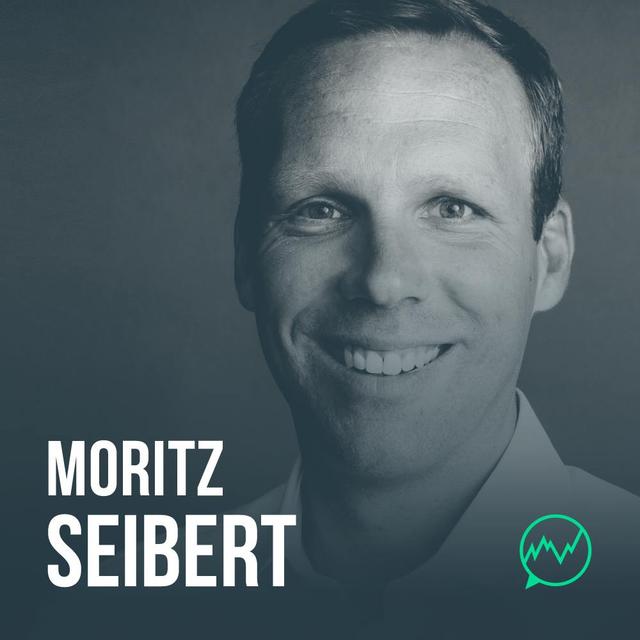
it shines a spotlight on what happens if you were to uncover a structural inefficiency that can be exploited. The featured guest on this episode is Moritz Siebert. A few of you may already know Moritz, and if so, you probably know him as the trend follower and for his crypto related interests. But almost no one knows that he was actively arbitraging warrants on Germany's DAC.
For nearly three and a half years, he's never spoken about it publicly until now on this episode. You'll soon hear Aaron has Moritz detail out all aspects in his recap the market, the efficiency, the trade, and the inevitable decay. Now we could be totally wrong, but this might be easier to digest for those who have basic knowledge about options and volatility. But regardless, it might be worth taking time to understand just from a high level.
because many traders have launched their careers on the back of an obscure edge. To help with this, Moritz has also written an assisting article, which we've linked to in the show notes. Plus in the show notes you can view the incredibly smooth equity curve Moritz generated from trading this strategy. See the show notes at chatwithraders dot com slash two hundred forty three. Finally, as I alluded in the prior episode,
This is Aaron's final episode hosting Chat with Traders. If you'd like to keep in touch with Aaron and stay connected, then the best way is to follow his personal Twitter account at AaronFifield. Erin, on behalf of myself and our listeners, we thank you so much for all that you do with creating this podcast and bringing on such great guests to the show all these years.
This podcast has been making a great impact and is a valuable contribution in the trading community. We've listened to you since episode one and witness you develop into one of the greatest interviewers in trading and You truly pioneered podcasting in the trading world, and we thank you again and wish you all the best in your next chapter. Listeners, don't go anywhere as Chat with Traders continues to bring you more great episodes.
¶ Understanding Warrants and Retail Trading
Again, this is episode two hundred and forty three. Now coming to you from Germany, here is Moritz. Before we walk through the actual trade and its specifics, I think it'd be beneficial just to take a few moments to give some context of the product slash market of which you were trading. Now, I know this uh strategy or this uh trade uh used warrants. You were trading warrants. Um I understand that they share some similarities to options.
In what ways are they the same and in what ways do they differ? And just it generally what are warrants? So warrants are like options. They have essentially the same economics. An option is something that is quoted and traded on a on an exchange, such as for instance the Eurex exchange or the CME. And a warrant is an option that is wrapped into a note or paper that's issued by a bank. So we're talking about a bank such as, say, you know, HSBC or Citibank or Goldman.
Issuing a warrant, so they're essentially issuing an option that is wrapped into the bank's paper and they make that available to retail traders. That is essentially the key difference. Economics are the same. They're quoted a little bit different. I'll get into that in a bit. But essentially, it's like an option, just issued by a bank. Okay, so when you say it's issued by bank, I mean what does that mean? And you use the term bank's paper again, like w what what does this kind of refer to?
Right. Let's start at the beginning. So there's a big structured product market, not only here in Europe, but I think it also exists in Australia. It definitely does exist in in the US but and in Asia as well. But Europe has a very large structured products market. That is a market where banks offer specific investment products to retail clients, sometimes professional traders as well. but mostly retail clients. And it's kinda like slicing and dicing
put options and call options and putting things together where you can have an upside participation, say link to the Eurostox 50 index, but with less of a downside and it has all the callable features. So all these type of things.
that is a space that is dominated by the banks and the banks will issue the products now in order to make them tradable, in order for these products to have an ISIN or a QCIP code, They need to be wrapped or they need to be packaged into something that becomes a tradable product. And that is usually a note. And a note is a debt instrument that's issued by the bank. They would issue that.
Paper, I call that paper, it's a note. And the terms of that note would essentially stipulate that the note is supposed to track. The performance of an index or is to supposed to track the performance of whatever strategy you know underlies underlies that product. So that that is how that works. Okay. And these are exchange listed products, just like options.
They are exchange listed, but not on the Eurex exchange. They are listed on specific exchanges that cater to uh the structured product retail market. And they're also traded OTC. Think about Robin Hood and retail brokers. You would have the same here. in Germany and you know all around Europe, you will have brokers that or through which you can access
These products. There are quite a few. Like I was using all of them. I can explain to you why I did that because I needed to, you know, get the best execution. And they were changing all the time. So I needed to flip around between brokers. But let's say there's like 10 retail brokers. And these brokers, they connect to the banks directly. So that's essentially an OTC trade. There's no exchange. And the bank would quote its bits and offers.
to the brokers and then you can just trade against the broker.
¶ Trading Against Banks: A One-Sided Market
Okay. And when you was describing it there, you said that these are products kind of packaged uh specifically for retail customers. Why is that the case? Like why why would retail not just trade options? Uh is it Yeah, are they creating a product that's kind of a more accessible through like more retail brokers? Like to trade the actual options you need to have a specific options broker, right?
You hit the nail on the head. That's exactly the reason. You know, I do trade options. I do trade, you know, Dax options and futures options on the S P five hundred. But in order to do that, you need to have a futures account or a margin account. You know, interactive brokers is an example. You can open an interactive brokers account or, you know, I do some of my trading through RJO, but these are futures brokers. And while everybody can go to them and try to open an account, it is
Not as easy to open an account there as it is to open an account with, say, On Vista brokers or Quartel Conzos and you Com Direct. I mean, all these retail brokers where you can essentially just show up with, I don't know.
a thousand bucks or two thousand bucks and and open an account and they would let you in. Whereas if you want to open I'm not I'm not sure what the requirements are now to open an account with interactive brokers, a margin account and then start trading options, but I guess you need to have substantially more money than that, right? Um so retail traders don't usually do that. And and that's why there is that specific market for
them. Okay. Understood. Uh so who are the predominant counterparts to the trades? Like it is the banks behind uh most of these trades or is it other retail participants as well who might be um posting bids and offers? You're only trading against the banks. And this is this is an interesting part here because
on a two sided market, such as for instance, on the Eurex Exchange, which is where the options are traded on the DAX. And by the way, that's the only underlier I traded. I'll explain to you in a second why that is. But if I trade on the Eurex exchange, I might be facing a market maker, right? So market maker quotes bits and offers. And if there's no other person or other trader taking the other side of my trade.
that trader will essentially create inventory and assume the position, right? And then hedge. Mm-hmm. Um, but there is a chance that if I buy, somebody else in the market sells. And the market maker just sits in the middle and collects the spread. That is great for the market maker, but that's not always the case. In the case of the warrants market and the banks, there is never another trader because it's a one-sided market. The banks only sell warrants, they don't allow traders to go short.
And that is important to understand because coming back to that interactive brokers margin account, I can open a short position because I trade on margin and there's clearinghouse behind it. on the exchange that manages the risk, right? And they would boot me out of the position if or margin call me if the position went against me and I didn't have the funding in the account to support the position. That is not something that a bank
would ever be willing to do in the retail market against or with traders who they absolutely have no idea who they are. They don't want the retail traders to open naked short positions on essentially convex products. Um so they would only sell. It's a one-sided market. They only show offers. You can buy the warrant from them to get along the warrant and you can sell it back to them to close your position, but you cannot go short. So you will always trade against the bank.
And you will always create inventory for the bank. If I buy a call option. I'm delta long, the bank's delta short, and they will need to hedge. They will need to buy Delta in order to hedge that position on their book and all the other Greeks as well. But it's always against the bank's balance sheet. Okay, so when you come to let's just say you're long a warrant and you come to sell it, is there a bid there for you to hit or does the bank just take it back off you?
Hm. Yeah, they they will show bits, but not all the time. You know, this is going to be the interesting part of the story that I'll tell you in a second, I guess, is you know, I can lift their offers and I would only lift their offers you know, specifically when I think or when my system and strategy showed me that now it is a good time to actually buy warrants from them because the warrants became too cheap.
I'm now along that warrant. At some point I need to get out of the position. And my holding period is kinda like, you know, three to five minutes. So that point is not too far away in the future.
So I need the bid. I need there to be a bit in order to get out of the position and realize my PL. Now, because the fact that I left a little bit of a footprint in that market and it became after a while, after you know, I was doing that for three point five years, it became kind of like clear that I was arbitraging them and taking their money.
they knew that it was me trying to get out of the position and they were using all tricks of the book in order to prevent that. And one way of doing that is to not show the bit or to increase the bit office spread and move the bit down. To not quote at all and you know, pretend that there's a fire drill and they had to, you know, close down the systems. I can tell you all the stories when we get there, but
You're right, I need the bit in order to get out of the position. And if the bit isn't there, I have a problem. Sorry, we'll move on from this in just a second, but would you be able to put a bid into the book? Are you able to do that? No. Because you okay. I can on the URX, right? If we're trading or on the CME or in any other options exchange, um you can put a bid into the book, which means you're willing to sell.
uh open a short position. Um and then your bit sits there in the audit book and you know depending on where you are, you get hit or not. You can't do that with the warrants. All right. I think that's important to note for for where we're going here. You were trading warrants on just the DAX, is that correct? Only the DAX index, correct. Um that is
one of the most liquid um or I don't want to say liquid, that's probably wrong, but it's one of the most widely and actively quoted warrant markets here in Germany. You know, that's kind of like the Haus under Leier, the DAX is a German equity index. It used to be the DAX thirty when I traded it. I think it now has forty members and it's called the DAX forty.
But you had all the banks and and let me give you some names. I mean it was, you know, Goldman, BNP, Socchen, Citibank, UBS, Deutsche, Commerce Bank. I mean, all the banks, you name them. They're in that space, in the structured products retail market, of which there's so many structured retail products that DAX Warrants is just one piece of that market.
But they were quoting a big strike range, they were quoting or they still are quoting, I mean the market still exists, they're quoting a big strike range, and they're quoting a big maturity range. Um so you know, everything from say it expires in a week's time to it expires in say three years' time. And strikes the DAX is now at about thirty thousand point thirteen thousand points, they would usually have strikes in the like five thousand to twenty thousand um point strike range.
And they would actively quote that all of these banks. So there's a big kind of like pool of products to look at. And that's just the DAX index, right? They will do the same on the Eurostox. They do the same on the S P, they suit on single stocks. And then all the structured products where they create package products with specific payout profiles. So it's a big, big messy market's where and that is also f important for for you and the listeners to understand.
Every single bank there, and you know, I used to be on that side, every single bank needs to manage tens of thousands of ISINs and QCIPs and products. Because they're quoting so much. There's so much issuance out there. And that's a big complex problem because. Every single one of these underlies has, you know, a repo curve and dividends and an implied volatility curve and all of that stuff needs to be updated in real time.
Um, so you can already understand the dimension of the, say, tech problem and and you know, the IT requirements that come along with it in order to manage these complex books.
¶ The Arbitrage Inefficiency & Volatility Surface
Tell me what was the inefficiency that you uncovered? Not how you traded it. We'll get to that in a moment. But just what was the the market inefficiency which you discovered? Right, two things. The trade worked because the banks quoted a too tight bit off the spread for Dax Warrants. That's reason number one. And reason number two relates to that complexity of managing all of these tens of thousands of products.
they were too slow or the technology used to be too slow to update Volatility surfaces to update to react to change in implied volatilities that's quoted in the two sided URX market quickly enough. Let me explain that because that that I think is important to understand. Um when we look at the options market on Eurex for DAX warrants today.
And the market is around thirteen thousand. So let's say that's at the money. I'm not sure if it is exactly at thirteen thousand, but it's kind of like around there. Yeah. Then On the URX and at the money call output option, we'll usually have a bid offer spread between three.
to six points. That is how wide that market is. That's actually not that much. When you think about it, when you translate that back into strike terms, it would translate to something like a three to five basis point bid offer spread in strike terms. And that we need to say is or that we define or I define as the fair market bid offer spread. Fair because it is
um determined on a two-sided market, which is URX, where people can meet to buy and sell and trade on both sides of the order book. So that is market standard. The DAX of Warrens, however, didn't have a three to five point spread. They always had a one-point spread. So they were quoted much, much tighter than market rates. And
The reason for that is the banks didn't care. They kinda knew that on average, with me being the exception, but they didn't know my identity, on average their warrants would be purchased by retail traders. And they were quoting their warrants. too expensively, right? They were always kind of like zero point five vol points or even one vol point in implied vol terms higher than the market. So they didn't really care about them having
a tied up at office spread, especially because most retail traders would purchase a Dax warrant or any other warrant and hold it long term because they have a view on the market, right? They would hold it overnight, they would hold it for a week or two or three because they think the market goes up or down.
So it didn't really matter that the bid office spread was one cent because these people didn't want to kinda like, you know, go go back and forth all the time. But I did. That that was, you know. I had a three to five minute holding period. So I wanted to get in and out quickly, which means that I needed to have a tight bit office spread. So reason one, too tight of a bit office spread. Given the notional trading size of the market, thirteen thousand points, it's a big, big market.
And then reason number two is Because the banks, as I've mentioned, they need to have data and update the volatility surfaces and SKU data and dividend data on all the thousands of underlies that they trade.
You know, obviously there's no person sitting there uh doing this manually. It needs to be configured and it needs to run in an automated fashion. And the way that works is they would, you know, look at the URX market where the true volatility is traded, and they would kind of like take a snapshot of the volatility surface that they would see there.
And translate that into their systems, create a configuration, you know, kind of like a skewness, steepness, slope, all of these type of things, and then just, you know, essentially press enter and save that and say, okay, this is how we're trading it.
But so most of the time, if there's nothing really happening in the market, that configuration is roughly correct, right? If there's no big moves in the market, the volatility surface stays relatively stable, and there's no need for them to really meaningfully update. their configuration. But every once in a while something happens in the market. That could just be, you know, an announcement, a rate announcement, whatever. It it could just be a big move in the market.
For whatever reason, right? Just assume that the Dax index drops five hundred points, which which can easily happen, right? And it happened many, many times. Now when something like this happens, the URX market immediately reacts to that. Implied volatilities would rise, spreads would widen, SKUs deepens, all of that happens in real time.
But the banks, they still sit on their old configuration of the volatility surface. It hasn't updated yet. It hasn't automatically updated yet. They need to create a new configuration. And I have created technology and software. To spot that. You know, my computer was kind of like, you know, showing me the alarms and showing me, okay, now the bank.
are too cheap given what they have historically quoted, the volatility surface. I can spot I could spot when the volatility surface was out of whack, when they became too cheap. Relative to the market. And when I saw that, I was trying to buy as much as I could because. The anticipation is that they would, within the next couple of minutes, update their volatility surface in order to prevent. For
Clean arbitrage opportunity to pop up, which could actually pop up if they became cheaper than the Eureks, right? Because if they become cheaper than the URX, I will buy their warrant and I will sell on Eurex because that's where I can't sell for a for a clean profit.
So they never wanted to be there. So they were kinda like f I forcing their hand to update the volatility surface to make it more expensive. Now when I have the position and I'm belong the option, I'm long Vega, I'm long gamma, I'm you know, belong the volatility. I will profit if they update their volatility surface and they mark up their volatilities again. I was waiting for that and then sell it back to them. Okay. The term volatility surface Mm-hmm.
What is that specifically related to? Is that Uh no volatility surface is essentially um a map uh of of all the implant volatilities. So there's a there's a term structure. A term structure is essentially just volatility over time. Um, like you know, it would it would show it's it's just a line. It would show you the three month volatility, the six month volatility, the eighteen month volatility, whatever, the three year volatility for the same strike.
Right. So you could see for the same strike, how does volatility change over time? And usually the longer dated um the longer dated volatilities are more expensive than the shorter dated volatilities. That that That may flip around. And then you have SKU, which is different volatilities.
For the same maturity but different strikes, right? And when you put these things together, the SKU and the term structure, it creates a surface. And essentially the surface shows you all the volatilities for an underlying market. Yeah. Have you ever watched a stock explode and thought, if only I had the capital, or sat on the sidelines because your account balance felt too small to matter? Good news.
With Trade the Pool's limited risk platform, you don't need millions or even thousands to start trading the US stock market. Bypass the PDT and tap into over twelve thousand US listed equities. From penny stocks to big caps, ETFs, even the newest IPOs, and short anything you like, with zero locate or hard to borrow fees.
Start your evaluation, get funded with up to$200,000 in buying power so you can go big without risking your own savings. And now you can also have unlimited time to reach the profit target. It's a game changer. Not ready to trade yet? Trade the pool offers a free demo and educational resources. Practice on live data, master the platform, and build confidence risk-free before you even pay a cent. Click the link in the show notes to start trading with Trade the Pools Capital.
¶ Strategy Discovery and Manual Execution
How did you discover this? Like how did you stumble across it? Because Uh, from my understanding, most of your trading is more related to sort of bigger picture trend following or um spread trading uh in the futures markets. Um, this seems a little bit out of your lane. How did you come across it? Yeah, it is completely out of my lane. Uh you're right. Most of my trading is systematic trend following trading. So many small losers, the occasional big outlier winner, that makes my P and L.
Um, and that's what I what I do still to the present day. Now, in earlier years, like you know, this is now twenty years ago, um, I used to be working for banks on the derivatives. trading and structuring side. So what I'm talking about is actually I used to be on their side. I used to be on that side of the book, which is, you know, I know the market. Um, and so I got interested, not because I immediately discovered that there's an arbitrage opportunity in the Warrens market.
there's remember I mentioned all these many structured products that exist. And you know there was um there was I think in twenty fifteen or twenty fourteen Um, for a specific reason, I got interested in a certain type of structure with an autocallable feature where, you know, I wanted to get exposure to I don't remember even the underlying name. I'm pretty sure it was a a a single stop. So I had a look at what's out there.
And I hadn't looked at that market for like years and years. So I was just browsing around the internet. um, looking at, you know, the websites of the different banks, seeing what they have, you know, trying to understand the prices, you know, calculating whether they were pricing it fairly. I stumbled across the DAX warrants and it's just like, hmm. Interesting, they're quoted with a one cent bit off a spread, and I can see that they are quoted with a three to five point spread.
on the Eurex. So I just gave that a little bit more of a look. And um one thing came to the next, I just, you know, then understood that okay, so this is This is actually too tight. They're quoting it too tight. How can I how can I take advantage of that? And it wasn't immediately clear to me because I knew that I can only buy their warrants. I also knew that their warrants are priced too expensively. They're always
you know, more expensive than what I could trade on URX. So it's kind of like that's off putting. But then over time I figured out that I'm if I'm quick enough to get in and out. Um I'm essentially essentially exploiting there to type it off a spread and there uh slowliness on updating volatility markets. So one thing came to the next. It wasn't immediately clear to me that this is how I would do it. Really it evolved over time.
eventually I had it together um in in twenty fifteen and I started with a bunch of paper traits by the way because I needed to get into the swing of things. You know, it wasn't it wasn't really clear to me that I could execute this cleanly. So I was, you know, testing it and playing around with it. I think for I did eighty, eighty two hundred or so paper trades where it was just, you know,
assimilating, actually doing the trade, but not not executing it. But I understood, okay, so that it would have worked, it would have worked, it would have made money. And then I just went for it and tried it out. Um and adjusted over time. I mean they they were throwing a lot of things in my way because over time they figured out that I was
uh eating into their P and L. They didn't know, they don't know, maybe they do now, they didn't know who I was. And I took great care of never revealing my identity. Sometimes I was kind of like forced to call them in order to uh have them r start quoting again, but I never used my clear name. Um so they were, you know, trying to prevent me from doing it, but Yeah. Uh there's so much going on on their desk. I every once in a while just sneaked in and took their money.
The uh the paper trading bit's quite interesting. I would have thought a trade like this was probably and I know we haven't got to the specifics about how you were actually executing and exploiting this R But um, you know, a trade like this, I would have thought that paper trading was would be quite hard to accurately kind of simulate. Um the trade, was it not?
It is, it is, exactly, because you know, I was just essentially typing down the position, the theoretical position into a spreadsheet and monitoring its P and L. Um, but I didn't I couldn't know whether I would actually whether I'd be able to execute that trade in reality. So I did it I did this for like eighty to a hundred times only because I wanted to work on my entry timing and exit timing. Um so what what I think is important for you to understand is I had this strategy.
um sucks in so many ways. It's great and it sucks in so many ways because it's extremely time consuming. You're essentially you need to look at the screen, you need to look at the market all the time. It's very difficult slash impossible to really automate this and kind of like
uh create software that would systematically and automatically execute these trades. You have to do it manually. And that means you need to look at the screens, which is not something that I usually do. I mean we all sit in front of the computer essentially all day working, but sitting in front of the computer staring at prices and volatility markets all the time. That is that is very stressful and very time consuming. So but for that strategy to work, I had to do that.
I needed to find a way where that didn't become overwhelming, where it's just like, you know, it's it's not my entire day. I need to do other stuff. I need to do my trend falling trading, you know, I I work on other things. So I had to keep this market kinda like I was watching that with my left eye and I was doing other things, you know, with my right eye, so to say. But I had to kind of like get into the rhythm and
figure out, okay, how do I how do I detect when they become too cheap? Um how what do I need to do when I see this? You know, I need to open all sorts of order entry masks from different brokers, type in the ISIN, you know, request for quote, execute, then be quick to have the other lag executed. So it's always, by the way, I always trade straddles and strangles, right? So calls.
uh calls and puts at the same time, uh, so that I'm delta neutral because I didn't have a delta view on the market. I only have a volatility view on the market. So I needed to execute and get into the routine of doing these trades, like, you know, copying over the I see the i the the identifier um number for the product, putting that into the
order entry mask, you know, requesting for quote, executing it, trading it, booking it, these type of things. I needed to become like a robot with that. That needed to be something that I would have to be able to do super, super quick and fast. So at first I was using the paper trades to kinda like get a feel for the timing. Now's the right time to do it. But then I had to go real. Um, because I can only play around with these order entry masks in reality. Um so I just went for it.
I came out of the gates uh blazing. I guess it's like Um I rarely had a down day. I never had a down week. I mean this strategy was uh uh unfortunately not scalable, but extremely extremely successful from a risk reward point of view. Yeah, well...
¶ Executing the Arbitrage Trade
Up to this point, we've set the scene of the market, the product, we've kind of outlined the inefficiency there. Let's speak more specifically about how you would execute the trade. So how you would execute the ARB. Like how would you specifically exploit the inefficiency that was that existed? All right. So think of me sitting in front of a spreadsheet. It actually is a spreadsheet. It wasn't any other software. It is a
An Excel spreadsheet. And that spreadsheet had a couple of API and DDE connections to all sorts of data sources. So for instance, I was taking the Eurex, the true DAX volatility market. from interactive brokers. So there's like you you can, and your listeners will probably know that, you can connect to interactive brokers and source data from interactive brokers. So I was subscribed to the DAX market.
um on interactive brokers and I was pulling essentially their volatility data into a spreadsheet. So now I have what kind of like is the fair market price. And then I had a bunch of other connections where I was connecting to all the different brokers that I was doing business with and I was pulling in their quotes all in real time into an Excel spreadsheet for the Warren's market. I now have the two together in a spreadsheet.
And that allowed me to create or to calculate a simple spread between how expensive is the warrant relative to what I can see in real time on the URX. And so let's just say that the warrant is five to six, seven cents more expensive than what's quoted on Eurex. And I would have, you know, I could calculate the implied volatilities and I could I I I did calculate all sorts of metrics in order to determine
uh relative expensiveness and cheapness. And then a code would run and For the entire day, every two seconds, I would create a snapshot, essentially store that into a database in order to get a feeling for how much more expensive are the warrants on average. quoted on that specific day that I'm looking at it.
So the market opens at nine, it closes at five thirty. For the entire period, I was kind of like, you know, measuring the relative expensiveness of the spread. And then using simple statistics. I can now calculate something like, you know, percentiles or quintiles. And I could now over time see, okay, the vol the the warrant market is now becoming too cheap in volatility terms relative to the URX and we're moving into the, you know,
the the the top percentile of cheapness. And it's like, okay, that's interesting. We're we're now really relative cheap. So an alarm would kind of like go off and indicate to me that, hey, this is this is now getting interesting. Warrants are now relatively cheap or in the like top 10% of cheapness for that day. So I would give that a closer look. Now what I needed to also be the case is I needed for there to be a market move. the market is moving higher.
So a market an equity market that moves higher usually results in a drop in implied volatilities. The volatilities get lower and lower and lower. That's not a great environment to put a long volatility trade on. That's not a great environment to be long a call and put at the same time. You know, you might be along a position that is relatively cheap, but it can still get cheaper, right?
I now knew that the the warrants were cheap. And if I did see that the market is actually going down, that implant volatilities are rising, that there's something happening in the market that just moves, right? Then I would get in. Because then the probabilities relatively high that the banks will be forced. to update their volatility surface and become more expensive again, essentially resolving the cheapness that has been created because they were too slow to update the volatility surface.
And then I would like to belong the call and the put. And immediately, like as soon as they did it, as soon as they updated the volatility surface, because I had a real time view. That would also show up in my spreadsheet. I would get another alarm. It's like, boom, here we go. They've updated their vault surface. I could immediately see the PL, you know, which I had in real time as well. And then I would go back. and try to hit the bit and close the position.
Okay. I might just ask you to maybe slow down the bit where you s where the alarm goes off and you say Then I get in. Like when you get in, what exactly are you doing there? So when I get in, um, I was looking at all the issuing banks at the same time. So my spreadsheet would have the Goldmans and the B and Ps and the HSBCs and the Deutsches and all of them displayed at the same time.
And I coded it in such a way with, you know, V B A or just, you know, the standard Excel type of stuff that you do that my spreadsheet would For me, without me doing anything, select the strikes and select the issuing bank. And calculate the position size automatically for delta neutrality. So I might have something like a minus twenty-five delta put and a plus fifty delta call. So I would have a ratio of two to one. All that stuff is automatically. So essentially the spreadsheet.
show me the position that I needed to put on, including the ISINS and everything. But what's an example of that position?'Cause you used the term or you spoke about strangles and straddles very briefly before, like can you speak to that part of it? Like how did you you know exactly like you know, where you buy and put warrants or calls or like What was the how would you determine like what kind of position you had to put on?
So um just for definition, a um a straddle is The combination of a call and a put option with the same strike price and the same maturity. So let's just assume for a sec that the DAX index trades at 13,000 points. A straddle would be a 13,000 strike put and a 13,000 strike call with the same maturity and you're buying it. Together as a package. They're two legs, right?
A strangle is essentially the same thing, but with different strikes. So it could be a 12,500 strike put and a 13,500 strike call. That is the strangle. But because one is a put, And the other one is a call, they have opposing deltas. The call is delta long, the put is delta short. I had no business in forecasting the direction of the market. I'm very bad at doing that. So I don't want to have a delta position. I needed to create the position in such a way that it's delta neutral.
When you trade a straddle, so same strike price, you're very close to delta neutrality because, you know, the put will usually have a delta of minus fifty percent and the call is going to have a delta of plus fifty percent at the money. So it's kind of like the same position size. It's slight differences, but not I don't want to get into the technicalities here. With the um the strangles.
It's it's a little bit different. The twelve thousand five hundred put is going to have a different delta, say minus twenty five, and the um thirteen thousand five hundred strike call is going to have a different delta. It could be whatever, plus twenty only. So I would have to trade slightly different position sizes on each of these two legs in order to assure delta neutrality.
I had programmed my system to do that for me. It would not only calculate the position size, it would only, it would also find out from the spreadsheet what the most attractive strike prices to trade. Right. And that depended on the bank's configuration of their volatility surface. Sometimes they had the SKU wrong, sometimes they had the term structure wrong, sometimes they had both wrong at the same time.
But it was kinda like always the case that there were some strikes specifically more mispriced than other strikes. So I was I had programmed my system to kind of like go in with a laser pointer and
figure out and search for the most mispriced item. And I had one other side consider that I couldn't always adhere to, but I was essentially trying to do that is to trade the call and the put with two different banks and not do both legs with the same bank because that was that would create that would make them suspicious. You know, if I come in with a relatively big size and I'm trading a call and a put at the same time, say against Deutsche. You know, usually the trait would just automatically
route through their trading desk and there would be an auto hatching feature and the the person sitting on that reverse trading desk may not necessarily see that trade. It'll just because there's too much, right? They can't react to every single trade that comes in. But they have security measures in place where if somebody comes in with too big a size.
You know, that person has to request for quote. That was me. So I was always creating a pop-up on their screen. They always had to manually allow me to trade. But when I come go to them with both legs at the same time, they would see that and they would kinda like smell it and say, Oh, there's there's something wrong. And they would therefore then not accept my request for quota, not trade with me.
But if I only show them one leg, they were like, Okay, so there's a person. I don't know the person who wants to go long or short on the DAX, relatively large size, but who cares? Let let the let that person do it. So I would do one leg at Deutsche and the other one at Comrades Bank or Goldman. They wouldn't speak to each other, of course, and that would allow me to get into the trade more efficiently.
Just for the sake of clarity, you didn't have like a a direct kind of account with these banks though, did you? You you went through a broker who then connected to the banks. So there was kinda like a middleman in between. So if that's the case, how did you kinda determine which bank you could route your order to if you were going through a broker, like wouldn't the broker take care of which bank they route the order to?
No. The ISIN or the product code that you're using specifically, you know, determines the bank. So you can Okay. Essentially I'm using ten different retail brokers. You know, listeners unless they are German listeners probably won't know the names, but there's like, you know, Comdirect and On Vista Bank and s there's all sorts of retail brokers.
And essentially their business is just to be the connecting tissue between these banks and the retail trader. Um, and you would have I would have to enter my order into that broker's system. And and these systems they all worked differently, by the way. So I also had to with my paper trading get to accustomed to the way their order entry system systems worked. Like how many clicks do I have to do? All of this, by the way, is very time sensitive because the market moves, right?
uh you know, if if I have one position on, if I have the call position on or the put position on, I need to be super fast in order to get the other leg on as well. Otherwise I have a directional exposure. That by the way didn't happen all the time. I mean, I can tell you all these, you know, accidents that that happened, but
Time is of the essence. So I had it to un I I needed to understand intimately well how exactly these order systems work. You know, how many clicks do I need to make in order to get to the to my destination? And I also had to develop a feeling for like their speediness of their execution. They were all kinda like, you know, some brokers were slower, the other were some others were faster. Um, they also had different prices. You know, sometimes you had these
free trading month like Robin Hood zero cost or zero commission trading where a specific broker had a cooperation with a bank and they offered for a month, you know, zero commission trading. So I was actually very keen to do business with them and trade for free. because my strategy is also commission sensitive, right? Especially because it's so short term and I was doing a lot of trades.
So yeah, I I I need to go through these brokers and then the broker would essentially en route uh or route my order to the bank. And it's now the banks The bank usually just accepts the order because they're quoting in an automated fashion through their systems. It's a big set up, right? And they would not um they would not kind of like, you know, react to a single trade and
the trader on their desk would not necessarily click the mouse and say, I accept the trade. 99% of the trades will just automatically froze flow through and just show up on the traders so the bank. Trader's desk, and that trader now has a position. But given the size that I traded, Trades usually resulted in a request for quote and it would create a pop-up on that trader's desk and they would have to manually accept it.
And what was the average trade duration like before you could flatten the position? How long was it before the, you know, the spreads or the prices came into line? Usually three to five minutes. Um, sometimes shorter. I mean I I had trades where Uh and that was just you know, probably a a case of of luck where I would establish the position and as soon as they had it, like, you know, two seconds later they updated their volatility surface and I would immediately sell it back to them.
¶ Battling Banks: Games and Decay of Edge
And it's kinda like, you know, a fifteen to twenty second turnaround time. You know, lots of clicking, but boom, you've made the money. Sometimes I had to stay in for, you know, longer. And this is where the games start, right? So, um, So let's just say I have the position. I have a clean execution. I get in with a call and the put to different banks. And there wasn't too much of a time difference uh between um the call and the put entry. I now have the position. I'm
now waiting for the volatility surface to update. Um and let's just let's just say the market like it goes down and volatility go go move moves higher. Um but the bank were the two banks that I traded with, they kinda like know that I had just established the position. They knew it because of the size that I traded, because I was, you know, trying to do as much as I possibly could in order to scale that strategy, right? So I would go in and trade.
you know, ten thousand warrants. I would go and trade another ten thousand warrants, another ten thousand warrants. Like, you know, I was trying to do as much as I can, but that became a big position and it showed up on their book. Now they therefore there knew that, um, as soon as they update the volatility surface, I would go out. They kinda like they they they just knew that over time it became clear.
Now, when they update the volatility surface, they know that they're going to lose money because I will sell that position back to them and I will essentially take their money. I will eat into their PL. So they don't want that to happen.
But it's kinda like a game of chicken because If they don't update the volatility surface and the markets move lower on the URX and implied volatilities move higher, they create an arbitrage up another arbitrage opportunity for me where I can buy more of their warrants. and actually sell on Eurex for a for for an arbitrage, right? So they don't want that to happen because then I can really go for that book.
So what they did is they kind of like they they're trying to stay cheap. They don't want to let me out of the position. And they're now using every trick that you can possibly think of. And this is widening the bit of spread. Moving down the bit. stopping to quote on everything that relates to DAX warrants or stopping to quote just the product that they know that I'm long, right?
Um and then so when that happens, that is really a problem because they're forcing me to stay in the position. I have no other way to get out. I need to get out through the bank, right? So I would call their hotline desk uh with the name of Helmut Meyer or Hermann Müller. I would never give them my name, right? And say, Hey, um
I'm this retail trader here and I you know, I have a position on. It's a small position. I was just playing along. It's like, you know, but it's kinda like it looks weird. You're quoting it in a weird way.
And they kind of like knew it was me, right? So I was asking to speak to the trader. I said, Oh, I can't put you through to the trader. You have to speak to the marketing representative. And I was like, you know, look, I mean, it's it seems to be out of whack. Everything else you're quoting is kind of like in line between
W why are you treating that product differently? It's I I don't understand it. And then they, you know, they look we have a fire drill going on, um, there's nobody at the desk. And it's like, oh really? It's like, you know, this is the third fire drill you have this day. This is kind of funny. And so they were they were doing everything they could.
um to keep me in the trade because that creates optionality for them as well. That that's what I say. It's the game but chicken, if the market moves lower. and implied volatilities rise, then it forces their hand. They need to react, because otherwise arbitrage them on Eurex. But they're long an option on essentially the market moving higher again
the stress in the market subsiding, volatility is coming down, and then all of a sudden, you know, their volatilities wouldn't be too cheap anymore. They'd be they'd automatically come back in line with the market. my position would then show a loss because volatilities have come down. They're priced fairly again in the warrant market, and then they would show me the bid again and say, Oh here, now you now I let you out of the trade, but obviously for a loss. So
you know, it was all these type of games that um I needed to play with them. Sometimes to the extent like, you know, I became very familiar with, you know, quoting regulations and all these this being Germany, obviously everything's regulated, right? So the banks are regulated when they quote these products, they need to adhere to certain rules and they need to
you know, quote during a certain period of time and blah, blah, blah, blah, and this. I don't remember exactly what the rules are. It's too long ago. I mean, this is the period twenty fifteen to twenty nineteen when I did this. So I don't remember what they were, but
back in the day I knew exactly what they were and I could quote it to them on the phone and say, Hey guys, um, just so you know, you need to do this and this and this, otherwise I'll sue you So and then, you know, they let me out of the trade. So that's ultimately what led to the the edge decaying, right? As they sort of just caught on and and made it too difficult for you?
They called on, they knew it was going on for three three point five years is for how long I took it. And, you know, I I send you my P N L curve and you can see at the very end it just started flatlining. Um and the reason it started flatlining is they essentially all of them over time increased the bid offer spread from one cent to two cents.
And and that killed it, you know. Um the the bank that started doing that was actually Deutsche. Um Deutsche was the first bank. Actually, I think also made most money from Deutsche. It was the most profitable counterparty. Um, but so yeah, I I took their money and over time they just said, Look, I mean, this is this guy is taking our money. Let's just increase the spread from one cent to two cents. Now you have to be if you put yourself in the position of the bank.
that is not an easy decision to make, right? Because there's B and P and Socchin and Goldman and HSBC and all the other banks out there who are still quoting at one. So they would have a competitive advantage in the retail market. They could go and show, hey, we're still quoting at one, you should come and trade with me. Don't trade with Deutsche, they're obviously more expensive.
So it's a difficult decision for the bank to make, but Deutsche did make that decision and they increased the Badaffer spread to two cents. So it was very difficult then for me, slash impossible, to trade with Deutsche Bank because it was just too high of a bit of a cost. um given the the the the short termness of the trade that I had on. And so I focused my activity on BNP and Socchin and Goldman who were still trading at one cent.
Um, but then over time they also, you know, changed to two cents and and that is kind of like what killed it. And ever since the market is at two cents. So I guess uh I one of the reasons why. the German warrant market no longer quotes at one cent spread, but is now trading at two, which is still a tet cheaper than what you would see on Eurex, but big enough.
¶ Pre-Market and Post-Market Volatility Exploitation
for there not to be an easy arbitrage opportunity. This may be a silly question that kinda misses the point, but I'll ask it regardless. How come you would never execute one leg um on the warrants, so the the structured retail product, and then the other leg on Urex? Um well because Eurex is fairly priced, right? There's um URX is a two-sided market where volatility is, let's just say fair, because it's determined by buyers and sellers in real time.
But you've got one leg which is fair and then the warrants which are inaccurately priced. Oh, I see. Yeah, no, but so when the volatility surface uh of the bank is out of whack, it makes the calls and the puts. Too cheap. Right. So yes, you you're right. I could have traded just one lakh with the bank or against the bank, buying volatility on the cheap. putting on the hedge on Eurex where it would be more expensive.
Um, but obviously I have an incentive to do both with the bank because the bank on both has a two-type offer spread and on both they're too cheap. So there's just more more bang for the buck there. Okay. Yeah, that's probably quite a key point. Glad I asked that question. I mean, I guess this is probably my lack of knowledge about options kind of showing through there. But yeah, thanks for clarifying that.
No worries. And the the other thing that is maybe well, it it's probably interesting to know, but a volatility Uh volatility essentially when you're trading options, you're trading volatility, right? And the volatility has a bid and an offer. Think about the volatility surface being quoted on the bid and being quoted on the offer. There's there's a spread between, you know. um offer volatility and bit volatility. Yeah.
Now the warrants uh obviously when you buy them, they're always long volatility. So the bank would quote the offer side of the volatility surface if they had one. But they have a bunch of other products. Yeah. All the collables and all sorts of like structured products where the end customer is short volatility as opposed to long volatility as I was with the Warrens.
most of the bank's business is actually in products where clients end up being shortfall, right? Because clients like to sell volatility for a premium, you know, thinking about this in a yield context, if you will. And So that created another opportunity for me to arbitrage that because. The true market on Eurex needs the DAX index to be open because the options are actually tied to the DAX and not to the DAX futures contracts, but to the DAX index itself.
which trades between nine AM and five thirty PM my time. Yeah. But the retail structured products market has a pre market and has a post market. It kinda like they start quoting at eight in the morning, which is before the market opens, and they continue to quote after five thirty all the way until ten PM. So that is interesting because I now have a volatility market.
on the Dax Warrants, between eight and nine, when the market is actually still black, the true market isn't even open yet. But those guys are already quoting volatility in anticipation of where the market is going to be in an hour's time. And after the market had closed at 530, they continued to quote volatility until 10, and they're no longer in a position to see the market. Now the pre and the post market quoting.
um, you know, the post market, they were kind of like tying that to what's happening in the Nasdaq and the S P five hundred, using this kind of like as a beta or kind of like correlating it, tying it to the to the movement of the American markets. But um the
a market quoted between eight and nine is a little bit more difficult because it kinda like, Oh, well, what does Nikkei do? What did the American markets do overnight? You just don't know whether there's going to be a big gap in the market, right? So they were super conservative, therefore
on their quoting between eight and nine. They made volatility very expensive. As you I mean, that is if you're a trader on these desks, that is a reasonable thing to do, right? And you would say, Well, I I really don't know where volatility markets are going to be uh we'll we'll open at nine AM um anything could happen. Let's be conservative. Let's let's just assume something bad will happen and quote it expensively, which is what they did. All right. So
Buying warrants pre market is not a good thing to do because the volatility is super, super expensive. And as soon as the market opens, um, they would become, you know, way cheaper and I would lose money. But I could find trades. I would now go into the pre market and trade. their products where they are actually short volatility or where I would be short volatility, right? So
They had marked up the volatility surface. Their volatility surface is too expensive. I'm trading a product that where I sell volatility. So that's great. So I'm selling volatility in the pre-market. Um, and then they update at nine A. M. when the market opens. And I make a profit on that product as well. Um Yeah. So when you were selling volatility, what product were you using to get exposure there?
Think about a call spread. Um, they call that discount options. It's a weird name, but let's go back to the example because we've used this a couple of times where the DAX trades at 13,000, which is roughly where it trades today. Um they would create a package where you can trade a call spread such as along the 10,000 strike call. and short th thirteen thousand strike call. That's a call spread. Long ten, short thirteen, right? And they would
Package that together again on the bank's paper in a note with a qsip and an ISIN and you can trade that package in one go. Now. The ten thousand strike call, and by the way, we're talking about something that has only, let's say, a month or five weeks or six weeks left to maturity, right? So the ten thousand strike call is way in the money because the market trades at thirteen thousand.
Which means that that call has a delta of close to one, it had almost no more Vega, it has no more gamma, it has all the other sensitivities are kinda gone. The action is on the thirteen thousand strike call. uh which is the short leg, right? Because that is at the money. That has a delta of point fifty, that has a great deal of gamma, that is long volatility.
But because the package is short that option, if I buy it, I'm short the thirty thousand strike call. And sometimes I was doing this in the pre-market. when they had the volatility surfaces marked way too expensively. And I would buy this between, say, eight fifteen in the morning and eight. Uh close to nine A. M. before they opened.
And then immediately when the market opened, it took them kind of like a minute or two, like a minute past nine or two minute past nine, they would recalibrate the volatility surface because that's when URX starts trading. Um, and then it would all come back in line and I would show a profit. Uh
¶ Humorous Encounters and Public Life
on these on these products. Yeah. Fantastic. Yeah. You know, I was doing this and of you know, they they didn't know me by name. Thank you. But the broker is not They knew my name because my orders were going through these brokers. But the brokers didn't really care because I wasn't eating into the brokers PL. The brokers loved me because I was trading so much, right? And um twice a year.
These brokers, they would do something special for their best clients. They would invite their best clients, the most active traders, the people that, you know, pay the most commission. To something that's really nice, like you know, uh a big soccer game. I live in the proximity of Munich, so there's Bayern Munich, and you know, they would invite you.
um to the lounge and you see a Champions League match and it's like uh champagne and beer and dinner and everything, right? But they would also invite the banks because th the banks were kinda like subsidizing or sponsoring the events and they were doing presentations on their latest products. So they went it was so funny because you know I was there and then the Deutsche Bank trader or whoever Goldman trader who I was actually trading against was also there.
I knew that I was uh trading against the guy, but the g this person didn't know me, right? So I needed to pretend that, oh yeah, you know, I'm I'm just bullish, I'm just long, I'm just, you know, dabbling around.
¶ Guest Contact and Podcast Farewell
Yeah, little did they know. Anyway, let's leave it there, Moritz. Share your Twitter, uh, your website, and if you're still doing your podcast, right? Yeah, every every once in a while I'll I I do that podcast. Um, people can probably find me on on Realvision, um, where every once in a while I uh
interview, you know, some of who I think are the best traders uh in in our space, both in traditional markets and also in the crypto markets. You can find me on twoquants.com. That's a website that I run together with. a friend of mine who's also called Moritz, funnily enough. Um, and my Twitter handle is Moritz Seabird. So, you know, if if you type in my name, uh, it'll it'll pop up and you'll find me.
Okay. Well we'll put links to uh everything you just mentioned there in the show notes, of course. uh like we do every time. Actually just real quick, uh quick word from myself to the listeners. Um, as Tessa has probably mentioned at the uh front of this episode, this is my final uh episode hosting, chat with traders. Um if you didn't catch that news uh for some reason, I will refer you to the uh public service announcement I did on uh episode two hundred and thirty-eight. So uh check that out.
Otherwise, if you'd like to keep in touch with me, uh best thing to do is follow my personal Twitter, which is at Aaron Firefield. Pretty simple. Uh of course, guys, appreciate all the love and support over the years. It's been real. Uh, Maritz, thank you very much for doing this. I'm glad we um got the opportunity to have this discussion because I just find this sort of thing
Uh like the these true kind of inefficiencies, just really fascinating. So uh I I'm I'm very grateful to have had you on. So I appreciate your time. to you, Aaron, for doing this and for coming up with that great show, which I really enjoy, love. So you've done a great job and thank you for doing it. Right back at you. Thanks for coming on the podcast. Over and out. the end of this episode of Chat with Traders. But rest assured there are more episodes. if you'd leave a rating.
We'll catch you next.