


¶ Intro / Opening
Chat with Traders is brought to you by Trade the Pool. Did you know that every decade the market reinvents itself? Online brokers opened the doors, mobile apps made trading seamless, and commission free trading erased barriers. Now a new era has begun. Meet, trade the pool, limited risk trading. And now you also have unlimited time to reach the profit target. From now on, your trading risk is capped and your trading opportunities are limitless.
Trade the pool funds home-based stock traders with up to$200,000 in buying power. That means you can trade larger positions and scale your strategies without risking your own savings. It's time to trade with more capital, making it truly worth your time and effort. Ready to trade the pool? Click. Click the link in the description and join the stock trading revolution today.
Okay, when I sell my business, I want the best tax and investment advice. I want to help my kids, and I want to give back to the community. Ooh, then it's The vacation of a lifetime. I wonder if my out of office has a forever setter. An IG private wealth advisor creates the clarity you need with the That harmonize your business, your family, and your dreams. Get financial advice that puts you at the center. Find your advisor at IGPrivatewealth.com.
¶ Introduction to The Ambrus Group
We're on episode 242. I'm Tessa and it's great to have you here. Before we feature our latest guest, I want to mention that this is Erin's second to last episode as host of Chat with Traders. Fortunately, we get to have him on one more episode where he will host alone in his signature way for a trade recap, where he'll be doing a deep dive interview with an arbitrage trader who exploited an incredible
pricing market inefficiency that existed for a number of years. It's certainly an episode not to be missed coming out in about a couple of weeks. And I'd also like to say that I've had the great privilege during this transition phase to co-host with Erin for the past four episodes, including today's, which I'll introduce very shortly. You know, I've learned so much from Erin and what goes into putting together a great podcast, and I've also learned a few things from your feedback.
I want to assure you that chat with traders will continue to be one of the great sources for your trading journey. So stay tuned for new updates on the direction of the show, including a slight change in my role and an introduction of an incoming new host. who will be the main interviewer on the show. I look forward to introducing you to him in the near future.
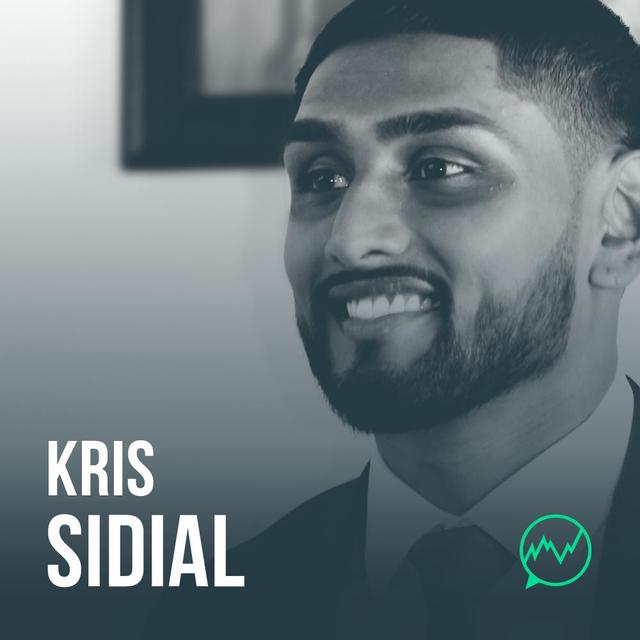
But let's be in the now, right here on Chat with Traders with episode 242. Today Aaron and I chat with guest Chris Sittiel from New York. He's Chief Investment Officer at the Ambrus Group. a long volatility fund, which its primary objective is to make outsized returns in the event of a market crash and therefore serves as a portfolio hedge for investors with heavily weighted long exposure.
In our chat, Chris shares with us about his prop trading roots before going on to explain the long volatility trade and positioning to profit from tail risk events or in this context volatility shock. He also speaks to the other side of the equation, generating absolute returns in the meantime with active trading strategies. You know, I have to admit, at first I was a bit intimidated by the more complex sounding trading strategies and approach, but
Chris has a great way of explaining it in a way that gave me a better understanding, at least a little bit better understanding by the end of the chat. So I believe there's quite a bit of rich information and helpful ideas to pick up here. Uh no matter what stage in your trading journey you're at, whether you trade volatility or not. So shall we get to it? Let's go. I am so pleased to present Chris Sitial.
¶ Early Trading Roots with Bob Cantor
Chris, I believe there was someone pretty influential to you early on in your career, and that gentleman goes by the name of Bob Cantor. I don't know too much about this uh guy, but how did you link up with him? Who was he? And why was he instrumental to you early on? Yeah, so uh that's a funny story because I had actually came across an ad on Indeed. This is like, you know, back in the day when those were kind of floating out there.
And when I had come across it, it had a number attached to it. So it was it was for a junior trader position in the Hamptons. So I'm from Long Island and it was about like an hour away from where I live. pick up the phone and call and luckily enough it ended up being Bob and you know after a couple of like serious interviews he hired me and it it was amazing because I didn't even understand who Bob was. And he was like a veteran on the CBOE. So he's this like veteran volatility trader.
And he ran ETG in the late nineties and and early two thousands. And here I am like going to this guy's house, you know, as his like sole junior trader, learning the trade under him. But yeah, he was absolutely influential to me because You know, I I'd been trading before, you know, as like uh a a retail trader, not really having a good understanding. I I'd say for a little bit of time I was profitable and then, you know, here and there I'd go through stints of like losses.
But Bob really solidified to me what it was like to not only trade vol, but to also trade vol profitably. And You know, he would always talk about these things called like anomalies. And as we go on deeper, you'd see how that like shaped my career. because those sort of like anomalies is the way how I think about risk and and trading uh to this to this very day. So it it's pretty crazy that went full circle like that.
¶ Academic Background and Market Understanding
So what was the job listing? Kinda sounds like he was trading just his own book from home and just kinda looking for a trading assistant of some sort. Yeah, yeah, exactly. That's really what it was. You know, so he had uh his own personal money and he had some family office money that, you know, he was taking care of. It was pretty sizable for, you know, just a a small team out in the Hamptons. And and it was just basic junior trader stuff.
Right, like printing out risk slides, executing orders, thinking about trades, just just the basic stuff that that a junior would go through. Okay. And what kind of academic background did you have prior to starting this job? Yeah, so it's interesting because people see that I'm currently finishing a master's at the University of Pennsylvania and they kind of have this assumption that
I had went the traditional Ivy League route to get to Wall Street, but that wasn't the case. You know, I started this program after in my my career on or, you know, during my career on Wall Street. But prior to that, I I was actually an accounting major. at a non-target undergrad, which is LIU. Uh, and this was kind of the reason why I was on N D to begin with, was because as uh
An undergrad and a non-target, you know, it's very difficult to kind of break in. So I was kind of doing everything I could to kind of land that first spot. Yeah, it's interesting because I often just think like a lot of the people who are in the long volatility space kind of come from a fairly uh academic background, like very uh mathematical minded, right?
Yeah, you know, so I guess that's one thing I can't like shy away from was that I was always really good at math and stats, you know, growing up. I was part of the math Olympiads and stuff. Um, so I did gravitate towards mathematics and even throughout college, you know, a lot of the minor courses that I took were were in stats. Uh it was just, I guess, the way how I saw the world. And it's interesting because
I thought early on that you could use applied statistics to make money in markets, but what I was doing incorrectly was I was assuming that markets were Gaussian. Right. So I was assuming that it was this closed ended distribution, whereas markets are not Gaussian. They're they're dynamical systems. And that's where like I would run into these sort of like fallacies, right? So it's like the big fallacy of like, okay, if you're doing some sort of mean reversion trade.
How do you know the full distribution? Right. How do you know that this is truly a one standard deviation or a two standard deviation event or or things of that sort? So I feel like definitely did have an appreciation for the math early on. And how long were you with Bob for before you moved on to prop trading?
Uh, you know, it wasn't long. Um it wasn't long. I I think cumulatively the time that I spent with Bob was about like a year or so. You know, it wasn't really a long time, but we spent a lot of time together in terms of talking about things. You know, it was it was one of those jobs where it wasn't really a job. It was like
you live and breathe this, you know. So when you go home, you know, you go home, but you're still talking about trading. You know, you're still thinking about positions. Uh so I would say, you know, a lot was learned during that time, even though it wasn't Multitude of years.
¶ Career Path to Ambrus Group
Gotcha. So we'll just breeze through this next bit because I'm very keen to get into more of the long vol details. But like kind of fill us in on what happened between leaving Bob and then the start of Ambrius, like what happened in between there? Yeah, so when I left Bob I went to go work for a prop firm called Chimera Securities. And you know, I learned a ton about like order flow and and market microstructure as to how
you know, intraday order flow works and trying to pick off orders or get in front of orders and things like that. And then from there, you know, I had a opportunity shortly after to go work for uh another firm that was, you know, technically a buy side hedge fund, but Ethos of the firm was very prop style. They were like XG2 guys at Xantis Capital. And, you know, I learned a ton from those guys as well.
Um, m more so, you know, and along the same frame as the things that were taught at like Chimera in terms of, you know, order flow stuff, uh auto correlation to to single name stocks and and managing risk, things like that. And then, you know, from there I went to BMO capital markets. I spent uh three and a half years at BMO and most of my time was on the exotic derivatives and listed options desk.
And I would say that that was when it kind of all like pieced together because during that time, you know, if you're part of a team that's that's, you know, trading a billion dollar exotics book. You're thinking about all the multitude of paths that could transpire in this book, right? So you're trading things like Variant swaps, uh cat variant swaps, phoenix autocallables, like buffer nodes, barriers, uh SKU locks. And there's like the you know, think of
think of a large derivatives book and think of it on steroids. You know, that's really, you know, you have to think about all the different paths that that these things could take. So, you know, your gamma exposure one night is one thing and you wake up the next day and and it's the other. And you know, it was during that time where I think that I started to have this this view that the same way how you can structure a vol book for an institution. to profit during a crash.
You could do the same thing on the buy side and or you know close to the same thing on the buy side. And you could structure this so that family offices, RAs, individual investors, and all these types of investors could partake in this. so that the hedge fund could serve as a true uncorrelated protectionary hedge so that when markets are crashing and volatility is rising, you know, you're generating these like large returns. And, you know, during uh March of 2020, when the market had crashed.
you know an an exotics book and you know a vol book in general, if you're positioned right, you did really well. Uh and that was really the view in my head was, you know, you could really go out and and do this and that's that's kinda how we put together Ambrose. And that's really what we do for our investors is that you know the investors will allocate like a small piece of their portfolio to a hedge fund like us so if
You know, the markets crash, we're trying to have this large return. You know, we're aiming for like two hundred, three hundred, you know, four hundred percent return is our aim. But if markets are not crashing, We're trying to maintain that bleed, you know, maybe you have like a slight bleed of five, seven percent, keep that in line. So it's this like true way of an uncorrelated hedge.
It's interesting that you kinda started your career, you know, your introduction to trading was through Long Vol, and then you kinda went off and you did a few other different things, but you've kinda wound up back in the long vol space again.
¶ Long Volatility as Portfolio Insurance
I know you briefly kind of outlined it there, but obviously I want to flesh this out a lot more. So just if you could, can you just explain like the basis of the long vology? Uh, I know you said that it's, you know, to kind of make a few hundred percent in a market crash when it occurs. But yeah, just if you could explain in very simple terms, just the basis of the long vol strategy.
And I know there's like a a good analogy you can use on how you kind of draw comparisons to it like being insurance. Yeah, yeah, absolutely. So one thing I will say is I don't think I ever like
fully went away from the vault space because even at you know, even on the prop side I was still trading the derivatives. I would say Not from like a tail risk perspective, but you know, still engaged on the derivatives and, you know, things like fixed futures, fixed futures term structure and and things like that. Right.
Our book as a whole, you know, I I think a lot a lot of people get scared away because Vol could be like niche and very esoteric, but but I think, you know, you worded it perfect. where it can be looked at as like sophisticated insurance in a way, right? Where it's like every m month you pay your insurance for your home or your car.
To ensure that if some crazy event occurs, you're not gonna lose that. And it's really the same thing that we do for investors where you know it's it's serving as a protection so if like let's say if a client had like a hundred million dollar portfolio or something like that and the majority of their portfolio is in equities and all sorts of alternatives they would take like five percent allocate it to us
And in a crash, we're hoping to have that return. Now, the construction of the portfolio is really what.
¶ Constructing the Convex Payout Portfolio
I think, you know, makes this because it's not as simple as like Buying a ton of puts on the S P or a ton of VIX calls, right? Because if you were doing things like that to get that type of a payout, you would bleed a tremendous amount. You know, and that's really the difference in this is because the way how some people
think that we do things is all right, you just go buy puts or on the SP or buy calls on VICs and you know you bleed on out, but that's not it. Right. The value add comes in being able to trade and run uncorrelated strategies that will offset that bleed. You know, it's almost like you have to look at the book in two two different baskets. You have basket one where
Your long vol in, you know, one to three month Vega. So, you know, let's let's say one to three month options. And basket two, you have a bunch of strategies that you run that will offset the bleed to that. So I would say what we do very different than most other funds is that what you would often see is like People will be short concave structures to fund convex structures. Right. And what I mean by that is.
You know, th they'll take bets that are 10 to 1 against them to try to make bets that are one to ten in their favor. Right. So you see this often in in the relative value of all world. And to us that never made sense because we said to ourselves, Well, why would you put up that risk?
So that if an event happens and that risk is not timed correctly or not managed appropriately, it compromises the mandate of the entire thing. And you saw this during March of 2020 when there was a lot of like quote unquote long vol funds that were marketing themselves as like Long Vaul, but when a crash occurred.
You know, they they only returned like 10% or some of them were even down because all those things that they had that they were concave in their portfolio blew out. And it, you know, it They lost more than they made on the convex stuff. So that's why for the things that we do, we make sure that the book. when you pair those two things together is not uh structured that way. That will result in that.
¶ Tail Risk: Deep Out-of-Money Options
In your volatility fund, what percentage of the entire portfolio does this portfolio insurance? I don't think you could really view it in that way. If you're gonna view it that way then you would say about like 10% of the AUM is allocated to these tails. On the other side, right, it's like trading a lot of like intraday order flow things. So what you're looking to do is be flat. on the other side of the book by the end of the day.
you know, once the market closes, you're you're pretty much flat on those positions and you're always carrying those tails. So you could have about like 10% entails allocated at one time. Right. So if you think of how that could work in terms of like, you know, an actual like payout. Right. If you have like ten percent allocated and let's say those options go fifty times, right, that's like a five X return on the entire portfolio. And you're just using options to acquire this.
Mm-hmm. So it's very, very far out the money options. I see. Like really, like you're talking sub five delta options, those options that will pay out. So we're not doing anything that are like at the money options or anything like that. It's really, really deep options. And that's why the payout is is so convex because the nature of these things is that n like 99% of the time they're gonna lose, right? Like, you know. But when you have That event, it pays out really, really big.
Is the purpose to do the long vault strategy is to hedge against any enormous risk, a tail risk, like you mentioned, to protect against, you know, long positions in the market. It's not just a normal hedge, right? Right. That's correct. That's correct. So it's not like let's say if the market dropped like five percent in a month, it's very unlikely that equity skew and and very unlikely that these tails are gonna like pick up and make a ton of money.
But like let's say if the market drops thirty percent in a month, these things are gonna pay off really, really big. So when you think about like the purpose of what it is, it's because if you're a large institution, or let's just say if you know you're a family office or something like that, and you have investments and all these different areas. Well, you know, the you can't trade in and out the market every single day if you know you're a
17 billion dollar family office or something like that. You know what I mean? It's it's very like unlikely that you're gonna be actively moving that way. So you need to have something in your portfolio that could protect against, you know, some sort of exogenous event.
And that's really why why institutions or family offices or fund of funds or RAs would have like an interest in something like this, because It's dormant for long periods of time, but when the volatility erupts, the payouts are really big. But if the volatility doesn't erupt, if there's not much of a decline, say for example, in an S P decline of maybe just ten percent versus something higher, what do you do then?
Right. So that's the thing. The other side of the portfolio is really designed to make sure that the bleed in the portfolio is not too much. So If you have like a down ten percent in you know three months, the portfolio would probably be up a little bit, but it wouldn't really be up too much. Now if you're talking about you have down ten percent in one day, the portfolio would be up a tremendous amount. But really The one side of the book is there.
to minimize the bleed that comes from buying all this protection. And if you don't get the tail event, right, let's just say you just get the market declining a little bit, that's okay. Right. That's not what we're there to to really protect against. We're really pr there to protect against those. really big bursts of volatility when they happen.
¶ Offsetting Long Volatility Premium
Mm-hmm. But you're still like we think about in insurance terms, we're still paying the premium every month. Right. But that's where the active trading comes in, right? It's To offset that. Exactly. That premium I see. Yep, exactly. And that's really the value add, right? Because if you couldn't do things that would offset that. then this would be a terrible thing because then you would just bleed, you know, 20, 30% a year, you know, and and the client's money is just decaying from the bleed.
But when you can do things to offset that. Right. It becomes uh this like perfect product. Like imagine, you know, in a in a really simple way. Uh imagine you bought a put, right? What's the what's the downside to you buying a put? You're gonna lose money. If you're not going to be able to do it, right. You pay for the The premium, right? Yep. Well what what happens if I told you I could give you a free put?
where you where you just participate in the market crashing and you you don't lose any money. You would tell me that's the most perfect thing in the world, right? Like sign me up. So it's really trying to to get that balance of, you know, obviously there is no free put, right? We can't say that we're gonna give you uh, you know, a free put.
But we're gonna attempt with our active trading to minimize the bleed that comes with being, you know, long that put so that When that event occurs, you know, that put could pay out fifty times or, you know, Mention to books like minimize the bleed based on how you know, your other strategy on the other side to offset the the cost of the you know, the insurance. I I just call it insurance'cause it's easy to To think about it in that way. Yep. Okay.
Yep, that's correct. Right. Imagine imagine uh think think of it like this. Imagine if you had to pay insurance on your home every month. Right. And let's say you had to pay five hundred dollars for your home insurance every month. If you invest like$5,000 with the bank, they'll pay you, you know, interest that will make$500 to pay for the home.
Right. So so you're looking at it, you're like, all right, so I could keep this investment in the bank and it will pretty much yield five hundred dollars and I could just take that five hundred dollars and pay for for my house insurance. Right. So effectively to you, this becomes like free home insurance. Right. That's the same way how we look at the book where we say,
we have to buy all these tails for insurance. So how do we pay for this now? And it comes with the other side of the book, which is a lot of the active trading and a lot of the low trading. Yeah. Have you ever watched a stock explode and thought, if only I had the capital, or sat on the sidelines because your account balance felt too small to matter? Good news.
With Trade the Pool's limited risk platform, you don't need millions or even thousands to start trading the US stock market. Bypass the PDT and tap into over twelve thousand US licit equities. From penny stocks to big caps, ETFs, even the newest IPOs, and short anything you like, with zero locate or hard to borrow fees.
Start your evaluation, get funded with up to$200,000 in buying power so you can go big without risking your own savings. And now you can also have unlimited time to reach the profit target. It's a game changer. Not ready to trade yet? Trade the pool offers a free demo and educational resources. Practice on live data, master the platform, and build confidence risk-free before you even pay a cent. Click the link in the show notes to start trading with Trade the Pools Capital.
¶ Advanced Volatility Shock Structuring
I'd be interested to get more into the details about how you actually are structured to profit from a volatility shock or a market crash here. I know You know, you said earlier that it's more complicated than simply buying a ton of VIX calls or spy ports. And it's more complicated because you're also running this absolute return strategy to offset the bleed. But if we just put that aside, how is it more complicated than just buying a ton of deep fix calls or spy puts?
Yeah, absolutely. Because you want to make sure that you are accounting for a couple of buckets. Right. So when you think about the market. You don't wanna say, Okay, I'm only going to be buying calls on VIX. Because what happens if the market starts to slide down and volatility doesn't erupt? You don't want to not make anything. And and to most people, they think that
The VIX and the S P is like directly cor like you know directly correlated. That's not true at all. You know, that the you can have the market sliding down and VIX is not going up. So you have to account for those sorts of like basis risk in the portfolio. And when you're doing so, you wanna replicate what you believe is a uh a good shock profile. So I'm trying to like not get into the esoteric stuff and talking about like
spot vol beta and how the term structure moves, if you're assuming a parallel shift or any of those things, right? We're just thinking like if you buy these options, you want to make sure that if the market gets here and if the or and if vol gets here. What is the payout on those options going to be? And you want to do this in certain buckets so that when you combine the buckets together, it's going to give you this large payout.
So a lot of people are not familiar with like what a variance swap is. And when you think of like volatility and variance, it's two completely different things because Variance is actually ball squared. So it's like this exponential return. So if you were long, like let's say 10,000 bucks of vagan notional of this like variant swap going into COVID, you would have made like$1.7 million. But you wouldn't have made the same thing if you you were long ten thousand bucks of S and P put.
Right. It's a very, very different game here that you're playing. So you have to make sure that when you're structuring your portfolio, that it has that velocity. in a in in the correct manner that's gonna be able to return such a thing. So yeah, it's it's not as simple as just saying, yeah, buy a bunch of VIX calls or buy a bunch of S P puts. It's where can we be buying value that would make the return So asymmetric.
if we are faced with that sort of a shock, if correlations go to one and and ball is starting to move. How can we put together this basket while at the same time eliminating that like basis risk that we could take. Like like the example that I gave you, if the SP goes down and volatility doesn't spike up, we want to make sure that we're at least making a little bit of money on something like that.
¶ Execution and Identifying Mispricings
Maybe you kind of answered this. Are you waiting for uh certain price points or triggers to put these positions on, or do you simply make these vol positions even when the pricing is not ideal?
Yeah, you know, so for the mandate of the portfolio, you have to keep exposure on. Um, you know, uh that's that's really one of like the tricks that comes there because Like let's say if you guys are invested in us, right, and a crash happens, you guys don't wanna hear from me saying, Hey guys, I'm sorry, you know, we didn't have protection on at this point. Uh but that's really our job is being able to pick and find where the value is.
Right. And and looking across the term structure, looking across certain names and and figuring out where where the value is. And then executing. You know, a a big thing is like executing. Because if you look at If you look at like some tales and I use this example often, let's say if you look at some 10 Delta uh one month S P puts, right? So let's just say some way out the money S P puts. Some people may look at that and they may say, oh, that's 20 cents. That's cheap.
That's cheap. You know, that's that's uh I'm gonna I'm gonna pay twenty cents for that. You know, the other contracts are five bucks, six bucks and stuff. Uh I'll I'll I'll buy that. Think about it. If you get filled at five cents. As opposed to twenty cents. And those options now go to a dollar. So let's say a crash happens, the options now go to a dollar.
Well the difference in that fill at twenty cents and the difference in the fill at five cents is significantly different, right? One, you've made twenty X. Right? Being executed at five cents. And the other, you've only made five X. So These sort of like hidden details are super important when you're when you're trying to put on these positions and execute and figure out where you want to go and buy.
Because, you know, if you're just going and buying willy-nilly and just saying, yeah, I just want to buy, you know, SP puts at at any price point, you know, when when the event happens, you're not really getting the value. You know, you almost have to think about it as like a value investor when they're buying stock. Yeah like imagine buying a stock at And then imagine buying the stock at two bucks.
And then now imagine the stock goes to fifty dollars. Very big difference in in return for the guy who bought the stock at$2 as opposed to the guy who bought the stock at$10. And as a vault trader, those things are really crucial.
¶ Volatility Across Market Directions and Products
To this point, we've spoken about you generating returns in the event of a market crash. And typically we understand that volatility is at its highest during a market crash. There can also be increased volatility to the upside, although it's less frequent. The way you are positioned, are you indifferent to whether volatility occurs to the upside or downside, like in the sort of the broader market? You know, so if you have a spike in volatility, uh like let's say Vic.
as the m the S P rallies up, which we've seen many times, you know, a lot of people forget uh September of twenty twenty was was one of those times where you had the S P, you know, tech tech stocks were going crazy and uh VIX and and front months VIX futures were also moving up in a big way. we are positioned to profit from things like that. Um, you know, if you're talking about just the S and P going up, you know, twenty percent over the course of a year.
Not really. You know, we aren't buying like uh, you know, tails uh to the right side, um, you know, for our long volatility book. We do do things like that in our absolute return fund. Um, but in terms of direct volatility, I think the easiest way to think about how the book is gonna move is that. VIX, which you know is just is just a weighting of SPX options.
starts to move up, yeah, that's gonna be profitable for us. So whether it's the S P going up and VIX going up or the S P going down and VIX going up, those those sorts of factors are good for us. And I'd just be curious to know if You explore any opportunities in volatility shocks occurring in other markets or products.
You know, again to this point in the conversation we've mostly spoken about VIX and uh, you know, the S and P, so equity indexes. Um Like do you look at any sort of volatility shocks or crashes occurring in things like say crude oil, for example?
So I have a lot of friends that uh that trade vol in uh those sorts of spaces. And uh unfortunately for us, no. Um, but it is very interesting to to look out into the landscape as to some of these areas that have massive value, you know, not only from a commodity standpoint, but you think about things like Chinese equities, you know, or um, you know,
FX uh across the board. I mean, there's so many of these like little esoteric pockets where you could get this sort of mispricing. And that's really where the value comes, right? Is is on identifying those mispricings. Um for us right now, you know, we're we're Smaller, so we're still just in the equity space, but I would hope one day we could branch out and take advantage of of cheap ball and and all these different facets of markets. Okay. You use the word mispricings there.
I'd just be curious to ask you like and I know this is a very broad question, but how do you identify when something is potentially mispriced? Yeah, that's a that's a great question because it's one of those questions you could bring to ten vol guys and they'll give you a hundred different answers.
Because, you know, there's so many different ways where you're like, okay, I want to look at implies versus realize, right? And I want to run that on like a five year look back and and I wanna see what where VRP is, right? Which is VRP is the volatility risk premium. Right, or I want to do something where I look at um And at the money put buy uh you know a a ten delta put. Historically I I wanna like look at that ratio to to see how is skew priced. Or I wanna go back and I wanna back into
the spot vol beta relationship. And what I mean by spot vol beta is let's say the underlying drops 1%. What is the reactiveness of vol? Is vol going to go up three vault points if it drops 1%? If it drops 1% is ball gonna go up, you know, 20 ball points. And and understanding these dynamics, right? Because they're they're nonlinear. They they are convex and and they're different in different environments.
Um, and I think that that is the key, is having a vol forecast and understanding what what you should potentially expect if the underlying moves there. Right. So the way how I was trained was to always think about the underlying first, thinking about Okay, supply and demand that could drive the underlying to a certain spot. And then how would Vol and specifically the term structure react to that? And that would give you an idea as to what the pricing of the option should be there.
And when you look at that relative to where they are now. you know, where is the the price value that you're getting. So like as Vol guys, again, oh everything could sound really esoteric, but it's almost the same thing as like a value investor, right? A value investor who is investing in a in a company and you know, I apologize because I'm not a value investor. I've never been, so I'm gonna butcher this. But like let's say you like some sort of PE ratio or some sort of EBITDA.
Because you have the projection that this stock is at$2, but you know, if this continues, the stock's gonna be at$50. So uh I like the fact that Ibera is trading here, you know, and and I wanna take a shot on this stock here because of this valuation that that I believe has an impact on on this underlying or will have an impact on the underlying. These options that you're using for the VOL positions, do you hold them until expiration or are you rolling these contracts from one month to the next?
There is a bit of a balancing act that comes there. You know, we're not always holding to expiration and we're not always uh rolling. We like to think about the exposure that we have in certain buckets at certain times. So there may be times where like we want more Vega exposure in our one month bucket than we do in our three month bucket. Right. And that could be that can be You know, something that
has a little discretionary component to it as well. Maybe we may say that, hey, there are key economic numbers coming up next month. If we're gonna be leaned a little more uh in the one month bucket. then the three month we think that that's a good idea because maybe if we get past these economic numbers.
you know, maybe the market kind of calms down. Right. So maybe you want a little more exposure in this bucket than the other bucket. Um, so that's really the way how we think about it. So it's it's it's not really like a hard rule of always rolling or Um, you know, l leaving till expiration, it's it's thinking about the exposure in terms of buckets and and how much exposure we want there from a vault stand.
¶ The Absolute Return Strategy
Chris, you mentioned the other side of the book and it's related to the absolute return strategy. How does this strategy relate to the long vault strategy that you just went through? You know, is it necessary to be used together or can it be applied separately? Yeah, so that's a that's a great question that, you know, you you just brought there. So I'll give you guys like a little story. Like during the first year of us being in business
Uh, we charged no management fees at all, like zero dollars in management fee. The only form of revenue that the business took under in our first year of operating came directly from trading. And it was from trading these type of, you know, absolute return capacity constraint type of edges that you kind of develop on the prop side, you know. This is, you know, we we made a um, I would say a push.
to spin out some of that absolute return stuff into its own fun because we've had people that a have asked directly for that and said, Why don't you guys kind of spin that out into its own thing? Because if you're sitting here and you can make money you know, to fund the tails, that means without funding the tails, you probably have a a a pretty good return as well. So it can be ran on a standalone basis.
¶ Behavioral Trading and Intraday Flow
The reason why we like it for the tails is because it complements it because there are these like it's a it's a basket of these uncorrelated strategies. And like, you know, the strategies are not something as generic as saying, oh, we're going to short vol here, or we're going to only be long stocks here or something like that. It's really a bunch of these strategies that try to focus on the behavioral reactiveness.
Off the market from like a flow standpoint. And I'd love to give you guys like an example, like a like a real example of how we think about these things. So, you know, let's say you have a stock that just tanks within the first uh in the first thirty minutes of the day, right? So maybe there's like bad earnings or something like that. There's a tendency for the behavioral component of market participants to react.
Very similar to these sorts of what I would call like like stages or features. And what you would see is, you know, during the first 30 minutes, not not always, but what you would see is A lot of market on open orders to lean to buy because a lot of people are probably like, okay, the stock should not be down 30%. I want to buy this stock. Right. So in the first 30 minutes, market on open orders are lean to buy. Everybody's like the stock's going up.
And then after the first, you know, hour or so when all those orders are done working on VWAP and and all those orders are done and completed. The stock starts to like fade back. So when you think about what's going on under the hood here, is you had a lot of Aggressive market participants that stepped in to buy the stock because they thought it was down too much. And now the stock is pulling back. How are these market participants going to react? Right?
And and there's a behavioral component that plays into this because what you may end up seeing is that the stock may now fade all day, right? And and you could be trading this type of flow and getting in front of this type of flow on an intraday level. and closing the positions by end of day. So
All of the strategies that we have developed, you know, on this side is lean towards taking advantage of the behavioral reactiveness of markets. It's not really so focused on saying we only want to go short, we only want to go long, we only want to do this, but can we identify these stages that that certain stocks and derivatives exemplify um that will will really induce this like reactiveness of of of of people's like behavior.
¶ Quantitative Validation of Strategies
When you talk about things like taking advantage of behavioral reactiveness, so thinking about what other market participants are are likely to do, it kind of sounds like very different from the long volume.
fund which is, I presume, predominantly driven by quantitative models. You did say earlier that use a little bit of discretion in thinking about what sort of exposures you want to have and that kind of thing, but When it comes to the absolute return strategy, is there any aspect of it that is quantitatively driven? Yeah, I would say it's statistically affirmed. So everything that we do, like it it has to have statistical affirmation behind it. And Yeah.
We go through a numerous amount of ways that we could look at these sorts of things and test these sorts of things and make sense of the core data. Um, and you know, we have things that we're When we're in the production stage, we like to monitor more on like a discretionary, right? So we could let the system run and we'll have a little bit of a override here and there.
Um, but it is a quantitative approach to these sorts of things. You know, it's not just something that is direct feel. We wanna be able to Prove that the this reactive nature happens time and time and time and time again, right? Can we test this? And, you know, when we compare it to the outer sample, is this valid? And and, you know, if it's not, which you'll have more often, you know, than than not, you'll you'll you're gonna have strategies that don't work, right? You just move it to the side.
But over the course of all these years, we've done a good job of sifting through these things and knowing, okay, this works. Why does this work? Because there's a autocorrelation process from the prior nights closed to the open, right? And it could be as something as simple as like there's some family office in Asia that's like that that likes buying in the pre-market or something like that. It these sorts of like reactive natures are are things that we know uh have statistical validity.
And our discretion just guides it through. So it's more on the quantitative side with a little bit of a the the discretionary overlay to it. Right. In that case, it might be interesting to ask you, like, how do you go about testing these kind of things? Because for most people, especially more retail participants, When they think about testing and kind of quantitative strategies, they're very kind of technical driven, where what you've just described is more driven by uh behavioural patterns.
Um, so wh which to me it sounds like would be a lot harder to kind of program and test and accurately collect data on. Can you explain a little bit about how you would test such a thing?
Well, you could use certain uh I I I w I wanna use the word technicals loosely. Um, because you know, I know there's a lot of people that don't have like a belief in technical analysis, especially like, you know, in in my world, right, the the the quantitative word world, a lot of people kinda like call it fairy dust, but There is validity to it because in my opinion, I I think technical analysis when applied correctly is just the visual form of what quantitative analysis is is telling you.
So you know, I think that There are certain things that you can look at that will affirm what you are trying to pull out from the behavioral stance. Right. And what I mean by that is. If you understand that the stock is now pulling back. you know, after a massive amount of buyers came in, some people who are probably looking at this from a technical standpoint are saying, okay, this is a VWAP crossover and, you know, this is some sort of like candlestick pattern that they have identified.
Right. So for us it's using the quantitative pieces to piece those sorts of things together where You know, people from from the technical trading standpoint maybe looking at this and maybe seeing the exact same visual that they've seen, but we are using different forms of like data its in itself, the numeric values in the core of it, or you know, the buys and the sells and and
the the order types or you know the trace designations that go through all these sorts of things that lead us into an assumption as to what is going on. So I think, you know, when you're Testing the data or you know you're going back and you're doing this, I think it's really important. to make sure uh make sure before anything you have a thesis because a lot of times I know you know younger traders tend to overfit a lot of stuff and it can be a nightmare when you overfit things.
Um, so I think it's make sure you have a th a thesis. You keep the features very limited. So you don't want to start you don't wanna start testing on like uh twenty factor model because that could be really, really convoluted and it's nine ninety-nine percent of the time it's just gonna be white noise that you're running into.
Boy, it's like if you s if you have like three or four factors that you're you're you're you're testing for and you have a thesis going in and you keep an out of sample, that's so crucial because that out of sample is so precious. You keep that out of sample. And then you start testing for that. I I think those sorts of things uh can be
very helpful as opposed to the other way where people say, Okay, what could I have done? Oh, and if I did this, I would have made more money. And then if I did this, I made more money. And then next thing you know, right, you're in this like big overfitting process where You put the system into production and you're just losing money and you're kind you're trying to figure out like why am I losing money? Because you don't have a true system that was accurately back tested.
So I think if using technicals can be okay, um just done in the the the right manner statistically. We've we've learned a lot here. And um in a nutshell, is there, you know, one actionable idea that you might have for, you know, the beginner trader or the retail trader based on what we've learned today?
¶ The Importance of Risk Management
Yeah, I mean, I I think the best thing that I could tell, you know, the the retail trader, especially as like a tail risk manager, is that you should always be thinking about risk first.
Um, that's like the number one thing is before you put on a trade, uh, while you're in the trade, uh, you know, when you exit the trade, everything should be risk. You know, you should You should always be thinking about what is the most that I can lose on this position and how do I make sure that I can guarantee that it will not get over that.
Because this is what the game of investing is all about. It's about survival. It it it is really truly about survival. If you look at people in their portfolios, you know, oftentimes you come across really good really good strategies and people who are good traders.
But they run into the non-regodic component. And what I mean by that is the the the timing ensemble of what goes on. Because if you play this game long enough, you're bound to run into a black swan. You're bound to run into, you know, a a big, a big drawdown. So it's how can you think about doing everything possible to avoid that? Because as a trader, if you can do that, you'll go through the cycles where.
maybe trading poorly, right? Uh, but then you'll go through those cycles where you trade well. And and those sorts of periods are the periods where you really compound your wealth. Um so I think That's the the the most the the most important thing is always be thinking about the risk component of things.
¶ Fractional Kelly Sizing for Risk Allocation
A question related to that real quick is I know risk management is you know so important, but how do you balance between risk management and taking enough risk? Yeah, yeah, that's a great question. This is where we could get like super mathematical, right? Talking Things like fractional Kelly, but
I am a fan of of Fractional Kelly, which, you know, I may I may get killed after this podcast by a few friends of mine if they listen to this. But um I like the idea and and boiled down in its simplest frame for for listeners, you know, what it boils down to is As you're doing well. And as your assumed probability distribution, because you can never know the full distribution, but what you assume to be is the probability.
Is shifting in your favor, you increase your betting size. Now, the problem with this is that, you know, if you if you run full Kelly. What you run into is you're bound to just go but.
Because you're gonna increase your betting size large enough to a point where you're gonna miss and you're gonna draw down. And you see this a lot with with traders where they're trading really well and they're like, Okay, I'm supposed to size up when I'm trading well. That's correct. You you know you you are supposed to
put on a little more risk as you're trading well, but not to a point where it will ruin you. Right. You're not you're not supposed to put on that risk where if two or three trades now miss, now you're drawing down, you know, 25, 50%. And it's finding that balance where you're you're you're running the You're sizing up, but if you lose
you're not getting completely dismantled. And on the on the flip side, right, as you're trading poorly, you start sizing down. And as you know, your assumed probability distribution is going against you, you start sizing down. So, you know, I'm a big fan of doing things like that where as you're trading well, you slowly scale that up. As you're trading poor, you slowly scale that down. And you continue to go about your process. That way.
¶ Kelly Sizing Resources and Nuances
If someone's hearing this and they are interested in reading up a bit more on Cali sizing um and you spoke there specifically about fractional Kali sizing. Have you come across any good material that you could uh recommend um in using Kali in the application of trading? You know I feel like I have come across a lot of uh articles online.
And I'm not remembering off the top of my head. You know, I've read a ton of white papers and stuff on this. If you guys go to SSRN dot com, you know, there's there's tons of stuff on like Kelly Kelly Sizing. I think Yuan Sinclair, who is a friend of mine and you know, a pretty well-known vol trader, has. written uh things on his Twitter thread about Kelly sizing. I think that that um is is an area that you guys could uh could check out a little bit.
Okay. I might try and dig some of those up. The only reason I ask is because I don't from the bits I've read online and and seen, a lot of it refers to killing in the sense of um in the application of more gambling and like sports betting or like you know, casino games, etcetera.
Absolutely, because that's the reason why those will that will be more effective is because those sorts of things are a true Gaussian, right? They're they're a closed ended distribution whereas markets are not, right? Markets are a dynamical system and you don't know the true distribution. So it becomes a challenge for sure when you're trying to apply it to markets because it's easy to apply Kelly betting to flipping a coin, right? Because you know and yeah, the odds are fifty fifty. But like
uh the odds are not always fifty fifty on this trade setup that you may have. You know, you may be in the in in the time ensemble where you're gonna go through like seventeen misses in a row. Um, and that's really the big like the the big problem with it. That's why I think And and when you look at these like papers and stuff, it's always around like full Kelly. This is why I I say I think it needs to be fractional Kelly and you have to have like a max max
cut off. So it's like I'll run fractional Kelly. I'm not saying me personally, I'm just saying if you're a person as a as a retail trader or something, you could say I'll run fractional Kelly up to about twelve percent max my my portfolio. Right. And that's like Huge if you ask me, right? That's like you know, it kinda cringes me a little bit, but I know some people that
uh do things like that and they're very successful traders. You know, they they're able to stomach that type of risk and and do those sorts of things. But you could cut that down. You know, it's a it's a scaling component. I just think it's a it's a guide. It gives you more of a quantitative guide than just finger in the air saying, Oh yeah, I want to size up today, you know, because I feel good. Yeah. Yeah.
¶ Outro and Contact Information
Very good, man. Well, Chris, we appreciate your time and coming on the podcast. Uh it's been a very interesting chat. Uh if someone wants to find out more about you, I know that uh you are reasonably active on Twitter. Uh would you like to show your hand or Yeah, it's uh K S I D I I I. I have like a ton of these like weird Twitter uh fake accounts and stuff like that. So guys if you don't don't follow those. Uh like
never to like sell you anything or anything like that too. So just just be careful that it's it's actually me and you know, Twitter Twitter could be a weird place. And also I'm at uh w dot theambersgroup dot com. If you guys are interested in our fund or or us, I'm always happy to talk to people.
Yeah, Twitter's a bit of a mess. Um we'll make sure to link to their correct account in the show notes, which will most likely be chatwithraders.com slash two four two as this should be episode two hundred and forty two. Well Chris, once again, thank you very much for your time, man. It's been good. Thank you, Chris. Thank you guys so much. It was a real pleasure. Pleasure being on with you guys. I've learned a lot today too. It's been very informative. Thank you. That's good.
the end of this episode of Chat with Traders. But rest assured there are more episodes.