


¶ Intro / Opening
Chat with Traders is brought to you by Trade the Pool. Did you know that every decade the market reinvents itself? Online brokers opened the doors, mobile apps made trading seamless, and commission free trading erased barriers. Now a new era has begun. Meet, trade the pool, limited risk trading. And now you also have unlimited time to reach the profit target. From now on, your trading risk is capped and your trading opportunities are limitless.
Trade the pool funds home-based stock traders with up to$200,000 in buying power. That means you can trade larger positions and scale your strategies without risking your own savings. It's time to trade with more capital, making it truly worth your time and effort. Ready to trade the pool? Click the link in the description and join the stock trading revolution today.
¶ Episode Introduction and Market Context
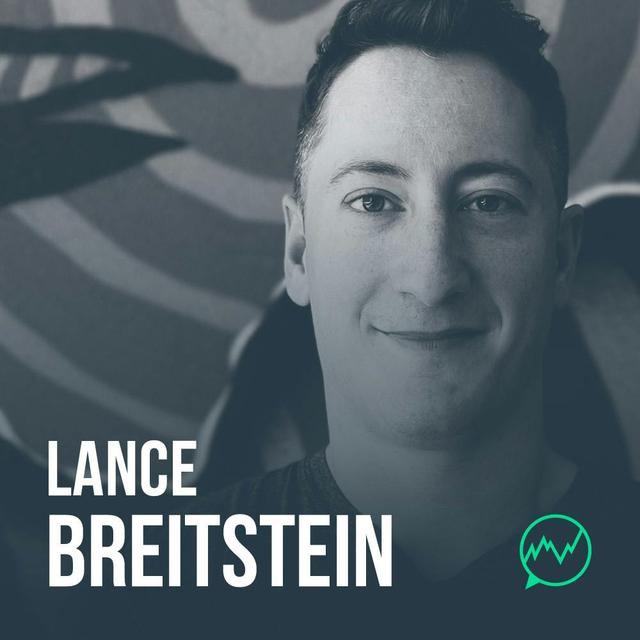
What is good traders? I am pleased to welcome you to episode 236. This is the promised and the much anticipated follow-up interview with Lance Breitstein. Lance was formerly a proprietary trader at Trillium. He earned the rank as top trader in both twenty twenty and twenty twenty one after consecutive eight figure years. Also setting the firm's all-time PL record.
As many of you are already aware, Lance was only on the podcast a few months back, but that was actually an interview we'd recorded a few years back and had been restricted from releasing. However, this conversation you're about to hear was recorded after the close, 13th of June, 2022. Which is worth noting as we open things up by discussing a negative 4% day on Nasdaq and trading with broader market context.
I then have Lance expound upon several trading concepts that have greatly attributed to his performance. The Broken Sline, The Right Side of the V, and Channel Fundamentals. Furthermore, Lance later shares wisdom for exponential bet sizing and ways to accelerate the learning curve. The last thing I'll say, links for everything that Lance makes reference to, including links to our previous episodes, can all be found in the show notes at chatwithraders.com slash 236.
And now, please enjoy. I consider this to be an extremely valuable episode. Here is part three with Mr. Lance Breitstein.
¶ Market Decline and Trading Approach
Alright man, I'm gonna hit record here and um first thing I'm gonna ask you is like what the hell happened today? How'd you go? So what the hell happened today is a good question. So obviously the market has been weak based on the rising Fed interest rates. Valuations were probably overblown to begin with.
So amazingly, what I thought was going to be a boring year after the last couple is pretty much another banner year for overall market volatility. And this weekend we saw Celsius, one of the crypto lenders. halt withdrawals which created a panic in crypto. And I think nowadays what what happens is is crypto is really just a a risk asset. And it Between the futures and and and everything else, it's just innately linked to overall risk assets like the SP and the NASDAQ.
And so I think when you get an implosion in crypto world, it kind of just shifts over and implodes tech and then brings down just all assets globally, which is kind of incredible. So everything's just car lighted now. Yeah, it's it's and I think a lot of that probably has to do with just the scale of investments in crypto and then I'm sure linking up the futures. Um, I know there's a lot of people out there probably arbing some of that stuff.
So what was today like for you? I mean, just for a little bit of context for the people listening, uh what, Nasdaq's down four percent or something like that today? I mean, was this a busy day for you? Did you have a lot going on? Yep. So it had the potential to be a busy day where I I I pretty much cleared my schedule and wanted to make sure that if something crazy was happening, I would be able to capture it. And
So kinda like to your surprise when when I mentioned that I didn't do anything so crazy, uh a lot of this goes with with me not wanting to fight the trend. And so for right now, however you base or define the trend, which which I would say first of all, we're making uh just daily lows uh on the NASDAQ and even the SP.
And then additionally, on an intraday basis, there were just no uh it we were just steadily weak. It was a lot of uh lower lows, lower highs. And what I wanna see is if we're gonna do that, some type of major flush out. And despite the huge move overall. We really never got that flush where uh volumes weren't really that elevated and uh a lot of the characteristics that I need to see that capitulation were not happening. And that always takes people by surprise because they think
uh just just simply based on price, I would be involved. But but really none of my decisions are price-based decisions. It all needs to be in conjunction with uh price over time and and volume capitulation. So if the move is is what I call like a slope of negative one where you're just steadily decreasing, I will have zero shares and and not want to fight that trend, which is which is largely what happened today.
¶ Trading With The Trend Strategy
So you're saying you don't want to fight the train, but is there anything in you that kind of wanted to go with the trend. Like I know the everyone kind of knows after our last interview you uh gravitate towards these capitulation trades, but you know, I know your playbook's a bit broader than that. Is there anything in it that sort of gets you into trades to go with the trend, or you were just happy to be on the sidelines today?
Oh, sure. So I mean that's a great question. And so despite being now known as a capitulation trader and that's one of my specialties, uh, I I very much will will always try to go with the trend when I can. But the key there is I I still need a proper setup. And so in this specific instance, uh, first of all, like big picture, we're just way too overextended over the last couple of days.
So nothing like I think you would have to be insane uh to start thinking short today just because of how uh extended we are over the last couple of days. That being said, if something if something it consolidates at a level And then breaks down from that level, I will absolutely consider going with that trend and vice versa to the upside. Um, so it's not that I just do capitulations, but uh it's more so capitulations allow you to be reactive.
and are highly probable and and and and profitable in some of those situations. But I would I would say I've I've Done a great deal of trading with with that trend as well. But I I really need that set up. And in this case, yeah, just just too extended from from anywhere I'd want to be. Because one big trend overall is in in my trading.
is I need everything to align. I need it to be a buy on the intraday. I need it to be a buy on the daily. I want everybody on every time frame screaming bye. And so right now, as far as a short with the trend. you have too many people thinking long because it's just too big of a move. So that's that kind of that helps me avoid a lot of the the wishy washy choppy stuff and and helps me get my win rate up.
Yeah. That I think was a really valuable answer, talking about sort of the the larger context. You know, we've been down, down, down for the past few days now, you know, to be looking at entering new shorts. um sort of becomes a lower probability trade, right? Exactly, exactly. And What so many people miss, just just as I've as I've been more in touch with with the Twitter crowd and and everything else, is
There's many ways to skin a cat, and there's not necessarily any right, any wrong. People can do many things different from me. But the biggest thing is that when everything aligns, Your probability just goes through the roof. And so a lot of people that are struggling with consistency, it's because they're not really getting enough people on their side as far as like.
Just I want I want the hedge funds to be buying, I want Warren Buffett to be buying. Good old Warren, uh thank God a couple of years later through COVID he's he's still kicking and I can make an example out of him every every time. And uh I want Warren Buffett to be buying, I want the hedge funds to be buying, I want the intraday traders, the swing traders, I want everybody to be saying, Holy crap, like this is a massive opportunity.
And and right now with that short, there's too many people like myself thinking by. In fact, like to be this overextended, it's funny, I reached out to Twitter today and and asked, can anyone crunch the stats?
And there are only thirty other times in history when we've done a ten percent move in three days. So it's it's it's a pretty incredible move and then statistically uh the the Twitter user that responded to me, he even the numbers and and found that there's actually positive edge uh in across those data points that the market tends to bounce from there. So to start thinking short now, it's that's that's why
you end up with with poor results uh for people that do that, it's because you're just chasing and and the odds aren't skewed anymore. It's it's so against you at this point. You know, that the pendulum swung too far to now think that way.
¶ Exceptional Market Opportunities 2020-2021
Yeah. Yeah, I think that's a hugely valuable answer. Anyway, Lance, um, you know, last time we did the podcast, uh, what was it like? when we actually recorded it, I know it only got released a few months ago, but I think when we recorded it must have been, what, two, three years ago. What has been happening since? You know, what's been going on since we last left off?
Yeah, so what a wild ride it's been and I can't believe the just just how popular those episodes were and and thank you for the platform you've given me to promote trading knowledge to the people uh together. Uh We we brought a lot of a lot of knowledge to the people and
So I would have never imagined what was gonna come right right after we were speaking because it was it was probably a couple months before COVID and the craziness of the years. Yeah. And so as as you've mentioned and and appended onto that podcast. So the market went nuts and I was really hitting my stride of my career where I was I was zoned in. I was I had all my reps, I had all my experience, and I was in just the perfect position to capitalize on that.
And it was one of those things where if on a normal slow month, and nowadays people forget just how slow the market can can normally be, but on a normal month, you might get just like a couple big plays. And and maybe maybe you get a couple pocket pairs and you really just try to do whatever you can with with 10 Jack most weeks. And 2020 and 2021 were pretty bunch just nonstop pocket pairs every single day.
And so that market was a learning opportunity for so many people because you're getting probably 10X, 20X, 30X the reps. And then if you're experienced, you're just able to to play the best hands. You know, it's like sitting down at a at a poker table and all you get is just fire hands. And so when that happens, um what was so great is is myself and and other top traders around me, we just knew like this is this is it guys, like this is a Super Bowl for us. And
And everything else became second priority. It was time to perform, it was time to take full advantage of it. And every single day you you wanted to go in there fully focused and and maximize the size and really uh as they say, make hay while the sun is shining and So so pretty much I I ended up doing that and just put up some some banner years for for their for the firm. Uh was was top trader in 2020 and 21. And a lot of people on Twitter have asked.
Like what what do some of those opportunities look like? And man, I would just say they ranged the full gamut. It's obviously there were a lot of capitulations. Um AMC and GME were some incredible tickers. But the thing to keep in mind is pretty much every single day you have stocks just going so far in every direction.
I mean I remember especially in March, you had ETFs that were just trading at massive d discounts to their net asset value, stuff that should never ever happen, you know, because again, we're not talking closed in funds. We're talking fully arbitrageable Uh just ETF.
Uh like I remember there was this crazy blowout in in GDX and GDXJ, where they were just some of the most liquid ETFs and largest ETFs in the world, but they were just trading at just egregious, egregious discounts due to forced liquidations. So it was just the time of of just an exhilarating time and an just a once in a lifetime opportunity uh in in the career of a day trader to capitalize on.
¶ Capitalizing on ETF Dislocations
Okay. Hopefully it wasn't a true once in a lifetime opportunity and there will be other instances like that to come. Uh, what you just said there at the end certainly piqued my interest. Can you talk more about that particular trade? ETFs trading, what was it, way below their net asset value. How do you arbitrage something like that? Yep. So what happened essentially is
It was such a panic and such liquidity crunch and some people wanted out of these things regardless of price. Some people were of course margin calls and and everything else. And so what we saw all across the financial markets, whether it was debt, equity, whatever. is everything was just being liquidated. And so obviously as an ETF, you have your net asset value, which is the value of the components based on their weightings. And so realistically you should never
sell below that or above that just because you can arbit out against the underlying components. But what happened was the markets were just so broken and just so disconnected that GDX and GDXJ were trading at like 10% discounts and stuff. And this wasn't for for just small size. This was like all you can eat. You probably could have parked uh 50 million, 100 million, hundreds of millions of dollars. Probably even billions of dollars across all the ETFs that were dislocated.
And and then theoretically you can short the underlying components, right? So if GDX is made out of, you know, call it five tickers, just for example's sake, um, you could buy the underlying, which sorry, you could buy the ETF, which is at the discount. then short the underlying holdings and theoretically that that spread will converge when the market gains rationality. Um but I think people were just at a shortage
of of capital. And so here's the other thing is ultimately to do those types of trades also takes a massive amount of buying power. So whereas some people might arbitrage that, I largely would do something like that just purely um just purely naked. And so the funny part too is you almost don't even want to hedge out the other side of it because even the components are just getting clobbered so, so, so, so much.
Where it's like if even the components are panicking, yes, they might be, yes, the ETF might be at a discount to the components, but it's like, man, once once people stop panicking, all of this is gonna bounce higher. And and part of the funny part of this too and the craziness is is gold is generally a a safe haven asset and nobody cared about price. It was just get me the hell out.
And once once that panic kind of abated, those GDX and GDX J just went went went to off to the races to the upside. So you said your trade, you weren't arbitraging it. You were naked on one side. Which side was that? Were you short the underline? Just just long the just long the ETF. Long the ETF. Okay. The funny part too is uh when I went long to ETF the next day, you're I think it was over a weekend even and you're just like, Well, this is
Pretty much free money. And sure enough, like the next day the market was down and the spread got blown out even more. Where it's it it really was one of those periods where Uh, I think it was John Maynard Keynes who said uh the market can stay rational longer than you can stay solvent, or sorry, irrational longer than you can stay solvent. And this was one of those things where for many market participants,
Uh you could you could think you're a genius buying GDX at a three, four percent discount, but that doesn't mean it won't go to ten percent, fifteen percent and and so on. So you really gotta be uh smart about your exposures and and and everything else in those times because because realistically anything can happen in the short term. Well exactly. So that just makes me wonder like why you didn't want to treat it as an arbitrage type of trade.
You know, it's largely just due to the BP intensity, the buying power intensity, but I would I would also argue that you run the risk of Weird, so many weird things were happening where you couldn't be so confident that other stuff wouldn't get blown out either. So you're also opening up to the risk that that spread will will just open up more. So maybe GDX.
and the ETFs will go lower where maybe then people buy the individual stocks or maybe someone that's trying to ARB that gets blown out and has to unwind. So you you I'm not so like it's only all risk-free if you can theoretically just hold. And that being being a day trader that really wasn't. um something I wanted to be tying up my buying power. And so I was much so more so trying to kind of make pick my spot when it reached just peak insanity and and and get some immediate relief on.
Gotcha. Okay. Yeah. Have you ever watched a stock explode and thought, if only I had the capital, or sat on the sidelines because your account balance felt too small to matter? Good news. With Trade the Pool's limited risk platform, you don't need millions or even thousands to start trading the U.S. stock market. Bypass the PDT and tap into over 12,000 U.S. listed equities.
From penny stocks to big caps, ETFs, even the newest IPOs, and short anything you like, with zero locate or hard to borrow fees. Start your evaluation, get funded with up to$200,000 in buying power so you can go big without risking your own savings. And now you can also have unlimited time to reach the profit target. It's a game changer. Not ready to trade yet? Trade the pool offers a free demo and educational resources.
Practice on live data, master the platform, and build confidence risk-free before you even pay a cent. Click the link in the show notes to start trading with Trade the Pools Capital.
¶ The Broken Slot Machine Concept
Lance, since you've come online, uh you've been sharing a few ideas and a few concepts. I think it would be a really good idea if we can kind of flesh out some of those. And one of those being the broken slot machine concept, which I think largely plays into stock selection and I think also ties into kind of what you were talking about earlier. picking those really good opportunities during the past couple years. So can you speak to the broken slot machine concept?
Yep. So this is one of my favorite concepts. And essentially what I say is You want to find if you go into a casino, you don't want to sit down at the roulette table, you don't want to sit down at blackjack. There's infinity games that have negative expected value, right? But now what happens if
There's a casino where maybe every day or every so often there was some machine that was broken and just had drastically, drastically better odds. You would have to be insane to keep on sitting there playing blackjack roulette or a normal slot machine and The reality is, is that's what a lot of people do, right? So there might be people that only
specialize in one type of stock or there might be people that only trade tech stocks or this or that. And the reality though is that's ludicrous because a lot of the time most trading is just noise. In a in a universe of thousands and thousands of stocks and securities. probably each day. There's maybe only five to ten of those that offer really significant edge. And what I would find though is people would just be so ingrained in their habits or just
people would label and identify themselves as X kind of trader. And I thought Labeling yourself as a type of trader is asinine, right? Like, I don't want to be the capitulation trader if IPOs are like printing money. I don't want to be labeled as the capitulation trader if breakouts and low floats are are doing a lot of money. So I really want to move to wherever the most edge is. And so that's my analogy is you need to find the one that's broken and offering the best.
odds. And what that might look like is uh it could be because of something having breaking news, or it could be because of earnings, or it could be because of a technical pattern, or it could be uh because of panic and it could be a capitulation. But like the more I meet with with with traders or like help help people out over the internet or in some of the mentorship I do, uh, you find that that people don't do a good enough job of just finding that play that offers edge.
And if you're guess what? You can be the best roulette player on Earth. You can be the best blackjack player on earth. Or the best slot machine player on earth. And guess what? You're not making money. That will never ever help you compared to finding the stock. or the slot machine with just drastically incredible odds. In fact, often if you're in the right stock, you can even trade poorly and still do well. It allows so much room for error when you're playing a game with meaningful eggs.
And most people, before they do anything, they need to first make sure they're playing something that isn't just noise because there's so much of it in the stock market. In one of your like uh reports or sort of reviews on one of your trading days, I think you use the word it magnify magnify, like it magnifies your edge, which I thought was really um
¶ Morning Prep for Edge Trades
Such a great word to use. What is your morning process each day for finding the broken slot machine? Yeah. And so even to touch on that real quick, I think one of the places where I mentioned this online on my Twitter was I posted my Carvada MSTR write-up. And that day is the perfect example of this concept.
If you were trading a random stock, of course you're going to have negative expected value. And to do better than a random stock, maybe you might trade the Qs or Tesla that day or Apple because they were a little bit more in play, a little bit more volume. And so that's one step closer, but that still wasn't the best slot machine you could have picked. And so what's so fascinating about that trade write-up is I ended up trading three tickers out of the whole universe of stock.
And it just so happens that my tickers, when they bounced, the market and the Qs and Apple and Tesla, all of those rolled over to lows. My three tickers did not. And I would argue that that is exactly what I mean. Where when you're in the right game, it magnifies your edge and gives you that cushion. If I had just simply chosen a less extreme and a less good slot machine, I would have been stopped out and taken a nice size loss rather than having a massive gain. And
So by being at the right game in that write-up, that that changed the whole trade for me. And that stresses the importance, right? Because you can do everything right, but if you're in the wrong game, you're still gonna lose. And it's such, such, such a big deal. And so you asked about my morning routine to spot some of these things and identify these things. Um
So first of all, a lot does come down to that prep, especially in this type of situation. Um so even beforehand, I was studying these tickers and in that write-up I mentioned probably a lot of people weren't doing the legwork like I was doing. With MSTR, which holds Bitcoin, uh essentially, I mean it's it does it's it's really kind of a software company, but it largely holds Bitcoin as as part of its assets and and moves with the price of Bitcoin. Um I highlighted in my write up
that MSTR, despite largely being a Bitcoin tracker, was down two X the move as the price of Bitcoin. So if you want to talk about a cushion I could very well potentially have bought MSTR and there was so much cushion where in the long run potentially, if Bitcoin went another 25% lower, I might still have broken even. And if Bitcoin bounced, then the upside would have just been incredible.
So part of that morning prep was I was studying these. I was looking at the charts. I was analyzing the daily charts. I was analyzing the volume, the volume turnover as the percentage of the float. I was um thinking about the risks involved, I was thinking about what prices. I would want the most. So a lot of it does come down to that morning routine. And a lot of it is also being aware of just what's in play and what's working. Um
If the market's melting and you're, you know, thinking, ooh, like my slot machine is gonna be breakouts, uh, you're probably playing the wrong you're probably playing the wrong game. Uh that being said, there are times when when IPOs all just have incredible follow through or there's times when IPOs all just melt and they can be great shorts. So a lot of that is is being aware of what's working in the market.
what's offering the most edge and um and really taking the time to make sure you're you're in the right stocks because if if you're not, then you're you're done before you even start. So you use this example here of three tickets you traded during a um that you wrote about in that report.
Do you have another example? I'm just, you know, because I know this is such an important concept to you. I'm just thinking if we can sort of really drive it home. Is there another example you can think of, you know, where you did a good job of identifying, as you call it, the broken slot machine for the day.
¶ Tesla Trade During Ukraine War
Yeah, sure. Even in some of the the prior NASDAQ panics this year, there is there's a big difference between uh playing a A stock that isn't that moving that much. Or I think back in February, there was a time where I played Tesla and the market was down a couple percent, but but Tesla for whatever reason was down like 50, 60 points. I think it was gapping down to like 690.
And this was the case where it seemed to be down so, so, so much more than the market and making such a large move, despite Tesla actually being generally a very, very great bouncer. And this was the case where we then also had a sell imbalance. And I was thinking in my head, oh man, I wonder if this is just somebody that's that's really panicking out of this thing. I ended up buying and taking the other side of that imbalance. And sure enough.
The second that that imbalance and that the market opened and everything crossed, Tesla just took off like a rocket. And what I essentially was doing was I was buying a ticker that was so much more overextended. Then the market. Oh, you want to know actually what's even more ironic about this move is this move in February was on the back of the Russia-Ukraine invasion. And
So oil prices were spiking that day and all this was shooting the market down. And so you also have the added layer of irony that, like, wait a second, if oil prices are going to the moon and we're gonna have this this war and gas prices are up, um If anything, you can make the argument that that stimulates more uh electric vehicle demand. So from many layers, you start to build uh all this cushion and this logic behind buying Tesla rather than buying the NASDAQ.
And when you end up doing this properly, it doesn't just magnify your reward, but it also reduces your risk. Because there's many situations where when you're in the right slot machine and playing the right ticker. The market can panic or sell off further. And so often your ticker will end up staying flat. or at least greatly relatively perform. And so, so really it's not just a matter of higher reward, it's also lower risk and even better probability of outcomes, which is so, so important.
Okay. I just want to make sure that um I sort of understand what you're saying there. Um, it it's interesting because, you know, when the whole war in Ukraine initially kicked off, like everything was down though, wasn't it? Like the whole market was down. So is that, you know, probably plays into Part of the reason why why Tesla was down, right? Yeah. So why were you like looking to buy?
Yep. And so, and I'll I was able to even just while we were talking, look up the date. I think we're talking February 24th for just more clarity when people listen to this. So much of what I do is again, it's not just about price. It's about price over time. And so if people end up pulling this Tesla chart. Something like five days prior, so so on on February seventeenth, Tesla was at around nine twenty. In a matter of five trading days, we're now gapping down sub seven hundred.
In a straight line, all down And so it's not that 700 is some magic price, but it's just that we went there so far so quick, right? Did the long term uh expectations for for Tesla probably really change over 20% in In a matter of a week? No, probably not. And
So the reason why I'm thinking that is just because it was so far so quick. And so even even as we record today in in a period of market environment and for and for the viewers and listeners, this is uh June thirteenth after, like you said, the market was down uh four four plus percent or so. And so the reason why today or these days I even have a long bias, it's not because the market was down so much, but it's more so because
the market and the NASDAQ was down over 10% in three days. Like those are just stunning moves when when what what really changed? uh in the world so quickly. You know, like it's it's it's price over time is the magic that that everything needs to be viewed in, not just price. Okay. Very good.
¶ The Right Side of the V
Let's keep moving now onto another concept. And again, this is one which you've shared online, but I think it would be good if we could flesh it out a bit more and this is probably just gonna further uh increase your reputation as the capitulation trader but Speak to me about the right side of the V. There's many worse reputations I could have area, so I I thank you for at least a relatively good one.
So the right side of the V was a post I did, and the point I was making, which is often a little bit misinterpreted, was simply this. You can buy in two different times. the same price and in those different times they will have drastically different expected value. So the image I used to display this was A V and buying on the right side of it at the same price. And so in the case of the V, when you wave for the right side, a lot of things happen.
So, first of all, you now have a stop-in that you can use at lows as opposed to no stop when you're buying on the way down. And the second thing is not only do you have a stop. But your probability of success is higher because now you're going with the trend rather than fighting with the trend or fighting the trend. And
So many people often miss the point. They say, like, oh, like in your chart you drew, like you only know that it went up after, uh, in with with the benefit of hindsight. But those people aren't understanding that like it doesn't matter What happens after? Like, regardless of the outcome, in that moment in time, you still have a stop.
And you're now going with the trend on the way up rather than the way down. And there's many ways without hindsight that you can define being with the trend, right? Like maybe you broke a, maybe you broke a downtrend. Maybe you're making higher highs and higher lows. Uh maybe price is just simply going up rather than down. So it's very much not hindsight biased. And number two, the other thing that
that I think people fail to realize is it's not just about waiting for the turn. This concept applies to so many different situations. So the example that I like to give is also in breakout in breakouts or in breaking news. And if you have some stock that's setting up with a really, really nice level, some nice resistance, uh maybe at 10 bucks. I want to buy 1001. I want to buy right when it breaks if it's a really, really good setup. And in the best setup,
In my opinion, that stock will just be gone. Everybody else will scramble to buy. It takes off, pushes away from the level, and you're in the money and it's never looking back. And if though I were to only buy the ones that come back and I buy ten oh one after it fails to go or af if it's just putzing around somewhere.
I might be buying 101 and it's the same price, but my but my probability outcome and like the the reward and everything is just so much different than when I bought it initially. And an even more extreme example of that is in breaking news. If I were to tell you um You know, all of a sudden the Fed isn't gonna raise interest rates. When you first buy the market.
If I can buy uh from flat those prints, I have amazing expected value on that. But now if over the course of 10 minutes or 30 minutes or an hour, that price makes its way back. That's not the same expected value as when that news first hit. Because now people have digested everything, and for some reason, we we're still coming back.
And that's just a totally different situation. In fact, now you would need to worry like, oh man, what am I missing that that that price is coming back? So it's not that it's hindsight or anything else. It's just simply saying that the expected value is different despite Uh situations where the price can be the same. And that's so important to recognize because people often don't realize how how much their probabilities are changing of success.
¶ Understanding Trade Expected Value
So I notice you use the term expected value quite a lot. I think it might just be helpful for anyone listening um who perhaps doesn't quite have their head around exactly what you're referring to there. So, I mean, what does it mean for you to kind of think in terms of expected value on a trade? Yeah. So expected value math really is the basis.
of of everything in trading. Whether people recognize it or not, or whether they're familiar or not, it is the fundamental driven thing and essentially what is what is a betting game, the same as it is in poker or anything else. And in fact, when I was doing some some mentorship with with SB Capital, I I even said this, which which I stand by. Trading can be summed up in just two sentences. Are you able to accurately assess the expected value of a trader opportunity?
And then are you placing your bet size accordingly? And I think that is literally everything this job comes down to. And so expected value is what are you gonna make when you win? times the probability of winning, then you subtract out what you're gonna lose and the probability of of loss when you lose. So that applies to anything from coin flips to uh rolling of of
of dice to poker to blackjack to everything. And what you realize though in a game like poker, where the universe of of opportunities is is pretty clear because everybody knows the different hand combinations. When you have pocket aces, for example, you know that your probability of winning is way higher. And as a result, your expected value of that hand, essentially, if you were to play that hand a thousand times, what are what are you generally going to win?
And when it's way, way better, you need to make your bet size reflect that and bet drastically more. And so expected value and your ability to accurately assess it. really comes down to every single thing you do in this job. Every single trade you put on, every single thing you, every single sizing decision, it all comes down to are you doing that according to the actual true expected value?
But with trading, it's quite hard, right? Because those variables can be way harder. There's times where you might buy a breakout and you don't know what the reward is. So, unless you have a target, filling out what that reward is can be quite hard. We might just need to estimate. Um, if anything, the easiest one generally to handicap is simply your risk. You know what you're gonna you lose if you're wrong because you just know what your stop is generally. Um
But the other part that makes it extremely hard is there's a very wide probability spectrum. Unlike in poker or in in in flipping a coin or some of the other mathematical just just thinking exercises, the spectrum of what can happen is enormous in in trading, right? It's not like chess or checkers or anything else where there's just an unlimited essential range of of outcomes. And What you need to do essentially is you need to use your experience.
And have a lens of viewing price action. And there really is no other way around that other than experience and reps. And so then when you've seen enough experiences and you have your lens. uh of how you view price action, you can start to say like, okay, like this range was maybe two points. We just broke out of the range. My rough Uh
My rough assumption is we might go a symmetric two points. I think there's a 30, 40% chance of that. I know my stop is just gonna be right below this level. So the best we can do is just handicap these and and estimate. And that's where the beauty of trading comes in is nobody really knows uh the answers because every situation's different. All we're doing is taking our best estimation based on our experience analysis and and any data we've collected.
And and that's what makes the game just just so wild is you never even know in retrospect what the expected value of a play was. You're always left guessing and refining uh even while markets change. So that's what keeps This game just so challenging and and so adaptive for for so many people.
¶ Applying Right Side of V: MSTR
Can you give an example of a right side of the V trade? I'm just trying to, you know, be it'd be nice if you could share uh sort of a real world example of where you've kind of waited for that that little turn. I don't know if maybe MSTR, I know that's a trade you wrote about in your report, um sort of dropped from three hundred to I think about hundred and fifty dollars. Is that right in four days? Seems like a huge trade. Oh indeed it was.
Exactly. So I know that's something you came in and bored, but you know, how did you time that? Like how did you I presume you waited for the right side of the V, right? Yeah, absolutely. And So what happens with this is it really, and again, my way of defining a change in trend isn't necessarily what's going to be right for anyone else. There's many ways to skin a catch.
Uh, you know, everyone will think I have the magic answers when when there really is no magic answer,'cause there's there's many of them. And what I say might disagree with other people, and the amazing part is we can all be right. And So for me with MSTR, um this stock was was clearly melting, just quite quite a large amount, as you said. And what I wanted to see was
Essentially, what I might use is things like a break of prior bar highs on my two minute chart. Another thing I might use is potentially a break of a moving average. Uh you know, there's many different different ways to define it. It could also be a trend line and you really don't know how it's gonna pan out until you actually uh you know, see it see it in real time. That's there's always just gonna be uncertainty. So in the case with with MSTR is we sold off aggressively off the open. Um
The market was you know, essentially everything was going lower off off the open. And I think I'm trying to pull up the chart real quick just so I can give a better answer. I do think we had a little flush right off the open and a little bounce. And so maybe I can't tell just from this picture, but maybe you did break prior bar highs, maybe you don't. But really what what did it for me.
was at around 845 or so, a lot of stocks went to the uh upper limit, which in the US markets, that's just essentially a volatility halt where there's just so much excess demand and the stocks moved up so quick. Uh so far so quickly that they halt the stock. And So for me it's never just one thing, it's a confluence of everything.
And so MSTR was selling off very, very, very aggressively. Well, everything else, uh, you know, Bitcoin wasn't really making the move like it was, the NASDAQ wasn't making the move like it was. So then once Carvana and and I think Beyond Me and some of the others went to the limit up, MSTR then broke two minute prior bar highs. And that now was going to be essentially the right side of the V.
And so to the critics that say, oh, it's all hindsight, so that's my entry, right? Once I'm once I'm getting along above those prior bar highs, anything can still unfold, right? Like it could still go to lows. We could sit there flat. Um all I'm simply saying is now I at least have a stop and now the trend is going higher.
So that that is essentially waiting for the waiting for the turn, right? Because otherwise I could have been buying 150 off the open, 145 off the open, 142. So it's not really just one. one thing in a vacuum, but it's how do all these variables and all these nuance come together to then trigger kind of that that that buy signal. And and when when I'm waiting for that to trigger, right? I'm only doing it once we're bouncing rather than when prices are going down and the trends against me.
¶ Benefits of Waiting For Turn
Yeah, I think this is really valuable because it kinda it almost like when you first hear, you know, I'm buying capitulations, it it it I mean, for me at least it initially it kinda sounds like you're coming, you're trying to pick the bottom, you're trying to buy the bottom and, you know, time it but you know, this concept right side of the V it's almost like helps to
reduce the risk of being too early, right? It sort of moves the objective of the trade from trying to, you know, pick a bottom to actually, you know, trying to identify a a turn, I guess. Yep. And and what I would find is, because ultimately all this comes from experience, right? None of these things are theoretical. And what I would find is before I waited for the right side of the V and waited for the turn.
is so often buying on the way down, one of two things would happen. First of all, if I was doing, if I had a stop, I would end up taking death by a thousand paper cuts. So by the time the stock actually turned, I already would have just taken so many losses that then I don't size properly once it does. Or the other even worse situation happens. If I try to avoid death by a thousand paper cuts.
By just being loose and not having a stop, then you end up where things go much further than you would ever would have imagined, and you end up drawing down so much. and also putting yourself in a bad position before the turn. And so what this really does is is it forces you to be patient and have and and and wait wait for that turn beforehand. And it's kind of counterintuitive, right? Because like
you do risk potentially not getting the rock bottom prices. If something just purely flushes out and and and you're kind of waiting for that that turn, yeah, you might get like a little bit worse price. And what I found though is your probability of being correct and the benefit of having a stop.
Just escalated my trading results so, so, so, so much. And the other thing that that people will say is like, oh, but you know, what if what if you can't get the same amount of liquidity on on the way up? And so without a doubt, there is probably gonna be less. liquidity on the way up. But what I found though
And that's so keep in mind this only really applies to to intraday trading world because most higher timeframes you're gonna have all the liquidity you generally need anyways. But so on intra intraday trading world, it is a valid criticism that you might not be able to get as much stock.
But what I found though is so often, you know, first of all, you can get all the stock you you you might want or need. And even if there's some situations where you can't get as much because we're turning and everyone's trying to buy. On a risk-adjusted basis, I was still just so much better off. So I ended up being because you're taking less risk and you're more precise with your entries.
Like you can actually take more risk when the liquidity's there. So this really catapulted my trading higher. Like it's it's not even not even close to how beneficial this was. Wildly beneficial. And that was one of the things that probably made me so effective.
in 2020 and 2021. Like you're just in such a better position to swing huge when you're not drawing down on the front side, uh, when you're not taking a thousand, you know, death by paper cuts. The other thing too is it's just less stress. It's just such an easier style. It's a more sustainable style. And you also lop off all that tail risk of when things go really, really crazy. So yeah, big points are it's not hindsight.
Uh if of course anything can happen once you buy, right? I'm not saying it has to go up. I'm just saying you now have a stop and your probabilities are better. And then number two, it's not just in these situations, but in many situations. uh you can be deceived to thinking it's the same trade just because it's the same price when it's not.
¶ Channel Fundamentals and Pullbacks
Mm. Uh another concept you have, Lance, um, is sort of channel fundamentals, which ties into defining a trend. I don't want to spend too much time here'cause there's a couple other things I'd rather prioritize, but just one point on this which I'd be interested to get your insight on, and I think it's something that, you know, you probably do quite well, which is probably a
largely due to your experience, but can you just speak to holding through pullbacks? So let's say you you buy a breakout or you buy a stock as it's kind of turning. And, you know, you feel as though it has a a larger move that could potentially unravel. How do you avoid getting shaken out, selling too early? Yeah. How do you manage holding through the pullback?
So what the channel fundamentals concept says is it's so, so, so important not to hit out at those higher lows. And it's so counterintuitive to normal psychology. So what happens is all the novice. Traders end up chasing the confirmation and you get all this buying that then exhausts itself, and it's normal to have a healthy pullback. And so all the people that chase.
They end up getting scared. They start to doubt themselves. They don't like not being in the money immediately. And so those people end up hitting out at the higher low, which is the exact opposite. That's where people like myself, if I want more stock. Now that I have the confirmation already in there, when we make that that high or low pullback, which is just healthy and a common pattern to unfold, I want to be buying or adding there. And again, this makes no prediction.
over what will happen in the future. That's not to say that this trend won't break. This isn't to say that I won't get stopped out. All it's simply saying is if you're gonna sell anywhere and get stopped out, you need to give it to the actual lows. rather than selling where very well it might become the higher lows. And nobody's to say how that pattern's gonna unfold, right? Like I might be buying what I think are the higher lows and it might just go right to lows and stop me out. That's fine.
All I'm saying is again, conceptually, you don't want to be the person that chases it higher only to get shaken out at that point before the true stop. And so often in these trends, you see that pattern unfold. uh in in really almost anything that trends because it's just human nature to do this. And and it's really the pros that recognize this pattern and can take advantage of of this behavioral bias by all the novices.
¶ Exponential Bet Sizing Philosophy
Okay, let's shift gears a little bit away from some of these concepts. I know that bet sizing is a topic which you have a few things to share. One of the questions when I put it out there that we were going to be doing part three here, uh, that came through Um, someone said Lance mentioned betting twenty R on a single trade. What's the thought process in risking such great size for one trade? Now I'm not sure if that I presume that I mean, is that something you said?
So I can't off the top of my mind think of of precisely what that might reference to, but I do think The concept is true that, and this is something I work with so much with the traders I I mentor or with some of the guys at S B Capital. Is all the really great traders I know, they have enormous, enormous, enormous skew in their trading. And so when the opportunity set gets drastically skewed in their favor.
When they get those pocket aces, they are not betting linearly. And so what I mean by that, right, is if you have two seven or maybe five ten or s or seven ten and you bet one dollar. And then if you get queens, you bet two dollars. Then when you get aces, you get uh you bet$3, you will not be a profitable poker player. Why is that? Because so many times you're gonna lose on the mediocre wishy-washy hands and it's not going to offset enough when you get the rare aces.
And So What the really, really great traders recognize is on those specific, special, really exceptional hands, you need to bet exponentially. I want to make those pocket aces matter so, so, so, so much that it outweighs all the variants of everything else. And the way to do that is to bet exponentially. And obviously when you're new, you you might not have the same skew. that that you can like an experienced person, but that's part of the progression. And
So here's the thing. There I recognize that there's a lot of people that might just be the consistent single, uh, you know, hit singles, hit the occasional double trader, and that's fine. But If you're gonna do that, you need to recognize that doing so is not Optimal and it's not going to be maximizing your PL. So everybody has their own personal risk tolerances, and that's fine. But there is, and it's it's this is not subjective. It is absolute mathematical fact.
that the better your hand is, uh, you really should, if you want to optimize it, you really do need to bet exponentially bigger. And so what I do with a lot of people is Is this. I ask them to define what are their best set setups. Most people can't even as immediately spit back to me and tell me what their A pluses or their ACEs look like. So the first thing you need to do is you need to figure out
What categories all your ACEs are in and what the examples are. Then you need to build an Evernote or something, a database of what those charts look like. And then you need to rep those again and again so that you recognize in real time exactly when the play is so good. And then you need to figure out how much you want to bet.
And so something I'm actually gonna be be tweeting about at some point is is I would have a note card on my desk. And this would be my little kind of just risk note card where I would, you know, say for like an A, a B, a C how much I want to risk. And so here's the thing. For most people, their C might be one grand, a B is is two grand, an A is three grand. For me, a C
Because I tend to be fairly selective, I might just not trade a C trade at all. But then a B might be five to 10K, but then an A might be a hundred K, and an A plus might be hundreds and hundreds and hundreds of thousands at risk. And what that does is it just allows me to know in my best plays, I can think like, okay, due to these qualities, this is, you know, a B, B plus, A minus.
Hey, whatever. And then I can make sure that I'm risking kind of what I pre set out to do. So because in the heat of the moment, In real time trading so quick and you're you're trying to think so much and you're under so much pressure where you want to try to systemize everything you can and minimize your decisions.
So if I can simply look down at a note card and know like, okay, Lance, like you think this is an A, you think it's an A for these qualities, you better be risking this amount. And all it does is help you be more conscious. about your bet sizing on these plays. And it it's kind of just it's This allows people to just have so much more SKU in their trading. And when you do this effectively,
What can become like a break-even trader? It can just have drastically crazy results. Like this was one of the things that helped me break out so much. and accelerate so quickly is because once I started to know what I was good at and recognize the oppress these opportunities, I was just betting so much on these. And it's just rocket fire when you're when you're betting on the right place.
¶ Managing Losses in Exponential Sizing
Yeah, this is good. I mean, I think for me personally, like this is probably one of the things I need to try and put into practice a bit more. You know, this all sounds really great to hear about it. Um, and sort of I mean, theory's not the right word, but just, you know, it it all makes sense logically when you talk about it here, right? But what happens when you take a loot, when you take a loss? How do you how do you manage that?
Yep. Because as you start to try and implement something like this, you know, obviously, even though this might be a really great setup for you, it might be A or whatever you want to call it. doesn't necessarily mean it's gonna be a winning trade. Yep. And so this is such such an important question. And and I know um so I have a performance psychologist who really specializes as a trading psychologist, essentially the the wendy's of of of billions.
And this is a topic he's been asked a ton. And what I would relate with with this is If this is something you want to work on, like you need to go all the way with it. You need to actually commit and and stick with it. So the analogy I would give is what a lot of people end up doing. is it's like it's like learning to swim, right? And you swim halfway across the pool.
And you say, Oh my God, like this is so scary. I don't think I can do it. Like, oh no, this is awful. And so then even though you're halfway across the pool, you swim right back and for all of your hard work, you get none of the benefit and you never actually made it across the pool, even though like you just needed a little faith. And so what people will do is they say, oh of course I want to increase my sizing and of course I want of course I want to grow and do all this stuff. But Bye.
at the first loss they say, holy crap, this wasn't for me. And so what I would say helps with this is one, being gradual, right? You don't need to become a hero overnight. Uh just just make gradual steps. And then two Expect that you're gonna have doubt.
And it's all part of it, right? Like this is something where if you don't leave your comfort zone, you're never gonna be able to grow. And so it's totally, totally normal that losses are gonna occur. And so often when you're trying to grow, like people might even like Just overreach a little bit and
That the way to view it is that is the cost of growth. That discomfort, that doubt, that is exactly, those are exactly the feelings that actually prevent people from doing the same growth step that you're trying to do. And once you frame it that way, that your feelings of fear and that any losses, any drawdowns are normal, again, assuming you're doing it responsibly, you know, I'm not saying be an idiot and and lose a million dollars and that's normal.
But but done responsibly and with the system and the data to back it up. Um, it's one of those things where when you get halfway across the pool, you need to say to yourself, like, look. This is supposed to be scary, but I've thought about this. I've game planned this. I'm doing this intelligently. I know this is the right path for me to grow. So I gotta keep on growing and I gotta keep swimming and reach the other side. And
that that I think would help a lot of people because what you asked is so, so, so, so common. And I can even think of one specific person I mentor that experienced exactly that. And And ultimately he just had to have this this conversation with with him him his cell himself.
And and and Jonathan Katz was was guiding him through it and he recognized like, look, growth is important to me. And look, yes, I I have been taking losses, but I've been taking losses for the right reasons and to pursue this next step. And and That discomfort is what I need to be there. And I will keep on swimming to the other side now.
¶ Practical Exponential Sizing Advice
Hmm. I was gonna ask you, but I feel like you've probably already answered this to a certain extent, like If someone can clearly lay out what is their kind of ideal play, you know, and they want to start betting exponentially larger on those particular plays What's an example of an exponential bet? Yep. So here's here's the number one thing I would I would recommend people test out on this. Figure out, estimate roughly how much you you are risking in your C trades.
Figure out how much you're risking in your B trades and your A trades. And look, I know people are gonna argue, what about the B plus, the A minus? Like it's it's just the gradient, you know? And This will transform the average novice's trading. Whatever you're risking on a C trade.
Transform that and make that zero. Just stop risking, just stop trading the C trade. It's not worth the headache. Uh and again, it's all subjective. Uh people are gonna say, oh, my C might be your B. Like I get all that, but but just go with the concept for you. Uh you always get in these like crazy Twitter debates where it's like, you know, just just work with me here, people. You know, so whatever your idea of a C is, just stop trading it. All that risk.
Just save that risk for your A's. And so now on your little risk scorecard, your little note card. Whatever your A's are, bump them up. You can even leave B's the same, but just do some kind of bump on the A's. And Look, look, if you're really experienced, you can allow it to be very exponential. But I I get it. If if you're a couple months in, a couple years in, you don't have the same uh buying power flexibility, you don't have the same uh risk limit flexibility, the share size flexibility.
But just move in the right direction, right? We don't need perfection. We don't need massive lead. Just each day and each week and each month move a little bit closer to this exponential bet sizing. And then the more experience you get, exaggerate it. And this one little task or this one little kind of hack I think can really help transform a lot of people's trading. Excellent. Yeah, I think this has been a good segment on bet sizing.
¶ Accelerating Learning Through Deliberate Practice
I know, Lance, the last thing you wanted to speak about or that we'd kind of mapped out in our talk here, accelerating the learning curve. Obviously everything we've just discussed could be sort of packed into this. or falls under this banner, I should say. But I think with regard to accelerating the learning curve, one of the things which you can speak to quite well is kind of optimizing your time.
So optimising your study time, for example. So, you know, in the in the case where let's say someone, uh, you know, an active day trader has about ten hours per week that they can dedicate outside of market hours. How would they best be suited to use that time? Like what's the most effective use of those ten hours per week outside of market hours? Yep, great question. And so a lot of positive feedback I got was on meta learning. People wanted to hear more. People wanted some resources. Um
Some books I would recommend. Uh Peak by by Anders Ericsson. Uh I believe the other one was also talented is is overrated. And a lot of the meta-learning focuses on deliberate practice. How can you get constructive feedback so you know what to be focusing on. How do you then get the reps and the experience, mindful, conscious experience? real world lifelike scenario experience that you can then uh get reps on, reflect on, and improve. And so even if you even if you read um
Man, it was I think it was the swing coach for for Tiger Woods. In his biography about Tiger, he talks about Tiger Woods would never ever hit a ball. at the range or anywhere and then not reflect on the shot. So whereas most people might go to the driving range, especially if you're a pro and you're hitting, you know, ten thousand balls a day or something.
People would just mindlessly hit, hit, hit, hit, hit and get nothing done. It wouldn't accomplish anything. And he would say that he never once ever saw a tiger mindlessly hitting. Anytime he swung that club and hit that ball, he was thinking about that shot, reflecting on it and thinking what he could have done better. And all these concepts apply to trading. And so one of the most important questions is what is the most effective use of your time? And
¶ Effective Trading Study Practices
Really, you need to be in the weeds studying the best place. And so so many people spend a lot of time studying noise and not studying the broken slot machine. Uh when really all you want to drill down on are what are the like Like and I I used to say this all the time in my office, like stop focusing on two seven. You know, like some amazing trade would happen and then maybe three hours later there's like
you know, s something in a different ticker, some small little thing. And it's like no no no no no. Stop stop asking me about two seven. Stop asking me about this trade. The the best Broken slot machine is right in front of you. That's all you want to put your time on. All these other 510, Jack, you know, Jack 9.
Just just forget those even exist. Do not waste a single bit of your time on those other than to know, okay, everything else on this universe doesn't fit what I'm actually gonna study. And so what I would do with those 10 hours. is is some mix of the following. Um So, first of all, I think a DRC is a highly effective process. What is a DRC? A DRC is the daily report card. I know SB Capital has a lot of blog posts on this.
And so what you're doing in a DRC is you have one objective that you wish to improve on. And not three, not five, not ten. You pick one thing. What will be the most effective thing you can you can improve on. And each day you reflect on your day and grade yourself based on whether you accomplished that. And so that is an app that is a practice I would be doing daily. Another thing I would be doing is every big trade, I would be writing up in very high detail.
Again, I'm not writing up the seven two. I'm not writing up the jack five. Not that not that those Not that it's not useful, but just because time is always limited, right? It's a limited finite resource on when we're maximally focused and fresh. So I would be writing up the aces of each week, the pocket pairs of each week in extremely high detail.
Um the other thing I would be doing, and I posted about this and did a video with with SB on this, is I would be recording my trading screens throughout the week. And every time there is a really big play, I would be trimming that video and building this database of what those big plays look like. And I would just be wrapping that again and again and again. Um, I guess if the fourth practice.
would be to get some type of of feedback from from a mentor or a better trader than you or even uh someone on your level, just someone that can help provide constructive feedback. And All of these practices I think are probably some of the most scientifically backed ways to get better because essentially you're studying the stuff that has edge in extremely high detail.
You're deliberately trying to improve on the most important thing each day through the daily report card. And then you're constantly getting feedback, both from the market in the form of PL, but also ideally from a mentor. And And so on that topic, like I can't stress enough how important it is to have um the proper environment.
And I know retail traders say like, oh, like, you know, I don't work for a firm. I don't have that type of mentorship, that type of environment. Well, like, you know, first of all, I would do everything you can do to get that. Um because it's it really is that important. And then if you can't work for for a firm for whatever reason, you need to do your best to build that. And so whether that's joining some of the the reputable
uh trading online trading groups or just finding a mentor. Again, how do you find a mentor? The short answer is because people always ask, you need to first provide value to them, get creative, do the thinking, do the legwork. There are ways out there. And like if you follow these practices with the guidance of a mentor to help refine you and hone where that time should be, I think that's really uh that's really just a recipe for success in a very short amount of time.
¶ Atomic Habits for Traders
This is another question that came through online. You're a big advocate of atomic habits, the book by James Clare. And this is something you spoke about on the last uh podcast we did together. Is those 1% daily improvements. Are there any other concepts that you've put into practice from James's work? Yeah, so that is a great question and
And I would I I would truly say that that book is the Bible for me. So it's not just the 1% improvement. Every single part of that book I would say is is just immensely valuable. Um You know, one one thing that's that's so important is is just that uh Essentially your performance is a lagging indicator of of of your habits. And so what I see all the time is people will start to do well.
And you know, this this this is just one of the most common things. People will start to do well. And because they start to do well, they then code. End. They stopped doing their DRC, they stopped putting the time in, they start going out during the week and going to work hungover. They don't get good sleep. And so all the successful habits they were doing that led to their underperfor or sorry, their outperformance, they stopped doing.
And you can get away with it for a little bit. And so when you stop doing those, you think, oh, I'm fine. And maybe a week, a month, couple months goes by. And then not too long after, all the things that helped you. succeed or gone. And then sure enough, your performance starts to follow and you can't figure out why. And so then I get all these people that come to me and say, Oh, I can't figure it out. Why am I doing this? And I say, Are you doing uh X, Y, and Z? And they say, Oh
Uh you know, I kind of stopped that once I was doing well. And I say, well, yeah. You know, well well what do you expect? And so then the other thing that happens on the other side of that is I have that conversation with them. And then a couple days go by, a week goes by, and they say, Lance, like I started doing a DRC, I started getting good sleep.
uh like how come I'm still losing money or how come I'm not like magically making money? And the answer is because uh, you know, it's it's it takes time. There's a lag. Uh so that concept is so so so important. Uh I think what he talks about regarding identity is immensely valuable. If you identify yourself as Uh a disciplined trader. And if what if what if your identity is I always take my stop? That's who I am. No matter what, I take my stop.
uh that's a very powerful thing to have because what happens is in those questionable moments where you might otherwise have the behaviors fighting fighting you uh to not take it and maybe you're you're hoping and praying. When your identity is this is who I am, it overrides a lot of those things. And one one funny thing for me is uh for many years now I say I don't like dessert.
And uh it's not this even came before atomic habits. It's just like I I love savory. Like give me, give me the burger, give me the pizza. I will eat a disgusting amount, which which all my friends Kind of test you, but when it comes to dessert, my identity has always been looked. I'm not a sweets person. I I don't eat dessert. And What that translates to is like it's not that I don't like these things, right? Like if you give me like, you know, apple pie or or
or a muffin or whatever, or chocolate chip cookies, like it's it's not that I don't like it, but it's it's just it's so ingrained in me that like it's just not what I what I crave. And so I might have it maybe a couple times a year, but that identity uh really, really powers me through. Same with the identity as I'm someone that does not miss a workout.
Right. And so what that allows me to do is even if I'm traveling for work or even if I'm uh busy in my life, it's one of those things where because that's what I tell myself. uh I I reprioritize my values and that makes a difference. Um even even dumb things like I say, look guys, I I I walk everywhere, I take the stairs and Even you know, it's almost like a fake it till you till you make it, but it's one of those things where it's like, unless I really need to take an elevator or take an Uber.
or or drive, I will really try to walk. And this stuff adds up. So that stuff is immensely valuable. Um I think controlling your environment being more important than willpower is huge. And all the time if people miss their stops or they take shitty trades, they say, oh, I I just ran out of willpower. And willpower is immensely difficult to control. It's it's immensely, immensely hard to fight willpower.
And like if you have sweets in the house, you're gonna be eating those. If you put the chocolate cake in in front of someone, they're gonna eat it really. And so in terms of trading, the question is how can you avoid That situation where you have weak willpower. Maybe that means not trading if you're not well slept. Maybe that means having a lockout on on certain segments uh so you don't snowball. Maybe that means
cutting yourself off at three negative trades before you know you're out of control and on tilt. And He talks about building this environment and these safeguards to help you overcome that. And I think really all those topics are like priceless things to be reflecting on. I could go, I really could go on forever as far as how atomic habits applies to trading or life. Yeah.
¶ Overcoming "I Should Have" Syndrome
Yeah. Well I know we said at the beginning of uh this that we'll we'll try and keep it to about an hour, but I know we've gone well in above and beyond that already, so Classic Os. Yeah, there was there was one question I thought I would ask you though, so let me just ask this and uh and then we'll we'll wrap things up here. But And I'm not even sure the best way to to phrase this question, but
I find myself and I I talk to other traders, you know, frequently. And the one thing I hear all the time is traders going, Oh, I should have done this, oh, I should have done that, oh, I shouldn't have sold it here, or, you know, I shouldn't have been so quick to cut this trade off. And, you know, I try and catch myself each time I kind of use that sort of language and I I think it's
I don't know, what do you read into that? Obviously you've I I'm sure you've heard it as well. I don't think anyone says you know, the phrase, I should have uh more than traders I you know, I just kinda think sometimes like how much better off I'd be if um I didn't use that phrase so much. But like how I could put myself in a situation to not have to use that phrase so much, you know.
Yep, yep. And that's a great point. And I think this also comes up in in thinking and and bets that uh that one book and It it's so I know a little bit of it's like obviously hindsight, but Yeah, well so it's it's that's the million dollar question really. It's like are you saying that because there's an actual change you should be making to your system?
Or are you simply saying that because the price action dictated otherwise? So let's say that, and and the best way to do this is you need to have some kind like, You need to have some type of reasoning and and rationale. And ideally it's documented uh so that you're not just flying by the seam of the pants of your pants. And so for example, with my system.
So often my stop is going to be prior bar lows or prior bar highs. So if if something is bouncing or if I'm playing some breakout, I want to see it just. You know, just consecutively moving, uh, moving in my favor, and and that's a pretty common stop for me. So if If I got stopped out and I took my stop and then the stock went higher, and I say, Oh, I should have held.
The question is why? Why why are you saying that? Did your system does your system truly dictate that you should have done that? Or are you just using hindsight? And if I took my stop like I should have, and I have no otherwise rationale other than the outcome, you know, you're just being dead wrong. And it's just so it's so, so toxic to think that way, right? Because I can take a massive, massive loss and the stock can immediately
Just do what I originally thought, but that doesn't mean I I I I shouldn't have sold, right? Because It's all about what occurs in in the aggregate. And on average, you need to optimize for that. You can't just cherry pick the situations where something would work. So that type of language is only effective if you're gonna consciously assess.
Is there something different and some tweak I should make to my system that'll be more effective in the aggregate? If not for that, like it's it's just it's just such damaging just language and mindset, right? Because, you know, it's it's like saying I'm trying to think of like A good example. Well I think the example you gave there was great. Yeah, imagine imagine playing roulette and you know, I I don't gamble that much so I'm I might botch this analogy.
But like imagine playing roulette and it lands on your number and it pays off, you know, you know, twenty X and you say, Oh man, I'm such an idiot like Oh, I I should have just bet so much more on that. Yes. But it's like no, it's a negative expected value game. Like you're only saying that because you won. And and so it's it's just uh yeah, I I would also find that that bothersome because The reality is if you start betting more using that logic, you're going to be losing more.
¶ Closing Thoughts and Resources
I knew you'd have a great answer to that question. All right, Lance. Well I think uh this has been a phenomenal episode, you know. I won't lie, I was feeling a little bit of pressure because I know the the punters enjoyed those first couple episodes, so You know, I feel like we uh really had to deliver this time around. And um I think you you've gone above and beyond. So
Yeah, again, I um greatly appreciate your time and um, you know, being so open and agreeing to come on the podcast once again. So, you know, hopefully it's not the last time. If someone wants to find out more about yourself and follow along with what you're doing, where is the best place to go? Aaron, I promise you though, with with your eloquence and Aussie accent, you can do no wrong and and the Twitter world will will love it all. Uh the best place to follow me is Twitter at
V one Lance B, T H E O N E, L A N C E B. And uh yeah, that's probably the best spot. I would like to very quickly uh you know touch on The Impact Competition, which is my little nonprofit, we help turn students into volunteers, future donors, uh philanthropists, and socially minded people through these case competitions that allow students to solve local social issues.
So if anyone's ever interested in donating to my nonprofit or helping get involved or helping to bring these competitions to their school and make a bigger impact in the world, impactcompetition.org is the spot to go. Uh otherwise See me on Twitter, tweeting, tweeting my butt off with a lot of free advice. Always happy to answer questions and help those out. And uh all I'll say is Aaron until part four. Amazing man. Well, uh folks listening, uh everything
Lance just mentioned there and um a few other things that have been mentioned throughout this podcast. I'll dig up links to all of that. I know there's a couple of videos you referenced. I'll put all those links in the show notes at chatwithraders dot com slash two three six. This will be episode two hundred and thirty-six. All right, Lance, we'll enjoy your evening and we will chat again soon. Thank you very much. Thank you so much and hopefully uh see you in Australia soon. For sure.
You've reached the I'd love it if you'd leave a-