


¶ Intro / Opening
Chat with Traders is brought to you by Trade the Pool. Did you know that every decade the market reinvents itself? Online brokers opened the doors, mobile apps made trading seamless, and commission free trading erased barriers. Now a new era has begun. Meet, trade the pool, limited risk trading. And now you also have unlimited time to reach the profit target. From now on, your trading risk is capped and your trading opportunities are limitless.
Trade the pool funds home-based stock traders with up to$200,000 in buying power. That means you can trade larger positions and scale your strategies without risking your own savings. It's time to trade with more capital, making it truly worth your time and effort. Ready to trade the pool? Click the link in the description and join the stock trading revolution today.
¶ Introduction to Kyle Schultz's Trading
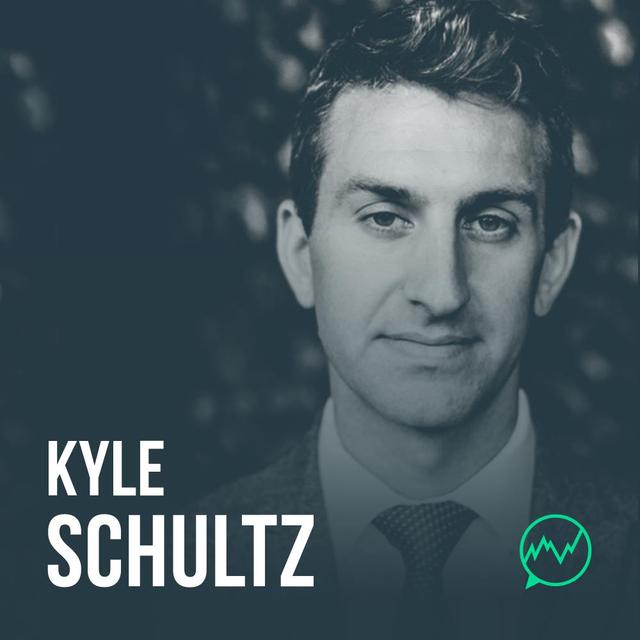
Hey, what's good everyone? Aaron here with episode two hundred and twenty-five. Hopefully you've had a chance by now to listen to those recent best of day trading episodes. If not, I suggest making the time. But now we return to regular programming. My guest today is Kyle Schultz, the managing director of Ravenia Investment Management, a registered CTA operating since April 2019.
With an objective to diversify by market, strategy, and time frame, Kyle has developed multiple algorithmic strategies for various futures products that can be categorized into momentum and mean reversion, long and short, intraday and swing. So naturally, our chat revolves around the theme of developing systematic strategies and Kyle's way of doing things.
This includes idea generation, backtesting, optimization, live trading, volatility and diversification, plus some closing thoughts about being sufficiently capitalized. And that is all from me. Here is Kyle Schultz.
¶ Financial Futures and Market Diversification
First of all, I mean one of the big things we're going to talk about here is developing systematic trading strategies. But first of all Let's address the markets you're trading, uh, because you're not someone who's running uh algos across thousands of stocks. You don't have a massive universe there. you're trading a few specific futures products. So let me just ask you, what products are you trading?
I'm currently trading equity index futures. So that's e mini and e micro, S P five hundred futures, e mini Dows, E Mini Nasdaq, and E Mini Russell two thousand. And then five year treasury futures, ten year treasury futures. And a few currency futures, euro currency, yen, and Australian dollar. So it's pretty focused on uh financial futures. Right. And is there any reason why you don't trade any commodity futures?
Well, I think, you know, w when you kind of figure out what works in the market and what works with your strategies, uh, you focus on those specific markets and And then kind of branch out from there. So although I've focused more on financial futures, I am looking into different strategies and commodity futures. And I should say that. In the past I've traded a variety of different securities from equities, options on equities.
um iron condor option spreads on equity index futures, Vic's futures, V Stock's futures. So I've I've I've had a e a wide array of experiences in different markets um and have really Honed in on equity index, treasury, and currency futures for the time being. Um, just because that creates the portfolio that I'm looking to construct that is diversified, but also has the ability to provide some some type of crisis alpha.
Okay, got it. So it's not something that you've ruled out altogether. It's something you may add in the future. Yeah, it's been an evolution. Obviously commodity futures are interesting because they are the true diversifiers, right? Um some commodity markets are still pretty correlated with equity, such as crude oil futures, but Soft screens and A variety of other commodity futures uh provide some diversification. So they're good additions. Uh
to add into equity future, equity index futures, treasury futures, and currency futures. Uh, but my, you know, like anything, my research and development and portfolio has been an evolution and will kind of continue to evolve, but that's that's essentially the next step. Right. Now obviously we'll get into your strategies uh a lot more as we get going here, but
I'm just curious to know, do you trade the same systems or the same strategies across all the products you mentioned a few moments ago? Or have you developed almost like product specific strategies? That's a good question. I trade it I trade similar strategies across all products. But I'm not using the same optimized parameters across each contract, right? Because the each market moves.
So differently. And and you'll especially find with the e-mini SP 500 futures, which is the most actively traded market, certain strategies do very well in that market. Um but don't necessarily port over well to even the Dows, Russell's or NASDAQs, right? So I I look at each market separately, but I'm using similar strategies. For example, I'm using maybe a uh mean reversion strategy on them open. I'm using intraday momentum strategies. uh mid frequency mean reversion strategies.
Um so same same principles uh for developing the strategies and using them in each market, but uh you know, they're optimized differently for each market. Okay. So a strategy that you trade on, let's say the E Mini, uh, is slightly different to the strategy or system you trade on the Russell index.
¶ Strategy Customization and Overfitting Prevention
Yeah, exactly. Um, so this this creates the potential so one of the arguments against this is that I'm I'd be just overfitting to each market, right? Um, but one thing I want to say is that I do a lot of different things to avoid overfitting. The first being to not use too many parameters, only a handful of parameters. Two, use walk forward analysis to vary the in sample and out of sample period of the back test. Um and then three is is really
Um, not optimizing to one specific thing. I'm looking at different optimizations, but then kind of figuring out what risk return I want in the portfolio. I'm not just taking the output of an optimization and using that uh right away. I'm making note here to ask you more about optimization and walk forward analysis.
Just before we move off the products you're trading here, I'm interested to know what is the advantage of you trading a strategy on you know the E Mini, the Dow, the Russell, etc. Like this this whole range of equity indices. when I imagine like the correlation between those products is very high. Like what added advantage or added benefit do you get from trading a strategy across um, you know, a bunch of products that are all highly correlated.
Well, they're they're not necessarily highly correlated and I do get a bit so for example, if I look at the portfolio and I break out my portfolio and I say I wanna have thirty to forty percent of the portfolio and intraday momentum.
I think you get a little bit of diversification by instead of trading um instead of just increasing your size on the e mini S and P five hundred futures. Um you could trade one contract of E instead of trading five contracts of EMA S P five hundred futures in a intraday momentum strategy, you can trade one contract in the Dow, one contract in the Russell, you know, and spread them out and you get a little bit of diversification.
Uh to your point, those strategies are somewhat correlated, uh, but they're not perfectly correlated and you do get a little bit of diversification diversification uh from my perspective. And I've seen that uh in the in the strategies where Not I might be trading the same strategy under each contract, but on any specific day, maybe only two or three of those uh markets are trading and the other two didn't signal, right? So um I think I think you you do gain some diversification from it.
Right, I see what you're saying. Yeah, that's a that's a fair point.
¶ Advantages of Futures Trading and Idea Generation
This may be uh for regulatory reasons, given you're a registered CTA, um, but what is your preference for trading the futures market, you know, over um, let's just say single name stocks. Like do you find it's easier to develop or I don't like using that word easy when it comes to trading, but do you find it's um is somewhat easier uh to develop strategies or there's less complications, et cetera.
I think that's where I started my research and development uh in the future space. And then the whole my whole concept is I wanna c develop a diversified portfolio of quantitatively traded strategies.
and then combine them together to get some of the the diversification benefits from lower correlations and different investment styles, mean reversion, momentum, intraday, mid frequency, swing. And so When I look at certain markets, the uh the futures markets obviously with with the leverage you get. You can create a portfolio, diversify, um, and really create the risk return structure that you want through that by Determining.
what your trading level is or how much cash you want to keep in your account, right? So Like you said, there's there's unlimited things to trade in the equities market, options market, um, Forex.
Uh, but this has just kind of been an area that I've honed in on during my research. I think sometimes, you know, you're turning over stones in your in your research and development and you know, you turn one over and and so you keep turning over stones in in that area because that's that's where you've gained some leverage and and some knowledge and insight into some strategies. Yeah, it's where you have the specialized knowledge. Mm-hmm.
Talk to me about idea generation, because I think there are There are there are probably quite a few people out there who go, you know, I can code. I understand some of the good practices when it comes to uh back testing um and developing strategies, but I'm just really stuck for ideas, you know, and they They don't really want to go down that path of just mashing together a bunch of random indicators.
What tips or how do you think about generating ideas when in those early stages of strategy development? I think that my background is kind of unique in the sense that I used to do hedge fund manager research and allocations to very large hedge funds for an insurance company. So I've got a portfolio construction background and mindset embedded uh in me when I create a portfolio and look at strategies. So I think for I'll I'll give you an example. When I was
First trading relative value volatility. I thought the volatility markets were just really unique and interesting. Um, and they created some interesting relative value pair trading strategies like looking at VIX futures versus e mini SP five hundred futures. or di VIX futures different maturities on the VIX futures curve or VIX futures versus V Stocks futures, which is uh European volatility.
So I started off looking at relative value strategies, but ultimately relative value strategies have some uh short vowel exposure in the sense that typically when volatility increases spreads blow out. Um so at the end of the day, those those strategies are short vowel. Um
And when I was doing a lot of my research, I said, well, what's the best way to add long volatility to the portfolio? And ultimately I was looking at VIX and e Mini. I was looking at different pairs. I and And what I discovered was that the best way to add long val to the portfolio is to use intraday momentum strategies because these strategies can outperform significantly in periods of market crisis because
Typically the market surprises to the downside. Th I think there's that old adage it's like the market takes the escalator up and the elevator down, right? So you have these violent down markets where intraday momentum strategies tend to perform well. And then you can also perform well in in in the up markets as well. Uh so it it doesn't have that kind of tail risk hedging type strategy where you're paying Carrie um for some long bowel exposure that
you know, takes a long time to hit, right? And which we saw during quantitative easing. Um so so from my perspective, I look at strategies, my my strategy what spurs my research and development is really starting from a portfolio construction perspective and saying what types of exposures do I want? Uh,'cause each strategy has has different risk return structures.
¶ Core Intraday Momentum Strategy Signals
Okay, so let's go with uh this idea of intraday momentum. So we've got You know, someone who doesn't have your experience and come from the background of which you do, someone who's maybe just a self-backed trader at home, um, who's, you know, fairly new to this Again, they have they know how to write some code. They have a pretty good understanding of some of the the good practices of of testing. They now say I have I want to go with an intraday momentum strategy.
Like how would they actually think about But what what the signals for that would be? Can you give an example of something that you would consider to be a quality intraday momentum signal? Yeah, I think there look, there's tons of I've I've read tons of different books. Um there's an incredible amount of information uh on the internet, right? So doing your own research and and
Through trial and error, trying to figure that out is is really you just gotta do the work right. So from my perspective. some popular mo intraday momentum strategies were like, okay, if the market gaps open a certain size, is it likely to continue throughout the day or another popular trading strategy for intraday momentum is called the opening range breakout. So you define a range, say the first thirty minutes or the first hour of the day. And you know, if there's if there's
a very strong movement, either up or down, you're making a bet that that will continue. So one of the largest CTAs in the world is Krable Capital Management. And Toby Krable used to work for Niederhofer back in the day. And I think I think he started out as a cotton trader, but he eventually wrote a book called um
sh um short term price patterns for trading in the market or something. And then he uh after he released it, he bought back all the books uh because he realized he gave away his strategy. Now, if you search hard enough, you can find that book. uh or PDF version, right? And in and in it he talks about the opening range breakout for different commodity markets and different measurement periods, right? So Those are kind of two widely known um examples of
initial signals for intraday momentum strategies. And then once you have that kind of main signal, you also probably want a confirmation signal. Um to know that the market's not gonna reverse or to trade at a specific time. You gotta kinda continue to do research to figure out, you know, additional additional filters or times of the day to trade that that make your strategy um have higher win rates uh and more attractive from a risk return structure perspective.
Okay. What about the signals that are output from your strategies? Like are they as simplistic as, you know, I want to buy the open range breakout. in the first thirty minutes of the day or Is there a little bit more complexity to it than that? I know you said just then that you want to have maybe some additional filters to try and reduce the possibility of buying false breaks, etc. But
I mean, are these the sorts of things you're looking at? Are these open range breakouts, or is there something a little bit more sophisticated going on? To be honest, I think it is as simple as that for the core signal, but the secret sauce is really in those additional filters. um and doing the additional research. Like I said, whether that's a filter that's like a confirmation signal, um, whether you're filtering based on volatility.
whether you're filtering on trading at a specific time of the day. There's there's a lot of other uh concepts that go into it, but the core strategy is is really built around either an opening range breakout or a gap breakout or a combination of the two. And what I've found is that um as I'm starting to do research in the commodity markets, opening range breakouts work out work better in commodity markets than in equity index markets, equity index futures.
But gap momentum strategies work well in equity index futures I've found. So You know, the core tenant of the strategy is really just that, but it requires a lot of work to refine it and and take that strategy to a very uh tradable risk return structure that you want to create through different filters and additional research.
¶ Backtesting Tools and System Integration
What data do you use to test and and generate these signals? Is it purely just price data? Yeah, so I'm I'm a price action trader. Um, so I am purely using um historical price data. I'm not using any fundamental data. I'm not even using any volume based data. A lot of people like to pair the volume with price data. I'm purely trading price action.
And so I use I'm sure a lot of different traders use Trade Station, but that's a platform I use. And um It's you know I started back testing in in R and Python. And was going to build out a complete trading system in Python, which, you know, I started tinkering with TradeStation and said, okay, for kind of.
Pareto Principle eighty twenty, this works great, uh, with very little additional need to program a whole trading system, right? And um you can do your walk forward analysis in there, you can do optimizations, you can automate your trading in there. So That platform uh has been great for testing ideas, backtesting, optimization, and then even trading algorithmically.
Let's go into this a little more actually because it's an interesting point you bring up. This is something which um I presume again uh some people get a little bit caught up on is like, all right, I'm gonna spend a significant amount of time here. in developing my strategies and um, you know, testing optimization and everything that goes along with it. You know, I want to kind of get this bit right. Like, do I go down the path of using a programming language like Python and R?
Or do I use a a a platform, you know, like TradeStation where um you know they have the easy language. It's a little bit um less sophisticated and easier to pick up than something like Python, but there's also um some things you can't do in something like TradeStation, which you can do in Python because it's an open source programming language and you know, sky's the limit really. What are some of the the pros and cons you see of each uh of those two options? Like
You know, are there certain drawbacks or um yeah. Can you go into that a little more? Sure. So and I should caveat, I'm not a programmer by background. So I think that's a main consideration. If you have If you're an engineer, you're very adept in programming, you might want to opt for building your own system.
Uh uh the biggest drawback from my perspective is just the amount of time and effort it takes to run that system and the complexity, right? Because if you have a system like Trade Station, Everything's fully integrated. The data feeds are already in there. The backtesting engine is in there. The algorithmic trading execution's in there. And they're a broker, right? So you don't need to pair a a broker with it's a fully integrated system.
So given the fact that I'm not a programmer by background, I could back test an R in Python. It would be an overwhelming project for me to develop a fully algorithmically executed system through like fixed protocol directly to the exchanges.
And then, you know, it creates all these complexities, which just creates risk for your business or your trading, right? When you have um things that can go wrong constantly. And TradeStation has its bugs, of course, but Like anything, I think having a fully integrated system saves a lot of time and effort. And once you get used to it, you know what the what the drawbacks are, where it goes wrong, and and and it's a lot more manageable than building out.
a full s a full trading system, in my opinion. Okay. And I should just uh point out that as TradeStation or a frequent sponsor of this podcast, this is uh this isn't supposed or intended to be a plug for them. Yeah I I yeah, that's good to mention. Um I'm I'm I'm bullish on TradeStation, but yeah, I'm not uh Um giving them a plug.
Yeah. No, I was more mentioning it from uh from my point of view. But I actually I do have one more question just before we move away from signal generation and more into the uh methods of backtesting.
¶ Crafting Robust Long and Short Signals
Um you trade both long and short. Um do your s signals for long trades and short trades differ, or are they simply the same but reverse? They are the same and although I'm going to be researching um whether they should be different because Like I said, there's this kinda kind of this trade off is that If you look at specifying the parameters to a long trade versus a short trade. You might enhance the back test, but it also increases the risk of overfitting'cause now you're creating
the double the amount of parameters that you're optimizing with. So whenever I'm backtesting or or thinking about enhancing a strategy, that's a main consideration. And it You know, black testing, although it seems like a hundred percent science, there's a little bit of art to the judgment of
how many parameters to use, um, and whether something is really overfit. And using walk forward analysis is obviously one way um to test the robustness of your trading system. There also just needs to be judgment. Um For example, if you're creating a trading system And it has a bunch of parameters you're back testing on and you get a great result.
What if you tweak those parameters slightly? Is the back test changing significantly? That's a sign that you're overfitting your models. Or, you know, is it relatively similar to your optimized back test? And that would be a sign that. The system's pretty robust, uh and the back test is pretty robust. Do you have a rule of thumb for what is a reasonable number of parameters to use in a strategy? Well, I like to use the least amount possible.
And, you know, it could be two to four parameters, in my opinion, um, that you're optimizing on. You might have other set parameters like only trade at this specific time of day or um you know this is the take profit and stop loss. But I wouldn't I'd I wouldn't use more than five parameters fully optimized and and The reason for that is that it just it just increases the risk of overfitting. So
Really a lot of my strategies use two to four parameters that are optimized. They might have other parameters that are unoptimized, but that create some structure to the trade. Less is more in in that perspective. Have you ever watched a stock explode and thought, if only I had the capital, or sat on the sidelines because your account balance felt too small to matter? Good news.
With Trade the Pool's limited risk platform, you don't need millions or even thousands to start trading the U.S. stock market. Bypass the PDT and tap into over 12,000 U.S. listed equities. From penny stocks to big caps, ETFs, even the newest IPOs, and short anything you like, with zero locate or hard to borrow fees.
Start your evaluation, get funded with up to$200,000 in buying power so you can go big without risking your own savings. And now you can also have unlimited time to reach the profit target. It's a game changer. Not ready to trade yet? Trade the pool offers a free demo and educational resources. practice on live data, master the platform, and build confidence risk-free before you even pay a cent. Click the link in the show notes to start trading with Trade the Pools Capital.
¶ Advanced Backtesting Methodologies
How do you segment data in the backtesting process, like in sample, out-of-sample, etc.? Because I know everyone kind of does this a little bit differently. How do you go about it? Well I do I I l I do like tobacco over a variety of different periods. So I like to run very long back tests. You know, sometimes in in in the trading system, I think a lot of data goes back to 1997 for equity index futures.
Just because I I I use the BACTIS more to try to understand how the strategies behave during different volatility environments and events. Um, you know, like the markets that we're in currently, we're talking about how they seem very driven by retail order flow. It's been very choppy intraday. Coming off of twenty twenty, which was a very momentous
movements in the market. The market changes, the microstructure changes of the market over time. And also every I'm I'm always looking at the volatility events to understand how the strategies behave during periods of market crisis. every volatility event is different, right? So two thousand eight financial crisis is completely different than a one day, you know, May twenty ten flash crash.
which is different than COVID, uh, in March and April of of or in February, March and April of twenty twenty, which was like a very quick and rapid bear market and very quick and rapid recovery. Um versus two thousand eight financial crisis, you know, was a prolonged deep crisis. So using longer back tests just allows you to examine differ more volatility events to understand the strategies.
But then from an in sample out of sample perspective, I use a cluster walk forward analysis test so that the in sample and out of sample periods. are varied over the over the walk forward, right? Because once again, if you're just using eighty percent in sample, twenty percent out of sample, well, you could still be overfitting. Um, so you know, the more diversification you can get from a cluster walk forward analysis, I think is better.
Okay. Um can you just maybe share a few more details around what that means to do a cluster walk forward analysis? What exactly is going on there? Yeah, so a clut uh a walk forward analysis is using different um in-sample and out-of-sample periods over time and then
you might only use eighty percent in sample and twenty percent out of sample. So it's a fixed in sample and out of sample period. And then but you're running it over a couple of different time periods, say, um say five years, say it's a five year Or say it's a three-year in-sample, two-year out-of-sample, you're running over, you know, multiple five-year periods. What a cluster walk forward analysis does, it says, okay, not only not only are we going to use in sample and out-of sample period.
over five year different five year periods, but we're also going to vary the percentage in sample and out of sample. So you might use a seventy percent in sample, 30% out of sample. Also use a 80% in sample, 20% out of sample, right? So it it varies. the percentages for in sample and out of sample in the back top.
All all it's really doing is it's it's just it's just creating more variation to test robustness, right? So like I said, if you're just if you're just using eighty percent in sample and twenty percent out of sample for the For the different periods, you could still be overfitting to that eighty percent in sample period. So more variability. um is kind of battle testing your your back test a little bit more.
¶ Critical Backtesting Metrics and Analysis
Mm-hmm. Now when you run a back test, it obviously spits out. a a huge number of different metrics. What are some of the most important metrics to you? Like which ones do you give the most weight to? So what's interesting is that in the futures markets, um, and in managed futures specifically. Return to max drawdown Kelmar ratio is is one of the most important metrics to use because most Traders um and clients are notionally funded or using s some amount of leverage, right? So
The whole goal is to maximize return without getting a capital call, right? So that you're utilizing an efficient amount of leverage. And The the interesting part is I I don't think TradeStation has a fitness function for Kalmar ratio. So you can't optimize the Kalmar ratio, which is odd. I think TradeStation, there's something called the TradeStation Index. Um that incorporates return and max drawdown, but also some other metrics.
But from what I've found Optimizing to return on account actually is an indirect way of optimizing to return and max drawdown because obviously if you have significant drawdowns, it takes You know, if you're down fifty percent, it takes a hundred percent just to get back to break even, right? So The return on account optimization is what I typically use, but I'm also looking at TradeStation Index.
Um, I'm looking at and then I also want to understand the win-loss percentages, where the take profits and stop losses are. Um in the report I look at max drawdown, max trade to trade drawdown. Uh just a variety of different risk return metrics to get a holistic picture of of what the risk and return are. And then I'm also going into each drawdown to understand. how the strategy performed during each drawdown.
And why. And I think that's key because it just helps you gain confidence in your strategy, right? When your strategies aren't working well, it makes you question them. And if you really truly understand when your strategies should be performing and when they, when they underperform, then you can gain stronger confidence in your strategies and you question them like. Okay. What was that first metric you spoke about? What was that called? Kalmar ratio?
Okay. So if we just pick on a few of these, so Kalmar, you've got your yep win loss percentage, you've got max drawdown, these are just a few. Um, what sort of values would you uh say are good or acceptable for each of those? Well, I I don't know if there's for for example, win loss. Well let's talk about win loss ratio, right? And let's talk about average trade profit. So So you might have a trend following strategy.
that has a very low win rate, but when it wins, it wins big. You let the trend run and when you get stopped out, you keep tight stop. That is just one example of a trade structure. It doesn't mean it's good or bad. But it's it is one example. And then it's good to understand that because I wanna pair those types of strategies with other higher hit rate strategies.
that might have a tight take profit but have a little bit more room on the stop loss, right? So I don't think that one is better than the other, but I like to understand which trade structure I'm trading and then also diversify by that trade structure, if that makes sense.
¶ Diversifying Strategies for Smoother Returns
Yeah it does, yeah. Okay. Actually that makes me think of uh another question I had for you. As this is something you've spoken about a bit here, is combining multiple strategies for added diversification and presumably smoother returns. How do you think about this? Like, how do you think about what types of strategies uh nicely complement one another?
Like is there something a bit more methodical to it than going, you know, this strategy's good, this strategy looks good on its own as well, if I combine them. Um, you know, that's great. Or is there something like, yeah, a little bit more methodical to the the the thought process of how you combine multiple strategies?
I think it is a combination of an art and a science, right? Because correlation is a very quantitative metric. Um But in reality, like I said, if when I'm creating a portfolio, I want to diversify by not only investment. Style. So for example, pairing mean reversion strategies with momentum strategies. I also want to pair trades that are intraday and then also swing focused or like I mentioned trade structure so high hit rate um strategies uh or low hit rate strategies with long um
or far away, take profits that win big, right? So I think about diversification conceptually from those perspectives. But then also the portfolio construction is obviously very quantitative, uh as well, right? So putting all the strategies in a portfolio, I'm trying to understand how is the standard deviation affected, how is the return affected. How most mostly I wanna see
How do the strategies perform during volatility events together? Because correlation, if you if you're to look at two strategies that have a zero correlation over a 10-year period. That's a very static number for a very dynamic actual metric, right? Because that correlation could be one during two thousand eight. And then it could be negative one during other periods, but when you look at the average over ten year period,
it looks like it's zero, right? So you're not really getting the right information from that. And the real information is that during periods of market crisis events, they're highly correlated, which you don't want, right? Um, so I think it's a little bit more nuanced than just looking at correlations over long periods of time. It's looking at how the strategies actually perform.
during different volatility environments and events and do you get the benefit from that diversification during those vol events? So Once again it's it's looking at metrics over different time periods, zooming in and also stepping back at the total portfolio level. Because you can, you know, using numbers, you can fool yourself. um into thinking something is lower risk than it actually is if your strategies turn out to be highly correlated during a market crisis event.
¶ Volatility Management and Strategy Filters
Okay. Just on this point about volatility, um Do your strategies uh adjust in some sort of dynamic way based on, you know, the current regime that we're in or the current uh levels of volatility. Like um, you know, do your stops widen i in highly volatile periods? Um, is there anything you do to kind of reduce the likelihood of getting chopped up?
Yeah, that's a good question. I mean the dynamic position sizing or dynamic stop loss and take profit I think is interesting, but I don't really use that. A couple of my strategies I just have. A volatility filter. It says Okay, is Val say above or below forty, right? And then the take profit and stop loss is adjusted as a result of that. And that's just kind of based on my back testing. Um, I found that this trading strategy behaved very differently during extremely high volatility.
uh markets and very low volatility markets, but I don't really use any very dynamic position sizing from that perspective or use like average true range Base stops and take profits. To be honest, I I don't even use trailing stops. I'm using fixed.
uh take profits and stop losses. Um the trailing stops, at least also um within trade station, uh tend to inflate um some of the performance I think, especially if you're using daily bars because Some of the nuances within TradeStation, um, you have to use look inside the bar back testing to understand the path dependency uh of that bar and whether your take profits and stop losses are hit. So um there's like I said, w when you're developing
uh strategies on trade station or whatever system, you have to understand the the drawbacks of using that system and where you can go wrong, right? Because Everyone just wants to create the when you're first starting out, you you find incredible back test, um, but you really have to spend the time with it to make sure that it's robust and that you're not missing anything. I guess the way that you are combining, you know, various sorts of strategies. So you've got, you know, intraday
swing or um medium frequency. And then within each of those you've got uh momentum and uh mean reversion. I guess that in some way the combination of all those kind of uh accounts for changes in volatility, right? Yeah, exactly. Uh, because I'll tell you what, like my intraday momentum strategies were trading signific they trade significantly during High volatility and less during low volatility, right? So the way those strategies are developed and the signal.
for those strategies is already volatility filtering and and has that natural um different regime uh different re market volatility regimes will either cause more trading or less trading. So it's kind of inherently built into that. Um so I kind of let the strategies organically um filter the volatility based on the signal I'm using. Right. Yeah. Yeah.
¶ Optimization Techniques Without Curve-Fitting
I want to pick up on optimization. It's something you've mentioned a few times. How do you go about optimisation? As we know that um, you know, curve fitting is a a big danger in creating uh systematic strategies. How do you go about optimization um without sort of running into those issues? As I've alluded to previously, there's a couple of different ways to avoid overfitting. I talked about not using too many parameters.
Um I also talked about using walk forward analysis to change and cluster walk forward analysis is even better to change the in-sample and out-of-sample periods and time periods you're looking at. And then the third way is to Look at small changes in your parameters and if that significantly changes your back test, it's likely overfit. If it doesn't, then you know, that's kind of a a simple
um conceptual way to show whether your your strategy is overfit or not. So I use a couple of those different tools. Um and then I look I I do like I said, look at very long back test, kind of like as long as it can go. Um to to understand each volatility in environment and and and event, but I also optimize over shorter term periods as well.
Right. So those few things you've mentioned there, I mean, pretty much describe how you reduce the likelihood of curve fitting. Um but what do you actually do in terms of optimization? So say you Run a back test, it spits out a bunch of results. Um, you know, what sort of things are you looking at to try and improve that, like to optimize it further? Like what are some of the things you might tweak and how do you go about that part?
No, that's that that's a good question. Um so when I look at the back test, I might notice I'm looking at the long trades and the short trades. You know, I think one one natural thing you might look at is, okay, is all the alpha coming from the long trades or is all the alpha coming from the short trades or is it diversified? Another thing you might look at is Did this strategy only perform well during volatility events?
Or does it perform well during a a year like 2013 or 2017 when you had the SP 500 up 20 to 30% with very low volatility? So it's kind of those in fr like I run a first a very long optimization just to kind of understand the strategy and then I'll dial into some of those nuances. So for example, if It performs very well during high volatility only and doesn't perform well during low volatility. I might use a a VIX filter.
Um if if only the short strategies work, maybe I'm just looking at creating a short a short market trading strategy or vice versa for the long side, right? So there's there's a couple of nuances when I'm looking at the performance report that will cause me to maybe filter the strategy, add some filters, look at different time periods. Um, I'm also looking into each trade. Did the trades earlier in the day perform better or the trades later in the day perform better? Sometimes the
for intraday trading strategies, the time of day is is very important, right? So if you can draw some inferences from that as well, then you can further refine your back test.
¶ Bridging Backtest to Live Trading
How do you expect live trading performance to compare to backtest results? So you've developed a strategy here, um, you've sort of gained confidence that committing uh real money to it is a good idea. Once it actually starts running, how closely do you expect um the real results to compare to um you know a historical back test? So I think it depends on the strategy. I think
Really what I'm looking for is if I develop an intraday momentum strategy, for example, that strategy should outperform in higher volatility when the markets are momentous, right? So If it's not doing that, then I start then I would question the strategy and whether you should be trading it. Right. Um I think it's more about, you know, does it have the same risk return structure as your back test? It might not have the the same exact performance results. Um but then I'm also looking at um
you know, how they perform together as well. So I'm not as focused on each specific strategy matching their back test and result as long as the portfolio is doing well. And that's one thing you also get from Trading a diversified portfolio of strategies. Um the tough the tough part is your trading strategy or the the market environment might not be conducive towards your trading strategy during the period you're trading it.
And that's why you really need to focus on the robustness of your strategies. Because if your strategies aren't robust, And you're in a market environment where your trading strategies aren't doing well, you're just gonna question your strategies. You're not gonna wanna trade it because they're not performing well. Um, you know, but it could just be the market environment, right? So
reducing that uncertainty, understanding when the strategies should perform and when they shouldn't is is important. Um but it's always it's look, it's always tough if you develop a new strategy and then it's not trading how it has in the back test, just because the market environment is different. Um, but once again, that's that's why I try to back test over long periods of time. You see as many different market environments and to try to create consistency in the in the performance.
¶ When and Why to Intervene
When you are live trading these systems, are there ever times when you allow yourself to intervene? So the only times I intervene is if I wanna take risk off the table. So I don't really intervene saying I think the market's gonna do well, I should step back'cause like I don't think anyone can consistently predict what the market's gonna do over time. The talking has try to do that, but I think that's more of of a of a media aspect of of running a large asset management firm.
And they might be right and tout their calls that are right and then ignore their calls that are wrong. So it's really difficult, you know, for someone watching the watching uh some of these larger asset management firms are talking heads in the industry uh to assess whether they're really
good at predicting the markets. And I think what you'll find is um some people can do that, but not with consistency over long periods of time. So with that said, I'm not trying to ever predict what the market's going to do. And most of the time, when I do think the market's gonna do something, a lot of times it's wrong, right? So I try to intervene
As little as possible and and let the strategies and portfolio stand on itself. The only time I will intervene is if I just have too many positions on at one time and I feel like Okay, I want to take an early take profit or stop loss just to take some risk off the table. That's that's really the only time I'll intervene. Just to reduce exposure. Because at the end of the day if if um you feel like you have too much risk on. That's gonna affect your trading psychology. Um, so you know, uh
I I think i if you are gonna trade systematically you have to rely on your algorithms and have confidence in the systems and portfolio that you're trading. Um but there's also kind of uh psychological aspect of, you know, okay, if you have too much risk on, are you not sleeping at night? Are you worried about the market? Are you anxious? You know, you want to trade so that you can really rely on your your strategies and algorithms without having to worry about them.
¶ Capital Requirements and Micro Futures
Last thing here, and this is a I I think this is a something worthwhile addressing. So what you're doing here, uh, as we've just been discussing for the last fifty minutes or so, you know, you're running systematic strategies across multiple futures products. Do you feel as though there is a minimum required capital base to do what you do? Like to do what you do effectively. Like if there's someone at home who's, you know, likes this approach and kind of wants to replicate it to some extent.
Do you feel like there's a minimum amount of capital they need behind them to be able to, you know, properly pull this off? Because you've gone down the path of being a CTA, you've raised funds from investors, um, you have an AUM of I think it's around five million dollars currently. Um if I'm not allowed to say that, I can edit that out. But yeah, I mean what are your thoughts on this?
That's a good question because for the individual trader. So, yes, you do need a certain amount of capital, right? Because if you're putting on a a diversified portfolio of trades, you have to have enough to cover the margin of multiple trades going on and getting the benefit of that diversification. However, with the e micros that the CME is running, I think you can do it with a relatively low capital base. Um
and still gain that diversification, right? So that's one of the benefits of the e micros uh that the CME has launched. And so you don't need As much capital as you would need if you're trading the e minis, like I am, for example. So if I have a hundred K account minimum. In the micros, say I'm trading 100K in the e-minis, you could be trading with 10K in the micros, right? So the advent of those creating those contracts has helped the small trader significantly.
Are those micros, are they only on the E Mini or are they on other uh futures products as well, like crude, for example? I believe they have recently launched um a variety of different micro contracts because the e-micro on the S P 500 has been so successful. I do believe they have them on other equity index features.
crude, I am not sure since I don't I don't trade commodities as much, but I know they've rolled them out to different equity index futures. And I imagine they're gonna roll them out. To different uh commodity futures as well. I know they created a a smaller Bitcoin contract as well, right? So there's These contracts have been successful because the small trader can utilize them uh more efficiently to to trade smaller capital accounts.
So that figure you mentioned before a hundred K, do you think that's probably a a good starting point? It depends on each investor's risk return perspective, right? So a lot of times For example, my clients can trade notionally funded. So they can trade a hundred K account size with 50K. And you know, that increases the and magnifies the returns and the drawdowns.
Essentially two X based on the performance figures shown for a hundred K portfolio. So but it's up to it's up to each individual investor. I think you need to think about what level of drawdown you're comfortable with and what standard deviation of returns you're comfortable with. And sometimes, you know, just looking at numbers doesn't really give you a feel for that. You know, you just gotta be
you y you have to kind of be trading, um, in order to understand how you're reacting to different drawdowns and standard deviations of returns. And uh that's kind of, you know. Well, like I said, it's a bit of an art in a science and you know, the science is looking at the numbers and saying, Oh, yeah, I I think I feel good with a fifteen percent max drawdown. But when that occurs, you know, are you getting uncomfortable? And that's the that's a bit of the art and feel of it.
So just to further put a little bit of context around this, like what annual returns are you targeting? Like what would you categorize as a good year? So I don't think I can discuss that from a CTA perspective. But you know, I would say that generally if you're trading and you're north of call it a two calmar ratio, then the beautiful part about futures is
you're only really concerned about certain risk return statistics, whether that's sharp ratio, Sortino ratio, or Kalmar ratio. Sharp ratio is essentially return to standard deviation.
Sortino ratio is return to downside deviation. So you're not penalized for upside deviation that that sharp ratio does. And then Kalmar Kalmar, as we discussed, is returned to max drawdown. So Say you can develop a portfolio with with a two calmar, that means okay, maybe you're doing thirty percent annualized returns with a fifteen percent drawdown. if you're comfortable with more drawdowns Okay, then you can you you can change your capital base as long as you're rec covering the margin.
to get to a sixty percent return with a thirty percent drawdown, right? So the reason that managed futures and just trading futures in general um can be very attractive is because you can create whatever um return and risk threshold you want, it's really just about finding The right strategies that have um those metrics that that reach your threshold, right? So like a two two or two or three Kalmar is is very strong and um then you can Create the
return and drawdown that you want to target based on the equity capital or the capital base that you're using. Does that make sense? It does make sense, yeah. I think that's that's quite helpful.
¶ Long-Term Perspective for System Traders
To close this out here, Kyle, and just maybe put you on the spot a little bit. Sure. Are there any final tips you would like to leave with aspiring system traders? Maybe the, you know, some tips you might have told yourself, told your younger self if you had to go back. Yeah, I think I think I would say you you just take a very when you take a very long-term view of trading.
That's gonna help you ride out the drawdowns and it's gonna help you continually evolve your research and portfolio. So to new and aspiring traders, I would just say Take a long term view because every drawdown you have, or if your portfolio's not doing well, your strategy's not doing well.
you know, those drawdowns are just learning experiences to continually improve your strategies. And and if if you take a long-term view and have a very long-term goal, um, you're not gonna get so caught up in those in those drawdowns, those tough periods. as you would if you're you're you know, just
so short term focus on the market. So try to step back, take a long term view and continually research and develop because there's strategies out there that can perform very well. And if you put in the put in the work and the time, um, you'll create a great portfolio there.
¶ Connecting with Kyle Schultz
Very good. Very good. Okay. Uh, Kyle, where should someone go if they want to find out more about you? Um, do you have much of a presence online? Yeah, so they can go to my my CTA's name is Ravinia Investment Management. So you can check out the website www.revenia-im.com. And then also I I I run a what's called a third party system development business where it's letter of direction business. I'm not directly managing
your account, but you're essentially licensing uh some of my trading strategies through TradeStation. And so that website is www.algorithmic-futures.com. Alright. And it might just be helpful if you can uh spell Ravinia. Yes, it's R-A-V-I-N-I-A. All right, Carl. Well, thank you very much for doing the podcast. It's been uh very interesting and um I've enjoyed speaking with you. So thanks a lot.
Thanks so much for having me. I I had a lot of fun and and I I hopefully uh people can check out the websites and feel free to reach out to me. My contact information is is on those websites. For sure. Thank you. You've reached the end of this episode of Chat with Traders, but rest assured there are more.