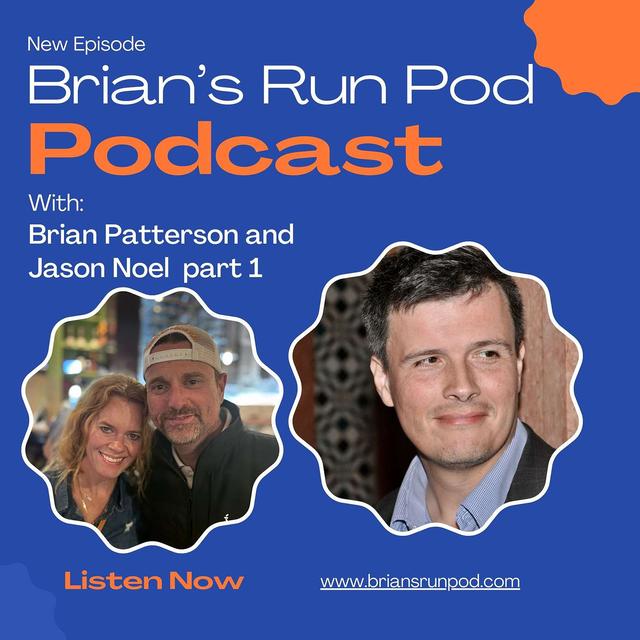



¶ Jason Nowell's Battle with Cancer
So you're thinking about running but not sure how to take the first step . My name is Brian Patterson and I'm here to help . Welcome to Brian's Rompod . So welcome back to brian's run pod , the podcast where we delve into inspiring stories from the world of running . And I'm your host , brian patterson .
And today we've got a truly remarkable guest on our show , jason nowell , who is just a not a marathon runner . He's a beacon of resilience and hope . After bravely battling brain cancer , jason found solace in the rhythm of running . His journey from recovery to racing is nothing short of extraordinary , and today he's here to share his story .
So join us as we explore Jason's incredible transformation from patient to athlete , his motivation behind every step and the moments from that that have defined his running journey . Whether you're a seasoned runner or just looking for some inspiration , jason's story is bound to leave you motivated and uplifted . So welcome , jason . Thank you very much .
I appreciate the opportunity . So how are you today ? I'm wonderful . Thank you Very good , very good . I know this wasn't in our outline , but what , as I usually ask most of my guests , is what was your ? What were you like with exercise growing up in high school ?
yes , so in high school um I participated in several sports , to include wrestling , high school wrestling , both greco-roman freestyle , as well as track and field , cross country and swimming . So I tried a little bit of everything .
All right , that's good , and did you sort of take that on when you went to college or did sort of some fall by the wayside ? And do you have other distractions at college ?
No , I had many distractions at college . No , I had many distractions at college . I called it the fumes disease , the smell of gasoline , making money in perfume . But no , I went through the college Army ROTC program .
So I spent , you know , when I was out of the classroom I was in the Army training program where we did our fair share of calisthenics and exercise . But I wasn't a collegiate athlete .
All right , okay , so were you in the forces after you left college ? Is that right ?
So when I graduated college , my goal was to fly helicopters and there weren't any slots available and there was actually a downsize happening in the military , so I chose a different direction altogether .
After finishing the program , I went to corporate America and worked first for the Boy Scouts of America as a fundraiser and a dive boat captain in the Florida Keys and then went to AT&T and several other places through corporate America , through corporate America .
So were you a you know was running part of your exercise regime at the time , or were you kind of just no , after cross country in high school and other than you know running through , you know training with the military .
I hadn't ran in 20 plus years , probably 25 years .
Think about out loud yeah , so was it the ? I mean , we'll kind of get on to your initial diagnosis of cancer . So was it that that kind of prompted you to do ? Because I know well , I'm , um , I've suffered from epilepsy since I was the age of eight , but I know , when I got into my , my teens , health and fitness was very much part of my lifestyle .
I mean , was that that's kind of the same for you , or yeah , um , I would say , all the way through college , you know , after high school , with with just the army , health and fitness was a part of my lifestyle . But after leaving that , I let health and fitness go by the wayside for years and to your point .
It wasn't until I was diagnosed with cancer the first time in 2016 , fall of 2016 . In 2016 , fall of 2016 , I had gone from my senior year of college of being 180 , 185 pounds or something up to , I think , 253 was my top end , oh right . And then was diagnosed with metastatic thyroid cancer and that was kind of an eye-opener for me .
It said , hey , you need to get it in cancer , right and um . That was kind of an eye opener for me . It said , hey , you need to get it in check , yeah and um . So I , I dropped a few few habits uh , like cold beer , oh right . And uh , yeah , just decided to start putting one foot in front of the other because I liked the way it feels .
Uh , it's good on
¶ Finding Community Through Running
my body , but it's a spiritual thing , it's a mental thing , it's just something that provided me with clarity . So that's where it got picked back up again in like 18 , 2018 .
Right . So after that sort of initial diagnosis and , no doubt , initial shock , I mean , I don't know , were you married at the time ? Was this something that you could share with other people at the time ?
Yeah , so you know it was a couple years before I decided to make the shift and go on the weight loss health journey after cancer the first time , but then found a community of people in or around 2018 that I started running with .
Right , okay .
Very good friend of mine and I just started getting out in the mornings together two or three days a week , but then it became a camaraderie exercise where on Saturdays every Saturday a small group of men would get together and run a 10K and have breakfast and share their week together .
And it just became , you know , something that I looked forward to on a weekly basis .
Yeah , yeah , I think a lot of people find that that running in a community it doesn't seem so hard as when you're running kind of on your own .
Sure .
Yeah .
Sure , yeah , and you know , all folks can be competitive , but this small group of gentlemen were very competitive .
So , that made it more fun and and , uh and you , you got to talk trash at breakfast and then sign up , you know , for a legitimate um organized run periodically and um , you know that took us right up to about the COVID timeframe when the whole world changed . Yeah , about the COVID timeframe when the whole world changed .
So did it take you very long to sort of get up to that level of fitness ? Because obviously , when you , after you were diagnosed , then you know you've , you've obviously taken it upon yourself to say , then I have to , I want to do something about this . So did that ?
Did that take a long time to build up to a level of fitness that you felt was kind of yeah , you know , I can build on this .
Surprisingly , it didn't take near as long as I thought it was going to .
Even after multiple years of leaving fitness behind , it came back relatively quickly , and if it would not have come back as quickly as it did , I probably would have lost interest , and but it came back fairly quickly to the extent that I could tell you that first full year maybe it was 2019 is the year .
Um , this uh running partner that I'm referring to , tom tom and I , we we made a goal and a pack to run a thousand miles that year and and we did . It took us us right to December 31st to get the last miles in , but after that it just kind of launched and took off .
So I know when I've had friends or relatives or people who have been diagnosed with cancer , then they've gone through treatment . So did that affect you ? You know , with your running .
My first cancer journey involved , uh , some some limited um radiation Right , and I say limited because it went over what I would call a short period of time versus the second journey . Um and no , it didn't . Um the second journey and no , it didn't . That didn't affect me as much as I thought it would at all .
So you only had the radiotherapy . You didn't have any sort of chemotherapy or anything Correct In the first cancer journey .
It was radiation and it was done at home over a week .
Yeah .
After the surgery , okay , after they pulled the tumor out right , oh , I see okay , all right , okay .
So I'm a bit , I'm a bit clueless about but where in where is the thyroid gland ?
yeah , so , the thyroid gland would be just right here okay in , in , in here . In fact , this is part of the scar .
Yeah .
But it was actually the dentist who found it . So I was at the dentist and she was poking around after going through , you know , just a standard treatment , or a dental hygienist did her part . The dentist came in , she started feeling around and she's like something's in there , it's not supposed to be .
And so I went from the dentist pretty quickly to the doctor . Feeling around and she's like that's something's in there , it's not supposed to be okay .
And so I went from the dentist pretty quickly to the doctor right oh oh my gosh yeah , I went from the dentist to the doctor , from the doctor to the ears throat specialist to the oncologist , all within about three days of each other , and ultimately I I had a tumor here , and so they made a decision that went like this it was supposed to be like this , but
it went halfway around my neck , from your rear , from your rear . Yeah .
Yeah , okay .
Yeah , and they pulled that tumor out and , and , um , they , they felt real , real good about the , uh , the surgery , and so I ended up , uh , with the one week of radiation . You fast forward , um , that was on October 3rd 2016 .
You fast forward , uh , what would be five years , or close to five years , when you , when you're kind of in the , you know the safe space . Yes , just just shy of October 3rdrd , which would have been august 2nd right 2021 , uh is when I was diagnosed again or they discovered uh a brain tumor or brain cancer right , right .
Okay , so I understand , uh , that you had a . How it was discovered was that you had a , or how it was discovered was that you had a seizure in the airport , or something like that Can you explain .
Yeah , um , we had during COVID the COVID timeframe , uh relocated our family to Omaha , nebraska , um , for work
¶ Brain Cancer Diagnosis at the Airport
. Um and uh had a great experience while I was out there worked for a wonderful company , and we were there around 16 months and just really didn't connect with the community as well as we wanted to , and it had nothing to do with the people , it was just the environment that the world was living in and had an opportunity to move back here .
So I came back and it was the first day on a new job and I was in the Omaha airport flying back here if you will for the new job and my family was still there . We were in the relocation mode .
I was in the Omaha airport , so you were on your own , I was in the .
Omaha airport , so you were on your own . Yeah , I was on my own , had a seizure in the airport and it turned out that in the snack bar next to the gate where I was getting ready to walk onto the airplane , there was a gentleman standing there or sitting next to me who knew me , and I didn't even realize it .
His niece and nephew lived two doors down from us in Omaha and he called her immediately and said Jason's on the floor in the airport , he's had a seizure . She's a physician and she said tell them to bring him to my hospital .
I hear that so many times .
I hear that so many times . Yeah , I hear that .
I hear that so many times . I hear that so many times . Yeah .
And I , looking back on that journey , you know my spiritual faith says we went to Omaha because it was part of God's master plan and I ended up in what I could have considered the best care at the time , right place , right time . And that's kind of where the time , right place , right time .
Right .
And that's kind of where the journey started with brain cancer .
Yeah . So , can you sort of explain about those early days ? Because I know , just before we started my mother had a tumor and I know she was .
Obviously it's going to be very different to each individual , but I know that she was coming back from Portugal and she was acting very weird and very strange and her behavior was totally what were those early days like ? What were those early ?
days like yeah , you really hit the nail on the head and bring to life my experience as well , by the way you described that . So the first thing I'll say is I don't remember a lot of it .
Oh , okay , all right . So you kind of go in secondhand , and what other people ?
tell you Right , right what . I do remember though is that even that morning I ran six miles before I went to the airport . I had been actively running on a pretty frequent basis , was probably in what I considered the best shape of my life and didn't realize that there was a problem at all .
Um , I , after the fact , and going back and reflecting on it , I did have some , some things that were happening that I didn't realize were related to that tumor , whether it was clarity and the ability to think or speak , um , all things that I thought were related to just being overloaded , probably overtrained , trying to move , relocate , start a new job probably
over-trained trying to move , relocate , start a new job . Things that turned out that I don't think that was the case at all . Now I'm sure that that tumor caused a lot of problems for me , that I just didn't realize and understand .
So do you think I mean I can only go from my own experience ? But do you think this mean I can only go from my own experience ? That do you think this may have been building up over a period of time prior to ? Yeah , to what ? To what ? Yeah , maybe six months or something like that . Yeah , it's .
It's hard to know how long . I mean . I have been through genetic testing a few times and they , you know , they've sent the tumor to several places to identify things . But the initial diagnosis is what they call a grade four glioblastoma or GBM . Grade four means it was growing pretty fast , it was growing rapidly .
Right .
Now whether or not that was six months , a year , three months , I don't think we know the answer to that . The science is unproven around that um . So as to how long exactly it had been existing or progressing over time , it's tough to tell , and I mean , I think it's fair to say it didn't happen in a week or two , or or even a month or two .
It's it had probably been building six months to a year or something along those lines . They are saying it was not metastatic , though , meaning it was not caused from the first cancer . So each cancer is being diagnosed as primary or on .
Yeah , okay , so those early days were you staying in the Omaha hospital for a while ?
Yeah . So that that's kind of a another interesting thing , but another great question . It gets me thinking . So um it . At that time I was in the hospital , so I was diagnosed on August 2nd . A week later a wonderful and amazing doctor uh , left her , left her family vacation and flew back to Omaha to take the tumor .
And that was during the height of COVID , and so my wife wasn't allowed in the hospital . There was an overload of patients in the hospital and when I went into that surgery they said look , based on where this tumor is , we're just not sure what's going to happen .
Right .
And what we mean by that is we don't know if you're going to walk , we don't know if you're going to have walking issues . We're just not sure . The real estate's tight . We're going to get in there , do the best we can , but we're just not sure , and so that alone was more frightening to me than anything . Yeah .
The fear of the unknown .
That's right . After 17 hours of surgery and like 13 people involved in the whole thing , I went to ICU and then to a room . By the next morning . Turns out , the guy that I shared a room with was also a brain tumor patient and , um , a bank robber on top of it all . But really imagine that , yeah it just .
He had spent 10 years in the federal penitentiary for bank robbery and uh was diagnosed with a brain tumor and and uh . So we shared this room together for a couple days and shared stories . But what I did or told myself I have to do after I realized I could feel my feet was I had to get out of the bed and move as soon as possible .
As soon as possible , and so , in an effort to keep my body moving , I broke every rule they had and got got out of bed and , just just with a walker , started moving with one foot in front of the other . I knew that was going to be key to recovery .
Yeah , yes , I can understand that . And I mean I understand that , and I mean just talking to you did your faith help ? Absolutely , absolutely my faith and family , along with great medical care , are the combination of it all . Yeah , so was it a question of just sort of taking you know one day at a time and also to , to try and keep moving . That was your
¶ Surgery and Recovery Journey
kind of your modus operandi or your strategy .
Right . So after brain surgery it's , it's , it's about a six , six week healing time before do they go to the next step . Um , I was unable to work you know work during those six weeks , and so the only way I felt like I could keep my mind off of brain cancer was to keep my body moving . And so I was so grateful and lucky .
I had some neighbors who were not just great neighbors but active runners when I lived in Omaha and we lived on the back of this lake called Lake Serinsky , and as far as I could go , when I could go , there was always somebody there to walk with me , whether it was to the end of the driveway , the end of the street around the neighborhood or around the lake
, the end of the street around the neighborhood or around the lake . And that was my goal every day , to do that for six weeks while I went through the healing process . And then came part two , which was probably the toughest part of it all , and that was 42 days of consecutive chemotherapy combined with radiation , monday through Friday .
Wow .
For 42 days .
Right . Did that really kind of like sap your energy , and was it quite painful , or yeah ?
Um , you know it wasn't , it wasn't painful , but it definitely was , uh , humbling in the sense that , you know , my wife would drive me every morning to the hospital and once I was done there I mean , I was , I was done for most of the day it just wiped me it . You know , it's just while .
It's such a gift that we have the science of chemo and radiation to do the things that they do and , you know , in this case , tackle cancer yeah it , it will get your attention . I will tell you that , yes , it will so they after those 42 days ?
it wasn't a question of you know right see ya , did they um what ? What was the plan after that ?
so it was this kind of a recovery plan or so we decided to take our house off the market in omaha when this all came up and we uh decided that you know , we were going to go through the surgery , the healing process , and then chemo and radiation while we were in Omaha and then we put our house back on the market and ended up back here in the
Indianapolis area and I knew I was going to have to continue chemotherapy . So after that first 42 days they do what they're called maintenance cycles . So it was another roughly 13 months or so of chemotherapy . So you take it for five days , you're off of it for 23 days . So every 28 days you rotate .
Okay , well , so every month roughly so that's right .
Yeah , and I was going to have to relocate , find new doctors , look for somebody that was willing to take me . You know that it was complicated and again , just great , great healthcare . Wonderful people at the university of Nebraska med center . They started making phone calls to peers and colleagues around the country and fortunately we have an MD Anderson Center
¶ Ongoing Treatment and Future Outlook
here and through the networking of these doctors I'm not exaggerating within three hours I had a phone call that said we'll take you , come see us . And so as soon as I got back to Indy I ended up under some just awesome healthcare here as well and finished that 13-month chemotherapy cycle .
And at this point I go in every three to four months and get you know an MRI brain scan to look at whether or not that tumor is dormant still and or showing progression . You always want no progression . That's the key . You don't want to see a recurrence .
So I've been doing that now for three years and will only hope and pray to God that I can continue to do that through this year before we lengthen the cycle of time that those brain scans will take place .
Right , okay , okay , so you are still linked to the hospital and they're still yes , sir , are still under the still linked to the hospital and they're still , yes , sir , you know , yeah , still yes , yeah , yeah , and , and I take kepra just to try to avoid , you know , seizures from ever happening again .
Yeah , and of course I I also have the power of synthroid , with no thyroid from the first cancer . So , yeah , I'm a medical cocktail walking medical cocktail . But you know , just grateful that we have the science to support . You know folks that need it , okay .
As is normal with my interviews , I have split it into two parts . Jason Noel , diagnosed with thyroid cancer in 2016 and brain cancer in 2021 , found solace and strength in running . Through a supportive running community and determination , he overcame health challenges , including thousand mile running a year , and discovered the transformative power of movement and community .
As you'll agree with me , he is a truly inspiring individual . So please do listen to part two next week , to this amazing story .