



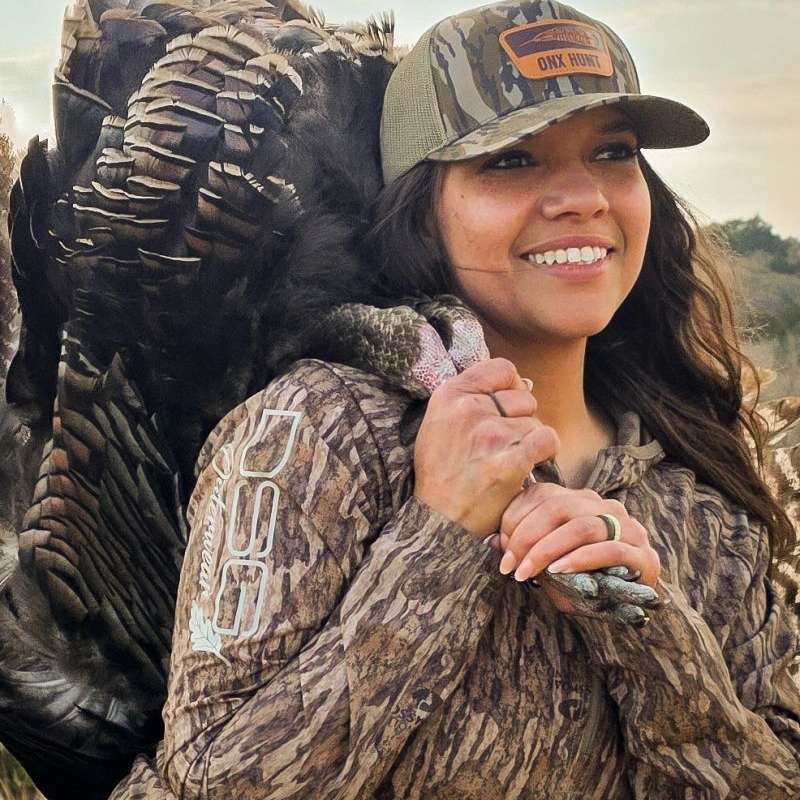
 Bethany Beathard
Little hands make light work when conservation starts at home. Join us for a great conversation.
Welcome to the Ascend podcast, a podcast by and for women in the outdoors. Every episode delivers real stories, practical how to's, and a welcoming community to help you start, sharpen, or rediscover your passion for the outdoors. Authentic women, real stories, outdoor adventures, Ascend. Presented by Ducks Unlimited, the leader in wetlands conservation. Your next adventure starts here, the Ascend podcast.
Bethany BeathardWelcome back to another episode of the podcast. I'm your host today, Bethany Beathard, and joining me today is a fellow mom in the outdoors conservation advocate, Amy Hall. Can you please give our viewers introduction about yourself and tell us how you got started in the outdoors?
Yeah. Sure. My name is Amy Hall, and I'm from kind of the Middle Tennessee area. I got started in the outdoors. I guess you could say I grew up fishing and camping and hiking and that kind of thing.
And probably in my early thirties, I started hunting. So it was later in life when deer hunting kinda jumped in into my my realm of things that I wanted to try and wanted to do, and then that was closely followed by duck hunting and goose hunting. And then it it moved into turkey hunting. And and so it's just I've loved doing a little bit of everything now. But fishing, I think, was like, it was the kickstarter of of that kind of lifestyle, fishing, and camping.
But, yeah, I have worked in the conservation world for, the Tennessee Wildlife Federation. So working for an NGO for the state of Tennessee. And and then I've worked also, I work right now for Hook and Barrel Magazine, which, of course, is, as we like to call it, the redneck GQ of the the lifestyle hunting, fishing, off roading, whatever, but we intertwine music and food and and, and a whole bunch of other things. So it's kind of a fun fun way of reaching out to people who might not have thought about hunting before or shooting sports or anything like that. So it's kind of a mission in itself.
Bethany BeathardYeah. I love hearing stories about how women got into the outdoors because, you know, yours was fishing, you know, and it you just never know what's gonna be that catalyst to, like, kick start it. And I'm like you. I'm like, whatever's the next season, I'm ready to learn. I'm ready to grow.
You know, my family weren't weren't big bird hunters growing up, and I think that's probably what I I hunt the most now is turkeys and ducks. And so it's just really exciting to see how, like, the journey, like, the outdoors always has something to offer. You can always grow. You can always learn, challenge yourself. Yeah.
That's really awesome. I love that. And Hook and Barrel, obviously, I write for them too. I do But I love, like, just talking about that for a second because I feel like something that Hook and Barrel does is also highlight people that are in the public eye that kind of have this private outdoor life that sometimes people don't see. And then they're like, oh, I love their music and it does really reach, you know, maybe a non hunter that might never hunt, but kinda turn them into that hunting supporter on the conservation side that they believe in management.
They support people in that life and also love their music. So I really like that connection and I feel like Hook and Barrel's doing that well. It's kinda connecting the hunting supporter, but non hunter.
Yeah. I agree. I agree. I think that I think that there's not enough of that in this world. It's not that we're trying to convert people, I think, across the whole community.
We're not trying to convert people to pulling a trigger on an animal. It's just creating a community where we might understand each other a little bit more or we might just support each other a little a little bit more. I've had conversations with women that don't even have a desire to get out in the woods or even men who don't have a desire to get out in the woods, but they're supporting their significant other or their kid or their or their parent, or somebody that they have a connection to, and they just want they've learned about it, and now they wanna support them. They wanna hear about the stories, or they want to celebrate with the successes. So it's just creating community.
Bethany BeathardYeah. It's the lifestyle because I think
Mhmm.
Bethany BeathardSomething that has been damaging about social media in a way is harvest, harvest, harvest. So showing kind of the lifestyle behind it really brings a different a refreshing angle and can, I think, really reengage those people, but that might have stopped supporting hunting because all they've seen was harvest harvest harvest? And now they're seeing like, oh, it's this lifestyle, you know, it's country. It can be kinda chic in a way. You know?
I I really love that. Let's talk just like basics. When you hear conservation at home, what does that really mean for a family?
You know, starting out with littles. So my kids I've got a daughter who's about to graduate high school. So starting out when they were little, it didn't look like taking them out on a hunt. It didn't necessarily even look like taking them fishing in the beginning. It looked like taking a walk around our house, learning about where, what tracks were and what stat was.
I think that it was really fun when my daughter ran up. I think she was third grade maybe. Not even third grade. It was in between first and second. She goes, we just found an a river otter latrine site. Did you know they only go in the bathroom one place in the whole area where they live? So it's going on hikes and learning what what kind of vine is that. Is that a vine that's gonna make you itchy later, or is it a vine that's great to look at? What do you not eat? What can you eat?
So it just look at those fall colors. Why do the leaves change in the fall? So I think that it's kind of like anything that you're teaching your kids in life, you take it with baby steps on how they can handle that information coming in. Let's just go on a walk and learn about our surroundings here. And then as they grow, how can you be involved?
Even as little as three and four, you can be walking and you pick up trash. Like, those are just the little bitty things that you start when when they're tiny and you're you're implementing the responsibility that we have as human beings to our country, to our world, to, the communities that we like to take advantage of and be in the outdoors. And so that's kind of how how I introduced my kids to the outdoor world and to our community was just little baby steps at a time of responsibility. I think we throw the word conservation out so much now, but truly, it could go back to the basic of this is your responsibility.
Bethany BeathardYeah. And I've I've I've noticed that kids tend to follow more what we do than what we say and really getting them outdoors, touching the things, noticing the things, you know. Something I love is to see just the amplification of moms sharing their journey outdoors with their kids. Like, they're actually, yeah, we're out here. I mean, even dads are doing you see in the world I feel like there's a shift too in social media showing more of, like, the family hunting, the family, you know, they always, you know, more highlight on getting used in the outdoors.
Yeah. I I'm a 100% agree what you said. It could be something so simple. Picking up trash is something that I love to do with my kids. It's an initiative that we've always got behind, and we've actually found some pretty cool stuff.
We were on we hunt a military base, and they will find, like, old military tent states, or, you know, we actually found a ketchup bottle and it, like, dated back to, like, 1940. But it was just we thought it was trash, and we picked it up, it was neat. And so, teaching them the simple things of tracks and stuff, a lot of people don't know that. Like, we're losing a disconnection. There's probably a lot of adults that cannot tell you the difference between certain tracks.
Yeah. Between a dog track or a cat track or a coyote or because they're very very clear distinctions. I think we had raccoon and otter tracks. So being able to tell the difference between that, being able to see, you know, when a leaf falls, what kind of tree did this go to? Does it have acorns?
Does it have seed pods? What type of wildlife will be using this? How if it decays, does it help with the growth of the forest? So you start with that, and as hunters, that leads into further conversations as they grow into it. Okay. We're looking at tracks. Which way are they going? Which direction are they going in? Are they heavier prints because it rained recently? Or are they heavier prints because it was a heavier animal, like a bigger deer?
So you're getting you're getting to learn along the way, and it just builds upon itself. It was I think my son, it was before kindergarten when I got my first year, and they had never seen the cleaning process. So going through and and getting an animal and prepping it for butchering and processing. And and I thought, well, this is a great way for them to learn and to respect and see the process because I had a rule, you can't hunt until you go through the process with somebody else from start to finish. And I think that that was the responsibility that I felt for preparing them for taking a life because it is a serious thing and it's not one to take lightly.
So it was something that, again, built upon them becoming stewards of this earth and not just takers.
Bethany BeathardI think the kids, it's chain it changed them whenever my kids started seeing that that process of harvesting, you know, we would have the meat in the freezer and mom would have this picture, but whenever they got to actually put their hands on it, you know, and they were like, well, what's this? What's this? And they really had a lot of questions. They were curious. It sparked so many good conversations.
Mhmm. And I feel like that's how we instill the love for conservation early on. We do this not only because it feeds our family, but there's other reasons. You know, there's there's herd management. There's all these other things that you can talk to them about.
If we go back just a couple decades ago, a lot of kids seen a lot of that because they were they were harvesting. You know, I talked to my husband's his grandma and she'll talk about always seeing like animals harvested. And and I thought she literally grew up like out in the woods and I was like, how many acres does your family have? And she was like, oh, we grew up in in town. We just had a corner lot.
And I was like, oh, well, you say you had like an orchard. She was like, yeah, because we didn't really have yards back then. It was gardens and chicken coops. And Mhmm. And she's like, you know and she's always talked about she remembered different times that they would go into the woods and harvest, you know, mulberries and rhubarb and all these things that were growing wildly in their area. And I was like, that's so far disconnected to where we are today.
It is. It very much so is. I I love the part I think my daughter did a third grade paper on why I hunt, and the teacher said I was expecting something totally different. And she went into herd management and CWD and, like, just went into the whole scientific side of conservation and why we do what we do. It's not just to put food on our tables.
There are other reasons for it. She said it was very enlightening. But I remember growing up, and there was a project that one of my classmates did on how to castrate a bowl. We don't have that much anymore in school. And so if you have FFA in your schools, my son has FFA.
He's heavily involved in it, so he's learning. There are cows and chickens and goats and sheep and all sorts of small animals on campus that they're learning from, but not every school has that. And so I I miss those opportunities that that our children have and learning a different side, not just the I don't know. I don't think I ever heard the word conservation applied to anything else other than wildlife habitat. Truly Yes. I think conservation wasn't a word used outside of that community.
Bethany BeathardI feel like it was almost intimidating. Mhmm. Even like as a mall, when I really started getting into hunting and, like you said, I felt this detached really from conservation. Like, that's kinda what, like, the wildlife department does. Like, I can't really play it other than buying a a license.
And, you know, we're stretched thin as moms. You know? We're doing all the things, but really there's so many tangible ways that you can incorporate the big word conservation in your life. Like you said, it's as simple as teaching your kids about tracks, picking up trash. Teach them, you know, all the diseases that go around and all the things.
And even, you know, like the story of, like, the buffalo. They were almost hunted to extinction. We lived in Oklahoma, that was something that was really real for us because actually lived in Lawton Fort Sill area, the Wichita Mountain Range, and that herd is the herd that, like, birth all the buffalo that we have now. Like, they moved them there for that purpose. There was only, like, 11 buffalo left in America.
And now, like, there's some of the most beautiful buffalo, and they and they have a big buffalo drive where they get them all together, and then they sell them off to different refuges and all the stuff and and Indian reservations. And it's just really interesting to see because, you know, my kids were from Oklahoma, so they're like, oh, yeah. You see a buffalo all the time. But then they go to the museum and they see, like, the pile of skulls and they're like, wait, what happened? And I'm like, yeah.
There can be a hurtful side to Mhmm. Over harvesting as well. And even like waterfowl, you look at, like, photos from, like, the nineteen twenties, it's like a 100 ducks. And the low country, like, you know, the plantations that the rice plantations left unkempt turned into, like, this waterfowl Mecca of the day. Mhmm. Literally stacks and stacks, and I'm just like, it's just unfathomable. It's like, who is eating all this? You know? Like, how what if this Yeah. Yeah. Not eat that many No.
It's true. We didn't have when I was growing up, Tennessee didn't have turkeys. Yeah. I don't remember seeing a turkey growing up in Tennessee, and it was a reintroduction over time. Same with elk.
We now have elk in East Tennessee, and all through North Carolina and Kentucky and all of the it's that reintroduction, but without the responsibility of the states and the agencies that are putting that together and creating a habitat for them in a place where they can survive and not just survive, but thrive, that's when you see these numbers come up. And the funding from that comes from hunters and and competitive shooters and the people who who are giving back by by purchasing. And we have the Pittman Ross dollars that are able to support these these ways of bringing the numbers back to where they need to be.
Bethany BeathardYeah. That really triggers the monarch butterflies migrate through Oklahoma. I remember seeing just tons of them and you don't really see as many anymore. And now there's places in Oklahoma that they're dedicated, like, non mowing spaces with the sign that's like a monarch sanctuary. That would not even be put in a place if people weren't being intentional because not everybody like, oh, there's less butterflies flying around.
But there's people paying attention that care and, you know, that's as simple as making a little pollinator area, a bee little hive, you know, building birdhouses with your kids, you know, nesting The the boys love that. What we're getting to is it can be simple and we don't
have to I think I saw signs out in my area, no mow May. So for the whole month of May, nobody mowed. And and it was to allow for babies to be born and for, for the wildlife to be able to utilize that time to move through at that point. You've got a lot of flowers that are coming through. You can plant things that you wouldn't normally see if you're mowing your grass.
You hear, well, don't plant the grass, leave the clover. Leave leave the weeds, I say with quotation marks. Leave the weeds because those can definitely be places where bumblebees, honeybees, things that come in and then cross pollinate and move it out. So there are so many little bitty things that you can do. You can live in the city and still help with that kind of thing and have those conversations.
You don't have to live in the country or parts of the county where where you can have more access to land. You don't have to have that. You can just support your local public grounds and and be a voice to allow for for those habitats to stay around a little bit longer for for butterflies to come through. Plant a butterfly bush to help with it. We've got four out front, and I don't live on 60 acres, but I have tons of butterflies and honeybees that come through every year for those.
And it's just little bitty things that you can do.
Bethany BeathardAnd I don't really think that we notice, especially as, you know, Tennessee, Oklahoma, those really, I feel like wildlife rich areas notice as much whenever there's no wildlife. So we lived in Hawaii for a little bit, and they literally have, like, no critters other than, like, wild chickens and a couple of mongoose. And it was just really odd coming from Oklahoma, and you're always seeing raccoons and arborealos and squirrels. They have no squirrel. There's no like, there's no I went to even South Korea, you know, after the Korean War, they have literally no critters there.
There's none. And it's so odd because, you know, they value so much just to see these little, you know, wildlife. And I remember a little boy asking his mom at our football team in Hawaii, like, can you show me a picture of this girl? And I was just thinking, I've seen so many squirrels growing up, you know? They just they don't have that in place.
Yes. There's huge ones, fox squirrels, black ones, you know? And it's just really interesting. I feel like we take it for granted a little bit in some of those heavier comp you know, even here in Georgia, you I mean, I can't go anywhere and there's trees everywhere. There's some type of bird, something. Yeah. And I think that kids just crave that nowadays. There's just the screen time statistics are crazy too. The indoor statistics are crazy. Yeah.
I think just getting out and experiencing the outdoors is much needed and prompts a lot of things.
If you ever hear a kid that lives in the city get outside to a place where there are trees, that is one of my favorite experiences was hearing my kids from where we were to coming to a place with tons of trees, and they go, we can actually climb a tree. And you take advantage of it when you have that moment, but but missing you don't you don't see what you're missing out on until you get into a a situation where you have access to it. So it made me more create a space while my kids were younger and not as busy as they are now to get to those spots, to those areas that they can experience things if I don't have them around me. So there are a lot of women that I've talked to that you have probably talked to that don't have that in their yard. They don't have it in their city, but they might know of places just outside.
And so it takes a little bit more effort, a little bit more planning. But having teenagers now and figuring out times to juggle and times to get them to these to do these things takes a lot of planning and a lot more creativity than when they were younger. And I could just say, hey, we're going for a hike. And it might just be to a local park that has a circle of a path that we could walk on. And so it doesn't take a whole lot to have those conversations.
It could be just a quarter mile walk where there are trees and bushes and squirrels, and you can find tracks in those little bitty places just as you can in the big places. You don't have to have access to 60 acres to experience that with your kids. You can go to your local park, and you just educate yourself a little bit on how to find those things. But that's the fun thing. I think we women love learning.
We love knowing all of the details, and I think it fed my soul a little bit to teach my kids how to do that because the things I didn't know, I was also learning alongside of them. So it created a space for me to be a kid again.
Bethany BeathardYeah. And we've mentioned this a couple times before. I feel like women feel like they need to be, like, the like, very knowledgeable, almost an expert an expert before we really dive into something. Yeah. Like you said, simple stuff.
We lived in Jacksonville. We used to do like a little nature group with our kids, and we went to one of those little half a mile walking trails. Mhmm. And one of the moms were like, here's some scrap paper, go do a bark rubbing with a crown. And we were gonna learn one tree and when we come back around this next event, you're gonna try to find that same tree at our next part. They were learning tree identification and not even realizing it.
And as a mom, that's not that's not outside of the realm of something that I can learn. It doesn't have to be college level knowledge in order to pass it on to your kid. You can there we have access to so many things in books and getting away from the Internet, but actually opening up a book to have that that thought process go through. But truly, it can just be on a kindergarten level or third grade level, and then you learn alongside of them. It doesn't have to be something that you're an expert in in order to teach it to your kids.
Bethany BeathardI feel like animal calling is the same thing.
Mhmm.
Bethany BeathardThat wasn't something that I really grew up doing. I used to hang like an elk call in my a cow call, like, on my truck. And I'd be like, every time I go, I'm gonna try to do like a couple calls. And then my kids started asking for their own one. And I have a son that can call without even using one. He just uses his mouth. He's like, it so many times. And it's amazing to see what kids pick off on, and they love that. They really, really do love that.
They do. I think the first time my kids heard an elk bugle was was at a film festival that we went to, they heard the elk. And from then on, if I was listening to something, if I was learning something, they heard it even from a different room in the house, they called down, are you looking at elk? And and it wasn't until maybe three years ago that I exposed them to an actual elk in person, and it all came back from all those conversations when they were little and all the sounds that they were hearing. It was it was like point a and point z came together.
Oh, wow. It just continued. It was just continuing education at that point in time, but it was fun going through Yellowstone and seeing the elk and and and just being able to experience that with them. Where we live now, I have chickens and ducks and and, of course, our dogs, but that has been another learning experience of how do you take care of them? What are the sounds you hear?
Can you mimic the ducks out there, for a duck hunt? Can what does taking care of them, what types of foods do they eat? How do they need protection? And it just it goes forward into how would they do that in the wild. And I'm lucky enough to have the ducks and chickens out there. You might be able to hear them. I don't know if you can on they're going crazy right now outside. But it continues that conversation through from being in the backyard to being in the wild. It's all connected.
Bethany BeathardYeah. I tell my kids, you really, as a hunter, become a mini biologist. And You do. You know, when you really learn and and depending on where you are, you might be a great turkey hunter for Oklahoma, but then you drop you off in Eastern country, North Carolina, totally different ballgame. I hunted also, like, Nebraska, the Sand Hills, Merriam's up there, totally different, you know.
So it's like, I love that because you're always evolving, you're always moving yourself, and it kinda all works together, but at the same time, you're like, wait, okay, This is how they normally act and, you know, they might not do that at all. And so I love that and the challenge of it as somebody that's, I don't know, seasoned in that area, but then you can get pushed down to novice like that.
You know? In a heartbeat. I did a Black Hills turkey hunt this year and just had to learn ahead of time. You don't cut. You don't like, there are certain things that you just cannot do with that species.
But when I hunted Rios in Texas, they said, no. You just have to yell at them. Like, you are yelling at those hens because those hens are yelling back, and they're gonna get all jealous, and they're gonna come in fighting. And it's a totally different experience from Easterns here where you kinda have to flirt, and you have to have this song and dance and be patient and quiet. And it's all different.
I hunt public land here, and I remember taking my kids, both of them, when they were very young in a ground blind. And, of course, they're bickering with each other, and I'm just at some point, I was going, okay. This is just this is going to be an educational day because there's no way a deer is coming in and let alone on public land. But
Bethany BeathardYeah.
They learned that day what it was like to have a deer, a doe blow at them and the white tail as it disappeared. And as frustrating as it was to me because I'm still human and I'm still a hunter and I still wanted that success of the day, I had to revamp my brain and I had to I had to redirect it into what the lesson was at the day for me and for them. Patience for me, for sure. But how else do you learn what causes a dough to blow and leave? What what what cause?
What was the result of this and why? And so those were hard lessons for me to learn alongside of my kids, but they will even still bring up that story even though they're older now. They will still bring up that story. Oh, we learned that day what the reason was for that. Getting my daughter out on a boat, duck hunting, and her being scared to death to pull the trigger on a 12 gauge because she had been told most of her life, oh, you don't need to shoot a 12 gauge.
It's gonna throw you off your feet. You're gonna fall backwards. It's gonna be too much. It's gonna throw you a punch. And, you know, the boat's off.
She's trying to put down a cripple, and she was scared to death. But to have somebody walk alongside of her, to have a mentor with her, to say this is how you do it, this is how your stance is, this is your responsibility, and to walk through that process was really important. And she pulled the trigger and got back to me and said, I did it. Look what I did. It Yeah.
It wasn't necessarily the perfect scenario of duck hunting in that moment, but it was a lesson that she learned. She also we went through, we were doing a doe management hunt. So this is another conversation of late season doe management. The numbers needed to be called down, but it's a little bit later in the season which meant there was a possibility that the doe was gonna be pregnant.
Bethany BeathardYeah.
So how do you have this conversation now? How do you prepare your kid for that possibility when you're also teaching. How do you clean a deer? How do you go through the process? This is the responsibility, and her doe was pregnant.
And it takes it into the science side of it. Like you said, you become a wildlife biologist to a certain extent because you're learning this is the part of number management. This is why it's done. When you take the lens off of just the hunter and you put on that responsible habitat building, numbers building, making sure everybody's healthy building, then you get to see it from a different viewpoint. That creates a well rounded hunter.
That creates a responsible hunter, a hunter that sees not just the take side of it, but the give side of it. And and I think that those are hard lessons to walk through, just her or a child to walk through, but me as a hunter, as an adult hunter to walk through. So For sure. But, man, the opportunities that those doors open up to create future voters and and Yeah. And the future generations that hopefully will keep the goal of of management close to their hearts, that it is something that they're passionate about and they hold themselves responsible for.
Bethany BeathardA couple of things you said triggered some thoughts, but this is a really good time to take a break. Let's hear from our sponsors and we'll be right back. Alright. We're back, and I wanna dive into something you said about going on the hunt with your kids and feeling let down because I feel like moms need that encouragement because I've been there. We're so limited on the times.
Like, right now, I know I could probably count, like, two or three times that I know for sure that I'm gonna be able to go out to the woods this time. And one of those is gonna be a time that we're doing a family hunt, and obviously, I want that for your kids. But then, like you said, like, for me, I want that for me too as, a hunter. And I feel like it's so discouraging because more often than not, we as moms are the ones with littles following us into the woods. You know, what encouragement can you give to moms in those moments?
Because it's really hard to reset your brain. It's really hard to be like, man, this was the only time I was gonna be able to hunt this month or, you know, bow bow season passes, now we have to go into firearm, and I practice all year with my bow and, you know, that didn't happen. I feel like moms just need that encouragement.
I think that no matter what the change, like, what change happens, no matter what schedule change or sick kid changes things, I think that you're still moving forward whether you feel like you've taken a step back or not. Whether you've been practicing all season for bow hunting and then you don't get to do it, you still have those hours. You still have that technique that you are working on mastering. That is still a small success. I think that I had to retrain my brain to think, okay, what are my success goals for the year?
And it can't be just harvesting an animal. What are the small goals along the way? I have this big goal, but I needed to mark out small successes throughout the season that I could tack off like, yes. I accomplished that. Yes.
I accomplished that. And it didn't necessarily mean that I got the full success of a harvest in the field, but I can still look back over that season and say, look at what I did accomplish. Look at what I did step forward in. I I now have mastered 25 yards with a bow versus the 20 that I was at. I'm now getting them all grouped into one section consistently at 30 yards.
Like, those are the successes that you need to be able to mark off as a mom to see your success along the way. And that's not just in hunting. That might be, hey, I've put on weight in my pack and I was able to put, you know, my kid grew five extra pounds and I've got them on my back, and I've been able to go a mile longer in a walk. Those are all things that add up because you have this small amount of time with kids at home. Mine are about to be leaving.
I've got about two and a half more years, and I'm gonna be in an empty nester. And it has been the days are long, but the years are short. And so I need to have those successes along the way because once they are gone, my time with them is going to be a lot shorter. My time of being with them on hunts are going to be limited versus my time to be able to go and do whatever I want to do. So it is kind of redirecting your brain, allowing yourself the thoughts of dadgummit because that happens.
You can have those moments of feeling it, but as long as you have the little successes also marked off, then you're gonna see your progress. And I think that was important for me. I needed to be able to see progress in my journey even though that season I might not have fulfilled the tag that I had. That was important for me to see my progress. And it's just I still felt disappointed.
I still felt frustrated. I still would wake up with a sick kid with a fever and not be able to go, and there was still that frustration. But at the end of the season, I could then go back in my calendar and see, look where I look where I notched that. Look where I progressed in that. Look at where I learned that extra skill to apply for later when I can get out there, and it will be important.
My son was with me when I first went through the whole process of field dressing all by myself and it took way longer than it should have, but I was trying to figure out how to do it myself. It was, yes, I got a harvest, but there was the frustration of I didn't have somebody helping me. He was teeny tiny and it took me way longer than it was. I was frustrated with myself. But the lessons that I learned in that moment, the next time I was with him by myself or I was by myself and I was doing it, when I finally got, I cut my time in half because of the lessons that I learned along the way, and he got to see that.
He got to see me be frustrated. It was okay to be frustrated. It was okay to have a deer walk through and not be able to take a shot. They are watching you. It's okay to have those feelings, but how are you how are you applying them for growth? How are you succeeding in the small goals and showing them that's how you get to the big goal even if it takes three years to get a deer on the ground? It was three years of hunting for me before I got a deer on the ground. That's a lot of frustration.
Bethany BeathardI elk hunted in Oklahoma for the last five years. And this last year, knew it was gonna be, like, my last chance because we know we were moving and I was probably not gonna be able to at least put in for the draw to go back this year. And I finally drew another bull tag. And the first year, I had maybe a shot, but then I decided that I didn't feel like it was an an ethical shot of me. It was gonna be pushing my ability.
So I I didn't take the shot. And then this last year, I got really close. I I called my first bull in, so that was like a win. And but it's like Oklahoma. So there's like little sprigs and like, there's not there was no way for me to make a move on him and he just kinda stood there for a while.
He would trot into the trees. I would call, he'd come back out, and we end up getting like, he came in hot one time and we ended up getting locked up at like a 100 yards, obviously out of boat range for me. And I was just like, oh, like, what do I do? Like, I cannot, like, we and we I felt like twenty minutes, like, I'm shaking, you know, like, can't hold the pose any And it it didn't end in a harvest, but I was like, man, that experience. I called him in.
It worked. Like, you know, I did what I could to get in, and I was just like, that was a win for me. Nobody saw it. Actually, my husband experienced it cause he was, like, off in the distance, and he's seen me going towards it. And he was like, I was in suspense the whole time. I was like, yeah. Me too. Me too. But it was a win. I felt it.
And I felt It's a win. I felt, like, kinda heartbroken, but then at the same time, I felt like, man, all those times of me bugling and annoying my whole family paid off. Like, they, you know, it worked. Yeah. The small ways
how journaling also might help. Like, there's plenty of apps out there that that you can figure out a way of doing it or just writing it down. But journaling through your journey of fishing, hunting, hiking, camping, like, whatever your goal is, journaling through it so that you can see where you took the two steps forward even if you had to take a step back. So you're seeing that progress go through is can be something that is very helpful for someone who needs a tangible, visible reminder of what might have have grown through. I I think that that's really important for women who, especially mothers, who might not be able to feel progress in a year Yeah.
Because of responsibilities. But that's for anybody, even if you're a a single woman who's in the workforce with a challenging job. That can be for anyone in the military who might have gotten called out during during the season, and you just have to be able to see those small goals moving forward even when the big goal might might have gotten a step back on. But having those small goals will keep you moving forward and see that forward forward moving progress.
Bethany BeathardYou also mentioned your daughter in the duck story and talking about how she was able to overcome because of mentorship. And I think, you know, we've talked about here on Ascend, just creating a community for women to, you know, find encouragement and mentorship. It plays such a big deal. And like you said, the first time you had to dress the, you know, deer without someone there, it's a scary feeling, you know. It's like, you feel vulnerable.
Like, how I gonna ruin this? And really, it's not that big of a deal once you once you find your groove and your steps because how I skin it is not how you do it. Not you know, there's a million ways that people do it. There are. I just feel like that's where we find ourselves as women a little bit as we're in a vulnerable space.
A lot of us are new, you know, and mentors have made a big part of my life as well. And some of those mentors are it's not like I had like a grandpa, you know, when I was little, I did, but now there are other moms. There are other ladies too. And there's been amazing men along the way as well. How have you been able to you know, you've mentored your kids and received mentorship. How is that for you now? Like, are you still feeling like you seek out mentorship friendships? Oh, a 100%.
Yeah. I am constantly constantly learning new things, and I hope to never be at the end of my learning journey. So I'm always seeking somebody that's just that little step ahead of me. It doesn't have to be someone who has fulfilled the whole big gamut of the final success. It's just seeking out people who are just ahead of you on that journey that you can ask questions to and you can learn from.
No. I I learned how to hunt truly from women who were just a step ahead of me. That is how I learned. And it wasn't from women local to me either because I didn't really know a whole lot of people around me that hunted that were female. So it was just constant conversations with women around the world who were just that step ahead of me that I could say, well, how did you do that?
I wonder if it would work for me. Maybe I need to find another person that that has a different technique that might work for me, and then you put all of these nuggets of goodness together to find your own way. Because at the end of the day, we're just learning how to be respectful of the harvest that we're taking, whether it's a fish or small game, bird, or a big game animal. You're just trying to find the best way to respect the harvest. That isn't going to, like you said, look like everybody else.
You have to figure out how it works for you. That might take a lot of conversations from different people. But no, I still 100% seek the counsel of men and women around me who are just that little step ahead. They don't have to know it all, but they might know something that I don't. And so it's just all about conversation.
That's why storytelling is so awesome because you hear somebody else's story and you go, wait, hold on. I haven't learned that yet. How did you do it? And and that's the lifeblood of an outdoors person, are the stories that we tell.
Bethany BeathardYeah. Tying it back to conservation is the same way because, you know, you start with picking up trash, but then you find yourself on a committee for a banquet, and then you're on the state board, and then, you know, you're writing letters to Congress whenever you see, you know, and you're you're engaging, you're making reels about the RARA Act, or it's a catalyst, you know, but we can all start small. And I feel like when we just get past, but kinda like that vulnerability stage get past, don't have to be the expert. You don't have to be, you know, on the congress floor talking about conservation. Yeah.
You
know? No. But your community is right there around you. Your neighbors are right there around you. I've I've always had the mindset of learn to teach, and and so when you learn something and then you do it, and then you teach it, it came from many, many years ago when I worked in health care and in surgery, it was learn, do, teach.
That was how you moved through what you were doing and I just apply it to everything that I do now. But I take a heart out of the freezer, a deer heart out of the freezer, and all of the kids in the neighborhood would come over, and we'd have a science lesson. My kids are sitting at the table. My neighbor's kids are sitting at the table, and we're going through and we're learning about the valves that hearts actually do have heartstrings, that this is the way that blood flows through to the rest of the body and this is how blood comes back from the body into the heart and into the lungs. And just because it's a deer doesn't mean that the organs don't function the same way.
Like, this is a learning opportunity. And then this is how you can put it on a skewer with green peppers and mushrooms and onions, and you can make a shish kebab out of it. And and they see that whole learning process through it. And that's just on my street. That's not me going into congress and and and lobbying.
Like, this is my responsibility is helping the people around me have a conversation. That's it. Let's find common ground. Don't you love to have a clean place to play? Don't you love to learn about what you're hearing?
Are you getting that birding app so that you can hear all of the different birds in your area? Like, those are the simple conversations that we don't have to have all of the rules and regulations and knowledge to speak legalese, and and you might not ever feel like that you know enough to do that, but you do know enough to just sit with your neighbor and say, oh, did you hear that bird? What was that? Oh, somebody dropped trash in front of me. Let's go pick it up.
Because it's learning through behavior that you're passing it on. So learn to teach is a big thing for me, and and that's a that's something that I pass on to my kids.
Bethany BeathardYeah. And like you said, they're watching us. They're seeing what we are doing. And
so Yeah.
Bethany BeathardYou know, if if mom's not doing that or if mom is doing that, I wanna do that too. Or that's just that's just how the the Bethards operate. You know? Like, that's we always pick up trash. I think that's where we start reintroducing this generation. We need them. We need the next generation to be involved. Like you said, for the next generation of voters to protect Mhmm. The life we love. I want my grandkids to be able to experience it.
Not everybody's gonna be a hunter, but at least they'll have the access to do so
Mhmm.
Bethany BeathardIf they want to. I feel like moms are a huge catalyst to the conservation at home piece because, you know, growing up, I was big on the after. Like, my dad would go to deer camp, bring the deer back, and then we would, you know, butcher it. My mom grew up in a big hunting family. My grandpa always would, you know, let's go shoot some rabbits.
He was doing the shooting and then I would help him clean it. But now we have more moms. And I actually read about this on hook and barrel with Dan talking about how he's seeing women doing more in the outdoors. They're really the ones that are asking the questions that are bringing the whole family with them to where the men are kind of like, this is my vacation and, you know, it's vacation time. And he's like, and they come expecting like a vacation.
Women come, what are you gonna teach me? I expect to harvest. Gonna do this. I wanna be part of all of it. And he said more often than not, when it comes to cleaning, he said women are always like, no, I'm I wanna do it. Like
I can do it.
Bethany BeathardGive me a knife too. I love to see that. I'm like, man, yes, women, you know, but I I love that.
I know I do. I think that Yeah. I I think you see more kids getting into this right now when the moms do. And there's nothing against I still love to get out and have alone time and have me time and be able to just be in my thoughts. But I also know that if I don't take them, I might not get out as much as if I do take them.
And it's five hours maybe. It might be just one hour, but it's it's time that I am sitting parallel with them. We might be learning something together. We might be just having a whisper conversation, but there's no screen. There is one on one time. You can never get back. You can't get it back, and it's it is so important and valuable. And I look back as my kids are becoming adults. I look back and I go, golly, I'm glad. I'm glad that that deer blew at that moment.
I'm glad that we had that moment as frustrating as it was back then. I'm glad we had that moment because I learned alongside of them. And we had that time together and we had the conversations and we sat and had snacks and looked through binoculars and and just had those moments where we all learned and I'd never change it. I wouldn't have hoped for a deer to come in in a harvest. I value that moment that could have been a negative thing in somebody's eyes and was a little bit at the moment.
But it was valuable to me and it still is.
Bethany BeathardAnd I can attest to that too. My kids remember every hunt that we went on. Like, my son and my mom remember when I we were hunting in Georgia once and a raccoon came out, we were hunting hogs to the feeder and my son dropped the thermocell and the raccoon just like looked at us and I had to climb down the ladder, get the thermocell, go back up because we're gonna be eaten by mosquitoes. And he and he still laughs about that. And I'm like, yeah.
I remember that. And we did and we didn't get a harvest that day, but he still remembers that hunt. And he thinks it's hilarious because the raccoon literally didn't leave, but and, like, watched us crawl back up there and was like, yeah. Live in this tree, and I eat all this all the time. But yeah.
And my daughter, we seen a coyote one time, and so we're like, well, aren't we hunting deer? And I'm like, well, predator management's important, and we got to talk about predator management and the important for that. And, you know, those are little times that they will never forget, you know? And I'm I'm glad to, like you said, for those moments, I I'm in the stage of all my kids are that preteen ish area. Well, my baby's five, but a lot of my the bulk of my kids, and I feel like the the the rope is getting shorter, you know?
And I know and my husband's like, you know, in just like this many years, we're not gonna have no kids in the house, and I'm like, I know. Yeah. And so Yeah. You know, in in the moment, you're frustrated, but they're so it's so worth it whenever you have that time with them.
My daughter says now, even if we go on a duck hunt or if we go on a turkey hunt or we and she says, I love these times that we get just you and me. So it might not the purpose of that trip might not even be about the hunt. It might be that your kids just need to walk alongside of you and to or to walk in your footsteps just for an hour. And and that's that's it just goes back to value for me with them.
Bethany BeathardYeah. Priceless. It really is. And can't even as a mom, it's I cherish those times. I really, really do.
Yeah.
Bethany BeathardSo Amy, thank you so much for joining us on this episode and reminding us that conservation doesn't have to start with big policies, but at home in our street sharing Deerhart, can you share with our viewers where they can find you and so they can connect?
Sure thing. You can find me on Instagram. It's amy hall hunter, or you can take a listen if you want to listen to, Her Wild Outdoors. It's a podcast that I did for a couple of years, and I learned a lot of good tips and tricks along the way. And then you can always email me at herwildoutdoors@Gmail.com if you need anything. I would love to be a sounding board or or just be that step ahead for you if if you need it.
Bethany BeathardWell, thank everybody for listening. And remember, conservation doesn't have to be big lobbying, but it can start small at home.
Thank you for listening to the Ascend podcast. New every week, the conservation driven podcast one week and our adventure video series the next. Watch the Ascend adventure episodes on the Ducks Unlimited YouTube channel, and be sure to like, share, and subscribe. Opinions expressed by guests do not necessarily reflect those of Ducks Unlimited. Until next time, follow your outdoor story wherever it leads you. Ascend.