



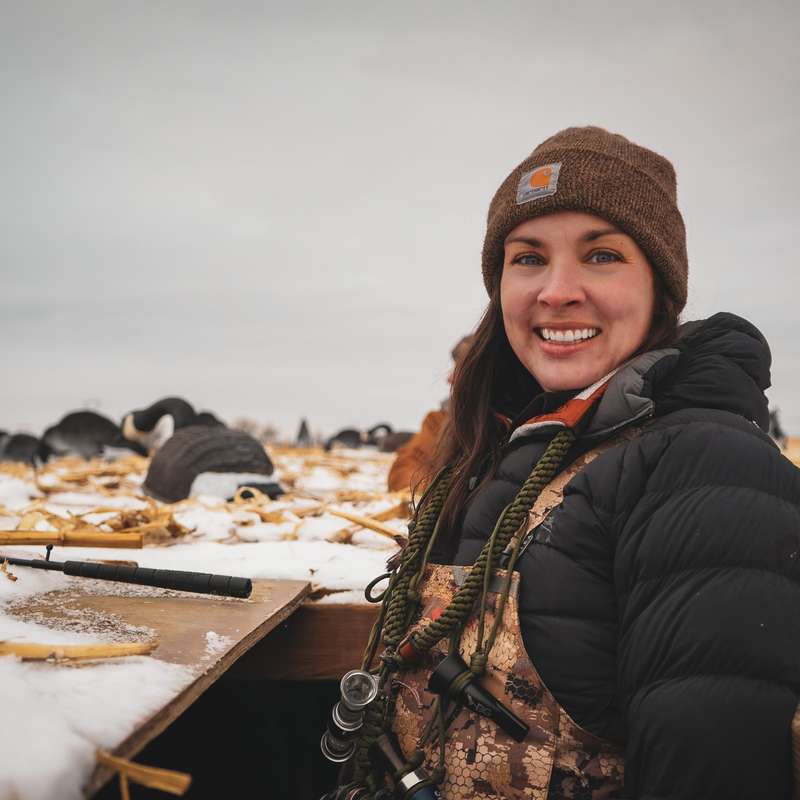
 Erin Crider
Welcome to DU Ascend where women share stories about how we're redefining hunting, community, and conservation. Today, I have my hunting buddy, Caroline Yielding, on the podcast. We're gonna be talking about how to prepare yourself for your next hunt now that you have found a hunting buddy. So we're talking about etiquette, setting goals. We're gonna talk about how far do you take shots, and then how to communicate when things maybe don't go so right. Stay tuned.
Welcome to the Ascend podcast, a podcast by and for women in the outdoors. Every episode delivers real stories, practical how to's, and a welcoming community to help you start, sharpen, or rediscover your passion for the outdoors. Authentic women, real stories, outdoor adventures, Ascend. Presented by Ducks Unlimited, the leader in wetlands conservation. Your next adventure starts here, the Ascend podcast.
Don't forget to rate and review the Ascend podcast. It's the best way to grow the podcast and help other women discover the next step on their outdoors journey.
Erin CriderI'm your host, Erin Crider, founder of Uncharted Outdoors Women. Welcome back to the DUCN podcast. I have Caroline Yielding, my hunting buddy, on the podcast today. She's addicted to upland hunting with her dogs. And bonus, we're both adult onset hunters.
So if you're an adult onset hunter too, and you're trying to find a hunting buddy, or maybe you've just found one, we're gonna be going through all the things that you wanna talk about before you go on your first trip. So let's get into it. The first thing that Caroline and I like to do is simply just set expectations for ourselves. We really enjoy going up to Wyoming and hunting public land up there, and we have a few things that we absolutely know we're gonna mark off of our list. But we do we're pretty good at setting our intentions and our expectations.
Our expectations, number one, to have a good time, which as we found in our last hunting trip, was not so abundant. But years prior have been really abundant. We're going on our fourth hunting trip to Wyoming together, and let's get into it. So, Caroline, what are some expectations that you have when we go hunting together?
Good morning. Yeah. Great to join you all, and and this is really great timing, Aaron, since we have a hunting trip to Wyoming planned next week. So really great timing. Yeah. We we just like to communicate our goals. So Aaron and I will talk about, you know, what seasons we really like to do all the things. So the last time we went up there, it was deer season. It was turkey season. It was it wasn't ducks yet, but it was it's always bird season.
So we had to communicate, you know, what kind of gear we were bringing and communicate how much time in the field we're gonna spend on each of those items. So, you know, so our goals are clear for each other.
Erin CriderMhmm. When we're deciding on what to bring, we're both trying to be really minimal. So when you find your hunting buddy, y'all, make sure if you're not driving, be mindful of how many bags you're bringing. I And know Caroline's probably laughing at me right now because I consider myself a minimalist, but guarantee, I will have, like, four or five bags of gear, which is why expectation wise, like, this next time we're going, we're not really doing a lot of fishing. And because waterfowl decoys and a a second pair of waders to and another shotgun takes up so much room, we're kinda, like, we're kinda skipping it.
Plus the fishing conditions don't look real great. Last last month, we rented a boat, and we barely fished. We just, like, floated on down to Turkey Island. And so we really didn't need to bring all this extra fishing gear, mainly because with the two dogs, with Honey and Abe, you have crates. You've got dog food.
We've got water. So since we're mainly upland hunting, and if you don't know what upland hunting is, we are in the plains for Wyoming, in the sage, in the cheatgrass, the invasive cheatgrass, and we're hunting chucker, some Hungarian partridge, just kinda what we're pretty focused on.
Yeah. I think the we'll be hitting the end of pheasant season in Wyoming for the first part of the trip, and then it'll end in the middle of our trip. But we will also have our ducks and geese when we're up there, and so, you know, that requires a lot of gear.
Erin CriderLot of gear. Yeah. Aaron is gonna try and be minimal and bring, like like, I think previously, I've brought, like, two dozen decoys, and you looked at me like, holy cow. What are you doing, girl? And so I think I'm gonna get I think I'm gonna just bring, like, six or maybe, like, steal Lars's decoys
so that we
Erin Criderdon't have to bring them. But being mindful of how much gear you bring is huge, especially in the little Tacoma.
Yeah. I have two large crates for my large dogs in the back of the truck, so that takes up a lot of space. So just being mindful of, you know, how much things you can bring and if you're really gonna use it or not.
Erin CriderI feel like another expectation that we really set is we're there to watch the dogs do their things. It has been so cool to watch Caroline's dogs, Honey and Abe, and I'm a let her talk more about them, to, like, grow up and, like, see them hunt other birds and learn how to hunt other birds. Because I guess when I got into upland hunting and I even own an outfitter. But as an adult onset hunter, I didn't know that you have to train your dog to scent different kinds of birds. Just because they're really good at hunting pheasants doesn't mean that they're real gonna be really good at hunting chucker or sage grouse or ruff grouse.
You know, they've gotta smell that. So I've been able to witness some of that. So our one of our expectations is hands down, I like to capture the moments. You know, do you wanna talk a little bit about Abe finding his first hunts? Yeah. So, you know, you just have to set your expectations
to where you well, if you're hunting with dogs, where your dogs are at in their journey for birds. So last last season, I had a puppy, and he was six months old. And I had my five year old, honey German wirehair pointer. And so you just had to say, oh, we have a puppy with us, so we can't be expecting a lot. You know, the first time he saw, he got on some hunts, he busted them, but he found that he got on that scent.
So a couple days later, we got on some, and he goes on point. And I was just, like, looking around and shocked that he was pointing because he's, you know, so young. And we go over, and Aaron's filming the whole thing. And about 18 get up, and I get two of them for him. But it was just really cool to see that progression of, you know, him two days earlier busting birds and to going to pointing birds a a few days later.
So just match your expectations with what your dogs are, where your dogs are at.
Erin CriderYeah. So I would say, as someone that doesn't own a hunting dog, if you're going with someone that is currently working their hunting dogs, be ready to not take every shot. You can't walk into that situation being bloodthirsty. Right? Because it might take a few times for the dog needing to bust the birds before they go on point. Because you're like, oh, I don't think he's pointing a mouse in the field anymore.
Yeah.
Erin CriderLike, those are probably and then I I just you know, I'm putting the gun away, and I'm just like, I'm filming. Like, I'm filming this moment. And I don't know. That was really cool. Like, we have it.
And Yeah. And it's funny in my own hunting how where how far I've come since I started, I was I felt like at first, was like, I just have to kill every all these birds. But now I'm like, if I don't even shoot, I'm I'm it's fine because I'm getting to watch my dogs work. So it doesn't really matter to me.
Erin CriderYeah. If you're finding your hunting buddy and knowing that you're not just, like, going out there for the first time to just hit as many birds as possible, it really brings down the stress level of the expectation that a lot of hunters have and a lot of new hunters have to get straps or limits of birds, it's not an expectation you should have. I don't know who set that expectation, but it was not us, and it was most likely not not any do it yourself hunter. Because hunting public land, we're so lucky to have so many conservation efforts going on here in the West, but hunting public land is so much fun. And if someone's already been in there, you just you just gotta kinda roll with the punches and find a new spot.
Right. And, you know, our last trip, you were saying, you know, it wasn't like past trips. It was that was because we didn't harvest as many things as we have in the past. But I still had so much as much fun as any other trip that we've had because, you know, we were just having fun, and we're outside all day and getting to watch our dogs work, and it was just a lot of fun.
Erin CriderYeah. And we got to visit some of the landowners' properties and see saw how they've been doing some restoration or they haven't been doing restoration and how the animals react to that. Like, we saw a sandhill crane on that little spot that we like to duck hunt that's real shallow. That was so cool. Yeah.
It was just
Erin Criderto see them. And crane season was over, but, we had permits. And, I mean, I think if we hadn't just, like, you know, rolled in there, let the dogs out, we maybe could have gotten one. But, like, who cares? Like, we saw one, and that's so cool.
We weren't expecting that. Mm-mm. Or the time that we sat and called turkeys, we had rented the boat, floated down the river during the daytime because we weren't dumb, got to Turkey Island, and, like, something had happened, like coyotes or something. Right? So we had to just change up our game plan and be flexible.
And so we went over to the private property where they normally roost at, and they weren't there either. And then I thought it was so funny how as we were leaving, here come, like, 30 turkeys up the gravel road. That was hilarious. Like, that's Yes. That's what would happen.
Right. Are, like, my nemesis. Okay. We've talked about respecting, like, personal space, gear. Let's talk about shooting lanes because I think our last trip, I also didn't know where you were when we were shooting that chucker, the one thing that we did finally harvest. Oh, no. We did get a pheasant, didn't we? Yeah. We got the chucker, but, like, I wasn't mindful of where you were. Right?
And if you were brand new to hunting and you don't know what a shooting lane is and you're upland hunting for birds, imagine walking through a field side by side, and then all of a sudden the dog goes on point, and you've gotta run up to that dog. Right? And, like, get really up on him so that you get the bird. And some and the dogs are fast, and sometimes they're far away. And if you've ever met me, I'm, like, barely over five feet tall.
Like, I got little little twigs' legs here. So I gotta move quick, and that bird got up and flew towards Caroline. And so here I am pointing my gun, and I was like, ah. We both looked at each other, and then I kept going past her, and then we did get it. But we have got some trust for sure.
Yeah. And plus we teach hunting for women, and we're not bloodthirsty. We're really good with our shotguns. And so being mindful of your shooting lane when you're going with somebody, Maybe even like I know Caroline's great, but she lets me take a lot of the first shots because she gets to hunt a lot. But there's also been times where I've been like, don't shoot the teal.
Like, when the teal land in the decoy spread, I'm like, don't we don't wanna shoot those yet because I really want the bigger mallards. And that's totally, like, based on like, I don't want that scare the mallards away trying to shoot these little, you know, tiny rocket ships.
And that's because you want you want those to act like real decoys. Right?
Erin CriderYeah.
Right.
Erin CriderYeah. And so it's totally preference where maybe if the only hunting that you've ever been exposed to is if birds land, you shoot them or if they come in at all. If anything comes in at all. You know? But we're in a new area. There are new different birds. I feel like I see in Wyoming than where I hunt in Colorado. Like, there's a lot of seagulls. Right? Like, we're close to a big reservoir.
We don't really have that in Colorado. We don't have a lot of seagulls running around. So being mindful of your hunting buddies, like, what they're really good at, and, like, following their direction is really key. Another expectation I have going into our hunts is we do a little usually a little duck hunting in the morning. But if it's, like, three days of straight duck hunting and it's really cold, we might only pick, like, two.
Like, we're gonna leave out, like, the coldest day or maybe the day that doesn't have the best expectations or maybe, like, like, the best weather that day. Or maybe if we only get a couple of days to hunt a little piece of private. It's kinda well, you gotta have flexibility and all of that.
Right. And that really that really, you know, goes into also your, you know, knowing your hunting partner's physical ability. Because, you know, if you're getting if you're gonna go duck hunting that day, then, you know, you can spend the rest of the day, these short really short days, you can hit the ground really hard for upland birds the rest of the day. Yeah. So you can just manage your expectations on, you know, how much can my partner, you know, walk today or hike around today?
Because that's really important to know. Because you you know, if you're if you're thinking, you know, I'm not the hardest hunter. I don't wanna walk 10,000 steps a day or 20,000 steps a day, maybe we'll both go out to the field, and and I'll just, like, be like, okay. Well, I'm I'm gonna be done after a couple hours, so I'll just head back to my truck and wait for you.
Erin CriderRight? Perfect example, I think, was we finally got into a rhythm last year or earlier this season where I think we looked at our phones, and I had hiked 20,000 steps, and you were, like, 15,000 just simply because I'm shorter. Right? I got shorter legs. And, like, I have to train to keep up with Caroline too over summer. So I'm hiking mountains. I'm doing not a lot of running. I've got some health issues with with scoliosis and all that stuff. Also, like, who loves running? Not not me.
Yeah. Anna, who's on my last podcast talking about a full send archery elk hunt with an 11 mile pack out. If you haven't listened to that one, you don't we talk about how you don't have to be that. You can start as a beginner. And she also has little tips in there about etiquette and hunting etiquette with her hunting buddy and partner.
So if you haven't listened to that yet, you definitely should because it is wild, and she tagged her first public land bull. If you can't see the theme here, we love public land. But I do have to hike and, like, get in shape to make sure that I can open the gates because Caroline's driving. Right? Also, if you are not driving, you're do not be a passenger princess. Like, whatever
I
Erin Criderfeel like, Caroline, whatever podcast you wanna listen to, like, I'm there for it. Or if when you get tired, I'm down to drive. Now I drive like a grandmother,
but
Erin Criderthe ticket I got outside of Hudson leaving your house does not
say
Erin Criderthat
I gave you your grandma.
Erin CriderI know. They caught me again. But not driving like a crazy person is great because I know we've been in that situation too where we felt uncomfortable being in the car or if the music was really, really bad. Or kinda just sat there. And then I suggested Suggested.
If did not want
Erin Criderthat. I was like, hey. I'm really, really into music and really into this new band right now. Like, can can we play some of that? Or, like, hey. I have this podcast, but, like, ultimately, whoever's driving, or if you need directions, or I mean, you've pretty much have the onyx spots picked out for the upland hunting. Like, I'm trying to do my part to aid in that. Right. Yeah.
And I I really appreciate it. Last our last hunt, I I usually drive just I'd I like to drive. I'm from Southeast Missouri, so coming out to Colorado, we just I just drive fifteen hours straight. I'm just used to driving, but the we hunted hard for about four days, and I drove up there. And I drove back in about the last hour. I was like, Erin, can you please drive? Like, I'm
Erin CriderGet us home. To take a nap.
Yeah. Get us home. Yeah. I need a little nap.
Erin CriderSo Yeah.
That was perfect. My
Erin Criderjob was to fill the gas tank.
Yes.
Erin CriderAnd then we split the Airbnb costs. And we also like, I feel like my diet has changed based off of how I've learned how to hunt, how we hunt up there. Like, I know I need a breakfast burrito to get going in the morning. Hands protein shake, breakfast burrito, and that will get me a couple hours in. And then we stop by the little bakery, pick up the sourdough and some coffee, and, like, I know that that stop is there.
And I see you're, like, you're eating an apple, like, on the way. You've got, like, a little bit of something here. Like, you're a snack like, you're grazing all
day. Snacker.
Erin CriderAnd I'm, like, a big meal gal, so I know that since Caroline's driving, I better have my meals set and ready to go. Like, if I plan on eating a big meal that I need more calories because I'm hiking about a quarter more than, then I need to make sure that that meal is quick or on the go or a sandwich in my pack, something like that.
Right. And so you you you need to talk about with your hunting buddy where like, first, where you're going because, you know, we're kinda going out far on BLM land, and it it would be hard to come back into town, grab lunch there, and go back out. I mean, that's a whole that might be an hour and a half driving. So and you wanna take if you wanna take advantage of all your daylight, if it's getting dark at the 04:30, then you wanna take those snacks with you. But if you're hunting in South Dakota where, you know, you can't even start hunting pheasants till 10AM, then, you know, it might be a little bit different.
You can you get to sleep in. You get to have that big breakfast. So just talk about those kind of expectations with your hunting buddy.
Erin CriderBut, yeah, knowing your your buddy's physical limit is really important in having this conversation because I could tell you I was gonna go take a friend, client of mine, just kinda go with her to support her on her archery elk hunt, and I was super excited about it. It's she picked out a really cool piece of Colorado public land that I've been to multiple times. I've hiked in Elk Camp back there, but I've never, like, hunted them myself back there. I've just taken things in on horseback, and I know the lay of the land. I've done some fishing back there.
And I'd had a negative I don't wanna say negative. I had a expectation setting conversation with her. And I think y'all really wanna hear that story. So we're gonna go to our partners, and then I'm gonna come back and talk about that conversation I had with her and how it ended up ultimately for her and I and what we're back on track to try and do this year. So a word from our partner Welcome back to the DUSN podcast where women share hunting stories as we redefine what hunting, conservation, and community looks like.
I am Erin, your host, founder of Uncharted Outdoorsman, and we're talking about hunting expectations with your new hunting buddy with my hunting buddy, Caroline Yielding. The story I want to talk continue talking about is how I was gonna help this gal. She's a client of ours at Uncharted. She's also just become a friend and helps us make a lot of good connections with, like for example, our elk camp was her connection that we did this year. I So was like, I'm gonna help her out and go on her elk camp with her because I have I'm I'm fit.
I knew I was gonna be fit that year to physically be able to keep up with Caroline. I definitely had a trained eye for elk at this point. I've got a lot of archery elk talk. Right? Like, I've been somewhat involved, and I have all the gear that she wouldn't need to buy. So I was gonna tag along with her. But the average elk filled tag is one every seven years. So I'm trying to, step one, set her expectations low, really low. Like, hey. We're gonna have a good time.
We should bring fly rods. Right? Like, we gotta find other things that if the elk situation is a no go and we're not physically capable of making it over ridge over ridge over ridge, then the conversation we needed to have was, what are we gonna do? And our elk hunt kind of fell apart at that time because I was, like, setting the expectation that we should not expect to get a thousand pound bull elk on her very first archery elk hunt. Right?
And those are the expectations Caroline and I always said. And because of that, another gal set an expectation that, oh, yeah. She gets lucky. She's tagged a moose. She's done this. She fills this tag. It just works. So she gravitated toward that person, but didn't have the expectation phone call. And I had the phone call from her crying on the top of the mountain saying, hey. This didn't really work out.
And it was all because of expectations. That gal wasn't physically fit. She didn't know where the elk were. She brought her her partner, which was like a surprise, and it was a little more expensive than they were expecting or that she was expecting to pay because they ended up not camping. They stayed in a very expensive part of Colorado.
And, it just kinda fell apart all because they didn't have this conversation that Caroline and I are walking y'all through to set expectations and how to ask questions about that because scenarios do come up. So helping in the field is kind of the next topic, and I wanna say that Caroline's really helped me in the field when we were on that white tail hunt. This is just like a meat hunt. We're sitting at a fence. Right?
And this little doe we don't even know if it's a doe. It's a baby. It was come it came running in at us like a little puppy dog.
Yeah. It was definitely a boy. It was like,
Erin Criderjoy going on. And I've got this doe tag, and we just have, like I don't know. Maybe it's, like, two acres. Like, it's a long slot of land in in the country, in, like, a rural part of town. But, like, if I were gonna shoot this doe, we would need it to be down immediately.
And so all of a sudden, three does appeared. Right? They walked, like, 12 feet from Caroline, and you didn't move. You didn't even make eye contact with me. And once they got out there, I'd kinda decided which one I was trying to take, the bigger one, because I wanted the most meat as possible. Right? And she was pretty broadside to me. And so I I right before I I took the shot, I looked at Caroline, and I was like, the one on the left. Right? And you were like, yes.
And so I took a shot, and she took it like a champ. Right? I have, like, a little compact two forty three. She moved, but it was getting dark. And so I was like, Caroline, is the one way on the left? Like, because they had kinda moved around. And she was like, yes. Another great thing to help with your shooter is ranging. We already knew this this doe was within my comfortable range, which was 200 yards, but she kept an eye on that doe. Right.
And she had it in her binos. So that was super helpful. It felt made me as a newer big game hunter feel really, really confident. And then I immediately go into shock.
Yeah. Yeah. So that was that was a good, you know, how to show, like, how to help your honey buddy, because you went into shock. And I was like, okay. Let's you know, we are able to this is private land, so we're able to bring our truck onto the field.
So I'm like she's like, oh, we're gonna carry this out. I'm like, no. We're gonna bring our truck over here and pick this thing up. And, as soon as we do that, we get it back to the house. We and I start, field dressing it because Erin's in shock and just keep going.
And, finally, she, you know, settles down and starts, and she's helping, field dressing. We get it all done and put in the house, and it was just a really cool experience, you know, to be able to help your help your friend, with a hunt like that. Her first white tailed deer.
Erin CriderAnd I, the following week, had shot my first buck. So I told that gal that was with me, hey. I'm gonna go into shock and just need, like, five minutes to, like, gather myself, you know, like, hang out with me. And before that, like, thinking back, the my first Tom Turkey that I shot in fall. I don't always shoot hens, but most of the time I do.
Zero hunting ego over here. I also went into shock. And so now I know I don't know if it's because it's a bigger animal or what it is, but when I shoot geese, zero hesitation. When I shoot ducks, I'm so excited. But when I shoot something bigger or maybe a new species for the first time, I, like, blackout. And now we know. And Yeah. That's just how we come to find that out, I guess. You don't know till you do it.
Right. And you can you should even know if your hunting buddy is even ready to take that kind of shot, if they're on that level yet because and you have to be okay with, you know, you doing all that work and then being like, you know, I'm I'm good. Like, I I don't need to take the shot right now. So Yeah. Also be like, have those expectations and talk about that before you go into your hunt to make sure that you're okay with, you know, you helping your your friend do all that work and then not being prepared not to take the shot.
Erin CriderYeah. That's a good point. I also liked how this last time we went, I decided not to take the shot because I was like, these are just really little. And I don't know if it's because I always just see mule deer, but I was like, do I wanna take an hour or two of both of our time processing this very small doe? Or we hadn't gotten a public land bird yet, so we spent the rest of the day before driving home continuing to trucker hunt.
We actually got one, and that made a ton more sense aligned with our expectations than Mhmm. Me trying to get this little tiny dough because the what we found out was the blue tongue from the botanical eyes was real bad. And doing a little bit more research on blue tongue as a new newer big game hunter is like, oh, I probably it's also in a CWD unit. I probably don't wanna pull that tag moving forward because you're it looked like you're not supposed to eat the meat after they've had it once, and you can tell by the hooves. So Nice.
And, like, leaves our our time frame open to turkeys and fish and upland birds and waterfowl. Like, there's no shortage. I will also say I've helped a lot of gals try to get their first pronghorn. In the first pronghorn hunt I ever did, the gal didn't sight in her gun. Pretty disrespectful.
She had a shot that wasn't fatal, and she didn't bring, like, her whole box of ammo as a new hunter. You should definitely bring your whole box of cartridges for your rifle because you are new. Right? And my expectation was we were gonna get this animal down, and she didn't have the same expectation, but then I told her it was illegal to leave it. Finally, we did get the animal down, but afterwards, we had a very tough conversation about how like, I didn't know she's she had mainly been hunting in Georgia, so she was taking headshots, which that's not really a thing that you do out here in the West.
Like, you get them in the body because you have lots of places to go, and the animals are big. But in Georgia, they're significantly smaller. And so she explained to me that if she would have shot it through the heart or the shoulder, she would have been losing meat. But I didn't know that that she was planning on taking a headshot. So I tend to shoot my deer with that little compact two forty three within 200 yards three times.
And so Caroline knows that until that third one goes or the animal's, like, totally on the ground and has been there for a minute, like, there's probably gonna be a third shot. So take that into consideration. Also, when I take girls hunting, I tell them kinda what I want in return. And so the first couple times I took girls pronghorn hunting, we like, I was like, hey. If you can give me a quarter.
Right? So if I'm guiding you onto this this was before I was legally an outfitter. If you're guiding me onto this, you know, give me something. Right? Fill my gas tank. Bring lunch. Bring breakfast. Some give me some meat, like, something. So if someone's taking you and is being a mentor, like, invite them over for food. So when we were turkey hunting, we ate part of your husband's moose, and that was so cool.
And then this time let's let's see. We had your pronghorn when did we have your pronghorn? Oh, the last time we went Yeah. To Yeah. And that that's like that's what I thrive on.
Yeah. We had, like, pronghorn tacos for supper. We had pronghorn breakfast burritos. That's what we were eating the the whole trip. So that was really cool.
Erin CriderYeah. So be able to give back in ways like that and respect the the tag holder in what they decide to do.
Yeah. My first the I'm from Missouri, so we did we sit in a lot of stands and hunt deer. And my first I mean, my first deer hunt out west, I went with a friend, and she had the tag, and I didn't have a tag. And So she was showing me the ropes on spot and stalk. And she got a buck, and I helped her carry it out, pack it out, and field dress it.
And so she gave me she gave me probably, like, ten, fifteen pounds of meat a couple weeks later after she finished processing it just to show her appreciation for helping her pack it out and field dress it out there, which was really cool.
Erin CriderYeah. That's how you get invited back. Right? Mhmm. I definitely wanna say that I never, the girl that didn't sight in her gun, I never took her hunting again. That was not an invite back situation.
Yeah. So you definitely
Erin Criderwanna sight in your gun and shoot it, like, not free handed, but not on, like, the the pedestal that you used to sight it in. You know, get some reps in.
You know something that was really cool that happened recently this past weekend on our, guided pheasant hunt, we had a girl that that signed up and came to our pheasant hunt to learn about hunting up on birds. And she told us that one of her friends has dogs and is a big bird hunter. And she came to us to learn about that because she wanted to really already know all the information to go with her friend and not be not not holding her back, but just she wanted to level up before she got out there with her friend who is already very knowledgeable. So that was really cool. So if if you could do something like that and up your knowledge before you go even go with someone, that's a really cool that was I thought that that was really awesome of her to up her knowledge.
Erin CriderI think anytime you can share knowledge that improves your hunting buddy, that's where it's at. Definitely share everything you know or share the things that you don't know. Like, there's some days I'm like, I have no idea where the birds are. I don't know what we're gonna do. You know? And you just kinda gotta roll with it. Mhmm.
Yeah. And, you know, some days we you and I, we see hundreds of birds one day, and the next day, you know, I'm like, okay. I I wanna try these new spots, and maybe we don't see any birds today being that's just like you just wanna you wanna try new spot areas and not overhunt any areas. So just you won't see any that day, and that's just you just have to be happy with being in the outdoors with your friends in some beautiful areas.
Erin CriderYeah. So another way to get invited back is to capture some moments, I feel like. Seeing the moments that I've captured, I feel like I definitely wanna print some of those photos of you and Honey and you and Abe, and that means a lot to me. Maybe that's not how I get invited back, but that's how wanna continue to give back to you and record some of those moments. I think that looking back, I wish I like, I hardly remember Neve as a puppy because I was so busy, and I really wish I had had some moments that I had captured with her.
You know? Mhmm.
Well, I definitely appreciate you you doing that. Because I'm not like a big I'm not like you know, I I don't think about it in the moment taking stopping and taking a moment to take a picture. So
Erin Cridertrying to hunt. Yeah. Mhmm. Yeah. You need someone else to do that. You know? And I also feel like you're a better shotgunner. So it you're kinda like, it's your dog. You've trained them. You know them better than than anybody.
We're at this hunting spot was introduced to me via a man that I worked with on a nonprofit board. I've been going there for well, this is, I think, my eighth year going up there. So sharing some of those public land spots is really helpful to bring to be invited back. Like, who have you invited? Like, what are what are some tips to folks that you can give to get to be invited back? Food gets me. Like, I'm gonna invite you back if you bring me food.
Yes. Last year, one of our friends, she came with us. She hasn't this year because she's, been pregnant, but she brought so many snacks and food that was it was incredible. And I was like, you're always invited. You're uh-oh gosh. But really It doesn't have
Erin Criderto be fancy.
No. No. It doesn't have to be fancy at all. Like, you know Those
Erin Cridersweet potato chips she got from Costco?
Yeah. Boiled eggs. Like Yeah. Some taking some protein all the time. Yeah.
Erin CriderAnd she's invited back because now she's gonna be she's gonna have mom snacks like you. Like, how am I gonna be invited back? You know? Yeah.
Yeah. She had the mom snacks before she was a mom for sure. She was preparing herself really great.
Erin CriderI've also invited back gals that have brought me ammo when they've used my gun. That's big one. And not the cheap stuff. They're like, no. What do you shoot through this? And I'm like, oh. Oh, well. You know? And I'm not like, hey, business. You know? $80 $120 box of ammo. I'm like, oh, here's, like this is actually what I shoot. And they're like, gosh. This is, like, expensive. And I'm like, mhmm.
That's what I buy. But, also, my gun is like my guns are, I feel like, between 1,500 and $2. Like, that's not like, the last gal that borrowed it pretty much threw it in the sand, and I have to take it to get professionally cleaned. And that's kind of a bummer. Am I gonna let her borrow my gun again?
Maybe. But I'm gonna show her that how expensive it is to to it needs to Caroline, you know I've got a dirty gun. This thing is so bad. It needs to be taken in and be professionally cleaned because it's, like, in the stock. Like, it's
yikes. Mhmm.
Erin CriderIt's bad. And there's a lot of rust in there now. So
Are you gonna have time to do it before art? Before
Erin CriderI have to put that off tomorrow, or I need to go buy a tool and watch a lot of YouTube. But I do happen to know a gal, and so I'm wondering if she can, like, do me a favor. Because I'm gone. Yeah. I'm leaving, like, this week, and then I'll be back. And then we go on our trip. Yep. Other ways to be invited back.
For me, I think if being on time, like, if we say let's just say we're just doing we're planning a day trip, and we say, like, let's meet here at the trailhead at 05:30, and you don't and I'm there at 05:30. I'm I'm there you're probably gonna be there at five. If we say be there at 05:30, and you don't roll in until six, that for me, I mean, honestly, that's one of the biggest ones that, like, you know, I'll I'll cheer you on from afar, but my expectation is that we're always early. If you're not fifteen minutes early, then you're late. So you know, because your time like, you're driving.
You're using, money gas to drive somewhere probably a couple hours, and, there's only so much daylight that you have to hunt. So just be on time. And I feel like hunters are pretty good about that, but every once in a while, you'll you'll, meet someone that's not a not a morning person. So just set your expectations with with that.
Erin CriderYep. I also feel like communication is the biggest one. And if you have, like, really tight relationships with people, then you have to work even harder at communicating. And 2025 has been the year that I've really worked on communicating. And sometimes I tell gals, like, hey.
This isn't like, this relationship, whether it be, like, I just go high alpine fishing with this person, being able to be like, hey. I just don't think we mesh because I'm an early morning person, and you're definitely not. And, like, it's just not fun to hang around you. And that's okay to say things like that. Yeah.
But being able to communicate that in a way that's not like, hey. See you. Like, you're the worst. Right. You don't have to pick at someone's scabs at things that they're either trying to improve on, don't know that they need improve on. Like, I I it it takes a while to get really good at shooting a shotgun. Right? And you just wanna communicate. Like, hey. I'm new at shotgunning, so maybe, I don't know, do a follow-up shot.
Or if this is, a big deal to you, let me take, like like, you take the first shot and just having that communication of, hey. This this rubbed me the wrong way, or, oh, like, you barked at me, or just communicating. Because it might be that tired, didn't eat enough, low blood sugar. I know I'm guilty of it. And setting expectations and communicating your feelings and communicating how much you can physically do will really turn around a a trip because these relationships are really hard to keep because they're so sacred, and that's why few people have a hunting buddy.
So when you get one, being able to communicate and fix anything that needs fixing, gotta be open to that.
Right. No. That's really good to talk about those things before you you, head out on your trip, for sure.
Erin CriderAnother thing is help without being asked. So, for example, Caroline and I teach a lot of hunting. I also teach a lot of fly fishing. The more research you can do or the any classes you can take either through all the places we talked about on the very first podcast about finding community, seeing what people are posting. You know girls are gonna get in those little comments and be like, ugh, you know, this and that.
And you can pick up some vibes on, oh, okay. Maybe I shouldn't do this because it makes the hunter feel not great. Like, if you're taking someone turkey hunting and you've bagged 20 turkeys and she's never bagged one, I don't know. Maybe be like, hey. Do you want the first shot at this massive bird?
You know? Because I got, like, 20 of these things. You know, just communicating about those things. Can you think of other things to add to that? But after you find somebody educating your oh, YouTube? Getting on YouTube? I'm not a big YouTube girly now.
Yeah. I mean, if you if, you know, like, you said YouTube, you know, if you're especially if you're hunting with someone that this is like if, like like, let's just say me, like, I love upland hunting. And if you were like, oh, I did some research, and I think maybe this spot and this new spot, we should try this new spot because I see it has this kind of, habitat on it. So, like and, like, you the new person bringing that kind of information would be really cool because they're just like, you you don't expect that. So that would be and you'd be like, oh, like, you've done your research.
You're showing up prepared. You know what we're looking for. So that is really cool to see.
Erin CriderAs easy as, like, what kind of dogs are Honey and Abe? How do they hunt? Right? Mhmm. Yeah.
Knowing that they're pointers versus flushers and how you can prepare differently, at least I do, like, that's something you wanna walk into the situation, and you don't want to have the person taking their time that is taking you to be like, okay. This is what this dog does, and this is what that dog say, hey. I watched a bunch of YouTube videos on hunting Hungarian partridges with wired haired pointers, and I know that I need to be on the tail of this dog.
You know that you'll have to read about that you the dog might be working 300, 400 yards out. So when we when our Garmin goes off and it says that dog's on point, we really have to be booking it. So conserve that energy for that and, you know, bring those snacks for that.
Erin CriderAnother thing that I saw when I was YouTubing, and that is a brand new Upland Hunter, I really wanted to bring, like, a backpack of gear. It was, like, kinda heavy. Right? Heavy. Because it was cold, and I wanted to bring my hot tea and my metal thermos. I was dumb. I don't need a whole backpack. I just needed, like, an orange hat, orange vest, and, like, some water and, like, my sandwich.
Yeah. And, you know, you you you find out for the day if, you know, we're gonna be making a little loop. Are we gonna be able to come back to the truck? I mean, you shouldn't need a lot of stuff if we're able to come back to the truck a lot of times. Or, you know, you just say like, hey. I'm gonna, walk this field for an hour, and then I'm gonna go back to the truck and take a little break, come back out with you on the next field.
Erin CriderYeah. Another way to help without being asked is to make sure that you do know gun safety so that they don't have to be like, okay. What is this girl gonna shoot at? Right? Like, be like, oh, hey.
I'm unloading my gun, and I'm putting it here, and I'm putting it in the back of the trunk next to the dog crates and just being able to help. Like, Abe always comes to me for some water, and I I got nothing for him. Like, that's a way I could help if I just bring in another water bottle knowing Honey wants her water poured into her princess bowl. You know?
Yeah. Yeah. And, you know, you just set expectations like, you know, I have to who with with you, even with everybody I hunt with, I just have to say, you know, these are my hunting dogs, but they're also members of my family. So, you know, we don't shoot birds on the ground. We don't we I want you to shoot skyline like the blue sky and above, because I don't want anything to happen to to my dogs, because I care about them a lot.
I mean, I've spent a lot of time training them. So letting your hunting buddy know all that information. I mean, that's kinda good stuff to repeat each time you go hunting, even if you've hunted with them, you know, a lot.
Erin CriderOr they're they're advanced. Like, just Yes. Still making sure, hey. I don't know about, you know, what uncle Billy told you, but we don't shoot birds on the ground here when you're with my dogs. Right.
Yeah. I mean, because, the people that have probably been hunting the longest are usually the ones that that might make a mistake just because, you know, it's it's second nature to them. So you just wanna remind them, like, hey. These are my my terms, for us hunting together. And that's okay. I mean, you know, like, no one should feel upset about, you know, hearing that from you. Like, you know, you should set your expectations pretty quickly on that.
Erin CriderAnd I feel like that's what my whole goal is with my waterfowl hunts. I have a lot of gals that are they see limits of birds. Right? And they're like, oh, I'm gonna go sign up for That ain't that ain't what I'm selling. I am selling hunting expectations and experience.
Right? The probability that a brand new hunter is going to get a limit of birds is very, very low. As an an intermediate hunter, I still, every now and then, I maybe get a limit one, two times a year, and it's probably gonna be in Wyoming where there's nobody. Otherwise, my expectation is, like, hopefully, I get to shoot my gun, but we're probably gonna solve all the world's problems in this waterfowl blind. But, like, I don't want the girls to be late.
That's an expectation I have. I want them to help, like, already know that we're gonna set out these decoys, and I'm gonna explain to them how to do that. But don't show up to my blind for free thinking like, oh, I'm just gonna relax and, like, hang back here and, like, get a little bit of burp. Like, no. I'm bringing you out for a reason. Right? Mhmm. Especially if it's free, knowing that I charge for those experiences. That's the kind of stuff
you wanna learn about. Like, you wanna know, like, oh, why are you setting the decoys, you know, three in a bunch? Or, you know, however you're doing it. Like, why are you doing that? And is it different at different times of the year? And so you should wanna get out there and gain that knowledge from your hunting friend.
Erin CriderThen you don't have to be dependent on me. Another thing I really like with girls come to the blind when I'm actually hunting too is I don't want them to call up my birds. Unless I've heard them call before, like, if I've got feet down, I don't want them to not land or come in closer or come you know, I've if I've been calling at them and calling at them and they're doing circles and they're really looking at us, I want you to keep your head down if I'm hunting. In my classes, I let the girls look at the birds because I want them to see how they're reacting so when they get good at calling, they know why the birds are doing what they're doing. Right?
Like, how are they behaving? Animal behavior is really key to becoming a good hunter. So I'm always trying to describe what we're seeing, but I don't want to have to tell the girls, like, hey. Don't move. Like, don't move. We got we got birds working. Like, don't move. Let don't call. You know? Unless they are good callers. So those are the things, like, I don't want to ask. You know?
Thank for your you you you did the same thing for the for turkeys because, you're an excellent turkey caller. And
Erin CriderOh, thanks.
Yeah. This past year, we went to South Dakota Public Land, Mountain Miriams, and Aaron called them in from miles away. So, you know, I I have not perfected that, especially the mouth calls. So I would never, you know, mess that up and try to, you know, like, think that I'm gonna start calling when she's already doing an excellent job. Like, I can that's something I can do in the off season, you know, test that kind of stuff in the off season.
And that's I say the same thing about going to the, like, shoot clays. You know, people are like, oh, let's go practice and shoot clays. And they'll ask me during the hunting season. I'm like, no. Now is hunting season. Mhmm. We can go shoot clays. All summer. Our shots all summer long, but now we don't have time for that.
Erin CriderYeah. I felt like the your turkey hunting spot was a great like, for that hunt was awesome because you had the location, and you're like, Aaron, you can share any other of my turkey hunting locations. Don't share this one. This one's really special to me. And, like, when people ask where we were, I just gave them the state, and it's just etiquette to not give them, like, the honey hole of that exact location and spot burn it by putting more than just the state or the national forest, but putting, like, an exact pin to a whole bunch of people or in a Facebook group, you might not wanna do that.
But you can say, you know, we were in some really cool parts of South Dakota that it's just you gotta work to find spots like that because they were everywhere. And I don't think I really don't think a lot of people expect you to give them their honey hole spots, but just give them something to get started. Otherwise like, if there someone is asking you, like, where do I go? This specific kind of upland bird hunting, you give them, like, a sweeping area that they can go and do a little bit of research in so that they can also put in the miles. Another great way that we share Carolinas I share Colorado public land spots is giving them the state wildlife area.
It has the map. It's got the regulations. But I thought that that hunt was pretty cool because you took me to your hunt your honey hole. I brought no one. Didn't tell anybody. Like, my husband knew where where we were at. And then what I brought was the outfitter tent. I brought no food. You brought all the food, the moose and all that. The outfitter tent and the calling.
The calling.
Erin CriderYou know? That was my
That was key.
Erin CriderYeah. And then it would be really cool if we could get some ebikes back there this year. Like, that is how I'm gonna continue to give to the experience so I get reinvited.
Yeah. That was, you know, just it's really cool if you guy if both people in your group or however big your group is, you know, they all have, like, little things to bring to the table, like the snack person, the call the person that's great at calling, the person that has a location, the person that has the dogs, you know, if you can make up your hunting group like that, then you do you're really onto something really great there.
Erin CriderMhmm. And I know to our Wyoming trip, I'm like, okay. Anybody that wants to come because people see it on social media, they're like, oh my gosh. That looks like so much fun. And I'm like, because we have all of these steps in place, that's why it works out.
It has not worked out with girls in the past. But now that we have, like, what we like to do, our personality we're I mean, we're both from Missouri, which I think is pretty funny. I don't know if that has something to do with our personality, but we're both flexible. We have low expectations of actually harvesting. We have very high expectations that this is the very rare time that we have away from our families, and we're trying to make the most of it.
And it might require driving at 4AM, but that doesn't really help
so much. Days off from work each year, like and I'm a lot of them I'm spending hunting, so let's make the most of it. Even if we don't harvest anything, let's let's have fun.
Erin CriderYeah.
And to have a lot of fun, you really have to be prepared, by having these talks and communicating beforehand.
Erin CriderYeah. So the all in all, to wrap this up, the best hunting partners are the ones who don't always shoot something, but they're flexible and always have a great time and are fantastic at communicating. Thoughts, feelings, ideas, places to go, people to bring. That communication is open, but harvesting almost nothing is we had a great time too. So keep that in mind.
Thanks, Caroline, for joining us today. We really appreciated all your input on hunting etiquette, how to find a hunting buddy, how to communicate with a hunting buddy, and sharing some stories that we've had together in Wyoming on hunting. Thanks for helping us redefine the community here at the DUSN podcast. And for everyone listening, thank you for joining us today. If you'd like to drop a message in our comments about what else you'd like to see in the future podcast, let us know.
Stay tuned, and we'll see you at the next one.
Thank you for listening to the Ascend podcast. New every week, the conservation driven podcast one week, and our adventure video series the next. Watch the Ascend adventure episodes on the Ducks Unlimited YouTube channel, and be sure to like, share, and subscribe. Opinions expressed by guests do not necessarily reflect those of Ducks Unlimited. Until next time, follow your outdoor story wherever it leads you.
Ascend. Don't forget to rate and review the Ascend podcast. It's the best way to grow the podcast and help other women discover the next step on their outdoors journey.