



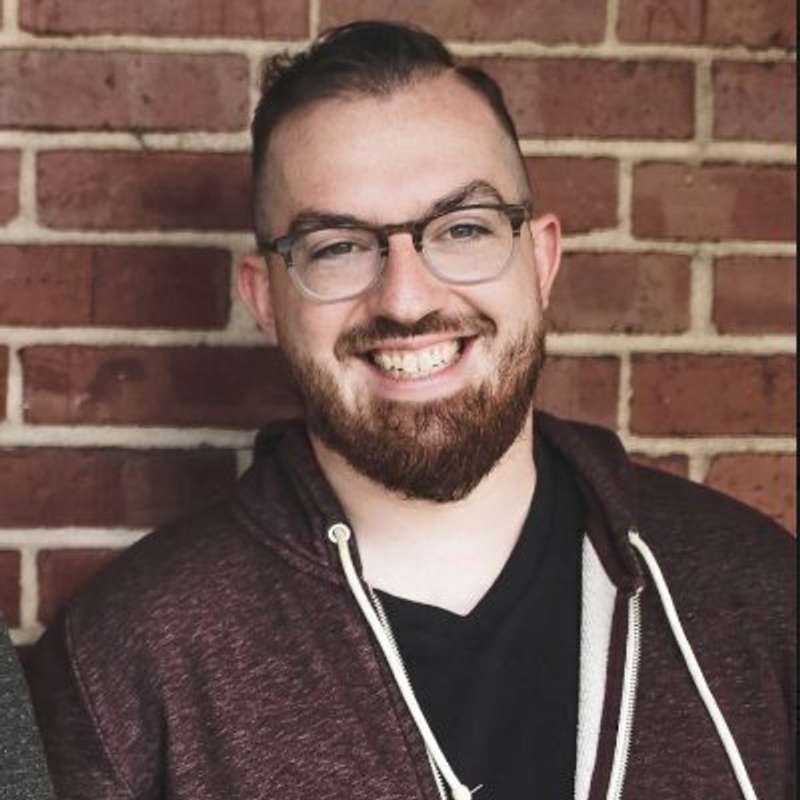
 Mike Bifulco
Hello, hello, and welcome back to APIs you won't Hate. My name is Mike Balco. I am one of your api co-hosts and guide through the world of designing APIs and building APIs, and doing all sorts of good stuff with API tech. I am joined today for an interview with a new friend of mine, someone who I met at a conference here in North Carolina. We're gonna be talking a little bit today about his project and some of the sort of mission of open source and supporting open source and things like that.
So today I'm chatting with Dudley Carr from Stack A Dudley. How are you doing today?
I'm doing great. Thanks for having me on.
Mike BifulcoYeah, of course. Super happy to have you here. I have lots of questions for you and I'm, I'm super glad you were able to make it because from our initial conversations when we sort of bumped into each other all over the place at all Things Open your work seemed very interesting to me. And I think a lot of the squad here that is part of the APIs you won't hate community will really. What you're doing. So I wanna talk all about that.
I wanna talk about how you got to where you are and what you're doing at Stack and just kinda get some of the history on, on the project in yourself. So tell me a bit about yourself and tell me about Stack.
Absolutely. So I've been a, in the software engineering space for the. 22 years. I did my undergraduate in computer science at Stanford and graduated at the peak of the dot com bubble burst. And briefly did a stint in finance, actually worked at Lehman Brothers on their exotic derivatives until I realized that stuff is insane and I got out. In the last 20 years, I've spent all of it working with my brother, who also did computer science, and so we've gone from one venture to the next.
So he is not here, but is probably the. More important of the duo. And anyway, we did our first startup in Rhode Island in my parents' basement. I think there was radon in that basement, but we we managed we actually built in the, you know, 2002, 2003, we built a product that. Became g talker. It was flash-based, you know, pre action. It was action script, but before it was even before they released all of their UI toolkits and stuff like that. And back backend was Python.
It was initially a desktop application, then became a. Web-based product. And we developed that out and ended up selling that to Google and moving to Seattle in 2006 to join the Google Talk team and work on that. And we spent about five years at Google going from one project to the next. First we were in apps and and then eventually I worked on Google Voice and then before leaving. So that was super formative for us. We learned a lot of things, met a lot of great people.
I think that was kind of the heyday for Google And and then after that we, we did some more startups food, food related things. And then we joined a company called Moz that does SEO here in Seattle. And we spent another four or five years there, I helped run a large portion of their engineering team and then grew some of their product areas.
That was also really formative for us in terms of, you know, understanding that space, growing teams and you know, just going through various product life cycles and things like that. At the end of our MOS experience, we actually did another startup with a friend here in Seattle around crowdfunding. And this was actually crowdfunding for sports team. So, There was another platform that was really taking off. We found out about Stripe Connect and started using that.
And really the, the basis for it was, you know, you have like a high school football team. They're selling candy bars and things like that. There's a lot of inefficiencies there and there's a lot of price gouging actually by merchants who sell products to schools to do that. And so there was. You know, 2017, 2018, there was a real impetus to you know, move all of that stuff online.
And we have a lot of learnings that I think happy to chat about, but that was kind of formative for us in terms of thinking about, you know, how you move money from a set of people who wanna support something to, to the recipients and what all is involved in that. That was also just kind of how we, we transitioned from that into consulting. So we've been doing consulting for.
Four years you know, we're kind of embedded engineers and product specialists in inside of organizations and to help them transfer in companies. And that's gives us a ton of flexibility and allows us to do cool things like what we've done over the last couple of years. At the beginning of the pandemic by the way, we launched something called Covid Trace. So we had the hot idea to do contact tracing. We tried to launch an app immediately. It was blocked by Google and Apple.
Mike BifulcoOh wow.
you're, you're not doing anything location based and we're gonna sort this out first, which is great. I think it was totally the right move on their part. We ended up adopting their the exposure notification. APIs that they have, and we ended up lo, I think we were the second app to launch in the United States.
And so we launched with the state of Nevada and worked with them over the course of two years doing exposure notifications, rolling that out for iOS and Android, and then eventually moving all of Nevada off of our custom app onto IOS's, built-in exposure notification function. And at the same time building out other things in terms of getting results to people and things like that. So really interesting problems around health totally unanticipated.
So that, that was actually that was all open source. We released all of that infrastructure, open source and the apps. And then, yeah, about a year ago we started on decade.
Mike BifulcoWow. Yeah, that's some in incredible back history there. I, I. Was not prepared for that, that much. Incredible problem solving that you've gotten into in your, your career. For sure. As someone who lived through an entire pandemic of being, you know, Locked in my home and not leaving and being very concerned about public health and those things. Super, super cool to hear, hear you worked on that and, and obviously impacted so many people.
And also, you know, collaborated with the, the big organizations like Apple and Google. That's massively cool to hear. I also don't think I realized that you and I had some sort of shared overlap not overlap, but, but maybe an odd Venn diagram of career stuff before working at Stripe, I worked at Google for a couple years. Not quite on Google Voice, on Google Assistant, so voice related stuff at Google.
Although I'm no longer there and actually probably worth mentioning for posterity since you and I met at All Things Open. I'm also no longer at Stripe. So I'm, I've left Stripe in the past couple weeks, but I'm very curious to hear about your experiences with Stripe Connect and, and all that. And so.
All of this history of all the crazy things you've done and, and like working with complex teams and big problems and across devices and problem spaces, and I'm sure languages and all the other things that have changed since what, 2003 when you first got into the the, the world of, of building things has led you to where you're at now. So tell me a little bit about Stack Aid and what you're doing. There.
Yeah, so Stack stack is a service that allows you to fund your second first order and second order dependencies automatically. It, the impetus for it came about a year and a half ago when we.
You know, repeatedly saw articles about people exasperated by their inability to sustain their open source project because, you know, the demands have increased on what they have to deliver and the reach, you the reach of their open sources beyond their wildest dreams, but, you know, they, they basically pay for it in their spare time or it takes away from other paying opportunities that they have. And so you see a lot of people kind of torn in those situations.
We, that really resonated with us. As I mentioned, you know, we had spent time in the fundraising arena and we, you know, we saw. Definitely momentum around Get Up sponsors an open collective, but we, we thought that there was an opportunity there. You know, I think what's super interesting about the software development space as opposed to any other space where people are trying to raise money is that we know we know what, what you use, right?
There's sometimes it's imperative, but increasingly it's a declarative. Way of specifying all your dependencies. And so we can, we can do so many things automatically to determine what you use and, and potentially influence how we allocate money. And so the, the, the seed of an idea was there and we started exploring, you know, the feasibility of it and what that would look like, and is it an effective model, things like that. And so that's been like the last year and it's, it's.
Super interesting. Kind of flushing that out and we're, we've been super happy with the results and the initial reception when we launched a couple of months ago.
Mike BifulcoSo. I've seen it and I'm sort of familiar with the product, but I wanna make sure that you know, it's abundantly clear what you mean when you're talking about this. So we're talking about funding open source projects in a way that is sort of sustainable and based on your dependency graph for projects that you're using. So when you say first and second order dependencies, what do you mean?
Yeah. So by first order, so let's take a Packers saw JSON in the node E. The first order of dependencies are the the dependencies and dev dependencies that you list directly in that za js o n. Now, those first order dependencies in turn have their own za js o, where they list their dependencies. That would be the second order of dependencies. Now you can walk that tree down all the way down, and there are gonna be lots and lots more. not unusual for a project to have literally thousands of.
Dependencies in their dependency tree. But you know, from a funding perspective, you have to draw the line somewhere. Otherwise, you know, you take a certain amount of money and divide it into tiny little pieces and it becomes somewhat meaningless. So we wanted to, you know, the, the easy thing was would be to just fund first order dependencies. But we, we realized, you know, a lot of those open source projects also want to give. And if we, you know, defaults matter.
And we realize that if we came up with a mechanism that, you know, when you find a first order dependency, it passes some of that onto its dependencies. You know, you're doing that automatically for the ecosystem. You're bene, you don't have to have everyone opt-in in order to have further reach into the ecosystem. And so yeah, that was the impetus to fund first and second order depend.
Mike BifulcoYeah. Got it. So from the, I I, gosh, I don't even know what, what you would consider to be the end user, but from the perspective of someone who is doing the funding, doing the supporting what does that look like? Like what is, what is the process for me? Say for a project I'm running, let's say APIs, you won't hate.com, right? It's a, it's a no JS project. We've got a whole heap of dependencies that are sort of built into this thing. What would I need to do to adopt.
a great question. So, you know, when you go to Staca us, there's the first step in the onboarding process is oh, often thing with GitHub and actually adding the GitHub app to either your personal organization or some other organization where repositories are we then scanned those repositories for you know, files like Bax, J S O N, or you know, others depending on whatever language you're. And we use those declarative list of dependencies, we ingest that and start looking at that dependency tree.
Once we have that, we, you know, we, we put you in the dashboard. We show you what we had discovered, like which files and which repositories we're pulling from. And we presume initially that you ne you want to fund all of those. You can, you can be selective, right? So I wanna fund these repositories and these package digest and things like, Based on that, based on the first order and second order dependencies we've pulled from that.
And you can then indicate as a level of support that you wanna do on a monthly basis. We then calculate how much would go to each of those projects. So it's hard to des describe, but there's a tree that we have in the, in the dashboard and it shows you, okay, you've got React or low dash, for example, as a first order dependency. It has these second order dependencies and it shows you the amount of your subscription that goes to each one of those.
And so that breaks down when you're, the next step is to enter a credit card and then, then you're off to the races.
Mike BifulcoYeah. Okay. So from, from my perspective, it is, you know off with GitHub, get this thing added to my stack of or to my GitHub organization. It'll go and, and I guess introspect and look at, or I guess inspect is probably even the right word there. Go look at all the projects I have and give me the the first and second order dependencies for each is the target. Then from there to say like, just using easy numbers I want to donate a hundred bucks a month. To these various organizations.
I, I have one fixed cost and Stack Aid kind of does the rest from there.
That's, that's exactly right. Yes.
Mike BifulcoYeah. Wow. So how, well man, I, I feel like I have so many questions. How does the money get from A to B? Like, how do you track down the the various projects that are then being funded?
Yeah, so that's the fun part about building something like this is because it's effectively kind of like a marketplace, right? I mean, we have, we're engaging with both. Individual developers and companies who are supporters and of course have a relationship with open source, maintain. So we have slowly been reaching out to open source maintainers kind of as we drive awareness or if they've receiving funding, we will reach out to them individually.
, but we also have been realizing that, you know, a lot of these people don't know who we are. There's a lot of things grabbing at their attention. So if they have an existing relationship with GI UP sponsors or Open Collective, we actually just use our corporate credit card and make the donation on those platforms. So our, you know, our goal is to get the money in their hands. And if they have an existing relationship, we, we lean on that. So that, that's worked out well.
But but primarily over time, I think for for the ease of developers and to give them more control in terms of, you know, how those funds are allocated. Especially if there are multiple people working on a project. Things like. You know, we we would like people to, you know, claim their project on stack.
Mike BifulcoYeah, sure. What does that look like?
So we use Stripe Connect under underneath. So you know, when you log into the dashboard and you owe off you also have to oth with GI up at the moment. We're working on other. Hosting platforms, but you o often we actually verify that you actually are a maintainer on those repositories that you're trying to claim. We list out those repositories you claim them. And then as part of that claiming process, we also need to collect the a Stripe account. So we send you over to Stripe.
They get all of the, the details necessary. To basically give us a, a stripe account so that we can deposit funds into at the end of the month. And then that's it. Then you're, then you're able to collect money from stack.
Mike BifulcoYeah. Wow, that's great. So, so I'd imagine there's some population of people who are very pleased to find out they can come to Stack Aid, click a couple of buttons and have money being funneled into their project every month. That, that's gotta feel pretty cool to be able to, I don't know, land that dream so seamlessly.
Yeah, I mean, I think it speaks more distract than to us. I mean, honestly, that flow is amazing and there's so much complexity abstracted. But I think from an end developer perspective, it is surprisingly easy to get up and running. And yeah, and I think it's, it's pretty great, you know, when you show up that a lot of the times there's, you know, a couple of bucks at the very least waiting for you there, and you immediately get that.
I think that has been an important part of stack it, which is, you know, you, you don't have to be a developer. Like the developer doesn't have to have an account in order for money to accrue for them. So you know, you have this kind of problem I think on GitHub sponsors an open collective initially where people didn't have a relationship with those platforms, so there wasn't a way to get money to them.
A lot of people have set it up, but there's also a large portion of the ecosystem that has no relationship with them. And so it was important for us to be able to accrue money and, you know, show people that you can actually. there's money in the open source that they've contributed and have that as a carrot for them to sign up.
Mike BifulcoSure. Yeah, that's, that's a really interesting model and having been exposed to GitHub sponsors a little bit, I know that like one of the nice things that comes along with this actually may, might be a Stripe Connect requirement, but to access Stripe Connect, you have to essentially have viable tax information, right? Like the, the right information to be able to be paid out. So that you're not just, you know, sending off money to some anonymous bucket somewhere.
But instead, theoretically it's tied to like an L L C or an individual proprietor or, you know, a more complex corporation in the case of vicar businesses. But a lot of that is, I would imagine abstracted away from you. You just need them to, to, you know, click the button and connect to stack with Stripe Connect.
One of the biggest concerns that we had out of the gate was you. All open source doesn't happen in the United States. There are people across the world, and the United States in particular has a requirement called know your customer. And so you need a lot of details in order to verify their identity and make, you know, make sure that this isn't for money laundering or some other scheme like that. And so that is actually all abstracted away for us. And that is pretty phenomenal if we.
A, a two person operation. There's just no way you're gonna
Mike BifulcoYeah,
that.
Mike Bifulcothe, the scope and scale of those money laundering operations is far more complex and sophisticated than, you know, I think we might realize as, as sort of an average consumer. You know, again, I'm, I'm not at Stripe any longer, but during my tenure there, like you, you do Financial crimes training and it's pretty astonishing in the creative ways people, you know, will, will go to lengths to make money disappear or just harder to trace whatever the case may be.
And nice that you don't have to worry about that. There's a lot of mechanisms in place to detect and prevent that fraud as well. . Okay. So I, I want to know a little bit about when did you what, what signals were you given that this was something that was going to work?
In other words that when you're starting to build stack, because it's only a year and change old at this point was there a moment or a series of events that sort of made you feel like, oh, this is something that actually has some momentum behind it?
Yeah, I think well, I think we had to prove to ourselves that it's viable and, you know, we, we have, there's some nuance to the model in terms of how we distribute that money. And, and more importantly, what's interesting about this problem is that it's not a one-time thing. So if no one shows up to collect the money, what do you do with that money? So there's a time component to it as well.
Mike BifulcoYeah.
we wanted, so we. There's complexity around the model to some degree in terms of implementing and doing it right, and we, we knew that the model itself needed to be validated and be comparable to things like get up sponsors and, and Open Collective. So we actually spent a large portion of the development. Building out a simulation. And so there's a, like simulation Dots US has.
It's, it's effectively like the, it's our entire site, but it has 5,000 made up subscribers at various price points using Pax JSONs that we had discovered on GitHub using source graph. Source graph was pretty instrumental in terms of d doing that. And we, we needed package js os that weren't on n p, right? We didn't want to grab load Dash's, patch json accidentally. And because that, that's not representative of potential end users.
So we took those 5,000 subscribers, plugged them in, you know, gave them some subscription amount between $25 per month to a hundred dollars per month. And we. Look to see what happens. Right? What's the outcome of, of this?
Like, is it just a couple of projects that get all the money or, you know, what does that distribution look like and the, the, the end result is that, yeah, you, you still have a power power law curve just like you do on Get up sponsors in Open Collective, but it was it was more stretched. So we ended up, we ended up funding a larger percentage of the, let's say the top 25% of funds included a significantly larger set of projects.
So even though they're at the tip of this parallel curve, they, you know, there's more of them included. That's great. But the middle, the middle was much broader. Right. A lot more of the money was going into that, and so that, that was the validation that we needed, right, internally to know that, yeah, we can reach more of this. I think in terms of the broader like readiness for this type of product, I, I think, you know, there's just a drumbeat of vulnerabilities and also just individuals.
Really talking about the lack of funding, the lack of maintenance around this, around this. And so that is the validation that we continue to look for you know, as an opportunity to do something about, I think we're, we're very nascent in terms of evangelizing this and, and driving awareness. But I think, you know, those two things kind of has given us the confidence that you know, the timing is hopefully right and it's the right product for the time.
Mike BifulcoYeah. Yeah. I, it's an interesting, almost, it's not that you have a chicken and an egg problem to, to work with, but I feel like the whole funding nut to crack is that like we, we all on some level, developers, engineering teams or organizations understand that it's important to Keep these projects funded so that they stay up to date so that vulnerabilities get shut down, bugs get addressed, functionality gets added, whatever the case may be.
it seems like a lot of the social pressure lands on individuals to do the funding in a lot of ways, and I think that maybe is a law of numbers thing. Like people you know, you get a lot more call to action as an individual to go fund things. But my guess is that the bulk of the volume of money is coming from organizations who are willing to fund open source things. Is that roughly.
Yeah, so we actually were able to analyze all of the Open Collective transactions. They do this amazing job of every transaction on Open, the Open Source collective, on Open Collective. You can literally download all of the transactions and so, I did that and I went
Mike BifulcoOh wow.
And yes, you know, organizations like Google and, and others, they do put in a ton of money. But if I remember correctly, I would say, Over 60% of it are from individuals donating at at much smaller amounts. So they're, they have a long tail and it is a significant portion of the contributions. And so it, it's, it wasn't as skewed as you would think towards large organizations.
Mike BifulcoThat that is a, a bigger percentage than I would've guess. That's really interesting. So what, what is your call to action or maybe your pitch for those who might have the capacity to donate? Like how, how is the I guess the, is there a sales process for this? Is it something that you're going to organizations and people and trying to get them to discover and use Stack as donors?
You know, I think, I think there are certain organizations that are very attuned to open source and, you know, they have open source program offices and they are actively engaging those communities and they are. they're looking, you know, they're either doing this themselves. So century is a customer of Stack and they did a ton of this by themselves.
They, they wrote custom things to analyze their dependencies, and they had a big spreadsheet and it's super impressive, but it's incredibly time consuming. And I think Indeed and others are also analyzing their dependencies and trying to figure out where to allocate money. So this is something that is happening today. So we're looking to engage with those types of organizations and understand, you know, how STACK can potentially be a part of that.
So I think step one is to really engage with organizations that are receptive to it. I think that's the kind of low hanging fruit. And I think beyond that, you know, there's, there's or organizations that are certainly consuming large. Portion of open source and you know, there's kind of a, a sales, different sales process around, you know, here are the ways that you engage with open source at those organizations. Funding is one aspect of that.
And so I think over time that's where that conversation's going. But I think the organizations that are currently funding open source to some degree, You know, they're kind of making the case for that and, and we, you know, we're trying to expand that conversation and, and as well as piggyback off of that,
Mike Bifulcoright? Yeah. It's nice that it's kind of the zeitgeist is that it seems that support has really changed in the past, I don't know, maybe 10 years to, like open source is something we can try or should try to, open source is something that, you know, I is the infrastructure of the internet in a lot of ways and something that you know, almost the, the ethical impetus is to support open source projects and to also be a part of that if you're able. So, okay.
I, I guess one more important question then, if I'm an open source developer what, what are actions I can take to be proactive about I, I guess making sure that I'm, I'm covered by stack or that you know, that I'm doing the right things to seek funding.
Yeah, I think you know, one. One theory that we have is that, you know, the, there are organizations like we were just talking about that are attuned and are willing to donate, but I, I actually think a fundamental shift will is dependent on individual developers donating and independent of the platform, but actively participating in that way of funding open source be it GI UP sponsors, open Collective Stack. Thanks, DD Dev, any of those platforms is a good way to start.
But there, there has, you know, we have to have that expectation that developers are doing this just like they do other types of open source contributions. And I think that. That groundswell of developers participating and educating and kind of demanding this in their organizations is what actually turns the tide. And so our focus initially is actually to get individual developers to come on board and we're, we hope that we're. You know, one of those solutions that makes it a lot simpler.
But if GitHub sponsors is the way that you do it, great. Right? Go, go on there. Fund, fund the people or the projects that you really care about. But I think that speaks volumes, right? And that I, I think is the thing that actually moves the needle. And those platforms have made it simpler. We hopefully have made it simpler based on, you know, what some set of people care about. But, you know, our, our goal is to evangelize individual developers. Contributing more.
Mike BifulcoYeah, that's a noble conceit and definitely one of those things that I think all of the people listening to the show can probably relate to. I certainly identify with it. I, one of the things I've been mulling over a lot lately especially, especially in the past few weeks that I've been like reconsidering my personal budget and the way I allocate money for things is that I, I think I would like to be a little more public in sharing and explaining.
The ways that I spend money in four good ways, right? Like charities that I donate to on one side, but open source things that I donate to projects that I support. And also, this is more on the creator economy side, but like Patreon and things like that, where there's like, you know, I love this podcast, so I give them a dollar a month, which is, you know, more than they would ever get from me clicking on ads. I could click ads every day for a week. And wouldn't give them a book.
And it goes a lot further than you would think. And it, it's funny, I've been kind of thinking that that's something that belongs in. Almost public profile, like I should be sharing this somewhere and making that a part of the my, my persona, my support for the world. And I think that that's something that we have a, great opportunity to do with projects like Stack A and with other things that we all participate in because it also creates that social pressure and that.
Impression that expectation that part of being a, a good citizen as a developer when you can and if you can, and if you have, you know, the, honestly the mountains of privilege that I'm sitting on top of, like, you should be giving back. I really like that. And I, one of the things that I like about STACK is honestly the, the tree view of the dependencies and seeing the amount of impact that, you know, even a few bucks a month can have is like visceral.
You really feel like you, you see that not only are you using this cascade of things to power whatever project you're working on, but you can also give back to them fairly directly. And, there's infrastructure in place to do that for you. I think that's really exciting and I think it's a noble cause and I'm hoping it's something that a lot of the folks who are listening to the podcast will be able to jump into and go ahead long into supporting, but also benefiting from.
Yeah. No, I appreciate that. I, I think what you're saying really resonates with us in that how you spend your money matters. You know, we are in a position of privilege where, you know, we we have discretionary money that we can funnel towards things. And I think, I think you nailed it. You know, a lot of these developers are, you know, at the moment maybe a couple of bucks per month.
You know, we're still small, but I think it, it really matters to those developers partly because it is a real recognition of what they're doing and they know that someone took the time and their money, you know, to do that. And I think that's super powerful. I think it's easy to dismiss it as, oh, it's, you know, it's a trivial sum of money or something of the.
But you know, when you are working on something, and a lot of times, you know, you can look at your MPM install numbers, like, oh yeah, that's through the roof. But this is, you know, getting an email from someone saying like, I like your project. That's really visceral as well.
Mike BifulcoYeah.
like people actually just paying. I think that's an incredible way. And so hopefully people are not put off by, you know, initially like, oh, the, the dollar amounts are not significant. It, it, it supports that individual at so many different levels. And so yeah, how you spend your money matters and and it has a really great upside on the other other side of it.
Mike BifulcoYeah. , it's pretty profound and an energizing thing for me. Well, Dudley, thanks so much for coming and hanging out today. I have two important questions for you before I let you go. One is I wanna know how APIs you won't hate listeners can find you and talk to you if they're interested. And where can they go to get started with?
Absolutely. Yeah. So you can email me at dudley dod e y stack.us and our website is stack a.us. I think if you search for Stack Google, we're number one. And you know, as we were chatting earlier, it's, it's super simple to get started. If you run into any issues please reach out and we're, we're happy to answer questions. But yeah, it's pretty self-service at the moment.
Just click on the button o off and then hopefully you're off to the races and, you know, always looking for more feedback and, Yeah. No, we, we appreciate every, every person who signs up and happy to answer questions.
Mike BifulcoGreat. Wonderful. Dudley, thanks so much for hanging out today. It's been a pleasure having you. And I'd love to catch up again you know, maybe in a few months or ear down the line to see how things are going.
Absolutely. Thanks so much for having me. Really appreciate it.
Mike BifulcoYeah, of course. Take care.
Bye-bye.