


¶ Intro / Opening
You're listening to an Airwave Media Podcast. This episode is brought to you by Marshalls, where you never have to compromise between quality and price. The buyers of Marshalls hustle hard. working to bring you great deals on brand name and designer pieces because Marshall's believes everyone deserves access to the good stuff. Visit a Marshall store near you or shop online at marshalls.com.
When did making plans get this complicated? It's time to streamline with WhatsApp, the secure messaging app that brings the whole group together. Use polls to settle dinner plans. Send event invites and pin messages so no one forgets mom's 60th. And never miss a meme or milestone. All protected with end-to-end encryption. It's time for WhatsApp. Message privately with everyone. Learn more at whatsapp.com.
¶ Podcast Introduction and Colugo Fascination
Over 7 million different animals inhabit our planet. The world is a beautiful thing. It's wondrous. It's marvelous. There are still secrets it has to share with us. And I really felt that the Colugo, the flying lemur... What can they teach us? So this is an ancient, ancient species. We don't have the fossil record on today, but the ones we have today are probably like... Many species are in crisis and need your help.
Welcome to All Creatures Podcast. This is Chris. And I'm Angie. All right. Last week, I thought we did something obscure with the Binturong. This week blows that one out of the water. Oh my goodness, Chris. Yes. The title of my first slide is this is why we do this show after all of these years. It is insane. It is insane. Like last week, San Diego Zoo calls the Binturong out of Dr. Seuss. No, this is the flying lemur or the Colugo. This is out of Dr. Seuss.
It's so fun. It's so much fun prepping for this. I think I have more slides than we will even be able to go over with my show notes. The world is a beautiful thing. It's wondrous. It's marvelous. There are still secrets it has to share with us. And I really felt that the Colugo, the flying lemur, first of all, doesn't fly and not a lemur. We'll take that out. Just to give you those quick little cliff notes, and we'll talk a lot about that, but I had no idea that this unique...
creature existed. And I'm just really excited to have everyone listening going along this ride and this journey with us. Well, yeah. I mean, so the genesis of all this is... This week, Dr. Richard Dawkins' book, Flights of Fancy, is released in the U.S. It had previously been available, I think, in the U.K., but now in the United States, you can get it.
Beautiful book. That's episode 274. Talking about the evolution of flight. It was a great interview. If you haven't listened to it yet, please do. It's amazing to talk about science and the science of this. One of the greatest thinkers of our time. Yes. Especially for us biology and nature nerds. Yeah. It's science. A scientist being able to have the chance to pick his brain for an hour was just amazing. And it was a great interview.
This week we wanted to cover a flying animal. Now, naturally, you would think of a bird. Which we will do. We have some on the dockets coming. We do. And for my brother's birthday, we wanted to do cockapo. Sorry, Joe. We'll get to it. I promise you. We will get to it. But this one edged it out because this is a flying mammal. Even if it doesn't fly, it's not a bat, even though it kind of looks like a bat. But there's just so much to talk about this animal today, Angie.
¶ Podcast Shoutouts and Announcements
Oh yes, Chris, it's going to be really fun. But before we dive in deep, I want to give a quick shout out to Emily from Cameron Park Zoo. We met over social media and I've interviewed her daughter on the podcast before for the kids podcast. Zoe talked to us about red rough lemurs a few episodes ago. So please check that out. Zoe's passion about red rough lemurs is very contagious.
Emily being inspired by our podcast and just animals in general and wanting to help educate people about what she does at her zoo and conservation. She started a podcast with some colleagues and it's called. Pause your day. P-A-W-S. And this is a fun podcast that just takes you through a day in the life of Chronicles at the Cameron Park Zoo in Texas. So if you can check out Pause Your Day and show Emily from Cameron Park Zoo your support, that would be greatly appreciated.
Yeah, and Zoe, it's always fun listening to those podcasts and just the excitement. We have some good ones coming up too. Yeah, we do. We do. We have more kids podcasts coming. So check those out. Okay.
¶ Colugo Physical Appearance
So a few weeks ago I sent Angie, it was on social media, a Colugo. I believe it was a Philippines Colugo. There's two species. There's the Sunda and the Philippines flying lemur. So the Sunda flying lemur.
Philippines flying lemur we'll talk about the differences but I sent a video to Angie I'm like I cannot believe this thing is is real it looked like it was straight from a movie so when I came to you know thinking about you describing this, I was like, okay, I'm going to sit back and make some popcorn and listen to how you explain to the listeners.
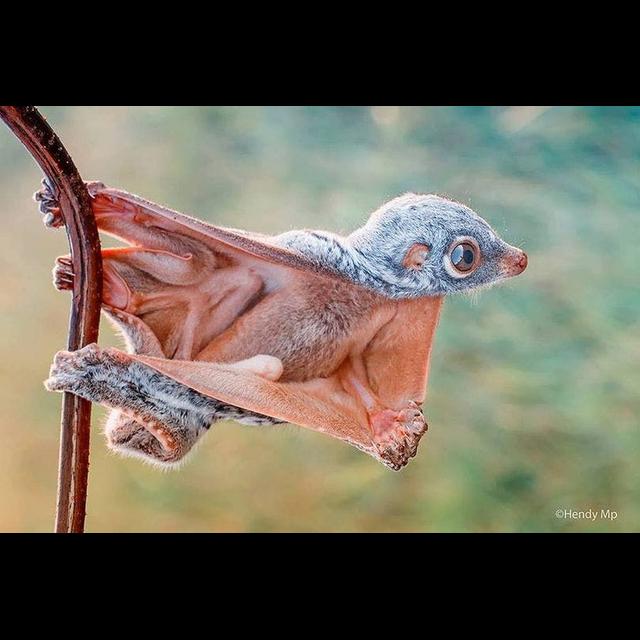
what in the heck a flying lemur looks like because it is so crazy challenge accepted right all right oh my goodness it is a really really cool creature well to begin with chris a lot of people say the Kalugos or flying lemurs look like a cross between a bat and a primate. So I think they're...
They're onto something there. But they are a smallish size, anywhere from two to four to five pounds, depending on which species of flying lemma you're talking about. And what really sets them apart is this web-like membrane called the patygeum. that connects all four of its limbs together. It's like, imagine if you put a cape on and then you held it open with your hands and then taped it to both of your feet.
and then opened up your legs. So when the flying lemur is gliding through the air, if you're looking up at it, and there's some really amazing videos on YouTube that just were breathtaking watching this thing glide from tree to tree. And in fact, I think National Geographic even put a camera on the underside. Yeah, I watched that one. Yeah, I watched that one. But it looks like a kite, okay, with like a head sticking out. And when it's not flying, it looks like a...
bat slash primate. With that, it has a small head and some say that the Philippine head resembles that of a flying fox, that type of bat. I think it does a little bit, but the head is small and the eyes are large. And this is what reminds me more of some of these old world primates. And with these large eyes, they're excellent for their vision at nighttime. But then their ears are just most darling little small rounded ears that make them almost look mouse-like.
a rodent-like, I suppose. And they have a long snout and a cute little pink nose, which can be reminiscent also to, I think, of a rodent or maybe a possum.
¶ Colugo Fur and Patagium Features
So I'm not doing them justice, but their heads are darling. And while the collego or the flying lemur is clung to a tree, their fur is gorgeous. The Sunda or the Malang flying lemur has really thick fur that's almost like gray, a little bit of brown, sometimes even flecks of red or black in color. But it has this modeled or... It's...
It's camo. It's a camo pattern. It blends in so well against the trees. It's amazing. It's incredible. It looks like the lichen on the trees. So it's almost like patchwork or mottled gray and white. which is really, really pretty, but it does help them blend in. Whereas the Philippine flying lemur tends to have more of a dark auburn, red, or deep brown color to their fur.
but also very thick. And you can often see white flecks or spots in their fur, but not that they don't have as much as that lichen model pattern as the Sunda or the Malayan. uh does so but really really beautiful fur and they do have a tail and the tail length is medium in size so it's going to be longer than a bat but Definitely much shorter than the lemur tails, right? Like we think of a ringtail lemur with this just really prominent tail. So definitely not like that. Pretty short in length.
Crazy thing is, is the patageum or this web-like membrane skin connects to all their limbs, like their arms and their feet, but connects to the digits. So each... finger or toe, if you will. So their fingers and toes are webbed. And it extends also to the back of their neck, like I said, if you had a cape on your back. And then it also extends to the hind legs, right? But then to the tail. Yeah. So because it does extend to the tail as well, this patageum, it's an...
odd shaped kite. It's not a traditional diamond. It would be a, let's see, one, two, three, four, five, six, like a hexagon shaped diamond with a little head sticking out. And the skin is just gnarly. We're going to talk a lot today about how they, of course, they use the skin to glide, right, to get the aerodynamics. It acts like a parachute, more or less.
But they also use it for some really cool parenting behaviors as well. And they're just a fascinating creature to watch, even if they're like sitting upright on a tree or sometimes they hang from a tree upside down. We'll talk about that when we get to behavior. And because of them being mostly nocturnal and where they live, there's still a lot we don't know about them, which I love a good mystery. So I did a lot of deep dive digging and I did find out.
some pretty cool behavior facts and some old studies dating back from the 70s 80s and 90s and then and then i was really excited to see a fair amount of literature in the past four to five years really trying to figure out what's going on with some of the habitat loss and what the what the actual counts in some of these parks in southeastern asia are so yeah for me the flying lemur or the kalugo uh is a great story of hope
But also mystery today. Oh, tons of mystery. And, you know, they say it looks like a lemur. And so that's where it got its name, the flying lemur. But as we're going to find out, not really. that closely related to them but a little close we'll get there we'll get there now the sundae is the bigger of the two it can get up to 27 inches long or 70 centimeters so not tiny
We're not talking sugar gliders that can fit in your hand. Oh, no. These are hardy. I mean, you would see these on a tree if you were looking and had the right tools and equipment. Like you say, they only weigh up to four to five pounds, like not very heavy. So that helps them get some distance with their gliding. Wingspan in the sun does like 28 inches or 70 centimeters.
¶ Geographical Habitat and Philippines Biodiversity
The Philippines flying lemurs is smaller. They get up to like 15 inches, up to three pounds or one and a half kilograms. So not quite as big, but you know, the two species, like we said, the Philippines, duh. in the philippines southeast asia that is where they they are that's where they live now the sunda goes from burma down thailand malaysia
and then down into Indonesia, Sumatra, and Java. So that is the two regions where they're at, and that's where the two species are. And basically, these animals live in the canopy of all the tropical forests in that region. So, and I think before we even started, and you're going to talk a little bit about this today, but you said like the Philippines has like what, the 5% of all biodiversity on earth or something crazy like that? Yeah, let's jump right there because, yeah.
It's on our bucket list, Chris. I know. I know. It's closer to you than it is me. But this is my sales pitch to everyone and why the Philippines is incredible and we need to all go there. It's 7,600 plus islands. And within these islands, it's estimated that 5% of the world's plant species live in the Philippines. And half... And half of these are found nowhere else on Earth. And then looking at just wildlife, the Philippines hosts one of the greatest concentrations of various...
species of animals to include at least 20,000, 20,000 that are only found in these islands. It's incredible. The island is beautiful. There's nature everywhere. and researchers think that one of the reasons there are so many species on the different islands is because these small islands tend to encourage or select for speciation.
Because there's not a lot of habitat. So the animal needs to change a part of itself to either maybe start flying or stop flying, right? That happened a lot in New Zealand with your cowcapoo. Yeah, kakopo and then kiwi, you know, even kiwi groundless. Yeah, exactly, Chris. But of course, due to just typical pressures that are everywhere with deforestation and urbanization.
More than 700 of these native species are threatened by extinction. But what's really exciting about the Philippines is in the past 10 years or so, they've made huge efforts. to save a lot of these species and to help protect their habitats and get these species to reproduce. There's a lot of sustainability, a lot of ecotourism. at the national parks and there are conservation groups that are focused just on these areas and
There's tons of education. There's tons of support around the national parks to help patrol, to stop poaching and things like this. Groups of people have even bought land to keep it natural. And species that are a big, big threat, for instance, the Philippine eagle, which is, there's only like 400 pairs.
Oh, wow. Wild. They're critically endangered. Really, really cool. Yeah, we got to cover that. The Philippine Eagle. They do a lot of captive breeding programs there to help increase the numbers. So. yeah, they're taking their, their biodiversity, uh, 5% of the world. So the Philippines is taking their biodiversity seriously. And even though COVID-19, of course, has stopped a lot of travel, you know, they're hopeful that that's going to pick up again soon.
And because people like if you're really wanting to see some rare wildlife that you can see, no, they can't see anywhere else in the world. Some of the species, Chris, I think we need to cover in the future. Like I said, the Philippine eagle. Philippine crocodile. That's one of the rarest in the world. They have the tamaraz. That's the bovine.
species it's native to the island and it's small but darling you'll love it and of course they have the those primates the tarsiers which are tiny they're like the second smallest primate and they communicate with each other through ultrasonic sounds. Oh, yeah. Okay. Yeah. Really, really.
Really rad stuff. So yeah, that's my pitch of why we might not be able to travel the Philippines this year for you and I on the podcast, but we're going to cover more of these species and let's put it on our bucket list. Yeah. Yeah, no, I would love to go there. Absolutely. Like tons of birds, all sorts of beautiful things. And now the Colugo, you know, I just, oh, these things are just amazing.
¶ Ecological Role of Seed Dispersers
And so this week, Angie, I know, you know, so we did the binturong and we were looking at Southeast Asia. We talked about palm oil. One of the things we talked about the binturongs and what's important with these flying lemurs is seed dispersers. And we say this like almost every week, seed disperser, seed disperser, seed disperser, this bird, this animal.
It's one of their primary roles as ecological, like ecological engineers, you know, and they do pollinate too. So they have this key critical role in helping maintain.
these biomes so with seed dispersals i really kind of dig into this a little bit because we talk about it so much and we always say oh it's important and then we go on to the next thing and i think people really need to understand what it means You know, is when an animal eats a plant, you know, fruits, nuts, they ingest these seeds and then the seeds go through their digestive system. And then they go out in the feces. So it's like a natural system for, you know, one...
Scientists described it as like power washing seeds with acids. So it helps strip away some of that outer coating, some pulp. Things like, you know, kills fungus and pathogens that might harm the seed and helps improve. Yeah, I never saw that. And it helps improve germination. And then with the dung, you know, and the poop, that's fertilizer. for the seed so here you have of course the seed with its own fertilizer and it's it's ready to germinate so that you know there's this this
What kind of relationship do you always call that, Angie? Like a reciprocal, you know, where... The animal's getting nourishment from the plant, but then the plant's getting- Symbiotic. Symbiotic, and the plant's getting benefit for the animal eating it because the plant's- I think that's mutual symbiosis. Mutual symbiosis. So the plants need this. I mean, they're living organisms. They need to reproduce like us. And in most plants, it's sexual reproduction.
you know, that has male parts and female parts and it produced male gametes and female gametes. And that is one way that they are able to diversify their genes. And this is really, Blake, breaking it down very simply because plants are a little bit way more complex than this but if you just think about it we talk about it in tons of other species you need gene diversity
to survive disease, to survive heat changes or cold. So with seed dispersal, so a plant sitting there, it can't walk off and breed, right? It produces... its strategy to produce seeds or has other ways some plants you know use bees with flowers or like we said the colugo can can pollinate bats pollinate uh birds pollinate and then even some are dispersed by the wind right
because the plant can't move around. So it needs to get its seeds as far away as possible because it doesn't want to breed with itself, even though some plants can, you know, but, or it, it doesn't want, it doesn't want to breed with, with. plants with similar genetics around it, right? So what seed dispersal is doing is getting these seeds, these genetics of these plants as far away as possible to breed with an unlike.
similar species, same species. So it can breed with another plant to get genetic diversity. I mean, that's pretty much every animal living thing on earth does that insects need to do this. A queen bee can't mate with the males that she produces in her hive. She needs to go out and breed with males from other hives to have genetic diversity. seed dispersers are doing this for the plants so they are these animals are eating these seeds and then just dispersing the seeds wide and far now
The world record for the longest seed dispersal. Do you remember? We brought it up long, long time ago in a different pod on a different continent with a different animal. That dispersed the seeds longer than any other animal on record. It must be a bird. No. Let's play charades. Okay. It doesn't swim in the ocean. So there you go. It's terrestrial. Okay. Different continent. Different continent. These animals walk long distances.
Very long, long digestion compared to some others. Okay, they got an herbivore. Dang, dang, touching my nose. A wildebeest because they migrate. Touching my nose. Who goes farther? Who's bigger? Who eats way more? Elephants. Yes. Savannah elephants. I pick you next time we do charades. Chris is on the screen like tapping his nose. Come on, Angie. Come on. Come on. I know it's late there. You can do this. That was like 300 pods ago. It was. It was very long ago.
I think I know I mentioned this once on record up to 65 kilometers away. Wow. In a study at Kruger where you got to go a couple of years ago, 30 times farther than Savannah birds take seats. Because their digestion takes longer. So 33 up to 96 hours. So when the elephant, you know, acacia trees or some of these other fruits that it likes to eat walks out. and can spread those seeds 65 kilometers. So as far as an environmental engineer or a biome engineer, they're critical because they're...
especially elephant dung is massive. So you have this big pile of dung with all these seeds and boom, you have new trees growing, right? Or new plants. So, you know, even right now, forest elephants, this is where we have an ecological crisis because they are just being poached left, right, and center really, really bad.
You know, that's where they're really worried because they have such a major impact because they eat so much fruit in the tropical forests. And they're the largest fruit eating mammal in Central Africa. So there's a... Great concern for those tropical forests. So critical. You have such a massive species making such a massive impact.
you remove that from the ecosystem, that ecosystem is going to collapse. It's just going to collapse. And my one example, and then I'll get off my soapbox here in a second.
¶ The Dodo Bird and Extinction
Last week, I mentioned the dodo bird and the dodo tree. So I did bring this up because this is what really years ago when I heard this story, I was like, wow, I didn't think about it for seed dispersal. So the dodo bird lived in the Mauritius Islands in the Indian Ocean. In 1598, Dutch sailors identified the dodo. Over the next six decades, the dodo was hunted to extinction.
Plus invasive species. So very similar to what's going on here in New Zealand and other islands. Killed them off. So in 1662 was the last sighting of the dodo bird. Now the dodo tree or the tambalock coke. Tambaloc, Tambaloc oak, Talamboc tree, Dodo tree, I think, has suffered significantly because Stanley Temple, who was a botanist in the 1970s,
The tree lives for hundreds of years, but they've noticed there's very, very few saplings or new ones coming up on the islands. And so he... that there was a mutualistic relationship with the dodo bird, that the dodo bird in their gizzard would break down the tough outer shell of the seeds. And then after it's digested and pooped out, then the seeds would germinate. Because ever since the dodo went away, these trees have suffered and are almost extinct.
Now, there's some controversy because there's other things, other factors. Some scientists say they're coming into play, but generally they believe that this tree is going extinct because the dodo went extinct. And there's many, many more here in New Zealand, the Kia. Some of our other parrots, because their numbers have diminished, it has had impacts on our forests here in New Zealand, all around the world.
Overall, there's just a big worry that if we lose these seed dispersers, it's going to have this massive domino effect on our forests. And so scientists are up in arms. We need to keep our eyes on these species. It seems like every week we talk about a species, you know, the ones that are endangered, even the ones that aren't, that seed dispersal is a big problem. And so I think it's just something that we all have to understand. And I hope I kind of explain that.
as quickly as I could. I think you did, Chris. You brought up some really interesting points that I hadn't really even thought about as far as distance and stripping that seed down. Basically being in its own manure, and we're always bringing horse manure home for our plants and our gardens.
Yeah, it definitely, definitely enriches the idea than just saying like, oh, they're a seed disperser. And pollinators are so critical too for a lot of the fruits we'd like to enjoy here in North America. But Chris, to add to your point about... why we should care about the flying lemur is yes, there's this ecological importance of sea dispersal and pollination. And then of course there's the morphological. I mean, just literally Google image a flying lemur.
you're welcome. I mean, just the patageum, the skin-like membrane that connects the head to the digits of the arm and the digits of the feet and the tail. I mean, it's just incredible. But they also have a really important phylogenetic or evolutionary story to tell. They are extremely unique. And there's been really cool recent discoveries. about potential new Bornean and Javan species that are genetically and morphologically slightly different. So when we think of this really unique...
evolutionary species. And Chris will touch on that in a moment. And the fact that it's been dispersing these plant seeds for a millennia. Yeah, it would be really, really bad if they went away. Oh, it would be really, really awful. Several plant species. Yeah. And us. And us, yeah. Definitely us.
¶ Importance of Colugo Discovery
yeah it's these animals we need to keep fighting we need to keep fighting we need to to learn about them and spread the message about them because the more you dig and the more you learn and you see what's happening around the planet Yeah, and I was like a kid this week, Chris. I just fell in love. And I had no idea until I read Dr. Dawkins' book, The Flights of Fancy, that flying lemurs or colegos existed. I know.
I was like this many years old when I learned this a few weeks ago. I know. And not that you and I specialize in flying or gliding mammals or primates or anything like that, but still. I mean, I would like to think I'm somewhat hip to the scene, the animal scene, the only scene that I'm slightly hip to. Nope.
And it was such a pleasure learning about them. I was like smiling ear to ear, you and I sending all these videos and clips back to each other. Oh, they're amazing. They're amazing. This is one of the most unique species on earth. And here you go. This episode is brought to you by State Farm. Listening to this podcast? Smart move. Being financially savvy? Smart move. Another smart move? Having State Farm help you create a competitive price when you choose to bundle home and auto.
just another way to save with a personal price plan like a good neighbor state farm is there prices are based on rating plans that vary by state coverage options are selected by the customer availability amount of discounts and savings and eligibility vary by state
This episode is brought to you by Jack Daniels. Jack Daniels and music are made for each other. They share a rhythm in the craft of making something timeless, while being a part of legendary nights, from backyard jams to sold-out arenas. There's a song in every toast. Please drink responsibly. Responsibility.org. Jack Daniels and old number seven are registered trademarks. Tennessee whiskey, 40% alcohol by volume. Jack Daniel Distillery, Lynchburg, Tennessee. Talking about their evolution.
¶ Colugo Scientific Classification
And one of my favorite parts of the podcast, because I just think about the history and how this animal has survived for tens of thousands, now tens of millions of years. just to start start us off it's a mammal so we have 5500 species of mammal plenty to go for our podcast Now, I need to stay at the top. Challenge accepted. In the scientific classification, I need to stay in the top.
of the canopy because this is where they're they're differentiate because once you get to the middle of the canopy it's it's all the the same all the way down so they belong to a super order so this is before an order Super order, you are contugliers. You can look that up if you want. One of five of the following groups. So this is very high, right after mammals, super order.
Rodents, which we know rodents make up most of, like 40% of all mammals living today are rodents, population-wise. Lagomorphs. Tree shrews, which I think we need to cover at some point. Very unique. Primates and colugos. So at the very top of the mammal tree, you have the rodents, lagomorphs. Right, like think of all the roans you know, mice, rats, lagamorts, jackrabbit, arctic hair. I mean, like you said, it's really, really high.
High in the tree. Yeah. Yeah. Of course you have your carnivores and things like that. The carnivores are another order, but way up there, you know, with, with that. And then the order is derma. Think of a dinosaur. Think of a dinosaur. Dermoptertra. No, Dermotera. Okay, Dermotera. There you go. Yeah, like a pterosaurus, right? Okay, Dermotera. That's the order.
Do you know what that means? Skin. Derma, skin. Yeah, got that one. And terra, wing. Wing. There you go. Skin wing. There you go. Okay, I got the derm part. I think it's really cute. We both said like skin wing in unison. Like skin wing. Because it is. So in that order, there's only the Kalugos and that's it. So only two living species. That was my point on why you should care. And I'm not even an evolutionary.
buff dork yeah yeah like me yeah i was like this is well i was like yeah i was totally dorking out about this so there's only one other species that i can think of that we've covered out of the 180 that we've covered that had its own order That was really unique. Charades. Let me, let me get you on screen. 200 million years old. I was listening about a little bit about today again on a different podcast. I was listening to.
has a third eye in the forehead, but it's just for light sensor. Okay. It's a lizard. Does it live? No, don't call it a lizard. He was made clear on this podcast. I'm trying to get this guy. Tuatara. Yes. Yes. The Tuatara. Oh, yes. I'm waking up. I have an expert I'm trying to wrangle to get on the podcast. So Tuatara had 200 million year old animal, basically, here in New Zealand. It's not a lizard. It's its own order.
I love how offended you are that I call it a lizard. You're like, no. It's a podcast. I told Angie, I'm trying to recruit this guy to see him come on our podcast and I can interview him. I'm going to play that back later. He's like, don't you dare call it a lizard. Not on my watch, Angie. I'm like, okay, I mean, it looks like a lizard. It does, but they're amazing. But I love this fact. It is really unique. Yeah, it's a really unique reptile.
Really unique reptile. And the Colugos, extremely unique. Now you have the two species, the two living species, the Sunda and the Philippines. The family's the same. Genus is the same. The genus is... Galeoteris. And then the species name is Galeoteris veridus is for the Sunda. And then the genus. is cynocephalus for the yeah dog headed for the philippines uh volan so the genus does differ but you know the family's the same all the way up to the order is the same so
¶ Ancient Mammalian Gliders
Then obviously there's a lot in the fossil record that have gone extinct in between there. That's where some of that classification comes in. But now this is an ancient, ancient, ancient animal. Mammals first appeared, you're going to see anywhere from 180 million to over 200 million years ago. There's still some debate. And the missing link, or not the missing link, the link is cyanodonts.
So this was like a large cat that looked like a mammal, but it still had some of that reptilian parts to it. So the mammals came from that. That was the crossover species. So the earliest mammals were very shrew-like about 180 million years ago, okay? So that's how old our ancestors are. Now, sky gliders, this is what I loved. this week studying this, was a very early adaptation by mammals. And this is something we got out of talking with Richard Dawkins.
So the earliest sky glider, and I'm not even going to attempt this name, Mayopatagium ferculiferum. Okay, that was it. It was a fossil found in China that lived about 150 million years ago that looked like a flying lemur slash squirrel. So they had that web of skin stretching.
from their front legs to hind legs. So it's like that pat to guillem. So you had this thing evolving that long ago. And a lot of, in reading Richard Dawkins' work... a lot of this convergent evolution where you have sugar gliders, marsupials. So like sugar gliders and greater gliders in Australia that glide. Then you have the flying squirrels. Now we have flying lemurs. So 150 million years ago, you had mammals flying like the flying lemur.
¶ Colugos: Ancient Survivors
I want to be there. I want to see that. Somebody needs to make that movie. Well, no. Okay. So the Kalugos, this is how ancient these animals are. They emerged from mammals before primates did.
They branched off mammals 86 million years ago. Primates didn't emerge until 55 million years ago. So the flying lemur, and that was after the fifth mass extinction when you had the asteroid or... comet hit the earth so the kalugos are way ancient you're talking 86 million years ago is their most ancient relative off that tree
and bats didn't even emerge until 50 million years ago in north america so you this is an ancient ancient species do we don't have the fossil record on on today but the ones we have today are probably like last week we talked about the bentron being a couple million years old as a species these these animals are are just as old if not older they're very primitive they are pretty much what
ancient mammals looked like, you know, flying from tree to tree to stay above being eaten by dinosaurs. Yeah. I mean, think about it down below. You have T-Rex. or whatever velociraptors whatever you got over those millions are we talking what is that 100 million years 150 million years ago you had a flying lemur like animal so for 100 million years with dinosaurs walking around you have things flying from tree to tree to tree staying out of reach of these dinosaurs so they don't get eaten
you know then the dinosaurs go extinct with the mass extinction and you still have this colugo hanging out it's insane when you think about it like this is why i love the evolution part because i go whoa It just hits you. Well, this is why you should care. It's really, it's just really fascinating. We don't, we don't have this many, there's not that many ancient lines like this, I guess I should say. Not like this.
you know i mean yeah oh it's nuts it's nuts it's nuts it's nuts it's fun it's fun okay we got to talk about this this how they fly so let's get some facts out of the way
¶ Colugo Gliding Mechanics
On average, I found they live about 18 years. I couldn't find anything else. Yeah, didn't spew them. You did say that their large red eyes gives them really superior night vision. Right. And it's really interesting and very rare for mammals, their retina.
is avascular. So they don't have any blood vessels. And the physiologist to me really wanted to dork out about how that's even possible. But I ran, I ran short on time. So I tabled that one. I went, I did other deep dives, but that, but, but I think it speaks to. their primitive nature. Well, so to get to this patageum, you know, Richard Dawkins in Flights of Fancy, I think it was chapter eight. I reviewed the chapter again.
And read through the whole thing about non-flying animals. Gliders. Gliders. Lizards. Frogs. Snakes. Our list is long. 2022 is going to be a lot of fun. I can already tell. We've got some good, good animals coming. So, you know, so in his book, he talks about the flying squirrels and the flying squirrels have a patogam, patogam, but.
What's different with the Colugo is it incorporates that tail, so it gives it that much more surface area. Absolutely. So the entire body is one big parachute, so they can go farther. And looking at the statistics on average or on average, I don't know what the average flight is, but. can travel as far as 70 meters or 230 feet. But on record, there is a Sunda Colugo that went as far as almost 500 feet in one glide or 150 meters.
That's like an NFL football field for my American listeners and for... International soccer pitch. A football pitch. A soccer pitch, right? Or a football pitch. Yeah. Yeah. So, I mean, that's just gliding. And when you watch them, like that's what the videos, and I know you want to jump in and go crazy with this. But in the videos, you watch them that you see them gliding. And it's like, I love watching these people that use the, oh, the flight suits.
uh these skydivers and i'm like oh they're the most insane people on earth but it's fun to watch their videos and and how they they glide and fly watching these kalugos fly or flying lemurs i was telling you before we recorded like i was watching that video you were watching probably the same ones and how it's gliding down and then it flares up and it's almost like rudders yeah it's like slows way down it's
Oh, it's nuts. And that's all biology. Well, and then too, to be able to pick from what treetop to the next treetop, because the National Geographic video that was able to put like a little... a little video camera on their chest. So it's like you're flying with them. It's flying along and they put it in slow motion. And I'm like, why don't you just like pick that tree there? It's so much closer and safer. And they're like.
we kind of almost like weaving through the treetops. Nope. I want not, nope, not that one. Nope. Okay. That one. So the precision, I suppose, is just for me, for me was really, really impressive. Because they don't have all the mechanics that a flying mammal like a bat or a... bird has as far as steering and pulling up and all that. But they sure have figured out a lot of mechanics, a lot of physics there. I mean...
as far as the, probably the arc that they need to do and how to land. And I was reading somewhere that, and this is going to dive way too deep into the, like the physics of the glide, but that. going the longer distance is actually safer for them than going a shorter distance because a shorter distance, the impact is like too hard.
oh okay it was really fascinating i was i mean watching them and then when they flare up it's just my jaw hit the ground i'm like oh that's biology it's not a it's not mechanical it's all natural yeah and When they are foraging from food and going from tree to tree, they do have what they call glide paths. And so they will follow similar patterns like, okay, this is how I get from this tree to that tree and this tree to that tree.
And the flying lemur will repeat those each evening until they need to move on to a different set of trees. So they probably get better at the landing and all that with each one and knowing where they're going if they're doing it multiple times. They are just so beautiful and so controlled with that glide. It's just incredible. And the distances, as Chris mentioned, are insane. On the flip side though, the poor...
¶ Ground Movement and Parental Care
Clego. or flying lemur on the ground, not so much. And this is probably a video that you may have ran into on Facebook of like, ah, what's that? Or is this even real or something? I think that one of those were going around Facebook a lot, but. And so when they are on the ground, you can see their skin, the skin membrane, the pygeum, and it's partially open because they're on the ground, not fully open.
but they don't walk and they can't stand, they don't walk normally and they don't, they can't stand up or sit up if you think of like maybe a primate, like a baboon or something or a lemur. So what they do is this really crazy. hop and it's really slow and awkward looking where they kind of get their, their arms and legs underneath each other and then just throw themselves forward in a hop and then collect everything up again and then hop again.
And when they get to the tree, they're able to climb up it with their toe and fingernails, getting a good grip, helping them be pretty decent climbers. And then they'll hang out in the tree foraging and we'll talk about what they eat here in a second. And when they decide it's time to go to the next tree.
That's when the show starts, that glide. But boy, it's so different. It's like night and day to see them gliding through the air and then see them on the ground. They're definitely not very agile. It's like a sloth. But they don't spend much time on the ground anyways, so they did not evolve to be ground-willing at all. They are 100% arboreal. Okay, can I ask you this? And it might be getting a little bit ahead. But seeing the pictures of the baby with the mama, can she fly with that? Yes. How?
I have a picture that I can share with you or we can put on our show notes. Show notes, yeah. But the baby clings underneath her, so basically where her chest or belly is. And the baby with their claws holds on and just holds on for dear life. I mean, that's probably similar to like a primate or something, right? Yeah. And to help mom out there, she usually gives birth to a singleton. So just one. So that's good.
the mom will slow down as the baby starts to get bigger and bigger. So the mom and, uh, the mom and infant, uh, Colugo or flying lemur are together for about six months until it's weaned. And so the, the offspring will just cling. to the underside while she's gliding and the heavier the baby gets the shorter her glides distance yeah yeah yeah it's like a big weight
But think about, but there's something in, I mean, think about the physics of being able to adjust that. Like, okay, junior's now four months old, so I can only glide, you know, 50 feet instead of, it's just so fascinating. There's not a ton of videos on it because they are just so secretive and nocturnal and elusive. But the videos out there that do show this gliding behavior is phenomenal. Yeah.
Yeah. Yeah. They're amazing. They're amazing. So that's just such a fun, fun fact, such a fun adaptation.
¶ Comb-like Teeth and Primate Relation
And then, Chris, just the last kind of fun fact that I found out about flying lemurs or kalugas is that their teeth are shaped like little combs. which we like to call comb tooth, and they use it to groom their thick fur that they have on their backside. And when I say tooth comb, each tooth... of the incisors has like 20 little small lines on it, little tines. So these indentations are really helpful and just...
having them look good and keeping their fur nice and clean. It's like a lemur. I mean, remember in the, I forgot to mention this in evolution, in the tree, in the mammal tree, colugos are our closest relative, primates. So of all the primates, then you have Colugos. We're the closest. And then you'll get to the rodents, tree shrews, and the others. So they're not primates, but they're very close to primates.
Remember, they broke off first. So you would say they're closer to primates than they are to either bats or shrews. Yes, you're absolutely right. You're absolutely right. They are. And then the lagamores. So in our super order. The primates. Primatomorpha. So there's even, that's what's so interesting. It's like you got the super orders and then some other order is primatorphia. Primatomorpha.
which has Colugos and us primates. So Colugos are our closest relatives, you know, and I wish I could fly like them. Like how fun would that be? Just be like. So cool. Yeah. Yeah. I love it. Love it. Upgrade your laundry routine with a durable and reliable Maytag laundry pair at Lowe's. Like the new Maytag washer and dryer with performance enhanced stain fighting power. Designed to cut through serious dirt and grime.
And what's great is this laundry pair is in stock and ready for delivery when you need it the most. Don't miss out. Shop Maytag in-store or online today at Lowe's. Mutine, adjective, used to describe an individual whose spirit is unyielding, unconstrained, one who navigates life on their own terms, effortlessly. They do not always show up on time, but when they arrive, you notice. An individual confident in their contradictions. They know the rules but behave as if they do not exist.
¶ Diet and Predators
Now, before we get to some more behavior, because we've got to let you go, you've got 40-something slides of behavior. We're halfway there. Just kidding. A lot of them, honestly, are just photos. I know. It's amazing. It's so beautiful. Nutrition, herbivores, fruitivores, I mean, leaves, buds, flowers, fruits. sometimes insects. So maybe they get some, yeah, maybe they do get some omnivore in there, but a lot of fruits and sap and stuff like that. So that's what they eat.
As far as being preyed upon, humans do hunt them. Philippine Eagle, which that's on the list. That's coming up soon. Within the next few months, we'll definitely cover that one. I read somewhere, too, like boas can maybe snatch them. Maybe if it's on the ground, you know, a cloud of leopard can maybe get them. You know, there's always something bigger out there.
wanted to eat you but generally it seemed like they do pretty well because that camouflage they're high up in the canopy very rarely on the ground and i think one of their main behaviors is they're nocturnal right so
¶ Nocturnal Habits and Resting Positions
Yeah. I mean, there's, there were still learning a lot about them. They're primarily nocturnal. They definitely have some activity during dusk and dawn as well. And so during the day, the Colugo or the flying lemur likes to sleep. in the hollows of trees, or they'll just hang out clinging onto a branch somewhere camouflaged in the dense leaves during the daytime so that predators aren't aware of where they're at. And when they are resting in the tree during the day,
They're typically in two different positions. So one is just upright, just hanging on with their nails clinging to the bark of a tree. The other is hanging. And so this is a little bit for me. reminiscent of a bat where they haven't seen hanging from their hind feet. But a lot of times they'll hang from their hind feet and then maybe have one arm of their forearms hanging.
And so my question for you is, do you think they have their head up or head down like a bat whip? Yeah, sorry. I read that fact, head up. Yeah. Because, you know, isn't it bats? I mean, going back, it made me think we have to cover a bat. which we typically do in october but i want to do there was a bat i just oh gosh what was it was the oh its face was humongous it was a horseshoe face bat or whatever maybe the horseshoe faced one yeah big big face yeah really cute like ugly cute but
I would call it cute, but yeah. Only a face that only Angie can love, right? But it's a big bat. The bat itself is like a lot of pounds. But I remember us talking about, like, they are able to hang upside down and pump blood without passing out, right? They have a special mechanism. I want to review that when we cover our next bat. I mean... My brain can only hold so many facts, but yeah, they do have to keep their head up, right?
Yes, they keep their head up, but they'll hang, and then almost like a sloth. Some researchers compare it to like a sloth behavior and just hang out all day. And if they have a young, they're... The web-like skin, the patygeum becomes like a little nesting burrow. It's like a hammock. Yeah, a little hammock for the infant. But in general, you're going to see a flying lever. hanging on a tree alone. So there might be, if you're very, very lucky, you might see one or two in the same tree.
but they are definitely a good distance from each other and they have their own territories. So they have their own personal spaces and they're not interacting. You're really only going to see like a mother and her baby, of course, hanging out together.
¶ Colugo Social Behavior and Research
Pardon the pun. But there is, Chris, this really cool, not necessarily social behavior, I guess maybe semi-social behavior where the flying lemurs that live in the same territory. Maybe it's the same tree or same couple of trees. They tend to follow the same flight paths from tree to tree. So it's almost like there's like a Colugo Highway from tree to tree. And it probably has something to do with the fact of what the best flight path is. It's the safest, right?
to get from point A to point B, from point B to point C and et cetera. So I thought that was really interesting. So they don't, they follow the same gliding path throughout the evening while they're looking for food. And once again, researchers don't exactly know why. I would love to study more. Is this actually a cooperative behavior? Does this increase their survival rates? You know, what is, why are they engaging in this?
what seems to be almost social behavior, but then they're very territorial when they're on their part of the tree or on their individual trees. That's science, though. You observe a couple things, and then you end up with more questions than you started with. Always. Always. I'll tell you what, I was really, really happy. The behavior dork came out in me this week because as I was looking through the research, just trying to find really whatever I could about flying lemurs.
I came across a paper from, I think it was like 2009. Slightly dated, but not really. And it's called an ethogram construct for the Malayan flying lemur in Bako National Park, Sarak, Malaysia. Okay, so... Some behavior. I got the ethogram. So Angie taught me how to do ethograms back in the day. That's it. They didn't ethogram. They went out to the Bako National Park in Malaysia, in Saruk, Malaysia.
And these researchers went out looking for about six months from August 2008 to December 2008 throughout the whole day. just looking for, and I should have said the Malayan flying lemur is also the Sunda. So the name's kind of interchangeable. And they just went looking for them and they were trying to get counts of them, but then also just observe their behavior.
Not even collecting data, or at least there was no behavioral data presented in this paper, because typically what you do is you observe an animal, whether it's... under human care in the wild or in your own house and you, and you start to see what they're doing and you start to think of a question that you have about the behavior. And so the ethogram acts as a list of behaviors, very, very descriptive because. the way your two house cats are going to interact socially
affiliative, whether they're nice interactions or aggressively mean interactions, are going to be different and look different than the way two dogs in your house are going to interact socially. And so the ethogram's job is to be very species. specific and really describe the behavior. Like if you're talking about climbing, are you talking about
climbing one foot up and down? Are you talking about, if you're talking about walking, are you talking about one or two steps or five to 10? If you're talking about gliding, is that?
from, you know, is there a certain distance or a certain height? And especially when it comes to like social and reproductive behaviors can be very specific. So these researchers spent six months, over 4,000 minutes finding, first you have to find these Malayan flying lemurs and then observing their behavior both during the day and at night.
At night, they would use flashlight. They'd find them, observe their behavior, and then use flashlights and try to keep up with them. And so at any rate, the paper that was pushed out from this team was... a wonderful list for somebody like myself, who's a big nerd, to review all the different behaviors that they were able to see these flying lemurs do.
¶ Colugo Vocalizations
And so that was really helpful for me, just learning more specifics about how they interact and what their activity is. And what I really loved is the researchers were able to categorize four different vocalizations. because there's not a ton of research out there about their vocalizations. And they said there's a lot of noises that they observed. And when a flying lemur was making a vocalization, it usually wasn't by itself. It was usually making it.
towards either, whether it's territorial or courtship to another flying lemur. And so the four calls that they really focused on were what they called the greeting call. And that was observed when a male would approach and sniff a mother who had a young Kalugo. And then also from a mother to her offspring.
The second call was the disturbed call. And that pretty much speaks for itself. It was a noise produced from the mouth when the animal was disturbed. And the other call they just called calling. And so this was a type of communication between individuals. It was more, it was like squeaking in nature. And then lastly, they categorized a courtship call. which is produced between two individuals during the breeding season or when there is interest in one another to court each other.
And this is typically a female making a very loud pitch noise when M went around the male. So just really awesome stuff that these researchers were able to just observe and learn because there really is not – wait till I get to repro. That'll take like two minutes. Not even. There's just really not a lot that we know. about either species of flying lemurs. I'm just jealous that they see them.
Like to go out and study them. Right. So, you know, almost 5,000, you know, minutes recorded, but I mean, they were out for. you know, several hours during the day and overnight for six months. And that's, you know, that's what, that's like what field research looks like. But I mean, they're the only people that have recorded these behaviors. Yeah. Yeah. It's like historic. It's pretty cool. Right. Yeah.
Yeah, it is amazing. I'd love to go out and just see them glide from a tree, just to watch that behavior and just see it and just be amazed. 150 million years that has been going on mammals have been gliding like that well and that's the thing i mean these animals
have been around for 150 million years and we've been doing animal behavior data for, I don't know, a couple hundred or whatever. And there's still so much about their behavior that we don't know, which just blows my mind. It just makes me... curious and fascinated and wanting to know more.
Well, and it should be encouraging to all of our budding scientists out there that want to study this stuff. That there's so much to discover. You send me an email, I will make you whatever ethogram you need for your high school honors project, undergrad project, master's project. I don't care. In fact, my buddy, one of my good friends, you can appreciate this, Chris, just emailed me the other day up at White Oak. And she's like, yeah, so we're doing some.
observations on our Grevy Zebra. And I know you and Chris have that Equid ethogram. So it's really good. You just want to just send it to me so we don't have to reinvent the wheel. And I was like, absolutely. But I want to come up there with it to see your gravy zebra. And she was like, absolutely. So we have a date for the end of May to go up there. They have a pretty sizable herd. Yeah. I'm like, John, you're taking the kids. I don't care what day we go up there.
Yeah. I'm going, I'm going to White Oak. I know. Oh, it's like being used dream place to live. Go there. All right. Repro though. You said two slides. What do we, what do we know? Well, not a lot.
¶ Reproduction and Infant Care
But Chris, what I could find about flying lemur reproduction is that the Sunda or the Malayan flying lemur is reproductive throughout the year. However, the Philippine lemur, researchers believe that their... courtship and mating period last January through March, somewhere in between there. So a little bit different mating strategies, which is not uncommon between two different species.
Now, there's very little known about courtship behaviors, but the paper, the ethogram paper that I mentioned earlier. stated that there wasn't a lot that was observed. But what has been recorded in the literature is when male and female flying lemurs do have interest in each other, they'll have a very head held high posture. And the male collego will nip on parts of the female's body prior to copulation.
That's about it. Little, little love bites, which would be darling from a Kulego. So I can just picture it, but I'd love to see it in the wild for sure. And then the female, after copulation, her gestation period is about two months or 60 days. And in general, flying lemurs will give birth to a singleton. Rarely twins can survive. And somewhat similar to marsupials, newborn flying lemurs are really underdeveloped. They only weigh like 1.2 ounces or 35 grams. And they just...
basically cling to their mother's underside and to her. And of course they get their milk similar to a mammal from nursing, but the baby Kalego or flying lemur will hang out there for about six months, just clinging to the mom's belly. They're under regions. And she will hang upside down during the day so the baby can just hang in the baby hammock, right?
So cute. It's the best. Yeah. She basically curls her tail and then folds the pad GM or the skin. Right. Because remember, as Chris pointed out, this. this patageum skin is attached to the tail, which is really unique in these fur gliding mammal. And then it basically makes this warm, happy little place to, you know.
hang out and snuggle with her little one. And then of course she can move across the tree branches like that, move slowly and somewhat awkwardly. But still, it's like a little, it's like a baby wrap, a baby, you know, I love to wear. baby Maddox. And, uh, so gliding from tree to tree. No, no. And I will even tell you, I, I'm so clumsy that even when I baby where I'm always like, Oh, please don't let me fall down. And that's just like with walking, you know, luckily.
I never have fallen down because that would be bad, but definitely no gliding, no jumping, no horseback riding, no, you know, nothing, no, none of that. So yeah, I mean the female, the female flying lemur will, will carry the offspring.
for these six months and glide from, she's got to forage, right? Keep in mind that, uh, when you're a mammal that's producing milk, um, you're and all the species that Chris and I studied, and I can't necessarily speak for the flying lemur because Chris and I study herbivores and large ungulates, but... When they're lactating, their nutritional demands skyrocket, even more so than the last trimester in pregnancy, right? Their caloric intake, how much fat and protein they need. And so I would...
And make a presumption, which, you know, I would love for somebody to prove me wrong because it means that they're actually studying the flying lemurs. But I would make a presumption that, you know, the mom needs to eat more to make the milk, right? Oh, yeah. Yeah. So which means she needs to glide more. And Junior's just hanging out.
So the pictures are really cool. We'll put some of them on our show notes. I don't know what amazing photographer was able to get a picture of a female gliding with the offspring just clinging on.
¶ Conservation Efforts and Protection
underneath her so really really fun stuff conservation we don't have numbers on them they're both least concerned but they know their populations are declining Again, another part of the world where, you know, palm oil plantations, a lot of habitat destruction, you know, for agriculture, things like that, being hunted by humans for food. So, you know, all species are in decline because of this. And the flying lemurs, no exception.
No, but there's definitely good news. Like I mentioned, the Philippines, where they're really taking pride and initiative, both internationally and then local at home there to protect. protects several species, which would only benefit the flying lemurs. But then also in Malaysia, the Kalugo is protected by a lot of laws, including the Wildlife Protection Act. wildlife protection ordinance, and then an even more modern wildlife conservation enactment. So, but I think.
One of the biggest things is just education and helping people fall in love with these primitive, gliding, flying, beautiful creatures. Well, who's out there fighting for them? Well, Chris, the organization that I really want to highlight today doesn't specifically work with just flying lemurs in the Philippines, but instead wants to protect all of the...
awesome biodiversity in the Philippines. As we mentioned, it's a hotspot, great concentrations of wildlife, at least 20,000 species, which are not found anywhere else in the world. And so this group is called Conservation International, and they can be found at conservation.org. And they do tons of projects in the Philippines to basically build awareness and help improve locals' understanding of why it's important to save the biodiversity.
which in fact would help the flying lemurs. And they do this through lots of educational enrichment and improving the livelihoods and awareness of locals that are living in the areas. They work with strategizing and strengthening law enforcement.
And then, of course, they're always doing cutting edge research. One of their projects is called the Protect Wildlife Project. And that is... international collaboration of scientists and conservationists and law enforcement, just working to learn more about the animals that live. in the Philippines and how to help protect them. And so I just think it's a great organization. Once again, that's called conservation.org.
slash Philippines to look at those projects specifically focusing on helping protect diversity in the Philippines. Yeah, no, it's an area of the world we're going to start focusing a little bit more on. I can't wait to cover the eagle there because I know it's massive. I know it's a massive bird and it'd be amazing to cover.
Well, I mean, this week, conservation tip, I couldn't find anything specific. I just reduce your carbon footprint. We need to all do what we can. I mean, you know, reading the news, the environmental news, it's not good. I think this is our next big fight as we come out of this pandemic. But anything you can do individually.
will make an impact and i would say support politicians who support green energy and green policies it's a fight yeah yeah we talked about it last week you know supporting companies that are you know only buying sustainable palm oil We all have to change our behavior and demand better from the companies that we spend our money with and then the politicians that represent us from around the world.
you know not just in the in the us or canada or the uk you know australia where big audiences but you know to my fellow kiwis here in new zealand throughout the world you know we need to all do our part and start changing our behaviors and making some sacrifice. It's going to take sacrifice from all of us to change some of our habits.
I can go off on all the things I've done myself, personal self, to change. But if we all do it, we're going to leave a better planet when we leave here for our children, grandchildren, and so on.
¶ Episode Conclusion and Book Recommendation
So thank you so much. And the flying lemurs. And the flying lemurs. A long, long time. 86 million years ago, they emerged. 150 million years we've had mammals. Perfecting that glide. It's just magical. flying from tree to tree. So thank you so much, Angie. Great job today. I know it's late there in Florida, but you know, amazing research you've done.
And I just want to say thanks to you and thanks to our listeners. And just spread the word. Share this podcast. Show this Colugo or Flying Lemur on your Facebook feed, Twitter feed. Instagram feed, TikTok, whatever and say, yeah, these things are real. Listen to this podcast and you'll learn more. It would mean a lot to me and Angie. So thank you. Yes, absolutely. And if you're an animal lover or you know someone who is, I can't recommend enough Dr. Dawkins' new book, The Flight of Fancy.
It is just a conversation piece. The artwork in it, if you love art, the artist was just phenomenal as far as depicting. some of these fantastical creatures, right? I mean, it's just, it's almost like a coffee table book and really fun to read, easy to read, even though he is, you know, an evolutionary scientist. I generated a lot of conversation between Chris and I. And so it was eye-opening and much more fun for me to read.
read before bed than watching Netflix. Yes. Yeah, yeah, yeah, yeah. He loved that comment too when you said that. It's true. I mean, maybe it's just like a slow couple of months on Netflix, but I'm like, eh. I'm going to read this book. It's great. Yeah, it was great. It was just the storytelling was incredible. And it was just, yeah, it was a great book.
Well, thank you for listening and stay tuned. We'll be back soon with another species. Take care. Bye-bye. Listen. Learn. Share. Join the movement at allcreaturespod.com. I'm Matt Kaplan, the host of Safeguarding Sound Science, Evolution Edition. Evolution is the unifying principle of biology, yet it still breeds controversy a century and a half after Charles Darwin. Join us as we meet the passionate researchers and communicators who are expanding our knowledge.
and fighting to keep good science in our schools and politics. Subscribe to Safeguarding Sound Science on Apple, Spotify, Amazon, or wherever you like to listen.