



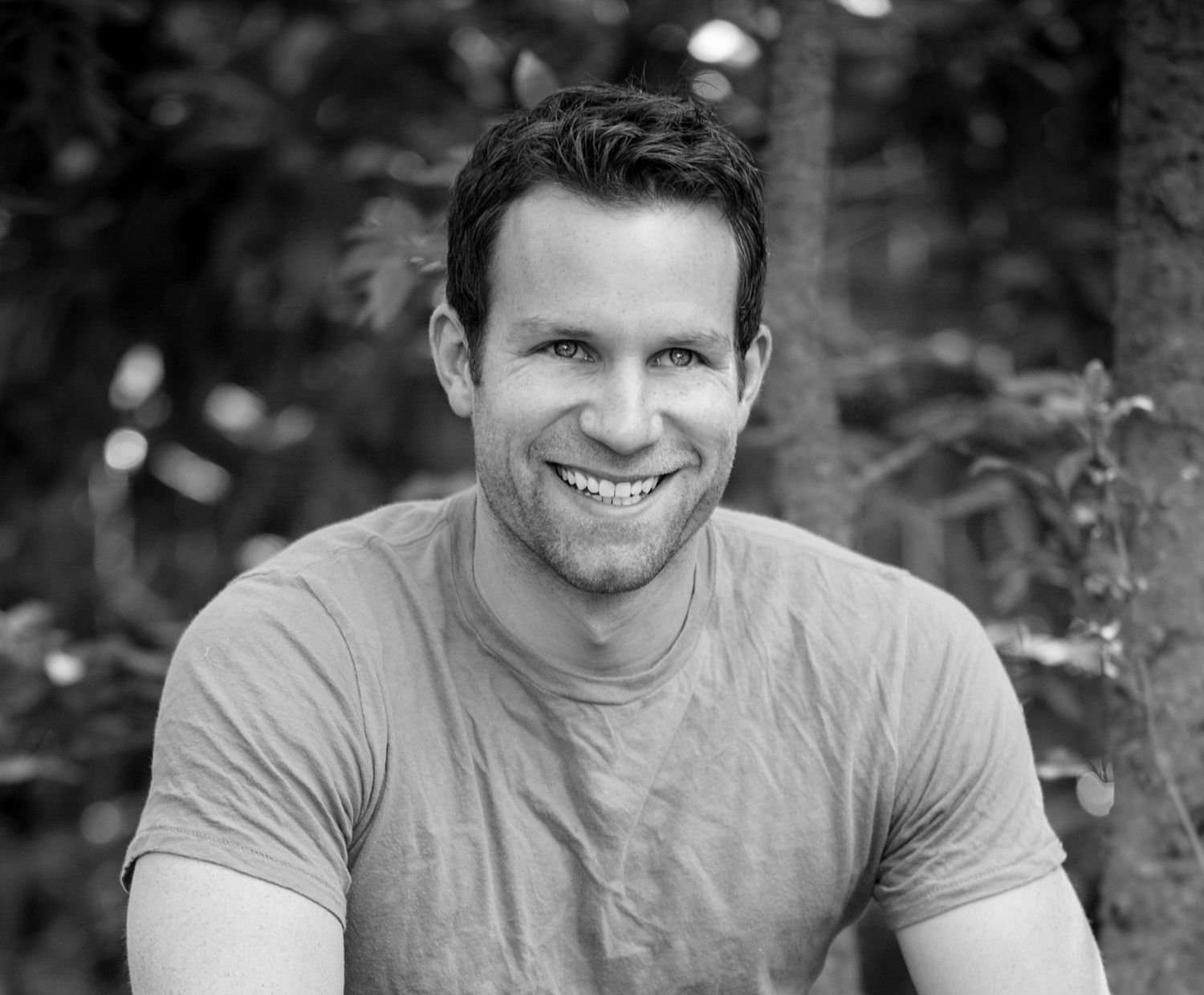
 Abel James
Hey there. I'm Abel James, and thanks so much for joining us on the show. Why do we always wait until it's almost too late to take our health seriously?
If you've ever experienced a rock bottom moment, you know that it can be a powerful catalyst to take radical ownership over your results and your life in general. But what does your physique say about the choices you make? This week's guest suggests that your health and physique is your proof of work, visible undeniable evidence of your daily routines and values. Today, we're here with doctor Jay Kuntz, doctor of pharmacy certified personal trainer, Bitcoiner,
and founder of Proof of Work Fitness. Jay is one of a kind. He's as comfortable leading advanced mobility drills at a pharmacy picnic as he is whipping up squirrel stew deep in the woods. My kinda dude. Along those lines, what's the weirdest thing that you've ever eaten? I'd say mine probably is guinea pig in Peru, which was actually scrumptious,
or maybe some random crickets that we ate when we were in Thailand, which I definitely do not recommend. Even the stray dogs wouldn't come close to those things. But another weird one was growing up in New Hampshire, sometimes people would go on the woods behind our property and and often without our permission, shoot an animal. And and, one time there was this old, old bear that they shot and they left some meat, at our front door. And my dad is a great cook. He tried everything
to make that tender again, but it was just the toughest old stuff. He tried marinating it for days, just pounding on it, shredding it up. Nothing worked. The bear meat actually tasted okay, but it was impossible to chew through. Just too strong for our we human teeth. But, anyway, we are, leading a lot of fun challenges right now in our brand new club called Club Wild,
and, I just wanna kinda catch you up on some of the things that are going on there. For the past decade and change, almost fifteen years, we've been helping people from around the world transform their health and their lives with real food and cutting edge science. So if you'd like to level up with fellow health nuts,
you don't have to go it alone, and you don't have to be on social media anymore either. We've built our own community completely outside of social media, and we're running our own challenges. We've built all of our courses. We have a recipe library and much, much more coming. You can find it all at wildrx.com.
We even have a newsletter you can sign up for for free if you just like to dip your toes in and get some free resources. So if you'd like to stay in touch, make sure to sign up for my newsletter at abeljames.com or wildrx.com. You can also check out my Substack, abeljames.substack.com to keep in touch. But I encourage you to go to wildrx.com
and check out club wild. We're already having so much fun in there, and I would love to meet you in the members area. Alright. In this episode with Jay, you're about to discover how to design your life to show up day after day, especially when things get tough, how to treat health as a compounding investment, and how to dollar cost average your workouts by taking one small consistent step at a time, why community is a superpower,
why surrounding yourself with goal driven people accelerates transformation, why tiny habits can create enormous changes in your trajectory, and much, much more. Jay's journey is just about as honest and actionable as it gets, so get ready for the kind of no excuses inspiration that might just get you moving by the end of the show. Alright. Let's go hang out with Jay. Welcome back, folks. We're here with Jay Kuntz, doctor of pharmacy certified personal trainer, a fellow Bitcoiner,
and founder of proof of work dot fit, a website and app where doctor Jay offers mindset coaching and much more. Thanks so much for being here, Jay.
Thank you, Abel. I appreciate it. And very good company. It's nice to be with a fellow Bitcoiner.
Abel JamesLikewise. Yeah. We met down in Mexico at the the first ever Bitcoin Fit Games, and I was, you know, still a little banged up recovering from that car wreck. So I was just, a a judge and a coach for that. But I gotta say, Jay, you were a phenomenal athlete and you were out there doing some of the sprints,
going deep down with the lunges and all sorts of things. And you were probably the only person doing it with perfect form that I saw anyway. There were lot of people who were just kinda like participating and getting through or whatever, but you were doing it right. So I just want to give mad props because even in the instances where you can get away with not doing it right, like you're still doing it right. And so that's something that's definitely laudable.
You know, like I believe that, you know, your body, your physique is that proof of work. And so, if you're putting the work in, if you're doing this stuff, then someone should be able to look and tell just on-site whether or not you care, you prioritize your health and fitness and not taking shortcuts on something like that. That just kinda goes with, you know, how you do one thing is how you do everything.
Abel JamesYeah. But for you, it's been a journey also, like, which we talked about when we sat next to each other at dinner one of those last nights. What was it like? You you've kinda bounced again. I don't know if it was rock bottom, but you've had some low moments too that it sounds like kind of propelled you to having higher standards, like, forever after. Right? Like, tell us about that.
So, I mean, I've always been into fitness and, you know, exercising and stuff like that, but I'd always really struggled with consistency. And so what I would do before is I would get to a place where I could see my abs and I was getting some good veins going in my biceps or whatever, and then I would kind of slack off because I look around at people around me and I'm doing more than them.
Of course you can see my abs and stuff like that. I kind of let take my foot off the gas and I'd always struggle with consistency. And I got going through pharmacy school, I started realizing, Oh, how I drink is technically classified as binge drinking when you have six or seven drinks in a row.
That's not healthy, basically. I was like, Oh, you know, like, so going for two weeks, three weeks without drinking anything and then drinking, you know, six or seven beers, that's not a good thing. And so I kind of like opened my eyes to that and, you know, starting to see like the lifestyle that I was living wasn't as sustainable as what I kind of thought.
Because I started seeing people in the pharmacy line and they're in their 30s, they're in their 40s, and they're starting to get diagnosed with diabetes and high blood pressure and high cholesterol, depression, stuff like that. And I'm not really living that much different than them. Like, yeah, I'll exercise, but then I stop. I keep having these things that interrupt my flow. And
you know, I ended up getting hurt one time. That was kind of like the low point for me is, you know, I got hurt while I was drinking and hurt my shoulder and I was like, got really got down on myself, kind of depressed that, you know, I didn't think I was going be able to do pull ups or push ups anymore.
And I was just sitting in an old rocking chair with bad posture and I lost a lot of muscle because I wasn't working out. Was just even though I knew the drinking was bad for my recovery, I was still drinking. So I wasn't sleeping good, I wasn't hitting my protein,
and I just, I wasn't putting in the practice of things that I knew that I should be doing, but at, you know, at a certain point I just finally like, you know what, like, I'm not gonna get better the way that I'm doing. So I, you know, I stopped the drinking and I started prioritizing my protein, you know, doing like just starting, not really, just like a basic walk. Just like, all right, let me just walk from one place to the other, do so many steps that way. Like I would log thirty minutes just walking back and forth on flat ground.
And I started kind of building up from there, you know. So wake up, walk in the sunlight, hit the protein shake and get a walk in. And then from there, like I built up and started working out again and just decided that, you know, I was going to take my health and fitness a lot more serious than what I had before.
Abel JamesYeah. And we were talking before we started recording about how, you know, as a pharmacist, you get to see people in the later stages of their life and what some of these seemingly innocuous
or just, like, pretty well normalized behaviors that most of us have, like, what that actually turns into over time. And, like, I mean, you know better than I do how many prescriptions most people are on who are standing in that line. But what is I mean, what does that look like? People who are just kinda living a normal life, you know, drinking a little bit here, but nothing too crazy. Like, what should you expect if you're not exercising a whole lot? So the biggest thing, and this is what drives a lot of metabolic derangements,
is called insulin insensitivity. Whenever your body is not as sensitive to insulin, then your insulin levels rise and then your blood sugar levels rise and that starts to damage the nerves in your eyes, the nerves in just like the actual nerves. So people get sometimes called diabetic neuropathy, where they get these pins and needles fillings in their lower extremities and it starts to mess with how you feel things It harms
your kidneys as well. So when people have kidney problems, people have diabetes, that stems from and then also high cholesterol as well and high triglycerides. It's usually driven not from a lot of cholesterol, but from excess sugar. And whenever you move, whenever you exercise,
you're helping your body become what's called insulin sensitive. So you actually take that, your glucose gets high, but when you build muscle, you give a place for your body to put that glucose as glycogen and it stores it in your liver but mostly in your muscles. So if you're not exercising, if you're not doing these things to burn those extra calories, then your body stores it because that's just like an evolutionary thing. We
never knew where our next meal was coming from. So now you got people, they eat whenever they first wake up, sausage, egg, and cheese, have like a Coke or something like that or like a 600 calorie coffee or something, and they're just not moving enough because we're sitting on our desks all day and it all adds up. So that's the biggest thing that drives all of that.
Abel JamesAnd also, like, that starts to compound in a negative way where, like, you have metabolic dysfunction, people aren't moving so much, and then you start having chronic pain because of that loss of mobility, right, which which can be hard to get back. So a lot of people approach that instead of trying to rehab the body, just slapping a band aid on there and taking painkillers for the rest of your life. Right? That's that's kind of the the typical process.
How do you see people get out of that cycle?
Yeah. The other thing about the chronic pain is it's driven a lot by inflammation. And you have that high sugar kind of diet whenever you're not burning all those extra calories. And there's like an inflammatory marker, like C reactive protein, and that would be high in people. And
of course, people will say, Oh, let me just take some turmeric and some black pepper. Yes, that helps. But it's really better to address the root cause. And even though you may people feel tired and stuff like that, like, it is better to do the exercise.
And they they'll find that they get more energy after they've begun, like, a strength training routine. They've added cardio to their routine. Then they actually feel, they're able to get through the end of the day without having to slam a bunch of coffees. And sometimes it's kind of counterintuitive for somebody that's kind of in the throes of, Oh man, I've got all this pain. Actually starting to work out and use their muscles, it helps their musculoskeletal system feel better because we're
made to move, right? And so sitting all day, that's not good. So trying to move from sitting for eight hours a day into trying to use a standing desk and, you know, trying to walk on your lunch break. That can, you know, do a lot to kind of help somebody, you know, because they're stuck in that kind of, you know, that sitting down pattern, you know, they're letting them on the ground. All that stuff is not good, you know?
Abel JamesWhat about from, like, a social standpoint or just, like, an enjoyment of life standpoint? How did you transition from, like, being kinda broke? Because I've been in the same situation, right, where you're kinda broke and beaten up, and it's just like, you could do the poor me thing and just, like, drink your troubles away. Or you could choose the other path. So, like, what was it for you that made it easier to stay on the path of just kinda, like, letting that side go, but still having fun and still making life, like, worthwhile, all that?
Yeah. So, you know, when you think about, like, longevity, you know, Bitcoin caused you to think about the future and, you know, thinking about, like, okay, if we if I'm gonna DCA,
I'm gonna, like, buy a little bit of Bitcoin over time and, you know, just stack my sats. Well, you do the same thing with your health and fitness. That starts somewhere like, you know, starting with a walk, like hitting 8,000 steps a day at first, 10,000 steps a day. That's a good, you know, like it's a good goal. Just that one intervention alone has been shown to reduce all cause mortality by fifty percent.
It just takes you're already doing stuff on your phone, you're scrolling, just do that while you walk. Take your lunch break and just walk after your lunch break. You don't have to sit down for the whole hour like you've been sitting down for four hours at work anyway. But then you can also invite people to go do that with you. You can be that person in your family and your friend group that says, Hey, let's go walk after dinner. Or instead
of going to see a two hour movie, let's go to the park and let's do something active. Let's throw Frisbee. And so really inviting other people to do that kind of stuff with you. And if you don't have people around you, like in a friend group that's already doing that, then go join some. There's apps called Meetup.
And the Meetup app, you can look up people that are doing they're playing free Frisbee. You know, I've met I've got friends here in Miami that do rollerblading. We got flag football. We got Bitcoin meetups. And then from the Bitcoin meetup, I invite people to come and work out, you know? And so that's the thing. It's like, I'll find community
and, you know, build that into your friend group because you are the summation of like the five closest people around you. And I also believe that kind of bleeds into whose content you're consuming. So if you're listening to people's content like this,
and maybe you're the only person in your family that really cares about health and fitness, but if you're listening to your podcast or educating themselves on how to live a fit and active lifestyle and how to do things better, then that will bleed into their interactions with everybody else and how they can be a positive influence on the people around them.
Abel JamesYeah, it's so interesting. I've had a number of people, and I only realized this after I kind of, like, stopped drinking,
that I was being used as the excuse to drink or not to. Like so, like, people who otherwise, like, wouldn't be drinking would do so when I was around just because in the name of a good time. But on the other side of that, and this worried me, you know, being a musician coming up that way, that's like you're supposed to be the life of the party. Like, you're literally paid in booze and paid based upon how much booze is sold, that sort of thing. But what I found is that actually you can have a lot more fun without it because you're not, like, getting cranky and tired at 3PM and, like, going through the ups and downs of the blood sugar and, like, just destroying your metabolism,
all the rest of that. And so, in fact, like, you can become that good influence on people instead of being the bummer at the party. It just like, hey. Why aren't you drinking, man? It's something where you can actually, hopefully, over time, maybe not right away, but elevate
the people around you, those five people or whatever that number is. Like, that starts to rub off on people in a negative way, which might seem like not a big deal, but you you look at that, like, compounding over time, and that becomes a big deal later. Right? Like, that becomes a whole different trajectory that everyone's on. So I think it's important to take that that responsibility seriously. Like you wrote, I think this is from a tweet, training isn't optional. It's not a hobby. It's my anchor. And if you think of it that way, then you show up differently.
Yeah. It's just like hygiene. Like I'm not going to skip brushing my teeth, right? I'm going to get up and wash my face. Like I'm going to do, you know, my exercise, you know, some days when I'm super busy, maybe it looks like I'm working out for fifteen minutes, right? But if a day that I've plenty of time, yeah, I'm going go in, I'm going work out, I'm going to hit all the major muscle groups and I'm going push myself.
But like, you have something to fall back to whenever you are super busy, like you do the fifteen minute workout, you do the quick jog, but you don't just do nothing. You can't just let weeks and weeks pass you by and you haven't trained because me, you know, now that because So once you're on this journey for so long, you get used to feeling good, right? And so when you don't have that input of pushing yourself hard and workout,
you can start to feel your mood shift a little bit. You're like, Oh, I'm a little blue. Why am I feeling a little sad? It's like, Oh, I haven't really pushed myself. I haven't really worked out. Haven't done a sprint. I haven't lifted any kind of heavy weights. And it's like, That'll probably let me go do that and then I'll feel better. Just like getting good sleep and drinking plenty of water. I'm used to being really hydrated. And so if I go for a couple hours and I haven't had anything, I can feel my level of being where you start to get dehydrated. And even when like a 10% drop, your brain starts to shrink. And so your body is made to be hydrated and those little things, they affect your performance, they affect your mood, they affect how, you know, all this stuff, you're supposed to do it for a reason. And a lot of times people just get used to feeling, you know, like a certain level of bad. They just get used to like this level of discomfort,
but they got to shift that into moving that discomfort into your training where you're like, you're pushing yourself, you know, a little bit out of your comfort zone so that you get the adaptations, you stimulate the growth versus just getting used to feeling bad because you you're not getting enough sleep. You're eating until you get uncomfortably full and, you know, you're having bad posture and like your back hurts.
Abel JamesYeah. And I love the concept of dollar cost averaging your health too, and kind of seeing it that way because the other tendency is to keep procrastinating, right? To just like save up everything, all your energy until the perfect dip comes and you could buy it all right then. The perfect workout, the perfect opportunity. That's not how life works though. It's not like sometimes you're buying at the top. Sometimes you have to show up when you least want to. Right? Like,
I was I was talking to the author of Inner Excellence recently, Jim Murphy, and he says there there are 100% days and there are 30% days. You know? Like, sometimes it's just a 30% day. That's all you've got, but you've gotta give it what you can and show up. And you also have shared that, you know, if you show up for your body, you start showing up differently in your life too. How does that work?
Yeah. So some people,
they come to me and, you know, it's just it's a mission just to get them out of their kinda funk, really. And it was like, let's get them going to the gym. Let's build that into their routine where it's like, you come home from work or, you know, before you come home from work, you've got your clothes packed. You know, you've got your shoes ready to go so that you can get to the gym, you know, and it doesn't take you a long time, which is get your clothes changed out. Then you're either going to hit the treadmill and walk for a little bit, or you just do some of the machines. I've told people like to start going at one of the machines and then just doing
whatever workout. Like just get kind of used to being in there and being comfortable because a lot of times people will go to the gym and then they'll just stay on the treadmill, you know? Or they go to the gym and they just stay at the classes. And they'll say the class is like a body sculpting class or whatever, but they're doing, you know, they're
not really pushing themselves. You know, they're like active in the group and stuff, but they're not going to change their physique with that, not long So depending on where the person is, it's like, just go there, get used to that, build that as part of your day, where you say, I'm going to stop by the gym. And then we push it. Because you don't want to go in and push somebody so hard that they're super sore and they're exhausted and they have this bad
connotation with the gym, like, Oh, I'm going to be sore for days, and stuff like that. Now, if somebody's coming in and they've already been training and they just want to help leveling up their athleticism, okay, they're already at a certain point, then you push them and you get them to a higher level. But if somebody's coming in and they didn't grow up being fit, then you just get them to the gym and build them up from there.
Have their identity more aligned with that. Like, I am somebody that goes to the gym. I am somebody that takes my health and fitness seriously. Because a lot of times, whenever people are on a health and fitness journey, they will get ecstatic from people around them because the people around them will see that they're eating differently and that they're exercising.
And so the people around them will, like, make a little comment anytime they have anything to eat. Oh, I thought you was Mr. Healthy now. I thought you whatever. And so having a community, you know, we have Bitcoiners and Business Professionals group in the Proof of Work Fitness app. And, you know, that's a place where you can talk about your PR. You can talk about, you know, whatever your favorite type of carb is.
Because a lot of times, the people that are around you, they're going get tired of hearing about you hitting your protein goals. They're going get tired of hearing about how much water you drank and or how much steps that you hit. Because when we talk about those things, it's like a reflection on those people because they're seeing what they didn't do. When you listen to how you made it work, even though you had a busy schedule and you're still making yourself better, it's kind of a reflection of them because they're not doing those things. And so it is good to find community and to talk about those things with people who actually have common interests.
Abel JamesYeah. And so, for that reason, it is really helpful to find community around some of the activities that you want to do, right? Instead of just like the people who are there, which we all have those relationships, right, family, friends, or just people who live close by neighbors, whatever that is, but also they're the intentional
relationships that you can build that that look to kind of up level your life. And and so often, it's hard to make friends, you know, as adults. We're all busy and that sort of thing. We already are so distracted, but when you can see someone on the reg or group of people regularly, you know, and just, like, show up for each other, Even if it's around kickball or whatever, it doesn't have to be around something totally insane from a workout standpoint.
That does build real relationships, real community, and you show up for each other around something bigger. And that's that's really what it takes. A whole bunch of that and a whole bunch of changing that whenever you move house or whenever, you know, your kids go to a different school, whatever it is, life gets in the way, so you have to continuously adapt to all this. So like, I love one of the things about your approach is that it's just like kinda no excuses, right? Like, no gym. Alright, show up. You watch some of your videos and you can definitely see you're getting a decent workout in despite the fact that you're not in a gym.
Yeah, yeah, exactly. You know, and, you know, really kind of going back to what you said about community, it's so huge. Whenever I moved to Miami from Tennessee, I didn't have any friends here. I moved here for a girl, so I was hanging out with her all the time. But I started getting into Bitcoin and she got tired of hearing me talk about Bitcoin.
I was into fitness, so I could only talk about Bitcoin and fitness to her so much, and she was tired of me talking about it. So I ended up finding this Bitcoin meetup, and then I would talk all I wanted to about Bitcoin, then I would start talking to them about fitness, And so that was something that was really good for me. One, because I learned more about Bitcoin, learned more about money. And I
I had some money on Voyager back in the day. And was telling my friends, Oh, I'm earning 9% interest on my USDC. You know, I'm like, you know, this is really good. And I was trying to tell them how like, well, because they were only Bitcoin. And they were like, where's the yield coming from, Jay? Where's the yield coming from? They're like, they're taking your money. They're making risky bets with it. And anyway, Prem, the founder of the Bitcoin meetup,
the Bitcoin meetup was called Bitcoin Brunch. Anyway, he taught me you know, just taught some sense into me and got me to kind of be a little bit more weary about where my money was. And so I ended up taking my money off of Voyager. And then right after that, they collapsed and everybody lost money. Yeah. It was you know, she's not I took off my Bitcoin off there, all, you know, all my cash that I had in there.
And then I'm like, all right, let me just focus on Bitcoin instead of trying to be into, you know, 20 other cryptos besides Bitcoin because I didn't really get it. Right? And so when you go to the community and you start having conversations with people, like real people, that you learn a lot more. You know, you level up, you know, your level of knowledge a lot more than you can just reading stuff on forums and listening to podcasts.
Abel JamesYeah. And it's also especially people who are, like, not and and not to make this entirely about Bitcoin, but people who aren't familiar with that world, like, often come into it or assume that it's all about some sort of crazy money making pyramid scheme investing thing. But when you spend some time in there, especially the open source community, it's all about proof of work. It's all about validating and then trust and verify and all of all of this transparency, actually.
And even more than that, it's like instead of trying to outrun the fiat system of inflation inflation and constant debasement that's just, you know, stealing our buying power over time, you can just stack sats. You can just hold them for, you know, as long as possible or until you need them, whatever. And that is something that as a scarce asset, you're building over time no matter what the Fiat reflection of value says that that is up or down or whatever. You're still
unaffected by that stacking your little stats over there. And that's, I think, a very important way to see the world at large. It does definitely translate to fitness in the sense that, like,
there is no magic bullet. We don't need to wait for the next crazy thing to come. We have enough right now to put some sats away. You know, go for that walk, drink some water in the morning, stay away from the stuff that we know is hurting us. And I think it's so cool too that you're, like, leading the the Bitcoin walks and the other things that help get the people who are deeply knowledgeable about one aspect of the world, it technology or finance or whatever,
and help them see the similarities in the world of fitness. Because you can if you show up financially with that mindset, it's a lot easier to kinda translate that into how you show up and and view your health over time. Now, one thing that is definitely one of my weak points that I I give you mad props for is I saw your hip flow video where you're doing all sorts of hip mobility
and workout, and that is something where I definitely especially as a long time distance runner and that sort of thing, I could use some more mobility in the hips. What are some ways that you've found to incorporate, like, building skill, and and progressing that skill into your your daily practices or into your routine? Because the tendency is just to kinda do the same workout over time, right, and get comfortable. But clearly you're not doing that, at least not in that workout.
Thank you. But yeah, a big thing that is kind of like what I talked about with the what I was talking about with the stretching and mobility flow at work is just building stretching and mobility into your daily routine. I begin every morning with a little stretch and a little mobility flow that I go through. It's grown over time as I've learned you know, about, okay,
let me just do more than just a simple stretch. Let me do, you know, let me work on my thoracic spine. Let me work on, you know, my hamstrings.
And, you know, I've built more into it over time. So I'm kind of like covering all the bases, but I didn't start that. I started just doing a basic stretch. And that's the biggest thing is like, can, you know, you don't have to do a five minute flow. Just spend the first, you know, minute of your day stretching, you know? And so like, that's where I start. I start with a daily stretch and, you know, the last thing that I do, know, as I'm laying down is I stretch,
just to kinda, you know, it helped me to relax. Like, if I lay down and I haven't stretched, I can tell. And, you know, like going back to kinda feeling like a certain level of good, like whenever I don't have that stretch, I'm like, oh, I can feel this little thing in my back. I've gotten hurt and done accidents before the change whenever I was 18, it was like 28 feet. And, you know, I hurt myself in car accidents.
I know what it's like to, you know, have a sore back and, you know, it hurts yourself when you're when you're working out, but you can't just stop moving. That's the biggest thing. You got to keep moving, keep stretching. And that's that's where I like to start is so once I've started the day, I have the stretch. So then whenever you want to,
like you said, talking about with your hips, if you're stretching in the morning and you can feel that your hips are tight, before you go to do some kind of hip exercises or something that's going to utilize your hips, spend a few minutes doing like a dynamic warm up where you're working that joint through the ranges of motion and see what you can control. So if you're just lifting your leg up,
see what you can do with just your muscles and then kind of, you you can kind of kick it up, you know, like just kind of kick it up a little with some, a little bit of force and then kind of control it on the way down. And what you would do is just, you know, you can either do stuff with like ankle weights. I know one of the videos I had on had like some ankle weights. And so first just do it just body weight only and just control your body through space.
And then, you know, after you get used to that, then you can add a little bit of weight and just being intentional about it. Right? And like going through and you do that with your shoulder. So you want to try to like lift your shoulder, your arm straight up, twist it around and go straight back.
I've got this stretch that I do, but it just causes you to be intentional about the rotation of your shoulder. And whenever you're doing that day in and day out, so when you go to do your training, you're doing your workouts, a lot of people hurt themselves because they're trying
to bench more than what they should probably, and they hurt their shoulders or something. Cause they're not doing anything for their joint capsule. They're not doing anything for the rotator cuffs. And if you just build that part into
like where you have a day where you just, you know, you spend, know, maybe you're taking it a little easier at the gym, but you're still going in, you're doing range of motion, you're doing, you know, some bands and stuff like that. That's good. That counts. Right? It it all counts.
Abel JamesNow we have to talk about this because I had one of the most entertaining conversations of the whole weekend in Mexico with you at dinner when you were explaining how good the eating is of some of the the game animals that you grew up around. So please, let's let's dig in and talk about some of that because that's I grew up in the backwoods in New Hampshire, and, know, we ate bear that was tough and, like, almost inedible as tough as bullets. So
anyway, riff on that a little bit because a lot of people are certainly familiar with eating some game meats, but not necessarily some of the ones that you're experienced with. So a story that comes to mind. So I grew up hunting, and my mom would you know, terrified. She didn't want me around because my mom, it was like a Yankee. She was from Chicago, up the Gary, Indiana kind of area. So they moved to Tennessee back in like 1988,
'89, right whenever I was born. And so she was, you know, just been in the country or been down in the South in Tennessee for just like a year or two. And here I am at two years old and I could clean a gun and I would tell my pop which part to put together next. And he would take it, disassemble it,
I would point to each of the pieces and tell them how to put it back together. I would clean it for him and stuff like that. And so, you know, she didn't like it that I was around the guns, but he was like, No, no, no. Like, this is how you do it. You teach them young and they respect the guns and stuff like that. So I grew up hunting.
And I remember I was like seven or eight and I was hunting by myself. I went and grabbed the gun and we lived on a big property in Tennessee. So I walked down to the creek and I couldn't find anything to shoot, squirrels or anything like that. So I was sleeping on this table and I was laying there for about thirty minutes. I was almost asleep. And then I heard the splash into the water. And then I woke up and there was a bunch of ducks in the water and it like, it scared me because how loud it was.
But, you know, my little hands were trembling with this little 22 I had anyway. And I aimed down at this duck and I said, boom, I hit him right in the head. And it was the middle of winter. So I had to swim across the creek and grab this duck and I'm swimming back in. And I was by myself. And I was just like picturing, like, what would they think if they saw me swimming with this duck? But long story short, I went and swam and got that duck and I brought it back. And
we ended up cooking and eating that. My pop cooked it. But that's the kind of hunting that I would do, just kind of impromptu. And also hunting squirrels, like first time I got a squirrel was a little bit around that time. The muck duck was the first kill. Then I ended up getting a squirrel. And after I got older, I shot a few deer. And the craziest one was when my brother and I were hunting and I shot a raccoon. And that raccoon, that
was probably the one you were talking about. Because, you know, a lot of people, whenever I tell people I eat raccoon, they're like, What? You're like, You ate what? And like, I Googled it and it says you can eat it. So I was like, I'm gonna eat it. You know? I took it to my uncles and, you know, my uncle cooked it for me. And yeah, ate on that raccoon for like, you know, half a week. It was really good. Another thing I've done was
I got a roadkill deer. I was driving in the country, and this was actually a little bit before I came to Florida. I saw this deer laying on the road and it was recently hit by a car and it was still warm. And it was still bleeding, not bleeding, but it had recently just died.
And anyway, so I took it and I took it back home and cleaned it. And I ate on that deer for two weeks, probably longer than what I should because I just cleaned it and soaked it in some saltwater, and then I would cook it a batch at a time in a slow cooker. And so that's just I don't know, man. It was so good. I was like, I can't just let it go to waste.
I grew up, you know, not wasting that stuff. You know, you gotta respect it. You respect the animal. And it had already So it was like, I wanted to honor it.
Abel JamesAnd the squirrel too. Like, in my experience, it's like, it's really about how recently
the animal was hunted and how quickly it was cleaned after that, and then just like how fresh it is when you eat it. So it doesn't even really matter necessarily what a lot of the animals are. That's just kind of like the fundamental principle. And I've eaten like guinea pig, bear, and all sorts of weird stuff. And a lot of them, you know, don't taste as weird as you'd probably expect. But, what was the way that you all were preparing the the squirrels? Because I think you had like a whole process here. Right? Yeah. Yeah. So the squirrel is like a delicacy. I mean, really, I love squirrel meat.
And how my pop would do it is, so we would kill the squirrels, we'd do a batch of them, walk around the woods until you come back with, we call it a mess of squirrel. There's probably like 10 And to 20 of then so you you skin them, you take the guts out, and then, you know, you cut them into into pieces, and then you let them soak in salt water, like a salt brine, and let them soak at least overnight, sometimes like three days. That really takes like the wild gamey kind of taste out of them.
And then, you know, you take some flour. I think maybe you like dip it in eggs or something. I wasn't cooking them. I always ate my pop making it, but he would take some kind of like batter, guess it's like eggs and flour, and dip the swirls in it, then he would put them into oil on the stovetop and cook them. You know, like, he uses canola now. With being a little bit more health conscious, I would tell him to use avocado oil you know, and not using like seed oils. So that
would be the only change I would make to it. But yeah, it's still a dare love to see. And I definitely would recommend people to have some Squirrel if they've never, you know, tried it before. Don't knock it till you try it. Yeah. For sure. Exactly. Because, like, there are so many people who kinda went deep into the survivalism,
Abel Jamesright, in the survivalist thing where there's just, like, packing up years worth of of canned goods and coffees and sugars and and, you know, like, all sorts of starches and that sort of thing because starches store well, but protein doesn't. Like, it's really hard to guarantee yourself a source of protein, high quality protein, more than, like, a year or two in the future, especially if you have a family. So in terms of, like, prepping survivalism,
you're not gonna be eating cow and hamburgers and cheeseburgers and stuff. Like, you're gonna be eating squirrel. You might as well prepare now. And like, at least living here in Austin, Texas, it's like, yeah, we've got some deer around there, but we got a lot of squirrel. We got a lot of raccoon. And I'd imagine if things went south, like, they'd be some pretty good eating. They're fat here, dude. There's some fat squirrels.
I know. I remember walking around in college and seeing all the squirrels. They just like, they'll laugh at you, but it's like, oh, if you did some I would, you wouldn't be laughing.
Abel JamesYou can almost catch them in your hands almost.
Really smart. Like, they'll, you know, say like this, you're facing this side of the tree, they'll crawl around to the other side. And as they hear you walking through the woods, they'll try to get on the other side, they'll move around with you. And if you've already shot at one and it's in a tree, it won't move. It'll stay there until trying to spook it out of a hole or something. It's
listening to you. And some of the other ones, they'll like make noises to try to get you get your attention over there just to like distract from the other one. Yeah. You know, it's definitely like a sport and it's fun to hunt them, you know, like the whole process.
Abel JamesYeah. And and like you said too, it's it's not just innocent fun. It's also like being a participant in that whole cycle of life definitely gives you a lot more reverence for what's going on when you do eat a cheeseburger later, when you do eat some fish. It's like that came ideally from the natural world, and we're a part of it. And if we're eating things that have been killed, it's like it's not just some some weird aberration
to be involved with hunting game. And so, like, yeah, that whole way that we we do mental backflips, myself included. We need to, I think, all be intentional about being a little bit more connected to where our food comes from. Terms of how you eat, I think you're big on protein. Right? Like, what was it? About a pound of ideal body weight? You're looking for like gram per pound of ideal body weight. For
me, I would say it's one gram per pound of body weight, but like when you have people, they start getting into obese territory, Yeah. Down to like ideal body weight That way, you know, because it doesn't have to be 300 grams of protein. There's actually some new research that's come out that I've recently been looking at that shows that it doesn't necessarily have to be even that high. Like that's good as a top number, but you can get by with a lot less because
when you look at people that are in prison, when you look at vegans that are making gains, the stimulus is the biggest part. It's like actually doing resistance training that you're sending that signal to your body to utilize those amino acids. So then when you send that signal, then your body takes whatever you give it and utilizes it. And so you can optimize with certain things. Like if you are a vegan and you are vegetarian, yes, you don't necessarily have to be one gram per pound of body weight. It could probably be more like 0.6
gram per pound of body weight, and you'll still make gains. It's not like you get extra gains after going way over it, but there's a threshold. You need to get a base amount because there's 20 amino acids, nine of them are essential. And whenever you feed your body those amino acids, you know, it knows what to do with them. You can kind of batch it up to where you have, like if you're like a vegan or vegetarian, you know, there's ways that you can match up different plant sources of protein.
So something like rice and beans will give you all the amino acids to make a complete protein. But if you had one of them without the other, it wouldn't. And so then you're not going to get the same type of response. It's called muscle protein synthesis. It's not going to be activated to the same threshold if you don't get all the amino acids. That one is primarily leucine is the biggest one that kind of sparks that signal to tell your body to rebuild and repair. So
if you're reading food labels and stuff like that, leucine is a good one to have. But just in general, animal sources of protein, they're complete sources of protein. So you don't necessarily have to think about it too much if you are, but if you are a vegan or vegetarian, it's better to kind of know which amino acids that you're getting and make sure you get those complete proteins in.
Abel JamesYeah. Protein is just so useful for satisfying hunger and pushing other stuff out. Right? So if you are aiming to get a satisfactory
level of protein most days, then hopefully that's curbing your hunger before you inevitably just like a wrist deep in a bag of Fritos or whatever by the end of the day, like so many. So it's like kind of preempting that a little bit. I tell people to prioritize the protein. Like whenever you're eating a meal or you're selecting your stuff, like make protein the main. Like, don't don't like have, oh, I'm gonna eat mashed potatoes and I'm gonna have something other stuff. It's like, no, you're gonna have, you know, some chicken thighs,
some chicken breast, you're going to have some ground turkey, you're to have that plus some type of rice or some type of sweet potato or some type of beans. And that's just like in addition to, but the main focus should be the protein. And that's the way I like to think about it. That's why I help my clients think about it. Like, get your protein in first, you eat that, and then
make sure, like, whenever you're looking at your calories and you're looking at your macros for the day, it's like, did you hit your protein goal? Okay, good. You did that. Did you stay under your calorie target? Because
as long as you get in a little bit of fat, you know, you can play around with the carbs. You can have a lot of carbs, you can have a little carbs. You know, it's better if you have more. That's going to be better for your performance because your body needs glucose and needs glycogen and you get that from the carbs. So I don't like to see people doing a lot of heavy keto or heavy carnivore. It's just not my thing. You don't have to be that restrictive.
You can have some flexibility and enjoy your life. As long as you're hitting your protein target and you're staying under on your calories, then you can have flexibility.
Abel JamesYeah, I totally agree. As a pharmacist, are you seeing in terms of people kind of taking their health into their own hands with peptides that are ordered over the Internet and just, like, injected into themselves? Whatever. It's it's a whole kind of wild, world that's been opened up now, with VPC-one 157 and TB-five 100 and all the others. What's your take on that and where it's all going?
So there's actually I just learned of like a certification. One of the pharmacists that I work with, he has gotten like an additional certification to kind of help people to, you know, pick out those different ones. Because there's a lot more than that you've been off set. Of course, you got that one, but there's some that blunts your appetite, so the GLP-one agonist, you know, a those lot of people are utilizing those, but, they're doing so to their detriment because,
yes, they say they lost 50 pounds, but based on the studies, 47 of the weight loss from those medications come from lean tissue. That's muscle and that's connective tissue because they're just not eating enough at all. And so your body is utilizing the difference in
the calories. It's utilizing it and it's burning fat, of course, but it's also burning connective tissue because they're not working out. They're not exercising. They're not giving their body a reason to say, Hey, we should hang on to this muscle. They're just not eating as much and they're keeping their activity low. So how someone could use a GLP-one agonist and spare their muscle
is to do resistance training at least two days a week, hitting all the major muscle groups. Ideally, you want to hit them twice per week, but at a minimum of once per week. And then
keeping your protein at a higher level. If you go for one gram per pound of body weight, that's going to be so many calories. So like for me, let's just say 150 grams of protein. So 150 grams of protein, that's going to be, say 150 times four, right? Like that's going be several 100 calories just from a protein alone.
That, like you said, has the satiation effect. Like you can only eat so much protein and you're going to start to feel full, right? So that doesn't give you a lot of extra room for, you know, a lot of, like say, you you want to eat some Takis or you want to eat, you know, some mashed potatoes or something like that. So if you prioritize the protein and you're doing your resistance training, then whenever you hit that calorie deficit,
it's going be from the fat. It's not going to be from your muscles. So that's one of the biggest things. And as far as some of the other ones, I haven't personally seen a lot of people using them. I've read people online using some of the different peptides and stuff like that. And,
know, if like, I had a client that was interested in that, could help them learn more because I've done some of my own research as far as, you know, the biggest ones is the VPC-one hundred fifty seven. People really, it seems to really heal, but there are some people that have had some side effects from those because
this is like research chemicals or whatever. So it's not like they're tested and evaluated. And so you don't know exactly what you're injecting when you're buying these things from people. So there are clinics that specialize in that and they have, I guess, reputable brands and stuff like that. I would definitely go that route if I was looking to get started with something.
Abel JamesWhat about hormones and just exogenous substances in general, pharmaceutical supplements? What's your approach to any of those, knowing what you know as a trained pharmacist?
So I try to optimize people's natural production of stuff naturally. Because if you don't have your lifestyle dialed in, like if you don't have a good handle on your nutrition, if you don't have a good handle on your training, like in your sleep, I like to stimulate, nourish, recover. If you don't have a good handle on those three, then you can do steroids, you can do exogenous testosterone, and your physique
is still not going to look that great. Like, yeah, you may get a little bit bigger muscles, but it's not going to get you cut. It's not going to get you ripped.
That's the thing. It's like, there's people in the gym right now that you would never even tell that they're using any of that stuff. When people come to me or some other people that are serious about their training, serious about their nutrition and ask, Well, what's our stack? You know, ask what we're doing to get lean or whatever. Because they're telling, they'll tell you like, Oh, I'm doing this to cut, to burn fat. I'm using this to like, to build the muscle. And it's like, Bro, like, but you're still eating like garbage. Like you're paying no attention to what your nutrition looks like. When you train, you're not even pushing yourself. So it's like you're
injecting yourself,
exposing yourself to risk for no reason because your heart is only supposed to get so big and your heart's muscle and it's beating all the And so you got people, their hearts are getting bigger, you know, their other internal organs are growing because they're doing growth hormone and they're not optimized on what they can do naturally. So like their sleep is still off. So like, yeah, your testosterone is higher, but your sleep is still trash, so you're not recovering as good as you could otherwise. And so if I had
somebody that wanted to get started with that kind of stuff, I would definitely make sure that they were optimizing their natural production first. Or before, if they say, Hey, my testosterone is low,
should I get on testosterone replacement? I was like, Well, are you training hard? Like, are you pushing yourself in the gym? Is your sleep optimized? Because if you're off on your sleep, your testosterone will drop like crazy. And there's a natural kind of ebb and flow of the testosterone anyway. And so like, if you're not sleeping good, if your nutritionist's not set up in a way, so like, yeah, you want to be in a calorie deficit, but you don't want to throw your calories in a hole and just be below a thousand calories. Let's say you're supposed to eat 2,500 calories. You don't want to be eating 1,500 calories like you're eating like, you know, like a small woman. You know, whenever you're like this big guy, like you need to give your body calories to burn so that
whenever you do burn those calories, it's coming from the fat. Because if you don't, like if you take your calorie deficit too deep or if you're doing intermittent fasting and you're going for like a long span of time without eating, And then whenever you do eat, you're under eating. That messes with your testosterone. I know because I've done that, you know? And then whenever you optimize it, you just, you fix your sleep, you fix your training and you get your nutrition.
You want to be in a deficit, but you don't want to be in too, you know, like a huge deficit. You just want to be in a little bit of a deficit. And then that will stabilize your hormones. So that would be the first place I would start is to optimize what you're doing naturally.
Abel JamesLove that answer. And what about visualizing the future or using visualization? How does that enter into your own life as well as the people who you're coaching?
Yeah. So I have it's called the proof of vision protocol. And basically what that is is thinking about, like you say, like a 50,000 foot view of your life and your goals, what you want to achieve. And you think, okay, well, if this is the goal, This is where I want to be at this optimized
place. Like I've got my habits and stuff like that dialed in. Well, what does that look like? What kind of stuff would you be doing? What does your habits look like? What does this version of you that's really dialed in, that has the six pack, that has the successful business, what are they doing, right, as far as what are they doing on their day to day? And
that's what you take. Once you see that, you feel the emotion of what it would be to kind of be there. What would it look like to look at yourself in the mirror and have the six pack, to be able to drive the car or to whatever the thing is that you want, whatever the big thing is. Feel the emotion of actually achieving that and really try to borrow and sit in that feeling.
And then let that push you to actually do the things like, Okay, well, if this is what I would be doing if I was already in the place, well, let me start doing that thing now. Let me get up in the morning and this is what I'm going to do. I'm going to do these type of behaviors because that's the biggest thing. People can be inspired. They can say, Oh, I'm motivated or whatever, but it's really, did you change your behavior? Did you do things differently with this information?
And that's the thing. Like, if you can take and see yourself as a healthy and fit person that's really dialed in with your habits, well then start doing that now. Like, just don't make excuses for yourself. Just start doing And you know, when you think about like business, you know, you have so many inputs. You have like, so me and online fitness coaching, like I have to send so many messages to people. I have to reply to people. I have to post content,
you know? And it's like, if I focus on executing on those things and I don't tie it to how many views I'm getting, or I don't tie it to like a metric like that, I'm focusing on like, you know, am I giving value? Like, did I make some content that somebody could take and get results from that with just following what I said in the video. Like that's, you focus on those things. And then people start to come in like, Hey,
I come across your page. I like what you're doing. I wanna work with you. I wanna be this version of myself. Like I've let myself slip and I want to get back and operate at a higher level. And that's the kind of thing that it comes with time, you know? And you gotta just put the work in. And, you know, my vision for Proof of Work Fitness is
I want to, like, whenever Bitcoiners, they, you know, they start stacking these sats, you know, they get the benefits of Bitcoin going up and they're like, oh, they get some freedom. What are you going to think of whenever you have the freedom? You're thinking about your health and your lifespan, and they want to get healthy now. So then they slook up Bitcoin and fitness. Boom, there's proof of work fitness talking about lifestyle and wellness and all these things that I talk about. And then they say all this proof
of work of talking about your wellness, talking about meditation, talking about visualization and being the type of version of you that is doing all these things and clicking all these boxes.
So that's my hope is that when people start getting serious about their health and fitness, they look up, you know, Bitcoin fitness, boom, there I am. And, you know, then they watch this podcast and I'm like, yo, this guy's talking about the stuff that I wanna do. Like, I want my life to go in that direction. And that's what I help people do.
Abel JamesLegit. Awesome. Jay, I could talk to you all day. What is the best place to speak enough for, people to find you, your work, and anything that's coming next?
So Proof of Work Fitness, that's my Instagram. It's my YouTube. It's my TikTok. On X, it's j a e p o w fitness. But everywhere else, it's it's proof of work fitness. But Instagram is is like the main place. I'm doing more on YouTube, and I've got some content coming out soon about from the Bitcoin Fitness games.
So that'll be that'll be exciting. I'm you know, just I take forever to edit. But Yeah. I've got a Me too. Got an editor, he's helping me go through some of that stuff. So I'm looking forward Nice. Posting more content on the Bitcoin Fitness games and recently did a pull up competition in South Beach and some more stuff like that coming out soon.
Abel JamesSweet. How many did you get?
So there was a few different competitions. So one was a 40 pound weight vest. There's another one is doing muscle ups. Then there was a freestyle. Then there was a handstand.
I signed up for the weighted pull ups. So with the 40 pound weight vest, I only got 12. The guy that won got like 31 or 32. He killed it, man. He really killed it. Wow. You know, I wanted to just go and just to show out, you know? Like, I just wanted to get and put some points on the board, you know? So I was good with that. Then the muscle ups, I didn't figure I would do a lot of muscle ups after I did the weighted pull ups, so I didn't sign up for that one. But I can do like five or six,
you know, one after the other whenever I, you know, didn't do muscle ups. I knew it would be less than that. And I know there's some guys that would go way heavy on that one, so I didn't do that. And then I did the handstand and the handstand, I got just like a few seconds. I'm still working on my handstand, but that's the thing.
It's about not what you can do in the next month or the next week or whatever. It's like, think about where you'd be in a year. And I know next year I'll be way better at my handstand. And as far as cyst resistance training, calisthenics are really good because, you know, you can challenge yourself without really putting that much harm to your body as far as like putting a couple 100 pounds on your back. And you can get ripped physique, You can make your legs grow as long as you train right. So
that's a good place for people to start if they're looking into getting started with fitness, to start with your body weight. Master your body weight. Master your own mobility. Move your joints through ranges of motion and be able to control. There's a lot of fitness that you can get just from that.
Abel JamesFor sure. Instead of just moving weights around, learn to move your body, focus on mobility. And you're a great example of that. Jay, thank you so much. You're awesome, man.
Thank you, AWAI. I really appreciate you. Thank you for the opportunity to speak to you and and your audience.
Abel JamesHey. Abel here one more time. And if you believe in our mission to create a world where health is the norm, not sickness, here are a few things you can do to help keep this show coming your way. Click like, subscribe, and leave a quick review wherever you listen to or watch your podcasts. You can also subscribe to my new Substack channel for an ad free version of this show in video and audio. That's at abeljames.substack.com.
You can also find me on Twitter or X, YouTube, as well as Fountain FM, where you can leave a little crypto in the tip jar. And if you can think of someone you care about who might learn from or enjoy this show, please take a quick moment to share it with them. Thanks so much for listening, and we'll see you in the next episode.