



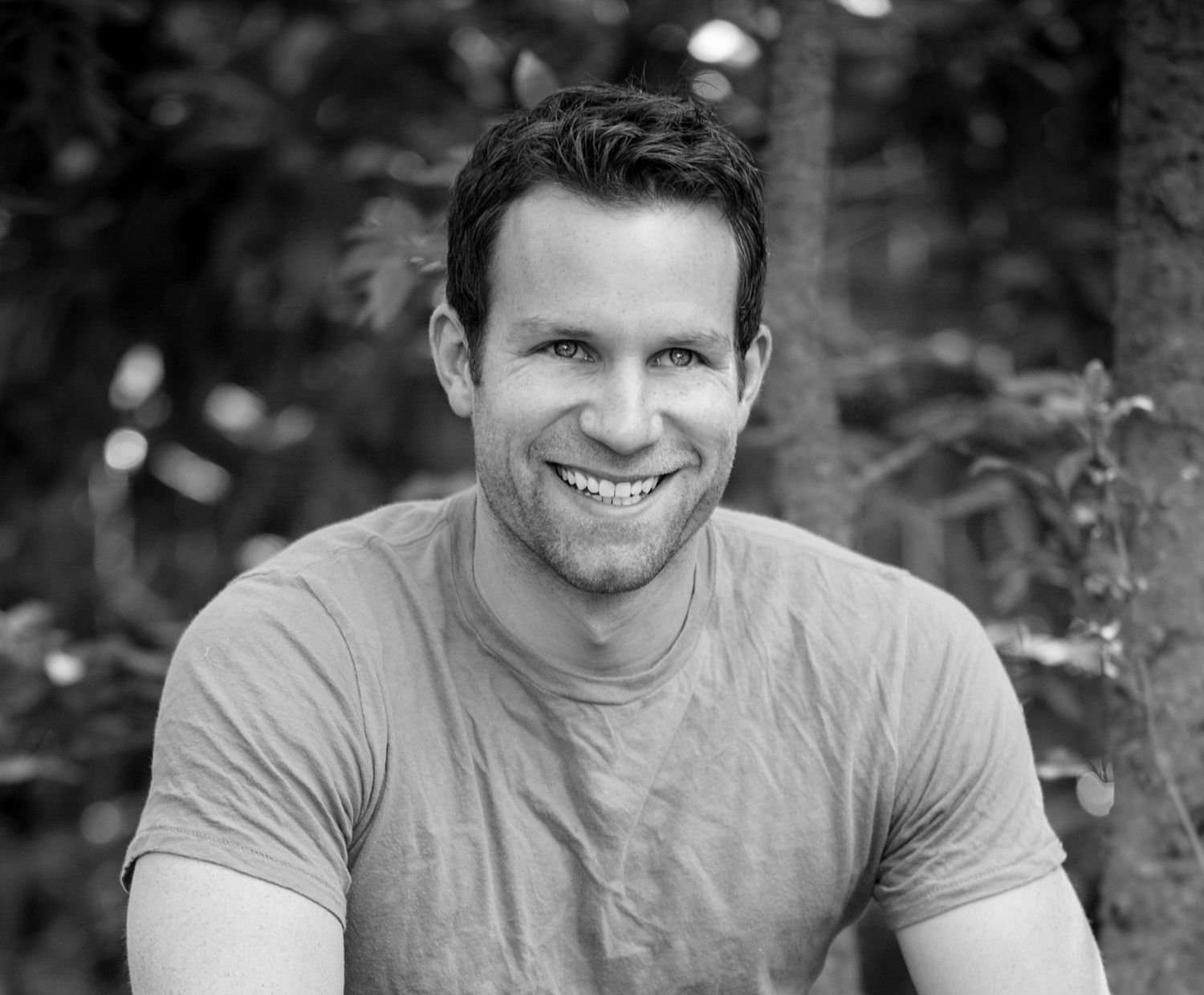
 Abel James
Hey all, this is Abel James and thanks so much for joining us on the show. If light and sound can rewire your brain, could targeted frequencies also help reverse trauma, post concussion syndrome, and even degenerative conditions with dementia like symptoms? What if the shamanic traditions, Native American lore, Vedic meditation, and modern brain science all lead to the same solution?
My guest today is Doctor. Lana Morrow, a pioneering neuroscientist, inventor, CEO, and spiritual explorer who works with frequencies, light, and consciousness to heal the body, brain, and spirit. After being knocked out last year and injured in a hit and run with serious post concussion syndrome, I've completed several transformative sessions with Doctor. Lana's brain computer interface to help heal my nervous system. Her invention uses gamified light, sound, and different frequencies
to help achieve flow states, calm the amygdala, which often overfires and locks us into fight or flight mode, and heal and regenerate pathways in the brain and nervous system. In addition to rapidly improving my coordination and reflexes, the most remarkable effect that I've experienced so far is a dramatic increase
in REM sleep and dream recall. She's definitely on to something. But before we talk to Doctor. Lana, if you want to keep in touch about the exciting events that we have coming up soon, I have live shows, music gigs, as well as speaking in Austin, Nashville, Las Vegas, Florida, and many more coming up soon. So if you'd like to join in the fun, make sure to sign up for my newsletter at abeljames.com. That's abeljames.com.
Alright. In this episode with doctor Lana, you're about to discover what it means to treat neurology and spirituality as a single living system instead of two separate worlds. The difference between music played for money and healing music played from the heart. In a world drowning in noise, manipulation, and fear, why authenticity
is the currency of the future, why some places instantly calm your nervous system while others feel like you're sitting in a microwave, and much more. Let's go meet doctor Lana. Welcome back, folks. Today, we're here with the wonderful Doctor. Lana Bachmora, an award winning functional medicine neuroscientist, inventor, and CEO of Think Interfaces. Welcome to the show.
Thank you for having me.
Abel JamesIt was such a pleasure hanging out with you at Sapiens Center and a few other events. I feel like the energy in Austin right now is very, very special. And, there are so many incredible people coming through and setting up shop here in some cases. What was it that originally drew you to Texas and Austin in particular?
I had an interview with a colleague and he suggested that exactly what you said, that the energy in Austin was really interesting. This was in 2021, at the 2021. And also where I was, I was in New York City. I had to escape. Was really, five gs was just rampant and I'm very sensitive. So I was literally even breathing. So I could not, you know, from nose. And it was very, you know, just very, very different. New York City suddenly became very, very different.
And I went to South Of Boston to work with a rehabilitation center and people from Harvard. And then after a while, that was not very conducive to my spirit. When I heard about people who were in Austin and people who are interested in spirituality and innovative technology, I think this is, you know, wonderful. And I had a dream. I had a dream that I needed to go and visit or live near the lake that is in the shape of a dragon.
Literally in a dream, it told me go to the Dragon Lake with crystal bottoms. So if you look at a map at the Lake Travis, and you turn it around upside down, you know, from how it presents on the map. It's a ship dragon and my home is right, my home is right on the lake now. And it's literally, I'm on maybe almost to the end of its tale, writing a tale of a dragon. And, you know, the Colorado River Trail, well, even even Barton Springs, it's laden with crystals at the bottom.
Abel JamesYou know, when I first came to to Austin, was palpable that it just felt different and very unexpected, especially for me coming from the Northeast. I grew up in New Hampshire and I expected coming to Texas for the first time, it'd all be like 10 gallon hats and tumbleweeds and desert and that that whole thing roused snakes everywhere.
And I felt especially going to the springs, as you mentioned, and being around all that limestone and and the with all the caves going on, the underground caverns, just the richness of of resources. I felt so grounded and just relaxed. But I have noticed, especially in recent years, that's not true in every part of town anymore. Like some places, you definitely feel like you're getting microwaved.
Yeah. It's different. Yeah. As you said, and I think native Americans had caves with the engravings there in Barton Springs. And if you notice the the mineral content of the water in Martin Springs is very curative. So it's always 72 degrees, if I'm correct, if I'm not missing. Somewhere around there. Yeah. Something like that. And you go in and you you can swim. It feels like it's moving like maybe like oil, but it's water because it's so rich in minerals.
And so that's what I perceived in my dream, except that Colorado River is slightly different, you know, right here. But then it's Lake Travagore, it's a river. So I just love it here, but I think it's very, very rich in ancient culture.
Abel JamesAgreed. And this is so interesting because you are a neuroscientist and you've got a couple of PhDs, no big deal, but I also studied the brain as an undergrad in school. And, you know, even at an elite school,
they didn't teach you about the connection between the brain and consciousness, really. They they taught you about all the machinery that was going on and the chemicals and that sort of thing. But they didn't really talk about light and they didn't talk about circadian biology or anything like that. So I I think it's really important that people who come with a pedigreed background, and and education that
you try to make that connection or at least acknowledge that it's important as part of the conversation because it shouldn't be just siphoned off to the theology department. Right? Like, need some intercommunication there, especially as we move forward as humans. So maybe you could just talk about that a little bit.
Yeah. Well, also life is homogeneous, you know? I mean, it's fractal, so we were all involved in at every level. We're here, there, and everywhere all at once. But if you live the way that we all are, you know, you don't distinguish, you don't separate your, you know, being from something else. It's not separated. It's all united. It's all holistic.
So it's kind of, I think that Rockefeller institution and institutionalized education has skewed that part because prior to that education was more natural and we're coming back to it now, which is really refreshing. Personally,
I've always been drawn to, since a very young age, like maybe two, three years old, I was always been drawn to Native American fables and stories and lore, you know, like, and then that to this day. I studied also ancient languages and I'm a Vedic meditator of many years, Rishi and the Siddha. And I've studied with my teachers, both from Himalayas, but also some of my teachers were shamans from, you know, from native American lineage.
So that's also something and we spent quite a bit of time with recording in our recording studio also, shamanic rituals and shamanic songs. So that's part of my heart, you know. And partially, I think that's why because it's connected to authenticity. You know, I think that the currency of the future will be authenticity. You know, there is no transparency, authenticity. There is no space for deceit. There is no space for not being direct and not being of heart. And I think if you're of heart,
then it's something that you connect everything. So going back to the question, I think that education as we have known it until now, and still, you know, regular university education, is still not very much of heart. You know, if you come from the heart, then you can connect the heart and the brain and the gut, and your whole being, therefore toroidal field is connected.
But people used to tend to not do it. However, even some teachers, professors, even when we went to school, they would accept that. My professor, you know, was like maybe 14, my professor of Sanskrit, he ended up, you know, teaching philosophy, but he offered us the fundamental basis of Sanskrit. And that's how I got interested in Vedas and Vedantas. And basically he translated it into very beautiful magical stories, you know.
And so with my child, would, you know, when she was very young, I did not shy away from talking about Mahaprata or, you know, something as far out as from Western medicine, Western perspective you would think that it's far out. But it's not. It's just a different culture and you introduce people to different things. And I think it's much healthier to be involved in holistic perspective.
Abel JamesYeah. I mean, growing up in The States, you don't really know what reality is outside of that. And, for me, it was such a shocker the first time I went to Asia and, like, saw people literally practicing magic every day, like on the streets and putting out offerings and rituals and all of this just richness of human experience that we were kind of told is just tomfoolery or or goofing around or some primitive throwaway thing that we've evolved or progressed beyond.
And, it's becoming very obvious, I think. And I'm curious if you have a similar experience. Like, when I leave The States and then I come back, there's, like, a heaviness to people's countenance and the way they move is slower, and it's it's like a piece of them themselves or their spirit has been snuffed out or subtracted somehow.
Yeah. I think that, there's some nations in India or in Africa. I've been drawn to African music quite a bit recently because of the rhythm and, or native, you know, Santa Fe area. There there are some natives that are amazing. And authenticity and purity of the spirit lauded. It's just a necessary element of everyday life and probably the top element of everyday life, which is I think what creates the everyday life being magic. Why not living in bliss?
I'm thinking these days, it's been now quite many years now, that I choose to live in bliss. Yes, there are stressful times, and we can have stressful times, but you can snap out of it if you can, you know, by looking at the sun or going out or basically reminding yourself that, hey, this will pass. And now take a deep breath and maybe I can play some music or sing something and then I'll get myself back to the vibration of peace and bliss.
And I'm not saying ecstatic bliss all the time, but definitely just calmness and appreciation. So, in Italy, we have a It's a very different culture than America, you know. So, we will sit in the restaurant and, you know, sometimes somebody will come in and sing something and the whole restaurant sing along. I haven't experienced that in America. No. And it's normal for us to sing a lot or to get up and dance or people, you know, will cook together.
Cooking is a very big part of our culture, know. It's an extension of the heart. And so, you're my friend, I love you, I'll cook for you. You know, it's a thing that we do. Or let's have a cup of coffee or tea and we'll have a really long chat. And then the meals or culture of the spirit is more of inclusive,
you know. If you go, I don't know whether it happened to you to be in Italy and you'll see somebody on the street, you know, strike a conversation or in the museum and at a certain point they'll invite you to their home or they'll invite you to a restaurant for dinner or they'll be more open. And I think that that is I understand. I've never been to India yet. Scheduled twice and twice the trip was canceled. But all my friends and teachers from India, they're very warm.
And I've experienced that Mexico. People are very sweet and very loving. So this kind of having your heart more open and more a little bit like what animals have, know. A small child or dog will come to you and will give you a kiss, know, on your leg or in your hand without a problem, you know, no matter who you are. And I think being open at the spiritual level and holistic level, it's just very beautiful, very natural.
Abel JamesAnd if you are stuck, that doesn't need to be a permanent personality thing. There are ways to kind of break out of this trance, so to speak. Right? And so maybe we can talk about the nature of of trance. What exactly is going on, whether it's a shamanic ritual or listening to a song or in a dance or something else? What happens to human beings? What's the origin of trance? Just like all of it. Let's open up a can of worms here.
You know, personally, when you're in Vedic meditation, for example, you drop into the state of no expectation. So there is nothing that you basically take a deep breath in and then unlike other methodologies of meditation, you simply and I'm by no means a teacher, I refer to my teachers you just lean back and you have your back supported and you let the thoughts, you know, you have your bija mantra, which is nonsensical mantra, doesn't have any, but it's in Sanskrit.
And it's derived from your features and your teacher gives it to you. And you can have simple initial mantra and then you can have advanced mantras. Every year you're supposed to get another mantra to get to the next level. It's a sound that resonates with the universe.
And universal, you know, maybe Symphony of the Spheres or, you know, Samovit, you can have a lot of, you know, you probably know Ravi Shankar's music, that's where you can see the sitar mimics the sounds that the universe emits, that the cosmos emits. So you just simply, you have no parameters. You sit, you don't have to pay attention to your breath, you don't have to pay attention to your thinking, you can just observe.
And the best I can describe it is at the beginning it's like a little bit vibrationally busy and then it kind of starts settling down almost like in a lake. It starts settling down to the bottom. Then you feel your essence of your being, your soul, you feel rising up. And that's the beginning of this, you know, at that point, just maybe an inkling of ecstatic state. You know? So not necessarily it's the rising of a Kundalini, but you just go into the next level
and you float literally. I mean, you end up floating a little bit and your body usually kind of collapses. Don't, your head is not upright anymore. Your muscles relax. And so if somebody looks at you from the outside, they will say, oh, perhaps she or he is sleeping, you know, and it's not sleep. In fact, what it is, is twenty minutes or thirty minutes of Vedic meditation. It's equivalent of probably several hours of sleep. So people get refreshed and you have much more energy.
And I mimic that, my systems mimic that in neurotechnology. So what it is, is the state of flow. And the state of flow is repeated with certain specificity for many months or years, you end up understanding how to quickly access it and go into the next level.
And you can access bliss, you know, if you're trained in that, if you're like literally letting go of reality or of perceptual reality of three dimensionality or what we're having here, you know, and you end up letting it go and going into the next level. And just like in twirling dervishes or in, you know, Carantella in different practices in different parts of the world, end up with that kind of sense of ecstasy, you know. Not necessarily every time you meditate, but oftentimes
you end up with, you know, a real beautiful bliss. And what's nice about it is that your DMT is self provoked. You don't need to take MDMA or psilocybin or, you know, where also you don't know where it will lead you, you know, whereas with this you have more your own natural, I'm not saying control, because you're let go and you let your higher self united with nature take over.
So in that respect, you lose control, but you gain more control because your higher self is united with unity consciousness, with with basically nature consciousness, and that takes over. And it's ascension, so it's it's more adequate, more appropriate for your own being. Does that make sense?
Abel JamesIt does. Yes. And with especially in the Western world, a lot of the shamanic experience kind of be not being there in the same way that it is in a lot of the worldwide culture. You do need to be discerning when you start trying to be a psychonaut, right? Whether you're talking about psychedelics or finding a shaman or a healer, what is the way to do so being informed by Western medicine, but also being open to the possibilities that are well beyond it?
That's a very, very good question. It's also a question that is maybe provocative because, you know, there's so many people, you see it in Austin, it's very evident, you know, there's so many people who are self proclaimed shamans or self proclaimed experts. There is a lot of that. So I think one of the ways that I trust that it's really working is the proof is in the pudding. Either it works or it doesn't.
So if you're a musician, so if you want to form a band or you're in with a player, another player, there is that je ne sais quoi that you know that will tell you whether that person knows what he's doing when he's riffing on a guitar. You know that you can actually have a good band session with that person, and if you record you don't have to take 20 takes, you know. It'll be you go into the groove,
or if you're a jazz player or a blues player, can improvise and go into that state together. This is basically a state of authentically finding the union with that other soul and concretely kind of elaborate on that. So I think that happens with our teachers in science, that happens with our teachers in English, in writing, you know, when you learn from somebody to write your paragraphs or write your scripts, you end up, you know, jamming with them in a different way.
So it's really finding this union of understanding and discerning where vibrationally each one of you is. And so the idea, I think in my humble opinion, is that you end up finding feeling or your knowledge, your database will tell you, well this person actually can hold a debate with me on neuroscience or this person, if I mention certain books or certain aspects, they will not know where to go. And you don't have to be, you know, there is no arrogance necessary for that, but you just know
that certain things. When people talk about, you know, call themselves shamans or they go into certain, you know, claim of neuroscience, oftentimes, you know, I'm thinking, you know, if you have a lawsuit, you wouldn't go with a paralegal. Wouldn't go with a proper So the same with, or if you, you know, you break your leg skiing, the same thing. You would not go to speak with somebody who has never had a surgery on his hands or her hands. You would go with them, with appropriate people.
And so I think in the world of wellness nowadays, discernment is really important because a lot of people, it's at the margins of unknown, especially with new knowledge, and people don't either they refer to, you know, what they have seen on YouTube and or on Google and then they think they know a lot more. There is something to be said about studying or about learning humbly from different books, different articles, different teachers. You know. It's it's either you you know it or you don't.
Abel JamesI sense that you've studied
spiritual traditions deeply and, at least in my experience, which is quite limited, most of that doesn't come through the Internet and certainly not through AI. It's in old dusty books that still have that leathery smell and, you know, it's kinda you gotta go down into the musty basement or you gotta do the work to find the teacher who has that special book at his library or whatever it is. How do you see the kind of advancing human knowledge from a spiritual direction amidst the sloppification
of everything from AI? What's the way forward or what's the way to keep learning? Do we go back to books?
Yeah. Very good question. I personally prefer human touch and human knowledge. I think I studied with Tom Noss. I first studied with Tom Noss a long time ago. He teaches the Patanjali School of Thought and then I studied with many different teachers. Right now I'm connected with a group in New York City with a few really, really even younger teachers, they're really brilliant and really good. Emily McCarthy is one of them, Doctor. Raju from Himalayas, they have a beautiful school of Ayurveda.
It's a bunch of people who have very similar school of thought, or it's in the lineage of Maharishi Mahesh Yogi and Patanjali school of thought. And so you can choose to then you know, take some courses and over years you can perfect the courses. Know, you basically attend to these courses and they're not simple, you know, they're really deep knowledge and we have usually you take like a retreat and you have for three days and three nights you're just studying that. You're hearing some
of it at night and you have exchanges with your teachers. And then you're adhering to specific grounding, basic elements of yoga, and that kitchari is zero food, very, very simple things. But it deepens the knowledge in a very authentic way. So I also am not very eager to use any, you know, like AI. I create organic intelligence and we can go deeper in that, but I personally do not subscribe to AI. And I tested it in science
when ChatGPT first came out. Well, not really, that was just maybe a year ago. I tested it because I wanted to take some shortcuts, you know, and understand what is going on. And a lot of my friends are using ChatGPT, you know. And I pulled in some articles with some specific frequency based hypothesis and came out wrong. Even some of my own articles were quoted wrong. And I have, like in my stories on my Instagram, I have a whole sequence that I describe my experience,
which is quite interesting. Know, you say, can you find this and that article? It says, no, that article doesn't exist. But then you give it like a clue. And then it says, oh yeah, yeah, there is an article of that. But it gives you wrong names. So maybe my name is first. I experimented a few, you know, colleagues' names and my name. And then
it says, well, there is no more. And then you feed it another one. And then it says, well, there is more. And then you feed it a third one. And then when you're done with 15 of them, we start from zero. It's like a bad law court case where a person claims, No, I don't have anything. And then they discovered they have a lot. So at the end, I ask you to please remember it and log it in. And it came back with the answer, no, I can't do that.
So what comes back to me is that somebody wrote those codes. And I would love to know the face of that person who wrote those codes. And what is perplexing is how many intelligent people have fallen for it. You know, like I know brilliant people who just go blindly for the shortcut. And I don't have anything against it. Like, you know, maybe Claude is better now. And, you know, I've used perplexity many times for references of, you know, where do I file the documents? I have to have FDA
approval now, so I'm filing all of that. So it's just a shortcut. It's really convenient. But to blindly believe it and get teachings from it about your spiritual values from a robot, or you don't know who coded it, I would not do that personally. I think that's hard.
Abel JamesYeah. Well, and we're seeing too that it weakens humans' like cognitive function and the creativity and and the rest of that. If you use it too much as a crutch, you are atrophying it in terms of your own state of being like for me, for music, I'm relatively unthreatened by AI generated
recorded music because it's just, I mean, it's fine, but a musician will never really listen to it and be like, wow. Yeah. I wanna play that. For the most part, it's that's not what music is. And and maybe we can talk about that next. Music is more than just like the sound file. It's a holistic experience and what really makes it magical is that connection.
And I'd be curious to hear your piece on this too because there's been a lot of talk in healing circles about four thirty two being the perfect pitch for, healing frequencies
or, five twenty eight. I often tune in four forty four, a little bit sharper than four forty. But my take on all of this is that music is not so simple as there's a perfect frequency for everyone all the time. The magic of it once again is meeting people kind of where they are, uplifting them from a state of being such that if you're playing for a crowd, you are trying to kind of like massage the situation to make it better than it would otherwise be, more fun, more jovial,
whatever that is. Now it could be the opposite and certain frequencies enter into it. But how do you think about all of this, especially given your background in ethnomusicology?
So I think that people in, for example, I mean, just one example, you you as a musician, you understand that. I come from, like, we owned, with my ex husband, we owned a recording studio, a production studio in Manhattan. So we recorded oftentimes people from the lore of Alan Lomax. One of the men, Gideon DeCangelo, was archiving all the native music of America for the moment. So we helped with that. My ex husband helped with that.
And we were, you know, so familiar, we would go also to North Porto Arctic Circle to record the Yoikin of the nomadic groups, you know, with Sami people. We were an unofficial embassy of Sami people in New York City. There was a lot of I love listen to some of this. You know, very beautiful. This was this was passion for both of us, so we just, like, recorded a lot of beautiful,
valuable lore, you know. So what is one common denominator, and I'm in November, I'm going to be in Africa and in Egypt, and I'm going to go to the Bedouin villages to record because I'm planning on creating the film on Ascension actually, on what what what is human doing? What would we as human beings do when we are growing into this crystalline body? What does that mean? And how do we remember Atlantis?
Why is that connected to a Bedouin village, for example, where people are still playing antique, authentic instruments and the way that they're tuned and the way that they resonate through their cases, very natural. It's analog and it's authentic and it's resonating with, with, I think it's resonating with ley lines that I'm studying now.
And there is not much science to right now, not too many people that I know of who have studied ley lines, maybe Graham Hancock can speak about it or some, you know, Ibrahim Karim is somebody dear to my heart and his teachings. You end up with understanding that these ley lines are basically connected in somehow fractal faction. And what do I mean by that? So, the idea is to approach the authentic player.
For example, a musician who has been in, you know, tradition of village for maybe thousand years, you know, they're very authentic and also very schooled. Maybe not at the conservatorium, but in my life, in my perspective, that's probably more valuable, you know, more authentic and more deep. And so what their music usually reflects is it reflects some sort of harmonization of the universe. And how does that ripple effect in ether? What is happening in ether when that ripples?
That's my jam. I like carbon to crystalline conversion, and I like to understand what is that. What, where are the pathways? And so the pathways are the ley lines. You know, you can actually, when they talk about Symphony of the Spheres, you know, it's usually there is somewhere in those numerical values, is a Fibonacci series.
And the Fibonacci series and the fractals, you know, the Mandelbrot mathematics, really falls into this authentic connection to something that is essential to the not only human being but with nature. And I'm speaking not very educated in a very educated way at this level because what I've been looking at right now is just kind of a vast prism know, is that true vast prism? What is that that actually covers,
that is covered in that vast prism? So if you pull yourself out of not only of Madagaya, but if you pull yourself into the cosmos, what appears? What is there? Why are the leylines connected to the sun and to the Orion belt? And why are the frequencies that will lead you there generated from your own inner pico level, you know, essence of your body. And at that point you end up not even talking about time space, because in ether there is no time space.
And in my humble opinion, I think when you play music in that kind of knowledgeable way or feeling way, authentic way, you end up taking a shortcut,
almost like in Egypt when they had ankh that was put next to your nose, you know, and this is what also with, you know, that state of the flow that we call that we think. For example, where I work with with really good musicians, they understand because they can or this this lady that I was just telling you about, she's a perfect, incredibly, incredible example of a medium, you know, of a sophisticated teacher and seer.
And she enters the state, I mean, literally in three minutes, she's out there already and she's healed quickly, So there's some people who already studied and who have studied and who are primed in their mind body, in their biofield in general, to the levels that they can accept this very quickly and travel rather fast. And then other worlds open.
For example, personally I have experienced, you look up in the sky at night and I can see the copper grid of Gaia, and it's in the form of the seed of life. And it was in New York City. Not expected to live in New York City. But now when you train your mind, which basically you drop the preconception, and you train your mind to just drop it and you understand, Then you can see the second layer. You can see the crystalline layer. You can see that it's all accessible to all of us.
So I think that the picture is very vast. The music can be really a very incredible frequency vehicle to go there, as you were saying. I don't think that that specific, you know, just like when we really met the scales of consciousness, that's not aligned with my thinking. You know, I think it's about basically a sphere of ethereal knowledge or ethereal vibrational field. So you can't make a triangle and make the numbers
of specific frequencies saying this is your consciousness, this the third level. That's a little bit of, you know, far fetched argument that doesn't even have any value in theory or in laws and practice, you know. Whereas if you speak with some really interesting physicists or astrophysicists or mathematicians who really understand the values of crystalline formations, there are laws and there are rules and regulations.
And, you know, so that's why personally, I think Maxwellian physics was really quite valuable because before it was suppressed, you know, people were actually believing in ether, you know. It was not just considered non scientific. Does that answer your question?
Abel JamesYes, but I have more. So we've talked a bit about frequency, but what about rhythm that entrances people, whether it's a shaker or drumming? I've heard, you know, some spiritual teachers mention that the downbeat is kind of in line with God, but the upbeat and the syncopation is not. It's the opposite. So I'm I'm curious because especially when you listen to sort of trance
shamanic shaking, that sort of thing, there is a lot of syncopation going on. Is that exercising demons? Is it shaking things up? What what's going on?
So personally, I respond extremely well, and I've studied with with, a few teachers in Shabbat tradition who use just simple drum, you know, the round drum with drumming, to retrieve soul retrieval ceremonies and all of that. And so I studied that and I'm trained in, you know, the drumming of that level. Very, very simple, which is almost like a mimicking heartbeat. And I know that that works with a lot of people. That works really well.
It works with me too. Yeah. I think I think a lot of people resonate with simple shamanic drumming. And I think also young children resonate with it too, which is really interesting. And also animals resonate with it too. You know, so I can tell you just a little bit what I do in neuroscience with that.
In order to create certain specific frequencies where you can, example, I'll just speak about my field, which is visually evolved potentials stimulating on the retina, where you obtain certain specific responses in your brain. And you can then use different programs or create different programs that have specific algorithms that can have different ratios of certain things. In my world of neurotech and neuroscience, it's all in algorithmic ratios. And that's where you get the best results.
And the way that, for example, it's going back to the rhythm. There is such a thing that is called interstimulus interval. And it taps into the specific rhythm of how will you stimulate the retina, at what time, what tempo, and it has to be exact. It has to be exact in my world, in my programs, it's down to a millisecond.
And so it not necessarily measures is in sync with your own heart, but what we did with my team, we assembled 1,700 articles and gave it value and logged it into Excel spreadsheets and had different analysis of Anabas and Manamas to understand what are the overlays.
The values that were inserted were those from these 1,700 studies that are talking about specific value, be it intra stimulus interval, which means when will the stimulus appear, or frequency on the screen, which means how frequently will you have a checkerboard or a vertical line appear, or contrast sensitivity, which is another value. For example, when you turn the light on or make the screen dimmer or lighter, that's you know a bit sharper, that depends on contrast sensitivity.
So that translates in you then being able to selectively stimulate your retina. Which then translates into, because retina is mostly an organ in the body with dopaminergic receptors. So if you simulate that properly in a very specific rhythm, then you end up you kind of code the trans of your retina, which then codes the transmission of your dopamine.
So you self induce hyperproduction of dopaminergic elements, dopamine, which then in turn also, if you have equal, you can equalize serotonin and dopamine in that way, but you also regulate the nervous vagus, because that's directly related. And when you regulate the nervous vagus, you shut down the amygdaloid response, which is fight fight reflex. So all of that happens at once. And what we have now noticed is that it also happens at the level of mitochondria.
And I think it's the inner walls of mitochondria and it has to do with charge, ionic charges of different types. And again, all of that is very complex, results in very complex algorithms, and a lot of them are photovoltaic algorithms as well. So, in our case, we just transmit Nothing looks into you. There are no cameras, but you transmit everything from the reader, from the values of your own production of the brain. So you're co creating the program in real time.
But that's why it's called Sensing. That's because it's smart, it's based out of crystalline components. It's a different type of chips and it's photovoltaic, based on photovoltaic energy. Why, in that respect, the rhythm is crucial. Probably one of the most important parts of the whole program is the rhythm.
And so I find it fascinating because when you listen to Indian music or to African music, you know, for different instruments, African instruments, or, you know, just some beautiful, beautiful performers in Mid Africa that is really in Central Africa that are just incredible. And I think that their authenticity relies on the fact that they instinctively, intuitively,
they know how to tap the rhythm of their own heart. Now that doesn't mean that it's the rhythm for your heart, my heart, or other people's, but you can actually have a common denominator. And just like, you know, majority of people like the riff of, I don't know, Miles Davis, or the majority of people resonate with Ravi Shankar, or, you know, George Harrison. You know, when when he's authentic, he's authentic. You know? So or even what is the difference between Rostropovich
playing, you know, the cello or Yo Yo Ma? You know? My personal child, you know, when she was very little, she was six months old, I would put her in front of the same piece of music, but played by Rastropoich or played by Yojima. She could not sustain Yojima, but she would stay in trance for like hours in front of the music played by a good high quality musician, you know. And so I think that, and this is a baby, this is like a new, you know, almost newborn baby.
And I found that also with my dogs and with animals. Forces have that kind of thing. So there is something about the rhythm that is resonating with the planets. And that's another thing I'm really interested in understanding. How does that tap into these vertices of, you know, mathematical composition of fractals?
Because I think once you have that aligned, I just had a conversation with with my good friend, Doctor. Todd, he's an anesthesiologist, but also very, very educated and like his specialty is seeking fractals,
you know. And so I think it's really interesting when you have, I think the alignment of your inner world, you know, when we say we're in alignment, is probably referring to this unusual alignment of, you know, the macro to macro, you know, the full algorithm of the universe, of the cosmos, versus the micro elements in your blood. You know?
Abel JamesIt's so interesting. Too far out. This is great. No. This is so great. And I'm gonna stick with the music thing because it's top of mind for me. I just played a show last night, but before that, went to go see one of my favorite bands in Austin called the Greyhounds. And they are just like the funkiest groove imaginable. That doesn't always translate. Like, I've I like their albums, but I don't absolutely love them.
Going to see them live, it is different every time, even if they're playing the same song. And the timing is, I was talking about it with my wife because she's not like a trained musician like I am. I'm super geek about all of this, but like the true mastery is when someone can play or sing behind the beat and it just lands perfectly. And it is mathematical, but not perfectly mathematical.
It's different every time. Right? And it's those micro kind of adjustments to each other as members of the band make little hesitations or little adjustments that really makes it hit, doesn't it? It's it's I just don't see AI ever being able to do that. Maybe it could, you know, entrain someone into a groove or something like that, but it's just not the same as those micro adjustments.
Doesn't always sound a little plastic to use a pedestrian word? Know, it's almost like looking at something through plexiglass. There is no consciousness. There is no soul. And I don't think that AI will ever you know, the transhumanism movement tries tries to there's so many proponents of it, you know, Elon Musk and and Kurzweil and all of these, and they want to, you know, create a transhuman forever. I don't believe in any of that. I think our sacred humanity and our sacred heart is really
incredibly important. It's God given, you know, and it's so important. So AI will never, you know Jimmy Page wrote something very beautiful on Instagram and on TikTok and on X. That was when, it was about three months ago. He was saying how AI is stealing now, you know, music and blatantly stealing it from musicians. How there should be laws, should be rules and regulations about plagiarism, and somebody should be brought to court about that.
And he said, you know, there is, as a young musician, when I was young, he was saying I would be hired to be in a studio in London, and I would be, you know, staying there for like hours, for sometimes twenty four hours, plucking on my guitar and finding the right tune until it came out. Know, and it's this quintessential essence of his soul merging with his instrument, merging with that moment that would produce something beautiful.
And it didn't come all at once, it didn't come for free, it didn't come scraping from some other people's music, it came from God, from cosmos, into his heart, into his capacity, and into his also training. I mean, these people train their lifetime for it, so they should be honorable. And so he said, well, the AI will never have that capacity, but what we should be putting it as a real label to it is plagiarism.
So he called upon everybody who read that to actually have a petition to stop the plagiarism of AI against real musicians.
Abel JamesYeah, because it goes way beyond music. It goes to all the books that we've read and podcasts we've put out and all of that. That would be finding good if it were attributed.
And then there were some, even if it's just micro sense, like that are streamed, like Spotify was supposed to pay musicians or something like that. Like that technology exists. We could make that happen, but instead they're just kind of taking it all for themselves and messing it up as they go. So it's like people are reading my bio, reading about schools that I never went to, like, and just
making up stuff. If it's 99% true, but 1% not, it's, it's like, that's a big problem because if the rhythm were 99% correct and 1% wrong that I was just talking about, that would not work. It needs to be those micro adjustments for it land. And that kind of reminds me too, birdsong. I studied that as an undergrad and it's very mathematical, but also not perfect. They have absolute pitch. Humans have relative pitch, especially in the Western world. But with birdsong,
that is definitely something that can just snap you right into a memory or a trance. You know, if you're listening to a chorus of cicadas, you definitely go into a whole different frequency. And my wife and I had an incredible experience when we were in the Badlands a few years ago in our truck, and we were just kind of driving slowly, there was a herd of bison that suddenly kind of, like, came up behind us and surrounded us and
started bellowing, like, all at once and kind of stopping there. Not agitated or anything, just being bison. You know, the male was right next to us, a whole bunch of them, they're bossing each other around, and it was wild. When they made those sounds, you could feel it in your chest. And it kind of made me long for a forgotten time when you could experience something like that. It was a it was a true spiritual moment. And,
so sound can be an incredibly powerful force to help people reconnect with nature. But let's talk a little bit more about the light side of things because people I mean, the implications of this are incredible that you can help people recover from concussion and brain injury through reprogramming
your retinas. Like, it's that your eyes are an avenue to reprogram your brain, your nervous system, and your spirit, and you can actually use technology for good to help you achieve that too. It doesn't have to be a race to the bottom, you know, transhumanist agenda. No.
No. It's a but also you can use the it's a similar program with auditory evoked potentials. You can have specific sounds that also impact specific area of temporal lobes and create certain harmonies and frequencies that can also heal. Music is medicine. So personally, was just studying I'm also schooled in auditory evoked potentials, but most of my work was in visual evoked potentials and brain mapping. So it's always the same principle. It's always a binary code.
You know, you stimulate something with certain specific stimulation and you obtain the evoked potential. The potential is in the neurons that spike in a certain fashion. And then you need to know how to stimulate them properly so that you can actually get that flow of that specific microelement, whether it's dopamine, serotonin, or other neurotransmitters,
you can play around with it. I think that what's fascinating about dopamine, if you find the right flow of the dopamine that is exact, you can induce the production of BDNF, brain derived neurotropic factor, and then you can create the production of connection of new neurons, like dendritic connections. And after about a while, you find ways of they create so many more new pathways. They end up even producing new stem cells. That's my new study now.
A new study where I just designed and we're basically showing that we're making new neurons and stem cells via thought. So it's kind of a holy grail, but essentially it's not so strenuous. You know, it's not so difficult because you selectively stimulate the retina and you can do that also by selective stimulation of the audio of your auditory nerve as well.
You probably experienced that when you play the guitar or when you play your instruments and you go into almost trance and you lose many, many hours in that. Many natives, they heal through music, through sound. And we're now finally discovering it. You know, sound ball healings and gong healings especially can be extremely powerful if you know what you're doing. You know, and Tibetans have known that forever, or African or Native Americans have known that forever.
We're just going back home to that. We're just remembering that. And that remembering is priceless. It's not as esoteric as it sounds, you know, to stimulate the retina with specific. And in 1990, I wrote a paper, I was a kid, I was just studying at Mount Sinai. I came from Italy to Mount Sinai to do research on dopamine, but I was also doing research on consciousness.
And so we published a paper on what was called N70, negative evoked potential spike that we discovered that was a small wave of negative wave that happens before you actually exercise the stimulus. The precautious recording. And nobody in the world has done that before. Know, it's like because we were questioning what happens in the brain and how do we do that? We generated a bunch of stimuli on the screen, black and white, in specific contrast sensitivity and specific frequency.
And in the rhythm, we tested many different rhythms, let's say 10 categories of rhythms, 10 categories of contrast sensitivity, and then light intensity and other things. And we stimulate, we put people in front of them, you know, contraption, you have to put your chin somewhere so you're literally looking at the retina, or hemiretina, half retina. And we did that with both humans, ourselves, patients and monkeys and cats.
And we recorded and Evoked Potentials, what happens? In all the species, across the species, we found out that at certain point before the stimulus was happening, that N70 would appear. So the brain was recognizing something else. And I think it's coming from the biofuel. And at that time I did not know anything about it, but right now it's retrospectively
thinking about it. I think it's coming from, you know, we're sensing, we're toroidal fields more than we are this tangible skin and retinas and eyes, you know? So does that make sense to you? Did I answer your question?
Abel JamesDefinitely. And one other piece that I'd love to touch on is that you bring fun and play to healing. And, you know, Western medicine largely has been so sanitized and kind of like over professionalized and there's just no space for fun or even connecting with people as humans really. Just kind of shuffling bodies through the system. So it's really important to kind of have that other
side. Maybe you could just speak a little bit about that. Like, how can we humanize healing more and why is it so important that we actually enjoy ourselves as we do this? And specifically, would love to hear more about your work kind of like applying video game principles to a healing practice.
I worked a lot with children in New York City. I had a clinic and my specialty was not only work potentials, but also neuropsychology. I had different fields that I was covering and mostly worked with children who had issues. Mostly differential diagnosis of difficult situations. The child has a problem in school, cannot learn or cannot sleep or has panic attacks. Where does that stem from? What do you do with that? So with children, you have to play.
There's no, you know, you can't be in a white coat and, you know, look at them and then, you know, learn something, if you want specific results, if you want authentic true result. So my style of testing was always, you know, get down on the floor, three minutes of Lego building or car playing or whatever you play with, you know, depending on the age. And then you insert some testing into it.
And then you get, you know, I learned to literally memorize their scores and then put them when they were away, you know, write them down. Or I would record a session, you know, so they could transcribe it later in order not to disrupt the play and in order to be more authentic. Because if you're a scared child, then the testing is invalid at the end. Because you can say, well, here's his IQ. So many times I've gotten children's data, you know, his IQ is slow.
And what happened is that the boy was just scared of the testing and he couldn't do much. And so they clam up. So because of that, I thought that, you know, it's natural to be playful. So playing around with things that we can do is really important, because it brings you to a heart level and authenticity. And it's
so the not so playful part of my system is the headset, no? And the fact that you can put it on, you can put it like that, on the the head in like one second and you don't have to glue your electrodes on for like hours. And that's an innovation that has not been around for a long time, but it took me with my team, probably in 12 teams of engineers, took us maybe six years to create all of that and many millions of dollars, you know. And then you combine that with chips and then the algorithms,
and then you create video games. And so, neuro games that we create, neuro programs that we create, are very specific. They're very, very complex. And so it's definitely not neurofeedback. But it presents in such a way that it's accessible. My goal was just to create something that was very nice for a child who is maybe two years old and autistic, or an adult who is maybe 90 and demented,
or 80. And in both cases it has to work. So it was a very high high bar that we posed to ourselves, but we achieved the goal. You know, we published in Nature, we're going to publish now, I'm working with NIMH now, with, you know, different levels of My team is really good, you know, people are really intelligent and it's really great. And then for the gaming part, not the gaming, but the neuro program part, I hired a few people who create games for Nintendo.
So they're really specialists in creating proper games. And some are from Columbia University. You know, they're architects, but they also do some different games. So we have several only three games are finished, and we have about nine that that are now in the process. I'm building an app now that will be out, hopefully, for everybody. But what happens is that with that kind of going into the flow, you create a state of in the flow, just like when you riff and you're happy with your band.
That kind of in the flow state makes you forget the limitations of your body or your mind. So it allows you for rerouting your brain, rerouting your body, rerouting your knowledge, and seeing yourself as a better person than you were. As a result, our training brings people to have higher IQ, or if they have concussionpost concussion syndrome, they don't have it anymore. Or they are able to perform better or think better.
More focusing happens, ADHD is gone. In many cases PTSD goes away like really quickly, or anxiety and depression go away very quickly. So there's a lot of applications that one can have with that. But again, it has to be done principally, I think mainly the game aspect, the playful aspect of that was designed so that people actually would relax and get in the state of flow.
Abel JamesYeah. And it's really remarkable what you've been able to achieve with that. I'll just comment on that from personal experience because I just went through post concussion syndrome after a nasty car accident last June in a hit and run. I was knocked out and really injured my spine and shoulder and knee and all sorts of parts of my body needed to be rehabbed.
Many, many dozens of appointments and vestibular therapy, speech therapy. And so I'm I'm fresh on the other end of that with lots of other symptoms too in terms of mood and not being able to really get out of the funk that I was in. So I just want to
be a testament to the fact that humans really can recover the nervous system, the brain, the body if you put in the work and apply the right sort of stimulus. I know music was an absolute monster improvement for me once I was able to start playing again and I was healed up a little bit because, you know, I just read a few articles about this that the essentially what you said that the human brain or body and consciousness doesn't have space to feel pain
when you're in flow. And I've definitely experienced that, though I had several herniated discs, torn tendons and ligaments and all that stuff and a blown out knee. It's like when I was playing, whether piano or singing or playing guitar, like, you know, I was really in it, I couldn't feel any pain. And what's interesting about that too is that it would definitely ratchet down the level of pain
kind of for the rest of the day or the rest of the night. Like, it wouldn't completely go away. It would come back when I stopped playing, but I'm I'm so glad that I kind of went through that rehab and it makes me think that other people, no matter where they are, there's there's a way to get better and tune up your skills and tune up your reflexes and all that. Like, my ability to be in front of lights for recording this or or at shows was really it it bugged me out. It put me back on my heels for a long time. But after going through some of this, it's helped so much. So I can't imagine how much your sorts of interventions and therapies could
help people who are struggling with the same sort of thing or me, hopefully, when
I try it out. Yeah, I also combine it with a lot of, you know, supplements, specific supplements, specific lifestyle change, you know, people get better, but then they have to go home and they have to really stick to lifestyle change, you know, maybe specific things, everybody's different. And I don't, my training is not cookie cutter, you know, it's like really, it's tailored to person, you know, so we're all unique.
And I think it's really important to be, but what's nice is when you work with like your creatives, it's beautiful to see how much more they can attinge to, you know, go to the next level. And their voices change, their capacity to play different instruments at the same time or different riffs at the same time. It's just a brain expanse. So I'd be honored to play around.
Abel JamesRight on. Yeah, let's jam. Well, Doctor. Lana, so great to talk to you. I would love to talk to you some more and invite you back on. But in the meantime, what is the best place for the listeners to find you and your work? Oh, thank you.
Thinkinterfaces.com and there is a button to, you know, get in contact with us or doctor morrowthiimthinkinterfaces dot com. And that's a very maybe you can send a link then later on and connect it to your episode. But that's basically the best way of doing it on Instagram. I'm doctor lana morrow and you can send me a DM, and that's very easy. We're at the Hive and Well, you know, the wellness center here in Austin, in Bee Cave, and it's quite a beautiful, beautiful center.
And I just have my clinic there, but there are many, many other practitioners and wellness experts who are incredibly beautiful. So shout out to Alive and Well. It's a great place.
Abel JamesAmazing. Yes. Even if you don't live in Austin, it's a great place to come hang out and heal or just kick out, kick back for a little bit with some good people. So come hang out with all of us and come see Doctor. Lana too.
Thank you for having me, and thank you for all your good audience.
Abel JamesHey. Abel here one more time. And if you believe in our mission to create a world where health is the norm, not sickness, here are a few things you can do to help keep this show coming your way. Click like, subscribe, and leave a quick review wherever you listen to or watch your podcasts. You can also subscribe to my new Substack channel for an ad free version of this show in video and audio. That's at abeljames.substack.com.
You can also find me on Twitter or X, YouTube, as well as Fountain FM, where you can leave a little crypto in the tip jar. And if you can think of someone you care about who might learn from or enjoy this show, please take a quick moment to share it with them. Thanks so much for listening, and we'll see you in the next episode.