



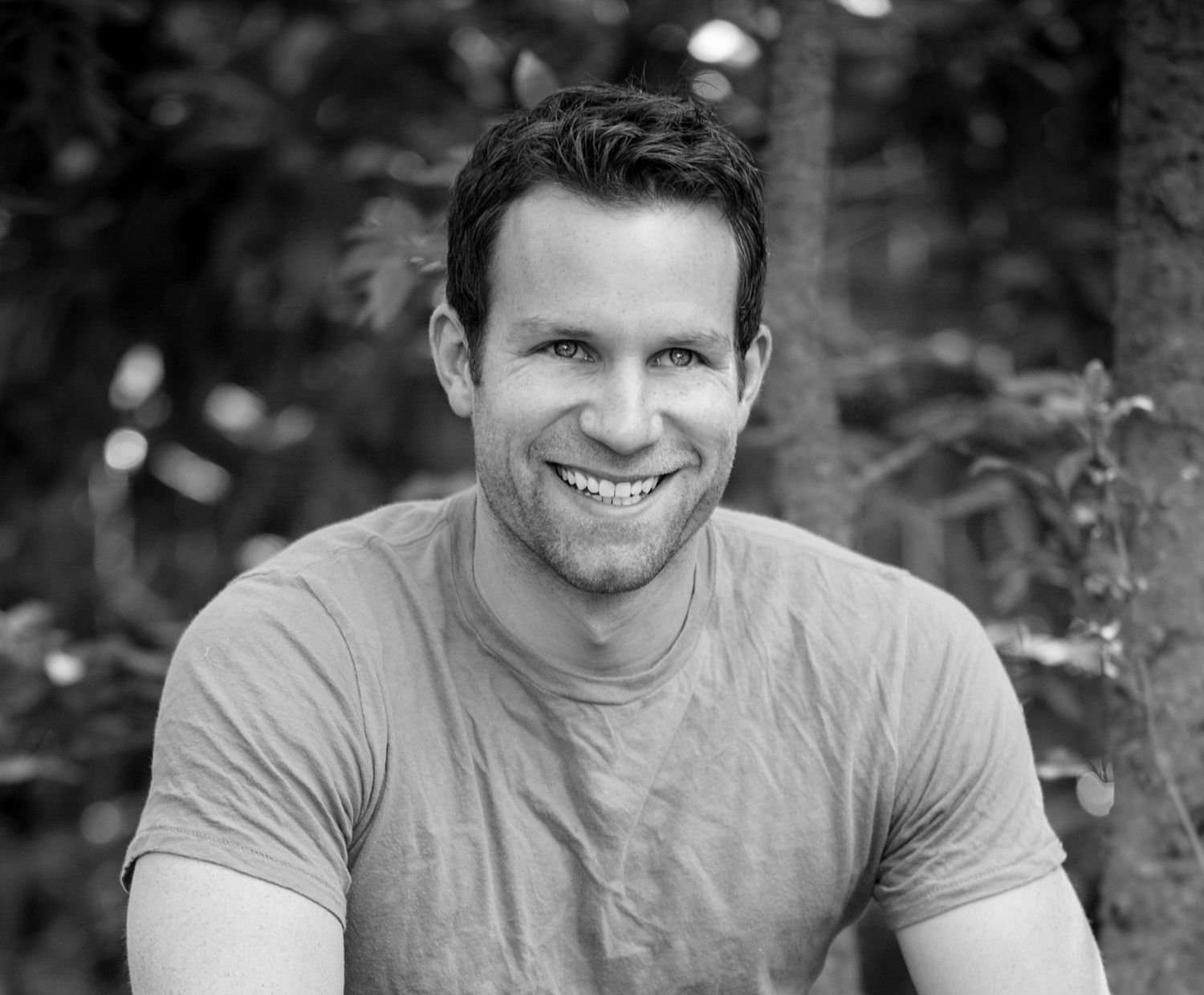
 Abel James
Hey all, this is Abel James and thanks so much for joining us on the show. What if the most dangerous inflammation in your body actually starts in your mind? In this special two part episode, I'm joined by my longtime friend and collaborator Doctor. Srini Pillai. Srini is a multi talented Harvard trained psychiatrist, author, musician, and pioneer of psychogenic longevity and he's here with us to unpack the hidden connection between stress,
inflammation, and how you actually live your life. Doctor. Srini also wrote a musical, and we've written quite a few songs together, which I hope to share soon. Srini has spent years at the cutting edge of neuroscience and human potential asking a very simple but revolutionary
can changing the way we think about stress and possibility actually transform our bodies and how we age? Before we get to the show, I have some really exciting news. I just got back from a crazy trip to Nashville where I spoke at a health event with some pretty rad doctors, but also had some extra time to lay down tracks for my new album. And once again, I'm doing this with my longtime collaborator and friend, Denny Hemingson, and,
those longtime listeners of you out there will remember Denny. He's been a guest on the show many times, and he also produced my album Swamp Thing, and he is just an absolute wizard. He's been the musical director and guitarist for the Tim McGraw band for
several decades now, and also has become a very close friend. So the music that is coming out soon for my new album is, I hope, going to touch a lot of hearts, and we're really excited about it. We're listening to rough cuts of it right now, sending it back and forth. So stay tuned about that. I also have a lot of upcoming shows, live shows playing music and speaking in Austin, as well as Nashville, going
out and doing a retreat, and maybe a little bit of surprise music in Florida as well, and then maybe going on tour this summer and even longer. So if you'd like to meet up in person or come to one of our live shows, make sure to sign up for my newsletter at abeljames.com. That's abeljames.com.
Just sign up for the newsletter, and then I'll even send you a quick little gift as a thanks for staying in touch with us. Also, if you're looking to upgrade your habits and get transformative results without any newfangled peptides, pharmaceuticals, or other eye wateringly expensive biohacking equipment, we have a brand new app launching soon, you'll be able to find our Club Wild Community and our brand new app at wildrx.com. That's wildrx.com.
Alright, in this special episode with Doctor. Srini Palai, you're about to hear how to become anti fragile by using stress to heal instead of harm your body. The real difference between self deprivation and self sabotage, how harnessing the psychology of possibility can change the physical state of your body, how to reclaim the magic of being human as
rapidly reshapes our world. In this special episode, you'll also hear a bit more about how you can join some of our upcoming live in person collaborative projects, events, and retreats with Doctor. Srini Pillai and more. Also, tuned for part two of this podcast coming soon, which features the wonderful Doctor. Uma Naidu. She's also been on this show before and you're gonna love what she has to say. Let's go hang with Doctor. Shrini.
Podcasts are always fun to do, and they're always interesting because they're interesting people to talk to. But this particular podcast is especially special to me because I'm not even sure whether to think of it as a podcast. I'm here with Abel James, who is a friend and an expert at many, many things, to talk about the connection between stress and inflammation, but also in particular, why people might want to think differently about how they manage stress. I'm a Harvard trained psychiatrist.
I'm also a brain imaging researcher who currently spends a lot of time thinking about the connection between human psychology, health span, and longevity. And I call that psychogenic longevity. But don't restrict myself to speaking only about tangible things. I'm interested in the intangible as well. And I'm delighted to be here with Abel James, whom I've been meeting with for several years, talking about things as varied as music and health and
life in general. Abel, welcome, and I'd love to hear where you're situated in this conversation as we begin to talk about this. Absolutely.
Abel JamesYes. Well, doctor Srini Pillai has been a dear friend, for many moons now. I think we met more than ten years ago and hit it off right away, just connecting on so many so many things. Like Srini, I have many spinning plates and many interests and eccentric areas of my life, and and one of the things that I think we have in common is is a deep interest in how the brain works, and, that for me, that started very early.
I've been a musician my whole life and and kind of a creative, but in college, studied brain science and psychology and did some independent studies on where exactly music and creativity comes from, and that became the subject of my first book called The Musical Brain, and I continued work in health, specifically in health, fitness, and longevity.
I've been hosting a podcast for almost fifteen years now, and, doctor Pillay has been a popular guest multiple times and will be many times more. And one of the things that's happening now, especially in the face of of AI and, an increasingly virtual world is, Srini, I'm fascinated by the fact that while we have spent a lot of time together in the physical space, that was many years ago. And we've been meeting for, I think, what, five or six years almost every week virtually. And I haven't even seen you for, like, ten years, but we've had all of these touch points. I'm really excited that we're about to see each other again in person. That's gonna be so much fun. But I think it's one of the promises of
of technology despite the fact that many of us are increasingly distracted and kind of living in this chaotic online virtual world that's becoming increasingly fake as well or nonhuman, there are ways to really support human relationships, and friendships and professional events and and and that sort of thing as well using technology. So I think some of the things that we're going to be talking about today are especially relevant now because
I don't know a single person who's not confronted with more stress than ever in their lives. It's it's an uncertain time. So how would you like to start this off, Srini?
Well, I I was thinking one of the reasons that we're having this conversation is to give people a taste of what they could have at our in person event that we'll be having at Amrut Ocean to see if this kind of conversation is something that could actually help their lives move forward. And I think for me, one of the big things is when people talk about, firstly, I have a pet peeve about the whole longevity subject, because I feel like people are getting milked on the hope of longevity
without the data really supporting that. Meaning a lot of data shows that in fact, human lifespans are getting shorter. And so maybe it's more important to think about how to live healthily into old age, to talk about health span rather than longevity, and to have that kind of honesty. But also, one of my pet peeves when I hear people talk about this is this kind of generic advice, as if there's nothing under the surface. Like, sleep well and eat well. And I was like, what? Sleep
well and eat well? Like, yeah. I mean, what is that even? It's not even for different people, sleeping well is completely different. For different people, eating well is completely different. I'm curious, just to get us started, firstly, you're understating your background. Able Health had the number one health podcast a long time ago for a very long time. And I think part of it was your innovation in bringing the truth out to the public.
I hope so. And it's kind of a shame that that should be an innovation. I know. But I think you and I have connected a lot about, like, why don't people just say what they think the truth is? Why does everything have to be sold as an agenda? And I'm interested to know, when you started your podcast, was that something that was consciously on your mind? And do you think anything's changed since then?
Abel JamesAbsolutely. What a wonderful question. Because in many ways, I started the podcast out of anger. I was I was misled into becoming unhealthy in the pursuit of health. So it was by following my doctor's advice, who was, you know, by all accounts a very well credentialed and well paid and well known doctor, in fact. When I was living in Washington DC as a consultant after college, that was the first time I had excellent health insurance. They called it Cadillac insurance. And I used it, you know,
and I used it to try to prevent the issues that had popped up in my family from high blood pressure and heart disease and all sorts of various things that that pop up in almost everyone's family. The problem was once I started following his advice, which was I was still running about 30 miles a week as a I'd been a lifelong runner, and I started eating zero or as close to zero as possible, dietary cholesterol, avoiding red meat, and
mostly focusing on changing my diet, doing the things that I thought would be healthy. After eighteen months, I had gained about 30 pounds and I was on about four or five different prescription medications. And it took me losing everything in an apartment fire and looking at myself in the mirror and realizing that I had the body of a a man in his forties or whatever, overweight, inflamed with all these problems,
not in spite of the fact that I was trying to be healthy, but because I was trying to be healthy. And once I realized what exactly was going on, I started following, much more reasonable advice based on ancestral health and sees these other proven principles of health and fitness. I got to single digit percentage body fat. So basically, like ripped six pack that unbelievable
shape within just a few months doing the things that my doctor said would stop my heart and kill me quickly. And so then I started hitting all these personal bests in marathon running and running 10 k's and that sort of thing. So interviewing people who were outliers became just
a fascination of mine. People who had lost a 100 pounds and kept it off for more than five years was kind of like the first round of interviews that I did. And then, you know, I kind of continued talking to all sorts of different people, doctors, researchers, scientists,
professional athletes, and creatives as well. People who have been on the road their entire lives, who use their body as an instrument and need it to be in great shape in order to perform and to be at their best. And so that's led to over 500 interviews on my own show and a bunch of different series and documentaries and starring on a TV show on the ABC network years ago and and many many other strange adventures over the years, but it's been what just what an incredible education
in the world of health, fitness, and true longevity like you're talking about. Not just saying generally, well, yeah, you should eat well and and sleep well. Like, anyone can say that and anyone can do that, but it's not useful at all. Going down these rabbit holes and having honest conversations with eccentric geniuses
is an incredible way to learn. And I hope that there can be a lot more honest conversations about how this really works because what's happened in in the years since the Internet has changed from long form audio podcasting when I first started about ten, fifteen years ago, that was really the primary way that people listen to podcasts to a much more Hollywoodified media driven and and even corporation driven conversation.
And also at the same time, we're seeing these sound bite type things, whether it's a tweet or just a few characters that say, it's simple. Eat well and sleep well, and you'll live to a 120 or 250 or whatever it is. And that's just preposterous.
Now there are a whole bunch of different things that we can implement into our lives that aren't that complicated that will get these results, but it's mostly through consistency and knowing exactly what those things are that you should be doing every day.
Yeah. I I so many things that you're saying I feel like I can relate to. I I think Someone once told me that there are a lot of healthy looking people in the graveyard. And I really recognize that whatever looks to be, whatever sounds to be healthy, the storytelling behind health is so complicated because
everyone within health wants to be an expert in something. And everyone wants to say, I tried this, so you should try that. If they say, I tried this and it worked for me, I totally get it. If they say, I tried this and you should try that, the reason that's completely illogical is that it could only be true if I am identical to them. If I am not identical to them, you cannot use the logic, I tried this, so you should try that. That just makes no sense. So that was
first thing that I objected to. I was a very good boy at medical school. I studied very hard. I internalized the information. I knew what the standards of care were. I took for granted what I was being taught as being the truth. And I was able to communicate with people about the basic standard of care.
But I realized after a while that although the gold standard in medicine is population data, although the gold standard is what works for a group of people, in reality, there is no one human being
that I've ever met who comes close to whatever the supposed group average is. Because there's always something about them that's different. You know, if it's not a different race, it's a different height. If it's not a different height, it's a different baseline blood pressure, different family history, a different way of metabolizing fat, metabolizing carbohydrate. And so, I started to think, Okay, so let's accept that these overgeneralizations are not really in people's best interest.
I'm excited to be with you and with Doctor. Uman Aytu at Amaradoshan because I want to get people really involved in these conversations to basically say, I've tried this and this has not worked. And everyone's told me that this is the thing that works. Because I think through conversation, we can recreate
our personal stories to make more sense to us. An example for me is that I feel throughout my life a very inspiring person to me has been my personal trainer who I've been with for a very long time. And I think I've also been very frustrating to him because unlike people in the general health zeitgeist,
I will not just do things that I'm not supposed to do. If someone will say, Oh, you can't have that because it has cholesterol. I'm like, Well, cholesterol does Your statins, for example, do decrease cholesterol by activating the mevalonate pathway. But they're also impacting your steroid pathways. They're also impacting whether your cells have energy or not. So, how can we look at single variables? What we have to start to do, I think, is also start to look at patterns.
But I feel like you, through your work on TV, actually started to see how very different people with very different challenges were able to follow just a few simple patterns to unearth these hidden factors that were in their way. And when you told me about what was going on when you put on that weight, if I think about periods in my own life where I have more weight on than I want, there's almost always some kind of psychological factor, like not recognizing
the importance of something. Like I said something to my trainer the other day, I said, I just finished my fourth day of interval training for twenty minutes, which is like no heroic feat, but for me it was a change in pattern. And I came off the treadmill and I was like, why do I feel like I want a pat on the back? Like, I'm not like this usually. Like, prior to that, I've been working fifteen to eighteen hour workdays and loving it and not needing any reassurance.
And then I realized that somehow I had set a different standard for the importance of physical health in my life. And I wanted somebody to be like, Good boy. I mean, he actually joked and sent me a note back saying, Go get them, Tiger. And I was like, What? Like, why do I need this? I need it because somehow I had deprioritized the importance of physical health. Now, I think people have gone the other way with this. They're depriving themselves.
I have all kinds of theories about the deprivation sort of mentality that exists in society today and why I don't think that's always helpful. But I'm curious, on your TV shows, tell us a bit more about what exactly you did. And then also, what are some of maybe two or three patterns that you saw emerging that were common to many people, psychologically as well as physically?
Abel JamesWell, many people are probably familiar with the TV show from a while back called The Biggest Loser, which was a weight loss competition on NBC. And for one year, ABC decided to make their own version that was going to be less negative and less about screaming trainers whacking their fingers at people on the treadmill for ten hours and that that whole thing. So that was the stated goal anyway. But the show itself was, of course, a weight loss reality competition,
and so it's it's TV. And that was definitely a part of the learning process for everyone because as you say, when you're working fourteen or eighteen hours a day, it's hard to stay healthy and get things accomplished. We were shooting TV for fourteen, eighteen hours a day. And so even though people on the show basically, the setup was a little different than NBC's version of The Biggest Loser where there's basically
the contestants or the people trying to lose weight and change their bodies are competing against each other. This was a bit different because while the contestants were competing against each other, so were the coaches, and the coaches could be eliminated. So every week, all of the coaches, and and some of them took a a vegan approach, some of them were more about exercise, in particular exercise strategies. Mine was about the wild diet and eating real food,
and exercising outside in a particular way. So, anyway, each of the coaches was on the chopping block every week, and they could be fired if the contestant didn't like the way that they were being coached or if they weren't getting results. So it's a big accountability factor when you have to take your shirt off in front of the entire nation and step on the scale and see, did you do the work or did the work work? Right? Like, did this approach even
wind up in in getting any results for anyone? So it was very interesting to see that pretty much everyone who did the work and followed a plan did better. They lost weight. They became more fit over time. But taking on some of these different approaches,
some of them were much more enjoyable or less enjoyable than others. So, Kurt, I was set up with the first week, and we stayed together the entire competition. And thankfully, I was never fired. I was one of the longtime coaches on the show. And first week, I think he couldn't believe that he still got to eat
red meat and a bit of cheese and that he didn't really have to work out that hard, but walking outside was a big, big part of it. He was 47 years old and three hundred and fifty two pounds when we started, and his body was more than half body fat. By the end of the competition, he was down after three and a half months, down 87 pounds and had lost
basically a quarter of his entire body fat. So he had lost a quarter of his body in pure fat, finished a half marathon, went rock climbing for the first time, which is something he always wanted to do but was over the weight that you're able to do that and they won't even let you get up there. But mostly the thing that had been driving him
is really important to highlight because he didn't just wanna like look good on camera or something like that. Although I'm sure he didn't wanna continue to look bad on camera. That is something that is worth acknowledging. But he wanted to be there for his grandchildren, and he realized at 47 years old as as a grandpa that he couldn't really, like,
get down and pick them up and and be physical and play with them. And and more importantly, he wasn't sure if he'd be walking around even the next year because he had all these health problems, mostly as a result of the weight. But what you find is when people stop sabotaging themselves, if they find that piece of leverage that was really ruining everything and then stick to a plan that does not include that and allows them to be happy and healthy and fulfilled without that escape,
and it could be some sort of addictive food substance, pharmaceutical behavior, habit, whatever it is. When you can get with someone who kind of is is honest as an outside observer sometimes that can really help find those things. So one example from the show is a friend of mine, Rob, was coaching Latasha and who was actually
in media for her day job. And so she was on TV as a newscaster and all this and was carrying extra weight and was putting in the work, working out really hard, and doing everything right, but the the scale really wasn't coming down significantly over a few weeks. And so Rob and and some of the other trainers were kinda asking, like, what well, what's going on here? Because it seems like everything should be working. Let's dig a little bit deeper. And she's like, well, you know
so we're asking, you know, what do you eat for breakfast? What what happens for lunch? What are the things that you enjoy as a treat throughout the day? She's like, well, every day, I love to have a little bit of cheese. And we're like, great. What's a little bit? And she's like, well, you know, like
block or so. And I'm like, you know, well, what size is a block? And she's like, the the whole block. And we're like, oh, we found it. You're eating a block of cheese every day. That is definitely adding up to more calories and and more fat and and more energy than you ultimately need for this sort of process. And here are some better ways to meet your macros and give you more energy and also allow you to still eat the cheese, just not a whole block. And so that was one example, and there are endless examples of how this works. For Kurt,
he had basically been overweight for so long and tried so many different diets and and some injections as well and other things that had just kind of given him that yo yo effect. And because he tried so hard, his wife as well and his family, and none of them really seemed to work. They just kind of
became complacent and had some ice cream, you know, it's summertime, and so they had ice cream in the freezer, and they would enjoy ice cream pretty much every night as their treat. And so finding a way for him to still eat his ice cream sometimes,
but not a whole tub every night is the difference that allowed him to lose, you know, 10 pounds a week over and over, week after week without depriving himself too much and still maintaining his energy. And then by the end of that process, once you've implemented a lot of those healthier habits, your tastes change, your gut bacteria changes, and your cravings change, and you start to crave the right foods and the right behaviors because
something in your brain realizes that that delayed gratification is more valuable than whatever you feel when you eat the whole tub of ice cream at once. And who hasn't done that? Right? Like, I'm guilty as charged. We're all there sometimes. But if the difference is the people who do that as the, excursion away from their norm are going to do fine. The people who just have that as their norm are going to be in trouble eventually.
One of the things I'm really looking to jumping into in the webinar and then in much more detail as a live event is the difference between self sabotage and self deprivation. Because I think so many people go from self sabotage to self deprivation. Now, one thing that really deserves a double click is understanding, well,
most people say, well, I do have to deprive myself of food that I actually want. And it's like, well, that can be one way you can think about it. Or you can think about it as giving yourself a gift because you can be with your grandchildren, because you can live more healthily into older age. The frame you put around it, I don't think it has to be fake, but I think it does have to be real. And you have to recognize that going from self sabotage to self deprivation
doesn't work. There are umpteen studies showing that people started on a diet, they can never stay on it. There are those people who sort of enjoy being mildly anorexic.
And I have friends who even joke about it. They're like, Oh my God, I feel like it's a compliment. And someone's like, Oh my God, you look Are you sure you're not too thin? They're like, Oh really? Like, I kind of like the compliment. And I'm like, I mean, maybe there is something funny to that. You know, I get that. But I think a hidden factor is what lies between self sabotage and self deprivation. And think in the webinar, we'll go into that.
And in the live event, I think actually do some immersive embodiment work to be able to really touch base with yourself and say, what is the signal my body is giving me about this? I'll give you an example. And this is sort of a frustrating example for a lot of people who are close to me. But at some point, I recognized that my weight increased because of how my carbohydrates were being metabolized. And I was never into no carbs. Because I like carbohydrates. I love rice, I like fries.
So I was like, what am I going to do? Am I just going to eliminate fries for my life? And I thought, I think on my deathbed, I will not feel happier if I said, for the last forty years or fifty years, I didn't eat fries. So I thought, well, I wanna see what this feels like to order fries if I go somewhere and eat two.
Which of course, most people were like, stop it. Like, don't do that because if you eat two, I'm gonna eat the rest of it. And I'm not gonna be able to do that. But for a long time I was able to, and I still do sustain, like how I'm going to limit it. But I actually feel good about the fact that I've not eliminated that from my life. And like you said, there are times when I might overdo something related to that. I don't feel like I'm like a bastion of
anything even close to what a perfect body would be. But I think who I am represents, I think, the struggle of a lot of people, which is how do I live a good life that feels enjoyable, that I think is a kick ass life, not just a slightly less lame life, and at the same time, enjoy take life for what it is. Like, I I have friends who there there's something about the the group of people who are thin and slightly miserable That is, like, so unattractive
to someone like me. Because it's not that I judge them for being their way. It's more like, I don't wanna be like that. You know? And, like, do I feel happier when I enjoy my food? Definitely. Like, should everyone feel happier when they enjoy their food? No. I know a lot of people who are like, I don't really care about that. That's not where I get my meaning from. And it's the same thing with like exercises,
right? I was just looking at some of this data the other day, and actually I'm gonna do a little excerpt of this on my Instagram, but there was this really cool study which I thought was somewhat hilarious, where they looked at, why is it that when people who are obese are walking, don't necessarily get thinner, they don't lose that weight. And what they found is that the human body, if you if you look at how we've walked and you look at evolution,
you know, you hardly see any obesity amongst chimpanzees because they're running around on all fours the whole day. We made ourselves more efficient by just having, you know, standing on two legs and walking on two legs. But the problem is that the body is always correcting for efficiency
and regards the challenge as being something that's bad for you. So, another hidden thing is, what if certain challenges were good for you? What if certain kinds of stress, like lifting a particular weight or walking in a way that was effective, was good for you. And so they did a funny thing rather than First of all, I don't know who gets 10,000 steps a day without
spending four hours. I've been astounded by how I go out and I spend forty minutes walking and I come back and I'm like, what, 3,500 steps? How is that 3,500 steps? Like, who has time to do all 10,000 steps? Now, I have friends who do that, but they have different lifestyles. One thing that I think was funny about the story is they use a Monty Python silly walking method. Nice. They used this method, the kind of exaggerated method of
lifting your hips up high and going forward. And what they found is that people who used this method had 2.5 times more of that energy metabolized than if you just walked as normal. Now, the reason I make this point is that, yeah, it is an exaggeration and I can't imagine walking a boardwalk like a Monty Python character doing all these strange movements.
But there's a part of me that kind of wants to. There's a part of me that's like, if I'm realistically not going to find four hours a day to do that number of steps, then I should be trying to double up on the amount of energy that I'm burning up. And so, I think that's just one creative way of trying to understand how you can adjust what's happening in your physical life and how you can adjust what's happening in your mental life. For me, the portal to change.
I think a lot of people, this is a hidden fact that I think is really problematic, is the portal to change is the psychology of possibility, that something is possible. And even with regard to this treadmill thing, for example, I was like, Achilles hurt a little bit for like a year, and then I was like, dinner was fine. And I was talking to my trainer about how to increase
my heart rate so I can do not just weight loss stuff, but cardiovascular stuff. And he was like, well, you gotta try to get your heart rate up to 140. And I'm like, that's like that never happened. So he was like, well, yeah. So try to get it up to 140. And I was like, I'm not gonna run because I really I don't feel like for my knees, that's a great thing. So I was like, I can speed walk, but that's not gonna get me there. I can probably take the treadmill to four point o, maybe 4.1,
and then I'm gonna have to run. And then I don't really wanna run. And I said to him, I I'm not sure I can do the incline. He he asked me, what's your incline? And I said, nothing. And he said, why? And I said, I don't want to make my Achilles worse. And he said, well, what if it gets better? And I said, what do you mean? He said, sometimes you got to train your body to behave in ways that you want it to behave.
And so, I'm happy to say that today was actually the first day that I got to a five on the incline. Nice. It pushed my heart rate up a little bit more. And this is not about doing what's right and what's wrong. It's about setting a personal challenge for yourself and trying to understand that the blocker in my mind was that it was not possible. That there was no way I was going to get at that point, I didn't even think it was possible to get to a point five incline.
And one of the things that got to me is when he said, But what if that's better for you? And I thought, Yeah. And what was funny about getting to five was that there were zero Achilles issues. So I was like, that's interesting. Sometimes we avoid the things that we think make us uncomfortable, yet it is those things that are the training that we need.
And in your journey with people in helping them understand that, have you come across people who just avoid doing the uncomfortable thing because they think it's gonna hurt them more?
Abel JamesAbsolutely. Yeah. And that's the tendency of everyone. Right? Because it's it's scary when you get hurt, or your body doesn't do what what you think it's supposed to do. So all of us carry these past traumas that are mostly subconscious, and and I use that word relatively lightly because what I'm talking about is mostly what happens when you twist your ankle and you don't heal all the way, and and something happens to your knee or you tweak your back. And so, you know, at our ripe old age,
we all have a history of of bum knees or hurt foots or something that we broke that that didn't fully heal. And when that happens, which recently happened to me as as listeners of my show know well, I was in a major car accident last summer, which
injured my spine, herniated discs, tore all sorts of tendons, hurt my shoulder and my knee. And in the process of rehabbing that and going through physical therapy and and ultimately trying to regain my conditioning for running and strength training and that sort of thing, I'm still in the process of learning how to trust my body again
because it doesn't work in exactly the same way as it did when I was training the way I did before the accident and all these different things. And also, as the years go on, you need to kind of adjust your rate of training, your volume of training, and and the way that you're
approaching all of this to make sure that you're not destroying yourself in pursuit of some random arbitrary goal. Like, running or or doing a triathlon or running a marathon are incredible pursuits, but if they become a lifestyle, we've seen that this can actually damage your heart and and lead to a less satisfying life and a shorter life where you're just basically running on pure adrenaline and cortisol. And this is one thing that you had kind of brought up before where they're the people who avoid that discomfort
and don't work on the v o two max or kind of sprint exercises or heavy training, that sort of thing, to exhaustion. And then there's the other side, the folks who are addicted to these endurance events and just racing and racing and running across countries and all that thing, and that that can be very cool as a challenge. But it's important to know that that is very different from long term health and wellness.
And so that middle there is where I like to live now, especially, because I've been on both ends over the course of my life, and many of us have. But the thing that really that I wanna highlight here is that when you do challenge yourself, especially in the presence of other people who can make sure that you're doing it in a way that's safe, like with a trainer or someone who's an accountability buddy in the gym or on a run, that sort of thing. Working out with other people
is something that we all kind of need to do to get to this point where we're more exhausted and and we've reached a level of intensity that we just wouldn't have reached on our own. So I I recently just got back from a trip to Nashville. I was speaking out there and started recording for a new album, but before we started recording,
my dear friend and producer said, hey. Why don't we get a a workout in? And the guy who was leading the work I'm like, alright. That sounds cool. The guy who was leading the workout though, it's like former military intelligence, total badass jacked dude, and he's like going to Jamaica in twenty days, and he's just like, I'm not gonna wear a shirt the whole time, so let's go fellas. And we're working out like two hours in the gym in the morning, and this is my first
real workout in the gym since the accident, even though it's been ten months or whatever. And so I'm just going or or attempting to go rep for rep with these guys because they're a little bit older than me, but they have been doing this workout, like, four times a week since January, so for months and months and months. And I'm going in there as kind of green, and I'm compensating because I'm still not, like, fully back,
in action. But having them be there as as kind of, like, the I guess, to to model that these guys so one of them, my friend Denny, is is almost 70 years old, and he is crushing these workouts. And the other dude is in his fifties, and he's crushing them. It's just like, man, I'm 41. Even if I am a little bit beat up and not all the way back, I should be going rep for rep with these guys. And so anyway, like, over the course of doing that, I get so exhausted that I'm delirious
in the best way possible, kind of like the experience that you're talking about with your trainer. It's just like, oh my god. I almost feel like giddy. I'm so exhausted. I never would have done this to myself, and now I feel different, and you're gonna be sore the next day. Right? But it builds this confidence that
when you get through one of those workouts and you're doing more, just like, oh, man. I don't think I can get through this, but there are two guys next to you rooting you on, being like, you know, you can do this. Your brain
and this is one thing we talked about during these workouts and being brain geeks, it's fascinating to me that this guy had trained with a lot of Navy SEALs, and he said, it's common in training that you encounter the brain thinks that you need to shut down and stop doing things, about 70%
of the way there. But you've still got this 30% where your body is fully able to operate, and and it's within that 30%, usually just by boosting above that 70 a little bit where you're challenging those boundaries and retraining your brain as to what heavy is or what fast is. Right? Like, so if you think a 100 pounds and lifting that is heavy, and then you just walk over and you try to hold 200 pounds,
your body's like, there's no way this is happening. But if you if you go from 100 to say one ten or one twenty and you lift that up, you know, you can't do it the whole way, but your brain starts to recalibrate what heavy is or what maximum effort is. And this is something that is very important for us to do on a regular basis no matter who you are because it's a perishable skill. This is something where as soon as you stop challenging your brain or doing those exhausting workouts
or getting your heart rate really revved up, as soon as you stop doing that, you know, once a week or a couple times a month, your body loses the ability to get there and and your brain starts to think, well, the threshold of safety is lower. And this is kind of what aging is. This is what loss of of function
is and how it develops. And so the way that we, you know, become 80 or 90 year olds who are, you know, carrying baskets on our heads at elevation in the blue zones, you know, just like walking and and working out like they're teenagers even though in their eighties or nineties, is by never giving up that sort of exercise. Never stopping to, like, never stopping to play, never stopping to move your body. And I I wanna also mention that it doesn't have to be an exhaustive workout in the gym.
You can get your steps in and your movement in by dancing. Like, one thing as a performing musician, I'm always floored, I don't think I have the graph right here, but I was recently looking at, the data from my Garmin watch, which is tracking my steps and my activity, and my Oura Ring, which is doing the same thing and tracking all that. On the days when I try to get my steps in and I'm working out, you know, there's a say it's about, like, right here. It's
a fair amount of steps and it's a fair amount of working out. On the days that I have a gig where I'm playing for sixty or ninety minutes on stage and I have to lug the gear and do all that stuff and get to the gig and walk there and all that, the amount of activity is more than on my run days. Right? Like, I'm getting more steps in when I'm dancing around on stage and moving amps around than when I'm actually doing a workout. And so it's really important to recognize that for some people, if you
like to do salsa dancing or you wanna take up the tango or you just wanna dance like a crazy kid, go out and do that. Have fun while you're moving. Enjoy your body. It's it's by losing that connection with enjoying our bodies or being made fun of because you're a bad dancer or something, which is something in my psychology that I need to get over. It's like once you can move like a child again and keep that that childlike mentality to the way that you approach movement and life and activity,
it doesn't have to be a drag anymore, and you get that giddiness again.
I love dancing. So dancing is sort of is a and and one of the things I love about it is that I think I honestly think it's got something to do with when you love something and and you you you have a mental sort of openness to what that is, I think it makes it easier to actually do what you're doing. I have this sort of birthday month in which I have this sort of birthday extravaganza. And one of the days is a bunch of people I'm close to at home, and I play music all day.
And I pretty much danced almost the entire day last year. And people were like, where are you getting this energy from? And I was like, I guess I always had it. I don't even know that I have it on a day to day basis. But when I'm surrounded by people I love, when I'm listening to music that I think is amazing, I feel like moving
and I'm not really thinking about what else is going on. So, that's the positive side of that. While you were speaking, by the way, because I talked to you frequently after your accident, I think you had the most amazing, and still do, mental capacity to deal with that kind of adversity. Because from the first day I talked to you about it, you were like, yeah, I think I'm feeling more slowed down.
But what it also did for you, and I experienced this, was that it made you less inhibited about the freedom and creativity in your thinking. So it was as if your mind was like, while your body's healing, how about I just go a little popped crazy for a while. It started and I could feel I was like, wait a minute, like, this seems really good. Whatever Abel's going through,
I fully recognize the physical discomfort you were in, but I also recognize that it liberated something in you that had not been there before. So I'm curious about what that is, and I think that's something it would be great to also do a double click on. But much of what you were talking about reminded me of the concept of hormesis.
The idea that not all stress is bad and that some forms of stress are good. And you can't keep yourself away from all infections. Your immune system needs to be trained. You can't keep yourself from any exercise. Your heart needs to be trained. So, at a certain level, hormesis is about the fact that a certain amount of stuff can be really good for you, and if it exceeds that, it's too much. But getting to this point of what is excess Is I think very
important. And when you were saying what you said earlier, you reminded me, it's funny how these things register in your head, right? It's like one set that I was doing with a trainer on-site, the same trainer that I work with now with on FaceTime. He asked me to do some chest presses, and so I did a bunch with a certain weight, and he was like, okay, how about we do three more? And I was like, okay, that was 12. Why do I have to do 15?
So I was like, okay, sure. I did three more, and he was like, how's that? I was like, I'm yeah. I'm done. And he goes, no. Let's do five more. And I do five more,
And he goes, well, how about another five? I was like, no, I'm I'm really done. He said, no, just try it. I was like, can barely lift this. So keep lifting until you can barely lift it. And somewhere around seven after that, I was like, my hands were shaking, and I was like that. And he goes, this is just a lesson I want you to remember for the rest of your life. There is a difference between tiredness and failure. And the ability to accept failure is where you grow.
So what you're doing is you're avoiding failure and you're making tiredness your endpoint. When between tiredness and failure, there's a big growth that can occur. And I think for a lot of people that doesn't register that way. It's another sort of hidden sign that somehow if we fail, we've gone too far. Now as you said, going straight to 200 and rupturing things and not that's also pretty extreme.
There's nothing I think that's overt. And sometimes I'll even challenge my trainer. I'll probably say, I would say 99% of the time I don't because he understands me so well. But when he suggests a weight that I'm like, that's a little over the like, what? And he'll be like, well, I don't know. And he said this a while ago, was like, do you want to get, like, stronger as you get older or not? Like, what's your goal?
And I was like, yeah, of course. But in your head, don't think that that's possible. You think that at a certain point, you should just maintain something. But in fact, you will need more muscle on you to deal with what happens when you're older. So why not start building it now? And why not get stronger now? And I feel like for a lot of us, I had a patient today I was talking to, and he was like, I'm just not like 100%. He just had COVID, and he was like, I haven't been back to the gym
in, like, more than two weeks. I was really enjoying the increased muscle I had. And now I feel like I'm losing it, but I don't know why I can't get there. And then all of a sudden, all this other stuff happened. Like, well, in my personal life, I have this stress. And in my personal life, have stress number two and stress number three. And basically, they were all interacting. So I think sometimes it helps to compartmentalize.
To be like, I have these four horrible things that are going on in my personal life right now, and I'm not gonna let them intrude upon the one thing I can control, which is to go to the gym for twenty minutes and hop on a treadmill or to go for a walk outside. And I think psychologically, if we can recognize that compartmentalization can help, I think it could be really important in terms of how to live a life.
From my perspective, it makes a lot of sense that health span and longevity is less related to disease and more related to something that I talked about in the last webinar, which is intrinsic capacity. And one of the key factors that correlates with living more healthily into older age is vitality. And most human beings, I think we have an epidemic of the loss of vitality in society. Most human beings are dragging themselves through life.
They're sitting in a restaurant. They're playing with their children or grandchildren. They're doing whatever, but there's no like being super psyched about life. There's also a group of people who are pretending to be that way, which is also annoying when you're in that presence. You're like, what are you doing? Like, pretending to be life vital all the time. You know, there there is something fundamental to human nature that I think is always energetically present.
And I find that if I correct to that, I change things entirely. Like, when you were telling me about the things you monitored, I was I am ambivalent about monitoring for a couple of reasons. One is I don't really like wearing a lot of those devices. I had a ring once that was too closely they could adjust the software from another country, and I was like, what? On my hand. But
also, I like wearing jewelry. So that's a whole other aesthetic choice in terms of what I want to do. But I do think it helps to take a look at your steps. I do think that if you want to look at your VO2 max, you're like, ah, it's nice to know from time to time, how you're tracking with your mental choices and physical choices with everything else.
However, in relation to the example you gave early on about sleep, studies have shown that if you think you slept poorly, if two groups of people, they both slept poorly, the group that was told you slept poorly had much poorer cognitive function. So somehow, I think it's fine to track and it's fine to know you slept poorly.
And even if I tell myself, I don't think I had the most peaceful night of sleep, I will say, and despite that, my cognition is going to be amazed because I know it's going be better than my default state. And I think self talk is so helpful in these instances. It helps you get the best of both worlds. You can measure, you cannot be bummed out about it, and you can tell yourself you're not going to default to the mean. You're gonna still find a better way of existing.
From your perspective, how much in your evolution physically, how much has your mind played a role in that? And from your perspective, what have been some of the highlight realizations you've had when you were like, wow, I'm glad I have a mind like this? Which, by the way, I think a big piece of that, and we've composed songs together, so I think a big piece of that is your musicality as a human. But I'm interested to know what you've identified at the core of your being
Abel Jamesabout what makes you get up every day and keep going at it. That we can grow, that we can adapt, and we can get better. We are not our identity or what we think our identity is or our limitations. And I'll just give an example from when I was a much younger man. When I first moved to Austin back in 2008, I was moving from Washington DC, but I grew up in New Hampshire in cold weather, and I just I always run hot. I like the cold. I don't really like
the heat of the South. I do like the South and the people and all that, but the heat, I don't know. And so being a runner and I was training for marathons and all that, it was coming to be summertime in Texas, and it gets hot here. Sometimes it gets to be a 110 plus degrees, and it's still humid. Right? And so I'm just like, man, what am I gonna do? Like, maybe
I'll take up swimming or something. Not a great swimmer. So I I did that, but I'm just like, man, I I really miss running. Maybe and I'm I'm reading these books, and I came across, the book Chi Running by Danny Dreyer, who's been on the podcast a number of times, and he's just a a wizard of of running. And mostly the mindset around it is is what he focuses on. And so for me, one thing that made an enormous difference was instead of saying,
well, I'm only gonna, like, run on the days when it feels great, and it smells great outside, and it's great weather and and all that stuff. No. No. No. What if instead I start to train my body to adapt to the heat? Because that's a thing too. Your body can adapt to the heat. So I'm like, what if I challenge my body to not be one of those, you know, guys from New Hampshire who I thought I was? And I,
you know, actively and I wouldn't recommend this, by the way, necessarily. Certainly don't start here. But, like, what if I run-in at noon on a hot day in Texas and get used to just
feeling okay in that sort of situation. The way that I did that was instead of, like, being miserably hot, I just imagined that I was in a hot bath. I imagined that I was in a sauna. I'm like, this is sweating it all out. This is this is good stuff. And what what happened over the course of time, and it took a few weeks, is that my body really did start to adapt to the heat. And it started instead of just, like, hating every time I was sweating and feeling, like, miserable anytime I was sweating through my shirt, I'm just like, we're all in it. This is a swamp. This is a giant swamp. Everybody's sweating. Like,
am I worried about? And so I have you know, people who stayed in New Hampshire or stayed in Washington DC or or stayed there. I'm still friends with a lot of them when I go back. I've aged differently. I'm a different person now in many ways, and I I hope to think that I'm a much better person now. Not better than them, but just a better version of myself and a different version. Someone who the younger version of me
would have made fun of or criticized because it was different or it wasn't the identity that I thought it would be. So I think this is just, like, a long lesson in saying that it's one of the most exciting things about life and also something I learned very intensively after the accident is that
we can even if we're coming from somewhere below baseline where we were injured or it's not our natural area of strength, whatever it is we're talking about, Let's talk about balance, say. If you've always been clumsy or something like that. A lot of people just say that, and they drop stuff all the time, and they trip, and they get into accidents.
But if instead of just calling yourself clumsy, what if you work on that? Because I was clumsy after my vestibular system was injured in my brain, but over the course of the next few months training that vestibular system, putting lasers on my head to recalibrate where my eyes were and how my brain kind of tracked my location in space and then spending time balancing
then balancing on one foot, then closing my eyes and balancing on one foot, and then starting to just walk progressively on a weird wobbly foam board that were toppled over and then toppled over. After doing that for months, one of my physical therapy actually several physical therapists said, you know, you might be better after this accident because you've done all this training on balance than you were before
you had a horrible concussion and got all these injuries in the accident. And that just totally blew my mind because people don't think of it that way. People think, well, I'm just gonna get clumsier and lose my balance and coordination as I get older and that's it. But the sad part of that is is people who fall, which is a very, very common injury
as you, you know, approach sixty, seventy, and 80, if you fall and break your hip, from what I've read, you have about a fifty percent chance of being alive a year later. And this is the the decline that many people do not, come back from. So before any of that happens, don't settle for those limitations. Like, right now, because these these losses of coordination or or even the fact that you've never built that capacity
start to compound after thirty, forty, 50, and it it gets harder and harder to correct them. So before you limit yourself and and call yourself a certain thing or limit your identity in a certain way, make sure that you're challenging that identity. Make sure that you're experimenting and and being playful like a kid and not being too locked into whatever it was that is is keeping you from
going out there and playing baseball or playing football or trying soccer or learning how to dance or or going for a sprint or God knows climbing a tree. You know, the idea that climbing a tree or pulling up on things, doing pull ups is only for young kids or athletes is ridiculous. You look at other countries or you look at the the history of humanity. Like, how do you define maintaining function over time?
In in the medical field, it's like, well, if you're in your sixties or seventies, you should be able to get up and down out of a chair. In other parts of the country, if you look back historically at humans, it's just like you should be able to climb that whole
ladder up the wall into the place where we're staying tonight or whatever. You should be able to carry water from the river. You should be able to walk up that mountain. And if you can't, then you kinda lay down and die. That's, you know, where it goes. But you keep that capacity your entire lifetime aside from injuries, which you recover from. So I think it's it's really important that that we use our mindset
to challenge us and make us better over time. Like you said, why can't you be stronger than ever right now? Maybe we won't be faster than ever and have the quickest reflexes as the years go by, but you can challenge yourself to be better at certain exercises and be better than you ever have. We can always reach that personal best.
Yeah. I think what you're talking about in terms of recovery from the concussion is a concept known as antifragility, which is you don't just rebound from stress, you actually become stronger in the face of it. And studies show that people who feel like the stresses they're encountering are bad for them actually do get more stressed and feel worse.
Whereas if you can say to yourself, I don't like the stress, but what I like is how it's going to help me grow, And what I like is how it's going to help me get better. I think that mindset shift is also hidden. And what I think I'd love for us to do with the webinar is double click on that. And so say, well, where does growth mindset hide?
This mindset of I can get better progressively over time, and how can I have what I would call existential confidence, which is a commitment to a possibility that is not yet a reality, but that we know we can deliver on even if we haven't delivered on it in the past? And I think that comes from committing to possibility. And committing to possibility is something that has not happened yet. Now you might be like, well, how can I commit to something if it's not real?
Well, who's ever created anything that was created before they were created? Anything, Central Park was nothing, then it was an idea, And now it is this amazing structure that people can move through. It was not always a reality. It was a possibility. What I wish people would ask themselves more is, even per week, what are three new possibilities per week I can be dedicated to? People are always like, Oh, that's too much.
Whenever I run any kind of seminars with corporations, I'm always slightly disheartened that people seem to have learned not to want to have dreams that are too big. Like, oh, well, you know, I hope that the team can get along. Really? That's your peak possibility? Like, how is it your peak possibility? And then there's a part of me that's like, No, you're just saying that because you're inclined to think that way. Why not sit with them until they can feel that comfort?
And I think so many people feel afraid to want to dream, not realizing that dreams become the blueprints upon which we build our realities. And I feel like if people can recognize that we are blueprint makers, and yes, sometimes we have days when we're tired. Like I have days when I'm saying, I don't want to be a blueprint maker. Like I just want to get through the day. I don't have quite that,
but I have an empathy for people who feel that. I think what I generally have is a fascination with what it is to be human. Because I think what it is to be human is a pretty funky thing. I don't think it's just It doesn't all live in the logical brain. I had a really interesting evening, the other evening where a very close friend of mine came over with a friend of his, and there were a bunch of people here, and everybody went out in the evening. And everybody was talking to everybody,
we were having drinks and talking about things. All of a sudden, I left the group and they were like, where where are you going to? I said, I'm just going to the stairs to meet Chris, who was not there. And they're they're like, what? Like, did Chris text you? I was like, no. Like, does he come here all the time? I was like, no. But how do you know he's coming? And the door opens and Chris walks in. No kidding. Like,
what are you doing here? And I'm like, what do you mean what am doing? I'm hanging out here, the same thing you're doing here. And he goes, yeah, but I mean like on the stairs, were you about to go out? I was like, no, I came to meet you. He's like, well, I didn't tell you that I'm coming here. And I was like, no, you didn't. Now, you could say, like, that's nonsense, it's chance.
A 100% agree that's one possibility. You could say what Carl Jung would say, which is that that was meaningful coincidence. We don't know how to explain it, but there's something there. Or you could say what I am implying, which is that if that actually is a repeatable human capacity, then we have far underestimated what our minds can do. Now, I don't make it a habit of doing that all the time, but I do have flirting experiences with this amazing thing that it is to be human.
And I think most humans forget that about themselves. Yeah. They they think, well, no, that's for, like, gurus or hypnotists or mystics. They forget that the magic of being alive is an intrinsic faculty that every human being can tap into. And sure, like, let's say I went there and Chris didn't come. You know, people would be like, well, I guess he didn't come. Like, so what? You're still testing your intuition.
You know, I had a feeling in the last week that a good friend of mine was bumming out about something. And I was like, I'm gonna text or ask how are you, because I know he's bumming out about this. The next time I see him, I'll just give him a hug, because I know something. And so when I saw him, and he said that, you know, he was like, yeah. I went to this time. The next time, I felt he was feeling something heavy. I texted him, and I was like, Yo, I think I'm feeling
what you're feeling right now. And he goes, Well, if you're feeling ecstatic and really happy that the weather's turning warm. And I was like, No, got that wrong. It's okay. But if you don't test yourself on that, you don't develop that capacity. It's the same thing as what you were saying about physical things. If you don't test, if you don't try to develop your intuition And I think we go back to where we started, right? With AI and how AI is changing things.
I think we both have a penchant for what it is to be human. I think we both feel sad about the fact that a lot of human skills are going to be ignored. I think, though, that one possibility for us I mean, think about it. If you are a human, which we are, and you were going compete with AI, why would you not want to hone your intuition? It's a capacity that if AI develops it, it's going to take a much longer time.
It might have machine learning and pattern recognition, but we have this kind of instantaneous ability to recognize things. What I'm saying and how it relates to health is if we are entranced by the magic of what it is to be alive, then nothing will stand in our ways. I think that the permission to experience the magical feeling of being alive is where we can all start our days. And when we get taken away from that, I think we demand that we go back to where that magic is.
Because for every human being, magic is, in my mind, a God given right. It's a God given right to actually connect with what lies beyond the linear. And I'm so excited that in the webinar, and especially in the in person events, we're going to get a really cool chance to be able to look at what lies in these exponential hidden spaces. And then what I hope is that people will see that there's a lot of value in tapping into the things you don't tap into
in a general way in your everyday life because you don't have the time to do that. That's why I think a reset is what we all need at least every quarter to be able to guide ourselves into what this magic is.
Abel JamesI agree, and I couldn't agree more, actually. One of the things that makes life so much more magical is getting together in person with these shared ideals and these shared kind of mental experiments. You know, if you can walk into a room where people are open to the idea that magic exists and that we need to follow the breadcrumbs and that it's not just some corporate exercise or we're there there for work or whatever. We're just kinda going on vacation.
When you're connected with these other people who are open minded like this and open hearted as well and and trustworthy, incredible things happen. And I think, you know, I'll offer this too because I think it is important that people know for the most part, with some exceptions, the people who I've interviewed on the podcast,
who we've had, you know, just incredible conversations with, I have met before that. You know, there are very few that are just a cold interview done virtually. Almost everyone I have met before, and we've had that connection, that that resonance or that we've we've vibed over something. We've riffed on stuff. We've ranted together. We've, you know, we've shown vulnerabilities to each other. We've built friendships, and
it has never been more important to do those things than now. And so many incredible projects and, you know, vacations and and more friendships and relationships have come out of just showing up to something where it seems like it could be magical. It seems like something really special could happen, but there's no clear reason why. It's it's not something that is logical in that way. It's more, something that is giving yourself the opportunity
to take that excursion away from your normal life because none of us should be settling for the mundane. And the more we let computers run the world instead of humans, I I believe the more mundane it's going to get in many ways. And it's by doubling down on these deeply human skills that require connecting with each other, in person
that will allow us to kind of find the way forward because right now there's never been more uncertainty and a lot of humans are really bummed out. But we don't need to be because we can build utopia, but we need to build it in parallel to the dystopia that's just going to happen anyway. Everything's kind of inevitable, I believe. But it's important that right now we all get together and kind of build a parallel
culture and community of people who believe that there's a better version of the future than the one that most of these tech companies are trotting out for us.
Abel James, I am over the moon about this conversation, but also about the upcoming conversation we have in the complimentary webinar on the hidden connection between stress and inflammation, where we will actually go into some concrete ways in which you can tap into the brain to create some of these mindset shifts that we're talking about to be able to live a life that exposes this magic to us. Thanks so much, and I can't wait for it.
Abel JamesThank you, Srini. Hey, Abel here one more time, and if you believe in our mission to create a world where health is the norm, not sickness, here are a few things you can do to help keep this show coming your way. Click like, subscribe, and leave a quick review wherever you listen to or watch your podcasts. You can also subscribe to my new Substack channel for an ad free version of this show in video and audio. That's at abeljames.substack.com.
You can also find me on Twitter or X, YouTube, as well as Fountain FM, where you can leave a little crypto in the tip jar. And if you can think of someone you care about who might learn from or enjoy this show, please take a quick moment to share it with them. Thanks so much for listening, and we'll see you in the next episode.