



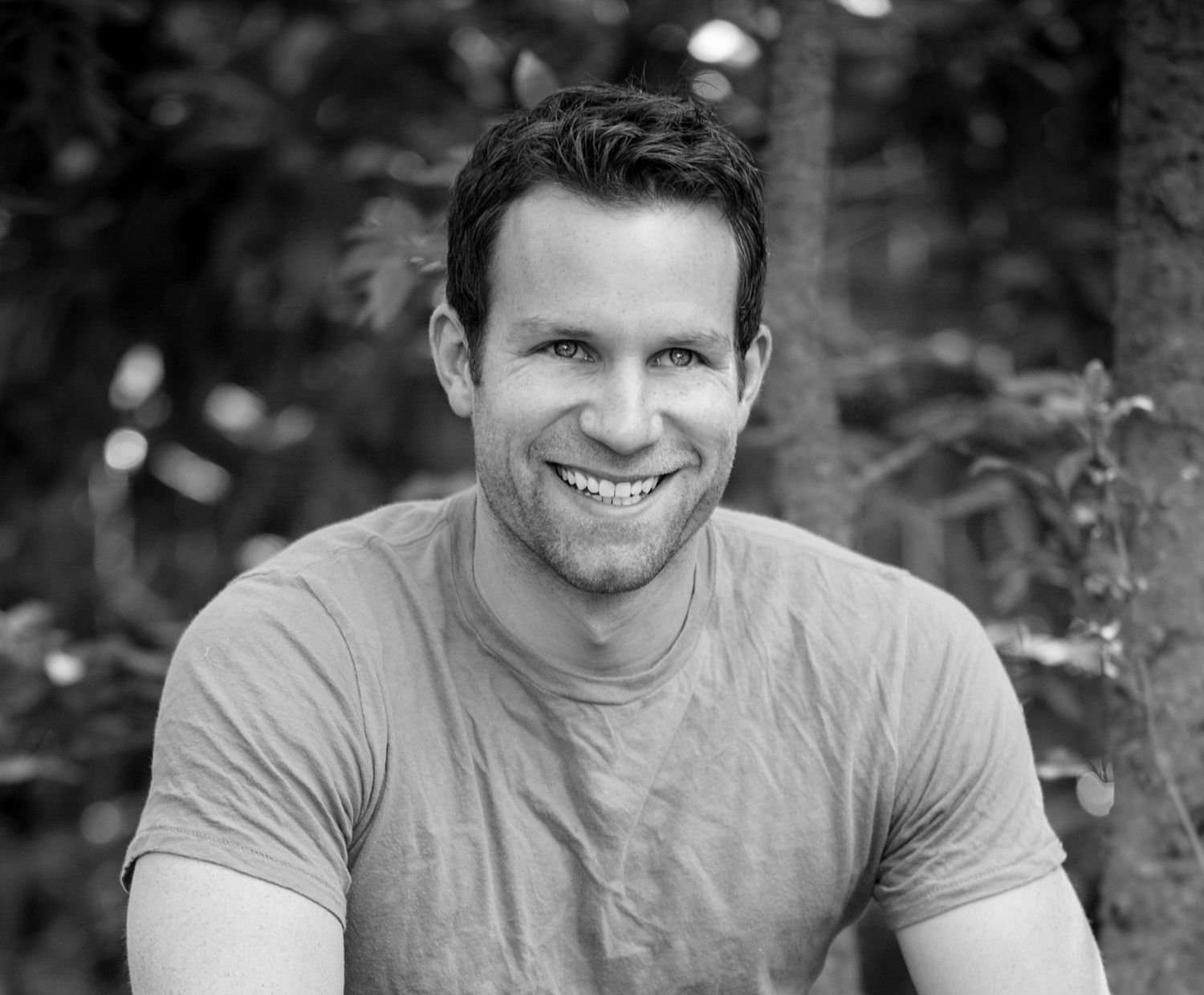
 Abel James
Hey, y'all. This is Abel James, and thanks so much for joining us on the show. Does splurging on late night takeout quietly rewire your brain like a drug? Are your nutritional choices building resilience and longevity or quietly feeding inflammation, burnout, and creeping disease?
If you're done with extreme dietary dogma and want a science backed way to eat for your brain and for your future, this episode is for you. In today's special episode, I'm thrilled to be here with the incredible Harvard trained doctors and dear friends, doctor Srini Pillai, psychiatrist, brain scientist, and musician, and doctor Uma Naidu, a pioneering nutritional psychiatrist, chef, and best selling author known for her mood food creations.
Now some exciting news before we get to the show. I just got back from Nashville
laying down tracks for a brand new musical album of original tunes with the incredible Denny Hemmingson, who's been the band leader of the Tim McGraw band. He's about to go on tour pretty soon, so we're trying to get everything wrapped up real soon, but still laying down tracks. Stay tuned. I'm really happy about how this is coming out. Also, on the musical side, I've been doing a lot of live shows and playing a live show tonight in Austin,
then packing up the rig and driving to Vegas to play a show out there and go on tour for a little bit, but then we'll be back in Austin playing a lot more live shows than going on tour to some other surprise places this summer. So if you'd like to stay up to date about that and some upcoming speaking events, live events where we can meet in person as well as some retreats at Amrit Ocean Resort and more featuring doctor Uma as well as doctor Srini. Please join my newsletter at abeljames.com.
That's abeljames.com. Sign up for the newsletter. We'll send you a quick little surprise as a thanks for doing so, and you can stay up to date about all of the cool stuff that's coming down the pike. Also, if you're looking to upgrade your habits and get transformative results without any newfangled peptides, pharmaceuticals, or other ridiculously expensive biohacking equipment.
We have a brand new habits app launching very soon, and you can also join our Club Wild community and find the new app at wildrx.com. That's wildrx.com. Alright. In this episode with a couple of brilliant docs from Harvard,
you'll hear how to enjoy treats like chocolate cake and hot dogs guilt free without sending yourself into a spiral of shame. The story of a patient who transformed his mental health by changing one daily habit before breakfast, how art, poetry, and music can rewire your brain and support longevity just as powerfully as diet and exercise,
the shocking truth about women's health research and how nutritional psychiatry is finally starting to close the gap, and much more. Doctor. Uma Srini and I will also be talking about an exciting new collaboration where we're getting together in person for brain resets on the beach in Florida and many other events coming up down the road. If you would like to stay up to date about that and get the show notes to this show and many more, make sure to check out my Substack at abeljames.substack.com,
abeljames.substack.com. You can find the show notes, a bunch of goodies there, and also help stay up to date with all the cool stuff that's coming up soon. I mean, in this age of AI where it's harder and harder to trust anything that you see on the Internet, I mean, there are fakes of me out there that we've had to chase down and try to get rid of on ads and that sort of thing. It's wild.
There's nothing like getting into the same room with people who care about each other and care about where the world is going. It doesn't have to be dystopian. We just have to build this utopian, world that we dream of in parallel as the rest of the world spirals toward doom. So on that note, let's go hang out with doctor Uma and Doctor. Srini.
Hello, and welcome to this amazing discussion. I am delighted today to be joined by Abel James and Doctor. Uma Naidu. I'm Doctor. Srinivale, a Harvard trained psychiatrist, brain scientist, also a musician. I just finished writing a musical and I'm a technology entrepreneur. Mostly, I don't like to live in boxes because I don't think I'm any of those things. But I'll stop there and hand it over briefly to Abel and Uma to introduce yourselves. Uma, would you like to go first?
Sure. I'm delighted to be here. I'm Doctor. Uma Naidu. I'm a Harvard trained nutritional psychiatrist, chef, author of two bestselling books, as well as I've studied nutrition. And I'm excited to talk with you both.
Abel JamesThank you, Abel. Thank you, Uma. I'm delighted to be here as well. My name is Abel James and I'm also a man of many distractions. Primarily, I've had a podcast in health, fitness, and longevity that also talks about technology and some other things for almost fifteen years. A few best selling books as well, mostly about real food and brain health, although one of them is also poetry. And I'm also an active creative mind and I'm constantly making music,
some with Srini and performing live. I live in Austin, Texas as well. Can't wait to see you all in person.
One of the reasons we're having this conversation is to give you a taste of why the conversations that we will be having in the webinar are different from what's floating around the internet or what you generally hear about. And also to ask you to consider whether it would be meaningful to you to attend the live session where all three of us will be present. In addition to hearing intellectual thoughts, which is really the minority of the program,
there's going to be an opportunity in the live environment to embody a lot of these facts. You get to choose between walking on the beach, yoga, physical exercise. You get to taste Doctor. Umuneidl's amazing mood food creations, which he'll tell you about in a little bit. And you'll get to hear from all three of us about different perspectives on health so that you can actually check against yourself
whether you're doing things that make a difference for you. And just to start us out, the one thing I'll say is that I think someone drew my attention to the fact that there's a crisis in self care. That, like, it's very rare you get someone saying, I didn't realize that a donut is not like standard healthy food or that I think fried food is healthy. Or, People know in general what's healthy or not healthy.
The way that the current system approaches that is to say, bad person for eating the donut, bad person for eating the fried food. And I feel like there's something a little off about that in terms of encouraging people. Just from a purely psychological standpoint, there's a lot of research to show that positive feedback provides an impetus for change. And also that helping people construct an image of their ideal selves can be much more powerful in trying to help them identify
what might impact their health in the longer term. Specifically, what we'll be talking about in the webinar is some of the hidden elements that impact how people end up being inflamed. And just to start us off with Uma, I'm interested in knowing how you reconcile the fact that when let's all three talk about our perspectives on this, but there's a general rule, I think in the medical literature and in general, that if you eat fast food and you eat processed foods,
you'll feel bad. Whereas most people, if you did a survey upon the first bite at any fast food chain, and you were like, Do you feel better or worse? Most people would be like, I feel amazing. Can you speak a little bit to what's hidden in the connection between those foods and inflammation? And how do you even reconcile the fact that they're not gonna relate to not feeling good about that? Because they do feel good when that's happening.
You know, the way that I like to explain it, Srini, because it's not a straightforward explanation. Because, in fact, people do eat fast food and they eat lots of donuts and they feel great. But it's not the feeling of just when they eat the food that matters to our brain health and our mental well-being. It's the feeling that comes after that and that follows up in it because the immediate release of sugar to the bloodstream,
to the feeling, taste, the flavor of whatever that food might be, has a great enjoyment to them. But like I always say, there's a reason they sell dogmas in twos. It's you eat the first donut and about two seconds later, you need the second one. Because they're not satiating like whole foods are. Are they not tasting? No, they're absolutely tasty. Should we subsist on them and eat them all the time? Probably not.
Because the effect and impact after that short release of energy is that there is a significant impact on sort of the longer term level of inflammation in our body. I like to say that, you know, comfort foods, unfortunately, are discomfort for the brain. It's the longer term impact that's going to make a difference. The energy crash that follows, the inability to then regain your focused attention.
If this is what you're eating on an ongoing basis becomes a problem for most people, does it mean that you shouldn't enjoy some medication or treat or have it be part of your life? You absolutely can. But do it in moderation and lean into healthy whole foods as much as you can and enjoy what people call treats, you know, on occasion and not every day all the time.
Abel, what's your take in that?
Abel JamesI would love to add that it's worth acknowledging that the vast majority of foods that we find, whether we're going to a fancy restaurant or a fast food restaurant, would never be found in nature. And so if if you imagine finding a giant lava chocolate cake out in the woods, it's an absurd idea, but this is what we're confronted with day after day on billboards. And so all of this hyperpalatable food
is surrounding us. And the industries, multiple industries, tech industries, media, and and fast food, double down on the psychology of this and the the colors that get us hyper attuned
to craving something in particular, hopefully from their restaurant. Right? And so if you're going out into the world, one thing that's really important is having high standards for what you decide to eat and preplanning that a little bit so that you're not desperately hungry at a weak moment and going to the wrong place and filling up on all this this food that is not going to satiate and and not going to serve you ultimately. But also, you know,
many of these foods do feel and taste great, and this is by design. It's it's an act of chemistry more than an act of nature, though, and it it also acts within the body more like a drug when you get those quick hits of sugar, MSG,
flavor chemicals, and all these other things. And so if you are going to partake in that part of the the eating world, which is very difficult not to, I I do as well, there are certain ways to mitigate that by ordering things that are not fried in seed oils, for example, and getting something that's grilled instead. Or if you're going to,
go for a sandwich, try to hit the protein and turn it into a bowl instead of focusing on high glycemic carbs and modern wheat and grains and that sort of thing. And so I'll just kind of end it off by saying, when you go out and you're eating in the real world, put your shields up and have a plan and have high standards for what you decide to eat because it's not just about how you feel right then, it's about how you feel in the days and the weeks that follow.
Yeah. And I I think when you were saying that, you reminded me. We talked previously about, how influential my personal trainer is in my life. And when when he realized that I'm never gonna absolutely give up hot dogs, He was like, dude, how can you eat that? Like, it's absolute junk. I was like, you're asking me how can I eat something that is delicious, that I love, that has memories for me as a child, that carries meaning?
The way I could eat that is that I like the continuation of meaning. I like the deliciousness in the moment. And I think it would be really cool to be able to eat a hot dog. He said, well, do me a favor then. As a start, every time you order a hot dog, just order a salad as well. And I was like, That just sounds terrible. He's like, No, no, just order it because while you're poisoning your body, you should also be doing something good for yourself. And I was like, Why
are you telling me why that's not poisoning my body? He was like, Well, you're a doctor. You think you're doing amazing things for your body? And I said, Well, to a certain extent, am. I'm increasing my happiness. I'm changing how my brain is responding to the world. I'm feeling satiated in some way. But I thought that practice was really good. So whenever I think about the idea of if going to make the choice on occasion to eat something that I deliberately, that I know is not healthy,
I'll order a salad with that just to counteract what that effect is. But what I found in our retreats, the live retreats is Uba's been very influential in actually creating these menus. And she doesn't talk a lot about this about herself, but when she was at cooking school, she won the award for most innovative chef.
And part of it is that she comes up with these things, which I've not seen them in many recipe books. But maybe you can speak a little bit too. You know, at the breakfast, you make this chickpea replacement for eggs as a way of rethinking cholesterol. What goes into something like that? And I think a lot of people have come to these and said, can you teach me how to make this at home? And how do I make this at home? Can you speak to some of that? Yeah.
Yeah, I definitely can. You know, the way that I think about recipes is that food has to be delicious even if it's healthy. And I think that that's the missing step in a lot of how we think about food culturally. We think that, you know, if it's healthy, it's gonna taste like cardboard. And it really isn't the case. So the way that I envision recipes is things that I find delicious that I enjoy eating, and how can I reformat them,
recreate them to still be tasty, but maybe be more nutrient dense from a brain nutrient perspective or just from, say, the fiber, the level of fiber, the level of plant based fiber? So for example, a lot of people consume eggs and generally they are not considered unhealthy
anymore. There are many mixed opinions about that. But eggs in moderation are a healthy food, but not everyone eats them. And for either plant based eaters or for people who just want to expand, using chickpea flour to make an omelet is an option for people. And another thing that you can do with that is add tons of spices. And a pure spice is rich in antioxidants and anti inflammatory properties in addition to making something delicious. You can add in a ton of vegetables that you like.
And you can also, if you'd like, eat eggs as well. So I think that the principle of it is coming up with ways to recreate a scrambled egg or omelet that is interesting for people, still delicious, it's something they can travel with, they can eat on the go. But then adding in things like cheer pudding as an alternative to just, you know, granola, because most granolas, unless you make it at home, are loaded with a lot of sugar.
Whereas if you create a cheer pudding or you make a homemade granola, which we do for some of the meetings, you can control the sugar and you can add other ways to sweeten spices like cinnamon. For example, I know Abel I think Abel has made some of these, I'm sure. And you can
add in things like berries and nuts to the top of a cheer pudding, and it can be super delicious. So even chopped mango, which is sweet as a fruit, and a little portion on a cheer pudding is not gonna upset any type of, you know, imbalance in your glucose or anything like that. And fruit is healthy because it comes with fiber and minerals and vitamins, And it's not just a sort of sugar dose like a donut is. So I think that that becomes really critical in the enjoyment of this experience.
And I'm always excited to create more and more things that we can eat together at the retreats.
But you you said something that made me think about something. Was thinking, you know, one of the reasons we want people to attend the webinar and really also come attend the live retreat is to appreciate many of the contradictions that exist in medicine. There's a widespread literature that shows that antioxidants are very helpful because they mop up toxic radicals. They protect cells from poisonous reactions. And so cells can live for longer and you can feel healthier.
However, in this webinar, where we're going to be talking about some of the hidden connections between stress and inflammation, one of the things that I think most people are not aware of is that if you have a high level of inflammation at baseline, you have to be a little bit careful about how many antioxidants you're actually consuming. Because antioxidants are also associated with accelerated progression of cancer.
So if you have a cancer that's dormant and you are feeding it antioxidants, in the same way that antioxidants protect normal cells, they can also protect cancerous cells. And they can also turn into into pro oxidants in the body. So I think what I want for most people to understand is the essence of this contradiction. Because at every level of the human mind and body, there are these contradictions. Nothing is that linear. Antioxidants can be helpful. They can also be hurtful.
Lowering your cholesterol can be helpful. It can also be hurtful. And yeah, if you're wondering like, what? It's like, no, there actually are studies that show that cholesterol, statins, for example, that affect the mevalonate pathway are not just impacting cholesterol, they're impacting many other things at the same time, like steroids and steroid pathways and energy in the cell. But the same physical contradiction
is something that I think exists for all of us mentally. Like, when you were both talking about sugar, and I think you both think about nutrition more than I think about it, I made a firm stance in my relationship with sugar. Sugar has served me too well in my childhood for me to make sugar an enemy. So I've decided that sugar is a friend who will visit from time to time.
I don't want to make sugar my enemy. Like, don't look at a cake and think, Oh my God, it's horrible. It's a beautiful memory of a beautiful time. In fact, there are one or two studies that show that the family bonding that can occur around cakes can actually be protective in relation to health. Abel, when you were on a TV show where you were helping people lose weight,
what would you say to someone who is like, I want to eat cake? And you did really well at it. Maybe tell us a little bit about it. And then I'm curious to know how you handled that kind of situation.
Abel JamesYes. So it was a about ten years ago, almost exactly, on ABC. It was a weight loss competition, but the the coaches, and I was one of them, were on the chopping block every week. And so there were different approaches, that worked well or not so well, and everyone kind of had their own unique experience. But every week, the contestants who had 50 to a 100 plus pounds to lose, say, stepped on the scale, and the coach and they had to see what the progress was like following their
approach. And for some of the approaches, they were very, very strict where you didn't get any junk food. You didn't get anything that wasn't basically just the typical diet food that you would think of. You know, tastes like cardboard, just munching on celery all the time, and dramatically undereating calories,
which I'll I will say is not good for most people in the long term and does not support longevity in the way that we once thought that it did. And so it's very important to recognize that we need to nourish ourselves and have some fun when we are getting results. And so the way that you do over time and kind of the unique approach of the wild diet, which was my approach in the name of, my book as well, I was matched up with Kurt, a 47 year old grandpa who weighed three hundred and fifty two pounds and had four plus pages of medical issues to deal with, largely
because he was carrying so much body fat. And he loves ice cream, and he loves brisket and hot dogs and ribs and everything delicious you could possibly imagine.
But he's also a reasonable man, he wants to be there for his grandchildren. And he he knows that he needs to change things up from what he's doing. And he's tried and failed with so many diets largely because they did deprive him so much of what he loves. And it's just something that you can do for a few months, and then it's just like, alright, it seems like it's not working where there's a crisis in your life or it's a stressful event. And so all of a sudden, this diet that you thought was serving you, you run out of energy, you bonk, you crash out, and then you give it all up. And then that's where you get yo yo dieting, which doesn't serve anyone.
And so with Kurt, I told him from the beginning, I am here to help you and I'm here for you, but I'm not I can't do any of this for you, and I'm not gonna be camping outside and
making sure that you're not eating bad stuff all the time. That's that's really on you, and you need to find a way to do that that makes it worth it over the long term. But I will tell you, here's a framework that has worked for me, my wife, and our community of thousands of people all over the world who have dramatically transformed their health with real food and functional fitness and outdoor workouts that aren't too crazy without any newfangled pharmaceuticals
or injections or anything like that needed whatsoever. So the way that we made it worth it was by him trying it and also getting to eat his cheeseburgers for the first week, a few of them, but without the bun. You know, he used a lettuce wrap. And, a similar thing where he anytime he was having a treat, he would have to pre feed with, like, a bone broth soup or a high protein soup, get his veggies in,
as well as make sure he was drinking plenty of water and that sort of thing, but the treats weren't taken away. We made a little bit of homemade pie for him, and we had, as well chia pudding, avocado pudding with some chocolate in it. And you can make all of these things and sweeten them with with dates or with alternatives to high glycemic sugar.
That makes them quite delicious. And so he was eating pumpkin pie and cakes, and we had a dessert party and all this stuff, And the other contestants were really mad, but he got into it.
What really enforced it was that when he stepped on the scale week after week, and he was a you know, he's a tall, large man with lots of weight to lose, so this isn't reasonable for most people. But he was losing 10 to 15 pounds for the first few weeks, and some of that is water weight, but over the three and a half months or so that we worked together, he was losing seven to 10 pounds pretty much every week like clockwork because he was fulfilling his needs for protein, was getting a diversity of some flavors from spices,
and he was still able to refeed after his workouts with some some treats. And that's another piece too. It's like on the days when you're sedentary and not working out or you're not that active,
those treat foods hit different. They're more likely to spike your blood sugar. On the days when you are more active, there's actually an advantage to refilling your glycogen stores with some level of sugar from whole food sources and even some non whole food sources that can be really useful in refueling your muscles. So once people kind of get the gist of this and see that it works,
they recognize often that they don't have to give up all of these things that they love. They just get to eat them in a kind of a different way and and time it a little bit differently. And I think also, you know, having my wife and and community members
not just kind of saying that this works, but we've been living this for, like, fifteen years. And so any question you have to ask, we're here for you. And we say, this is the way that we navigate it. And I think people know me as kind of a guy who likes to have some fun, especially the musician side. And so I think it's essential as well that anyone who we coach, we're not just saying things, we're practicing
them as well. We're walking the walk and having fun and nourishing yourself and not taking anything too seriously is is an important part of this process. Because again, it's not a sprint. It's a marathon. You're gonna have to do this for the rest of your life. Well, that's the thing I think that I particularly
enjoy about thinking about the live experience that I'm I'm pretty certain I'm gonna want you to play some guitar. I think Let's go. I think it would be so fun for people to come to it to just to experience that you can be in an environment where people are talking about stuff related to health span, but not feel like someone's lecturing at you and providing valuable science based information, but at the same time, recognizing that the fundamental problem with science
is that it is population based, right? And it's not individualized. So if we don't think about individuals and you don't care for individuals' questions, you'll never be able to help any specific individual. We limit the numbers at those retreats for that reason, to be able to provide that kind of individualized care. We've talked about some of the people in your clinic and people who you have felt have made
some profound changes in their lives. What's a story that stood out that you think a lot of people would relate to in terms of not expecting to get better and then suddenly making it?
Very early on in my community clinic when I started to really engage in principles of nutritional psychiatry, and before I had formalized protocols for my patients, I had a patient call me out as a very junior resident, but I was still pretty timid and trying to do the right thing. But he came back a week later after I prescribed Prozac,
which is an SSRI medication many people are familiar with. And one of the side effects is weight gain. He actually was, I know from his, you know, medical record and having it in front of me on the computer that he was already, let's say, overweight when he'd come in. But he read the, you know, the printout from CVS and he came in charging into the office saying, you caused me to gain this weight because of the medication.
And when he came in, he had this massive favorite coffee in Boston, originated just outside of Boston, as Dunkin' Donuts coffee, 20 ounce size, and came marching in with it. And I said, well, tell me both, you know, what did you put in your coffee today? And he said, well, you know, I did this and that. But he basically said there was a quarter cup of ultra processed creamer, because that's the creamer they added Dunkin' Donuts, and eight teaspoons of sugar.
And I was able to, I'm not much of a calorie counter, but this in this way, it was useful for him because it was tangible information he could understand very quickly. So I broke it down for him on the on the computer, I said, well, before you even ate breakfast, because you you you're telling me that you have your breakfast at ten and this was only in the morning, you've actually consumed x amount of calories that are completely empty,
and I'm sure you're not satiated after this. He said, no, then I go and eat breakfast. And, you know, his eyes lit up, and it was sort of an moment in my clinical journey, in my own work and understanding how you can translate simple information, like just calorie counts, empty calories, and explain to someone
that they can make an adjustment to their lives. So enjoy something. I'm a big believer, like what you said, Abel, people should enjoy things that they love and look forward to, like that cup of coffee, but maybe we can adjust and tweak what he adds to it. And that was a massive shift in both the therapeutic relationship. He didn't find me. Was, like I said, I was a timid new resident. I didn't wanna be fired. And we actually did not need to increase his dose of medication,
but he wanted to know, well, if you can teach me that fact, what else can you teach me about the other stuff? I mean, can we cut calories somewhere else and do this and do that? And it really became a working case of what can we do to adjust your diet? And he did very well many years into the treatment. So I would say that it taught me so much.
And he ended up being happy that we didn't need to increase the dose of his medication because he had the compounding effect of nutrients from whole foods as well as a low dose of medication.
Well, I think maybe a little bit of the webinar that we're going to be having, is complimentary, and I think a lot at the retreat, I'd like to debate some of this. I'm a psychiatrist, I prescribe medications, lot of my patients are on them. I do not do that easily. I did not just hand out medications because of the standard of care. And one of the people who trained me is Doctor. Ross Baldessarini, who is one of the most famous people in pharmacology.
He wrote one of the biggest sort of equivalent Bibles in pharmacology. And when I would present a case, I would say the patient's on X, Y, or Z. I think we should do this. And he would say, well, Doctor. Pillai, do we know how that medication works? It's like, yeah, no, it's a selective serotonin reuptake inhibitor. He goes, and how do we know this? I said, oh, because this inhibits five HT2A. And I'd go on into this long
sort of story about this and he would say, Doctor. Pillay, do we know how this medication works? And I would be like, well, I mean, he eventually drove me to the point where I was like, actually, we don't really know. And he said, exactly. Now what's going to distinguish you as a Harvard trained doctor is you're going be able to tell your patients that. Because if you don't tell your patients that, it's a crime.
And patients need to understand that for most of these medications, we don't know how they work. And yes, we understand depression is a real problem. We understand anxiety is a real problem. But so is diabetes, and so is obesity, and so is taking away your sexual function. So for me to be like, here's something that will actually help your depression, and oh, by the way, you won't be able to respond sexually anymore. It's like, what is happening? Like what? That's the price you're paying for?
So, what he got me to do for my entire rotation was when I presented patients, rather than saying the patient's on the following medications, he said, to train yourself, I want you to say the patient's on the following toxins. And he said, and this should be stated not just in psychiatry, but across all of medicine. And I think,
for me, that was a real eye opener. It made me understand that the value of a physician who actually understands what's going on in medicine is to be able to share with the patient how much we don't know. I think both of you can relate to this, but I know in my whole public persona, one of the things I've had trouble with is when I see people being successful at garnering attention. They're usually saying very polarized things.
Don't eat oxalates, eat this. And none of us is like that. So it comes across as being a little bit drab. Like, these guys are going be like, know, don't eat things that are too bad, but you can occasionally eat this. Abel, I'm curious. How do you deal with the fact that you are as knowledgeable as you are, that you are not polarized, and that you're not going to be touting the usual marketing nonsense that other people are hearing? Like, how do you make peace with that in yourself?
Abel JamesI consider it as a similar thing to dietary intake. So with food, you have to have very high standards, you want the real thing.
With anything that you're consuming with your mind, I apply the same sort of filter. And so not that I don't consume junk food from the Internet from time to time, scrolling videos or going on x or Twitter and reading stuff, like, that's fine. But what what I have noticed, because I've been doing this for a minute now, is is that largely many of the early conversations were long form and driven by people who were researchers in the field who had blogs,
authors who had written books about it, studied it for years, you know, doctors and and true professionals. And as the years have gone by, we've seen much more of the dancing influencer on TikTok effect where people are just kind of parroting ideas that they may or may not understand and may or may not be true that have to be thirty seconds or less or ten seconds or less or whatever. And so there's not a whole lot of, learning that's really happening in in that space,
in my opinion. And and it's not the best vehicle or or space for me, I know, to spend my time and and trying to learn. I like to learn from talking to real people who understand this very, very well, whether it's in person, off the record, which is great, or also on the podcast. It's an incredible way to, explore ideas. I listen to podcasts that are long form from professionals.
And that's the thing that that keeps me sane about all of this because it's very similar in the music industry as well. What's rewarded is not the best song or the most thought out transformative experience. That's more reserved for the local scene and spiritual music and religious practice of music. It doesn't mean that it's less valuable just because it's less popular. And what you see
is more like a medicine show from the turn of the century where you just see all of this craziness and these polarized ideas, and they're fighting and they're going back and forth. So this is kind of the reality TV version
of this information. And so if you wanna get real work done and you want to understand all of this better, talking to the people who have been practitioners for many, many years and have made mistakes and worked with many people and and learn from those experiences is extraordinarily
powerful. And I think working and interacting with people in multiple circles like you folks who who come from a totally different background than I do is very valuable because you can see the things that are in common that are the foundational
principles of health and longevity that really work. And once you kind of understand that you don't need the whole dog and pony show on the short form Internet world, that's what really keeps me sane. That whole thing can exist. It's going to exist anyway, but that doesn't mean that we need to spend our mental time there. Because our our if you're talking about stress, one of our biggest problems is overstimulation
and just getting more and more inputs and more and more scrolling is a problem that almost everyone has right now. And so to the extent that we can turn that down and regain our sanity and clarity, that makes it easier to approach this with a better plan for what
you actually want to learn about. Because if you're just thinking, you know, you're going out there on TikTok and one person is saying, you need to avoid oxalates, another one's saying, seed oils are the big problem. Another one's saying it's meat. Another one's saying it's vegetables. It's just like insanity. So take a step back, deep breath, and try to approach this in an old school way. I love to learn from real people and books because
it takes a heck of a lot longer to write a book than unless you use AI or whatever. Like, the old school way of writing a book than it does to have AI generate all of these tweets or do a dance on TikTok. So try to learn the old school way from real humans again.
I I really like what you said, Abel. And I I also wanna go back to to what you said about the television show you worked on because the it also had this principle of someone being able to enjoy things that they ate in everyday life.
You know, for me, it's about helping people go back to real food. I think that's the case, something with you and me. And I think also for real people, I love what you said. I'm always fascinated by the fact that people are talking about mental health with absolutely zero training. You know, I can probably set a fracture if you ask me, but the last time I did that was in my orthopedics rotation at medical school, so I might do it crooked.
So I think that when doctors who are not psychiatrists and mental health trained are talking about all sorts of things in mental health, it doesn't always feel authentic to me, because I think that you just need to be working in the field more to comment and to truly guide people. So I think there's a dearth of information and hearing from real people, but you get sort of these snapshots of quick reels and videos where you're supposed to consume information.
The other thing that I like about what I consider to be long format learning. So the experience at the retreat has bursts of information that we will each share, but it's also not just a spa experience, and it's not just a seminar, webinar, or class. It's really integrated in a beautiful way, in a lovely setting, with just having so much sunlight and air and being at the ocean.
You can have the spy experience, you can do the breath work, you can do yoga on the beach, but then you can also have this immersive learning experience from real humans who will speak to you directly and not show you a video that's ten seconds long. I just wanna know what you're saying and thank you for pointing that out because I think it's become so important in this era that we're in to be human and work with humans.
So I think I both agree and disagree with some of what you said, Roman. I think I certainly would probably not talk about setting fractures because that's a little bit out of my wheelhouse. But my specialty is psychogenic longevity, which is how does mental health impact the rest of the body? And you talk a lot about I
said I can't, I might
be able to, but I probably will set it crooked is what I'm saying. Right. And and so the part that I'm disagreeing about is that I don't think that we should be thinking about the body as separate. Like, I don't think the brain is separate from the lungs, is separate from the heart, is separate from the bones. I I think that it's all connected. And sure, while, like you, I would not set a fracture, I don't think I would hesitate to connect bone health with brain health and skin health.
So that's one thing. The second thing is, I do think we need a multidisciplinary team on board. One of the things I really appreciate about Amrit Ocean Resort, and I would not have appreciated this had I not had a fascial treatment, is that there are experts on fascia, right? Fascia, for those who don't know it, is sort of this connective
tissue just underneath the skin, which for the most when we were taught, we were taught of like, this is just connective tissue. When you were dissecting a cadaver, you take the skin off and then you just remove this fibrous tissue like it's nothing. Well, turns out that this tissue that looks like it's nothing has powerful influences on the endocrine system, on your mood system.
And so having a fascial therapist there who actually drew my attention, I consider myself generally well read, I try to keep up with information. But I was not aware that a lot of problems in the temporomandibular joint in the jaw are because of foot issues. And I was like, what? And so I went and looked at the literature, and I was like, wow, actually, the way you walk or what's happening in your foot does impact what's happening in your jaw. And he pointed out that there's this connection
of fascia. There's not an immediate anatomical link you can make through nerves or blood vessels. Eventually you can trace them back there. But the fascial link really does explain what's happening in different parts of the body. So I 100% agree about, I think it would be dangerous if I talked about how to set fractures. But on the other hand, I would encourage people in general to start thinking in integrative ways. My dream really is to be able to set up a center where
there's every kind of person. A trainer who's very good at what they're doing. A nutritionist who's very good at what they're doing. A doctor who's very good at what doing. And, you know, when you said that about writing poetry, Abel, it drew my attention to when I was in my internship, I did my internship at Mass General in neurology. And I was very incredibly
privileged, and I say this not like in the Internet way of like, was so privileged to be invited to something, but to have Seamullen Fisher as a teacher in neurology is sort of like an iconic moment. He was such a deep thinker. He discovered one of the forms of stroke. And I remember sitting with him one afternoon, and I was notorious really for even post call, I would stay on, go to the library, come back
talk to him about what was going on in the brain. And he would constantly say to me, you should leave psychiatry, you are a neurologist, you should not be. I said, no, but I like the unknown things that can't immediately be explained by the brain. I want to probe that. But I said to him, how did you even discover this variant of stroke? And he said, what I did was I made note on little cards of what I saw.
And so for every patient that I saw, I made a handwritten note which developed my intelligence about where there were commonalities, where there were patterns. It took the time to see the pattern. And I was like, wow. But I said, well, that must have been amazing that you spent time with those patients in that way. And I thought to myself, I don't really want to take notes on these patients. I'm probably not going to be doing that as a specialty subsequently,
but I do want to actually experience the idea of getting to know them. And so I never told anyone, didn't even tell him, I didn't tell the patients, but for every patient that I was assigned to see, I wrote a poem about them, so I could keep it with me. Because I wanted to have an understanding, not just of the tangible, but the intangible.
I wanted to understand that what we now know, which is that self transcendence is one of the strongest mindsets that correlates with decreased problems in inflammation and immunity. Long term transcendental meditators are able to down regulate all 49 genes associated with inflammation. They're able to up regulate genes associated with oxygen carrying capacity and immunity. So, we know that these artistic experiences, poetry,
for example, they might sound crazy to someone. Abel, I don't know if you remember this, but we had met each other and got along for a long time, and then we weren't in touch. And the thing that made me want to contact you again was I said, he was writing a book of poetry, he must know what's happening. That in human nature,
poetry is not that separate from what's going on in medicine or what's going on in human health. I'm curious about what you think you got out of poetry and how that would translate into any advice you'd give anyone else about being fully who they are.
Abel JamesI just love that question, Trini. And tip of the hat for asking it because I know that you're a creative as well and know the deep value of that act of creation. And it's not so much about the product. I I want to emphasize that. And it doesn't matter how good or bad, relatively speaking, the end product is, so the poem or the song or whatever you create the drawing.
It's more about what you learn while you're creating it. Because as you write a poem, or at least as I write most of the the poems, it's a way to examine ideas, and it's a way to think through and feel through issues. And and when you see that the words that we choose, whether it's in poetry or how we're speaking, reprograms our consciousness.
That is such a piece of leverage that that you can use whether this poetry is just for you, and I write plenty of poems that are just for me, right, or end up being just for me, and I'm sure you do as well, and I encourage everyone to do that. They're very similar to writing a song, and and for some of my poems, they are songs, and and it goes back and forth. But what that does when you finish it or you decide that it's finished
is that you've worked through this idea and then you've kind of created this little emotional experience that's a time capsule of a memory or I write kind of fictional poems as well, and this is an idea. And and so, for example, one of them is about I never knew either of my grandfathers because both died essentially before I was born or before I was more than one or two years old. And so, I kinda have this this missing piece in my experience and in my mind about what
that relationship could have been. And and somehow this story comes out of a man who lives his life largely alone and doesn't let people in. And eventually that loneliness in the midst of it, he gets brain cancer, and because he wants to do it all alone,
no one really knows about it, and no one can be let into his heart, and and he doesn't have that exchange of humanity with other people, and essentially dies alone. So that's a very sad story to hear it like that, but when it's put into a poem or a song with these emotions and these different ins and outs,
you learn so much about it because and you learn so much about being human because it's not about being perfect and it's not about having some perfect life where nothing ever goes wrong. It's about learning these lessons along the way of, yes, I'm supposed to be strong, but I still need to be vulnerable and let people into my heart and go into theirs and exchange
that sort of emotional energy. And so I would have no reason to think about a lot of this or really turn it into a finished idea for sharing with other people, unless I just kind of sat with an empty notebook and tried to examine some of the feelings that I was feeling that came out of nowhere or were floating through the air, depending on how you think about it.
But it's an excuse for yourself to almost actively meditate, and it's also a way to fight what we were talking about before, that overstimulation where we're just constantly getting all of these inputs. This is an output, this is allowing you to have the space to process some of these ideas and finally get some of them out of you. And so once you start practicing that enough, I'd be surprised if you didn't come out with some pretty kick butt poems or songs or drawings that
really enrich your life as well as other people's lives down the road. If you keep practicing that, you'll get better and that's really what art is. We're all artists, but it takes a lifetime to become a master. So working on that craft, whatever yours is, and we're not all gonna be great at everything, but working at the craft that kind of calls to you is one of the best ways you could possibly spend your time, and also incredibly good for mental health and brain health as well.
It's funny, Abel. You you may not know. So I was, like, this novice poet as a child, and I won local competitions in newspaper competitions and stuff. But, you know, it's funny how that creativity for me got really almost shuffled
in a in a natural way into cooking. And that is where I sort of spend my creative space and spend my time. But it's interesting to have that that link. So I would not call myself a poet right now, but as a child, I I spent time doing that. But you know what's interesting about this? At at you know, previous retreats that we've had, I've taken it upon myself to explain
the way I see people. Not as a psychiatrist or, like, a person who can see through something, but I think people do want to be seen as they are. And and we very often stay away from the poetics of experiencing who people are. And I think a lot of people got a lot out of my saying, this is how I'm experiencing you right now. I think you have a conflict between your spiritual life and your everyday sort of carnal life.
And that's okay because a lot of people have that. So the question is, when are you going to stop punishing yourself for holding this paradox rather than than working through it? And I think those kinds of conflicts where I I always talk about this example where I saw lots of women who would say, I love my children, but I hate my life. And they would be like, I just don't know how to deal with the fact that I don't like
how busy my life is. I don't like that I'm putting my life on hold. I don't like what it's doing to my body, but I do love my child. And then how do I hold this paradox and how do I move forward with this paradox? Which brings me to this notion, Uma, about women's health. Uma is actually in a movie, which hopefully she'll tell us about, that's going to be featured at the Cannes Film Festival this year. And it's a movie that's about women's health.
Can you tell us a little bit more about, firstly, why they made the movie and what it is. And secondly, let's talk a little bit about women's health and why this focus on women's health is actually something that we think is important.
Yeah. You know, I was invited to be part of this documentary called Shield, and it is going to premiere at Cannes in May. And it really features a lot of medical experts in women's health. One of the areas I was brought in to be featured on was nutritional psychiatry, the gut brain axis, gut health, and women's health. And I think that there's this massive sort of movement right now to hone in and focus on women's health because it's been absent in the conversation.
In part, women were only included in research at the NIH in the 1990s in this country, which is a very, very short time ago. So, so much of data is actually not based on research done in women. I think as a reaction to that, but many other things, including just the ongoing social conversation, different authors, different influences and individuals who brought forward the conversation, but then changes in some of the regulations around HRT and
the research around that. A lot of that has brought it forward. So, I think this documentary is very timely because it's coming forward at a point in
culture when we are really looking at this in a holistic way and trying to see, well, women have kind of been left out of the research. How can we now catch up and attend the fact that menopause and perimenopausal symptoms should not be seen as, let's give you an antidepressant, but what can we do holistically through nutrition, exercise, movement, improving sleep, HRT as a potential option, not for everyone,
that could make you feel better. One of the things I looked at, for example, was there's so many overlapping symptoms of someone going through perimenopause and women being diagnosed later in life with ADHD. So, sort of teasing those types of things apart becomes really important for this conversation. So I'm excited to be part of the SHIELD documentary. I hope that we can also create something at Android Ocean for a separate US premiere there.
But we're looking into that as well, so people can see the documentary and be part of that experience.
Yeah, I think first, I think it's shocking, right? Like, The United States Of America did not have women in research until the 1990s. Like, what were we thinking? And it's not like I think all women are the same, but I think it's pretty clear that there's a very different hormonal axis. You know? It's a And you
can't just base everything on men's data, right, and the research on men. So I think it's a gap that we need to fix. Just like we need to fix the conversation around doctors not studying nutrition in medical school, this is a separate conversation that's linked that needs to be fixed as well.
Well, you're you're doing a lot about that. Right? I mean, you created the first nutritional, educational program for, medical professionals. What inspired you to create that? And and what's it about?
So it started thank you for that question. So it started with the fact that there was no that that so far, nutrition psychiatry is not yet a recognized subspecialty in psychiatry. But bringing it forward through my books, This Is Your Brain on Food and Calm Your Mind with Food, has really created more of a public presence of the work that led me to develop courses at Mass General, which is CME based. So clinicians and different health professionals can actually gain education credits
for taking the courses. All of us that maintain licenses, you know, need to complete these CPDs for different professions. They're called different acronyms. So that was how it started. But then what I realized, there was still a gap because you can teach people the basics of nutritional psychiatry, like a primer.
But what about the fact that they haven't studied nutrition education, and they don't know, most doctors don't know, for good reason, because they haven't been taught it, to say anything other than, you know, limit to sodium for hypertension,
or, you know, we know that this type of candy and cakes are not good because you have impaired glucose tolerance. We're not really taught to know more than that. But it's a gap that if you are speaking to a patient who's a whole human, and they also eat food, that you don't have to only refer to nutritionists, you should have some working knowledge of that. So we were awarded a foundation grant, which allows us to create the first nutrition literacy curriculum for clinicians in The US.
There are lots of courses for doctors, or if you want to take additional credits in nutrition, there are lots of places that you can do it. But this really places the focus on if you wanted to fill that gap in your education and you are already practicing in the world, so it's hard to go back and try to study and go back to studying nutrition somewhere you can take our course. And I'm developing it. Although I studied nutrition, I brought on two alumni from Tufts
Nutrition School, the Friedman School of Nutrition. Tufts is the only freestanding nutrition school in The United States. And I have alumni trained nutritionists and RDs helping me develop the curriculum so that it's really well balanced and it's, you know, they're bringing in the current information. And I certainly don't know everything. So, it's been a great help to have them. And we plan to release this course.
And this is asynchronous learning, so it's available for clinicians everywhere, but especially in The United States later this fall.
Firstly, there's so much more to talk about in terms of nutrition. You know, there's always something at the back of my mind. I I feel like nutrition is about food that we put into our mouths, but it's the relationship of the hand with the mouth. It's very connected to lifestyle. You know, if you look at the Blue Zones projects, where you have lots of centenarians,
there are huge differences across the different zones. I mean, there are some similarities, like the fact that in most of the areas, have at least two drinks a night, except for Loma Linda, where there's no drinking at all. Or you have regions that eat more fish. All of them are very plant heavy, but you have regions that eat more meat. I feel like it's a signal that nutrition doesn't exist in a compartment on its own.
That if you are living with the right tribe and you have a sense of purpose and you feel connected to people around you, I think it impacts how you eat. And one of the things that I think I would like people to leave the live event with is a lifestyle plan. A lifestyle plan,
which is not like changing everything now tomorrow and you can change it, but what are you going to do? I don't like retreats that when you go to the retreat and you're like, oh, I had such a great time, and then you leave it and you go back to your life. It sort of doesn't make sense. I feel like what I want to do, and I know both of you do too, is actually create a context where you can have a commitment to the changes that you want to see in what your ideal life could look like.
And this is a little bit of an aside, but I'm remembering and I was thinking, this would be funny to say to both of you, I'm not sponsored by Coca Cola, but I feel very happy about one particular policy that they implemented, which I think relates to something you said, Abel, which is I heard, and I don't even know if they're still doing this, but I heard that at some point they implemented this policy of no more voicemail. And I was like, that sounds like a dream.
And so I did not check my voicemail. If you listen to my voicemail, it says, please do not leave a message. I will not be checking this. And it's because I can't get texts and emails and Slacks and every other It form of
goes back to that, you know, we are overstimulated because there's so many different lines of communication. You know, it's it's not Slack, it's a different chat app on a different platform
and a different workspace. It's just it's it's too much. Well, I think the thing about overstimulation is also you see, my last book was Tinker Dabble Doodle Try Unlock the Power of the Unfocused Mind. And I was very miffed about the fact that most of what the media picked up was that it's important to build unfocused times into your life, not to be like focus, focus, focus fatigue, but have a way to build in doodling or, you know, rest breaks or positive constructive daydreaming.
But the reason I wrote that book was not just to say take a break from time to time. I wrote that book because I think it should be part of a lifestyle. And if you look at longevity and health span, one of the parts of the brain that is the most impacted is this unfocused network. The inability to regulate the default mode network is correlated with all kinds of things like heightened states of inflammation, cancer, cardiac problems. So once again,
I think that I'm looking forward at the webinar to sort of highlighting some of these mysterious things that we don't realize. So we don't realize that being able to regulate the attentional network is not just about focusing, it's also about regulating the default mode network that is involved in many of these diseases. And what's
interesting about that is that the default mode network is the network that codes for self. It is where your own self story is. So I find it sort of interesting that dysregulation of your biographical circuit leads to biological problems. So, just listen to that again. What I'm saying is, when yourself is disrupted, there seems to be a correlation with biological issues. And what that means is that regulation of attention so that you have focus and unfocus is, I think, super important.
And a lot of people don't pay attention to that. They think it's, know, people talk about, for example, emotional eating. And I know, Uma, maybe without giving too much away, I know you have a new book that's coming up. Can you say a little bit about what you think about food and focus and why you think its relevance to mental clarity matters?
Well, firstly, a lot of this evolved with the aftermath of COVID, where people had symptoms of long COVID. But there were even people who didn't experience long COVID, fortunately for them, who just had this blah feeling. They can't quite focus, their sleep is off, they don't necessarily meet criteria for so called mental health diagnosis, but they're just not feeling good.
And, you know, I felt it was really important to help us understand with the available signs that brain fog can be helped through how we eat and other mechanisms. So, I felt it was, you know, a niche that needed to be spoken about and that people could be helped, which is what led me to write the book. And so, I think it's really an important part of the conversation. Again, one of those places where food is overlooked as a solution. And most often people go to medication or a stimulant
or something to help focus. And those may be necessary in certain situations. But like I mentioned earlier, the overlap of ADHD diagnosis and perimenopause, because the symptoms can be similar, a certain amount of teasing out of symptoms needs to be done, so we understand what we're dealing with and understanding what the root cause of that brain fog is for that person is key in being able to help them.
Again, what I'm hearing you say, I'm talking about the importance of unfocused to focus. You're talking about the importance of foods to focus. I think another way that I've heard Abel talk about this, and I think you have a vested interest in this, is this balance between sympathetic and parasympathetic activity, that the off phases are as important as the on phases. I wonder if you could just speak to that in general and what you would recommend people think about as a result of that.
Abel JamesAbsolutely. I think one one example that might ring true for some people and certainly not others is those who follow the NFL or or professional football remember Tom Brady doing incredible things for almost two decades, just kind of outliving everyone else in that sport. But the way that he did that wasn't by being, a guns blazing crazy athlete who was running around and doing acrobatics. He did that by having a team of full time masseuses surrounding
him, working on the fascia. Right? Like, making sure that his body was tuned up and recovering well. He was sleeping well. As I understand, he didn't eat a tomato for fifteen or twenty years because he learned that that inflamed him as a nightshade more than some other foods. And this is all, I think, important to recognize that, no, I don't have a team of masseuses following me around, but because I don't, but still understand the power of working on the fascia and working
on your body, I have lots of lacrosse balls and tennis balls and foam rollers and that sort of thing. So you can do much of this yourself, but for everyone, it's going to look different. To go back to what Uma was talking about, especially with women's health, one of the reasons among many that that women weren't studied, as I understand, is because it's so much more complicated because you you do have the different phases of life and and the different cycles of fertility
and all sorts of things. Whereas men are built more like Jeeps and are kinda predictable, and you you have one thing going in and another thing coming out and whatever it is, they're they're easier to study in that sense. But we're learning a lot of head nods from men and women about this. They go, yes. But, you know, as as time goes on and and we explore this even further, we learn that each man is also different and has different cycles
that from women, but also different from other men, and it's not always the same. So if, for example, if you have your testosterone tested in the morning or your cortisol tested, it's gonna be different than it is in the afternoon or at midday. And so you might be medicated
based upon a baseline number that's actually fluctuating. So this is all a long way of saying that the more we understand about nutrition, health, longevity, and this entire field, the more we must acknowledge that everyone is a biochemical individual. We are all unique in our own ways, and it's also going to be changing over the course of your lifetime,
by year, by decade, by seasonal focus, whatever your activity looks like or your sport is going to need to change over time. And the way that you fuel for your activity is also going to need to change and evolve. So this is something where you more wanna build foundational
principles in your mind and then have a compass that is solely your own so that you have full agency on how to heal and how to recover and do all of these things. Because if you just follow the traditional dogmatic advice of one guru or another guru, you're gonna be yo yoing and you're going to be more and more lost over time. And and so the goal here is to really surround yourself with people who understand their fields deeply as practitioners.
And then hopefully, can absorb some of that that knowledge by asking some deep and thoughtful questions that allow you to understand more about how to take action on a daily basis that builds up to consistent results over time, and it's not gonna look the same as everyone else. And I think there's a lot of promises of technology that will be helping with that, but we're not quite there yet. We really need to double down once more on the practitioners and professionals with a track record,
not just people who have a lot of attention on the Internet right now. Absolutely.
And I couldn't agree more. I mean, there are people who I feel like talked about this for a very long, very long time. People like Mark Hyman have been giving examples, showing I have deep respect for the way in which they've introduced this information. And I think, you know, people like both of you sort of continuing
that tradition and adding more of your own perspectives to that is something I really look forward to. Also look forward to that people will have the option to actually attend a cooking class so that they can not just eat the delicious mood food, but actually learn how to cook. They'll also be getting this compass that you talked about is something that will be given at the live session. So there is actually a research based way to develop this compass so you know how to direct yourself in life.
And I think immersing themselves in some of the things that you talked about, Abel, the little things they can do for themselves at home. I think you're being able to demonstrate to people what you can do with the lacrosse ball or what you can actually do to release the tension in that fascia is what makes the live event so exciting. Well, the next step is the webinar. Abel James, Doctor. Uma and I do thank you so much for being here.
I hope that people who are hearing this know that there's a real reason to attend the webinar. And based on that, you can then make a decision about whether you think a live immersion with like minded people and people who truly care about you will make a difference in your life. Thank you very much.
Abel JamesHey. Abel here one more time. And if you believe in our mission to create a world where health is the norm, not sickness, here are a few things you can do to help keep this show coming your way. Click like, subscribe, and leave a quick review wherever you listen to or watch your podcasts. You can also subscribe to my new Substack channel for an ad free version of this show in video and audio. That's at abeljames.substack.com. You can also find me on Twitter or X, YouTube, as well as Fountain FM,
where you can leave a little crypto in the tip jar. And if you can think of someone you care about who might learn from or enjoy this show, please take a quick moment to share it with them. Thanks so much for listening, and we'll see you in the next episode.