



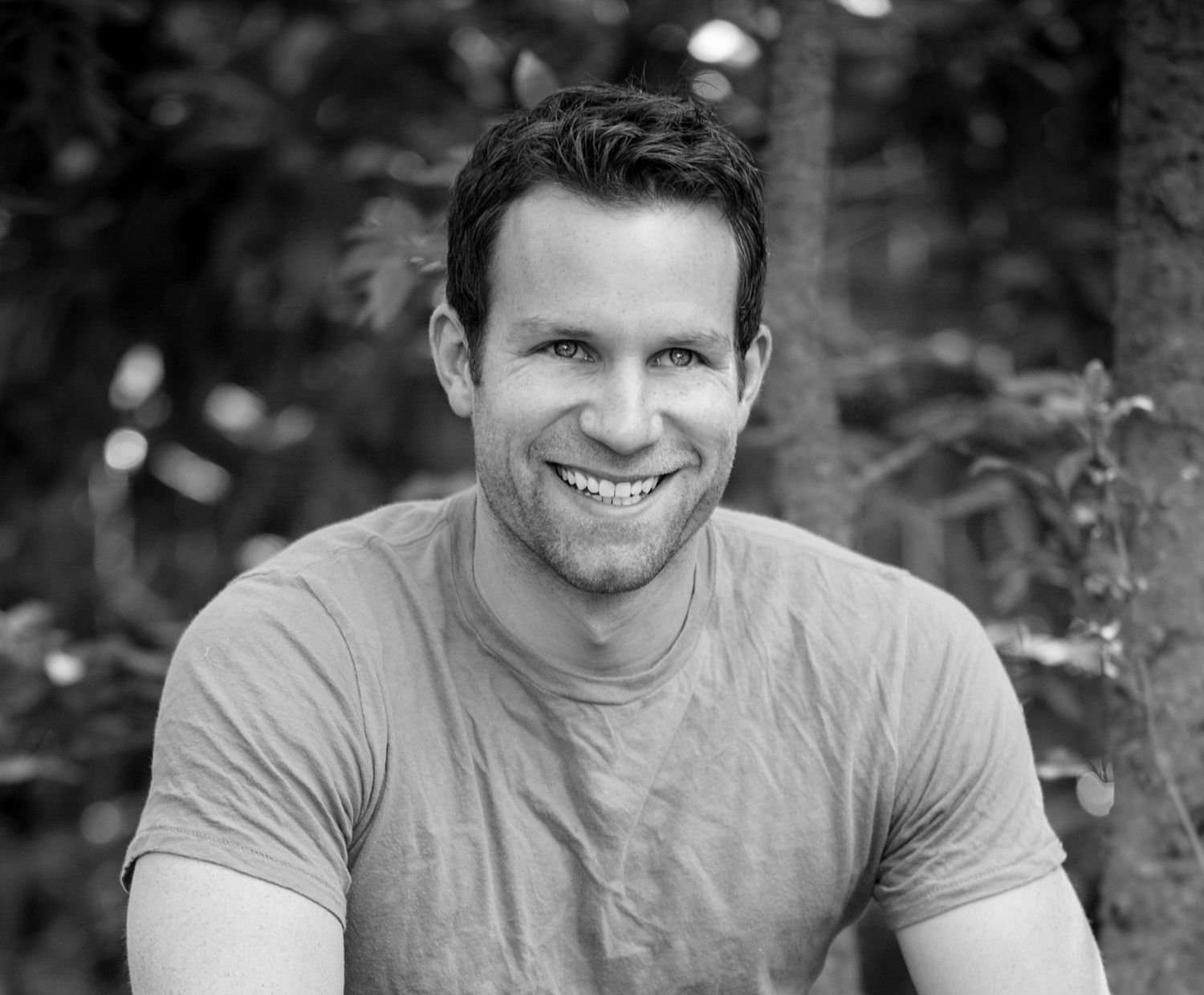
 Abel James
Hey folks, this is Abel James, and thanks so much for joining us on the show. A modern mystery haunts professional sports. Why are today's star athletes who are bigger, stronger, and faster than ever getting injured at such catastrophic rates? The glory days when all stars like Cal Ripken Jr. Played 2,632
consecutive games seem far behind us. These days promising careers are tragically cut short by horrific injuries televised to the masses. Some managers even see pro athletes as expendable as surgeons circle broken bodies like buzzards. The strange truth is this though, sometimes getting stronger actually makes us worse at sports. Athleticism
is much more than just an arms race of strength and speed. It's about physical intelligence, skill development, and building fluency in the language of movement. We're here today with Henry Abbott, award winning journalist and author of the new book Ballistic, the new science of injury free athletic performance. From jaw dropping moments on the NBA court to the hidden science and technology in cutting edge elite training labs,
Henry unpacks the secrets behind how to build and maintain athletic mastery for life. If you're looking for extra motivation to get out of your chair, this episode might just be it. Before we get there, here's a quick plug for a new project that's many years in the making. We're super psyched about this. Very soon, our newsletter subscribers are going to get a very special invitation. Alison and I have been building a brand new gamified members only private community completely outside
of social media. This is a long time coming. The, tech really wasn't there for many years, and it's just catching up now. So we're really excited about building platform and this new community for you folks. The Internet doesn't have quite the vibe that it used to, especially social media. So we're building our own space where health nuts like us can level up together. And we're planning challenges that you can join from anywhere,
live streams, as well as live events and in person meetups in Austin, Texas and beyond. We're also rebuilding our entire course library, ebook library, recipe library, so much more to come. So, I hope that you all can keep in touch. The best way to do so is to sign up for my newsletter at Abel James dot com. That's abeljames.com. But the entire new course library, our Club Wild platform, and much more is going to live at wildrx.com.
That should be just about why for you now. So once more, that's wildrx.com. But as always, the best way to keep in touch is to follow my newsletter and reply to my emails too. I read every single one, so I look forward to keeping in touch. Alright. In this episode, you're about to discover how cutting edge research is reshaping the way athletes train and prevent injuries,
surprisingly sneaky causes for common injuries and how to prevent them, what professors and elite athletes know about recovering from injury that you don't, how to incorporate more play and joyful movement into your fitness routine, and much, much more. Let's go hang out with Henry. Welcome back, folks. Today, we're here with Henry Abbott, founder of True Hoop, award winning journalist, and author of Ballistic,
the new science of injury free athletic performance. Thanks so much for being here, Henry. It's a treat. Thanks for having me. Absolutely. So you talk about this, that athletes are no doubt getting bigger, stronger, faster, and all the things, but they're also getting injured a lot more. And it's so tragic when you see these upstart young athletes who are supposed to be the next Michael Jordan, Kobe Bryant, whoever, and then they just have this horrific injury
for everyone to see, you know, like during a big game like Halliburton or something like that. Talk about why that's happening and also some of the exciting things that are happening to prevent that in the future with technology.
Sure, sure. So I'm super lucky. I, you know, I was a group of basketball fan and since basically adulthood, I've been covering basketball It's this beautiful game. The only people, like the guy in the book is about Marcus Eliot calls it big man ballet, right? It really is people doing just,
you know, it's kind of freak athletes doing their freakiest things and it's often breathtaking, right? I've sat in the best seats and it's just, it really is a wow thing. It's like seeing a musical performance or Yo Yo Ma or something, right? These students are just incredible.
But there was just this like sad river of just like right outside the stadium, they're just like, just the broken bodies are just kind of wheeled off, you know? And it's practically everyone. There's hardly a star NBA player who doesn't have a catastrophic injury at some point. And
we all have some ability to shrug at it. Like we're all used to maybe like car accidents, right? Oh, what a bummer, right? But at some point it's like, that's just too many car accidents, right? Like when it gets every star and it's just weighed heavy on me. Like when there'd be another draft every year and I've been covering this thing forever and you see them go up on the stage and shake the commissioner's hand and part of me is like, what are they getting into? Are they going be okay? Like the mom is right over there. Is she going to be happy with how this goes? It might be terrible.
And there are tons and tons and tons of incredible trainers and physical therapists and just smart people, many of whom have been on the show who know a lot about how to care and prepare these bodies better, but it didn't seem like anybody had magic. It didn't seem like anybody really was unlocking a lower injury rate future. Even as the NBA gets more and more explosive, like measurably faster, bigger, stronger, every year they weigh a little more, they're a little taller.
And now we can measure a thing with force plates, like how hard are they pushing on the ground or how explosively are they cutting left and right? This is not Michael Jordan's league. Michael Jordan soared over men who smoked. And he thought weightlifting was suspicious. Right. Right? Like,
and I'm not, yeah, they didn't all smoke and no, and some of them lifted weights, like, no, there's nobody anymore. Players nowadays basically don't have a glass of wine in season. They are so finely tuned and amped up. And like, you just got to respect that they're doing this at an incredible level and they're getting hurt more. So the answer that I believe is true is that seventy plus percent of non contact injuries come from landing.
So you're in the air with your pretty big body in the NBA case, or any of us running, I know if you go for a jog, you're airborne.
The book is called Ballistic, which basically means airborne, right? So in these moments, you're airborne, and then you're going to come down to planet earth. And it's kind of like the egg drop experiment in physics class where you're that little egg of your torso is going to free fall. And do you have a good contraption to land? Like, that's the question. And that's what the whole book is about this lab in Santa Barbara, where they've been putting
little devices, little measuring devices all over these elite athletes for ten years. They have more than 1,200 NBA players have been assessed now, even though there are only about three fifty players in the NBA. So let's, you know, several NBA's worth of players. And, basically, they're looking for what are the trends. People who end up injured, rewind the tape. How do they move? What are the trends in that? Are there any things we can learn from all that for us?
Abel JamesYeah. And it it turns out that pretty much everyone's injured all the time. And also, some of the results that have been sought in the gym, you you bring up, like, Kevin Durant's body versus LeBron James, and they're trying to train him up to get bigger and stronger. But that sort of, like, transformation doesn't always mean that you're moving better or being a more effective player who can win more games either. Like, we've kinda lost sight of what exactly we should be doing here.
Yeah. Athleticism is not what we thought it was. Right? I'm mad the thing that makes me mad out of all this like, I finished writing the book and I've been living my life and kind of reflecting on regular life compared to what we learned in the book. Right? And the thing that makes me mad is that we think the body's dumb.
Like in my school, I want to say this with a lot of love and respect, but like our gym teachers were not as smart as our history and literature and math teachers. Right? Like it was seen as a job for like a simple person. It's a simpler job, right? Run around to this, but no, these are masterful, complicated instruments. It's 600 muscles that work symphonically together. Right? So even when people ask questions like what's the workout everyone should do, it's like, why would it be that? Like, you wouldn't go to a conductor and say, what's one thing every orchestra should do? It's like, it's fucking complicated.
Like these are artists. You're not going to be Kyrie Irving from one tweak. And what you need isn't what I need, right? So if you're just going to kind of say open mindedly, what is athleticism?
Our naked eye assessment is like big muscles, running fast, jumping high. Like, okay, that's worth something. But I'm here to tell you in the NBA, the highest jumper in the combine every year usually doesn't even make the league. Like, it's just not that useful. Right? Because think about it, you have to like be off the ground forever during that entire time. The defense knows where you're going. Right. And maybe they're bigger, maybe they're strong, like maybe they get there. Right. So the bigger, stronger, faster
is worth something. But physical intelligence, meaning when you jump super high, when you land, can you land on either foot? And when you land, can you then explode in any direction? And can you land with balance and poise? And can you land while you're reading what the defense is doing and take what they're giving you? That
is more Yo Yo Ma kind of stuff. And they told us our bodies were dumb. So we don't think of it that way. But Kyrie Irving thought about it that way and he's been working on that forever. Honestly, one of the most basic examples of this is, are you right or left handed? And we all just accept that, right? For me, this one, my left one is just
kind of stupid, right? It's just a stupid It just doesn't do very well. And I played basketball growing up and that was just one of my limitations. Like, if I beat you left, I was a little bit out of I'd had very few tools to make you pay for that. Right? But basketball players are like the only people I know. I'm sure other sports too, but they would literally all through middle school, your coach would be like, after practice, you have to stay and work on your left hand. You're not ready to take the court. So the people who actually practiced
on having a good left hand, guess what? They totally got good left hands. All of them. It's totally plastic. You can totally It's in your brain and you can see it on an fMRI. You can improve that.
And there are actually a tremendous number of players now who are cross dominant, they call it. So like, you know, there are players who will sign an autograph with their left hand, but shoot a free throw with their right hand. Like, they're just like, it's very hard. And there some players who their coaches argue over like, should that guy be shooting threes with this hand or that hand? Because they've practiced so much that they've made a total level playing field. And so that's one little basic easy to think of example. But there are so many others with your hips and your ankles and your knees and your torso and rotation and breaking. There are all these things that are part of athleticism that were only emerging because these people are studying it with a really fine tooth comb for the first time. Yeah. And well, if you look at the best players too, or at least the ones who scored the most or truly unique in their league at the time, they didn't move like robots in, like, these
Abel Jamesstrict, you know, straight line. It was weird. It's wobbly. It's all over the place. And a lot of that comes from the hips, as you mentioned in the book. And I have been guilty of this for a long time, especially being a distance runner. Like, the tension in my hips and the lack of mobility is something that I work on, but not enough. But the magic, as you put it in a lot of these, athletes really
comes from how they use their hips in unpredictable ways to get in these positions that are ahead of another player who just doesn't get it. They don't move that way.
Yeah. So the Harvard MD, Marcus Elliott, who's at the core of this project, is way smarter than me, better than me at backgammon, better than me at cycling. Like, he's read more books. He's just like a higher achieved guy. But a couple times in spending a lot of time together, I said things that caught on with him. And he's very nice, but he's like, it kind of blows his mind that like,
my friend Henry, he's new here. I'm a journalist. I said he'd you know, I've read like more poems than him maybe. Like, I you know, I've met more deadlines, I would guess. But one thing I said to him as I was trying to kind of say back to him what I was learning to make sure I was getting it right, was that the hips are kind of the brain of the body.
And at first he fought me on it a little bit, but now he uses it when he gives public talks. And he credited it as nice, but he's like, it is like there, You know, the number of variables of what the hip can do is just sick, right? It's a ball in a socket. And then so the top part of your leg can move in almost like an upside down ice cream cone shape. So it can be anywhere in there. And then in those positions, it can rotate, right? And it can have a differing degree of musculature
kind of making it bouncy or stable, etcetera, in that position. And so kind of the number of, if you were to make us out of Lego, like you would need, I actually asked Marcus, I was like, What if we made it out of Lego? What would the pieces be? And he was like, We're going be here all day, bro. You can't make it out of Lego. All these soft tissues that we still talk about. Like I graduated from college and never heard gluten mead till SOAS.
These things are massively important. It's core to how we move muscles that we're just like stumbling into in 2025. Like, ah, like they were super important for millennia,
for millions of years, they've been super important, definitional to us as humans. They're the reason we can chase down gazelles and have big protein sources to develop big brains to solve problems. And we don't use them, understand them, treat them right. And if you just start to get into that, like your hips need to, in a nutshell, they need to be mobile, which everyone who does yoga knows,
and they need to be stable, which everyone who lifts weights knows. So mostly as we work out, do the one we're good at. And it's not enough. You need your hips to be mobile and stable. And even for you, like I'm a distance runner too, but I think my story is quite typical, which is I had tight hips, which didn't hurt me running. Right. I was pretty fast, but I did end up with pretty significant lower back problems and that's a 100% related. So like, can, you can cheat it for a while, but the reason you want the mobile and stable is so you can keep going
at a high level forever.
Abel JamesAnd that's the thing is like everyone's burning through their hips by the time they're in their sixties or seventies, especially athletic people. So what what's happening and what can we do to make sure that that doesn't keep happening?
Yeah. So I think the first one is there's a kind of basic at home assessment in the book where you can assess if you're lacking mobility or stability. And it's basically a challenging side plank with some specs. Well, you know, so it's a tight side plank that everybody hates to do with the leg elevated.
And in this version, I'm not totally sure why, but all 10 toes pointed forward. So your body's a big X. If you can just lock that out and hold it solid for thirty seconds, then your hips are stable enough.
And then the standing figure four, do you think everybody knows what that is? Is that like, I've been living in a weird world where everybody knows that, but I think runners know what that is and maybe non runners don't. Yeah. Okay. So you're going to stand on, let's say your left leg cross your right ankle above your left knee. That's the figure four part. And then you're going to sit
and everybody can get, like some people can get like my dad could get like one inch down. My wife can get so their hips are below her knees, right? If you can really get to 90 degrees at your knee and just sit there, then you're mobile enough. And it's not common that someone listening to this would be able to do one of those. It's very uncommon they'd able to do both,
even people who work out a lot. And so if you can't do one or you can't do both, that's what you're working on. And it probably means, I'm going just go out on a limb and guess that a huge percentage of your listeners are strong and have listed weights, now they got to go.
Yoga is not the top of the mountain for hip mobility, but it's a shorthand for the kind of stuff you got to do. You're going to be doing pigeon. You're going to do there's a bunch of different things, hip mobility. And what's tightened your hips won't be the same as what's tightened my hips. So you're going to have to go on a little journey here with lacrosse balls and Kelly Starrett's book and on and on, right?
But you can do this. If you know what you're working on, you can start to get in the game, right? And what you're not going to do is then run every step with like, now I'm using my added hip mobility. Like, no, you're going to add a practice of getting your hips
more stable or more mobile. And then you're just going to run. And they say it's like hanging the keys in the ignition of a new car in the driveway. Like your body's going to drive it, Right? Like it might not drive at week one, but like, but you can't consciously manage these processes because it's, you know, hitting the ground happens too fast. And if you get really focused on like, now I'm using my hips in a cool way, you're gonna do something weird with your ankle or you're gonna be asymmetrical or you're gonna screw something else up. So when you're running, just go run when you're playing basketball to go basketball, when you're kite surfing, whatever you do, they would say p three just fully be all in, totally present, having fun, have a blast. And then there's a different time when you're retreating to the gym and you're preparing your body by getting these better.
Abel JamesIt's interesting too how it's almost like it's like an award that people have having burned out knees or just like totally trashed backs, and they like talking about it. But nobody talks about at least not in my circles. No one's talking about the the pelvic floor, the root chakra. But basically, it's not just something that's kind of uncomfortable to talk about and needs work for a lot of us probably, but it's also our center of balance and the center of our athleticism.
It's not just something that, like, is another thing to work on. It's kind of the thing to work on. Right?
Yeah. It's, I mean, it's such a crazy setup and no other animal has this, right? Like we're like, there's a part of the book about it was kind like, imagine your torso is like a floor lamp. Right? And we are, we're these upright beings, which have these advantages we can see and importantly, our lungs are disconnected from our legs, right? When a cheetah runs,
its whole body compresses and it can only run fast for a short amount of time because it has to exhale with every compression of its body. We can run all day because our lungs can go at their own rates separate from our legs. So this is a genius. But we have the we're topple risks, right? Like we can bite it. You know, a cheetah is not going to bite it like we can. And what would be the base of the lamp, if you were, which should be a big heavy thing, is the top of our legs, right? Like it's
pretty crazy. It really is. I mean, physics class, this is a really complicated challenge, right? And I think the reason we don't talk about it is because we find it scary and confusing, right? Like there's nobody who can talk like a boss about like, Oh, well that's your psoas. Like, we're all like, I think I might be the psoas. Right? Like, it just seems kind of like a mystery, but I went through, and so we end up, you know,
the kind of way we can be authoritative about it is to just cut them out, right? Like we take this like genius little Sistine Chapel of a human creation and we just throw them in the garbage can and put a robot one in, right? Not robot really, but Yeah, yeah. And that's common and I think there's some people who really need that, but what was really weirding me out was I was in physical therapy for my back because I had tight hips and ran a bunch.
And my mother-in-law was in physical therapy because she got new hips. There's a great physical therapist in town, we love Jen. And so we synced up our appointments with Jen together and we'd be on tables thanks to each other and we'd get coffee after. It was like a cute little mother-in-law son date, right? And she was doing the stuff that I think everybody does, clamshells, etcetera, right? A lot of it is just hip range of motion, hip strength.
And I was working on this book at the time. And then I flew out to Santa Barbara and at that time it was NBA pre draft prep and it was the class that Holmgren and Jalen Williams are in. And those two guys who are both megastars of the Thunder now were before the draft, they were both at training at P3. And Chet in particular was doing like a lot of the same stuff my mother-in-law was doing. He was doing amped
up versions of these things and he was adding a lot of explosive components, etcetera. But I was like, Well, this is sure interesting. And so then I talked to the head of biomechanics there, who's this genius guy, Eric. And I was like, Eric, is this like Chet's doing this so that he can guard people on the perimeter or in the NBA and move laterally exclusively to triple. Is he also reducing his likelihood of one day needing a replacement hip?
And Eric got all excited. He's like, I think so. I think so. We haven't studied that. Eric's very dad driven, but then this started this whole, I was there for a week maybe, and I was just asking everybody, I'm like, well, why, like, could my mother-in-law have done this stuff like twenty years before and then never needed the placement? And they're like, you know, like, well, nobody tries that.
You know, like, like we haven't tried that. And I'm like, why haven't we tried that? Like, well, it's work. It's hard work. Like when you, like literally when you get hip replacement, they knock you out, you lie down, you don't do anything. Then you go work after, but like, well, what if you worked ten years before, twenty years before, maybe you would have the hip range of motion and stability and mobility I'm talking about, and you would just keep working.
Abel JamesRight. And it is baked into some other cultures just by the way that they move, and it used to be built into kind of all humans. But now we might have to kind of artificially insert it through these, like, things that are now in our culture, like yoga or Tai Chi is a little bit acceptable in the West. Right? And that's that's something that I've been doing now for many years, but I didn't I was at the beginning, I was just kind going through the motions. I'm like, I don't get it. What
am I doing? I understand that I'm like bending over and like moving around and stuff, but I like I don't really feel anything. I don't know what's happening here. And I had a similar experience where I was in a car accident rear ended like six months ago. And so I had to go through physical therapy for my spine and some herniations and that whole thing. But
almost fifteen years ago, I had also another surgery and some other things, I had to do some physical therapy and I was getting back into marathon running. And I found that the physical therapy exercises for my marathon running and being, you know, like having my vestibular system damaged and needing to rehab it and work on my balance again were the same freaking exercises I was doing before. You know, the bird dogs, the yoga positions, working on the core nonstop,
these very simple movements. But it made me think that, you know, the people who are doing Tai Chi their entire lives who just never stop,
never experience really the time where they can't touch their toes or go into a correct hip hinge. Right? Like, it's always there because they're always getting into those positions. And it used to be that that humans also had to do that by virtue of just living and carrying water and that whole thing. It's only now that we sit at desks all day that we're destroying our hips. And another really important point that you bring up is that it's not just overuse that causes these problems. It's actually underuse that can cause the same problems
and make it so you need a joint replacement, prematurely. So maybe you can can talk about that next. Yeah. So
you're going to throw your leg out there at some point, right? You're going to trip on the stairs. You're going to be chasing your dog. You're going to slip on the ice and you're to throw your leg out and that's when you will or won't get injured. Right. And so how does your leg go out there? That's a neurological question. What habit do you have of Maybe I'm going to steal the topic a little bit. Tracked 400 NBA players over two years and basically asked the question,
the people who end up with catastrophic knee injuries, how do they move? And in this 400 person cohort, it's not the biggest study ever, but it's bigger than most of these kinds of studies.
One hundred percent of the players who ended up with catastrophic injuries had the same habit of landing on the outside of their foot and then having the force roll to the inside. So your shin is going like a windshield wiper. And if it goes more than 25 degrees, like a lot of people go 15 degrees and it's fine. If it goes more than 25 degrees,
injury risk off the charts. So this is the question for us as we are slipping on the ice, how do you tend to put your foot out there? And it's kind of something you need to practice. And so this is where they're very scientifically driven at P3 in Santa Barbara, but we all can't help but notice
non scientific things too, right? And one of the big observations is kids who just grow up wild and free, unsupervised in the woods, throwing rocks, climbing trees, all this stuff, They just have a huge movement vocabulary
and they know how to throw their leg out there. They've done it. They've fallen a bunch of times. Right. And they've stumbled or I don't know if like, you know, the thing when you're trail running and you're getting a pretty good pace and you suddenly catch a toe and you like that next foot's going to go out there and save your life or not. Like, how does It's it Yeah, it's humbling. It's humbling. And you're like, really hope today doesn't suck. I don't want to go to urgent care.
But this is practice, right? You're putting your foot out there. And so yes, I think if we all grew up in the woods, we would not need to practice this because we practice it every day. Just like, you know, like there's some bunnies in my backyard, there's in the spring.
They just, they're doing like Kung Fu the whole time. They're just like, there's no predator up there. Just like, like doing like awesome moves, you know? And, all of nature does this, right. And they're just unbelievable athletes. So that would be how we would naturally get this. We don't, you know, as you say, we sit, we sit in school as you're running form, kids tend to run with perfect running form until first grade, right? Like now we teach them to sit all day and then they can't run-in
with a good form. So now you got to dive in and figure out what's wrong with you. We're kind of playing God a little bit, right? Where instead of just moving naturally, you have to move with input from experts, right? And so I think that's what this book is really about. It's like these are the people who've taken Tons of people have taken
mono factors and studied them. There's a lot of research of if your hip range of motion is X, the outcome is Y. This is a different model where there are sensors all over your body and you're in the midst of the explosive movements and these things happen symphonically. So for instance, does being overweight increase your risk of knee injury? And it's a very difficult question to answer. There are studies showing both sides. What they're finding at P3 is that if you land with
good form, which we can talk about in more detail, but let's just put that aside for now. If you land with good form, you can be three hundred pounds and you can land a million times and it's fine. But if your form's a little off, then the physics of it, the Newton's pushing on the tissues that can't handle it are more and then overweight rushes very high up the list to one of the top factors of respector. So academic research on movement does not generally consider interplay
of two factors at once. It's all about trying to isolate one factor. But the magic's in the two factors, right? So you don't know the answer until you find one. And I think we're going to find similar stuff with everything, right? So there's all these cool, you know, like there's almost, I was mad actually, I had devastating back pain. And only when I went there and got assessed, I learned that I landed with 60% of the force of landing on one foot.
And as soon as you saw that measurement, like I played back on my head, like my MRI, my x-ray and all the kind of like, that's obviously what happened. Like the force of landing pushed my lower spine, like damaged it and moved it. I'm like, why is this the first place where we You could check that with two scales, like two bathroom scales. Like why did nobody even think to assess that? Right?
Anyway, Like, there's a million factors like that that are super potent that we just haven't put in the mix.
Abel JamesAnd the forces involved are also incredible, and and the body is is wonderfully resilient, but we kind of break down and compensate over time. And so I think thinking about it like a loss of vocabulary, I think could be very interesting because also, yeah, let's talk about the cortical representation of movement in the brain. It's as
far as your brain is concerned, movement is a language and you need to kind of develop fluency and you can lose that fluency. You can lose that vocabulary over time through atrophy and that sort of thing. So it sounds like when you have these NBA players who are just like launching up in the air and then crashing back down with the force of, I think you said, like, the force is three times stronger than it needs to be to snap a human spine in half.
Gross. Gross. Right? Yeah. Who wants to think about that? Yeah. Eventually,
Abel Jamessomething's bound to pop, go the wrong way, especially when you're coming down at all these strange angles and you haven't, like, fully recovered from those injuries. Right? Because these guys, you would think that they would be in perfect shape and all tuned up, but in a lot of cases, they're they're kind of Frankensteins. Right? And they're dealing with all sorts of compensatory patterns that are maladaptive, but they're just struggling through through sheer, you know, experience,
skill, but they're kind of hobbling along. Like you mentioned Phil Jackson in your book. Maybe you can talk about the state of a lot of these different players and also just talk about what you can do in order to intervene to improve because we are plastic. It is like a language that you can relearn again. Right? So like, how do we get
broken? What happens? And then how do we get out of that? This is the great news. You're it's plastic is the word. These things can change just as you can learn French. I know it's hard, but you can't And you can learn to land differently. So yeah, I think it was the twenty ten NBA championships. Phil Jackson won his tenth, which was a record in Orlando. He and his family printed up these X hats. His
adult kids were there and everyone was very excited and he's covered in champagne. And eventually the party kind of wraps up and it's time to go home. And it just by dumb luck, I turned into this very, very, very long stadium hallway kind of under the stands just behind Phil Jackson and his huge entourage of mostly his children.
So we walked at Phil's pace, everybody walked to Phil's pace. And you'd seen him on TV and he's sitting in that extra big chair and you looked like, he's a dignified guy, right? But once it was time to walk, and I later looked it up, he had, I forget how many fused vertebrae and how many replaced this, that, you know, stuff in his heart, stuff in his knees, stuff in his ankles, like he had so many
things broken. And he's not that old, right? At that point, he wasn't that old. And he could barely walk. It was hard. It was very hard to look like I wasn't being impatient because I couldn't walk at a human pace without just running into them. I just have to kind of like, it was kind of like this embarrassing. That's every day for Phil. Right? And most retired NBA players from that era, they just pushed themselves so hard
and in many cases had very short careers. Mean, Larry Bird, I forget, he retired from the NBA at like, I want to say 33. They just didn't perform. They didn't actually deal with the rigors of the game very well. They just threw their bodies into it, got hit by the car of the NBA and then retreated, right? So it's not the best model and we didn't know very much then about what we know now. And so now there's this great Oliver Sacks is this kind of revered
neurologist, I think. And he has this great quote about how language is this little thing sitting on top of the ocean of movement in the brain. So there's all of these systems that manage movement and language came along much later and just copied the model. It's just a little thing sitting on top. So meanwhile, every university is full of basically language study, manipulating language. You write essays, you give talks, you make PowerPoints.
I'm looking at me, I'm like, old. Is that what we even do in college?
Abel JamesAI does it all for us now. We're probably
making videos. Anyway, but we don't You just sit there for all of that, right? And we assume the moving part is dumb and it's super not. And can just as you could be learning Shakespeare of language, you could learn Shakespeare of movement, right? And so this is what's happening. Mean, when I was talking about Chet Holmgren
and Jaylen Williams there, like those guys are there for seven weeks before the NBA draft. And in almost every case they come in, they get a full assessment and they find, oh man, you have, like, we're really worried about your hip range of motion on the right side. Or we're really worried about, like these are, in some cases, they're real red flags, even at those young ages,
but they stay for seven weeks and they go to language school, right? And then they go to the full immersion language school, just playing basketball with their new tools. And in many, many cases, they just duck it. They just get out of the high risk zone because they've improved. And there's a story I love where an unnamed player was he was the player of the year in college and came into P3 and landed on the force plates in a way that was really unusual,
where his right foot, I think it was his right foot would land normally and his left foot, the heel would never come down. He would land just on the ball of his foot and then just stay there and then go into the next jump. And they just never see that. You're landing with so much force when you jump as high as you can. This is just unusual. And
he's just about to start his NBA career. The bosses of his team are sitting in the room. They're on the couches in the other end of the room. And they're like, Hey man, what's going on? This looks really
super risky for the opposite side knee. So when you don't put your heel down on this side, you're landing with much less force on that side, which just stresses the system up. In his system, the stress point was going to be the knee. And he was like, What are you guys talking about? Like, he's like, I've had secret knee pain for weeks, but since my NBA career is about to start,
I can't be complaining about this, right? I played every game in college. No one's going believe me that I just hurt. So he got a secret MRI, which found his knee was fine, which it would be. There's nothing wrong with it. It's just like, it's just in the line of fire for a future problem, right? And so, but they found he was like believing them because they were identifying this thing that had been invisible.
He'd been playing on national TV all year. No one knew this. Right? And they're like, why are you not putting that heel down? And so they just had to train him basically to have confidence in his Oh, the reason he hadn't been heeled down was because he'd had fasciitis. I don't know if you ever had that, but that's totally painful, right? And so he played through fasciitis, but he modified how he landed so he wouldn't hurt his foot. That was all better, but his brain had this hangover
of, Man, your foot's going to hurt if you land all the way hard on there. And so they took a few weeks. He was willing to share the story with the team and with the team and with the people at P3, just basically coached him on like, yeah, that's a good landing. Oh, good job of getting your heel down. And after a while, he was landing fine and he never hurt that right knee.
Abel JamesInteresting. Yeah, I think that's such a great example of how you can prevent these catastrophic injuries from happening because they're so pernicious. But, like, if you're looking closely, you can see them creeping up. And if we're honest and we check-in with ourselves and really sense what's going on, like, you can nip those things in the bud, but the body is so good at compensating until it's not.
And it's better in them. Right? So like they they found that these super elite athletes, they're they're like they're movement savants is the phrase. So basically, for him, you know, he jumped really well when he had never had an injury. And then he got this injury and he still jumped really well. But now he did it through a different technique that was not sustainable.
So he looked great. He can keep solving the problems. He can keep scoring on you. He can keep doing much stuff, but it's just getting more and more painful. And I think, I mean, I'm 52. Think I'm actually 51. That's how old I am. I'm unclear on my age. I'm pretty sure I'm 51. But yeah, if I go out there and start a lot of workouts, I'm like, Oh, interesting discovery today. This is acting up today. It's tempting to then just dance
around it and start moving in really weird ways. Those conversations
Abel Jamesit never works out well. And that's how you really get hurt is is really the the compensations that stack over time. Or you just don't swing a baseball bat for twenty years or whatever, and you expect it to to swing with the same force in exactly the same way you did when you were, you know, a teenager. And that also gets gets ugly.
Yeah. I used to go to this CrossFit gym and, there was a guy there who came in just super hobbled and everyone's like, what happened? And he was maybe 41 or something. And he's like, oh, a charity softball game. He's like, everybody got hurt.
Like, like there's all these dudes who just hadn't played. And like you said, twenty years or whatever. And they're just, you know, the balls are flying them too fast. And you know, like one guy got it, one guy had a real, I forget what it was, but he like had a serious injury just hopping over a little fence. You know? Like Yeah. Yeah. I mean, that's and that's how it happens too. After the car accident, I had been, you know, doing core exercises for, like, three months or whatever. I had started doing kettlebell
Abel Jameslight swings again a little bit, and then I was just at the sink and I went to grab a tissue, and my whole back went up just like twisting to grab a tissue, lifting nothing, literally. And I was so frustrated. It felt like such an old man all of a sudden. That happens to can't be using those tissues, man. Those are dangerous. Yeah. That's You gotta watch out for that.
Well, things get segmented. This is a thing we talked about a lot. I don't even remember who made the book, but, like, like, let's say you've been through this car accident and then you go back to maybe you've done single leg RDLs your whole life. Don't know. But if you do it after the car accident, I haven't had a car accident, I've had my own issues. Now
you're like, Okay, now I will shift the weight into my left foot and now I will activate my left glute. And now I will begin to pitch forward. And that's not how animals move. That's not what you've been practicing. This is a new thing you've invented, which is all It's not good movement. This is like going to Spain and getting out your phrase book and being like, whatever. That's not Spanish, right? Your brain is scared.
Actually there's an expert I interviewed for the book named Rachel Zofness, I love her. She's so smart, she's a pain expert. And she's like, Pain is your brain's opinion that your body's in danger. And so when you have that, mean, your brain, which controls everything, it has that opinion,
you're not free to go kick ass, right? And it's dangerous to move that way. You have to do enough. You want your preparation, your physical therapy, your training to get you in the mindset of like, Oh, I got this. The music's playing, you got a little rhythm, you're relaxed. You need to relax. It's a huge part of the book. You have to relax. Your body's mostly moving with spring. If you don't let the springs, like pulling the rubber band back, right? If you're all tight, then you
you shoot just a rubber band, you pull it back not far enough and then it just doesn't go very far. Like the way that we run and jump is mostly elasticity. You need to like, boom, like get all that landing and then boom, get all that jump. You know, it's kind of a badass kind of audacious thing to do.
Abel JamesAnd I'd love that that way of explaining pain too, and the loss of mobility, because it is something where your brain doesn't actually lose the mobility the way that we might think it does. Like, it doesn't necessarily
hurt, and we avoid that pain and then lose it. It's it's like we have some sort of assault or injury or whatever it is against our bodies that we never fully recover from because our nervous system needs to recover in addition to like the inflammation or the injury that's in there, like our brain, our nervous system needs to learn that it's once again safe to be in that position
without something blowing out. Because last time it was in that position, it got injured. Right. And so that's something that I have really needed to learn, especially after the accident, because all of the things that had happened to me before that were basically like my fault through moving wrong or running into something. Right? So this was just like a weird, wonky angle.
Like, so now I actually do need to learn how to move with symmetry again, and you have to work against yourself a little bit. It feels weird to be in positions that were unsafe to your nervous system. It's almost like a the opposite of a phantom limb syndrome type thing where it's like it's not real, So you need to overcome this and then it feels okay again. And then you can relax, right? Then you can be fast again.
Yeah. I haven't read these studies, but I understand there are studies that basically if they like pump you full of propofol or whatever, you know, if you're out with a general anesthetic, like we're all gymnast mobile. You can really move your shoulders and your hips and you can rotate and all this stuff, or you can move your body. So then you sober up and you're conscious again and now you you and I have the same tight hips we've had forever. What's that about? It's like, it's your brain.
Your hip can do it. And so I remember there's a guy when I got assessed, I've been assessed twice at P3 and then I trained at this place they have called The Lab, which is sort of like their sister business for regular people instead of for NBA players and the like. And so that is run by this guy, Alex. Alex is sort of like a magical figure to me. He a little bit of the vibe of a surfer. He actually is a surfer, but no, but his
giant brain is like worrying and just knowing things that, I I've been to a lot of doctors, like he knows stuff that you want to know more than anyone. And at one point after my big back issue, was working through whatever, some movement that I'd done for twenty years, but now had a hard time doing. And he's watching and he would do little tweaks like just pull me back a little bit.
That like let's say I was pitched forward on one leg and that single leg Ardial Romania that left us talking about earlier, I hadn't noticed, but I would cheat like two or three inches forward, which kept my femur from being in the painful part of my hip. And I've been doing this in front of physical therapists and trainers and no one has said anything, but Alex is just like, What if we go here? Pulls me back and I'm like,
you know, like, got you. Yep. This is where I have to have courage. Right? It takes a little bit of like, like part of my brain, I think was like, oh, we'll just never do that again. We're just not going there. We're not going to put the head of the femur there. That's not cool. And then you're like, no. He's like, I'd been through the assessment. Experts have looked at it and been like, No, you're okay to do this. And then we keep going through different movements,
explosive stuff, all kinds of stuff. And at one point he's like, How do you think Imagine how you would move if you weren't scared to move. And I'm like, that still He said that to me, don't know, like two years ago. It still hangs in every workout I do. Like how would you move if you weren't scared to move? Solid
Abel Jamespoint, Alex. Speaking to that, I mean, you're writing all about ballistics and dealing with, a significant back injury. When you're talking about, like, herniations, the spine, the back, like, how do you get back into loading it and and coming down at these extreme forces when you're dealing with something that's, like, still needing to heal?
Yeah, I take a lot of solace from those studies that basically show if you just put everyone in MRI machine, everyone's got herniation, everyone's got diagnosable back then you have loss of disc height, all these different things, right? I got a pretty good collection of those. But nevertheless, like tons of people with terrible MRIs can move just fine because the body's got a lot of other tools to make that work, right?
And effectively for me, for the kind of, I am what they call a blender. So that means that when I land, my ankles flex, my knees flex and my hips tend not to flex. And so this is one of their first big discoveries at P3 was that people who land like that in the NBA are three hundred percent more likely to have lower back pain. And then they did it, they took that data set and just left it over here and then got a whole new bunch of players from the next year and
tested it again, exactly the same ratio. It's like 300% more likely. Now they do it in any population, it's the same. So this is this major cause of lower back pain that's not about core stability, it's not about strength. These players are all super strong in the core. It's just about a movement habit where you don't absorb force in your hips when you land. So for me, I'm like, I just need to not land that way
and my back won't take force of landing, right? So this is what I've been working on is just like, let's put that force in my glutes, And so I do a lot of stuff that is just, I've done so many dumbbell squats and so many pogos and so many I've done so many things to just
Abel Jamesbreathe life into my glutes. Right? Like, we're just gonna we're gonna get those guys involved where they used to just take a take the day off. I would imagine having someone else there to kind of like poke you in the right muscle to make sure that it's firing is something that's like not really negotiable for this process. Right?
For that? Yeah. Through the whole chain. Right. Also like, how do we know that is my problem? How do we even know that's what I'm working on? Right. They're kind of, There are all these different datasets. Marcus Elliott started studying biochemistry. He's like, Maybe in biochemistry,
he tore his ACL in high school, he wanted no one else to ever have to go through the same crap he went through. And so he undergrad majored in biochemistry, cause maybe that's where the signal would be upstream of the crisis. It kind of wasn't. Biochemistry doesn't really have the Then he went to Harvard Medical School and studied everything that you study there, from nutrition to delivering babies, to psychology,
to infectious diseases, all this stuff. What in all of that would be upstream of an ACL tear? Kind of nothing. And then he would go out and he had a practice where he used basically advanced training and he'd read every paper on every kind of athletic
injury or training. And he basically used his naked eye to say, Hey, I think that you're a little hunched forward or I think you're And had good results with that. But then at some point they got force plates in the ground and they could see kind of interesting things like a great athlete came and jumped on the force plate and then pushed off. There would be like a ski jump shape graph of how hard they force,
the force they had on the force plate, right? So they would start with a light force and it would build a build and they'd fly. Whereas if like a regular athlete came, it would be a straight line. They would be like just pushing,
right? And they're like, what's the what's that? So then they had to get the full, Marcus is decades into his career now, like, no, we have to do these really arduous assessments where we're gonna look at how the whole body is moving to explain what's happening on the force plate. And basically from the second they did that, which is the part no one else has done in big numbers with elite athletes, as soon as they did that,
Marcus would not love that I'm leading with this quote, but he's like, That shit's so good, everything else is dead weight. This is the magic of this. In heart attacks we have the echocardiogram, which was like, Oh, we can see the heart attack ten years before it happens, right? This movement data, which is new and which unfortunately our local doctors and trainers and physical therapists have not had access to, this is the killer insight that's going to
make everything else obsolete. The MRI doesn't know about the knee you're going to injure. So that's a long way of saying, I got my body put through that kind of assessment. And then they're like, Oh, like red light right here. We're worried about your right hip. And it looks like the problem is this way that you move and we're going to address it this way. So now I get to go to like, I just go to Planet Fitness in the strip mall and do these super elite diagnosed by geniuses workouts.
And I pay $15 a month. You know what I mean? Like, it's like, I've got the, I've got the feedback from the right source. And now it's just, I know what my project is and what I'm working on and then feel great.
Abel JamesIs there an equivalent, like, in music, a jazz musician would keep up on scales, right, like the fundamentals of music, drills, that sort of thing. Is there that for for hips, for core, or or what are you doing in your own life? What have you seen NBA athletes do to kind of make sure that that fluency is there at the basic level? Maybe not like all the odds and ends and and specific stuff, but just like the fundamentals. What does that look like?
Yeah, so Marcus would bristle at the question and say basically like, you're trying to be Yo Yo Ma, everyone's different. There's no such thing as one workout for everybody. But at the same time, after spending a couple of years with him, kind of like trying to extract lessons for us regular folks, the P3 warmup is 13 steps that I find if you get up, they're illustrated in the book, like it's a pretty interesting daily assessment. There's more bounce, there's more lunging, there's more rotating.
There's just kind of lot of elements that aren't, I mean, probably everything in there is familiar to everyone, but just in that combination, I find it's a pretty interesting daily kind of check-in of like, Oh, today we're noticing this thing or that thing. Quads are usually very flexible. I can easily touch my heel to my butt except for some random Tuesday in April when suddenly I don't have that on the right side, let's say, right? I'm like, Oh,
noted, right? So I think that functions for me as kind of an interesting check. Then I have my own, like a big move that I got from my weird body from them is standing pigeon. So I'll put a little blanket on our dining room table and put my leg across there and then lean forward like a pigeon by standing, which changes what's happening in your hip. For
me, it's a pretty good check of where I am with my issues. I'll know in the first, I'll do three rounds of forty five seconds on each side and maybe I would say thirty seconds into the first one, I will know if I was in the car all day yesterday or not. Okay. Yeah. You know what I mean? Like it's
a pretty good barometer for me. Would guess that you would have a different Actually you might have that one. I might. But most people would have a different one, right? A lot of people have big problems with their lower legs, right? The number one risk factor for ACL tear is
weak or poorly positioned lower leg. And so a lot of people would find this kind of sore calf or poor range of motion in your ankle that might be their big risk factor that they would, where they would want to check-in every day.
Abel JamesThose are the two. Kips and ankles are the big, that's where the action is. And what about training for wiggle and bounce and fluidity, which is so important in sport, but, you know, that's not the way that most people 30, certainly 40 move anymore.
Yeah. Pimetrics, I mean, it's it's this magic thing, right? So these are the biggest forces anyone will deal with. So I don't care if you can squat 600 pounds, you're dealing with bigger, like straight up measurable physics, number of newtons, bigger forces when you land and jump, right? These are the biggest forces. Pyometrics were invented by this guy, a Russian coach who found that Berkashansky?
Who found that his triple jumpers, you could do math of how far they flew and they would push on the ground with enough force to push up triple their body weight. But when he gave them triple their body weight on the bar, no one could come close to lifting it. So it was like, how are they that strong, but they're not that strong? And the answer is neurological.
It's in this pa ding moment. You're running up and then because it's happening in an instant, you're able to use the elasticity of your body, not just pushing up, but landing, stretching your glutes, stretching your quads, stretching your Achilles. Then we're well designed to use force in that way and we don't practice that. Everything's slow. Weightlifting is so slow.
You're not getting faster. So it's good to be strong, but it's good to be strong in a way that you can use when you move quickly, Like you do when you are slipping on the ice and need to put your leg out, right? So plyometrics is how you do that. Because the forces are so big, it's dangerous. So you should not start by jumping off a high box and then jumping on the next box, but you should start Part of the assessment is you take basically a broom handle and
just jump with your two feet together back and forth and back and forth. They assess I'm forgetting that. I think it's how many times you can go back and forth in eight seconds is part of the assessment. And there's a guy who did it 43 times. When you watch the video, it's honestly quite beautiful. And to do that, you're going hard. You're not landing, you're throwing, it's like you're punching the ground with your feet, right?
Which is what they want you to do, but you have to build up to it. You have to build these muscles of your lower leg. I work on this too. I'm holding
60 pounds and standing on my tippy toes on one leg for three times thirty seconds. And then I'm immediately going into Pogo's or whatever. You're just kind of building and building the work capacity of your lower leg, all these little muscles that make it so that when your feet land, your foot's in a good position to accept that force. Want to land, they say toes up. So like you're on the ball of your foot with your toes up a little bit,
which is going to position your foot so that your super strong Achilles and calf can stretch like it's supposed to and pass the force up to your quads and your glutes. So plyometrics, there's just the stuff with the rope ladder and you've probably seen people do it at the speed clinic or whatever, but everybody should have some kind of bounce, some kind of plyometrics in their routine. It doesn't have to be crazy aggressive, but it shouldn't be nothing. You can even apply it when you're
Abel Jamesdoing like a fast walk or a slow run. I remember I went real deep into running form after just endless injuries about fifteen, a little more than that, fifteen years ago. Post math The born to run phase? Yeah, Exactly. Right around that time and completely transformed the way that I ran. But I remember the when they were researching kangaroos and other animals and how they move and and basically how they can
generate incredible amounts of force without using hardly any effort. Like, they're not really expending energy. And like, how do they do this? And it's all about that spring and the bounce and what so many people do when they're moving, running, whether it's in sport or running just outright for,
you know, running as an adult, not as a child. But once we learn to run wrong, we're just smashing the ground with all of our force coming to a full stop. And then, like you said, using that linear movement to try to just push off again instead of, you know, like that that wheel behind a kangaroo that's kind of just like bouncing, bouncing, bouncing and compressing and then getting
larger every time. But you're not having to use force throughout. So, I think that's something that can be really, really useful as people try to move in a way that's a little bit more natural. Another, like, exercise that was useful to me was, try to run without making any noise. Because if you can do that, then you're not really transferring that impact to the wrong spots of your body to the wrong joints. It's very, very difficult to do.
But when you pull it off, it's kind of funny to spook people out when you just come up behind them. But if you're honest about it, it's like I remember when I first checked in myself, with myself before I changed my running form, it's like I was clomping all over the road. It was loud and that that can't be good. So if that's happening to you, whether you're playing basketball or just running around, like that's that's a good sign that you have some work to do.
All of the biggest forces they ever measure at p three are from people land like, step off a box. This is the they say an 18 inch box. You step off and then you jump as high as you can. The ones that have the biggest forces by far land toes down and then you're in free fall and your heels just go like, well, bam. That's the big like, I love my nephew. But when he goes down the stairs, I'm like, Oh my God. Like it's like, like, because
you want to punch the ground with with stretchy soft tissue, right? So if you were on the ball of your foot, you're activating the kangaroo stuff, neurologically, brilliantly combining some force of muscle and some stretchiness of rubber bands, right? But when your heel hits, that's the tibia punching the ground with bone and sending the force. All those newtons of the earth are going straight up at the top of your tibia is your knee,
which is not well equipped. You want the force going into your Achilles and your calves and all stuff, but it's like, Here it is at your knee. There's an ACL up there. There's all this other stuff up there. So yeah, you want to get The game is to become to learn the new word. I had to learn so many new words, but one of them was kinematic. These are kinematic movers. These people who can deploy the springiness in a neurologically superior way.
And that's what I think the future of athletic training is going to be.
Abel JamesAnd you've also said that kind of the ideal role model for movement is a puppy playing on the beach. That sort of suppleness and playfulness, right? That's what I think about. Yeah. I mean,
part of the problem with, you know, modern workout advice is it's just not fun enough. Right? Like, you what? You got to have these reps and do this. Like, yes, there is some of that, but like, that's not the goal. You know, like, like you have to go to the doctor and get immunizations, but that's not the goal. It's not living the dream. What is the dream? The dream is like, I actually had in my head, like, what's the freest moving, most joyous
thing there is, right? Like two puppies on the beach just going forward is pretty fun. And I kind of had them ahead as like a little bit of role model. Then And I'm spending a lot of time with Marcus and his family. And then there was a moment where his daughter was playing in his beach volleyball tournament. And on the drive over, he'd been like,
Mila, don't forget, like don't rush your serve. Like you gotta just take a second. And she's playing up in age and she and her like, maybe they were 12 and they're beating the number one ranked 14 year olds. And this is a great game. And then there's a moment where she just instantly serves and puts it right in the net. And he's like, Mila. And she turns and gives
him just Look of death. She literally wants to kill him. And then I think they lost that game. Maybe they won. I think they won their age group. I can't remember. But they did very well, but they didn't win everything. And then as soon as the game ends, I don't know what in their history led to this, but they just were immediately Marcus and Mila just rustling in the sand, just full on, just like, Oh,
And she's just like, You should shut off. They're just I'm like, Oh my God, they're literally puppies on the beach. It's what's happening. And then we all went to the ocean. It was just like horsing around. I think it is play. This is how wild animals move way better than us. And they do it by yeah, it's all kinds of gritty work and being on, but mostly they do way more play than us. And that's gonna be how we're gonna learn this kinematic movement.
Abel JamesYeah. So we need to artificially insert that into our adult lives often, we find. But once you do, you feel a heck of a lot better. It's not bad. It's not gonna be like a bad day. Yeah. For sure.
Awesome. Well, Henry, what is the best place for people to find your work ballistic and whatever you're working on next? Well, the hardest part of this whole thing is spelling my last name. It's two b's and two t's. But so henryabbott.com. It's my author website, something I didn't know I would ever say, but I have an author website now. You can you can get in there and, get all the stuff.
Amazing. Henry, so much fun talking to you. I look forward to hanging out in person one of these days. Absolutely. Sounds good. Yeah. Let's go, like, jump off a cliff or something. I love that kind stuff. Let's do it. Yeah. Okay. Thanks, man. Thanks for having me.
Abel JamesHey. Abel here one more time. And if you believe in our mission to create a world where health is the norm, not sickness, here are a few things you can do to help keep this show coming your way. Click like, subscribe, and leave a quick review wherever you listen to or watch your podcasts. You can also subscribe to my new Substack channel for an ad free version of this show in video and audio. That's at abeljames.substack.com. You can also find me on Twitter or X, YouTube, as well as Fountain FM,
where you can leave a little crypto in the tip jar. And if you can think of someone you care about who might learn from or enjoy this show, please take a quick moment to share it with them. Thanks so much for listening, and we'll see you in the next episode.