



¶ Intro
In 1975, Miriam moved back from California, and she said, we're gonna start an art movement. And then people loved it, and then everybody turned against it and hated it.
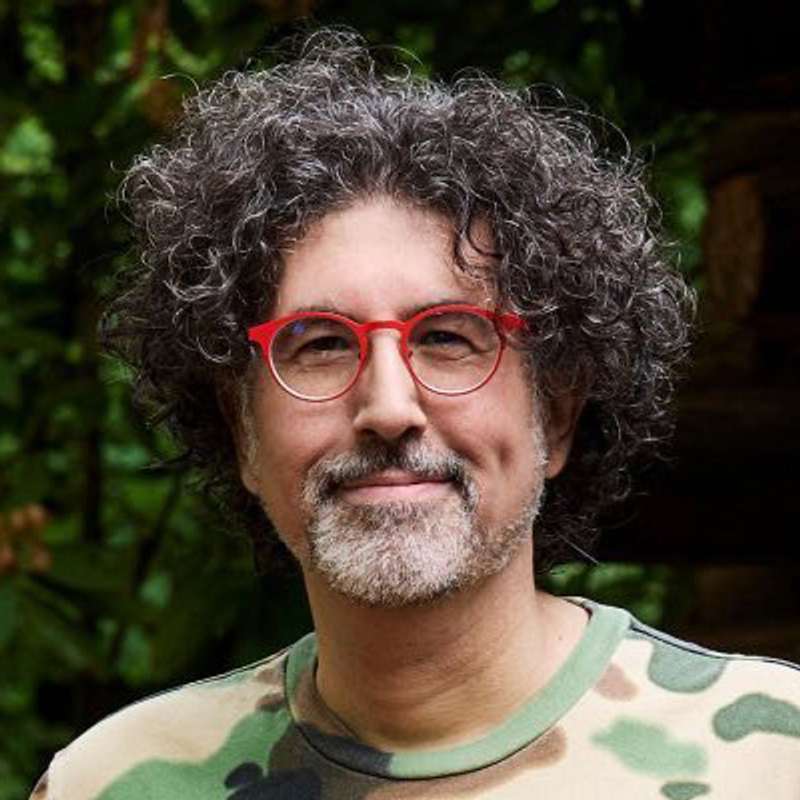 Hrag Vartanian
So who's the first that called it pattern and decoration?
We did.
Hrag VartanianSo who's we?
The group. I think it was maybe, like, the second or third meeting when there were maybe a dozen people there.
Hrag VartanianOkay.
We have to have a name. And there were the people on the pattern side and the people on the decoration side. It became a thing. And then there was a real backlash against this.
Hrag VartanianWhy? I did about P&D, you think, that didn't fit in with that image?
I think maybe it was just seen as... frivolous.
Hrag VartanianTouchy feely or other things. Who knows?
You know, kitschy.
Hrag VartanianRight.
Those are the kind of words that are used.
Hrag VartanianThat's the disparaging words right there.
Maybe there were too many women.
Hrag VartanianHello, and welcome back to the Hyperallergic Podcast. You were just hearing the voice of Joyce Kozloff, a key founding member of the Pattern and Decoration Movement, which is often just abbreviated to P&D. In the 1970s, along with artists like Miriam Shapiro, P&D was a major component the blossoming feminist art scene. These artists were fed up with hard edge abstraction, minimalism, and art championed by white men that claimed to be apolitical as if that ever really happened. Kozloff and her colleagues realized there was a real prejudice against pattern and decoration.
In 1978 along with her friend Valerie Jaudon, she wrote in the Heresies journal that quote, "We came to realize that the prejudice against the decorative has a long history and is based on hierarchies. Fine art above decorative art, western art above non -western art, men's art above women's art. In rereading the basic texts of modern art, we discovered a disturbing belief system based on the moral superiority of the art of western civilization." These politics are implicit in the decades of resplendently and unapologetically ornamental art that Koslov has gone on to produce. Eventually, her pattern paintings morphed into paintings and maps which became more and more overtly political.
And as a veteran of the 60s and 70s peace movements, not only did she refuse to shy away from expressing her dedication to feminism, but she was always infusing a spirit of war protest in her work as well. Even to this day, her political activism continues outside the studio as well as inside. If you've been listening closely to our episodes this season, you'll hear some recurring characters come back into the story. The Heresies Collective, Columbia professor Stephen Greene, and of course, the leading 20th century art critic, Clement Greenberg, who, like so many others in that era, dismissed Kozloff's P&D work as "ladies embroidery"- as if there's anything wrong with that. Well, good thing it wasn't all up to him, because Kozloff went on to create over a dozen major public artworks over the decades all across the United States.
And it would be fair to say that work like hers inspired generations of artists to unabashedly lean into extravagant ornament. In this episode, we'll talk about everything from her mother's embroidery to her travels in Turkey and Iran that inspired her art. And we'll also hear from Hyperallergic staff writer Maya Pontone, who reported this past year about an iconic subway mural of hers at Cambridge's Harvard Square that is unfortunately in danger of disappearing. I'm Hrag Vartanian, the Editor-in-Chief and Co-founder of Hyperallergic. This podcast is supported by Hyperallergic members. These
are people who believe in the power of independent journalism to tell stories that no one else is telling. So if you can, please consider becoming a Hyperallergic member. Now, we have a lot to cover, so let's get back to the conversation.
¶ Childhood
So I'm in the studio with artist Joyce Kozloff. Hi, Joyce.
Hi, Hrag.
Hrag VartanianHow are you doing today?
Very well. It's a beautiful day.
Hrag VartanianIt really, really, really is. So one of the reasons I wanted to have this conversation with you was that I've admired you from afar or at least your work. So thank you for coming in.
Thank you.
Hrag VartanianSo I want people to get to know you a little bit, and I wanna get to know you a little bit more. So can we start at the beginning? Tell us, Joyce. Tell us about your childhood.
I grew up in a town in New Jersey, a small town called Manville. I had 2 brothers. I was the oldest of 3. My dad was the borough attorney of this town, and my grandfather had a hardware store there.
Hrag VartanianOh, okay. So you had real roots there.
Yeah. It's a very sad story about that town because it was a company town dominated by the Johns Manville Asbestos Factory Oh, wow. Which was the largest asbestos factory in the world. Oh, wow. And
Hrag VartanianThis was when when Jersey was making everything in the world.
Yeah. Yeah. This is I was born in, December 1942. So we're talking about the forties fifties.
Hrag VartanianRight.
The asbestos company knew about the harm of their product, but the public didn't.
Hrag VartanianOf course.
And and many people in that town suffered the consequences.
Hrag VartanianUgh. It's a typical Right. Typical typical story. So what was it like growing up in New Jersey in the forties fifties? I mean, was it the white picket fence Americana thing? Or, I mean, how would you describe it?
We had a backyard, and and and we had a garden. We didn't have a picket fence. I walked to public school. There was a public school that everybody went to. I was only 35 miles from New York. Right. But that was a completely different world.
Hrag VartanianSo did you ever go?
Well, you know, like once a year there would be a trip to the Statue of Liberty or the Empire State Building.
Hrag VartanianOkay. No. No. Like a family trip?
A school trip. Oh,
Hrag Vartanianschool trip. So not even a family thing.
No, my family didn't do that. I think it was small town America. It could have been halfway across the across the country, you know. My mother was a homemaker, but she was very active in all kinds of community organizations. So was my dad. She did a lot of embroidery, very fine embroidery. Always. She always had it with her. Oh, wow. And I think that may have influenced me, but I never really acknowledged it. And I regret that.
Hrag VartanianWhy do you think? Why do you think?
That I didn't acknowledge it? Yeah. Because I didn't take it seriously.
Hrag VartanianRight.
You know? And I wish I could tell her.
Hrag VartanianWell, that's one of the things, like Yeah. You know? Well, you can't always, but you do see it now.
I do.
Hrag VartanianYou do see that.
And then we moved to another town where I went to high school.
Hrag VartanianOkay. And What was the town?
Well, we lived outside of it, but the town is called Bound Brook.
Hrag VartanianOkay.
And so I went to Bound Brook High School. And at the high school, there was one art course that was called art, which I took, you know. And I I somehow I was always the class artist, just all the way through grade school and and high school. And so I would make the stage sets, and I would make the the the signs and whatever. And I loved that, and I get validated for it.
I was everybody thought I was the class artist. But, when I decided I went to an art school, I had a lot of resistance. My parents and my teachers wanted me to go to a prestigious liberal arts college.
¶ Art School at Carnegie Mellon and Columbia University
Hrag VartanianSure.
I think I wanted to go to art school and be an artist as a kind of defiance, because I didn't really know what it was.
Hrag VartanianRight.
You know, as to kind of defining myself as different from them, and I had an aunt and uncle that intervened, who really were very important in my life, and they were in Pittsburgh. I mean, she was a fashion illustrator, and she was a docent of the Carnegie Museum, and they were much more cultured than my family. And they said to my parents, if she comes to Carnegie Mellon, we'll we'll look over her.
Hrag VartanianGot it.
And that's how I ended up going there.
Hrag VartanianOh, wow.
Yeah. Because of them.
Hrag VartanianThat's really amazing. You just need, like, one relative to, like, validate and be like, hey, we got this.
Well, everybody respected them, but when I got there, I had a lot to make up for because I'd only had this one course called art.
Hrag VartanianSo what was that like?
Well, I worked really, really hard, and I didn't get good grades. And I I forgot that, and when my mother died, I was going through all the papers and I saw my report cards, I went, oh my god. You know? See in drawing, see in painting. You know? I mean, I I I had to I had so much catching up to do.
Hrag VartanianSo what was Pittsburgh like for you then? Like,
what I loved it. I still love Pittsburgh. At that time, the steel mills were still there. So I was
Hrag VartanianSo it was a very different city.
Very different. I was there in the early sixties.
Hrag VartanianGot it. Okay. So the rust belt hadn't fully rusted.
Yes. Yes. And and you could you'd see the the steam coming out of the the the chimneys and the steel mills. Oh, wow. And it's it's leveled on different level layers.
Hrag VartanianSo did it feel more working class as a city?
Very much. Very much. And there were these steps going up from one layer to another that that people were walking. And then there were also these these trains that, that took you up and down, and there were trolleys. It's very much a city of hills with these 3 rivers that come to I don't wanna be, you know, giving promotion for the city of Pittsburgh.
But there are these 3 rivers that come together at the bottom and a lot of Beautiful. A lot of bridges and then these these levels going up and up and up. It's really terrific.
Hrag VartanianI mean, first time I went to Pittsburgh, I was actually flabbergasted. Like, I was like, this is really pretty. Yeah. And you don't realize how integrated it is with these bridges and rivers.
Right.
Hrag VartanianIt's hilly around. It's kind of it's really it's really pretty.
And then I took a course that changed my life. It was my junior year, I believe.
Hrag VartanianOkay.
And it was a required course, I think it was a required course for art majors called the Oakland Project. Oakland was the neighborhood Oh,
Hrag Vartaniangot it.
That, the universities are in. And for a semester, you were supposed to go out and document the neighborhood. Mhmm. And every week, we came back and put our stuff on the wall. And I was just so into it. I was in the street, and I used every and I used every different material and every different approach, and I just loved watching the activity and documenting it. And and that was the best work I did in art school. And I think that had a lot to do with my becoming a public artist later.
Hrag VartanianOkay. I like that.
You know, I was it it was acknowledged as good work for the first time in all my years there. Yep. And that felt good too.
Hrag VartanianSo now what was teaching what was learning about art there like? I mean, I'm guessing it was a pretty traditional, probably no women discussed?
Oh, no.
Hrag VartanianSo what was that like as an art student in the sixties? Like, were
you Well, first of all, I was a an art ed major. I did student teaching during the day, and I took studio courses at night. And then I taught junior high school and I was really bad at that. And
Hrag VartanianHow bad? How bad, Joyce? Come on, tell us.
I was eventually fired.
Hrag VartanianOh, you're kidding.
No. That was
Hrag VartanianGo, Joyce.
My that was my first job in New Jersey teaching junior high school art. And it I just So was
Hrag Vartanianit you didn't have patience for them? Or was it just like
I was
Hrag Vartanianthey were unruly
Yeah. I didn't know how to establish any type of discipline or
Hrag Vartaniancontrol. Gotcha.
So they were throwing art supplies with wads of wads of paper mache and paint all around the room. Finally, it was so out of control. Finally, I was fired. And I mean, that was supposed to be what I was gonna do with my life. So I was kind of devastated.
Hrag VartanianWell, okay. Plan b. So what was plan b?
I actually went to graduate school in fine art.
Hrag VartanianAnd where?
At Columbia.
Hrag VartanianSo now what was the art world for you? Like, was it this idea that the art world only existed in New York? I mean, did you feel like there was a career in it? Like, did you You know,
I don't think I knew anything about any of that.
Hrag VartanianSo you went in just sort of wide eyed I
really, I really don't think I did. Right. And in Pittsburgh, we had the Pittsburgh Biennial.
Hrag VartanianOh, the Carnegie, yeah.
Carnegie. The Carnegie. Yeah. And that was a way to see art from from everywhere. That was very exciting.
Hrag VartanianSo that was formative for you.
Yeah. That was that was great. And and the Carnegie Museum in general. There weren't a lot of galleries in Pittsburgh at that time.
Hrag VartanianMakes sense. Okay. So now you go on to grad school. You moved to New York. Tell me about it. I mean, because we're talking this is, like, literally the one of the most boisterous times of art in New York. Right? We're talking, like, the sixties.
Yeah. I was there from 65 to 67. I
Hrag Vartanianmean, that's kind of an important formative period
in New York. I wasn't accepted into the MFA program. I was in a program called special student or something.
Hrag VartanianGot it.
And I was also working in 2 galleries on Madison Avenue. So I was doing both.
Hrag VartanianOh, wow. Okay. 2, not even one.
Well, 2 days a week in 1, and 2 days a week in they don't exist. They haven't existed forever.
Hrag VartanianWhat were the names? Can I ask?
Well, one was called the Castellane Gallery.
Hrag VartanianOkay.
That was where Yayo Kusama first did those installations.
Hrag VartanianDid you meet her when you were there?
Yeah. And I sat in the room with this these these penises going out into infinity. Day after day.
Hrag VartanianYou know, that sounds like a perfect 19 sixties New York experience. Kusama penises radiating from this space. And what was your first impression of Kusama when you met her?
I mean, she came in. She was very cute. She always had a miniskirt on. Mhmm. And she was, like, already a very hot artist then.
Hrag VartanianRight.
I mean, she was sort of the part of the pop art scene.
Hrag VartanianRight. Right. Right. Did pop art excite you? Yeah. It did. Yeah. And what about it excited
you? And also some of the abstraction that was going on. It was just all exciting to me.
Hrag VartanianIt was? So minimalism, color field, all
the same. So much minimalism.
Hrag VartanianOkay. Minimalism didn't feel exciting to me.
No. But I was more interested in abstraction. And then when I got into this graduate program, we kind of were all pushed into being hard edge abstractionists. Really? And and we all went in doing different kinds of work. I was doing kind of expressionistic semi figurative work. Mhmm. And by the time I came out of the program, I was doing hard edge abstraction.
Hrag VartanianLike everyone else?
Like everyone else.
Hrag VartanianSo what was it? Why? Why? Was it like a Greenbergian thing?
Yes. Very much.
Hrag VartanianSo everyone was studying post painterly abstraction
or something? It was just it was somehow in the air.
Hrag VartanianWho were the professors at Columbia?
You know, the professors weren't necessarily doing that kind of work.
Hrag VartanianIt just felt like everyone was sort of gravitating towards that?
Yeah. Oh, that's so interesting. And eventually, we all found our own separate voices later, but we all came out doing these, I mean, these these paintings that, like, mine had maybe 3 or 4 shapes in them and Yeah. Very flat colors. And, you know, my teach one of my teachers, Steven Green
Hrag VartanianOh, you taught you learned with Steven Green. He taught a lot of people. I know. Frank Stella too.
Right. A lot of people. So his claim to fame was that he was Frank Stella's teacher, and he would talk about Frank Stella all the time. And he brought Frank Stella in to talk to talk to us. And,
Hrag VartanianI interviewed Frank Stella about Stephen Green once.
Uh-huh. Stephen Green used to give you a tough crit, and the next day, come in and apologize. Really? Yeah. And I I remember that. I think that was very neurotic.
Hrag VartanianHe also taught Jake Berthold
Uh-huh.
Hrag VartanianAnd a lot of other people. Anyway, sorry. Go ahead.
Yeah. He talked for a long time. And the teacher who worked with me the most was Theodore Stammos. Oh, okay. I remember A
Hrag Vartanianvery arc New York school.
Yeah. I was very fond of him. He you know, like, some teachers like the male students, some like the female students. He was good with the female students. He was good with the women.
Hrag VartanianAnd respectful.
Yeah. And I remember one day, I was doing one of these paintings. He said, I'm gonna teach you how to scumble. Go to the ladies' room and get a lot of paper towels. And we were down on the floor on my painting with poured acrylic and paper towels, and he was teaching me how to scumble. That's one of my most vivid memories of graduate school. So how
Hrag Vartaniando you how do you scumble? I don't know.
It's like you you you kind of make a soft surface
Hrag VartanianGot it. Okay. Got it.
Rather than a hard surface.
Hrag VartanianGotcha. Gotcha. Gotcha. So these are some of the formative teachers for you?
Well, these were teachers, and they were all men.
Hrag VartanianOh, I was about to ask. No women. No. So then did you ever get a sense that as a woman you could make a career as an artist? Or or was that something that just appeared a a scene
Yeah. Turned to you? I don't think no. Maybe other people did. I mean, I was pretty naive. I mean, I I don't think we we we thought about our gender that much. You know?
Hrag VartanianBut you must have known that it it there were restrictions because of it. I mean, wasn't this New York where you couldn't go into certain restaurants if you weren't accompanied as a woman? Isn't that the same thing?
Maybe I never tried to go. I know. But, yeah, I mean, of course, but I know that I didn't say when I was in school, why don't I have female role models? Why don't I have female teachers? Looking back, I say that, but when I was there, I didn't Of course not. I didn't say that.
Hrag VartanianWell, because if everyone's thinking the same and it was sort of expected
Right.
Hrag VartanianThat's kind of the way it works. Right?
Right.
Hrag VartanianOkay. Now you finished at Columbia.
I finished.
Hrag VartanianYou said 1967.
Yes. Oh, and the other thing is the the peace movement was happening in New York at that time. Right. And in graduate school, I started going to these enormous peace demonstrations, like in field Central Park, a 1000000 people, you know. And at Columbia University, there were all these teachings and things.
And I think that that was very, politicizing moment. When I was in Pittsburgh, I was doing this during the civil rights movement, and I remember that. And I student taught in Pittsburgh in a black neighborhood in the hill. So I had some exposure to the civil rights movement in but then, really, it was the peace movement in in which I started to feel most involved.
Hrag VartanianSo what was that?
And everybody was kind of swept up in it.
Hrag VartanianSo did did it really
Certainly on university campuses. I grew up in a small town, but I could never not live in a city. I'm addicted to street life, and even during COVID, I had to be out in the street. So that was one of the more most vivid moments, those
Hrag VartanianTotally.
Demonstrations, and I still go to demonstrations. Sometimes I ask myself, why am I still doing this?
Hrag VartanianSo, okay. So you've graduated. What did you do next?
Well, I got married the same way that I got my MFO.
Hrag VartanianOh, okay.
Or the same Right. Month or something. I I met my husband about 6 months before I finished at Columbia.
Hrag VartanianOkay.
The way I met him, he he he's an art critic. He was an art critic. Is he walked into our studios.
Hrag VartanianWhat's Max's full name for everyone?
Max Kozlov. Same name as me. Okay. He used to eat in this pizzeria. Maybe it's still there called V and D's over on Amsterdam and a 100 and something street.
Hrag VartanianNice.
And he ran into Stephen Green. And Stephen Green said, I wanna bring you up to the studios and show you the work of the graduate students. And he was pushing the guys Mhmm. But Max came back the next day and asked me, he said, I have a question for you. And I said, Oh, I don't think I can answer it. And he said, Would you like to go to lunch? So that was easy.
Hrag VartanianYou're like, I got that.
Okay. So we had lunch and we got married 6 months later.
Hrag VartanianWow. Yeah. That's fast.
That was very fast. I know.
Hrag VartanianYou just felt it. You're like, this is it?
I don't know. He talked me into it or something.
Hrag VartanianBut you timed it with your graduation month I don't know. Which is interesting.
It's like everything, and then I kind of didn't know what happened. You know? I mean, I got my MFA and my MRS and
Hrag VartanianAll at once. All at once. You know? And you're like, why not? Next phase. Okay. So now you got married, next phase of your life starts.
Right.
Hrag VartanianTalk us through it. What happens?
I inherited a studio from Miriam Shapiro. Miriam Shapiro and Paul Brock were friends of Max's, and they were moving to California
Hrag VartanianOkay.
To teach at UCSD. Okay. And she was giving up her studio.
Hrag VartanianUniversity of California, San Diego.
Yeah. And she was giving up her studio on the Upper West Side, and there weren't very many studios. Oh, we we lived at a 106th in Broadway. And she was in the studio building, but she rented a section of a cloisonne workshop. Oh. And she turned it over to me. That was my studio for 7 years.
Hrag VartanianWow. Okay.
I went there every day. I did some part time teaching here and there.
Hrag VartanianBut so many women of that generation, when they got married, they sort of stopped making art. You never had that. No. You you knew you were always gonna make art?
No. I No. Yeah. I never stopped making
Hrag Vartanianart. And thankfully, it's like you it seems like you had support from others who also
wanted to see
Hrag VartanianI did.
Yeah. Yeah. I did.
Hrag VartanianAnd was Max doing criticism then?
Yeah. So
Hrag Vartanianhe had already been writing criticism when you met?
Oh, yeah. Okay. I actually had seen him lecture and had read his work when I met. Oh. That's why when he asked
Hrag VartanianI love people who fall in love with art critics. I don't know why, but
Well, you know, I didn't fall in love with him when I heard him lecture.
Hrag VartanianOkay.
And that's why I went and came to my studio and said he had a question for me because he was very multisyllabic, and I didn't always understand what he wrote. I I that's why I said I don't know if I can answer. But in in any case, about 2 years later, we had a son, Nicholas.
¶ From abstraction to patterns
Hrag VartanianAnd what kind of work were you making?
Okay. So I continued that work that I started at Columbia for a little while.
Hrag VartanianOkay.
But it really wasn't me. And I came to realize that I started introducing a few more shapes and colors, you know. Mhmm. And then when Nicholas was born, I started working in a tiny room, which was almost like a big closet in the building where we lived.
Hrag VartanianOkay.
So that I couldn't didn't have to go out away Sure. When I when I was working. And I had to work smaller. And I started I don't know. I started doing these paintings with, like, these zigzags in them, almost like game boards. And I don't know why. But they, I think, were my first real personal work. And I painted them in a kind of much more nuanced painterly way. It wasn't a hard edge anymore. They were kind of soft geometric abstractions, and they had repetition in them.
That was the first work that I showed. On my 30th birthday, I had these big rolls of these hard edged paintings in my closet that I used to have to climb over to get down the wine glasses when I had company, and I threw them all out. Almost all of them, I have one.
Hrag VartanianOh, wow.
I I just didn't need them anymore.
Hrag VartanianYou were done.
I was done.
Hrag VartanianBut you kinda regret it, I think.
I don't regret it. Okay. And I I don't have good pictures of it. I wish that I had that, but we didn't have good pictures then.
Hrag VartanianSo where were you showing when you said you were exhibit?
My first show was in 19, 70 at Tibor Denoche. Oh, wow. And I showed with him all through the seventies. And what happened was we were moving to California. Max got a job at teaching at Cal Arts the 1st year.
And I had a toddler. And I had never shown my work to anyone. So I took my slides around, which is what you did. And they hold them up to the light, or they say they're not interested. And I went into Tibor D'Anache, which I didn't really think was the right gallery, but I had paid a babysitter and everyone else had rejected me.
So there were a lot of galleries in that building. And so then I went in there and Tibor was sitting there and he held him up to the light and he said, when can I come to your studio? And I said, when would you like to come? And he goes like, how about tomorrow?
Hrag VartanianWow.
And he came to the studio, and I didn't have a complete body of work, but I was moving to California. And he said, do you want September or October?
Hrag VartanianWow. He really was taken by them.
This was no. This is not the whole story.
Hrag VartanianOh.
This was like June when we were moving.
Hrag VartanianGot it.
His longtime director, John Bernard Myers Mhmm. Had left with the whole stable
Hrag VartanianOh, wow.
Right before I walked in Or maybe a week before.
Hrag VartanianTiming, timing, timing.
I know.
Hrag VartanianRight.
And started his own gallery and took all the artists. And Tibor had never been active in the gallery. He was a banker. He was behind the scenes, and his relationship with John Bernard Myers ended. The gallery ended, and there he was with a gallery and the fall season coming and nothing
Hrag VartanianAnd no artists.
No artists. So somehow he filled up his gallery pretty fast.
Hrag VartanianWell, we see how. Yeah. And lucky for you.
So he came and I and he said September or October. I said, October?
Hrag VartanianSo that was your first major show after?
That was my first show.
Hrag Vartanian1st show period.
I had never been in a group show.
Hrag VartanianWhat? No. How did that how did you
how did God lose you? I said, just kept a student show, maybe.
Hrag VartanianYeah. But, no, how did that happen?
I, we weren't part of the downtown scene. We were living on a 100 and sixth Street.
Hrag VartanianSo you felt disconnected from the downtown scene?
I didn't know anything about it, really. Oh, wow. You know? So so I was living in California when I had the show. Right. And I came in for the show, and the show was reviewed. It got, reviewed in a lot of short, nice reviews in different places.
Hrag VartanianAnd it was good reviews?
Yeah. Oh, good. Okay. And then he offered me another show and another show, and I showed there for almost every year through the seventies. Wow.
Hrag VartanianAnd And you were selling?
Some. Yeah. Okay. Yeah.
Hrag VartanianI guess I'm also asking because it's like I wanted to know how much pressure there was to sell in that era.
There wasn't any pressure. I
Hrag Vartaniandon't I don't think.
Okay. But he did sell. And they sold in those days a lot to corporations. Mhmm.
Hrag VartanianWell, if you're a banker, I guess you also know.
Well, which is which is bad for artists because then the work disappears into the black hole.
Hrag VartanianAnd no one ever sees it.
Back hole and the corporations merge with other corporations, and you never know where the work is. But some of my early work, I'll never know where it is. But,
Hrag VartanianOh, wow. Really? There's pieces you've just lost track of?
I've lost track of. And I know other artists have too. But anyway, so my reaction to my first show was these paintings look really small and timid. And and that was good because getting them out of my studio into a big white space Mhmm. Was really good for me. And the next body of work I pushed, you know, I pushed those zigzags, and I pushed the color, and I pushed this pushed the scale. And it started becoming more exciting to me, you know. This is where the decoration comes in.
Hrag VartanianLove it.
¶ Joining the feminist movement in California
So the year that we were in California, which was 1970, 71, I became involved with the feminist art movement. It was a very big thing in my life. It made me rethink everything from my personal relationships to all those questions you asked me about art Yeah. And what did I look at and why and and and how did I see myself, and how did I Mhmm. See my peers. We formed this group called the Los Angeles Council of Women Artists, and we protested at the county museum.
Hrag VartanianYeah.
And that was my first, you know, feminist.
Hrag VartanianSo what did you protest for in that
time? We protested. We went in, and we counted the works in the permanent collection, and there was only one by a woman. And who was it? Elizabeth Viger Le Brun.
Hrag VartanianYou're kidding. That was
it. Yep. Easy to remember. And then we went in the library, and we looked at the catalogs of the exhibitions, and there had only been one by a woman, and it was Dorothea Lange.
Hrag VartanianYou're kidding.
And it had been 20 years earlier.
Hrag VartanianAnd that was it? Yep. In 1970? Mhmm. Wow.
So it was very easy to make a list of demands. One of the things that came out of that, that they they demanded, or that the county agree museum agreed to do with a historic show about women artists, which is the show that Anne Sutherland Harris and Linda Nochlin did, women artists 15 50 to 1950. And that came out of Formative show. Yeah. That came out of the demands that our group made.
Hrag VartanianOh. And you
realize that was so direct. And it didn't happen till like 5 years later Right. Because of all the research they did. Of course. So with my friend, Gila Hersh, who's an artist in California, we had this little project that we never really finished, underlining in art magazines and art history texts adjectives that were gender loaded.
Okay? So there were there there were the tough, strong, virile ones, and then there were the soft, sweet, decorative ones. So that's when I got interested in the word decorative. Ah. Because of the language, because how it was used.
Hrag VartanianRight.
And that goes back to that year. And before I started doing the work, I started thinking about decorative, the decorative arts. Who makes the decorative arts? That's so interesting. The decorative arts are made by women, by people who are anonymous. They're made by people in other cultures.
Hrag VartanianRight. But they're unnamed people.
Yeah. And in the Western hierarchy
Hrag VartanianThat's right.
They don't appear. And in the way I learned art history, they certainly didn't appear.
Hrag VartanianAbsolutely.
So I knew nothing about the decorative arts, because I had a traditional art history background, and I loved art history.
Hrag VartanianBut you already spotted then there was this hierarchy happening that was
That was that was the thing, was the underlining of the words. And then I remembered when I was in graduate school, the worst thing you could say we were all doing abstract painting. The worst criticism you could say was that it was decorative.
Hrag VartanianYou know, and it was true decades later too.
I gather.
Hrag VartanianYou know?
So you tremble that someone would call it decorative.
Hrag VartanianThat's right.
So then I decided to embrace the word and stop worrying about it.
Hrag VartanianDamn right. That's good.
And I wasn't the only one, you know.
Hrag VartanianThat's also your activist self coming out
a little bit. Yeah. Yeah. But a but a lot of people saw that as, okay, we're gonna we're gonna turn this around, you know.
Hrag VartanianGreat.
So what was happening was in these paintings I was doing, which were getting more intricate, I was painting these these textures with different kinds of brushes and brushstrokes and the different shapes, and they were turning into patterns. And there was a fine line between a texture and a pattern.
Hrag VartanianYep.
In 72, I went to Tamarind, and I looked at a lot of Native American, carpets.
Hrag VartanianSo Tamarind is a is a print, Lithography workshop. Lithography workshop.
And the summer.
Hrag VartanianFor those who may not know.
Yeah. In the summer of 73, we spent in a village in Mexico. Max was writing about the Mexican mural paint movement. And I was looking at Mexican decorative arts and copying the patterns into my into my sketchbook so that I could come home and use them in paintings. And then immediately, I started putting these these patterns into into my paintings.
And that was the beginning of my pattern painting. Some of the others in the group were were doing it earlier, you know, and we didn't necessarily know about each other. We found each other through a kind of osmosis. I knew one person, another person, and something was in the air. And we came to it from different roots.
Hrag VartanianI'm always curious how the movements formed. So when you were talking about the feminist movement that was sort of forming, were these just kinda colleagues that slowly you started hearing there were gatherings? Or, like, how did you get involved?
Okay. So Miriam Shapiro was a mentor, and she was 20 years older than me.
Hrag VartanianSo you knew her in New York. That's how you ended up with her studio.
I knew her in New York, but not very well.
Hrag VartanianOkay. Got it.
And she was really a different generation. Mhmm. You know? She and her husband were friends of my husband. And then when in California, I got to know her better. I was a faculty wife. And the first party for the faculty and faculty wives, another faculty wife invited me to a consciousness raising group. Oh. And I joined the group. This is the fall of 1970. Mhmm. And it it completely raised my consciousness within a couple of weeks. It was very radicalizing.
Hrag VartanianSo so what The women were like?
The women weren't artists in the group.
Hrag VartanianOkay. But when you say consciousness raising, what it what it was the what took part? What took place, I should say?
You have a subject for the evening. Okay. Like How do you feel about your mother?
Hrag VartanianOh, okay.
How do you feel about your body? Very basic subjects.
Hrag VartanianWow.
You go around the room. There are 8 or 10 women. Mhmm. And each one addresses the subject from her own experience as allowed 15 or 20 minutes.
Hrag VartanianWow.
And you're you can't interrupt. And then at the end, you have a conversation about the commonality of it. And I I don't know. It's not it's very different from group therapy where you deal with people's problems. This becomes a social issue that is shared. Right. And it's very it's very radicalizing is all I can say.
Hrag VartanianI could imagine. This is also pre talk shows, so you probably didn't have a lot of opportunity to hear people's experiences like that.
So and there were very different women in the group, different ages, different levels of of education. We came together through, a women's center near where I lived, who signed up for it. And this other woman who asked me to join signed me up, who was also a fac a displaced faculty wife with a young child, you know, coming out from the East Coast. So I was when I saw Miriam Mimi, I would talk about my conscious retinist raising. So then she invited me to this brunch at June Wayne's.
June Wayne was the former and director of the Tamarind Lithography Workshop. Got it. And at the meeting were all these people I met for the first time. Several of whom became friends. 1 was Judy Chicago. 1 was Moira Roth, who died recently. He's an art historian. And Bev O'Neil, who was an art historian, who also died. And Claire Spark, who did programs for Pacifica Radio. They went around the table, and everybody said what they were going to do.
They're gonna start a feminist education program. They were gonna start a magazine or something. And it got to me, and I didn't have a project. And I I guess I was set up, but Miriam started saying to me, you always talk about feminism. You always talk about and and you don't do anything. And I felt kind of shamed. Mhmm. And I was, like, holding back the tears. And so I said, well, well, what should I do? And they said, you're gonna organize the Women Artists of Los Angeles.
Hrag VartanianHow did that go?
Well, I only knew the ones in that room.
Hrag VartanianThat's great.
So I I mean, I think I was set up. Anyway.
Hrag VartanianBut did it work?
Yeah, it did. They each gave me a list.
Hrag VartanianOh, wow.
And mostly Miriam did it, and she really wanted this to happen. And then she wanted to empower me, you know, and and I have to give her credit for that even though it was very humiliating. So I ended up calling all these people I never heard of. I remember the rotary phone on the wall and the lists and calling and checking off, and I have taken care of this baby and trying to do my work, and 65 women came. Crowded into this small apartment, standing room only.
Hrag VartanianWhich apartment?
Apartment that we lived in in.
Hrag VartanianOkay. So, okay. So 65 women show up. Yeah. What was the reason they showed up?
I told you the names. A lot of them are very famous now.
Hrag VartanianTell me.
Lucita Hurtado.
Hrag VartanianMhmm.
Betty Saar.
Hrag VartanianOh, wow. Okay.
Alexis Smith. Oh, wow. Via Selman. Many well known actors.
Hrag VartanianSo we're talking really an important group of
people. But but nobody was well known then.
Hrag VartanianOf course. So what do you think people showed up?
We were we were mostly young.
Hrag VartanianSo why did they show up?
They were mad.
Hrag VartanianAt what?
Well, first of all, there was this show opening at the county museum called Art and Technology. And someone, Chana Davis, do you know her?
Hrag VartanianYeah, I do.
Chana was the only woman who was part of this project, art and technology, which a lot of money had been poured into by the county museum where they put artists into different industries. Right.
Hrag VartanianAnd those people you may not know, the county museum is LACMA, essentially.
LACMA. So LACMA.
Hrag VartanianGo ahead.
And it was opening and the catalog had a grid of faces on the front.
Hrag VartanianMhmm.
And they were all men. Right?
Hrag VartanianThat would make me mad too. I could see. Yeah.
And I don't know if they were all white men, but they must have been almost Probably. Almost all
Hrag Vartanianwhite men. We could probably guarantee that without even looking.
Without even looking. So that was that was what they were mad about, plus everything else. But anyway, we decided to protest the county museum.
Hrag VartanianMhmm.
The main thing that came out of it was the historic show.
Hrag VartanianBut that's a big deal.
It was a big deal.
Hrag VartanianBut it's also this was probably the first time you met a lot of these women. Mhmm. And was it the first time a lot of them met each other?
Yes. And they recognized each other. Some of them were the wives of artists and didn't know that they were artists. Oh, wow. And they, you know,
Hrag Vartanianand So this was formative. This was a formative event.
And a lot of those women remember that evening.
Hrag VartanianRight.
You know, like Luchita said, Luchita Mulligan. She was married to the artist Lee Mulligan. Oh. And June Wayne said to Hurtado, and she goes, Luchita Hurtado. It's like she owned her name, and that and and she always talked about that moment.
Hrag VartanianOh, wow. So okay. Wow. So you played a big role.
I think it was a, a moment, and it was a it was just a moment, and I happened to be there. And I happened to be
Hrag VartanianJordan just happened to be there. You made everyone come together.
No. No. Don't
Hrag VartanianYou called everyone.
I did. I made the phone calls.
Hrag VartanianIt's alright,
Joyce. Own
Hrag Vartanianit. Own it.
I was I was scared if I didn't, that I would
Hrag VartanianThe shame, I'm telling you. Shame.
Right. So anyway, so that year was such an important year for me, and I made lifelong friends. People who were really important
Hrag Vartanianto me. So that that event, the day after, the weeks, the months after, what did it force you to challenge about your own work, and maybe your own trajectory, or what you thought about fellow artists, or the art community? How would you how would you
characterize that? I started seeing people who were doing really overtly feminist art and feeling a little embarrassed about being an abstractionist.
Hrag VartanianReally?
Yeah. Okay. But it was a while before I could act on that, you know. Mhmm. I mean, my sensibility was already formed. But I was very interested. There was a group of women in the Bay Area, and that that summer we lived in the Bay Area, and I sort of joined that group briefly.
Hrag VartanianSo what was this group?
It was a group of women artists that had their own weekly meetings, kind of a consciousness And
Hrag Vartanianwho are some of them? Do you mind mentioning?
Anne Lita Shapiro, Danelle Estee, Judith Lanier.
Hrag VartanianSo prominent artists now in their own right too?
Yes. Yes. And and, a bunch of others.
Hrag VartanianHow was the Bay Area deal? Very different.
Very different.
Hrag VartanianSo, well, how would you characterize this?
Well, there's because because they came out of Bay Area art.
Hrag VartanianRight.
And some of them had studied with those guys at Davis, you know. Got it. So it was figurative. It was small. It was intricate. It was funny. It was outrageous.
Hrag VartanianSo when you say Davis, you mean UC Davis because that was such a formative art school
in that period. Right. Right. They were doing these wacky, paintings, like watercolors, small and tense.
Hrag VartanianAnd painting in the Bay Area never quite waned. It's always been prominent too.
Right. And and but this was like a feminist version of Bay Area art. Right. And, and, you know, and I was sort of, like, embarrassed I was doing this New York abstract paintings. Anyway, it all went in the hopper. Let's put it that way. It all went in the hopper, and I respect all those people, and I love their work. Then I joined the feminist groups when I came back to New York. But it didn't have the same impact on me.
Hrag VartanianThe New York ones.
Yeah. No. Because that moment was was in kept for me in California.
¶ The Heresies collective
Hrag VartanianGot it.
But I was active in those groups. I was in the Heresies Collective Mhmm. And I'm very involved in the formation of that magazine and the Tell us
Hrag Vartaniana little bit about Heresies.
We're gonna be here all day. Good. Oh, come on. I'm serious. Alright.
Hrag VartanianSo If you're open to it, I love this. So as long as you're open to it, I'm open to it, Joyce.
Okay. Well, let's just see how far we go.
Hrag VartanianOkay.
It's like we're still 40 years back, so it's not too good.
Hrag VartanianBut this is a formative period. Right. Okay. So now Heresies. So now what was the difference between this Heresies group in New York and the groups you were in in California? Were there different conversations going on?
Well, Heresies was later. It was around 1975 when we formed Heresies.
Hrag VartanianGot it.
We felt some of us have been speaking among ourselves, that we needed to have a publication. Mhmm. And that it had to be issue oriented and had to be around the issues that we were interested in. There were some feminist art publications, but they were more monographic about an individual people's work. We were we were interested in more thematic issues.
Hrag VartanianSure. More about the collective.
Yeah. So there were 21 of us that formed this collective. And we weren't all artists. There were some writers. There was an anthropologist. There was filmmaker. But we're predominantly artists. Mhmm. And it was a magazine about art and politics. Mhmm. Feminism Art and Politics. And it was supposed to be a quarterly, but it never came out 4 times a year. And it existed until 19 9 1993.
Hrag VartanianOh, wow. Okay.
I mean, different people were involved with it. Totally. And there were different groups that worked on each issue. The issues were formed around the people's interests.
Hrag VartanianGot
it. Like a group of women involved with music could say, we wanna do an issue on that. And then they would get that issue to do, or women in architecture.
Hrag VartanianDid you do any issues?
I worked on women's traditional arts, the politics of aesthetics, issue number 4.
Hrag VartanianNice.
That was the decorative arts issue. You know, each of these issues, the collective on that issue would work on it for a year, arguing about each thing, collecting that you probably know, collecting the material, reviewing and having people rewrite, collecting the visuals. It was all black and white. This issue went through a transformation. Our original idea was to talk about the decorative arts, and Elizabeth Weatherford, who's an anthropologist, was very involved.
We were talking about it globally as an homage, but we began to discover that in many cultures, it's a form of oppression. That, you know, in Europe, little girls went blind making lace. They had the little girls making the lace because their eyes were the best. Absolutely. And in the near east, they have little girls weaving.
Hrag VartanianThat's right.
That's why we had slash women's traditional arts, the politics of aesthetics.
Hrag VartanianGot it.
Because it became a much more complicated thing than just making an homage. That's the thing about pattern decoration. The the criticisms that we've received for appropriating from other cultures, which we saw as an homage, not not taking something. But we were naive. We didn't see the full complexity of it in the beginning.
Hrag VartanianSure.
And I I can see that now. Mhmm. And I really try to be a little more clear about it. But I was painting those pattern paintings during the time that I worked on the issue. The issue didn't come out till 1978.
Hrag VartanianOh, so like at the peak of
Yeah.
Hrag VartanianPattern and decoration. Yeah. So that was that was probably very formative, the influence of that issue.
It was all interwoven. Yeah. And Valerie Jardin and I coauthored a piece that was in that issue Got it. Which was a collection of quotes about decoration.
¶ First Pattern and Decoration painting
Hrag VartanianSo what was your first pattern in decoration, or a PND, as we sometimes call it
Okay.
Hrag VartanianWork?
I think my first pattern decoration painting was about 1973, and it's called Three Facades. It's based on sketches from Triguresque church facades in Mexico. Oh. Okay. Those churches were, I think, 16th century, and they're interlocking brick and tile facades. Got
Hrag Vartanianit. Got it.
Got it. And very, very rich. Very, very rich. And we'd been in Mexico, and I made sketches of them. There's 3 zones in the painting, and there are 3 different patterns. And And
Hrag Vartanianhow large was it?
Or
Hrag Vartanianis it, I should say?
It's 60 by 40, something like
Hrag Vartanianthat. Okay. So it was quite large.
Yeah.
Hrag VartanianOkay.
And some people thought it looked like a quilt, but it wasn't based on quilt. It was based on architectural ornament.
Hrag VartanianWas that a dismissive comment when they say it looks like a quilt at that time?
No. Women always think everything looks like a quilt.
Hrag VartanianOkay. Well, I was just trying to think if that was one of the coded words like decorated or something. No.
I don't think so.
Hrag VartanianOkay. I don't
think so. Anyway, to me, it looks like what it is. I like the painting and I sent it up to Tibor's. It was between shows. And he had it in the back room.
Hrag VartanianOkay.
And Clement Greenberg came in
Hrag VartanianOkay.
And saw it and said it looked like ladies' embroidery.
Hrag VartanianWhat a great compliment.
And Tibor freaked out, called me on the telephone, and told me to take it away.
Hrag VartanianWow.
He was his voice was shaking when he called me.
Hrag VartanianSo I guess he didn't think of it as a compliment.
No, he didn't. But the weird thing was I put it in my next show. I sent it back up there with the other paintings in my next show, which were all pattern paintings, and he didn't say anything.
Hrag VartanianMaybe it took a while for him to process. Maybe.
Or maybe Maybe he was like maybe Clem didn't come in again.
Hrag VartanianOr maybe maybe he was like, you know what? Screw that guy. I don't agree.
¶ Forming the Pattern and Decoration movement
In 1975, Miriam moved back from California. Mhmm. And she said, we're gonna start an art movement. We're gonna meet with a couple of other people doing this pattern deck. Well, we didn't have the name yet, doing these pattern paintings.
And she had met Bob Zukanich in California, who was doing a visiting artist gig. And so the meeting was at his loft, and Amy Golden was there, who was an art critic, who had it was a big California connection. She had been at UCSD, and so had Bob Zakanich, and so had Mimi. And, Bob Kushner and Kim McConnell had been there too. And then Tony Robbins knew Bob Zukanich, and that was the very small first meeting.
And then there were there were just a couple meetings, but it grew. And then there were exhibitions, and then it became a thing. And then it was written about, and then people loved it, and then everybody turned against it and hated it.
Hrag VartanianSo who's the first that called it pattern and decoration?
We did.
Hrag VartanianSo who's we?
The group. Okay.
Hrag VartanianSo how many of you were how many of you were in the we?
I I think it was maybe like the second or third meeting when there were maybe a dozen people there.
Hrag VartanianOkay.
We have to have a name. And there were the people on the pattern side and the people on the decoration side.
Hrag VartanianAnd where were you meeting?
I think it was like also at Bob Zicana's loft.
Hrag VartanianOkay. And where was that?
In, Tribeca.
Hrag VartanianTribeca. Okay. Got it. And by then, you had already moved to SoHo?
I I moved to SoHo in 74. 74.
Hrag VartanianOkay. In the same place you still live?
The same place I still
Hrag Vartanianlive. Amazing. Amazing. Okay. So now pattern and decoration becomes a thing.
It became a thing.
Hrag VartanianThere's about a dozen
of them. And the Holly Solomon gallery open.
Hrag VartanianOkay.
And she was really promoting it big time, and she had a lot of decorative artists. And she was really pushing the decoration part.
Hrag VartanianSo why did you think she she it spoke to her?
I think it related to her sensibility.
Hrag VartanianGot it.
I think she loved it. Got it. You know? And she took it to Europe, she took it to the art fairs. And then there was a show, I think, around 1978 at PS 1 curated by John Perrault, in which there was something like 45 artists. So it it be it did become a thing for a couple of years. And then there was a real backlash against this.
Hrag VartanianWhy? Tell me a little bit of a backlash. Because, you know, when I studied in the nineties, pattern and decoration was in certain circles was kind of disparagingly talked about. Right?
I'm sure.
Hrag VartanianDo you know? But at the same time, artists never stopped looking at it. Do you know? Like, a lot of artists were still inspired by it in different ways. Now where did the backlash do
you feel? Snooze to me.
Hrag VartanianWell, I mean, I saw it. Maybe it wasn't such grand scale, but I definitely saw, like, snippets of it here and there. Where do you think started the backlash? Where do you think that was coming from?
Maybe there were too many women. I don't know. Really?
Hrag VartanianYou think that might have been part of it?
I don't know. I mean, I think the aesthetic had a feminine component to it, you know. And a lot of people don't like that. But I but I think that what happened is there was a pendulum swing away.
Hrag VartanianRight.
There was pendulum swing toward, neo expressionism around 1980. I mean, the seventies had a much looser time in terms of the art market. It wasn't the seventies weren't so art market driven the way the eighties were.
Hrag VartanianRight. Well Reaganomics had a big effect. Right?
I think so.
Hrag VartanianDo you think Reaganomics had an effect of this kind of like rejecting of this kind of feminine or something?
Well, I always thought that it was Reagan's politics, you know, that Yeah.
Hrag VartanianTell me about that.
That well, I mean, I just the whole country kind of turned to the right. Right. You know, and
Hrag VartanianSo what was it about PND you think that didn't fit in with that image?
I I think maybe it was just seen as, frivolous.
Hrag VartanianTouchy feely or other things. Who knows?
You know, kitschy.
Hrag VartanianRight.
Those are the kind of words that are used.
Hrag VartanianThat's the disparaging words
right there.
Hrag VartanianGot it. So one of the things about this
But it, you know, wasn't. I mean, we really took it very seriously.
Hrag VartanianTotally.
I mean, we we really studied the decorative arts. We used to go to the Cooper Hewitt and the Met. And the Islamic wing opened at the Met in 1975, and that was a big, big influence on me and many of the others.
Hrag VartanianYeah. I guess we forget about those little things, like the opening of a new gallery is gonna have a huge influence.
And the Cooper Hewitt opened around that time in New York. And they had wonderful shows in those years, and we used to go together and look at them and talk about what we were looking at.
Hrag VartanianGot it. So now part of these works in the seventies, we're looking right now at an image of short silk from 1978. Definitely has a feeling of, like, different pattern books and stuff. Now was that something that you were passionate about? Because there's, like, such a beautiful coming together of these really, like, I mean, frankly, disparate and, like, diverse patterning.
I made those silk pieces at the fabric workshop. They're printed. Yep. And I wanted to make this total room. I was challenged. I was going around the country giving lectures like artists do Mhmm. About my work. And I'm talking about P and D. And I didn't only talk about my work. I had, like, a whole P and D lecture too.
Mhmm. And there would be people in the audience who were in craft, and they would challenge me. You're not because we talked about breaking down the hierarchy. Art, decorative art High hierarchies. Yep. Hierarchies. You're not breaking down the hierarchies. You're just taking from low art and making high art. You're just taking from us. In other words, you're downwardly mobile and we're upwardly mobile. Do you know what I mean?
Hrag VartanianOh, wow.
You know? And I got that a lot. Really? And I started thinking about it. I started thinking about it. And I started thinking that maybe they're right. Maybe I had to get my hands dirty. And I only knew how to paint. That's the only thing I ever did. You know, I never learned how I certainly I failed ceramics in art school because I couldn't throw a pot.
I just couldn't throw a pot on the wheel, and that was a criterion. But I decided I had to get my my hands dirty. I had to sort of listen to these people, and if I really wanted to break down the hierarchy, I had to do that.
Hrag VartanianLearn the skill.
Yeah.
Hrag VartanianRight.
So that's when I started making the tiles, which are very crude in the early ones. I mean, I rolled out the clay with a rolling pin and cut the shapes with cookie cutters. And then I wanted to make this total room at the gallery. And I made it at the Tea Board and Nagy Gallery. And it was shown in 1979, and it had a combination of the tile work and that hangs silks it that I did at the fabric workshop. And I knew that I couldn't cover all the walls unless I used some print process.
Hrag VartanianGot it.
You know? So I repeated the they're silk screens. I repeated the screen on different colors with different inks to give a variety, and the patterns themselves, these are mostly mostly Egyptian and Islamic. It had to do with what I was looking at. There was a So yeah. There was a King Tut show in the I
Hrag Vartanianwas about to say that this one we're looking at now from 1979 is Tut's Wallpaper Right. Which is the same period the giant blockbuster King Touch show came to New
York. That's right.
Hrag VartanianI mean, I love it. I never really quite thought of it, the fact that, like, these are also a reflection of the visual environment
Yes.
Hrag VartanianIn the art world at the time.
For me, it was. I mean, I stayed very close to my sources and probably too close. I mean, a number of the other artists were much more playful and loose with their sources. I was deeply respectful of my sources. So, you know, that was just me.
Hrag VartanianTotally. Absolutely. So now the backlash, like, how did that manifest? I mean, did it mean, like, all of a sudden, gallerists didn't wanna show the work? Did it mean that, critics were being very critical and mean about it?
I mean, what did it mean? All of the above. All of the above. Many of those artists haven't had a gallery in decades.
Hrag VartanianGot it.
And
Hrag VartanianSo it really felt like a real rejection.
Feminist, we were called essentialists, and that was very hurtful.
Hrag VartanianSo how were you essentialists?
The next generation, and I'm gonna say this very crudely, and I'm actually very interested in their theory and their work, but the next generation criticized my generation for having essential ideas about women, about gender, that gender is constructed. So what we're doing, which is, glorifying the handiwork of women, was considered essentialist. That was more painful to me than any of the other
Hrag VartanianSure.
Objections. Yeah. You know?
Hrag VartanianSo what do you think of that criticism now?
So my work is so much about Islamic art, which is mostly male.
Hrag VartanianSo why do you think you the the appeal of Islamic art? What what was that? Was it partly just the Met, like, gallery and this, like, whole new world opened up to you?
Yeah. Yeah. I loved I loved it. And in the seventies, I went to Morocco and Turkey. Mhmm. And later in my life, I went to other other countries. I went to, Tunisia and and Egypt and Iran and India. But during the seventies, during that time, and specifically went to see the things I was interested in. And I was very interested in architectural ornament. I still am.
¶ The 1980s and public art
And then in the eighties, I moved into public art, which comes right out of this.
Hrag VartanianSo let's talk about the eighties.
Okay. So this project that I put together with the hanging silks and the the tile floor piece and the tile pilasters, I called an interior decorator. And the travel It was I showed it in 4 different venues. In each place, I I adapted it to the room. It was 2 years of work making those pieces, and they would exist for 3 weeks and take a week to install.
And I thought, this is just doesn't make sense. Mhmm. You know? I mean, there are people who do installation are here much more flexible in the way they work. And I wasn't able to think of a way to work that was more flexible. This my work is very inflexible. So I wasn't thinking about doing public art, but I got this, form in the mail that probably hundreds of artists got to fill out to apply for, the transit stations in Cambridge, Massachusetts, which was the first transit program in the US.
Hrag VartanianAmazing.
They had it had been in other cities. And I said in my slides, and I think the fact that I was working in tile was was a a useful thing.
Hrag VartanianAbsolutely. You can imagine for public art.
Yeah. So 6 months later, I I was a finalist for Harvard Square.
Hrag VartanianAmazing.
And I did my proposal, and it was accepted.
¶ Maya Pontone on the deterioration of Kozloff’s Harvard Square Mural
Hrag VartanianSo I'm speaking to Maya Pantone, who is a reporter here at Hyperallergic. Hi, Maya.
Hi.
Hrag VartanianSo, okay, you've been doing some reporting on the Joyce Kozloff mural in the Tea Station at Harvard Square. And so tell us a little, like, get us up to speed. What's going on with this mural? And tell us tell for the some of us who haven't been to Cambridge, in Massachusetts, what what they would see if they were in front of this mural.
Yeah. So this mural, New England Decorative Arts, it was installed in 1985. Mhmm. So it's been there for quite a while, and it's definitely changed over time. It's super colorful, almost looks like a quilt, which is purposeful. There are lots of images referencing New England's regional history. You have silhouettes from European settlers to displaced indigenous community members. You have allusions to New England cemeteries, flora, fauna, houses. It's 85 feet long. It's located big.
It's really big. 85 by 8 feet, I believe, and it is located in the bus terminal. So when you walk into the station, you go down several flights of stairs, and it'll be off to your left. Harvard Square's tea station, like most of Boston's tea stations, that's what its public transit is called, the tea. The station is in severe disrepair.
So the mural is also in disrepair. It is cracking. The ceiling is falling apart. There's water damage, and there are at the moment are no plans to repair this mural.
Hrag VartanianSo And that seems to be an issue with the wider Boston Tea System. Right?
Yeah. The tea system is a complete mess. If you talk to anybody from the Greater Boston area, they will probably have more than just one gripe with the tea. Especially in recent years, it has gotten really bad. There have been several accidents. There's so many delays. Sometimes the trains don't come. Yeah. It's it's a really big problem. Yeah. And, yeah, the lines have been down, periodically.
Hrag VartanianSo what did you learn, you know, talking to Joyce and and understanding what was going on? What did you learn about the mural, and what are some of the issues it's facing in general?
So, yeah, the mural has been these issues have been long standing. Joyce knew about these issues from the beginning, actually, because she had to return to the mural 2 years after it was installed because tiles were cracking. She said that there's something wrong with the wall's structure, so it keeps repeatedly causing cracks in the mural. On top of that, she has also talked about water damage, due to runoff from the street. That is also a big issue in general in Boston, flooding.
The city has been dealing with flooding issues and leaking all over the place.
So
Hrag VartanianIt sounds it sounds like the the subway system didn't figure those things out before they had all these things installed.
No. It it it is the country's oldest subway system.
Hrag VartanianRight.
So it Right. You know yeah. It's in it's definitely long overdue for some repairs. Let's put it that way.
Hrag VartanianYeah. Infrastructure, like like many places in this country, unfortunately, has been suffering. So did talking to Joyce, help you see the artwork in a different way?
Yeah. It definitely did. So she was a pioneering member of the sixties seventies pattern and decoration movement. So An
Hrag Vartanianimportant art movement.
Yeah. And knowing more about her own role in that movement totally made me see that artwork in a different light. You look at it and you realize it is it's a tiled quilt
Right.
Which is definitely referencing her her other public artworks that she's done. The work was initially presented at Momo p s 1 the year before it was installed. So, yeah, I I just did not know anything about her practice as well as also the MBTA's arts on the t program, which is another whole issue, because, yeah, there's a lot of public artworks along the subway lines, alongside Joyce's that are also falling into disrepair that have been deinstalled because the subway system can't maintain them.
Hrag VartanianSo what can be done to save this? Because I know that members of the, the transportation Authority are interested in potentially doing this, but it sounds like it's gonna be expensive.
Yes. So Joyce has been working on this for a long time.
Hrag VartanianRight.
And she's drawn up all these different budget estimates. She believes it'll probably cost upwards of $1,000,000 because in order to replace she would need to be completely replaced, essentially. So she has actually been digitizing all the tiling, that is in that mural on an iPad. She's in her eighties and has been digitizing it. And so that way, it can hopefully be replaced whether it's in her lifetime or not.
Hrag VartanianRight. And it would be, you know, it'd be a real shame. I mean, a prominent female artist, really wonderful work that sort of connects to the tradition of quilting in New England and and many American sort of traditions. It would be really sad to see from such a mem major member of the Pattern and Decoration Movement to be lost. So what what how can how can people help? I mean, what are they waiting for at this point? Is it the state? Is it the city? What what are some of the obstacles?
1st and foremost, money, for sure. The MBTA is concerned about its public artworks, especially when I reached out to them to ask about this, but they have a lot of other issues that they need to address. They're currently trying to repair the entire system, and that's gonna cost more than a $1,000,000,000 according to the agency.
Hrag VartanianLike, tens of 1,000,000,000 of dollars.
Tens of 1,000,000,000. Yeah. I shouldn't say just a 1,000,000,000. Very low.
Hrag VartanianNowadays, a 1,000,000,000 doesn't seem to go that far, unfortunately, with infrastructure.
Yeah. So money is the biggest obstacle. But then, yeah, she has said that she would need a sign off from either the governor or the CEO of the MBTA.
Hrag VartanianGot it.
She has gotten support from the Cambridge Arts Council as well as from the former Cambridge mayor. But, unfortunately, they don't have the authority to replace the work.
Hrag VartanianSo maybe people should be writing maybe the governor's office or the CEO of of the transit or something maybe to advocate for this piece. That might help.
That's what Joyce definitely feels. She believes right now, the biggest way to, help this artwork is to make some noise, because, yeah, she's been making noise for a long time, but it would be a lot louder if others joined.
Hrag VartanianGood to know. Thank you so much, Malia. Thanks for reporting.
Thank you for having me.
Around the turn of the century, I had so many ideas I couldn't get to in my head because the public art was taking up too much of my my life, so I started I stopped doing public art.
Hrag VartanianGot it.
And I basically returned to the studio.
Hrag VartanianAnd so what year is that around?
Around the turn of century. These projects go on for years.
Hrag VartanianI mean, they're huge projects.
Yeah. And I just did 2 recently again, but I hadn't for a very, very long time. And I didn't think I would ever do it again. And I was burned out.
Hrag VartanianMakes
sense. So anyway
Hrag VartanianSo this century, you're back in the studio.
Much more, yeah.
Hrag VartanianSo So tell me tell me a little bit about that experience, how that's been, and how did things change there? Did you start doing exhibitions in galleries again Yeah. At that period? And who were you showing with?
I've been with DC Moore for 25 years
Hrag VartanianMhmm.
Which is a very long relationship.
Hrag VartanianYes, it is.
Truly is. Everybody's wonderful there. I feel so lucky Great. And privileged and supportive. I'm not a good seller, and they keep showing me.
¶ Paintings of maps
Hrag VartanianSo so now when you started showing there, like, what is it when you started going back to, I mean, painting? Like in a studio? I never stopped. Okay. You never stopped. Never stopped. Got it.
Okay. But I wanted it to be my total concentration.
Hrag VartanianGotcha.
And I have now, I've had a number of shows there
Hrag Vartanianover
the years.
Hrag VartanianGot it.
And I started getting interested in cartography.
Hrag VartanianSo is that, a new influence in that period?
Yeah. Got it. I started getting interested in cartography early in this century. And that became my major subject and still is.
Hrag VartanianYeah. I see there was a piece at the American consulate in Istanbul Right. That seems to be connected to that larger cartography Right. Interest. Okay. Got it. Right.
So how that happened was it came out of the public art. You you you when you start a project, all in the old days, you'd be sent blueprints. Mhmm. The blueprint was like a a scaffold or a map. Mhmm. And then I would enrich it. I would put content into it. I would put decoration, but also content. Mhmm. Because all the public art art projects, I try to have some content connected to the place.
Right. Of course. And then that's what I've been doing all those years. And I thought maybe I can use this in my private work. Maybe, I can think of the map as structure for content and elaboration. And it's been just great. I mean, you know, I've worked with so many different kinds of maps over the last 20 some years. And each series is another idea, another kind of map, another way of approaching it. I keep thinking I'm gonna run dry on this, but so far I haven't.
Hrag VartanianSo what's interesting to you for about maps?
Well, I think that maps and patterns are similar in that they're, carriers of popular culture. They're they're accessible to everybody and used by everybody. Mhmm. And they're full of information.
Hrag VartanianTotally. So now, how did the art world change in that in that period? You were showing in the seventies in galleries. You took a little bit of a break for public art, and you went back to galleries in this century.
I never stopped showing in galleries.
Hrag VartanianOh, you never so you still always showed.
But much less frequently. I'm I was I've had a lucky career because a lot of the P and D artists have not been able
Hrag VartanianThat's right.
To continue showing.
Hrag VartanianSo but how did the art world change for you? Like, how did like, I mean, you know, people often say things were more there was more camaraderie before. Now it feels much more business. Like, what how's your experience been?
I I don't know. Community's always been very important to me, and I'm still I still treasure my community. I I don't
Hrag VartanianBy the way, you have a very good reputation of helping artists.
A lot of artists have helped me.
Hrag VartanianI know, but I mean, you know, I I will say Joyce in, like, asking people preparing for this. One person in particular said you've been very generous to artists. So I just wanna note that because I think that's, you know, unfortunately not as common as it should probably be.
But It should be.
Hrag VartanianIt should be. Absolutely be.
It should be. But how did So, you know, and in this century, I've done a I've done a lot of political activism, and the work has become more political.
¶ Political activism in and outside the studio
Hrag VartanianSo you've always been political, it seems.
Yeah. I've always been political, but I think the decorative work doesn't really read as political. It it was political in its day.
Hrag VartanianI don't know. I think it kind of does Okay. To me anyway.
Yeah. I mean, it it was political when we first did it, and I think it's been absorbed into the larger culture. But I've taken on different kinds of political issues in in in recent years.
Hrag VartanianSo one thing I've always wanted to ask about the pattern decoration movement was, you know, in this fifties sixties, it was something people would talk about all over painting or like this. Was there ever kind of an inside joke about this kind of like taking that all over concept and sort of playing it in a different way?
I think that Carter Radcliffe wrote about that, about how this was an extension of earlier American abstraction.
Hrag VartanianI mean, it feels connected, at least in retrospect now, looking at it back. Like, it feels connected more.
And some of the other artists, like, I think that Bob Zukanage would be a real link.
Hrag VartanianWell, because he was more gesturally too.
Yes. And he's a little bit older. And he came out of that kind of painting. And he talked about how hard it was for him to make a break with the things that he had grown up with and done before.
Hrag VartanianSo there was some kind of something there. There was something there.
So now how More for some people than for others.
Hrag VartanianRight. Which always is the case, I guess. Right? And then in terms of politics too, I mean, also the idea of one of the things that I think is kind of political, but I'd love to get your take on it, is because you're kind of taking something that traditionally is not the focal point. Right? And you're making it a focal point. Right?
Mhmm.
Hrag VartanianWhich feels very political in terms of, like, directing attention.
Mhmm.
Hrag VartanianDo you know in a place that is often considered a frame or overlooked or, you know, decorative, which is the word that kind of comes up. Now, how much was that conscious?
Oh, I think that was conscious.
Hrag VartanianThat was conscious. It was conscious.
Yes. Definitely.
Hrag VartanianAnd so why did you think that was important?
I I grew up with Western painting. I love it. Mhmm. But the baggage was too heavy for me. Mhmm. The, you know, the baggage of the geniuses and all of that. And and and and now, we've just blown it open anyway. But I had to look at other things.
Hrag VartanianSo one other big topic I really wanted to talk with you about was sort of your own sort of political work. You know, your own activism, your own passions. Because I think sometimes when artists, particularly painters, strangely, when they're not making representational work so much or at least not, like, blatantly figures or something like that. There's this there's this, sense that somehow everyone's made everyone's sort of apolitical and stuff. And I one of the interesting things about you is I find that there you have a very active political activist life as part that seems parallel, maybe intertwined.
I'd love you to talk a little bit about that and where you think the latest sort of wave of that act political consciousness came from.
The latest wave? I mean, there have been 2 things I've been essentially involved in, the peace movement and the women's movement Right. Over the years. And there are many, many other things that I care about, but these are the things that I've had an active role in. Mhmm.
And, during the period of it was called the lead up to the war in Iraq when there were massive worldwide demonstrations, I was part of a group called Artists Against the War. Mhmm. And I'd been in anti war groups before, but I was very active in that group. And
Hrag VartanianThis is after 911? Yes. Yes. Okay.
Yeah. When, you know, there was all that discussion, but we knew that they were going to invade even though millions and millions of people all over the world were taking to the streets. We made things for the marches. We made banners. We made placards, and we did actions in public places.
It was very it was you know, it didn't stop the war, but we were we were part of a larger a larger phenomenon. And I just couldn't imagine sitting back and not doing anything. Mhmm. This is, you know, the good German syndrome. So I mean, I'm assuming knowing you that you may have been doing the same thing.
Hrag VartanianOf course. Absolutely.
In Canada or Here.
Hrag VartanianI was here. You were here. Yeah. Yeah. Yeah. No one was here. Yeah. No. Absolutely. This kind of work around activism, how does that feed your relationships with other artists? Can you talk a little bit about that?
Yeah. I think I said to you earlier that I I became addicted to groups. Right. And they run their course. You know, I once read that the the the lifespan of a group is about 2 years. And so when there's this thing that you going on that is so widespread, and you feel very strong strongly about it, I don't wanna just stay in my studio. I wanna be involved in the street with other people. I I don't need to be alone in my studio all the time.
Hrag VartanianRight.
I do need to be alone in my studio, but not all the time. And I'm not. So I guess I'm not as private as some artists. And that's the thing about public art too. That's a kind of work that isn't for everybody. Not for
Hrag VartanianSure.
Not for intensely private people. Yeah. You know, because you do have to interact with a lot of other people in the world. And, you know, there's a dynamic to a group, and, I see you nodding your head.
Hrag VartanianI've witnessed so many groups. I could only imagine which way you're going.
No. What I was gonna say is when it's really great, when the energy's great, you make something that none of you or you do something that none of you could do individually. Absolutely. But that doesn't always happen. No. Sometimes it exists. But that's the high when it does happen, when something clicks and it just takes off. Mhmm. And you feed off of each other and you have a dialogue. You know, there there there there are some times when it's just, you know, terrible, like all relationships.
Hrag VartanianIt's so true.
But I wanna say about this latest, political group that I've been involved in called We Make America. We formed the week that Trump was elected.
Hrag VartanianRight.
And I can tell you how that, Maria de Los Angeles, a young artist Mhmm. Was very briefly my studio assistant before she became famous. And, so she and I were in the studio when he was elected.
Hrag VartanianRight.
And we said to each other we had to do something. So we both contacted everybody we knew who we thought would be interested, and 16 people came to the meeting. And at that meeting, we called ourselves We Make America, and we decided that we were makers. Mhmm. And what we could contribute to the resistance movement was our visual skills.
Hrag VartanianRight.
And,
Hrag VartanianYou guys made some cool signs.
We did. We still do.
Hrag VartanianYes. Still do.
Still do. And at that meeting, because immigration was already such a big issue
Hrag VartanianYep. And I mean, it was a whole year of Trump essentially saying I'm gonna deport people and not let people in.
Right. And Marita was DACA at that time. Oh, wow. Okay. So, that was one of the things we were talking about. And we decided to use the Statue of Liberty to and and Anne Agee came up with the torch. Mhmm. And that was the first series of objects that we made, which, you know, it's really funny. I went to the I went with some of the people in this group to the abortion march and somebody we didn't know was carrying one of our torches.
Hrag VartanianNo way.
Yeah. So, you know, we made 100 of them. Right. And we gave them out. So they're around and that feels really good.
Hrag VartanianThat does, I bet. So now how does that work seep into the studio?
I'd love
Hrag Vartanianto you know, like,
what I don't know.
Hrag VartanianDoes does it? Or how does it go the other way? Does it go from the studio to the to the street? I mean, how how what is that relationship for you?
The work is is collective.
Hrag VartanianRight.
Not individual. And a lot of times, there's a discussion, and it leaves to something that we decide on that I don't particularly like.
Hrag VartanianRight. Sure.
Or there may be something that I like that someone else doesn't like. And the group process, means that's what you do. But I may not feel very personally connected to it.
Hrag VartanianSo it's it's a different kind of creativity.
It is.
Hrag VartanianYeah. Okay. It is. So that makes sense.
So the other thing is a lot of the, you know, making sessions have been in my studio Yep. Because I have a big seventies studio.
Hrag VartanianGot it. Yep. Totally.
And so I think maybe it gave gives me a bit of a higher profile, which is I don't particularly want, but I don't actually make much of the stuff. Because it's in my studio, I'm doing all the prep work and cleaning up and stuff. I don't I hardly ever make anything. There are other people who are much better at making this stuff than I am.
Hrag VartanianWe all play our role. We all play our role.
Yeah. I I see myself as a cheerleader.
Hrag VartanianMhmm.
I mean, I just have to be doing something. You know, I said right now in my studio this weekend, a bunch of us are making there's a group called We Make America that formed the week that Yes. Trump was elected. We're we're making props for next week's reproductive rights march.
Hrag VartanianTotally.
And we're making dicks and cunts. And we're making them funny. And I said to myself, why am I still doing this? I'm 78 years old.
Hrag VartanianSo why are you? What did you decide?
I just and and when someone said, but you know, if I say this to some people, they'll say, do you think that makes a difference? And my answer is I think it's all cumulative.
Hrag VartanianAbsolutely.
And that's my only answer. Not what our little group does, but just the the cumulative effort. I mean, it's outrageous we have to be doing this. Sometimes I make art or I write something because I get mad.
¶ Civil War series
Hrag VartanianMhmm.
And,
Hrag VartanianAlways a good place to go sometimes. And
I did these paintings with civil war battles with viruses erupting from them. And, you know, it's it's it all ends up decorative in my sensibility, the way I paint. But there is a lot of rage in there.
Hrag VartanianWhere does that come from?
From what's going on in our country.
Hrag VartanianRight.
And just from reading the headlines every day, day after day, year after year.
Hrag VartanianIt's been a bad 20 years for watching America in many ways and living in America.
It is. It is.
Hrag VartanianAnd how are you coping with it? Does art help you process the world? I mean, how I'd love to get a sense of your process.
Yes. I think it does. I mean, I I just did a project in South Carolina
Hrag VartanianMhmm.
A public art project. And when I first went down there, Greenville, across the street from the hotel I was staying, I was staying in a hotel because I had a meeting the next morning with the people who were commissioning me. I got up early. I walked across the street to this big cemetery. Mhmm.
And in the front of the cemetery, there was a civil war monument and a cannon and a, obelisk and a but you expect that. But when you went inside, there were about a 100 small tombstones that each had a confederate flag next to it, a small cloth and completely fresh. And I started to hyperventilate.
Hrag VartanianWow.
I got really frightened because somebody was changing them. Someone was doing that. And I've here I am, this Jewish woman from New York, you know. And I just, I had a very extreme, a physical extreme reaction which is very unusual for me. And I took pictures of it and it really scared me.
And then I started reading about the civil war and thinking about the civil war. And then since then all these things have happened. Right. And a lot of things were already happening then, but it wasn't so strong in my consciousness. And I was just back there this summer, and those flags are gone. Wow. But I did take pictures of them.
Hrag VartanianThe world changes.
The world changes, and they are talking about moving the monuments too.
Hrag VartanianAmazing.
So, you know, that that's a good thing. But that experience has something to do with the paintings that I did. Because I do maps, I was talking to a friend of mine, Timothy App. He's a painter, and he participates in Civil War reenactments. And he told me I should look at Civil War battle maps, that they were very interesting, and he was right.
And that was what I started looking at. But I didn't know what I would do with them, so I had them around for a while. And then I started painting these paintings.
Hrag VartanianTotally. Totally. So now okay. So let's let's look at that that sort of, like, the last 20 years of some of the activism. So you're involved in the anti war activism. So how about in now in the studio, what were you doing and during that period? So we can just sort of get
¶ Making work about war
a sense. A lot of work about war in this century. Okay. And I started thinking about it again. You know, I hadn't been thinking about it so much in maybe the eighties nineties. But in this century, a lot of my work had to do with war. I went to the American Academy in Rome, 992,000. Mhmm. And I made this large walk in globe called Targets, and I I wanted to do something about aerial war, about the bombardment of, civilian populations, which was more and more where war was
Hrag VartanianRight.
And the fact that we weren't seeing it. So I wanted to figure out a way to image it.
Hrag VartanianSo at that period, I guess, what were you thinking about or looking at? Was it the war in the Balkans? I mean, like, what was the
There were all these wars.
Hrag VartanianRight.
There were always wars.
Hrag VartanianAbsolutely.
You know, in the Middle East, in the Balkans, as there still
Hrag Vartanianare. Absolutely.
And, as long as there weren't many American casualties, it was not treated as a big deal here.
Hrag VartanianThat's right. It was
It's only a big deal for the people we were bombing.
Hrag VartanianThat's right. That's exactly right. That's that seemed that
became something I wanted to deal with.
Hrag VartanianOkay.
I had already been mapping for 10 years.
Hrag VartanianMhmm.
And, I did these pieces in around 90 7, which were based on nautical charts.
Hrag VartanianRight.
And a friend of mine said, you should look at aeronautical charts. Oh. And this friend's father, who he was completely estranged from, had been a general during Vietnam. And he had these aeronautical I still have an image of it, which I never saw it, but it was described to me. He had these aeronautical charts in his in his den or something.
And he would put little stickers where where we were gonna bomb. Yeah. So that I actually don't think I've talked about this. And I I would mention this person's name, but I don't know how he'd feel about it. And so then I went and I, you buy them from NOAA, which is a government agency.
Hrag VartanianYep. National Oceans
and And aeronautic or something. Something like that. And, they're beautiful and they're very large, and you can buy the whole there's a catalog I had with the whole world, and there's a number for each section. So I started buying aeronautical charts of the parts of the world that we had bombed since World War 2, since 1945.
Hrag VartanianRight.
And, there were a lot of them. You know? Right. There were, like, 20.
Hrag VartanianSo this is how your interest in politics has has entered the studio. Yeah. Yeah. Absolutely.
Some of them were major wars, and some of them were just little things that nobody remembered, or I didn't even know about.
Hrag VartanianRight. Right. Right.
So this piece is about all the places in the world that we bombed since World War 2 until I finished it in 2000. Because people kept saying to me, are you gonna add to this? And I go, no. This is what it is. Right. You know? And and that was a very important piece for me. And it's been shown a lot in Europe, more than here. They love it in Europe.
Hrag VartanianAre we surprised? No.
It's traveled the Atlantic Ocean more times than I have.
Hrag VartanianYet yet we're not surprised.
So, and the thing about it is when you go inside, you go inside and you close the door behind you, and 3 or 4 people can go in at a time. And if you speak, there's an echo because of the shape. Mhmm. Which architects told me, well, didn't you know that? No, I didn't. And to me, that was like a gift.
Hrag VartanianRight.
Because it it just amplified the feeling of the bombing.
Hrag VartanianYeah. Yeah. Yeah. Absolutely. So okay. So now
So since then, I've done a lot of work about war.
Hrag VartanianSo what do you think you've learned about war? Like where's the fascination? Like what what is it that
I'm a girl. I never I never played with war toys or I never was interested in it. It's just maybe that's why. I want to understand. I want to understand that mentality. My brothers made these drawings of battles when they were little children. And my son made drawings of the battles of the superheroes. And then they went through puberty, and they stopped. They none of them were artists. Right.
But I watched that, and I wondered about it as a child and then as a mother. So that was something I wanted to explore. And I did this book called Boy's Art.
Hrag VartanianSo I wanna drill down a little bit on this, Joyce. Is it is it to sort of understand their place in the world? I mean, is it to understand your relationship to war? I would I'd love to, like, understand a little bit about where the urge is coming from.
I I would say it's partly war and masculinity, and that goes back to my feminism, and to understand things that are so, foreign to me.
Hrag VartanianThe first time you were doing your anti war activism, it was a very different America in some ways. So I guess I'd just love to hear a little bit from someone like you who's been doing activism and making work, and engaging with this material material for so many decades.
In the sixties, I I mean, everybody, in my generation, practically, was out there marching.
Hrag VartanianRight.
And I was making abstract art. Mhmm. You know? And I never thought there was a conflict. I don't think. I don't think I thought about it. And I had friends who made political art.
Hrag VartanianRight.
And I had an idea what political art was. You know, I do still don't think that people think of me as a political artist.
Hrag VartanianWell, that's what I'm kind of interested in, because because I know you as a political person.
Right.
Hrag VartanianRight? And that's that's why I I guess I'm I the reason I wanted to have this conversation is because I think your situation is not unique. Because I do think we are often forced to compartmentalize Mhmm. Or silo our lives in different ways. And I think that's only more recently starting to break down.
Mhmm.
Hrag VartanianBut I wanted to hear from you. What do you think? Has it been breaking down a little?
I guess I do feel that I've pulled things together for myself. Mhmm. It's about using your own visual language, you know? I can't become, you know, a Succo, or I always say Diego Rivera.
Hrag VartanianRight.
You know, or Picasso making Guernica. So if I wanna talk about these things, I have to think about it and figure out a form in which I can express it that's me. Yep. And the mapping work, I mean, it is more political than the patterning that I had done earlier.
Hrag VartanianRight.
Or it's political in a different way. Absolutely. Maps are maps are all about power. Let's do it. And maps endlessly fascinate me for, you know, I sit there and I copy them in great detail, and then I'm copying this information. And the information, you wouldn't really know unless you were looking at it that closely. True.
Hrag VartanianMaps are kind of, I could see them related to pattern, right? Definitely. They use a certain code and they sort of repeat and there's a key and there's all these.
That's why I'm so comfortable going back and forth between one or the other.
Hrag VartanianRight.
I mean, I I I like that. I mean, it's on a grid.
¶ Advice for artists
Hrag VartanianNow, where do you think, like, for your own work, like, what do you feel like you've learned making your work over the decades? Like, what are the things you've learned?
I used to, if I finished a body of work and I didn't know what to do next, I would panic that I'd never work again. And I don't know how common that is, but I bet I'm not the only one.
Hrag VartanianI guarantee you're not.
But I think I've let go of that fear. You know, I think you just have to give it time and something will happen.
Hrag VartanianRight. Right.
And that's something I've learned. That's a that's like an old lady comment.
Hrag VartanianI don't think it's an old lady comment at all. I think that's a really wise comment. That because I think I think that anxiety is a very real anxiety.
And I won't make things just to make things. Sure. I I think there's some of that that goes on, and I'm not even criticizing it, because I think that people work in different ways.
Hrag VartanianAbsolutely.
And maybe that that is another way to get somewhere. Mhmm. But it's not for me.
Hrag VartanianSo what role does art play in your life now? Do you know? And I'm not talking about just making your work, but I just mean generally.
You know, I love to look at art, any kind of art.
Hrag VartanianRight.
And I go out all the time to look at art. It feeds me. I like to feel like I'm in a dialogue, and I get excited about it. And I I have to see art. I'm not that kind of artist who can be, you know, always self generating. So, you know, I don't see everything, certainly. Mhmm. I try to see the work of people that I know Mhmm. Or that relates to my interests.
Hrag VartanianThat's great. So now, advice. Advice to younger artists. Have you thought about that, Joyce? What would you tell them nowadays?
I you know, my thing is community.
Hrag VartanianYep. I'm with you.
I mean, I didn't ever believe that, you know, that mystique about the artist and their garret. It's just it's not possible.
Hrag VartanianThe lone genius Yeah. Toiling away.
I don't believe in genius, number 1. Number 2, I
Hrag Vartaniandon't I knew I
liked you. Number 2, I don't believe in alone. No, I mean, I Yeah. Especially I would say, you know, I took graduate students. You know, when you leave school, that's a really rough time.
Hrag VartanianYep.
Stay in touch with your colleagues.
Hrag VartanianYou gotta build your village
and network. Build your community and look at one another's work and help one another and give one another feedback, and certainly, it's been essential to me.
Hrag VartanianSo, Joyce, this was a pleasure. Is there anything you'd like to add? I mean, we've got we've had a full journey through the life of Joyce Kozlov. Yeah. You know? And Yeah.
From my roots in New Jersey.
Hrag VartanianThat's right. Through the tumultuous seventies to the public art of the eighties nineties and to to this sort of cart cartographic influenced last 20 years. So now thank you, Joyce.
Thank you.
Hrag VartanianThis was an absolute pleasure.
Thank you.
¶ Outro
Hrag VartanianThank you so much for listening. This episode was edited by our fabulous producer, Isabella Cegalovich and supported by Hyperallergic members. If you'd like to support this podcast and the work we do at Hyperallergic, then please consider becoming a member. And if you'd enjoyed this episode, please subscribe and rate it, whether you're listening to it on Spotify or any other platform and hit the like button if you're watching it on YouTube. I'm Hanag Watanyan, the editor in chief of Hyperallergic.
Thanks for listening and see you next time.